Is your beautiful garden pond becoming a stagnant, murky problem?
A lack of circulation can harm fish and plants, turning your oasis into an eyesore.
The right pump is the heart of a healthy pond.
Choosing the right size pond pump depends on your pond's total water volume, the number of fish you have, and whether you have features like waterfalls or fountains. A good rule of thumb is to select a pump that can circulate the entire volume of your pond at least once every two hours.
Choosing a pump can feel overwhelming with all the numbers and types available.
However, understanding a few key factors will make the process simple and straightforward.
This guide will break down everything you need to know, from calculating your pond's needs to understanding the latest technology.
Let's dive in and find the perfect pump to keep your pond thriving.
What Factors Determine the Right Pump Size?
Are you wondering why two ponds of the same size might need completely different pumps?
The answer lies in the specific details of your pond's ecosystem and design.
These variables directly impact the workload a pump must handle to maintain a healthy environment.
The most critical factors for sizing a pond pump are the pond's water volume, the biological load from fish and plants, any water features like waterfalls, and your local climate. Each element adds to the demand placed on the pump.
To select a pump that performs efficiently without wasting energy, you must evaluate your pond as a complete system.
A pump that is perfect for a simple fish-free pond will fail in a heavily stocked koi pond with a tall waterfall.
Let's explore each of these factors in more detail so you can make an informed choice.
Pond Volume is the Starting Point
The single most important measurement is the total volume of water your pond holds.
This figure is the foundation for all other calculations.
You can find the volume by measuring the length, width, and average depth of your pond.
For a rectangular pond, the formula is simple: Length x Width x Depth x 7.5 = Total Gallons.
For an irregular shape, estimate the average length and width.
A pump that is too small for your pond's volume will fail to circulate the water adequately.
This leads to stagnant zones where harmful bacteria can thrive and oxygen levels can plummet.
This can result in algae blooms, foul odors, and an unhealthy environment for your fish.
Conversely, an oversized pump can create an excessive current.
This can stress fish, dislodge plants, and drive up your electricity bill unnecessarily by over 30-50%.
Therefore, getting an accurate volume measurement is the essential first step.
The Impact of Fish and Plants
Your pond's inhabitants create what is known as "biological load."
Fish produce waste, primarily ammonia, which is toxic.
Plants, while beneficial, also contribute to debris as they shed leaves.
A higher biological load requires more aggressive filtration and aeration to process waste and maintain water quality.
This means you need a more powerful pump to drive the filtration cycle more frequently.
A common guideline is to ensure your pump can circulate the entire pond volume at least once per hour if you have a moderate to heavy fish stock.
For ponds with very few fish, circulating the volume once every two hours is often sufficient.
A more precise rule of thumb is to add approximately 10 gallons per hour (GPH) of pump capacity for every inch of fish in your pond.
For example, ten 6-inch fish would add a requirement of 600 GPH to your baseline calculation.
This ensures the filter receives enough water to process waste effectively, keeping the environment safe and clean.
Water Features Demand More Power
Water features like waterfalls, streams, and fountains add beauty and valuable aeration to a pond.
However, they also add a significant workload for your pump.
The pump must not only circulate water but also lift it to a specific height.
This resistance is known as "head pressure."
A standard circulation pump may not have the power to create a visually appealing waterfall.
For waterfalls, a general rule is to provide at least 1,500 GPH for every 1 foot of waterfall width to create a solid sheet of water.
For a more robust, powerful cascade, you might aim for 2,000 GPH per foot of width.
Fountains and spitters have their own requirements, usually specified by the manufacturer, but they also contribute to the total demand on the pump.
When you have water features, they often become the primary factor in determining your required pump size, overriding the basic circulation calculation.
| Feature Type | Recommended Flow Increase (GPH per foot of width) |
|---|---|
| Gentle Trickle | 500 - 750 GPH |
| Standard Sheet | 1,200 - 1,500 GPH |
| Roaring Cascade | 2,000+ GPH |
Don't Forget Your Climate
Your local climate plays a subtle but important role.
In hot climates, warmer water holds less dissolved oxygen.
Increased circulation from a stronger pump is vital to keep oxygen levels high for your fish, especially during the peak heat of the day.
Running a waterfall or fountain during this time significantly boosts aeration.
In colder climates, a pump's role can shift during the winter.
Continuous water movement is necessary to keep a small hole open in the ice.
This opening allows toxic gases from decomposing matter to escape and fresh oxygen to enter the water.
This process is critical for the survival of fish over the winter.
For this purpose, you don't need a powerful flow; a small, continuous circulation is enough.
Some pond owners use a smaller, secondary pump just for winter duty to save energy.
How Do I Calculate the Flow Rate and Head Pressure?
Are you confused by terms like GPH and "head pressure" on pump boxes?
These two metrics are the technical specifications that tell you if a pump can do the job.
Mastering them is simpler than it sounds and is key to buying the right pump the first time.
First, calculate your required flow rate in Gallons Per Hour (GPH) by dividing your pond's volume by the desired circulation time. Then, determine your head pressure, which is the resistance caused by lifting water and pushing it through pipes. Match these two numbers to the pump's performance chart.
Every pump has a performance chart that shows its GPH output at different levels of head pressure.
A pump rated for 3,000 GPH might only produce 1,500 GPH when it has to push water up a 5-foot waterfall.
Understanding how to read this chart is the final step in matching a pump to your specific pond setup.
Calculating Your Base Flow Rate (GPH/LPH)
Flow rate, measured in Gallons Per Hour (GPH) or Litres Per Hour (LPH), is the volume of water a pump can move in one hour.
The minimum requirement for any pond is to circulate its entire volume at least once every two hours.
This prevents stagnation.
- Formula for Minimal Circulation:
Pond Volume (in Gallons) / 2 = Minimum GPH
However, if you have fish, you should circulate the water more often to keep it clean and oxygenated.
For ponds with a healthy fish population, aim to circulate the full volume once every hour.
- Formula for Ponds with Fish:
Pond Volume (in Gallons) / 1 = Recommended GPH
Remember, this is just your base flow rate.
You will need to add to this number if you have waterfalls or extensive filtration systems.
The table below provides a quick reference for base flow rates.
| Pond Size | Volume (Gallons) | Minimum GPH (No Fish) | Recommended GPH (With Fish) |
|---|---|---|---|
| Small | < 500 | 250 GPH | 500 GPH |
| Medium | 500 - 1,000 | 500 GPH | 1,000 GPH |
| Large | 1,000 - 2,500 | 1,250 GPH | 2,500 GPH |
| Extra Large | 2,500 - 5,000 | 2,500 GPH | 5,000 GPH |
Understanding and Calculating Head Pressure
Head pressure is the total amount of resistance the pump must overcome to move water.
It's a combination of vertical lift and friction from the piping.
Ignoring head pressure is a common mistake that leads to weak waterfalls and poor filter performance.
The calculation is straightforward:
- Vertical Head: Measure the vertical distance (in feet) from the pond's surface to the highest point the water will reach (e.g., the top of your waterfall). Every foot of height equals 1 foot of head pressure.
- Friction Head: For every 10 feet of flexible tubing your pump pushes water through, add 1 foot of head pressure.
Total Head Pressure (in feet) = Vertical Head (in feet) + (Total Tubing Length (in feet) / 10)
Let's use an example.
You have a waterfall that is 4 feet above the pond surface.
You use 20 feet of tubing to connect the pump to the top of the waterfall.
- Vertical Head = 4 feet
- Friction Head = 20 feet / 10 = 2 feet
- Total Head Pressure = 4 + 2 = 6 feet
Now, you know you need a pump that can deliver your desired GPH at 6 feet of head pressure.
When you look at a pump's box or manual, find the performance chart and see what GPH it produces at the 6-foot mark.
This ensures your waterfall will have the strong flow you envisioned.
What Are the Different Types of Pond Pumps?
Do you feel lost trying to choose between a "mag-drive" and a "direct-drive" pump?
Not all pumps are created equal; they are designed for different jobs.
Understanding the main types will help you narrow your search to only the most suitable models for your pond.
Pond pumps are categorized by their motor type (magnetic drive, direct drive, or hybrid) and their intended function (circulation, waterfalls, or solids handling). Each type offers a unique balance of energy efficiency, power, and durability.
Choosing the right type of pump is just as important as choosing the right size.
A fountain pump will quickly clog if used as the main filter pump in a debris-filled pond.
Similarly, a powerful, energy-hungry direct-drive pump is overkill for a small decorative feature.
Let's break down the most common types so you can match the technology to your task.
Submersible vs. External Pumps
Your first choice is whether the pump will sit inside or outside the pond.
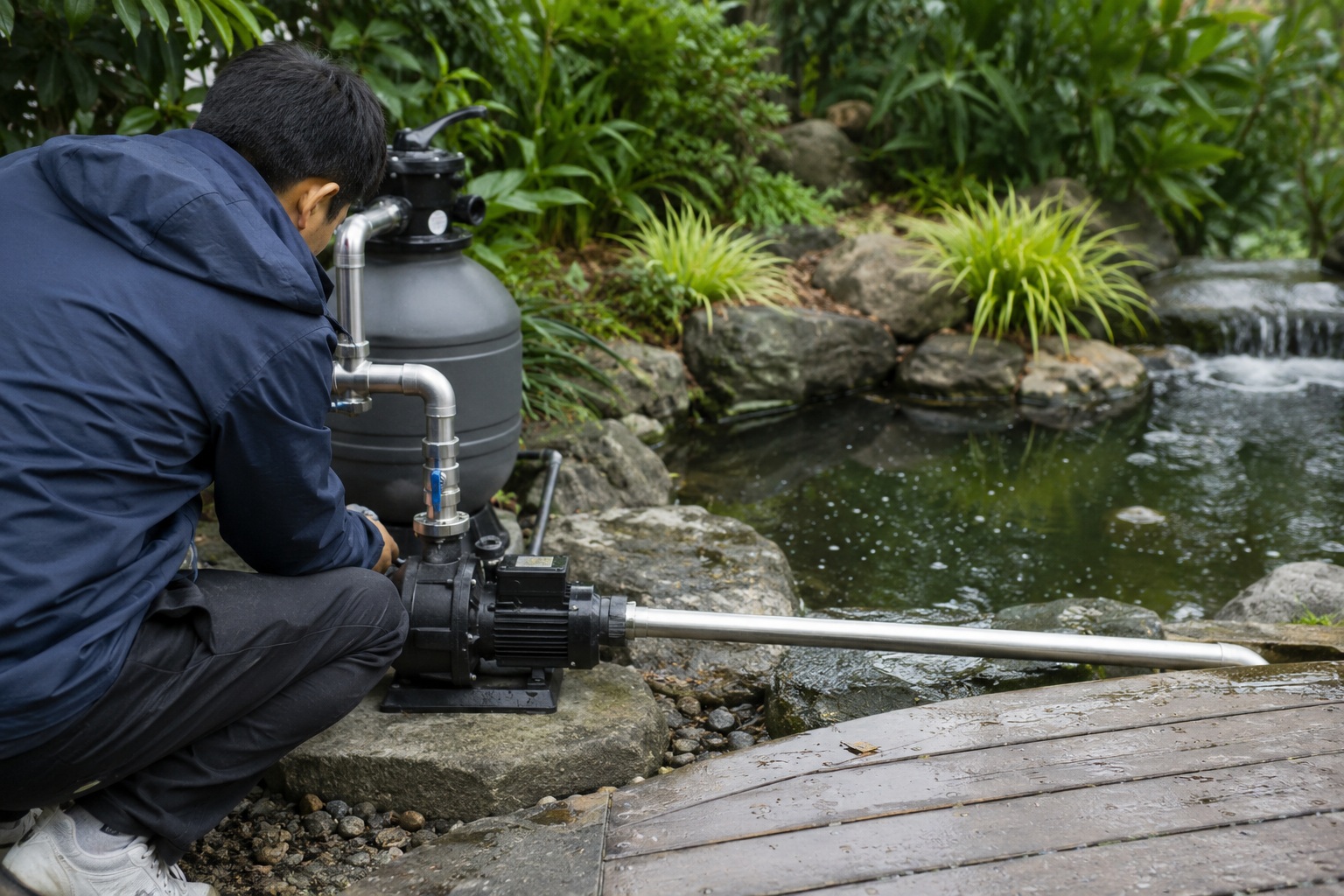
Submersible pumps are the most common choice for garden ponds.
They are placed directly in the water, often inside a skimmer box or at the bottom of the pond.
- Pros: Easy to install, quiet operation (muffled by water), and easily hidden from view.
- Cons: Can be difficult to access for maintenance, and their lifespan can be shorter if they run dry.
External pumps are positioned outside the pond in a dry, protected location.
They are typically used for larger ponds, complex filtration systems, or gravity-fed setups.
- Pros: Much easier to access for service, often more powerful and efficient for high-flow applications, and tend to have a longer lifespan.
- Cons: Can be noisier, require more complex plumbing for installation, and must be protected from the elements.
For most residential garden ponds under 5,000 gallons, a submersible pump is the most practical and cost-effective solution.
Matching Pump Motor Type to Your Application
The motor is the engine of your pump, and different technologies offer different benefits.
Magnetic Drive (Mag-Drive) Pumps: These pumps use a magnet to spin the impeller, with no direct connection to the motor. They are highly energy-efficient, making them ideal for 24/7 operation. They are best suited for smaller ponds, fountains, and low-to-medium head pressure applications. Their energy use can be up to 60% lower than comparable direct-drive models.
Direct Drive Pumps: In these pumps, the motor's shaft is directly connected to the impeller. This design delivers much more power and can handle high head pressures, making them perfect for large waterfalls and demanding filtration systems. However, they consume more electricity and can have a shorter lifespan due to more moving parts and wear.
Asynchronous & Hybrid Pumps: These pumps offer a "best of both worlds" solution. They combine the power and high-flow rates of direct-drive pumps with the energy efficiency and longevity closer to that of mag-drive pumps. They are an excellent, versatile choice for medium-to-large ponds and waterfalls, providing a strong balance of performance and operating cost.
Pumps for Specialized Jobs
Beyond the general-purpose circulation pump, some are designed for specific tasks.
Fountain & Spitter Pumps: These are typically small, low-GPH submersible pumps. They often come as a kit with different nozzle attachments to create various spray patterns. Their intake cage is usually very fine to prevent the nozzles from clogging, which means they are not suitable for general filtration in a dirty pond.
Solids-Handling Pumps: These are the heavy-duty workhorses of the pond world. They are engineered with a special impeller and a wide-open intake that can pass debris like leaves, fish waste, and small twigs without clogging. Some models can handle solids up to 1.25 inches in diameter. They are the best choice for use with bottom drains or for ponds with a lot of fish and debris. Using a solids-handling pump can reduce your cleaning frequency by over 75% compared to a standard pump.
What Are the Most Advanced and Efficient Pump Technologies?
Tired of high electricity bills from running your pond 24/7, or wish you could have a pond far from a power outlet?
Traditional pumps are no longer the only option.
Modern technology offers solutions that are smarter, more efficient, and more versatile than ever before.
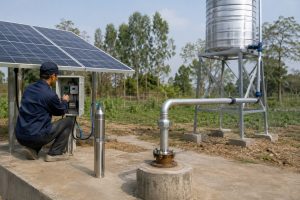
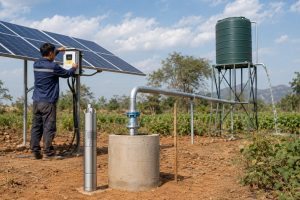
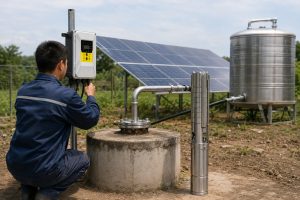
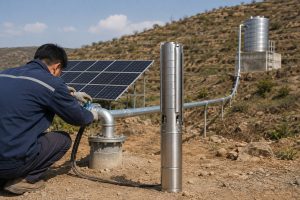
The most advanced pumps use high-efficiency Brushless DC (BLDC) motors, often powered by solar energy. These systems can reduce operating costs by over 50% and provide reliable water circulation even in completely off-grid locations, with smart controllers that optimize performance.
Moving beyond the standard AC-powered pumps opens up a new world of possibilities for your water feature.
These advanced systems are not just for remote agricultural wells; they are perfectly suited for the modern, eco-conscious, and cost-conscious pond owner.
Let's explore the technologies that are changing the game.
The Power of BLDC Permanent Magnet Motors
The heart of the modern, efficient pump is the Brushless DC (BLDC) motor.
Unlike traditional motors that use friction-creating brushes, BLDC motors use permanent magnets and electronics to operate.
This design is incredibly efficient, with some motors converting over 90% of the electrical energy into mechanical power.
A typical AC pump might only be 40-50% efficient.
This high efficiency has a direct impact on your wallet.
A BLDC motor can perform the same amount of work while using significantly less electricity.
Furthermore, these motors are more compact and lighter—often up to 40% smaller than an old-style motor with the same power output.
They are also virtually maintenance-free due to the lack of brushes to wear out, leading to a much longer service life.
Harnessing the Sun: Solar-Powered Pumps
Pairing a BLDC motor with solar panels creates the ultimate off-grid water-moving solution.
A solar pump operates entirely on free energy from the sun, eliminating electricity costs and allowing you to place a pond or water feature anywhere on your property, regardless of power access.
Modern solar pump systems are far more reliable than older models.
They use an intelligent controller, often with Maximum Power Point Tracking (MPPT) technology.
This controller constantly adjusts the pump's load to extract the maximum possible power from the solar panels, even in cloudy or low-light conditions.
This technology can boost the water output by up to 30% compared to systems without it.
Choosing the Right Pumping Mechanism for the Job
While the motor provides the power, the pump's mechanism determines how it moves water.
Different designs are suited for different tasks.
Screw Pumps: These pumps use a spiral screw turning inside a rubber stator. They are champions of high-lift situations but provide lower flow rates. This design is perfect for creating tall waterfalls or lifting water from a deep source. A key advantage is their excellent resistance to sand and grit, which would destroy other pumps.
Plastic Impeller Centrifugal Pumps: These are high-flow workhorses. They use multiple spinning impellers to move large volumes of water at medium pressure. They are an economical and lightweight choice for general pond circulation, powering wide waterfalls, and pond-side irrigation. Modern polymer impellers are highly resistant to wear from fine sand.
Stainless Steel Impeller Pumps: This is the premium, long-life option. The pump body and impellers are made from corrosion-resistant stainless steel. They are designed for harsh water conditions, such as acidic water common in ponds with heavy leaf debris, or for users who demand the highest reliability. They offer high flow rates and exceptional durability.
The Smart Hybrid Solution: AC/DC Pumps
What if you want the 24/7 reliability of grid power but the energy savings of solar?
The most advanced systems offer a hybrid AC/DC solution.
These pumps come with a smart controller that can accept power from both solar panels and a standard AC outlet simultaneously.
The controller's logic is designed to prioritize solar power at all times.
When the sun is shining, the pump runs 100% on solar.
If a cloud passes over, the controller instantly supplements the solar power with just enough AC power to maintain the desired flow.
At night, it automatically switches over to full AC power.
This ensures your pond's vital circulation never stops, while guaranteeing you use the absolute minimum amount of paid electricity.
It offers total peace of mind and the lowest possible operating cost.
Conclusion
Choosing the right pond pump is a balance of science and goals.
By calculating your flow rate and head pressure, and understanding the different technologies available, you can ensure a healthy, beautiful, and efficient pond for years to come.
FAQs
How long should a pond pump run per day?
For a pond with fish, the pump should run 24 hours a day, 7 days a week.
This ensures constant filtration and aeration, which is vital for fish health.
Can a pond pump be too big?
Yes.
An oversized pump can create excessive current that stresses fish, damages plants, and wastes a significant amount of electricity.
It's better to size it correctly.
Do I need a pump if I have plants?
If you have fish, yes.
While plants provide some oxygen, they are not a substitute for the consistent circulation and mechanical filtration that a pump provides.
How much does it cost to run a pond pump?
Costs vary based on the pump's wattage and your local electricity rates.
Look for energy-efficient models like mag-drive or BLDC pumps to minimize running costs.
Where is the best place to put a pond pump?
Place the pump at the deepest point of the pond, and at the end opposite from where the water returns (like a waterfall).
This maximizes water circulation.
How do I keep my pond pump from clogging?
Perform regular maintenance by cleaning the pump's intake screen.
For debris-heavy ponds, use a skimmer box or choose a solids-handling pump to prevent clogs.
Does a fish pond need a pump in winter?
Yes, it is highly recommended.
The pump maintains a hole in the ice, allowing harmful gases to escape and oxygen to enter, which is crucial for fish survival.