Tired of your noisy, power-hungry pool pump driving up your electricity bill?
You can replace it with more efficient options.
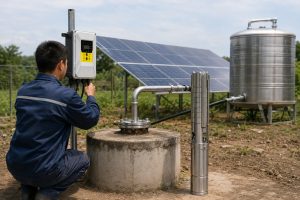
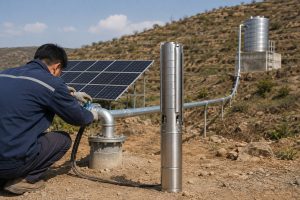
Solar-powered pumps offer a quiet, cost-effective alternative that runs on sunlight.
For smaller tasks like inflating, you can even use household items like an air compressor or a vacuum cleaner.
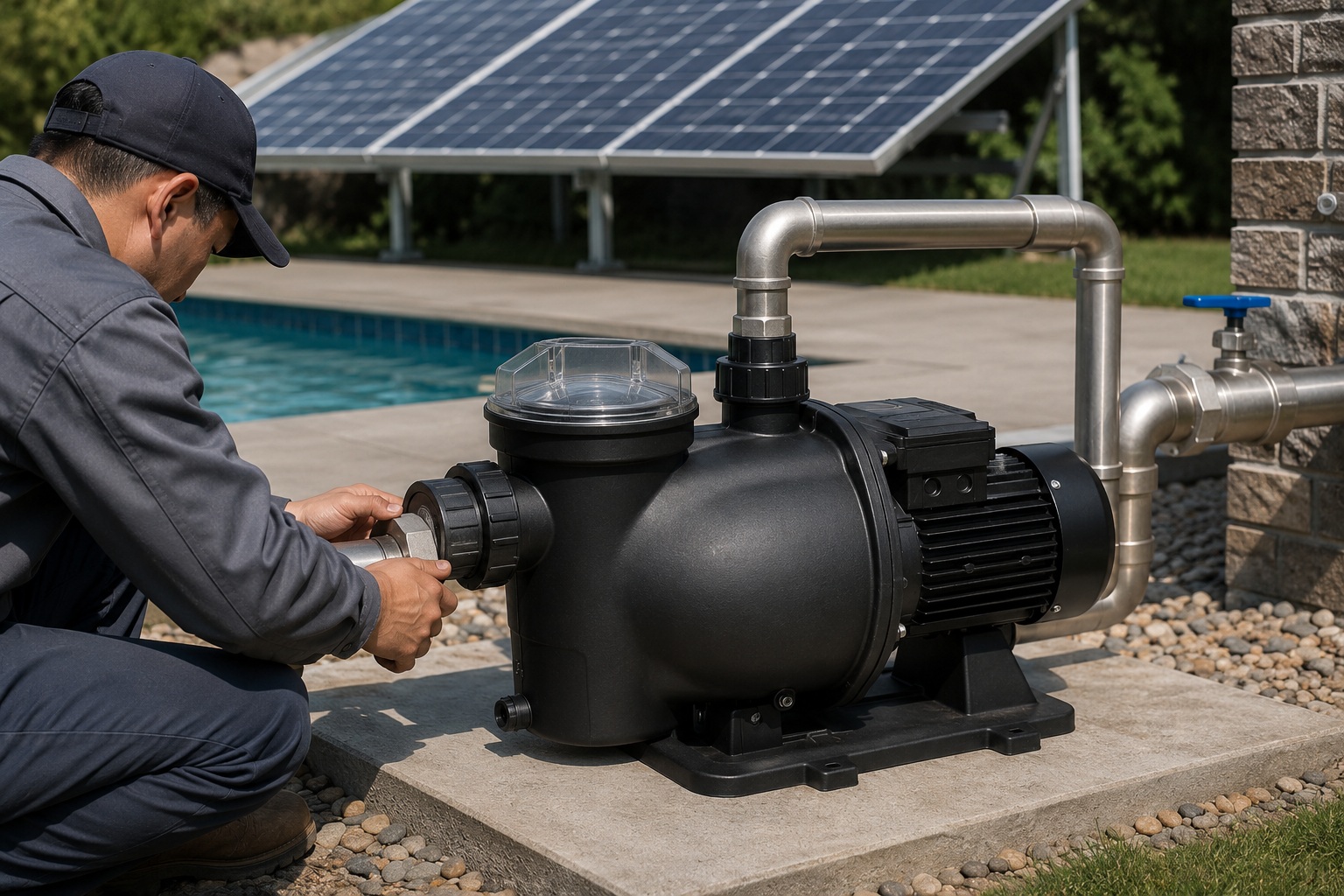
The question "What can you use instead of a pool pump?" opens up a bigger conversation.
It’s not just about swimming pools.
It’s about finding smarter, more efficient ways to move water for any purpose.
Many people try to repurpose equipment, like using a pool pump for a waterfall, or look for cheap alternatives.
However, these quick fixes often lead to bigger problems like equipment failure, high energy use, and poor performance.
The real solution isn't about avoiding pumps.
It's about choosing the right pump, powered by modern, efficient technology.
Let's explore the common pitfalls of makeshift solutions and then uncover the advanced technologies that offer truly sustainable and cost-effective alternatives for any water-moving task.
Product Review: DIY Solar Pool Pump (Almost) Changes the Game
Struggling with the high cost of running a traditional pool pump?
A solar-powered model seems like the perfect, game-changing solution.
Yes, solar pool pumps can drastically cut electricity costs.
But many imported models suffer from technical glitches and a lack of support.
They are powerful and quiet when they work, but can fail quickly due to design oversights, leaving you with a broken system.
The promise of a solar pool pump is compelling.
One user, frustrated with his high-powered AC pump, installed a 500-watt, 0.67 HP DC solar model.
The initial experience was surprisingly positive.
The pump was incredibly quiet and powerful, running entirely off sunlight.
However, this initial excitement soon revealed some significant underlying issues that plague the current market for these products.
The biggest problems are not with the core concept, but with the execution, control systems, and manufacturer support.
The Payback Potential
Despite the flaws, the financial incentive is undeniable.
A detailed return on investment (ROI) calculation shows just how quickly a solar pump can pay for itself, even with the initial investment in panels and equipment.
The savings come directly from eliminating the electricity cost of running a conventional pump.
| Cost Component | Initial Investment | Annual Running Cost |
|---|---|---|
| Old AC Pump (1 HP) | $0 | $247.84 |
| New Solar Pump System | $881.00 | $0 |
| Annual Savings | - | $247.84 |
The calculation is straightforward.
The old 1 HP (746-watt) AC pump, running 7 hours a day, consumes 5.22 kWh daily.
At an average electricity rate of $0.13/kWh, this costs $247.84 per year.
The new solar system has an initial cost of around $881 for the pump, two 400-watt panels, and basic hardware.
By dividing the initial investment ($881) by the annual savings ($247.84), you arrive at a payback period of just 3.55 years.
Considering a DC brushless motor has a potential lifespan of 20,000 hours (over 8 years of seasonal use), the long-term savings are substantial.
The Technical Glitch
The most critical flaw observed was the pump's tendency to cycle on and off rapidly in variable sunlight.
On a partly cloudy day, the pump would run for a few seconds, shut down for ten, and repeat endlessly.
This constant starting and stopping puts immense stress on the DC motor, leading to premature failure.
This is likely the root cause of the many negative reviews for such products.
The pump’s controller lacks a "soft" transition or a buffer to handle minor dips in solar power.
The user had to create a workaround with an external timer to shut the system off in the late afternoon to prevent this damaging behavior.
This highlights a major gap: the need for intelligent controllers.
The Market Opportunity
The review concludes that there is a huge, untapped market for well-engineered solar pool pumps.
The technology is ripe for a manufacturer to step in and solve these simple but critical issues.
The three key areas for improvement are:
- Stable Pricing: The market has no clear price point, with similar-spec pumps ranging from $341 to nearly $1,000.
- Clear Documentation: Installation manuals are often poorly translated and lack essential troubleshooting information.
- Fix the Cycling Glitch: An improved, smarter controller is needed to prevent motor burnout and ensure longevity.
Can You Use a Pool Pump for a Waterfall?
You have a powerful pool pump and a plan for a beautiful backyard waterfall.
Why not use the pump you already have and save some money?
Technically, yes, you can make it work for a short time.
However, a pool pump is the wrong tool for the job.
Using it for a waterfall leads to high energy consumption, noise, and potential damage to the pump, as it's not designed to handle the debris found in pond water.
It’s a common question for DIY enthusiasts.
On the surface, all pumps move water, so it seems logical to repurpose a strong pool pump for a decorative waterfall.
The main reason people consider this is availability and perceived power.
Pool pumps are robust machines built to circulate thousands of gallons.
However, their design is highly specialized.
They are engineered for high-pressure circulation within a clean, closed-loop system of smooth pipes.
A waterfall, on the other hand, is a low-pressure, high-flow application that often involves lifting water vertically and dealing with leaves, algae, and sand.
Using a pool pump in this context is like using a race car to plow a field—it’s simply not what it was built for.
Key Differences: Pool vs. Waterfall Pumps
The differences in design lead to significant variations in performance, efficiency, and durability when used in a waterfall setting.
A specialty waterfall pump is engineered for continuous 24/7 operation and whisper-quiet performance, while a pool pump is louder and designed for shorter daily cycles.
Understanding these distinctions is key to choosing the right equipment.
| Feature | Pool Pump | Waterfall Specialty Pump |
|---|---|---|
| Purpose | High-pressure filtration in clean, chlorinated water. | Low-pressure, high-volume flow in debris-heavy water. |
| Energy Efficiency | High power consumption (e.g., 750W-1500W). | Highly efficient; often uses 50-80% less electricity. |
| Durability | Designed for ~8 hour/day cycles. Prone to wear from debris. | Engineered for continuous 24/7 operation. Resists clogging. |
| Noise Level | Can be loud, disrupting the tranquil setting. | Designed for whisper-quiet operation. |
| Flow Type | Creates a strong, pressurized jet of water. | Provides a smooth, natural, "laminar" flow. |
| Debris Handling | Small filter baskets; not for leaves or sludge. | Large intake screens to handle organic debris. |
The High Cost of a "Free" Pump
Using an existing pool pump might seem free, but the operating costs tell a different story.
A typical 1-horsepower pool pump can add $60 to $100 per month to your electricity bill.
In contrast, a purpose-built waterfall pump uses significantly less wattage.
A solar-powered waterfall pump, for instance, has an operating electricity cost of zero.
Even a grid-powered specialty pump is far more efficient, often consuming only 10-20% of the power a pool pump would draw for the same effect.
Over a single season, the energy savings from using the correct pump can easily exceed the cost of buying it.
When to Upgrade
If you are serious about your water feature, upgrading to a proper waterfall pump is not a luxury; it’s a necessity.
A pool pump is a temporary, inefficient, and risky solution.
An upgrade will lower your energy bills, reduce maintenance, last longer, and provide the beautiful, gentle water flow you envisioned.
Choosing a solar-powered model further enhances these benefits, aligning with sustainable and eco-friendly practices.
7 Easy Ways to Inflate a Pool (even without Pump)
It's a hot day and your inflatable pool is flat.
You can't find the pump.
Does this mean your plans for a cool dip are ruined?
Not at all.
You can inflate a pool using several common household items.
An air compressor, vacuum cleaner, or even a hair dryer can get the job done in a pinch.
This particular problem highlights a different, simpler meaning of "without a pump."
It's not about water circulation, but air inflation.
While blowing it up by mouth is a theoretical option, the exhaustion isn't worth it.
Fortunately, a little creativity can turn common tools into makeshift air pumps.
These methods are all about moving air, not water, and they offer quick solutions for a very specific problem.
Creative Inflation Methods
-
Air Compressor: If you have one for your car or bike tires, it's a powerful option. You just need to find or fashion a nozzle attachment that fits the pool's air valve. Be careful not to over-inflate, as compressors are high-pressure.
-
Electric Pump: This is the intended tool, designed for high-volume, low-pressure inflation. It’s the fastest and safest method, often filling a large float in under three minutes.
-
Hair Dryer & Water Bottle: A crafty solution. Set the hair dryer to "cold." Cut a plastic water bottle to create a funnel-like nozzle, tape it to the dryer, and you have a makeshift inflator.
-
Vacuum Cleaner: Many vacuums have a "blow" function. Simply attach the hose to this outlet and use it to push air into the pool. Like a compressor, these can be powerful, so monitor the inflation closely.
-
Leaf Blower: Another powerful household tool that can do the job quickly. This is often a two-person job—one to hold the blower, the other to manage the pool's air valve. Again, be cautious of the high pressure.
-
Manual Pumps: A bicycle, foot, or hand pump is an old-school but effective method. It requires manual labor and will be slow for a large pool, but it's portable and requires no electricity.
-
Large Bag Method: A surprising but workable hack. Fill a large trash bag with air, then hold the opening tightly against the pool's valve. Squeeze the bag to force the air inside the pool. It’s slow and tedious but proves that necessity is the mother of invention.
While these methods solve a simple inflation problem, moving large volumes of water requires a far more robust and engineered solution.
The real innovation isn't in finding ways to avoid pumps, but in revolutionizing the pump itself to be more efficient, durable, and intelligent.
The Core Revolution: High-Efficiency BLDC Motors
Your pump keeps failing and your energy costs are too high.
The problem isn't just the pump; it's the outdated motor technology inside it.
The true alternative to a bad, inefficient pump is a good one, powered by superior technology.
High-efficiency Brushless DC (BLDC) permanent magnet motors are the core of the revolution.
They offer over 90% efficiency, last up to 10 times longer, and drastically reduce operating costs.
The problems identified with both DIY solar pumps and repurposed pool pumps—inefficiency, noise, and premature failure—often stem from the motor.
Traditional brushed motors are inefficient and have a short lifespan, typically 2,000 to 5,000 hours.
They are prone to wear and require regular maintenance.
The solution lies in a more advanced motor architecture.
A Brushless DC (BLDC) permanent magnet motor represents a quantum leap in pump technology.
This is the engine that drives modern, high-performance solar water pump systems.
What Makes BLDC Motors Superior?
Unlike brushed motors, BLDC motors have no brushes to wear out, which dramatically increases their lifespan to 20,000-30,000 hours.
They use powerful permanent magnets, such as 40SH neodymium iron boron, on the rotor.
An intelligent electronic controller precisely manages the power sent to the stator windings, creating a rotating magnetic field that turns the rotor.
This electronic commutation results in higher efficiency, greater torque, and exceptional reliability.
Unmatched Efficiency and Durability
The numbers speak for themselves.
BLDC motors consistently achieve efficiencies exceeding 90%, whereas traditional AC motors or brushed DC motors might operate at 50-70% efficiency.
This means more water is pumped for every watt of energy consumed.
This high efficiency is critical in solar applications, as it reduces the number of solar panels required by up to 30%, directly lowering the initial system cost.
The compact design also makes them 47% smaller and 39% lighter than conventional motors of similar power, simplifying installation and shipping.
| Feature | Brushed DC Motor | BLDC Permanent Magnet Motor |
|---|---|---|
| Efficiency | 50% - 70% | > 90% |
| Lifespan | 2,000 - 5,000 hours | 20,000 - 30,000 hours |
| Maintenance | Requires brush replacement | Maintenance-free |
| Control | Simple, less precise | Precise electronic control |
| Size & Weight | Larger, heavier | Up to 47% smaller, 39% lighter |
The Strategic Value of a Better Motor
For a distributor or importer, the motor is the heart of the product's value proposition.
A system built around a high-efficiency BLDC motor allows you to offer your customers a product that is not only energy-saving but also more durable and reliable.
It reduces warranty claims, enhances brand reputation, and provides a clear competitive advantage in a market crowded with inferior products.
The motor is the core technology that enables a pump to be truly cost-effective and sustainable.
A Portfolio for Every Need: Specialized Solar Pumps
You need to pump water from a deep well, but your customer needs to irrigate a large farm.
A one-size-fits-all pump won't work.
You need a flexible product portfolio.
The solution is to match the pump type to the specific application.
A solar screw pump for deep wells, a plastic impeller pump for farm irrigation, and a stainless steel impeller pump for corrosive water—all powered by the same high-efficiency motor—create a winning portfolio.
Once you have a high-efficiency motor, you can pair it with different pump ends to create a comprehensive product line that addresses diverse market needs.
The true power of a B2B offering is not a single product, but a versatile portfolio that equips distributors to succeed in their local markets.
This strategy moves beyond a generic "solar pump" to a targeted solution for every water-moving challenge, from providing drinking water for a single home to irrigating acres of farmland.
The three main types of solar deep well pumps form a complete and competitive range.
The Deep Well Specialist: Solar Screw Pump
This pump is the high-head champion.
It uses a stainless steel screw rotating inside a rubber stator to push water upward through compression.
This design generates incredible pressure, making it ideal for lifting water from very deep wells (high head) but at a lower flow rate.
Its key advantage is its high resistance to sand and grit, which would destroy other pump types.
It's the perfect solution for domestic water supply and livestock drinking water in arid regions with deep water tables, such as parts of Africa and Latin America.
The Agricultural Workhorse: Solar Plastic Impeller Pump
When high flow is the priority, this multi-stage centrifugal pump is the answer.
It uses a series of durable, wear-resistant plastic impellers to move large volumes of water at a medium head.
It's lightweight and highly economical, making it the go-to choice for farm irrigation, pasture water supply, and large gardens.
Its excellent resistance to fine sand makes it a reliable workhorse in the agricultural sectors of the Americas and Africa.
While highly effective, its limitation is reduced durability in highly corrosive water or at extreme depths.
The Premium Performer: Solar Stainless Steel Impeller Pump
This is the top-tier model, built for durability in the harshest conditions.
The pump body and impellers are made from SS304 stainless steel, providing superior resistance to corrosion.
It is designed for environments with acidic or alkaline water, such as those found in parts of Australia and the Americas.
It delivers high flow rates at medium-to-high head, making it suitable for high-end homes, ranches, and any application where reliability and long service life are paramount.
Its higher cost is justified by its exceptional durability and performance in challenging water conditions.
| Pump Type | Key Feature | Best For | Advantage | Limitation |
|---|---|---|---|---|
| Solar Screw Pump | Low Flow, High Head | Deep wells, domestic use | Excellent sand resistance | Limited flow rate |
| Plastic Impeller Pump | High Flow, Wear-Resistant | Farm irrigation, gardens | High water output, economical | Less durable in corrosive water |
| Stainless Steel Impeller | High Flow, Corrosion-Resistant | Corrosive water, premium homes | Extremely durable, long life | Higher initial cost |
Beyond Solar: The AC/DC Hybrid Advantage
Solar pumps are great, but what happens on cloudy days or at night?
The fear of an unreliable water supply is a major barrier for customers.
The solution is an intelligent AC/DC hybrid controller.
This technology ensures a 24/7 water supply by automatically switching between solar and grid/generator power, guaranteeing reliability without sacrificing the benefits of solar.
The single biggest objection to a purely solar-powered system is its dependence on sunlight.
For critical applications like providing drinking water for a household or livestock, any interruption is unacceptable.
This is where the final piece of the technological puzzle comes into play: the AC/DC hybrid controller.
This innovation addresses the "cycling glitch" and reliability concerns of early solar pumps head-on, providing a robust solution that offers the best of both worlds.
How It Works: Intelligent Power Management
An AC/DC hybrid system is designed with two power inputs: one for DC power from the solar panels and one for AC power from the electrical grid or a generator.
The intelligent controller is the brain of the operation.
- Solar Priority: When the sun is shining, the controller automatically prioritizes the free energy from the solar panels to run the pump.
- Power Blending: On overcast days when solar power is reduced but still present, the hybrid function can blend AC power with the available DC power. This maximizes the use of free solar energy while ensuring the pump runs at the required speed.
- Automatic Switchover: When the sun goes down or during extended periods of heavy cloud cover, the controller detects the lack of DC input and seamlessly switches over to the AC power source.
This entire process is automatic.
The end user doesn't have to do anything; they simply enjoy a continuous, uninterrupted water supply 24 hours a day, 7 days a week.
The Ultimate Selling Point: Total Reliability
For a distributor, the AC/DC hybrid option is a powerful sales tool.
It completely eliminates the customer's fear of a solar-only system.
It transforms the conversation from "What if the sun doesn't shine?" to "You'll have water no matter what, and most of the time it will be free."
This technology provides water security.
It ensures that whether for a home, a farm, or a remote commercial operation, the water will always flow.
This combination of solar efficiency and grid reliability creates a premium, worry-free solution that justifies the investment and establishes a brand as a leader in dependable water technology.
Conclusion
The best alternative isn't no pump, but a superior pump system.
By matching high-efficiency motors with specialized pumps and intelligent controllers, you can provide a reliable, cost-effective water solution for any need.
FAQs
1. How long do solar water pumps last?
A quality solar pump with a brushless motor can last 20,000-30,000 hours, or over 10 years. The solar panels themselves are typically warrantied for 25 years.
2. Can a solar water pump work at night?
A standard solar pump works only with sunlight. However, an AC/DC hybrid system can automatically switch to grid or generator power to pump water 24/7.
3. How much does a solar water pump system cost?
Costs vary by size and type, from a few hundred to several thousand dollars. The key is to calculate the ROI from electricity savings, which is often very rapid.
4. What is the difference between a solar pool pump and a solar well pump?
A solar pool pump is for high-volume, low-pressure surface circulation. A solar well pump is designed for high-pressure applications to lift water from deep underground.
5. How many solar panels are needed for a water pump?
This depends on the pump's wattage and local sunlight conditions. A high-efficiency pump requires up to 30% fewer panels than a standard model.
6. Do solar pumps need batteries?
Most modern solar pumps do not require batteries. They pump when the sun is out, and hybrid models use the grid as a backup, which is more cost-effective.
7. Are solar water pumps difficult to install?
Installation is straightforward for anyone with basic plumbing and electrical skills. The systems are designed to be user-friendly, though professional installation is always an option.
8. Can solar pumps handle dirty water?
It depends on the pump type. Solar screw pumps are excellent at handling sand and grit, while other types may require pre-filtration for debris-heavy water.