Your pool water is getting cloudy and slimy.
Dumping and refilling it is a waste of water and money.
Here are ways to keep it clean without a pump.
**Yes, you can keep a pool clean without a pump using a simple system.
Combine regular manual skimming, a floating chlorine dispenser, a pool cover, and consistent water testing.
This method can keep a small pool clear for weeks, saving water and effort.**
While these manual methods are effective for short-term maintenance or for smaller pools, they do require daily attention.
Understanding the risks of not having circulation is key to preventing bigger problems.
For those seeking a more permanent and automated solution, exploring energy-efficient options is the next logical step.
Let's first dive into the essential manual techniques.
Why Manual Cleaning is Your First Line of Defense
Debris and bacteria quickly ruin still water.
Without a pump, you are the circulation system.
Here's the manual approach to fight back against cloudy, green water.
**A combination of three actions is key.
Manually remove debris before it decomposes.
Maintain a low and steady chlorine level with a dispenser.
Cover the pool when not in use.
This system prevents the breakdown of water quality from the start.**
This isn’t one trick.
It’s a combination of a few small things that keep the water from breaking down in the first place.
When you do all of them together, the maintenance becomes minimal.
But if you skip one of these steps, you will notice a difference very quickly.
This simple system is built on three core pillars: proactive debris removal, consistent sanitization, and protection from the elements.
The Importance of Immediate Debris Removal
You must remove debris like leaves, grass, and bugs as soon as you see them.
Once these organic materials sink, they begin to decompose.
This decomposition process releases phosphates and nitrates into the water.
These compounds are the primary food source for algae.
Decomposition also rapidly consumes free chlorine, reducing its sanitizing effectiveness by up to 50% within the first 24 hours.
The less time debris spends in the water, the less work your chlorine has to do.
Use a fine-mesh hand skimmer daily, or even multiple times a day if the pool is heavily used.
If you see dirt and debris that has sunk to the bottom, use the skimmer to gently stir the water.
This will lift the particles so you can scoop them out.
| Time Since Debris Entry | Impact on Water Quality |
|---|---|
| 0-6 Hours | Minimal impact. Easily skimmed from the surface. |
| 6-24 Hours | Begins to sink and decompose. Starts consuming chlorine. |
| 24-48 Hours | Releases significant nutrients for algae. Water clarity starts to decline. |
| 48+ Hours | Fuels algae blooms. Contributes to cloudy, slimy water. |
Maintaining a Stable Chlorine Environment
The goal is to maintain a consistent free chlorine level between 1 and 3 parts per million (PPM).
Throwing in chlorine granules causes a huge spike followed by a rapid drop-off, which is inefficient.
A floating chlorine dispenser is the best tool for this job.
It slowly releases a controlled amount of sanitizer from a tablet, ensuring a stable environment that continuously fights bacteria.
For a small pool like a 10-foot inflatable (approximately 1,500 gallons), a single 3-inch chlorine tablet can effectively chlorinate the water for over two weeks.
Set your dispenser to its lowest or second-lowest setting.
Small bodies of water need far less chlorine than you might think.
More is not better.
Too much chlorine can irritate skin and eyes, fade swimwear, and damage the pool's vinyl liner.
Always test your water a day after starting to see if you need to adjust the dispenser.
The Power of a Simple Pool Cover
Covering your pool when it's not in use is one of the most critical steps.
This is the fastest way to ruin your water if you neglect it.
A simple plastic tarp acts as a physical barrier.
It blocks over 95% of debris like leaves, pollen, and bugs from ever entering the water.
It also dramatically reduces water evaporation by up to 90%, which saves a significant amount of water over time.
Perhaps most importantly, a cover blocks the sun's UV rays.
Sunlight degrades chlorine, and a cover can slow down this chlorine loss by 35-50%.
This means your chlorine works longer and more effectively.
Use bendable wires or weights to secure the tarp, especially if you live in an area with summer storms.
This simple step is what keeps your water clean long-term, not just for a day or two.
What Happens When You Don't Circulate Pool Water?
Your pool water looks fine today, but trouble is brewing underneath.
Stagnant water is a breeding ground for bacteria and algae.
Ignoring circulation can lead to costly problems.
**Without circulation, your pool can decline in 24-48 hours.
Chlorine levels drop, debris settles, and water becomes cloudy.
Within a week, you'll likely face algae growth and unsafe swimming conditions, turning a simple issue into a major cleanup project.**
A pool pump does more than just move water.
It is the heart of your pool's circulatory system.
It pushes water through the filter, which removes contaminants.
It also distributes chemicals evenly to keep the entire body of water sanitized.
Without it, the water becomes stagnant, creating the perfect environment for all the things you don’t want in your pool.
Understanding how quickly this happens will motivate you to act fast.
The 7-Day Decline of an Uncirculated Pool
The deterioration of pool water quality follows a predictable timeline.
- Day 1-2: The Silent Decline. The water may still appear crystal clear. However, chlorine effectiveness plummets by 50-75% as it's no longer being circulated. Sanitizer in one area gets used up, while other areas become unprotected. Dirt and small debris begin to settle on the pool floor and start to decompose.
- Day 3-4: The Visible Change. The water becomes visibly cloudy as bacteria and other microorganisms multiply without resistance. The pH balance can shift dramatically, making the water irritating to skin and eyes. You may notice early-stage algae as slimy green or yellowish spots on the walls or floor.
- Day 5-7: The Point of No Return. Algae blooms become widespread, turning the water a noticeable green, or even black. The water often develops a foul, swampy odor from decaying organic matter. The pool is now an unsafe breeding ground for mosquitoes and other insects. At this stage, simple chemical additions won't work, and a major cleanup is required.
| Day | Chlorine Level | Water Clarity | Algae & Bacteria Status |
|---|---|---|---|
| 1-2 | Drops by 50-75% | Appears clear | Bacteria begin to multiply unchecked. |
| 3-4 | Critically low / gone | Visibly cloudy | Slimy spots (early algae) appear on surfaces. |
| 5-7 | Near zero | Murky, green, or brown | Widespread algae blooms; unsafe for swimming. |
Factors That Accelerate Deterioration
Several environmental factors can make your water turn bad even faster.
- High Temperatures: Heat is an incubator for algae and bacteria. For every 10°F (about 5.5°C) increase in water temperature above 80°F (26°C), the growth rate of algae can double. A pool in a hot, sunny climate will turn green much faster than one in a cooler, shaded area.
- Direct Sunlight: The sun's UV rays are powerful. They break down unstabilized chlorine, reducing its effectiveness. On a bright, sunny day, you can lose up to 90% of your free chlorine in just a few hours without circulation or a stabilizer.
- Heavy Bather Load: Every person who enters the pool introduces contaminants like sweat, body oils, sunscreen, and bacteria. The more people using the pool, the more demand is placed on the sanitizer.
- Environmental Debris: Pools located near trees, gardens, or construction sites will have a much higher load of debris. This organic matter consumes chlorine and provides food for algae, speeding up the decline of the water.
Is Draining Your Only Option?
The water is already green and slimy.
You're wondering if it's even worth trying to save it.
Sometimes starting fresh is the most efficient and cost-effective choice.
**Draining is best when water is already green, slimy, or has a strong odor, as chlorine alone won't fix it.
For minor cloudiness or debris, manual cleaning is sufficient.
Draining is a last resort, as it wastes water and is time-consuming.**
If your water is already in bad shape, you are better off draining it and starting over.
Chlorine alone won't fully fix it once it gets to that point.
You'll save yourself time and the cost of multiple chemicals.
However, you don't always need to empty the pool for common issues like leaves or a little dirt.
Knowing when to clean versus when to drain is key.
When to Clean Your Pool Manually
You should opt for cleaning instead of draining in these situations.
- Slight Cloudiness: If the water is just a bit hazy but not green, it's often a sign of a temporary imbalance. This could be due to low chlorine or incorrect pH. Test the water and adjust the chemicals accordingly. A good skimming can also help.
- Visible Debris: If you just have leaves, grass, or dirt on the surface or floor, the water itself is likely fine. Skim and vacuum it out immediately before it has a chance to decompose.
- Water is Less Than 3 Days Old: If the pool was filled recently, the water is almost certainly salvageable. Apply the manual cleaning system (skim, chlorinate, cover) to get it back on track.
When Draining is Necessary
It's time to drain and refill if you encounter these problems.
- Widespread Algae Growth: If more than 25% of your pool's surfaces are covered in green, black, or mustard algae, the battle is likely lost without a pump and filter.
- Slimy Walls and Floor: A slimy feel indicates a significant biofilm has formed. This biofilm protects bacteria and algae from chemicals, making it very difficult to treat without powerful circulation.
- Foul Odor: A swampy, musty, or fishy smell means there is a high level of decaying organic matter and bacteria. The water is unhealthy and should be replaced.
- Failed Chemical Shock: If you've already tried a heavy dose of chlorine (a shock treatment) and the water shows no signs of clearing up within 24-48 hours, it's time to start over.
Simple Methods for Draining Without a Pump
If you do need to drain your pool, you don't need a pump to do it.
- Garden Hose Siphon: This is the easiest method. Submerge one end of a garden hose in the pool and the other end at a point lower than the pool's water level. Once the water starts flowing due to gravity, it will continue to drain. A standard 5/8-inch hose can drain about 300-400 gallons per hour.
- Pool Vacuum Hose Siphon: This works on the same principle but is much faster because the hose is wider. A 1.5-inch vacuum hose can drain over 1,000 gallons per hour, cutting your drain time by more than 60%.
- Wet-Dry Vacuum: For the last few inches of water that a siphon can't reach, a wet-dry shop vacuum is perfect. It's also great for small spas or steps.
- Buckets: The most labor-intensive method, but it's free and works for very small kiddie pools or for getting the last bit of water out.
| Draining Method | Speed (Approx.) | Best Use Case | Cost |
|---|---|---|---|
| Garden Hose Siphon | Slow (300 GPH) | Small pools, lowering the water level | Low |
| Vacuum Hose Siphon | Medium (1,000+ GPH) | Faster draining of medium-sized pools | Low |
| Wet-Dry Vacuum | Very Slow (by tank capacity) | The last few inches of water | Medium |
| Buckets | Extremely Slow | Small kiddie pools, final cleanup | Free |
Why a Pump is the Best Long-Term Solution
Manual cleaning is a constant battle.
You're tired of skimming and worrying about chlorine levels.
An automated circulation system is the permanent fix for a truly low-maintenance pool.
**A pump is the heart of your pool's health.
It circulates water through a filter to remove contaminants and evenly distribute chemicals.
This prevents algae and bacteria growth automatically, saving you hours of labor and ensuring your water is consistently safe.**
While manual methods work, they are a reactive, short-term fix.
You are constantly fighting a battle against nature.
A pump and filter system wins that battle for you, proactively and efficiently.
It is the difference between bailing out a leaky boat with a bucket and simply fixing the leak.
Modern technology has made these systems more accessible and cost-effective than ever before.
The Power of Automated Circulation and Filtration
A properly sized pump automates the two most important jobs for a clean pool.
First, it circulates the entire volume of pool water multiple times per day.
This constant movement prevents debris from settling and denies algae a chance to take hold on surfaces.
Second, it forces that water through a filter.
This filter captures microscopic particles that a hand skimmer could never catch, sometimes as small as 5 microns.
For perspective, a human hair is about 70 microns thick.
By removing these tiny contaminants, the filter drastically reduces the amount of food available for bacteria and algae.
This process also improves chemical efficiency by up to 30%, because the sanitizer can focus on killing germs instead of fighting debris.
Choosing an Energy-Efficient Pumping Solution
The biggest hesitation for many is the perceived electricity cost of running a pump.
While traditional pumps can be energy hogs, modern technology offers powerful, eco-friendly, and cost-effective alternatives.
- BLDC Permanent Magnet Motors: The core of today's most efficient pumps is the Brushless DC (BLDC) permanent magnet motor. These motors achieve efficiencies of over 90%, a huge leap from the 60-70% efficiency of older induction motors. This means they are more powerful while being up to 47% smaller and 39% lighter.
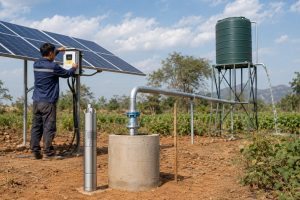
- Solar-Powered Pumps: These are the ultimate solution for off-grid or cost-conscious pool owners. Paired with a BLDC motor, a solar pump system runs entirely on free energy from the sun. An intelligent Maximum Power Point Tracking (MPPT) controller maximizes solar energy utilization, ensuring the pump works effectively even on overcast days. This high efficiency often reduces the number of solar panels needed, lowering the initial investment cost.
- Hybrid AC/DC Systems: For guaranteed 24/7 operation, hybrid systems offer the best of both worlds. The controller is designed to prioritize free solar (DC) power whenever it's available. If sunlight is insufficient, or at night, it can automatically switch to or blend with grid (AC) power. This ensures your pool stays sparkling clean around the clock with maximum energy savings.
| Feature | No Pump (Manual) | Traditional AC Pump | Modern Solar Pump (BLDC Motor) |
|---|---|---|---|
| Upfront Cost | Very Low (<$100) | Medium ($400 - $800) | High ($800 - $1,500+) |
| Operating Cost | Low (chemicals only) | High (monthly electricity bill) | Near Zero |
| Daily Maintenance | High (15-30 mins/day) | Low (run automatically) | None |
| Water Quality | Inconsistent, high risk | Consistent | Highly Consistent |
| Environmental Impact | High water waste | High energy consumption | Very Low / Sustainable |
Conclusion
Manual methods are a stop-gap for small pools.
For a truly clean pool, an efficient, automated pump is the best long-term investment for savings and convenience.
FAQs
Can you put chlorine in an inflatable pool?
Yes, but always use a floating dispenser with slow-dissolving tablets.
Never place tablets directly in the pool, as this can damage the liner.
How long can a kiddie pool stay clean?
With a cover, daily skimming, and a chlorine dispenser, a small pool can stay clean for over two weeks, even with regular use.
Will chlorine kill my grass when I drain the pool?
A properly maintained chlorine level (1-3 PPM) is highly diluted and unlikely to harm your lawn.
Avoid draining a pool that has just been shocked.
What is the easiest way to empty a pool without a pump?
The easiest way is using a garden hose as a siphon.
This method uses gravity to drain the water and requires no special equipment.
How do you keep a pool from turning green without a pump?
Prevent algae by maintaining a stable chlorine level with a floater, skimming debris daily, and covering the pool at night to block sunlight and contaminants.
Is it safe to swim in a pool without a pump?
It is only safe if you are meticulously maintaining water chemistry and cleanliness manually every day.
If the water is cloudy, slimy, or has an odor, it is not safe.
How often should you run a pool pump?
A pool pump should typically run 8-12 hours per day.
This is the time needed to circulate the entire volume of water at least once.
Do I have to drain my pool if it turns green?
If it is just light green, a chemical shock and thorough cleaning might save it.
If it is dark green, slimy, or smells bad, draining is faster and more effective.