Is your pool looking cloudy or green, despite your best efforts?
It’s frustrating when your pool isn’t ready for a swim.
The secret to a crystal-clear pool often lies not just in chemicals, but in when you run your pump.
The best time to run your pool pump depends on your goals.
For energy savings, run it during off-peak hours, typically at night.
For maximum cleanliness and to fight algae, run it during the hottest, sunniest part of the day.
Many owners find a hybrid schedule offers the best balance.
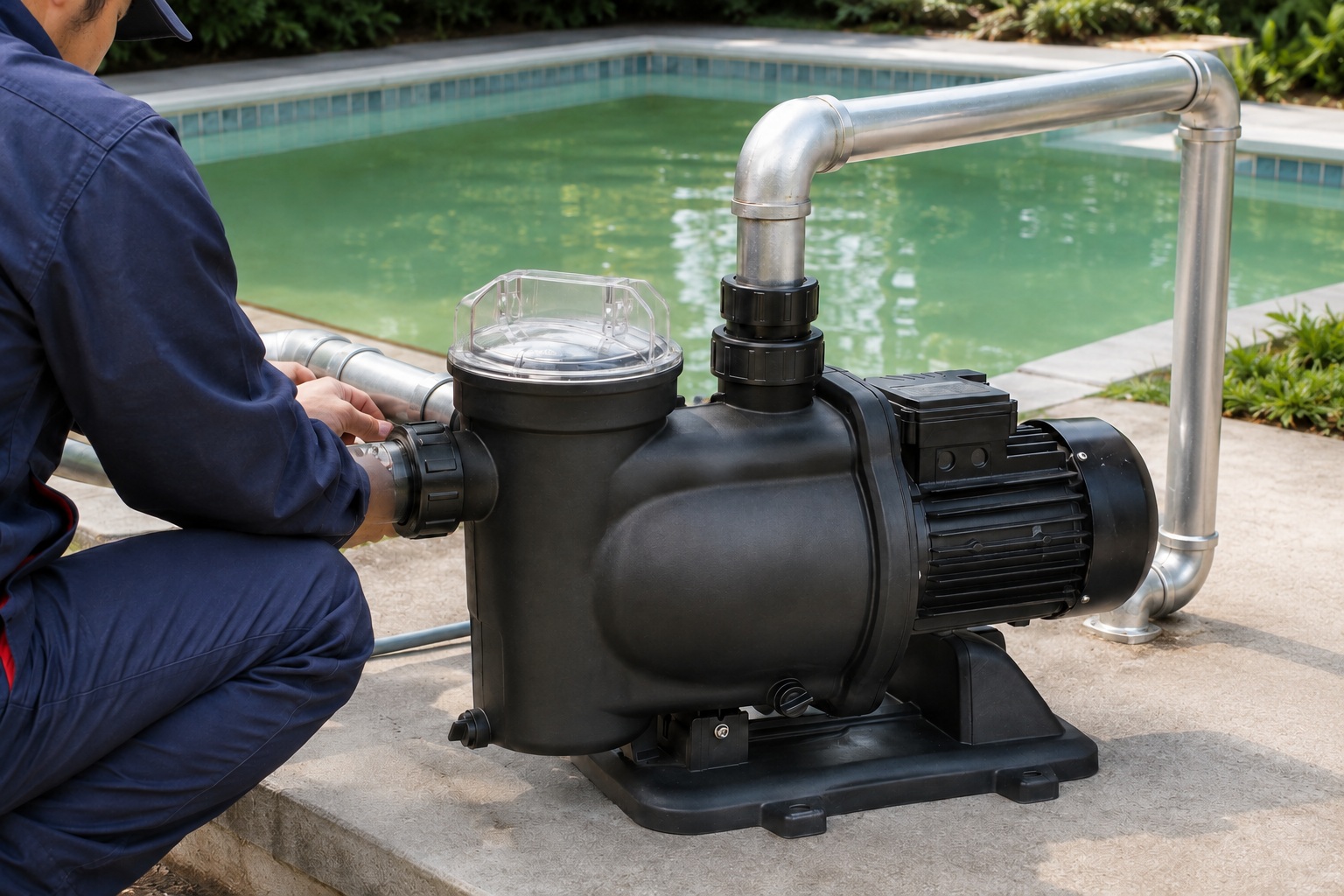
Deciding between saving money and having the cleanest possible water can feel like a difficult choice.
You might hear one pool expert recommend daytime running, while another insists on nighttime.
The truth is, there isn't a single answer that fits every pool owner.
The perfect schedule for your pool depends on its size, your climate, how you use it, and even the type of pump you have.
This guide will break down all the factors, helping you create a customized and efficient pumping schedule that keeps your water pristine and your energy bills in check.
Let's dive in.
How Long Should I Run My Pump For?
Are you worried your electricity bill is skyrocketing from running the pool pump?
You might be unsure if you're running it too much, or not enough.
This uncertainty can be costly.
As a general rule, you should run your pool pump long enough for the entire volume of your pool water to pass through the filter at least once per day.
This is called a "turnover."
For most residential pools with single-speed pumps, this takes about 8 to 12 hours.
The "eight-hour rule" is a common guideline, but it's not a universal solution.
The exact runtime your pool needs is more specific than a simple time estimate.
It's a calculation based on the relationship between your pool's volume and your pump's power.
Achieving at least one full turnover is the most critical goal for maintaining a clean and healthy swimming environment.
If your pool sees heavy use or you live in a very hot climate, you might even aim for two turnovers per day.
Let's explore how to determine the precise runtime needed for your specific setup.
Key Factors That Influence Runtime
Several variables affect how long your pump needs to work.
A small, covered pool in a cool climate will have different needs than a large, exposed pool in a sunny, tree-filled yard.
Consider these factors:
- Pool and Pump Size: A larger pool naturally contains more water, requiring a longer runtime to filter it all. Similarly, a less powerful pump will need more time to complete a turnover.
- Pool Usage: A pool that's frequently used by many swimmers introduces more organic matter like sweat, oils, and sunscreen. This increases the demand on your filtration system, requiring longer pump cycles.
- Environmental Debris: If your pool is surrounded by trees, plants, or grass, it will constantly collect leaves, pollen, and dirt. This debris clogs filters faster and necessitates more pumping.
- Climate and Season: In hot, sunny weather, algae and bacteria multiply much faster. The sun's UV rays also break down chlorine. To combat this, you'll need to run your pump longer during the summer than in the cooler off-season.
- Pool Cover: Using a pool cover is one of the most effective ways to reduce pump runtime. It prevents debris from entering the pool and reduces water evaporation, which helps maintain chemical balance.
How to Calculate Your Pump's Ideal Runtime
Instead of guessing, you can calculate your pump's required runtime with a simple formula.
First, you need to know two things: your pool's total volume in gallons and your pump's flow rate in gallons per minute (GPM).
You can find the flow rate in your pump's user manual.
If you don't know your pool's volume, you can estimate it with these formulas:
- Rectangular Pools: Length x Width x Average Depth x 7.5
- Circular Pools: Diameter x Diameter x Average Depth x 5.9
- Oval Pools: Length x Width x Average Depth x 5.9
Once you have those two numbers, use this calculation:
Pool Volume (in gallons) ÷ Flow Rate (in GPM) ÷ 60 = Required Runtime (in hours)
For example, let's say you have a 20,000-gallon pool and your pump has a flow rate of 35 GPM.
20,000 gallons ÷ 35 GPM ÷ 60 = 9.52 hours
In this scenario, you would need to run your pump for about 9.5 hours each day to achieve one full turnover.
A Note on Different Pump Types
The calculation above works perfectly for single-speed pumps.
However, many modern pools use dual-speed or variable-speed pumps, which change the equation.
- Single-Speed Pumps: Run at one constant, high speed. They are effective but consume the most energy.
- Dual-Speed Pumps: Have a high and a low setting. You can use the high speed for vacuuming or when the pool is dirty, and the low speed for general daily circulation, saving significant energy.
- Variable-Speed Pumps (VSPs): These are the most energy-efficient option. They allow you to dial in the exact flow rate needed. They often run for much longer periods—sometimes up to 24 hours a day—but at extremely low speeds. This constant, slow circulation provides superior filtration and can reduce energy costs by up to 90% compared to a single-speed pump.
| Pump Type | Typical Runtime | Energy Consumption | Filtration Quality |
|---|---|---|---|
| Single-Speed | 8-12 hours | High | Good |
| Dual-Speed | 12-18 hours (on low) | Medium | Better |
| Variable-Speed | 18-24 hours (on low) | Very Low | Best |
When Should a Pump Run? Day or Night?
Are you confused by the debate over running your pump during the day versus at night?
Some say daytime is crucial for sanitation, while others swear by nighttime for savings.
This conflicting advice can make you second-guess your strategy.
Running the pump during the day is best for water quality, as it circulates chemicals to fight the sun's degrading effects and removes contaminants during peak use.
Running it at night is best for your wallet, taking advantage of lower, off-peak electricity rates.
The debate between daytime and nighttime pumping boils down to a classic trade-off: optimal performance versus cost savings.
There are strong arguments for both sides, and the right choice often depends on your primary goal.
Is your top priority to maintain the most pristine, algae-free water possible, or are you focused on minimizing your home's energy expenses?
Let's break down the pros and cons of each approach so you can make an informed decision.
The Case for Daytime Operation
Running your pump when the sun is high in the sky provides several key benefits for water hygiene.
The primary advantage is its ability to counteract the effects of the sun.
1. Counteracting Chlorine Loss:
Sunlight's ultraviolet (UV) rays are chlorine's worst enemy.
Direct sun can deplete your pool's free chlorine level by up to 90% in just a few hours.
When your pump is running, it continuously circulates the water, distributing freshly generated or added chlorine from your feeder or chlorinator.
This constant distribution helps to maintain a stable sanitizer level throughout the pool, even under intense sun.
Without circulation, the chlorine in the top layer of water is quickly destroyed, leaving the pool vulnerable.
2. Fighting Algae Growth:
Algae, like most plants, loves sunlight and warm water.
It thrives in stagnant conditions.
By running your pump during the day, you keep the water moving, creating an environment that is less hospitable for algae to take hold and multiply.
This proactive approach is much easier than dealing with an algae bloom after it has started.
3. Handling High Bather Load:
Most swimming happens during the day.
Swimmers introduce bacteria, sunscreen, oils, and other contaminants into the water.
Running the pump during these high-traffic times means your skimmers and filter are actively working to remove this debris immediately, rather than letting it sit in the pool for hours.
The Argument for Nighttime Operation
The main driver for running a pool pump at night is simple: cost.
1. Leveraging Off-Peak Electricity Rates:
Many utility companies structure their pricing to encourage lower energy use during peak demand hours (usually daytime and early evening).
By shifting your pump's runtime to the middle of the night, you can operate it when electricity rates are significantly lower, potentially cutting your pump's energy costs by 30-50%.
2. Maximizing Chemical Efficiency:
Just as the sun harms chlorine, it also degrades other chemicals, especially pool "shock."
Shocking your pool is most effective when done at night.
Running the pump overnight after adding shock ensures the chemical is fully circulated and has hours to work its magic without being burned off by UV rays.
This means you get more sanitizing power for your money.
Day vs. Night: A Direct Comparison
To make the choice clearer, here is a direct comparison of the two strategies.
| Feature | Daytime Pumping | Nighttime Pumping |
|---|---|---|
| Primary Goal | Water Sanitation & Clarity | Energy Cost Savings |
| Algae Prevention | High. Disrupts algae during its peak growth phase (sunlight). | Low. Allows water to be stagnant during peak growth phase. |
| Chlorine Stability | Good. Circulates new chlorine to combat UV degradation. | Excellent. Chlorine is stable at night but isn't needed as much. |
| Energy Cost | High. Operates during peak electricity rate hours. | Low. Operates during off-peak electricity rate hours. |
| Debris Removal | Excellent. Removes contaminants during peak swimming hours. | Poor. Debris from swimmers sits in the pool until night. |
| Chemical Shock | Ineffective. Shock is quickly burned off by the sun. | Highly Effective. Allows shock to work for hours without UV interference. |
How About a Hybrid Model?
Do you feel forced to choose between a perfectly clean pool and a low energy bill?
It's a common dilemma for pool owners.
But what if you didn't have to choose?
A hybrid model, which splits your pump's runtime between the day and the night, offers the best of both worlds.
You can combat algae and UV rays during the day while also taking advantage of lower energy rates at night, achieving optimal filtration and cost-efficiency.
Why settle for the pros of one schedule when you can combine the benefits of both?
The hybrid model is gaining popularity because it provides a balanced solution that addresses both water quality and operational costs.
Think of water circulation in your pool like blood circulation in your body.
Constant movement is essential for a healthy environment.
By breaking up the pump's runtime into several shorter intervals, you ensure the water never remains stagnant for too long, preventing problems before they start.
Designing Your Ideal Hybrid Schedule
Creating a hybrid schedule is straightforward.
First, determine your total required runtime using the calculation from earlier.
Then, divide that time between a daytime slot and a nighttime slot.
A popular and effective strategy is to run the pump during the two periods when it matters most: peak sun and off-peak energy hours.
Let's use our earlier example of a required 9.5-hour runtime.
You could split this into:
- Daytime Run: A 4.5-hour block from 11:00 AM to 3:30 PM. This covers the time when the sun is at its highest and strongest, helping to circulate chlorine and deter algae growth. It also coincides with likely swim times.
- Nighttime Run: A 5-hour block from 1:00 AM to 6:00 AM. This takes full advantage of off-peak electricity rates to complete the turnover cycle, saving you money. It also helps distribute any chemicals you may have added in the evening.
This approach ensures you are actively managing sanitation during the day's most challenging period and saving money while you sleep.
The Power of Programmable Timers and Smart Controllers
Manually turning your pump on and off multiple times a day is impractical.
This is where technology becomes your best friend.
- Mechanical Timers: These are simple, affordable devices that allow you to set on/off times for your pump. They are a basic but effective way to automate a hybrid schedule.
- Digital Timers: Offering more flexibility, digital timers allow for multiple programs and different schedules for different days of the week.
- Smart Controllers: The ultimate solution for pump automation. These systems, often controlled via a smartphone app, allow you to precisely manage your pump's schedule from anywhere. Many are integrated with variable-speed pumps, automatically optimizing speed and runtime for maximum energy efficiency. Some advanced systems can even connect to AC power as a backup on cloudy days, ensuring 24/7 operation if needed.
Using a timer or controller isn't just about convenience; it's about consistency.
An automated schedule guarantees your pool gets the circulation it needs, every single day, without you ever having to think about it.
How to Run with Efficiency
Is your pool pump secretly draining your wallet?
Even with the perfect schedule, simple maintenance mistakes can cause your pump to work harder and use far more energy than necessary.
This waste adds up quickly.
To maximize your pump's efficiency, regularly clean all skimmer and pump baskets, maintain balanced water chemistry, cover the pool when not in use, and use a timer to automate your schedule.
These simple habits significantly reduce the pump's workload and lower energy bills.
An efficient pool pump is one that moves the most water with the least amount of energy.
Achieving this efficiency isn't just about the pump itself; it's about the entire pool ecosystem.
Every part of your pool's system, from the water chemistry to the plumbing, can either help your pump work smoothly or force it to struggle.
By adopting a routine of proper maintenance, you not only extend the life of your equipment but also reap significant savings on your monthly utility bills.
Essential Maintenance for Peak Performance
Think of this as a simple checklist to keep your pump running smoothly.
Performing these tasks regularly prevents small issues from becoming big, energy-wasting problems.
- Empty Strainer Baskets: Your skimmer baskets and the pump's own strainer basket are the first line of defense against debris. When they become clogged with leaves, bugs, and hair, water flow is restricted. This forces the pump to work much harder to pull water through the system, dramatically increasing energy consumption. Check and empty these baskets at least once or twice a week, or daily during heavy-use seasons.
- Maintain Balanced Water Chemistry: Water that is properly balanced requires less intervention. When pH, alkalinity, and sanitizer levels are correct, your chlorine works more effectively. This prevents algae and cloudy water, eliminating the need for extra "shocking" and the long pump runtimes required to clear up a green or murky pool.
- Brush, Skim, and Vacuum: The more debris you remove manually, the less work your pump and filter have to do. Regularly skimming the surface, brushing the walls and floor, and vacuuming sediment reduces the overall load on your filtration system, allowing it to operate more efficiently.
Upgrades That Boost Efficiency
Beyond regular maintenance, a few strategic upgrades can lead to massive long-term energy savings.
- Install a Pool Cover: A pool cover is arguably the single best investment for pool efficiency. It can reduce debris entering the pool by over 90%, slash water evaporation (saving water and chemicals), and retain heat. All of this means your pump and heater run less, saving you money.
- Upgrade to a Variable-Speed Pump (VSP): As mentioned earlier, VSPs are the gold standard for energy efficiency. While their upfront cost is higher than single-speed models, their ability to run at very low, optimized speeds can reduce pump-related energy costs by up to 90%. The savings often allow the pump to pay for itself in just a few seasons.
- Check Your Plumbing: The design of your pool's plumbing plays a role in efficiency. Larger diameter pipes and long, sweeping elbow joints create less resistance than smaller pipes with sharp, 90-degree turns. Less resistance means the pump can move water more easily, using less energy. While a full plumbing overhaul is a major project, keep this in mind during any future renovations.
Conclusion
The best time to run your pump is a balance.
A hybrid day-and-night schedule is often optimal, ensuring water is clean during the day while saving you money at night.
FAQs
Is it cheaper to run a pool pump at night?
Yes, it is generally cheaper. Most utility providers offer lower "off-peak" electricity rates during late-night and early-morning hours, which can significantly reduce your operational costs.
Should I run my pool pump 24 hours a day?
No, this is usually unnecessary and very expensive for most residential pools. The goal is to run it long enough for one full water turnover, typically 8-12 hours.
Can I run my pool pump for only 4 hours a day?
This is only sufficient if you have a very small pool or a powerful variable-speed pump running at a high-enough setting to achieve a full turnover in that time.
What happens if I don’t run my pool pump long enough?
If the pump doesn't run long enough, the water will stagnate. This allows debris to settle and creates a breeding ground for bacteria and algae, leading to cloudy and unsafe water.
Is it better to run a pool pump in one long session or short intervals?
Running the pump in several shorter, spaced-out intervals (a hybrid schedule) is often better. This keeps the water consistently circulated and prevents stagnation throughout a 24-hour period.
Do you run a pool pump while swimming?
You can, and it is a good idea during periods of heavy use. It helps the skimmers and filter remove contaminants like sunscreen and body oils from the water immediately.
Should I run my pool pump when it rains?
Yes, it is perfectly safe and even beneficial. Running the pump during rainfall helps to circulate and mix the rainwater into your system, allowing the filter to remove any impurities.