Struggling with unreliable water access or high energy bills from traditional pumps?
You're seeking a durable, long-term solution for your water needs.
A quality solar water pump system is a long-term investment.
The pump motor itself can last 10-20 years, while solar panels are rated to maintain efficiency for over 25 years.
Proper selection, installation, and maintenance are key to maximizing the lifespan of every component in the system.
Understanding the lifespan of a solar water pump isn't about a single number.
It's about understanding the longevity of each individual component.
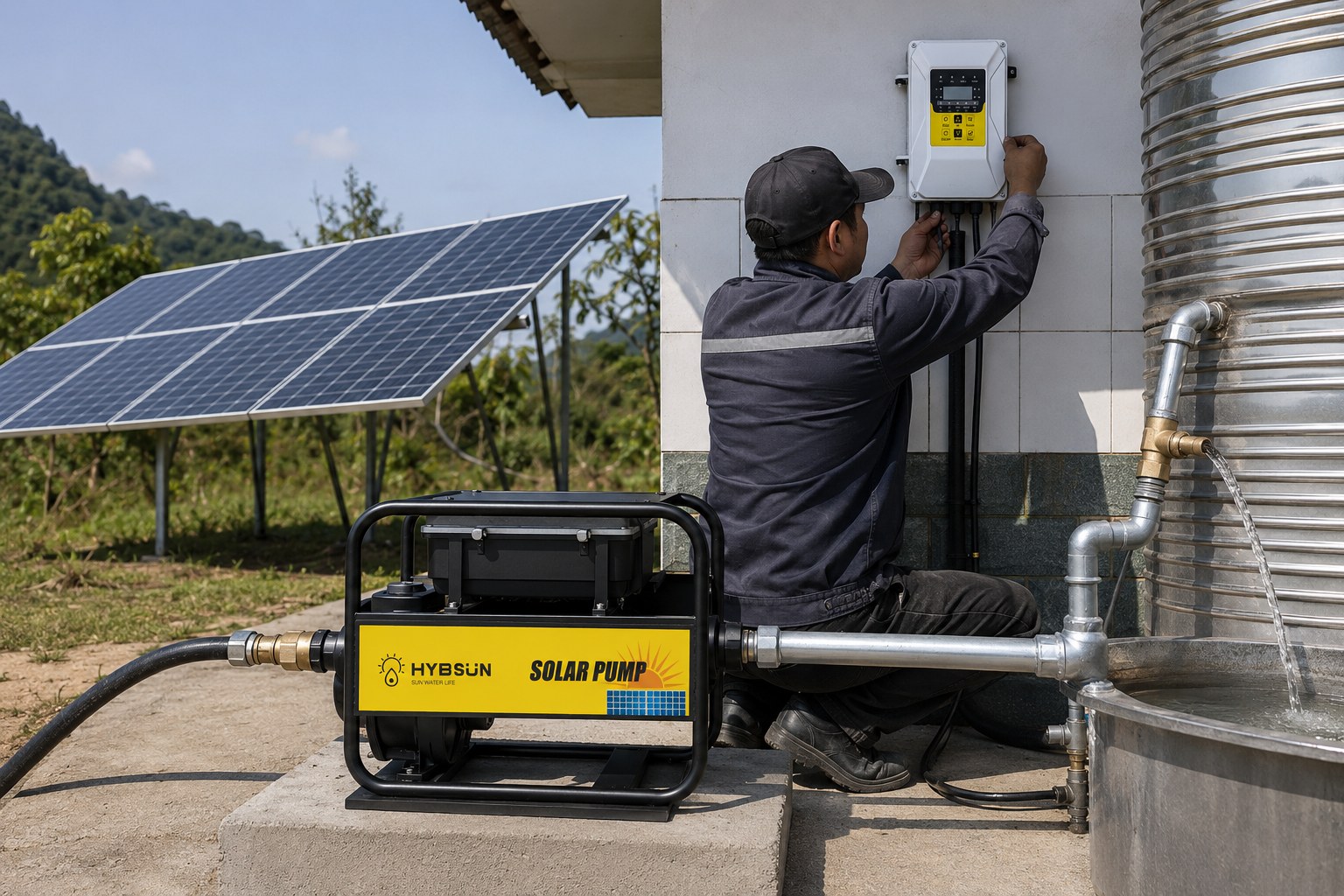
A complete system consists of solar panels, the pump and motor, and the controller.
Each part has its own expected service life, and together they determine the overall durability of your water solution.
Let's break down how long you can expect each part to last and what factors are at play.
How Long Do Different Components Last?
Are you wondering which parts of your solar pump system will need replacement first?
It's a common question, and the answer helps in planning for future maintenance.
The solar panels are the most durable part of the system, often outlasting everything else.
They are typically rated to maintain over 80% of their original efficiency for 25 years.
The pump and motor assembly generally have a lifespan of 10 to 20 years, depending heavily on usage and water quality.
Deeper Dive into Component Durability
The longevity of a solar water pump system is best understood by examining its core parts.
Each component has a unique role and a different expected lifespan, influenced by its design, materials, and operating conditions.
Solar Panels: The 25-Year+ Powerhouse
Solar panels are the foundation of your system's longevity.
Most Tier-1 manufacturers provide a performance warranty stating their panels will maintain at least 80% of their rated output for 25 years.
In reality, many panels continue to produce usable power for 30 or even 40 years, albeit at a gradually decreasing efficiency.
This makes them the most reliable and long-lasting part of your investment.
The Pump & Motor: The Heart of the Operation
The pump and motor are the hardest working components.
Their lifespan can vary significantly, typically falling between 10 and 20 years.
A pump used intermittently for 6-8 hours a day will last much longer than one running 24/7.
For example, a pump operating constantly may see its lifespan reduced by up to 40% compared to one with normal usage patterns.
Many systems also include a sacrificial part, like a helical rotor, designed for easy replacement in wells with high sand content.
This simple maintenance can bring a pump back to full production without replacing the entire unit.
Controllers and Electronics: The Brains
The pump controller, which includes an inverter and Maximum Power Point Tracking (MPPT) technology, manages the power from the panels to the motor.
These electronic components usually have a lifespan of around 10 years.
They are sensitive to heat, moisture, and electrical surges.
Proper installation in a sheltered, well-ventilated location and the use of lightning protection can extend their service life significantly.
| Component | Typical Lifespan | Key Influencing Factors |
|---|---|---|
| Solar Panels | 25+ years | Environmental damage, cleaning frequency |
| Pump Motor | 10-20 years | Daily run hours, water quality (sand) |
| Pump Controller | ~10 years | Heat, moisture, lightning surges |
| Helical Rotor (wear part) | 1-5 years | Sediment and sand content in water |
Key Factors That Influence Pump Longevity
Are you trying to figure out why one pump lasts 5 years while another lasts 20?
The secret isn't just the brand; it's how the system is designed, installed, and maintained.
Several key factors dramatically impact how long your solar pump will reliably deliver water.
Understanding these factors allows you to make informed decisions that can double the service life of your equipment.
From the water's quality to the electrical setup, every detail matters.
Deeper Dive into Longevity Factors
Maximizing the return on your solar pump investment requires attention to detail before, during, and after installation.
The environment in which the pump operates and the way it is used are just as important as the quality of the pump itself.
Let's explore the critical factors that determine whether your pump will meet or exceed its expected lifespan.
Water Quality
This is arguably the most significant factor.
Clean, clear water with low sediment is ideal.
High concentrations of sand, silt, or minerals act like an abrasive, accelerating wear on internal components like impellers, seals, and rotors.
A well with high sand content can reduce a pump's lifespan by over 50% if not properly managed.
Installing well screens and pre-filters is a crucial step to protect your investment in these conditions.
Correct Pump Sizing
A common mistake is to buy a pump that is either too large or too small for the job.
An oversized pump will cycle on and off frequently, causing excess strain on the motor and controller.
An undersized pump will be forced to run continuously at its maximum limit, leading to overheating and premature failure.
A correctly sized pump runs efficiently within its designed performance curve, reducing stress and potentially extending its service life by 15-20%.
Proper Electrical Setup
The electrical system is the pump's lifeblood.
Using the correct gauge of wiring, ensuring tight and waterproof connections, and matching the solar array's voltage and current to the controller's specifications are non-negotiable.
Poor wiring can cause voltage drops of 10% or more, forcing the motor to draw more current, which generates excess heat and shortens its life.
Similarly, mismatching the solar panel output to the pump controller can cause overheating and component failure.
Regular Maintenance
While solar pump systems are known for being low-maintenance, they are not "no-maintenance".
Periodic checks are vital.
This includes cleaning the solar panels to ensure maximum power output, checking electrical connections for corrosion, and monitoring the pump's flow rate.
A gradual decrease in flow can be an early warning sign of wear or a potential issue, allowing you to address it before it leads to a catastrophic failure.
| Factor | High Impact on Lifespan | Low Impact on Lifespan | Mitigation Strategy |
|---|---|---|---|
| Water Quality | High sand/silt content | Clean, clear water | Install well screens, filtration, choose sand-tolerant pump |
| Pump Sizing | Mismatched to demand/head | Correctly sized for application | Professional sizing calculation (TDH) |
| Electrical Setup | Undersized wires, loose connections | Correct gauge, waterproof connections | Use manufacturer's wiring guide, hire qualified installer |
| Maintenance | Neglected system | Regular cleaning and checks | Create a simple annual maintenance schedule |
| Lightning | Direct or nearby strike | No lightning activity | Install certified surge protection devices |
Choosing the Right Pump Type for Maximum Lifespan
Worried that you might choose the wrong type of pump for your well?
It's a valid concern, as the pump type must match your specific water source and needs.
The three most common types of solar deep well pumps are screw pumps, plastic impeller pumps, and stainless steel impeller pumps.
Each is designed for different conditions, and choosing correctly is the first step toward a long and reliable service life.
Let's explore which pump is the right fit for your application.
Deeper Dive into Pump Selection
The pump itself is the part of the system that interacts directly with your water source.
Its design and materials determine its suitability for your well depth, required flow rate, and water chemistry.
Making the right choice here prevents premature wear and ensures efficient operation for years to come.
Solar Screw Pump: For Deep Wells and High Head
This type of pump uses a stainless steel helical rotor turning inside a rubber stator.
It physically pushes a column of water upward.
This design makes it excel in applications requiring very high lift (head) but at lower flow rates.
Its major advantage is its incredible resistance to sand and grit, as the rubber stator can pass small particles without significant damage.
This makes it the ideal choice for deep boreholes in regions like Africa and Latin America, where water tables are low and wells can be sandy.
- Best For: Deep wells (>100 meters), domestic water, livestock troughs.
- Limitation: Lower flow rates, not ideal for large-scale irrigation.
Solar Plastic Impeller Pump: For High Flow and Value
This is a multi-stage centrifugal pump.
It uses a series of engineered plastic impellers that spin to create pressure and move water.
These pumps are designed to deliver high flow rates at low to medium heads, making them perfect for farm irrigation, filling storage tanks, and general-purpose water transfer.
The high-quality plastic used is surprisingly wear-resistant against fine sand and offers an excellent balance of performance and cost.
- Best For: Farm irrigation, filling ponds, high-demand homes.
- Limitation: Less durable in highly corrosive water or extremely deep wells compared to stainless steel.
Solar Stainless Steel Impeller Pump: For Durability and Corrosive Water
This pump is the premium option.
It features impellers and a pump body constructed from SS304 or SS316 stainless steel.
This makes it extremely resistant to corrosion from acidic or alkaline water.
It is the go-to choice for applications in coastal areas, regions with challenging soil chemistry, or for anyone demanding the highest level of durability.
While the initial cost is higher, its extended lifespan in harsh conditions often results in a lower total cost of ownership.
- Best For: Corrosive water, high-value agricultural or residential projects.
- Limitation: Higher initial cost and weight.
| Pump Type | Best Application | Flow Rate | Head (Lift) | Sand Resistance |
|---|---|---|---|---|
| Screw Pump | Deep Well / Domestic | Low | Very High | Excellent |
| Plastic Impeller | Irrigation / High Volume | High | Medium | Good |
| Stainless Steel Impeller | Corrosive Water | High | Medium-High | Good |
The Role of the Motor and Controller in System Durability
Do you think the pump is the only important part?
Think again.
The motor that drives the pump and the controller that feeds it power are just as critical to the system's overall efficiency and lifespan.
A high-quality motor and an intelligent controller can significantly reduce energy waste, minimize wear and tear, and protect your investment from electrical damage.
They are the unsung heroes of a durable solar water pumping system.
Deeper Dive into Drive System Technology
The motor and controller form the technological core of your solar pump.
Advances in this area have dramatically improved the performance, reliability, and lifespan of modern systems.
Understanding this technology helps you appreciate why certain systems outperform others.
BLDC Motor: The High-Efficiency Core
The heart of a modern solar pump is the Brushless DC (BLDC) permanent magnet motor.
Unlike older brushed motors, BLDC motors have no physical brushes to wear out, making them virtually maintenance-free.
They boast efficiencies of over 90%, compared to 60-75% for traditional AC or brushed DC motors.
This high efficiency is crucial.
It means the motor converts more solar electricity into pumping power, and less into wasted heat.
A cooler running motor is a longer-lasting motor.
This efficiency also means you can achieve the same water output with a smaller, less expensive solar array—often reducing panel requirements by up to 25%.
MPPT Controller: The Intelligent Brains
The controller is the brain of the system, and those with Maximum Power Point Tracking (MPPT) are the smartest.
An MPPT controller constantly adjusts the electrical load to find the perfect balance of voltage and current where the solar panel is producing the absolute most power.
This technology can boost the water output of a system by up to 30% over the course of a day, especially during early morning, late evening, and on overcast days.
It also provides vital protections for the motor, such as soft-start capabilities, and safeguards against dry-running, overheating, and voltage fluctuations, all of which are critical for extending the motor's life.
Hybrid AC/DC Capability: 24-Hour Water Security
What happens on cloudy days or at night when you still need water?
This is where hybrid controllers come in.
These advanced controllers can accept both DC power from solar panels and AC power from the grid or a generator.
The system is designed to prioritize free solar energy first.
When sunlight is insufficient, it can automatically blend in or switch over completely to the AC source.
This ensures you have a reliable water supply 24/7 without having to manually switch power sources, providing the ultimate in convenience and water security.
This feature is essential for critical applications like household water supply or intensive livestock operations.
Conclusion
A solar pump's lifespan depends on a system of interconnected parts.
By choosing the right components for your needs and ensuring proper installation and maintenance, you can expect decades of reliable, cost-effective water service.
FAQs
How do you maintain a solar water pump?
Maintenance is minimal.
Regularly clean solar panels, check for secure wiring, and remove any debris from around the pump intake to ensure a long service life.
Can a solar pump work without a battery?
Yes, most modern solar pumps are designed to work directly from solar panels during the day, pumping water into a storage tank for later use.
How deep can a solar pump go?
Solar pumps can service a wide range of depths.
Screw pumps are designed for very deep wells, capable of lifting water from over 200 meters (650 feet).
What happens to a solar pump on cloudy days?
On cloudy days, the pump's output is reduced.
However, systems with MPPT controllers and appropriately sized solar arrays can still pump significant amounts of water in overcast conditions.
How many solar panels are needed for a water pump?
This depends on the pump's power rating (watts), the daily water requirement, and the solar irradiance at your location.
A professional sizing calculation is recommended.
Are solar water pumps reliable?
Yes, with high-quality components and proper installation, solar water pumps are extremely reliable, often more so than grid-powered systems in remote areas.
Can you run a solar pump at night?
Without a battery bank or a hybrid AC power source, a solar pump will not run at night.
The standard design uses a water tank to store water for nighttime use.
Does a solar pump need an inverter?
Yes, the controller for a solar pump includes an inverter to convert the DC electricity from the panels to the power required by the pump motor.