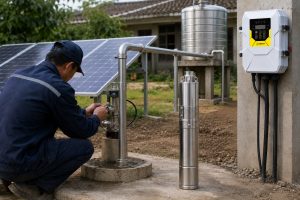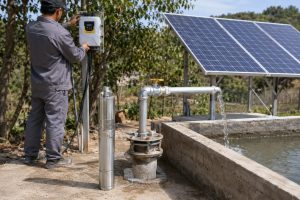
Struggling to figure out if a 1/2 HP pump is powerful enough?
Choosing wrong means you risk low water pressure or wasting money on a pump you don't need.
A 1/2 HP well pump can typically push water 30 to 60 feet vertically.
However, factors like your required flow rate (GPM), pipe friction, and the use of a pressure tank significantly increase the total workload, known as Total Dynamic Head (TDH).
Understanding "how far" a pump can push water is about more than just the vertical depth of your well.
It's a calculation of the total resistance the pump has to overcome.
This total resistance is called Total Dynamic Head, and it's the true measure of the work your pump needs to do.
Let's break down how to calculate it accurately so you can select the perfect pump for your needs, ensuring optimal performance and efficiency.
What size water pump do I need to lift water?
Choosing the right pump size feels like a gamble.
Pick the wrong one, and you could be stuck with weak flow, or worse, an unnecessarily high energy bill.
We can help you choose correctly.
To find the right size, you must first determine your required flow rate in Gallons Per Minute (GPM) and the Total Dynamic Head (TDH).
For a simple 30-foot lift needing 10-15 GPM, a 1/2 HP pump is often sufficient.
Choosing the right pump isn't just about horsepower; it's about matching the pump's performance curve to your specific water needs.
A 1/2 HP pump might be perfect for one job but completely inadequate for another, even if the vertical lift is the same.
The two most critical factors are the flow rate you need and the total work the pump must do.
Calculating Your Gallons Per Minute (GPM) Needs
First, you need to know how much water you'll use at peak times.
For a household, this means adding up the flow rates of all fixtures that might run simultaneously.
An average home typically requires 10-15 GPM for comfortable use.
For irrigation, the calculation depends on the number and type of sprinkler heads or drip lines.
A small garden might only need 5 GPM, while irrigating a larger pasture could demand over 40 GPM.
Here is a quick reference for common household fixture flow rates:
| Fixture | Average Flow Rate (GPM) |
|---|---|
| Kitchen Faucet | 1.5 - 2.5 |
| Bathroom Faucet | 1.0 - 1.5 |
| Showerhead | 2.0 - 2.5 |
| Dishwasher | 1.0 - 2.0 |
| Washing Machine | 1.5 - 2.5 |
| Outdoor Hose Bib | 5.0 - 10.0 |
Understanding Total Dynamic Head (TDH)
Total Dynamic Head (TDH) is the total equivalent height that water must be lifted, considering all sources of pressure and friction.
It is the most crucial number for sizing your pump.
The formula is: TDH = Vertical Lift + Friction Loss + Pressure Head.
- Vertical Lift: The vertical distance from the water level in the well to the highest point of use.
- Friction Loss: Resistance from water moving through pipes and fittings. Longer pipes and smaller diameters increase friction.
- Pressure Head: If you use a pressure tank, the tank's pressure setting adds a significant workload.
A pressure tank increases the pump's job because the pump must overcome the internal pressure of the tank.
You can convert the tank's PSI rating into feet of head.
The conversion is: 1 PSI = 2.31 feet of head.
| Pressure Tank Setting (PSI) | Equivalent Head (Feet) |
|---|---|
| 40 PSI | 92 feet |
| 50 PSI | 115 feet |
| 60 PSI | 140 feet |
Let's look at an example.
Imagine your well water level is 20 feet below ground, and you have a 60 PSI pressure tank.
The calculation would be: 20 feet (lift) + 140 feet (pressure head) = 160 feet of TDH.
This doesn't even include friction loss yet.
In this scenario, a standard 1/2 HP pump might only deliver 5-7 GPM.
If you need 15 GPM at 160 feet of TDH, you would likely need a 1 HP or 1.5 HP pump.
What is the difference between a shallow well pump and a deep well pump?
Buying a pump for a "shallow" well can be confusing.
Is a deep well pump a better choice?
Using the wrong pump type wastes money and energy.
Let’s clarify the difference for you.
A shallow well pump is designed to draw water from a source up to 25 feet deep.
In contrast, a deep well pump, which is typically a submersible model, is engineered to push water from depths of 50, 80, or even hundreds of feet.
The key difference lies in how they move water: one pulls, and the other pushes.
This fundamental distinction affects where they are placed, how they are primed, and what applications they are best suited for.
Choosing the right type is essential for efficiency, reliability, and the longevity of your water system.
Shallow Well Pumps: The 25-Foot Rule
Shallow well pumps work by creating suction to pull water from the source to the surface.
Because they rely on atmospheric pressure, their effective suction lift is limited to about 25 feet (7.6 meters) at sea level.
These pumps, such as jet pumps or centrifugal pumps, are installed above ground near the well or water source.
They are excellent for drawing water from cisterns, shallow wells, lakes, and rivers for applications like home water supply or garden irrigation.
However, they must be primed (filled with water) before their first use to create the necessary suction.
Deep Well Pumps: Pushing Power from Below
Deep well pumps are designed for depths greater than 25 feet.
The most common type is the submersible pump.
This long, cylindrical pump is placed directly inside the well casing, fully submerged in the water.
Instead of pulling water, it pushes water up to the surface.
This design is far more efficient for deep applications because pushing water is easier than sucking it over long vertical distances.
Submersible pumps are self-priming because they are already underwater.
They are the standard for residential wells and are known for their quiet operation and high reliability.
Can I Use a Deep Well Pump in a Shallow Well?
While you technically can use a submersible pump in a shallow well, it is often not the best choice.
A deep well pump is engineered for higher head pressures, meaning it's "over-qualified" for a shallow application.
This leads to several issues.
The pump will cost more upfront and use more energy than a properly sized shallow well pump.
This oversizing can cause the pump to cycle on and off frequently, leading to premature wear on the motor and control system.
It's always better to match the pump's specifications to the job's requirements to maximize efficiency (which can exceed 90% with modern motors) and ensure a long service life.
| Feature | Shallow Well Pump | Deep Well Pump (Submersible) |
|---|---|---|
| Maximum Depth | 25 feet (7.6m) | 50 - 500+ feet (15 - 150m+) |
| Operation | Pulls Water (Suction) | Pushes Water |
| Location | Above Ground | Inside the Well, Underwater |
| Priming | Requires Manual Priming | Self-Priming |
| Best Application | Low-lift, surface water | Deep wells, high-lift needs |
How do modern solar pumps meet different water needs?
Off-grid water access often seems complex and expensive.
Relying on unstable power grids or noisy generators for your water supply is a major hassle.
Solar pumps offer a reliable, silent, and cost-effective solution.
Modern solar water pumps are not one-size-fits-all.
They use highly specialized designs to match specific needs perfectly.
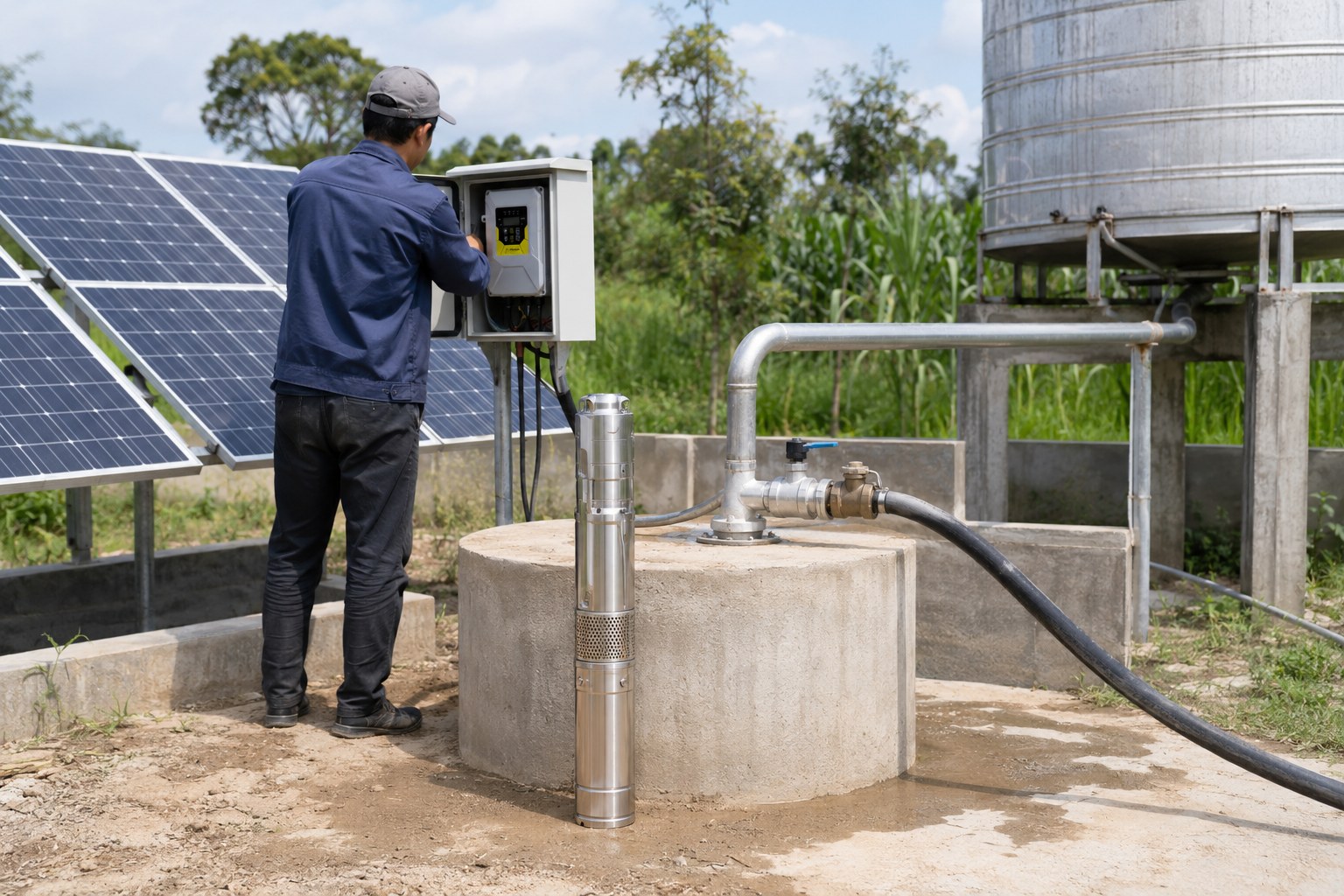
Solar screw pumps excel in deep wells with low flow, solar plastic impeller pumps are ideal for high-flow irrigation, and solar stainless steel pumps are built for corrosive water.
This diversification in pump technology allows for tailored solutions that deliver water efficiently and reliably, no matter the environment.
From remote homes in Africa to large farms in the Americas, a specialized solar pump exists for the job.
The key is a powerful motor driving a purpose-built pump end, creating a portfolio that meets global water demands sustainably.
The Core Technology: High-Efficiency BLDC Motors
At the heart of every advanced solar pump is a Brushless DC (BLDC) permanent magnet motor.
These motors are a technological leap forward, achieving efficiencies of over 90%.
This is a significant improvement over traditional AC motors, which often operate at 60-75% efficiency.
The rotor is constructed from high-grade neodymium iron boron magnets, delivering powerful torque in a compact design.
As a result, these motors are up to 47% smaller and 39% lighter than their predecessors.
This high efficiency directly translates to lower costs for the end-user.
Fewer solar panels are needed to achieve the same water output, reducing the initial system cost by 15-20%.
Furthermore, the brushless design means there are no parts to wear out, offering a maintenance-free service life of over 10 years.
For Deep Wells and High Head: The Solar Screw Pump
When you need to lift water from very deep wells, the solar screw pump is the ideal choice.
This pump uses a simple, robust design: a single stainless steel helical screw rotates inside a rubber stator.
This action creates sealed cavities that move water upward with each turn, generating very high pressure.
While its flow rate is low, it can produce extremely high head, making it perfect for lifting water from depths of 300 feet or more.
It is also highly resistant to sand and sediment, a common issue in boreholes that can quickly destroy other pump types.
This makes it the go-to solution for domestic water supply and livestock watering in arid regions with deep water tables.
For High Flow and Farming: The Plastic Impeller Pump
For applications requiring large volumes of water, like farm irrigation or filling large storage tanks, the solar plastic impeller pump is the workhorse.
This is a multi-stage centrifugal pump.
It uses a series of stacked, wear-resistant plastic impellers to move large quantities of water at a medium head.
These pumps are designed for high flow rates, easily delivering 25 GPM or more, depending on the model.
Their key advantages are an excellent price-to-performance ratio and strong resistance to fine sand.
The lightweight construction also makes them easier to install and service.
This combination of high output and affordability has made them widely popular for agricultural and pasture water supply across the world.
For Tough Conditions: The Stainless Steel Impeller Pump
In environments with corrosive water, a standard pump won't last.
For these challenging conditions, the solar stainless steel impeller pump is the premium solution.
Both the pump body and the impellers are constructed from high-grade SS304 or SS316 stainless steel.
This material provides superior resistance to corrosion from acidic or alkaline water sources.
These pumps offer high flow rates and medium-to-high head capabilities, similar to plastic impeller models, but with the added benefit of extreme durability.
They are essential for providing a reliable water supply in coastal regions, areas with alkaline soil, or for high-end homes and ranches where water quality and system longevity are top priorities.
| Pump Type | Best For | Flow Rate | Head (Lift) | Key Advantage |
|---|---|---|---|---|
| Solar Screw Pump | Very deep wells, domestic use | Low | Very High | High sand resistance, extreme lift |
| Plastic Impeller Pump | Farm irrigation, high volume | High | Medium | Economical, wear-resistant |
| Stainless Steel Pump | Corrosive or harsh water | High | Medium-High | Superior corrosion resistance, long life |
How can you ensure a 24/7 water supply with a solar pump?
Solar pumps are great, but the sun doesn't shine at night or on cloudy days.
The fear of your well running dry when you need it most is a real concern.
A hybrid system completely eliminates this worry.
Modern solar pump controllers now feature AC/DC hybrid functionality.
They are designed to prioritize free solar power during the day but can automatically and seamlessly switch to grid power or a generator when sunlight is insufficient, ensuring uninterrupted 24/7 water access.
This smart technology offers the best of both worlds.
You get the massive cost savings and energy independence of solar, combined with the on-demand reliability of a conventional power source.
It's a fully automated, worry-free solution that guarantees water is always available, day or night, rain or shine.
The Brain of the System: The MPPT Controller
The intelligence behind a modern solar pump system is its Maximum Power Point Tracking (MPPT) controller.
This sophisticated electronic device acts as the brain, optimizing the connection between the solar panels and the pump motor.
An MPPT controller constantly monitors the voltage and current from the solar array and adjusts the electrical load to extract the absolute maximum amount of power available.
This process is over 98% efficient.
It allows the pump to start earlier in the day, run later in the evening, and continue operating even during periods of low light or cloud cover.
By maximizing every available watt, an MPPT controller can increase daily water output by up to 30% compared to older controller technologies.
Uninterrupted Water: The AC/DC Hybrid Advantage
The ultimate solution for 24-hour water reliability is an AC/DC hybrid controller.
These advanced controllers are engineered with dual power inputs, allowing them to be connected to both a DC source (solar panels) and an AC source (grid power or a generator) simultaneously.
The controller's internal logic is programmed to always prioritize solar power.
As long as the sun provides enough energy, the system runs entirely on free, clean power.
If clouds roll in or as evening approaches, the controller detects the drop in solar input.
It then automatically blends in or switches over to the AC power source to maintain the pump's performance.
This transition is seamless and requires no manual intervention.
When the sun returns, the controller automatically switches back to solar priority.
System Benefits for the User
For a property owner, this hybrid functionality delivers immense value.
It's the perfect setup for someone who values quality, efficiency, and hassle-free operation.
The primary benefit is cost savings.
The system is designed to use as much free solar energy as possible, significantly reducing electricity bills.
Second is unmatched reliability.
Whether for a household, livestock, or critical irrigation, the system guarantees water is always available, removing the anxiety associated with off-grid living or unstable power grids.
Finally, it offers complete automation.
The intelligent controller manages all power switching, providing a "set it and forget it" experience that ensures peace of mind and a constant, dependable water supply around the clock.
Conclusion
Choosing the right pump depends on flow, head, and water conditions.
Modern solar pumps with efficient motors and hybrid controllers offer versatile, reliable, and cost-effective solutions for any need.
FAQs
How many GPM will a 1/2 HP well pump?
A 1/2 HP pump typically delivers 5 to 15 GPM.
The exact flow rate depends heavily on the Total Dynamic Head (TDH), including well depth and pressure settings.
Can a 1/2 HP pump lift water 100 feet?
Yes, a 1/2 HP pump can lift water 100 feet, but the flow rate (GPM) will be relatively low.
Always check the pump's specific performance curve for exact figures.
Is 1/2 HP enough for a well pump?
For many shallow wells (under 80 feet) and standard household use, a 1/2 HP pump is often sufficient.
Deeper wells or higher water demands may require more power.
How much pressure can a 1/2 HP well pump produce?
A 1/2 HP pump can typically generate 40-60 PSI, depending on the well depth.
Deeper wells will result in lower available pressure at the surface.
How many solar panels do I need for a 1/2 HP water pump?
A 1/2 HP (approximately 375-watt) pump usually requires about 500-600 watts of solar panels to ensure reliable performance, even in less-than-ideal sunlight conditions.
Can you oversize a well pump?
Yes, and it should be avoided.
An oversized pump cycles too frequently, causing premature wear, wasting energy, and potentially depleting the well's water supply too quickly.
How long should a well pump last?
A correctly sized and properly installed quality well pump can last for 10 to 15 years.
Pump life depends on usage, water quality, and regular maintenance.