Are you tired of your pond pump constantly getting blocked?
This common problem stops water flow and can damage your pump, turning a beautiful feature into a maintenance nightmare.
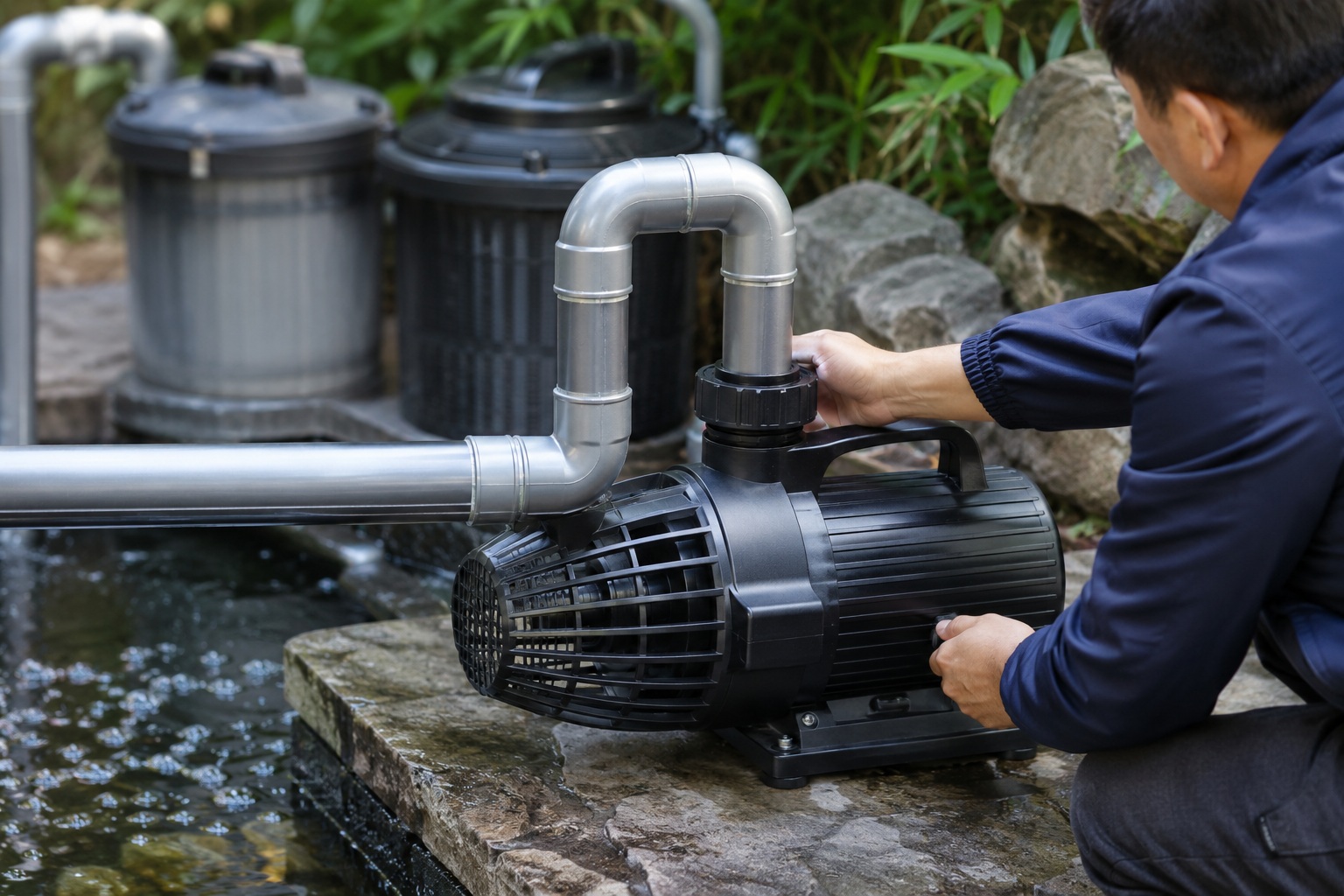
The best pump to prevent clogging is a solids-handling filter pump.
These pumps feature large cages and wide inlets designed specifically to pull in debris like leaves, algae, and fish waste without jamming, sending it to the filter for easy removal.
While no pump is 100% clog-proof, understanding the technology behind them is the key to a clearer pond.
Choosing a pump designed for your specific pond environment is the most important step you can take.
This guide will break down the different types of pumps and explain how to select the one that will minimize maintenance and keep your water feature running beautifully.
Why Most Pond Pumps Clog
Your pond pump is running, but no water is coming out.
You think the motor has failed, but it's still humming.
This is a classic sign of a blockage, not a broken pump.
The most common reason for a pump to clog is debris buildup.
Leaves, string algae, and sludge get sucked into the pump, blocking the intake screen or wrapping around the internal impeller.
This obstruction stops water flow completely, which can quickly cause the motor to overheat and suffer permanent damage.
The Anatomy of a Clog
To understand why pumps clog, you need to know their basic parts.
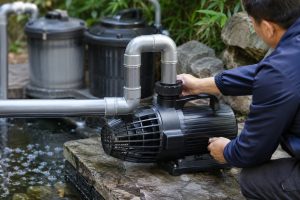
Every submersible pump has an outer cage or screen that acts as a first line of defense.
Behind the cage is the intake, which leads to the heart of the pump: the impeller.
The impeller is a spinning, propeller-like component that pushes water out.
A clog can happen at any of these three points.
| Debris Type | Clogging Location | Impact on Pump |
|---|---|---|
| Large Leaves, Twigs | Outer Cage | Blocks water from entering; causes a slow flow reduction. |
| String Algae | Impeller Shaft | Wraps around the impeller, causing it to slow or stop; leads to high motor strain. |
| Sludge, Fine Debris | Intake / Pre-filter | Blocks flow completely; can happen quickly in dirty ponds. |
The Domino Effect of a Clog
A clogged pump is more than just an inconvenience.
It's the start of a chain reaction that can harm your entire pond ecosystem.
When the pump stops, filtration stops.
The beneficial bacteria in your filter, which rely on a constant supply of oxygenated water, can begin to die off in as little as 4-6 hours.
This causes a spike in ammonia and nitrite, which are toxic to fish.
Water movement is also critical for aeration.
A still pond surface doesn't exchange gases effectively, leading to a drop in oxygen levels.
In a heavily stocked fish pond, this can become a disaster very quickly.
Even a partial clog that reduces flow by 50% can have negative effects.
For example, an Ultra Violet (UV) clarifier needs a specific "contact time" to kill green water algae.
If water moves through it too fast or too slow due to inconsistent flow, its effectiveness is drastically reduced, and your pond may never clear up.
Common Clogging Culprits
Knowing what causes clogs can help you anticipate problems.
Blanketweed and String Algae: This is the number one enemy of pond pumps, as its fibrous strands easily wrap around impeller shafts.
Leaves and Organic Debris: In the fall, leaves can overwhelm a pump's cage in a matter of hours.
Fish Waste and Sludge: In ponds with high fish loads, waste and settled sludge from the pond bottom can be sucked into the pump.
Plant Debris: Small bits from pond plants can break off and get pulled into the intake.
What Makes a Solids-Handling Pump Different?
You need a powerful pump for your pond filter, but you are worried about it clogging with waste and debris.
A standard pump is not designed for this job and will leave your filter starved for water.
Solids-handling pumps are engineered specifically to resist clogging from pond debris.
They feature large, open cages and are designed to pass solid waste up to a certain size directly to the filter.
This makes them the superior choice for filtration systems in ponds with plants and fish.
Design Comparison: Solids-Handling vs. Other Pumps
The main difference between a solids-handling pump and other types, like fountain pumps, is their core design philosophy.
One is built to move dirty water, while the other is built to create a clean, decorative spray.
A solids-handling pump is like a high-volume trash pump for your pond.
Its job is not to be a fine filter itself, but to move the "problem" debris to a location where it can be properly filtered out.
| Feature | Solids-Handling Filter Pump | Fountain Pump |
|---|---|---|
| Primary Goal | Move debris to filter | Create a decorative spray |
| Cage Hole Size | Large (6mm - 12mm+) | Small (1mm - 3mm) |
| Pressure | Low | High |
| Water Volume | High | Low to Medium |
| Clog Resistance | Very High | Very Low |
| Best For | Pond filtration, waterfalls | Fountains, spitters |
The Physics of Solids Handling
Solids-handling pumps operate on a principle of high volume and low pressure.
Think of them as marathon runners, not sprinters.
They are not designed to shoot water high into theair.
Instead, they are engineered to move a large quantity of water efficiently, even when that water contains solid objects.
The internal mechanism, particularly the impeller and the volute (the pump casing), is shaped to allow debris to pass through without getting stuck.
A typical solids-handling pump can pass solids up to 1/4" or even 1/2" in diameter.
In contrast, a high-pressure fountain pump must force water through a tiny nozzle.
To protect that nozzle from getting blocked, its intake cage must have very small holes, which ironically makes the pump itself extremely prone to clogging in a typical pond environment.
Why a Solids-Handling Pump is Essential for Pond Health
Using the right pump is a cornerstone of modern pond filtration.
A solids-handling pump plays a vital role in maintaining a healthy ecosystem.
By efficiently moving solid waste from the pond bottom to the mechanical stage of the filter, it removes waste before it has a chance to break down and decompose in the pond.
This decomposition process releases harmful ammonia and consumes valuable oxygen.
Removing the solids first greatly reduces the biological load on the pond and the filter system.
Furthermore, a consistent, reliable flow is critical for the health of your biological filter.
The beneficial bacteria that live in your filter media require an uninterrupted supply of oxygen-rich water.
An unreliable pump that clogs frequently will starve these bacteria, leading to a "crash" in your filter's performance and a sharp decline in water quality.
How Do I Select the Right Anti-Clog Pump?
Choosing a pump feels complicated, with all the talk of "flow rate" and "head height".
If you choose the wrong pump, you could end up with a weak waterfall, a constantly clogging system, or an unhealthy, murky pond.
To select the right pump, first match the pump's type to its intended job.
Use a solids-handling pump for filters and waterfalls.
Then, calculate the required flow rate.
A good rule of thumb is to turn over your entire pond volume at least once every two hours.
Matching Pump Type to Pond Function
The single most important decision is choosing the right type of pump for the task.
Using the wrong type is the number one cause of pump frustration and failure.
A fountain pump will never work well for a filter, and a small feature pump will clog in minutes in a real pond.
The table below clarifies which pump to use for common pond setups.
| Your Goal | Recommended Pump(s) | Why it Prevents Clogging |
|---|---|---|
| Filter & Waterfall | Solids-Handling Pump | Designed to move high volumes of dirty water and solids to the filter without blocking. |
| Fountain Only | Fountain Pump | Small cage holes protect the delicate fountain nozzle from clogging. It will not filter the pond. |
| Filter & Fountain | Two Pumps: 1x Solids-Handling, 1x Fountain | This is the best practice. Each pump is specialized for its task, ensuring both systems run efficiently without compromise. |
| Small Pond (under 500 gal) | All-In-One Unit | A good compromise for small spaces, but these units combine all functions and will require more frequent cleaning. |
Calculating Flow Rate for Optimal Performance
Once you've chosen the right pump type, you need to select the right size.
This is determined by its flow rate, measured in gallons per hour (GPH) or liters per hour (LPH).
The standard advice is to circulate the entire volume of your pond at least once every two hours.
Pond Volume (in gallons) ÷ 2 = Minimum GPH
However, for ponds containing fish, especially koi, which produce significant waste, you should aim for a higher turnover rate.
Pond Volume (in gallons) = Minimum GPH for Fish Ponds
For example, a 2,000-gallon pond with fish needs a pump rated for at least 2,000 GPH.
You also must account for head loss.
Head loss is the reduction in flow caused by pumping water uphill to a filter or waterfall.
A pump's advertised flow rate is its output at zero feet of height.
Check the pump's performance chart to see its actual flow rate at the height of your waterfall or filter outlet.
A pump rated for 5,000 GPH might only produce 3,500 GPH when lifting water 5 feet.
The Dangers of Incorrect Sizing
Choosing a pump that is too small is a common mistake.
A small pump will struggle to lift water to the filter, its flow will be easily impacted by debris, and it may clog frequently because it lacks the power to move solids effectively.
However, a pump that is too large can also cause problems.
- Overwhelms Filtration: It can push water through the filter too quickly for mechanical and biological processes to work effectively.
- Reduces UV Effectiveness: UV clarifiers require a specific contact time. If water flows too fast, the UV light doesn't have enough time to kill algae. A 50% increase in flow speed can reduce UV effectiveness by more than 60%.
- Wastes Energy: A larger pump consumes more electricity, increasing operating costs without providing any additional benefit.
How Can I Prevent My Pump from Clogging?
Even the best solids-handling pump can be overwhelmed if it's not maintained.
Ignoring routine checks leads to reduced flow, strain on the motor, and eventual failure, often during the hottest part of the summer when you need it most.
Regular, proactive maintenance is the secret to a clog-free pump.
At least once a month, turn off the power and inspect your pump.
Clean the outer cage with a brush, clear debris from the intake, and check the impeller to ensure nothing has become wrapped around it.
This simple 15-minute check prevents the vast majority of clogging issues.
A Step-by-Step Maintenance Checklist
Following a routine makes maintenance quick and easy.
Always perform these steps to ensure both your safety and the longevity of your pump.
- Safety First: Disconnect the pump from the power source. It is highly recommended that all pond pumps be connected to an RCD (Residual Current Device) circuit breaker for safety.
- Remove the Pump: Carefully lift the pump out of the pond.
- External Cleaning: Use a coarse brush to scrub leaves, algae, and sludge from the outer pump cage. This is the primary cause of reduced flow.
- Internal Pre-filter (if present): Some pumps have a strainer sponge inside the cage. Remove this and squeeze it clean in a bucket of pond water. Using tap water can kill the beneficial bacteria living on the sponge.
- Impeller Inspection: Most pumps have a removable impeller housing, often secured by a few screws or a twist-lock mechanism. Open it to reveal the impeller.
- Clean the Impeller: The impeller is held in place by a magnet and will offer some resistance. Gently pull it straight out. Carefully clean any debris from the blades and the central shaft. Inspect it for any signs of damage or wear.
Advanced Clog Prevention Strategies
Beyond basic cleaning, you can strategically set up your pond to minimize clogs.
- Use a Pond Skimmer: A skimmer is a separate box that sits at the edge of the pond and houses the pump. It pulls water from the surface, catching leaves and floating debris in a basket before they can sink and reach the pump. This can reduce direct pump maintenance by over 75%.
- Elevate the Pump: Never place your pump directly on the pond floor. Setting it on a few bricks or a dedicated stand lifts it out of the thick sludge that accumulates at the bottom of the pond.
- Maintain Proper Water Levels: If the water level in your pond drops below the pump intake, the pump will suck in air. This can cause an "airlock," where the pump runs but moves no water, leading to overheating.
Troubleshooting: Pump Running, No Water Flow
If you find your pump humming with no water output, follow these steps to diagnose and fix the problem.
This simple troubleshooting sequence solves the issue over 90% of the time.
| Symptom | Most Likely Cause | Quick Solution |
|---|---|---|
| Motor hums, zero flow | Clogged Intake or Impeller | Turn off power. Remove pump and clean cage and impeller thoroughly. |
| Flow stops after cleaning | Airlock | Submerge the pump and tilt it side to side underwater to release any trapped air bubbles. |
| Weak or sputtering flow | Low Water Level | The pump is sucking in air. Add water to the pond until the pump is fully submerged. |
| Gradual flow reduction | Kinked or Blocked Tubing | Inspect the entire length of tubing for any kinks, collapses, or internal buildup of algae. |
Conclusion
A truly "clog-proof" pump doesn't exist, but a solids-handling model is your strongest defense.
Combine the right pump with correct sizing and routine maintenance for a healthy, beautiful, and hassle-free pond.
FAQs
What is the difference between a pond pump and a waterfall pump?
Pond pumps circulate water and handle solids for filtration. Waterfall pumps use high pressure to lift water vertically for a strong flow over a spillway.
Why is my pond pump running but no water coming out?
It's likely a clog in the intake or impeller. It could also be an airlock in the pump or a low pond water level.
How often should I clean my pond pump?
Inspect it monthly during the active season. A full cleaning, including the impeller, should be done every 2-3 months or when you notice a drop in flow.
Can a pond pump be too powerful?
Yes. An oversized pump can overwhelm your filter, reduce UV clarifier effectiveness, create excessive water loss from splashing, and waste electricity.
How do I stop my pond pump from clogging with leaves?
Use a solids-handling pump with a large cage. For best results, install a pond skimmer to catch leaves before they sink.
Can I use a fountain pump to run a filter?
It is not recommended. Fountain pumps have fine screens to protect the nozzle, meaning they will not pass solids to the filter and will clog very quickly.
What does head height mean for a pond pump?
Head height is the maximum vertical distance a pump can lift water. A pump's flow rate decreases as this height increases.
Where should a pump be placed in a pond?
Place the pump at the opposite end from where water returns (e.g., the waterfall) to maximize circulation. Elevate it on bricks to avoid sucking sludge.