Struggling to find a dependable water source for off-grid locations?
You're losing crops and profits because grid power is unreliable or nonexistent.
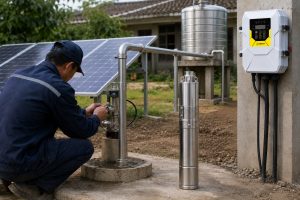
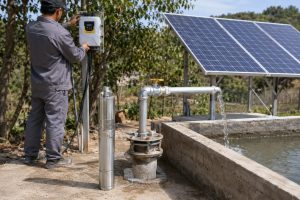
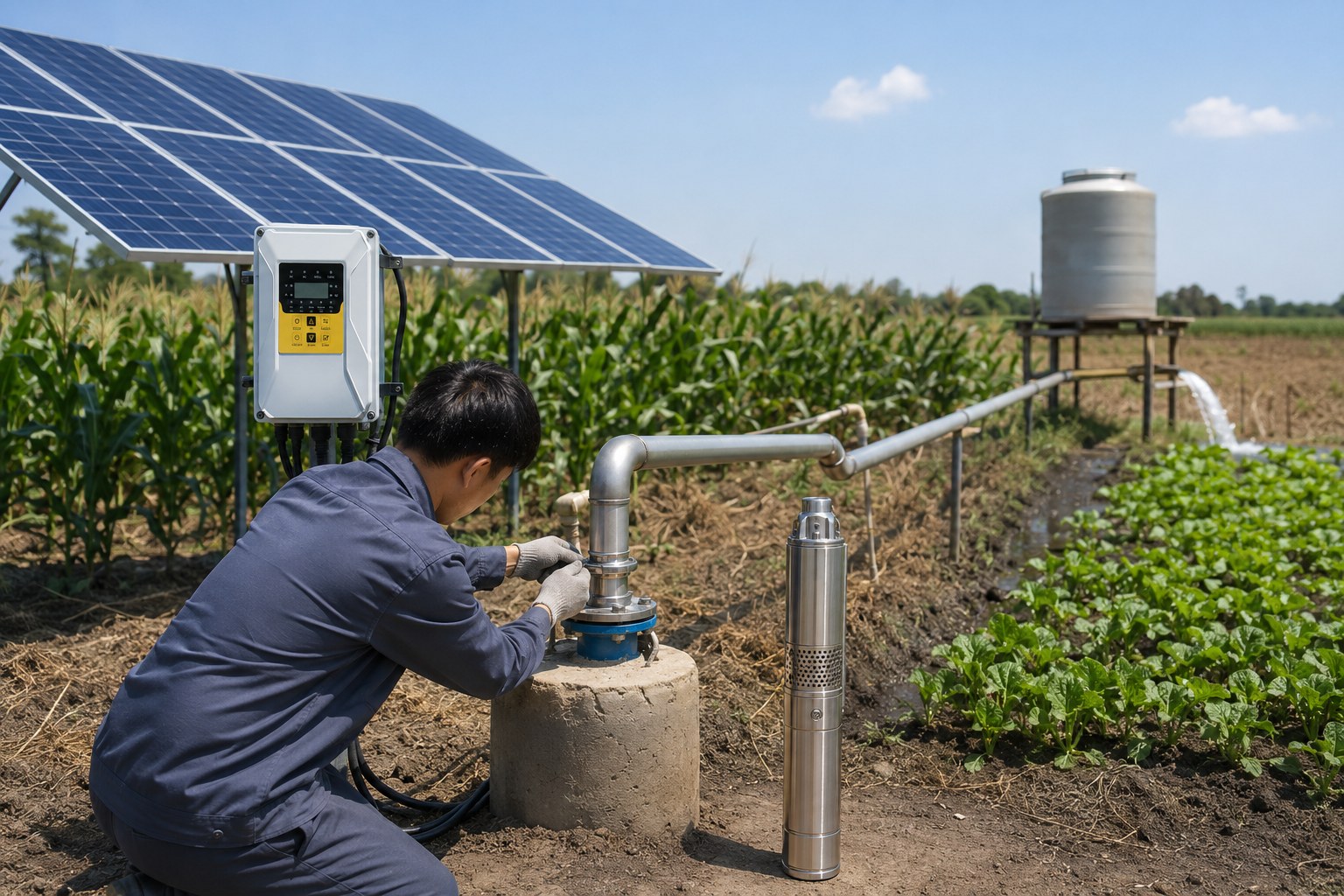
Solar water pumps offer a cost-effective, green solution.
The best solar water pump depends on your specific needs.
For deep wells and long-term reliability, brands like Grundfos are top-tier.
For budget-friendly projects, brands like Hober and Difful offer excellent value.**
The key is matching the pump type—screw, plastic impeller, or stainless steel—to your water source and application.
Choosing the right solar water pump can feel overwhelming.
With so many brands, types, and technical specifications, it's easy to make a costly mistake.
This guide breaks down the top options based on reliability, cost, and application.
We will help you understand the core technologies that define a great solar pump.
Keep reading to find the perfect solar water pump for your projects, ensuring you can offer your customers a complete and competitive portfolio.
Which Company is Best for Solar Water Pumps?
Finding a brand you can trust is a huge challenge.
Poor pump choices can lead to system failures, leaving farms and communities without water.
Which brand truly delivers the best performance and value for your investment?
Globally, Grundfos and Lorentz are premium market leaders known for their exceptional engineering and reliability.
Shakti Pumps dominates in India, while brands like RPS Solar Pumps are popular in the U.S.
For cost-effective solutions, Chinese manufacturers like Hober and Difful provide strong, competitive alternatives for distributors and NGOs.
I've seen projects succeed or fail based on the brand chosen.
A reliable brand offers more than just a product; it provides peace of mind through durable engineering, strong support, and proven performance in the field.
Understanding the strengths of each major player allows you to build a product offering that meets diverse customer needs, from high-end agricultural projects to budget-conscious rural water supply.
Global Market Leaders
Premium brands set the standard for quality and innovation in the solar pumping industry.
Grundfos, a Danish company, is celebrated for its SQFlex series.
These pumps are the industry benchmark for deep well submersible applications.
They can operate on both AC and DC power, offering incredible flexibility.
With a service life often exceeding 15 years, their durability is nearly unmatched.
Lorentz, a German brand, specializes exclusively in solar water pumping systems.
Their systems are engineered for remote, off-grid locations and are a favorite for community water projects and large-scale agriculture.
They are known for advanced solar controllers that maximize water output.
Regional Powerhouses
Different markets have their own leaders tailored to local needs and government programs.
In India, Shakti Pumps is the largest manufacturer, driven by strong government subsidies for farmers.
They offer a wide range of affordable and reliable pumps, making them a key player in global solar irrigation exports.
In the United States, RPS Solar Pumps provides user-friendly, all-in-one kits.
These kits are designed for DIY installation on farms and ranches, which simplifies the process for end-users.
Franklin Electric is another major U.S.-based brand, respected for its rugged and reliable pumps used in agriculture worldwide.
| Brand | Strength | Best For | Price Point |
|---|---|---|---|
| Grundfos | Extreme reliability, 15+ year lifespan | Deep borewell irrigation, long-term projects | Premium |
| Lorentz | Advanced solar tech, off-grid focus | Community water systems, remote agriculture | Premium |
| Shakti Pumps | Affordability, strong in India | Small to medium farms, subsidized projects | Mid-Range |
| RPS Solar Pumps | Easy-to-install kits for DIY | U.S. farms and ranches | Mid-Range |
| Hober/Difful | High value, cost-effective | NGO projects, budget-conscious distributors | Economy |
What is the Most Reliable Solar Pump?
In remote areas, a pump failure is a catastrophe.
It can mean the loss of livestock, crops, or a community's only source of clean water.
So, which pump can you truly count on when reliability is non-negotiable?
The most reliable solar pumps are Grundfos SQFlex and Lorentz systems, which are proven to last over 15 and 12 years, respectively.
Their reliability stems from superior materials and advanced motor technology.
For budget-focused projects, Chinese brands like Hober and Difful offer dependable performance with lifespans of 8-10 years.
Reliability isn't just about how long a pump lasts.
It's about consistent performance day after day, even in harsh conditions.
This consistency comes from the heart of the pump: the motor.
High-end brands invest heavily in motor technology, which is why they command a premium price.
However, understanding the technology allows you to find reliable options across different price points.
The Core of Reliability: The BLDC Motor
The true secret to a modern, reliable solar pump is its motor.
Most top-tier pumps today use a Brushless DC (BLDC) permanent magnet motor.
This technology is a game-changer.
BLDC motors achieve efficiencies of over 90%, compared to 60-75% for older brushed motors.
This means they convert more solar energy into water-pumping power.
This higher efficiency reduces the number of solar panels needed by up to 25%, significantly lowering the total system cost.
The rotor is often made from high-strength materials like 40SH neodymium iron boron magnets, providing powerful torque in a compact design.
A BLDC motor can be up to 47% smaller and 39% lighter than a traditional motor of the same power.
This makes installation easier and cheaper.
Because they have no brushes to wear out, these motors are virtually maintenance-free and have a much longer service life.
Comparing Reliability Across Brands
When evaluating reliability, consider both the pump's construction and the manufacturer's service network.
Grundfos SQFlex pumps are the gold standard for a reason.
I've seen them operate flawlessly for over a decade in deep wells with minimal maintenance.
Lorentz systems are similarly robust, with excellent support networks even in remote regions of Africa and Asia.
For projects with tighter budgets, brands like Hober and Difful have proven surprisingly durable.
Their use of efficient BLDC motors and quality controllers makes them a solid choice, especially for NGOs and distributors who need dependable performance without the premium price tag.
| Feature | Premium Brands (Grundfos/Lorentz) | Value Brands (Hober/Difful) | Impact on Reliability |
|---|---|---|---|
| Expected Lifespan | 12-15+ years | 8-10 years | Longer lifespan means lower total cost of ownership. |
| Motor Efficiency | >90% (BLDC) | >85% (BLDC) | Higher efficiency means better performance on cloudy days. |
| Service Availability | Extensive global network | Regional distributor support | Crucial for repairs in remote locations. |
| Best Use Case | Critical long-term infrastructure | Budget-conscious projects, NGOs | Aligns investment with project requirements. |
Advanced Control for 24/7 Water
For ultimate reliability, some systems now feature advanced AC/DC hybrid controllers.
These controllers can automatically switch between power sources.
On sunny days, the pump runs entirely on solar power.
If clouds roll in or on overcast days, the controller can blend AC grid power with the available solar power to maintain water flow.
At night or during extended bad weather, it can switch entirely to AC power from the grid or a generator.
This ensures a worry-free, 24/7 water supply, making it ideal for critical applications in homes, farms, and businesses.
Which Solar Water Pump is Best for Agriculture?
Farming demands are specific.
A pump that's perfect for a deep village well might be the wrong choice for irrigating a field from a river.
Using the wrong pump type can lead to inefficient water use, high energy costs, and even crop failure.
What pump is truly best for agricultural needs?
The best pump for agriculture depends on the water source.
For deep borewells, submersible pumps like solar screw pumps or multi-stage centrifugal pumps are ideal.
For shallow sources like rivers, ponds, or canals, surface pumps offer the most efficient solution.
Matching the pump type to the application is critical for success.
I've helped countless farmers select the right system.
The most common mistake is focusing only on the brand, not the pump technology itself.
A farm's water source—be it a 200-foot deep borewell or a shallow pond—dictates the type of pump required.
Understanding the three main types of solar deep well pumps—screw, plastic impeller, and stainless steel impeller—allows you to create a versatile product portfolio that serves nearly any agricultural scenario.
Solar Screw Pump: Low Flow, High Head
The solar screw pump, also known as a progressing cavity pump, is a specialist.
It uses a single helical stainless steel screw that rotates inside a rubber stator.
This action creates sealed cavities that move water upward, generating very high pressure (head) but at a lower flow rate.
- Best For: Deep wells (over 100 meters / 330 feet), domestic water supply, and livestock watering where high pressure is needed to push water over long distances.
- Advantages: Excellent for very deep wells. It is highly resistant to sand and silt, as the rubber stator can handle abrasive particles without significant wear. This makes it perfect for the challenging water conditions found in parts of Africa and Latin America.
- Limitations: The flow rate is limited, typically under 4 GPM (Gallons Per Minute). It is not suitable for flood irrigation or applications requiring large volumes of water quickly.
Solar Plastic Impeller Pump: High Flow, High Value
This is the workhorse of many agricultural systems.
It is a multi-stage centrifugal pump that uses a series of impellers and diffusers to build pressure and flow.
The impellers are made of durable, wear-resistant engineering plastics.
- Best For: Medium-depth wells, farm irrigation, pasture water supply, and filling storage tanks. It delivers a high flow rate at a medium head.
- Advantages: It provides a high volume of water, making it ideal for irrigation. The plastic impellers offer excellent resistance to fine sand. They are also lightweight and more economical than stainless steel versions, making them a popular choice for distributors in the Americas and Africa.
- Limitations: In highly corrosive water or very deep wells where pressure is extreme, the plastic components may wear faster than stainless steel.
Solar Stainless Steel Impeller Pump: Premium Quality, Ultimate Durability
This pump is built for the toughest conditions.
Both the impellers and the pump housing are made from SS304 or even SS316 stainless steel.
This construction offers maximum resistance to corrosion and abrasion.
- Best For: Corrosive water environments (acidic or alkaline), coastal regions with saltwater intrusion, and high-end applications like ranches or premium homes.
- Advantages: It has exceptional corrosion resistance, ensuring a very long service life even in harsh water. It offers high reliability and can handle high flow rates at medium-to-high heads. This is the top choice for markets with known water quality issues, like parts of Australia and the Americas.
- Limitations: The cost is significantly higher than plastic impeller models. The pump is also heavier, which can add to installation complexity.
| Pump Type | Flow Rate | Head/Pressure | Sand Resistance | Best Application |
|---|---|---|---|---|
| Solar Screw Pump | Low (~1-4 GPM) | Very High | Excellent | Deep wells, livestock water |
| Plastic Impeller | High (~5-40 GPM) | Medium | Good (Fine Sand) | Farm irrigation, general use |
| SS Impeller | High (~5-40 GPM) | Medium-High | Very Good | Corrosive water, premium homes |
What Are the Top Chinese Solar Water Pump Manufacturers?
Global projects often operate on tight budgets.
NGOs, international aid programs, and distributors in developing markets need reliable solutions that are also affordable.
How can you access quality pumps without the premium price tag of Western brands?
Chinese manufacturers like Hober, Difful, Solartech, MNE Solar Pump, and CNP Solar Pump lead the market in providing cost-effective, durable solar pumps.
They are a critical part of the global supply chain, offering reliable technology for NGOs, distributors, and large-scale projects where budget is a key factor.
I've worked directly with NGOs deploying water systems in rural communities.
For these projects, Chinese brands are often the only viable option.
They have made solar pumping technology accessible on a massive scale.
The key is to partner with a reputable manufacturer that invests in quality control and uses modern technology, like efficient BLDC motors and smart MPPT controllers.
These brands are no longer just "cheap alternatives"; they are powerful competitors offering significant value.
Why Chinese Brands Matter for Distributors
For a distributor like Andrew in Australia, having a flexible product portfolio is essential.
You need premium options for high-end clients and cost-effective solutions for larger volume sales or competitive tenders.
Chinese manufacturers fill this crucial role.
They enable you to offer a complete range of products under your own brand.
This combination of quality and price competitiveness allows you to win more business.
- Cost-Effectiveness: Chinese brands leverage economies of scale and an efficient supply chain to produce pumps at a fraction of the cost of European or American brands. This allows for healthy profit margins for distributors.
- Technology Adoption: Leading Chinese manufacturers have quickly adopted key technologies. They widely use high-efficiency BLDC motors and intelligent MPPT controllers, ensuring their products are competitive in performance, not just price.
- Flexibility: They are often more willing to work with distributors on OEM/ODM projects, allowing you to build your own brand identity. They offer a wide range of pump types, from screw pumps to stainless steel centrifugal pumps, covering all major applications.
A Look at Leading Chinese Brands
Several Chinese companies have established strong reputations in the global market.
Hober is well-regarded for its durable submersible pumps and advanced controllers. They are a popular choice for irrigation projects and are frequently used by NGOs.
Difful offers a versatile lineup of AC/DC hybrid pumps, making them attractive to distributors who need flexible solutions for various customer needs.
Solartech focuses on high-efficiency systems, making them a good fit for large agricultural projects where maximizing water output per watt is critical.
MNE Solar Pump and CNP Solar Pump are known for their highly competitive pricing, making them ideal for bulk purchases for large-scale rural water supply programs.
| Chinese Brand | Primary Strength | Ideal Market Segment |
|---|---|---|
| Hober | Durability, advanced controllers | NGO projects, irrigation distributors |
| Difful | Versatile AC/DC hybrid pumps | Distributors, rural home systems |
| Solartech | High-efficiency systems | Large-scale agricultural projects |
| MNE/CNP | Competitive pricing, volume production | Bulk purchases for government/NGO tenders |
By partnering with the right Chinese manufacturer, you can build a powerful, competitive, and profitable solar water pump business.
Conclusion
Solar water pumps are revolutionizing access to water.
Brands like Grundfos, Lorentz, Shakti, and Hober offer excellent solutions.
The best choice depends on your water source, application, and budget.
FAQs
How long do solar water pumps last?
A quality solar pump with a BLDC motor can last 8 to 15 years. Premium brands like Grundfos often exceed 15 years with minimal maintenance.
Can a solar pump work at night?
Not on solar power alone. However, systems with an AC/DC hybrid controller or a battery bank can operate at night using grid power, a generator, or stored energy.
Are solar water pumps worth it?
Yes, especially in off-grid areas. They have zero energy costs after installation, are environmentally friendly, and offer a reliable water supply independent of the power grid.
How deep can a solar pump go?
This depends on the pump type. Solar screw pumps are designed for very deep wells, capable of lifting water from over 200 meters (650 feet).
Do solar pumps need batteries?
No, most modern solar pumps do not require batteries. They pump water when the sun is shining and stop when it's dark, with water often stored in a tank.
What size solar pump do I need?
Sizing depends on your daily water requirement (gallons per day) and the total dynamic head (the vertical distance the water is lifted plus friction loss).
What is the main disadvantage of a solar water pump?
The main disadvantage is the high initial investment cost. Also, its performance is dependent on sunlight, so water output is reduced on cloudy days or at night without a backup.