Struggling with high electricity bills or unreliable water sources in off-grid areas?
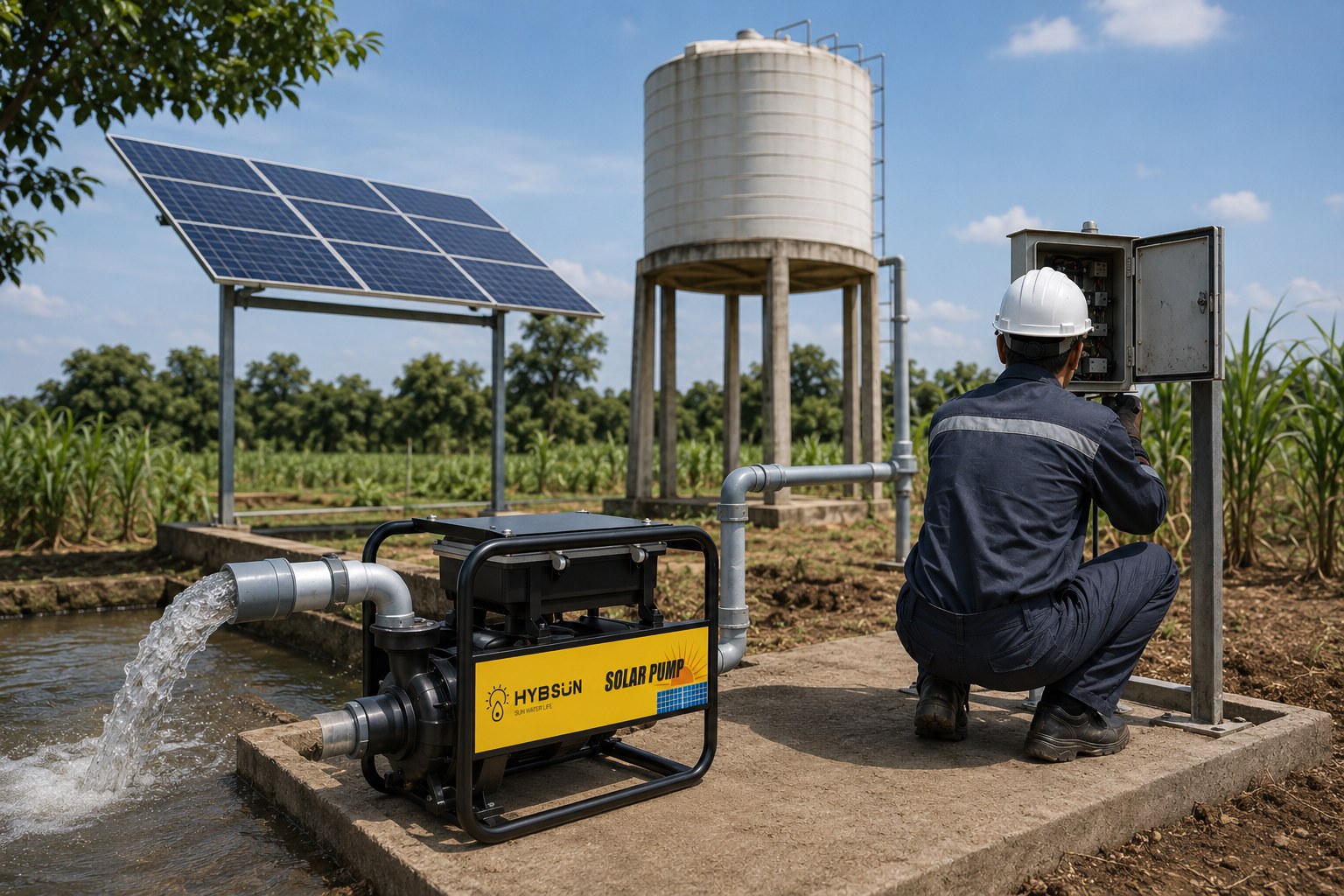
A solar pump’s lifespan isn't a single number but a sum of its parts.
Solar panels typically last 25-30 years, while the pump and motor can operate for 10-20 years.
The controller and other electronics usually have a lifespan of around 10 years, all depending on usage and maintenance.
Understanding what makes a solar pump system last involves looking beyond a single number.
It requires a deeper look into the core components that work together to deliver water day after day.
The longevity of your investment depends on the quality of the solar panels, the durability of the pump itself, and the efficiency of the motor driving the whole operation.
Let's break down each element to see how they contribute to the system's overall lifespan and how you can maximize it.
How long do the core components of a solar pump last?
Your pump system is failing, causing water shortages and high repair costs.
A solar pump system's longevity is determined by its three main components.
Solar panels are the most durable, with a performance warranty of 25-30 years.
The pump and motor typically last 10-20 years, while the controller may need replacement every 10 years, depending on environmental conditions.
A solar water pump is not a single unit but a system of interconnected parts, each with its own expected lifespan.
Thinking about the system this way helps manage expectations and plan for long-term maintenance.
The total lifespan is only as strong as its weakest link, so understanding each part is crucial for ensuring a reliable water supply for years to come.
Solar Panels: The 25-Year Powerhouse
Solar panels are incredibly reliable.
They form the foundation of the system's longevity.
Most high-quality panels come with a 25-year performance warranty, guaranteeing they will still produce at least 80-85% of their original power output at the end of that period.
This slow, predictable decline in efficiency is called degradation.
Modern panels have a very low annual degradation rate, often less than 0.75% per year.
| Component | Average Lifespan | Key Influencing Factors | Typical Warranty |
|---|---|---|---|
| Solar Panels | 25 - 30 Years | Weather exposure, quality of cells, degradation rate | 25-Year Performance |
| Pump & Motor | 10 - 20 Years | Water quality (sand, corrosion), operating hours | 2-Year Standard |
| Controller | 8 - 12 Years | Heat, humidity, electrical surges, build quality | 1 to 2 Years |
Pump and Motor: The Heart of the Operation
The submersible pump and its motor are the system's workhorses.
Their lifespan can vary significantly, from 10 to 20 years.
The biggest factors here are the working conditions.
Pumps in clean, clear water will last much longer than those in sandy or corrosive wells.
Similarly, a pump that runs for 6-8 hours a day will outlast one running 24/7.
High-efficiency Brushless DC (BLDC) motors, with fewer moving parts to wear out, generally offer a longer service life compared to older motor technologies.
Controller: The Brains of the System
The solar pump controller is the electronic brain, managing the power from the panels to the motor.
Being an electronic device, it's often the most sensitive component.
Its lifespan typically ranges from 8 to 12 years.
Protection from the elements is key.
Controllers housed in a well-ventilated, waterproof enclosure will last significantly longer than those exposed to extreme heat, humidity, and dust.
Quality MPPT (Maximum Power Point Tracking) controllers not only boost efficiency by up to 30% but are also built with more robust components, contributing to a longer, more reliable operational life.
Which type of solar pump lasts the longest?
You need a reliable pump for your specific water conditions, but choosing the wrong type leads to premature failure.
The longest-lasting solar pump is one matched to your water source.
For corrosive water, a stainless steel impeller pump is best.
For sandy wells, a screw pump excels.
For high-volume, clean water applications, a plastic impeller pump offers an economic and durable solution.
The concept of a single "longest-lasting" pump is misleading.
Durability is relative to the application.
A pump that thrives in one environment may fail quickly in another.
The key is to match the pump’s materials and design to the challenges of your well or water source.
By understanding the strengths of each pump type, you can select a model that provides an optimal balance of performance, cost, and, most importantly, a long and reliable service life.
Solar Screw Pump: The Deep Well Specialist
For deep wells and water with a higher sand content, the solar screw pump is unmatched.
Its design, using a stainless steel helical rotor inside a rubber stator, is inherently robust and abrasion-resistant.
This makes it the go-to choice in regions with poor water quality, such as parts of Africa and Latin America.
- Best For: Deep wells (high head), sandy conditions, and livestock water.
- Lifespan Factor: Its high resistance to sand and grit significantly reduces wear and tear, extending its operational life in harsh environments where other pumps would quickly fail.
- Trade-off: It provides lower flow rates compared to centrifugal models.
Solar Plastic Impeller Pump: The High-Flow Workhorse
This multi-stage centrifugal pump is designed for high flow rates in relatively clean water.
Using durable, wear-resistant plastic for the impellers makes it a lightweight and cost-effective solution for many agricultural and domestic applications.
- Best For: Farm irrigation, filling ponds, and home water systems with moderate well depths.
- Lifespan Factor: In water with low sediment, the plastic impellers are extremely durable and efficient. They are less susceptible to wear from fine sand than some metal impellers.
- Trade-off: Not recommended for highly corrosive water or very deep wells where pressure is extreme.
Solar Stainless Steel Impeller Pump: The Premium Choice
When dealing with acidic, alkaline, or otherwise corrosive water, nothing outlasts a pump built with high-grade stainless steel.
The SS304 impeller and pump body are engineered to resist chemical degradation, ensuring system integrity and longevity.
- Best For: Corrosive water conditions, high-end homes, and applications where water purity is critical.
- Lifespan Factor: Its superior corrosion resistance directly translates to a longer life in environments that would destroy other pumps.
- Trade-off: This premium construction comes at a higher initial cost and weight.
| Pump Type | Ideal Application | Key Durability Trait | Estimated Lifespan Range |
|---|---|---|---|
| Solar Screw Pump | Deep, sandy wells | Sand & Abrasion Resistance | 10 - 15 Years |
| Plastic Impeller Pump | High-volume, clean water | Cost-Effective & Efficient | 8 - 15 Years |
| Stainless Steel Impeller | Corrosive/Acidic water | Corrosion & Chemical Resistance | 15 - 20+ Years |
How does motor technology impact a solar pump's lifespan?
A pump with an inefficient motor costs you more in solar panels and fails sooner.
The motor is the heart of your pump, and its technology is the single biggest factor in system efficiency and longevity.
A high-efficiency Brushless DC (BLDC) permanent magnet motor can extend pump life and reduce the number of solar panels needed by over 30%.
You can have the most durable pump body in the world, but if the motor driving it is inefficient or prone to failure, the system's lifespan is compromised.
Modern solar pumps have moved away from older, less reliable motor designs.
The industry standard is now the BLDC permanent magnet motor, a technological leap that has transformed the performance and durability of solar pumping systems.
This core technology is what enables pumps to run efficiently for years, directly impacting both operational costs and service life.
The Power of BLDC Permanent Magnet Motors
Brushless DC (BLDC) motors represent a major advancement.
Unlike traditional brushed motors, they have no brushes to wear out, which eliminates a common point of failure and makes them virtually maintenance-free.
Here’s why they are superior:
- Higher Efficiency: BLDC motors consistently achieve efficiencies of over 90%. This means more of the sun's energy is converted into water flow, and less is wasted as heat. A cooler running motor is a longer-lasting motor.
- Greater Durability: With no brushes to replace, the primary wear components are the bearings, which are engineered for thousands of hours of operation. The use of powerful neodymium iron boron permanent magnets ensures consistent power delivery over the motor's entire life.
- Compact and Powerful: This technology allows for a smaller and lighter motor design without sacrificing power. A BLDC motor can be up to 47% smaller and 39% lighter than a traditional motor of equivalent power, simplifying installation and reducing strain on well components.
Market and Financial Impact
The high efficiency of a BLDC motor has a direct financial benefit.
Because it requires less power to do the same amount of work, you can power your pump with a smaller, less expensive solar array.
This can reduce the initial system cost by 20-30%.
Over the system's life, this efficiency translates into more water pumped per day and a more reliable water supply, especially on cloudy days.
| Motor Feature | Impact on Lifespan & Performance |
|---|---|
| Brushless Design | Eliminates brush wear, a primary failure point. This drastically reduces maintenance and extends motor life. |
| High Efficiency (>90%) | The motor runs cooler, reducing stress on windings and bearings. It also requires fewer solar panels, lowering system cost. |
| Permanent Magnets | Provides consistent, high-torque power without degradation over time. Ensures reliable startups and performance. |
| Compact Size | Lighter weight reduces strain on pump couplings and simplifies the installation process, lowering the risk of damage. |
As the core driving force, the BLDC motor is not just a component; it is the foundation of a modern, long-lasting, and competitive solar water pumping system.
Can a solar pump run 24/7 with a hybrid system?
You need water at night or on cloudy days, but a standard solar pump only works when the sun is shining.
Yes, you can get water 24/7 by using a hybrid AC/DC solar pump system.
These systems automatically switch from solar power to a grid or generator backup when sunlight is insufficient, ensuring an uninterrupted water supply without needing a large battery bank.
The biggest limitation of a traditional solar pump is its dependence on the sun.
For critical applications like household water supply or continuous irrigation, this can be a major problem.
Batteries can store energy, but they add significant cost, complexity, and maintenance, and also have a limited lifespan of 5-10 years.
A far more robust and durable solution is the hybrid AC/DC solar pump system, designed for ultimate reliability and round-the-clock operation.
How AC/DC Hybrid Pumping Works
A hybrid controller is the key.
This intelligent device is designed with two power inputs: one for your solar panels (DC) and one for an AC source, like the utility grid or a generator.
- Solar Priority: The controller's primary goal is to use free energy from the sun. Whenever there is sufficient sunlight, the system runs 100% on solar power. The controller continuously monitors the solar input.
- Smart Blending: On overcast days when solar power is reduced, advanced hybrid controllers can blend both AC and DC power. It will use all available solar energy first and then supplement it with just enough AC power to meet the pump's needs, maximizing your use of free solar energy.
- Automatic Switchover: When the sun goes down or during extended periods of heavy cloud cover, the controller detects the lack of DC input and seamlessly switches over to the AC power source. When the sun returns, it automatically switches back to solar.
This ensures you have a constant, worry-free water supply 24 hours a day, 7 days a week.
The Advantage Over Battery Systems
While batteries have their place, hybrid systems offer distinct advantages for longevity and cost-effectiveness.
| Feature | Hybrid AC/DC System | Battery-Based System |
|---|---|---|
| 24/7 Operation | Yes, with grid/generator backup | Yes, until battery is depleted |
| Initial Cost | Moderate (no batteries needed) | High (due to cost of batteries) |
| Lifespan | Long (controller life 10+ years) | Limited (battery life 5-10 years) |
| Maintenance | Virtually none | Requires battery monitoring & replacement |
| Complexity | Simple installation and operation | Complex wiring and configuration |
By integrating an AC/DC hybrid controller, you transform a daytime-only solar pump into a full-time, ultra-reliable water solution.
It provides the best of both worlds: the cost savings and environmental benefits of solar, combined with the 24/7 reliability of a traditional on-grid pump.
Conclusion
The lifespan of a solar pump depends on matching quality components—panels, motor, and pump type—to your specific needs.
A well-designed system will provide reliable, cost-effective water for decades.
FAQs
1. How long do solar panels last?
Solar panels have a performance lifespan of 25 to 30 years. After this period, they still produce power, but at a reduced capacity, typically around 80% of their original output.
2. How do you maintain a solar water pump?
Maintenance is minimal. Periodically clean the solar panels, check wiring for damage, and inspect the pump's intake for debris. The pump itself is largely maintenance-free due to its sealed design.
3. Do solar pumps need batteries?
No, batteries are not required for daytime operation. For 24/7 water access, a hybrid AC/DC controller that can switch to grid or generator power is a more durable and cost-effective solution than batteries.
4. Can a solar pump work on cloudy days?
Yes, solar pumps can work on cloudy days, but their output will be reduced. High-efficiency systems with MPPT controllers are designed to maximize performance even in low-light conditions.
5. How deep can a solar well pump go?
Solar well pumps are available for various depths. Solar screw pumps, for example, are designed for high-head applications and can effectively pump water from wells up to 1000 feet deep.
6. What size solar pump do I need?
The required pump size depends on your daily water needs, the vertical distance you need to pump (total dynamic head), and your location's average daily sunlight hours.
7. Is a solar pump worth it?
For off-grid locations or areas with high electricity costs, a solar pump is an excellent investment. It provides a reliable, low-cost water source with a payback period of just a few years.
8. Can solar pumps be used for irrigation?
Absolutely. Solar pumps are widely used for irrigation, from small gardens to large-scale agriculture. High-flow models are specifically designed to meet the water demands of farms and ranches.