Continuous pumping can overheat your system, leading to expensive repairs and downtime.
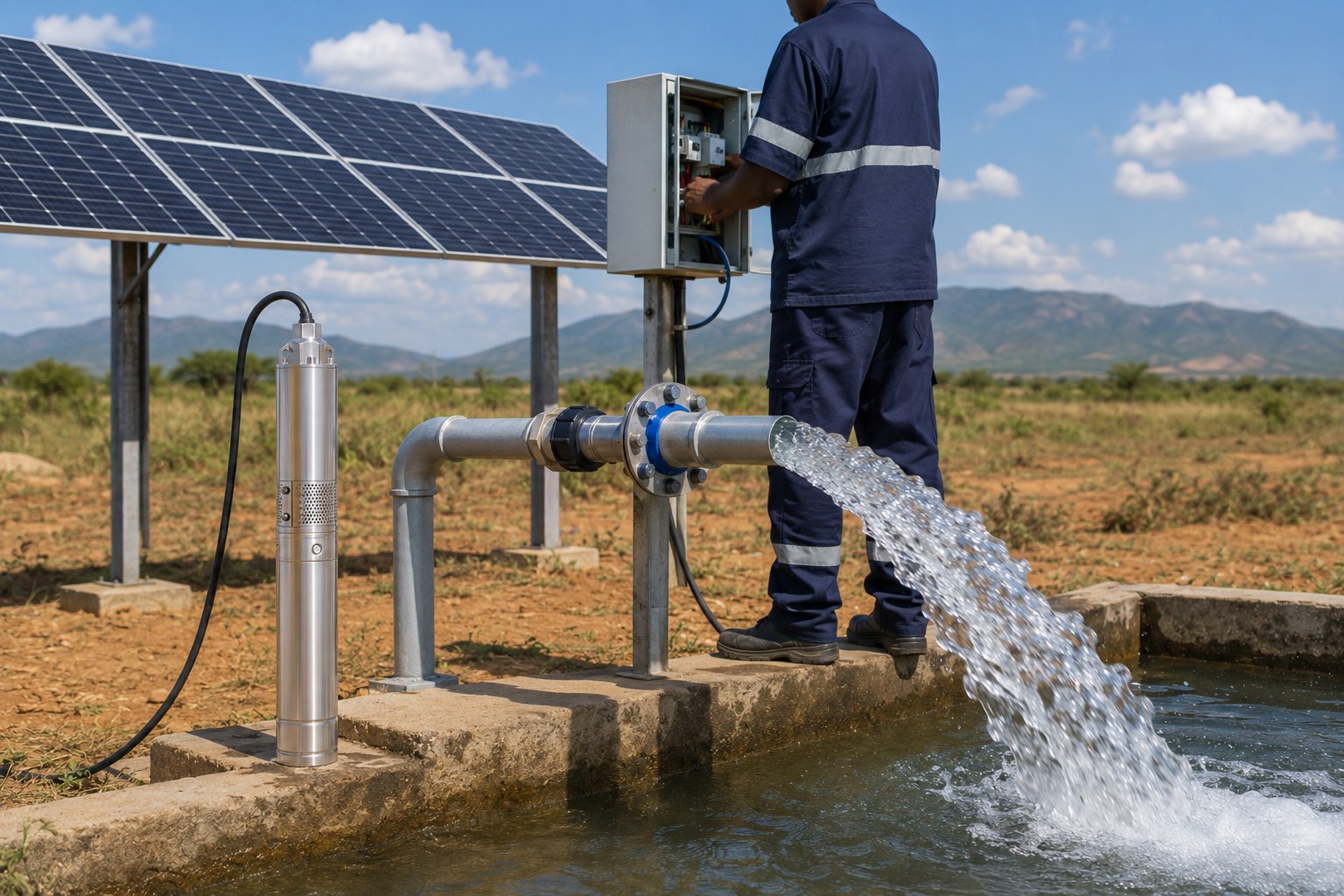
A submersible borehole pump can run between 6 to 24 hours daily. The exact duration depends on its design, cooling, and power source. Solar pumps typically operate for 6-10 hours, matching peak sunlight for optimal efficiency and longevity, while hybrid systems can offer 24/7 operation.
Understanding the pump's capabilities is crucial for maximizing its lifespan.
Not all pumps are built the same, and their ideal run times vary significantly.
Let's explore the key variables that dictate how long your pump can safely operate each day.
What Factors Affect a Borehole Pump's Work Hours?
Running a pump beyond its limits leads to premature failure and costly replacements.
Several factors dictate a pump's daily work hours, including its design, motor efficiency, cooling, and power stability. Industrial pumps can run longer than domestic models. Cooler water improves motor cooling, while a stable power supply is critical for extending the motor's life.
To truly optimize a pump's runtime, we must examine each of these factors in detail.
They work together to create an operating environment that either supports a long service life or accelerates component wear.
A well-managed system can deliver reliable water for over a decade, while a poorly managed one might fail in months.
Motor Design and Cooling Efficiency
The motor is the heart of the pump.
Its ability to manage heat is the single most important factor determining continuous run time.
Submersible pumps rely on the surrounding water to dissipate heat.
If the water level drops below the motor, it loses its cooling medium.
This can cause a rapid temperature spike, with motor windings potentially failing in as little as 15 to 30 minutes.
-
BLDC Permanent Magnet Motors: These motors represent a significant leap in efficiency, often exceeding 90%. This means over 90% of the electrical energy is converted into mechanical work, with less than 10% lost as heat. A traditional AC motor might have an efficiency of 75%, generating 150% more waste heat for the same work output. This superior efficiency allows BLDC motors to run longer and cooler under the same load conditions.
-
Water Temperature: The ambient temperature of the water plays a direct role. A pump operating in 10°C water can dissipate heat far more effectively than one in 30°C water. In hotter climates, a pump may need more frequent rest cycles to prevent overheating, even if fully submerged.
-
Flow Rate: Proper flow across the motor housing is essential. A clogged intake or a pump operating far from its Best Efficiency Point (BEP) can reduce water flow, creating stagnant "hot spots" around the motor and leading to localized overheating.
Voltage Stability and Power Supply
An unstable power supply places immense stress on a pump's motor and electronics.
It can be just as damaging as a dry-run scenario.
Voltage fluctuations, whether surges or sags, can drastically shorten a motor's lifespan.
-
Under-voltage: This forces the motor to draw more current (amps) to maintain its power output, causing the windings to heat up rapidly. This is a common cause of burnout in rural areas with unreliable grids.
-
Over-voltage: This can cause insulation breakdown in the motor windings and damage the electronic components in the controller, leading to catastrophic failure.
A voltage stabilizer or surge protector is a small investment that can protect a pump worth thousands of dollars.
For solar-powered systems, the MPPT (Maximum Power Point Tracking) controller plays a similar role, optimizing the voltage and current from the panels to run the motor efficiently without overload.
Best Practices for Extending Pump Lifespan
Simple maintenance and operational discipline can double the life of a borehole pump.
You can avoid most common failures by following a few key principles.
| Best Practice | Impact on Pump Lifespan | Estimated Improvement |
|---|---|---|
| Install Dry-Run Protection | Prevents motor burnout from lack of water for cooling. | Up to 80% reduction in motor failure. |
| Ensure Full Submersion | Guarantees consistent motor cooling during operation. | Extends motor life by 50% or more. |
| Avoid Rapid Start-Stop Cycles | Reduces thermal and mechanical stress on the motor and bearings. | Can increase lifespan by 2-3 years. |
| Use Voltage Regulators | Protects motor and electronics from damaging power fluctuations. | Prevents 95% of electrical failures. |
By implementing these practices, you shift from a reactive repair cycle to a proactive maintenance strategy.
This ensures water security and provides a much better return on your initial investment.
How Do Different Pump Types Affect Run Time?
Choosing the wrong pump type for your well can cause constant breakdowns and inefficient water delivery.
Run time is highly dependent on pump type. A solar screw pump excels in deep wells with low flow needs, running efficiently for hours. A plastic impeller pump delivers high flow for irrigation but may need rest. A stainless steel impeller pump offers high flow and durability for continuous operation.
The design of a pump's "wet end"—the part that moves the water—is tailored for specific conditions of flow, pressure, and water quality.
This design directly influences its efficiency and how long it can run without strain.
Let’s compare the three most popular types of solar deep well pumps to see how their unique characteristics affect their ideal operating schedules.
Solar Screw Pump: Low Flow, High Head
This pump is the specialist for deep wells.
It uses a single helical screw (rotor) rotating within a rubber stator.
This design acts like an Archimedes' screw, pushing "pockets" of water upward with each rotation.
It generates very high pressure (head) but at a lower flow rate compared to centrifugal pumps.
-
Ideal Applications: Deep domestic wells (over 100 meters), livestock watering in remote pastures, and trickle irrigation systems where high pressure is needed to overcome elevation changes.
-
Run Time Characteristics: Because it operates on a positive displacement principle, its efficiency remains consistently high across a wide range of depths. This means the motor is not easily overloaded, allowing for long, stable run times of 8-10 hours a day, perfectly matching the solar energy curve. Its high sand resistance (up to 3%) also prevents wear that could otherwise force shutdowns.
Solar Plastic Impeller Pump: High Flow, High Value
This is a multi-stage centrifugal pump.
It uses a series of stacked plastic impellers that spin at high speed.
Each impeller adds energy to the water, increasing its pressure and flow.
This design is engineered to move large volumes of water at moderate depths.
-
Ideal Applications: Farm irrigation, filling storage tanks and ponds, and general water supply for homes and communities with wells less than 80 meters deep.
-
Run Time Characteristics: These pumps are designed for high-volume work. They can run for 6-8 hours straight during peak sunlight to meet large irrigation demands. However, their efficiency is best within a specific flow and pressure range (BEP). Operating them in a very deep well or with a restricted outlet can cause motor strain and overheating, necessitating shorter cycles. While wear-resistant to fine sand, they are less durable in highly abrasive or corrosive conditions, which could limit their continuous use.
Solar Stainless Steel Impeller Pump: Durability and Corrosion Resistance
This pump is structurally similar to the plastic impeller model but built for tougher conditions.
It features impellers and a pump body made from SS304 or SS316 stainless steel.
This construction provides superior resistance to corrosion, abrasion, and high temperatures, making it a premium, long-life solution.
-
Ideal Applications: Water sources with high mineral content, acidic or alkaline water (low or high pH), coastal areas with saltwater intrusion risk, and high-value applications like premium homes or critical community water systems.
-
Run Time Characteristics: The robust design and corrosion resistance mean this pump can handle continuous, heavy-duty operation. Its durable components are less prone to wear and tear, allowing it to run reliably for 10-12 hours per day, or even 24/7 in a hybrid AC/DC system, without a significant drop in performance. The higher initial cost is offset by a service life that can be 2-3 times longer than a plastic model in harsh water environments.
| Pump Type | Flow Rate | Head (Pressure) | Sand Resistance | Best For | Typical Daily Run Time |
|---|---|---|---|---|---|
| Solar Screw Pump | Low | Very High (up to 200m+) | Excellent | Deep wells, livestock watering | 8-10 hours |
| Solar Plastic Impeller | High | Medium (up to 100m) | Good | Farm irrigation, filling tanks | 6-8 hours |
| Solar Stainless Steel | High | High (up to 150m) | Very Good | Corrosive water, 24/7 use | 10-24 hours |
Can You Run a Borehole Pump 24/7?
Needing water at night or on cloudy days is a problem for standard solar pump systems.
Yes, you can run a borehole pump 24/7 with the right setup. While a standard solar-only system is limited to daylight hours, a hybrid AC/DC system allows the pump to switch automatically to grid or generator power when solar energy is unavailable, ensuring an uninterrupted water supply.
The key to continuous operation lies in having a reliable secondary power source and a controller smart enough to manage it.
This technology transforms a solar pump from a daytime-only asset into a round-the-clock water solution.
Let's explore how these hybrid systems work and why they are essential for critical water applications.
How AC/DC Hybrid Systems Work
A hybrid system offers the best of both worlds.
It prioritizes free energy from the sun but provides the reliability of a conventional power source.
The system is built around an intelligent hybrid controller that can accept two power inputs simultaneously: DC power from solar panels and AC power from the grid or a generator.
-
Priority Logic: The controller is programmed with a simple, efficient logic: solar first. As long as the solar panels produce enough power to run the pump, the system will use 100% solar energy. The AC input remains on standby.
-
Automatic Switchover: When sunlight fades due to clouds, sunset, or heavy overcast, the photovoltaic input drops. Once it falls below the threshold needed to power the pump, the controller instantly and automatically switches to the AC power source. There is no interruption in water flow.
-
Hybrid Functionality: Advanced controllers can even blend power sources. If solar panels are providing 70% of the required power on a partly cloudy day, the controller might pull the remaining 30% from the AC source. This maximizes the use of free solar energy while still ensuring the pump operates at its optimal speed.
Benefits of 24/7 Operation
An uninterrupted water supply is non-negotiable for many applications.
Hybrid systems make this possible without sacrificing the economic benefits of solar power.
-
Water Security for Households: Families are no longer restricted to using water only during sunny hours. They can shower, do laundry, or wash dishes at any time, day or night.
-
Livestock Safety: Animals require constant access to drinking water, especially in hot climates. A hybrid system ensures water troughs never run dry, protecting the health and productivity of the herd.
-
Optimized Irrigation: Some irrigation methods, like drip irrigation for certain crops, benefit from nighttime watering to reduce evaporation. A hybrid system allows farmers to schedule irrigation for the most effective and efficient times.
| Feature | Solar-Only System | Hybrid AC/DC System | Advantage |
|---|---|---|---|
| Operating Hours | 6-10 hours/day (sunlight dependent) | 24 hours/day | Uninterrupted supply |
| Reliability | Good (in sunny weather) | Excellent (in all weather) | Water on demand |
| Power Source | Solar Panels Only | Solar Panels + AC Grid/Generator | Operational flexibility |
| Initial Cost | Lower | Higher (by 10-15%) | - |
| Long-Term Cost | Very Low | Low (prioritizes free solar energy) | Significant energy savings |
While the initial investment for a hybrid controller is slightly higher, the value it provides in terms of reliability, flexibility, and true water security is immense.
It effectively future-proofs the water system against unpredictable weather and changing water needs.
Conclusion
A borehole pump's daily run time depends on its type, motor, and power system.
Solar pumps run 6-10 hours, while hybrid AC/DC systems can achieve reliable 24/7 operation.
Frequently Asked Questions
Is it OK to run a submersible pump for 24 hours?
Yes, if it's a continuous-duty rated pump and part of a system designed for 24/7 operation, like a hybrid AC/DC setup, with proper cooling and stable voltage.
How do I choose a submersible pump size?
Consider your well depth, required flow rate (GPM), and total dynamic head. Using an online sizing calculator or consulting an expert ensures you select the correct, most efficient pump.
What is the life of a submersible pump?
The average lifespan is 8 to 15 years. However, this varies greatly based on run hours, water quality, maintenance, and the quality of the pump and motor.
How do you know when your well pump needs to be replaced?
Signs include very low water pressure, the pump cycling on and off frequently, unusually high electric bills, or strange noises coming from the well.
Can a submersible pump run continuously?
A pump rated for continuous duty can run for extended periods. However, constant 24/7 operation without cycling is best handled by robust industrial-grade pumps in a well-managed system.
How much does a submersible pump cost?
Costs vary widely from a few hundred dollars for small residential pumps to several thousand for high-capacity industrial or agricultural models, excluding installation.
What causes a submersible pump to fail?
Common causes include running dry (no water), voltage fluctuations, lightning strikes, excessive wear from sand or sediment, and corrosion from aggressive water.
How often should a submersible pump be serviced?
A professional inspection every 2-3 years is ideal. This helps catch potential issues like worn seals or electrical problems before they cause a major failure.