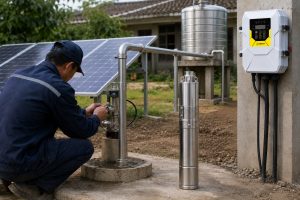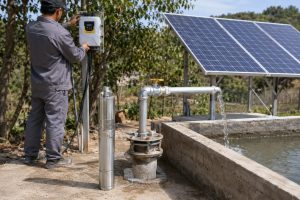
Struggling with unreliable grid power or high electricity bills for your water pump?
This dependency limits agricultural potential and clean water access.
Solar pumps provide an independent, cost-effective, and sustainable solution.
The main difference is the power source and motor technology.
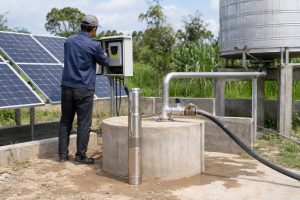
A solar pump uses photovoltaic (PV) panels and a highly efficient Brushless DC (BLDC) motor.
A normal pump typically relies on AC grid electricity or a fossil fuel generator with a less efficient motor.
This makes solar pumps cheaper to operate and ideal for off-grid locations.
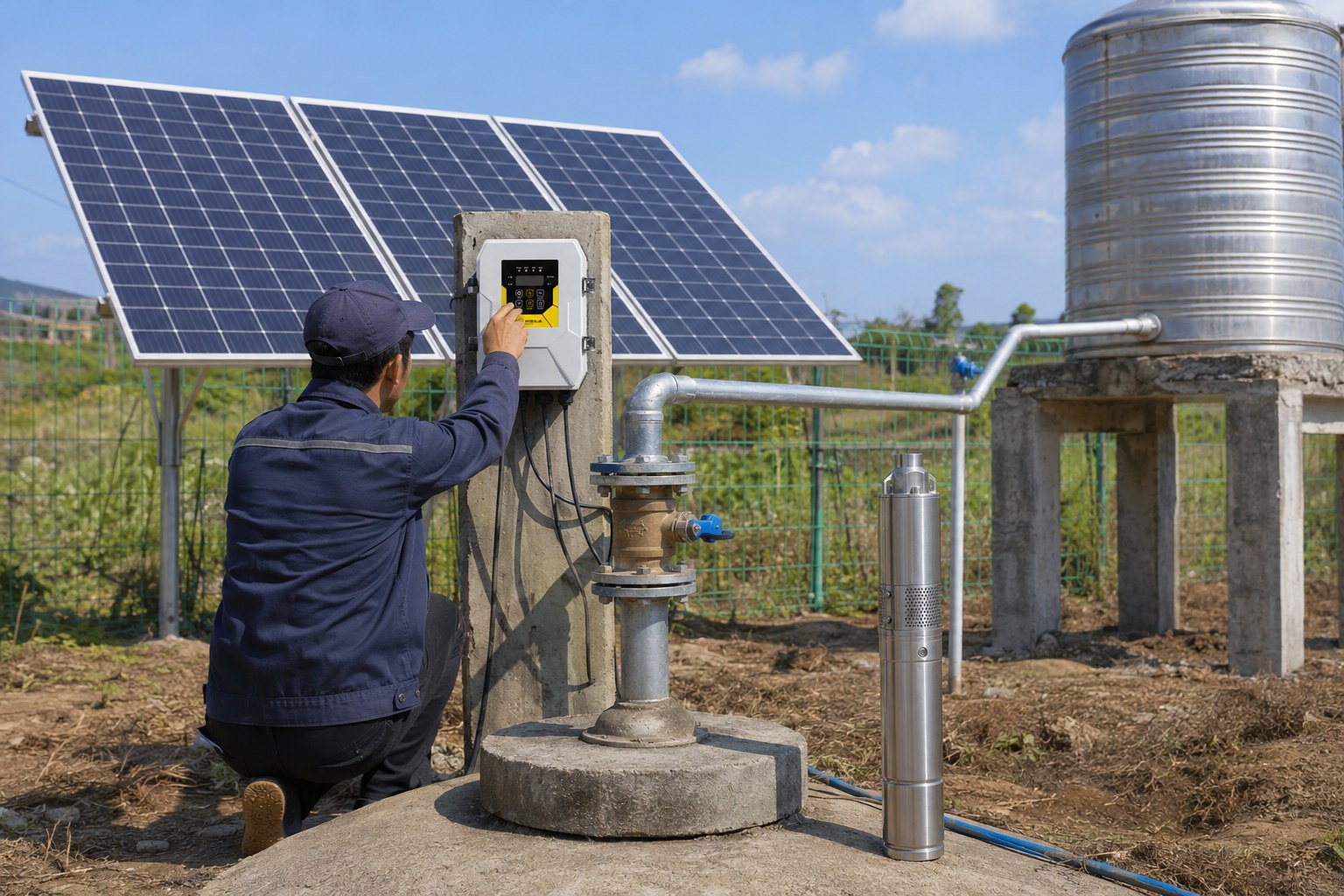
Understanding the nuances between these pump systems is crucial for distributors and end-users.
It allows you to choose the most efficient and reliable water solution for any application.
This article breaks down the core distinctions, from power source and motor type to the specific pump technologies available.
We will explore how to build a competitive product portfolio that meets diverse market needs.
Solar vs. Conventional Pumps: The Core Power Source Distinction
Are high electricity bills or the lack of grid access hindering your water pumping operations?
This reliance on expensive, centralized infrastructure creates financial burdens and operational uncertainty.
Solar pumps offer complete energy independence and significant long-term savings by using free energy from the sun.
The fundamental difference lies in their energy source and operational cost.
Solar pumps run on free, renewable solar energy, making them ideal for off-grid areas and reducing electricity bills to zero.
Conventional pumps depend on costly grid AC power or fuel for generators, incurring continuous operational expenses.
To grasp the full picture, we must dissect the components and long-term implications of each system.
The choice is not just about the pump itself, but about the entire ecosystem supporting it.
This includes the motor, power source, and lifetime running costs.
Power Source and Cost Comparison
A conventional pump’s reliance on the grid or generators introduces significant and variable operating costs.
Electricity tariffs fluctuate, and fuel prices can rise unexpectedly, making budget forecasting difficult.
In contrast, a solar pump’s fuel—sunlight—is free.
After the initial investment, the operational energy cost is virtually zero.
While the upfront cost of a solar pump system, including panels, can be 1.5 to 2 times higher than a conventional pump, the return on investment is typically realized within 2 to 4 years through eliminated electricity bills.
| Feature | Solar Pump System | Conventional Pump System |
|---|---|---|
| Initial Cost | Higher (pump, controller, panels) | Lower (pump, starter) |
| Operating Cost | Nearly zero | High and variable (electricity/fuel) |
| Maintenance | Low (panel cleaning, minimal motor care) | Higher (motor servicing, generator fuel) |
| Environmental Impact | Zero emissions, silent operation | Carbon emissions, noise pollution |
| Grid Dependency | None | Fully dependent |
| Reliability | High in sunny regions; weather-dependent | High (with stable grid/fuel supply) |
Motor Technology: AC vs. BLDC
The motor is the heart of the pump, and this is where another major difference lies.
Most normal submersible pumps use AC (Alternating Current) induction motors.
These motors are robust but suffer from lower efficiency, typically ranging from 40% to 60%.
This means nearly half the energy consumed is lost as heat, not used for pumping water.
Solar pumps almost exclusively use high-efficiency Brushless DC (BLDC) permanent magnet motors.
BLDC motors achieve efficiencies exceeding 90%.
This dramatic efficiency gain means a BLDC motor can pump significantly more water using the same amount of energy.
For a solar-powered system, this translates directly to needing fewer solar panels—reducing the total system cost by up to 25%.
System Components
The components required for each system highlight their operational differences.
A solar pump system is a self-contained ecosystem.
It consists of:
- Solar Panels: To capture sunlight and convert it into DC electricity.
- MPPT Controller: To optimize the power from the panels and protect the pump.
- BLDC Pump: The highly efficient pump and motor unit.
A conventional pump system is an extension of a larger infrastructure.
It requires:
- Grid Connection/Generator: To provide AC power.
- Control Box/Starter: To manage the motor's operation.
- AC Pump: The pump and induction motor unit.
This distinction makes solar pumps a complete, decentralized water solution.
Solar Screw Pumps: For Deep Wells and High Head Applications
Do you need to lift water from a well that is over 100 meters deep?
Many standard centrifugal pumps lose efficiency and fail to deliver water at such extreme depths.
The solar screw pump is a positive displacement pump specifically engineered for these high-head, low-flow challenges.
A solar screw pump uses a helical stainless steel rotor spinning inside a rubber stator.
This mechanism traps and pushes "pockets" of water upward, generating very high pressure (head).
It's the ideal choice for deep domestic wells, livestock watering, and small-scale irrigation where depth is the primary obstacle.
The design of a screw pump, also known as a progressing cavity pump, is fundamentally different from a centrifugal pump.
Instead of flinging water outward with an impeller, it functions like an Archimedes' screw.
This mechanical action is what gives it unique advantages in specific applications, particularly in regions with deep water tables like parts of Africa and Latin America.
How a Screw Pump Works
The core of the pump consists of a single helix metal rotor.
This rotor turns eccentrically inside a double helix elastomeric (rubber) stator.
As the rotor turns, a series of sealed cavities form between it and the stator.
These cavities progress from the suction end to the discharge end of the pump, carrying the fluid with them.
This process provides a constant, non-pulsating flow.
The flow rate is directly proportional to the rotation speed, while the pressure (head) is independent of speed.
This means it can deliver water to great heights even when the sun is not at its peak and the motor is running slower.
Key Performance Characteristics
Screw pumps are defined by their unique performance curve: high head and low flow.
This makes them a specialized tool rather than a general-purpose pump.
- High Head: They can achieve heads of over 200 meters (650+ feet), far exceeding the capabilities of similarly sized centrifugal pumps.
- Low Flow: The flow rates are typically modest, ranging from 0.5 to 5 cubic meters per hour (m³/h).
- Efficiency: They maintain high efficiency across a wide range of pressures, making them very effective for deep well applications.
| Application | Suitability for Screw Pump | Reason |
|---|---|---|
| Deep Domestic Wells | Excellent | Provides sufficient water for a household from very deep sources. |
| Livestock Drinking | Excellent | Delivers a steady supply of water to troughs over long distances and high elevations. |
| Small-Scale Drip Irrigation | Good | Provides adequate pressure and flow for targeted, low-volume irrigation. |
| Large Farm Irrigation | Poor | Flow rate is too low to meet the high-volume needs of flood or sprinkler irrigation. |
Advantages in Harsh Conditions
One of the most significant advantages of a screw pump is its exceptional resistance to sand and other abrasives.
The rubber stator can flex and pass small solids without sustaining significant damage.
They can often handle water with a sand content of up to 5%, whereas a centrifugal pump's impellers would be quickly eroded under similar conditions.
This durability makes them highly reliable in newly drilled boreholes or wells with poor water quality.
Their simple mechanical design also contributes to a long service life with minimal maintenance required.
Solar Plastic Impeller Pumps: The High-Flow, Economical Choice
Need to move a large volume of water for farm irrigation or pasture management without a huge upfront cost?
Some pump options are too expensive or fail to provide the necessary water output.
A solar plastic impeller pump is a multi-stage centrifugal pump that delivers high flow rates at an excellent value.
This pump uses multiple stages of durable, wear-resistant plastic impellers to achieve high flow at medium head.
It's a lightweight, efficient, and highly economical solution, making it the most popular choice for agricultural irrigation, livestock water supply, and home gardens in regions like Africa and the Americas.
This pump type represents the workhorse of the solar pumping world.
It strikes an optimal balance between performance, cost, and durability for a wide range of applications.
Its multi-stage design allows it to build sufficient pressure for most agricultural needs, while its high-volume output is perfect for irrigating fields or filling large tanks quickly.
Centrifugal Force in Action
Unlike a screw pump that pushes water, a centrifugal pump uses rotational energy to move water.
Water enters the pump at the center of a spinning impeller.
The impeller vanes catch the water and accelerate it radially outward at high velocity.
The water then enters a diffuser, which slows the flow and converts the velocity into pressure.
In a multi-stage pump, the water flows from the diffuser of one stage into the eye of the next impeller, and this process is repeated.
Each stage adds more pressure to the water.
This allows the pump to achieve a higher total head than a single-stage pump.
Performance Metrics
Plastic impeller pumps are characterized by high flow rates and moderate head.
Their performance is ideal for moving water from shallow to medium-depth wells (up to 80 meters) to the surface for distribution.
- High Flow: Flow rates can easily exceed 20 m³/h, making them suitable for applications demanding large volumes of water.
- Medium Head: They typically operate efficiently at heads up to 80 meters (260 feet).
- Economical: The use of engineered plastic for the impellers significantly reduces manufacturing costs.
| Feature | Plastic Impeller Pump | Stainless Steel Impeller Pump |
|---|---|---|
| Cost | Lower (20-30% less) | Higher |
| Weight | Lighter | Heavier |
| Abrasion Resistance | Excellent (for fine sand) | Good |
| Corrosion Resistance | Moderate | Excellent |
| Best Application | General agriculture, high-volume needs | Corrosive water, high-reliability needs |
Why Plastic? Debunking the Myth
The term "plastic" can sometimes be misleading, suggesting a lack of durability.
However, the impellers in these pumps are made from high-strength, glass-filled engineering polymers like Polyoxymethylene (POM) or Noryl.
These materials offer several key advantages.
They are exceptionally resistant to abrasion from fine sand, often outperforming stainless steel in this regard.
They are also inherently corrosion-resistant to many types of water.
Most importantly, they are significantly more cost-effective to manufacture, making the overall pump up to 30% cheaper than a full stainless steel equivalent.
This cost advantage makes solar pumping accessible to a much broader market.
Solar Stainless Steel Impeller Pumps: For Durability and Corrosive Water
Is your well water acidic, alkaline, or saline?
Standard pumps can corrode and fail within months in such environments, leading to repeated, costly replacements.
A solar stainless steel impeller pump is the premium solution, specifically designed to withstand corrosive conditions and deliver a long, reliable service life.
This top-tier centrifugal pump is constructed with SS304 or SS316 stainless steel impellers, diffusers, and pump body.
It offers maximum durability and unmatched resistance to corrosion, making it essential for applications in acidic water, coastal regions, and areas with alkaline soil like Australia.
This pump is an investment in longevity and reliability.
While it carries a higher initial cost, its ability to perform flawlessly in harsh water chemistry prevents the frequent failures that plague lesser pumps.
For distributors, offering a stainless steel option is key to serving high-end residential, industrial, and specific agricultural markets where water quality is a known issue.
The Importance of Material Science
The choice of material is everything when dealing with aggressive water.
SS304 stainless steel is an industry benchmark for corrosion resistance.
It contains high levels of chromium and nickel, which form a passive, non-reactive layer on the surface of the steel.
This layer protects the underlying metal from reacting with acidic or alkaline compounds in the water.
In extremely harsh conditions, such as brackish or saltwater applications, SS316 stainless steel is used.
It includes molybdenum, which provides superior resistance to chlorides.
This focus on material science ensures the pump's structural integrity and hydraulic performance are maintained for years, not months.
Performance and Reliability
Like their plastic counterparts, stainless steel impeller pumps are multi-stage centrifugal pumps that deliver high flow rates at medium-to-high head.
Their primary advantage is not a difference in hydraulic performance, but in reliability and lifespan.
In corrosive water, a stainless steel pump can have a service life that is 50-70% longer than a plastic impeller model.
This drastically reduces the total cost of ownership by minimizing downtime, repair costs, and the need for frequent replacements.
This level of reliability is critical for high-stakes applications like community water supply or high-value agriculture.
| Environment | Pump Suitability | Reason for Stainless Steel |
|---|---|---|
| Alkaline Soil Regions (e.g., Australia) | Excellent | Resists corrosion from high pH water. |
| Coastal Areas (Saline Water) | Excellent (SS316 recommended) | Resists chloride-induced pitting and corrosion. |
| Mining Operations (Acidic Water) | Excellent | Withstands low pH and chemical leaching. |
| High-End Residential/Ranches | Excellent | Ensures long-term reliability and pristine water quality. |
Investment vs. Expense
It is crucial to frame the higher price of a stainless steel pump correctly.
It is not an expense; it is an investment.
The initial cost may be 25% to 40% higher than a comparable plastic impeller pump.
However, if that pump prevents even one replacement cycle, it has already paid for itself.
For an end-user, this means peace of mind and a predictable, one-time cost.
For a distributor, it means a satisfied customer and a reputation for providing durable, high-quality solutions.
It allows you to target a more discerning, high-value segment of the market.
The Heart of Efficiency: Why BLDC Motors Dominate Solar Pumping
Are your customers' solar pump systems underperforming or requiring too many solar panels?
The motor is often the hidden bottleneck, wasting a huge percentage of the precious energy generated.
High-efficiency Brushless DC (BLDC) motors are the technological core that makes modern solar pumping feasible and cost-effective.
All high-quality solar pumps are driven by a Brushless DC (BLDC) permanent magnet motor.
It boasts an operational efficiency of over 90%, a stark contrast to the 40-60% efficiency of typical AC motors.
This superior efficiency means more water is pumped for every watt of solar power, directly reducing system costs.
The motor is arguably the most critical component in a solar water pump system.
Its ability to convert electrical energy into mechanical rotation with minimal loss determines the overall system's effectiveness.
The shift from traditional AC or brushed DC motors to BLDC technology was a revolutionary step, unlocking the full potential of solar energy for water pumping.
Efficiency by the Numbers
The efficiency gap between motor types is staggering.
- AC Induction Motors: 40-60% efficiency. More than half the energy can be wasted as heat.
- Brushed DC Motors: 75-80% efficiency. Better, but physical brushes create friction and wear.
- BLDC Motors: >90% efficiency. Almost all the electrical energy is converted into useful work.
This efficiency dividend has a powerful financial impact.
A system with a 90% efficient BLDC motor requires significantly fewer solar panels to do the same amount of work as a system with a 60% efficient AC motor.
This can reduce the required solar array size—and cost—by as much as 25-30%.
Technical Advantages
Beyond raw efficiency, BLDC motors offer a host of other technical benefits.
High Torque: They produce high torque from a standstill, which is crucial for starting the pump, especially in positive displacement pumps like the screw type.
Compact Design: The use of powerful permanent magnets allows for a much more compact and lightweight motor. A BLDC motor can be up to 47% smaller and 39% lighter than an AC motor with the same power output, simplifying transportation and installation.
Maintenance-Free: As the name "brushless" implies, there are no brushes to wear out. Brushes are the most common point of failure in traditional DC motors. The absence of brushes gives BLDC motors an extremely long service life, often exceeding 20,000 hours of operation.
| Feature | BLDC Motor | Brushed DC Motor |
|---|---|---|
| Efficiency | >90% | 75-80% |
| Lifespan | >20,000 hours | 2,000-5,000 hours |
| Maintenance | None | Brush replacement required |
| Noise | Very low | Moderate (sparking, friction) |
| Cost | Higher initial cost | Lower initial cost |
| Reliability | Very high | Moderate |
The Role of Neodymium Magnets
The "permanent magnet" in a BLDC motor is not just any magnet.
High-performance solar pump motors use high-grade rare-earth magnets, typically Neodymium Iron Boron (NdFeB).
These magnets, such as the 40SH grade, create an incredibly strong and stable magnetic field.
This powerful magnetic field is what allows the motor to generate high torque in a small package and maintain its efficiency even at high temperatures.
This advanced material science is a key enabler of the motor's superior performance.
Beyond the Pump: The Role of Intelligent Controllers
Are you concerned about your pump running dry on a hot day or stopping completely when a cloud passes over?
A basic pump-to-panel connection is inefficient and leaves your expensive equipment unprotected.
Intelligent pump controllers are the brain of the system, designed to maximize performance and safeguard your investment.
Modern solar pump systems must include a controller with Maximum Power Point Tracking (MPPT).
This technology optimizes the power drawn from the solar panels, boosting water output by up to 30%.
The controller also provides crucial protections like dry-run prevention and allows for advanced features like hybrid AC/DC power input.
Simply connecting a pump to a solar panel is a recipe for poor performance and premature failure.
The voltage and current produced by a solar panel fluctuate constantly with sunlight intensity.
The controller acts as a sophisticated power converter and system manager, ensuring the pump motor receives the optimal power at all times while protecting it from damaging conditions.
What is MPPT?
Maximum Power Point Tracking (MPPT) is a smart algorithm.
A solar panel has a specific operating point (a combination of voltage and current) where it produces the absolute maximum amount of power.
This "sweet spot" changes throughout the day with temperature and sunlight.
An MPPT controller constantly monitors the panel's output and adjusts the electrical load to force the panel to operate at this maximum power point.
Compared to a direct connection or a simpler PWM controller, an MPPT controller can increase the total water pumped per day by as much as 30%.
This means faster tank filling and more reliable water access, especially during early morning, late afternoon, and on overcast days.
Essential Pump Protection Features
A high-quality controller does more than just optimize power; it acts as a bodyguard for the pump motor.
It continuously monitors the system for dangerous conditions and will shut the pump down before damage can occur.
Key protective functions include:
- Dry-Run Protection: Senses a drop in motor load or uses a well probe to detect when the water level is too low, stopping the pump to prevent it from overheating.
- Over-Voltage/Under-Voltage Protection: Protects the motor from voltage spikes or sags caused by changing solar conditions.
- Over-Current Protection: Shuts the pump down if it becomes clogged or jammed, preventing the motor from burning out.
- Reverse Polarity Protection: Prevents damage if the solar panels are accidentally wired backward during installation.
The Hybrid Advantage: AC/DC Input
The most advanced controllers offer a hybrid power input feature.
This is a game-changer for applications requiring 24/7 water availability.
These controllers have separate inputs for both DC power from solar panels and AC power from the grid or a generator.
The controller's logic is designed to prioritize solar power.
When the sun is shining, the pump runs on free solar energy.
If clouds reduce the solar output, the controller can blend in AC power to maintain pump speed.
When there is no solar input at night, it automatically switches over to the AC source.
This ensures a constant, reliable water supply while maximizing the use of free solar energy to keep operating costs at an absolute minimum.
It offers the perfect combination of sustainability and reliability.
Conclusion
A successful solar pump solution is a finely tuned system.
It combines the right pump type for the application with a high-efficiency BLDC motor and an intelligent controller.
This synergy ensures maximum efficiency, durability, and value.
Frequently Asked Questions (FAQs)
Can a normal pump run on solar power?
Yes, but it's inefficient. Running a standard AC pump requires an expensive inverter and many more solar panels compared to using a native DC solar pump with a BLDC motor.
Are solar water pumps powerful enough?
Absolutely. Modern solar pumps can lift water from over 200 meters and deliver flow rates exceeding 100 cubic meters per hour, suitable for everything from homes to large-scale agriculture.
How long do solar water pumps last?
A quality system can last over 20 years. The solar panels are often warrantied for 25 years, and the maintenance-free BLDC motor has a typical lifespan of over 20,000 hours.
Do solar pumps work on cloudy days?
Yes, they do. While performance is reduced, the MPPT controller extracts the maximum available power. Water will still be pumped, just at a lower flow rate than on a sunny day.
What is the disadvantage of a solar water pump?
The main disadvantage is the higher initial investment compared to a conventional pump. They are also dependent on sunlight, so water is not pumped at night without a hybrid controller or battery storage.
How many solar panels does it take to run a water pump?
This depends on the pump's power rating, the well depth, and required flow. A small 200W pump might only need one or two panels, while a large 3000W pump could require ten or more.
Can solar pumps work at night?
Not with a standard setup. They require sunlight to generate power. To operate at night, the system needs either a battery bank or a hybrid controller connected to an AC power source.
Is a solar pump worth it?
For most off-grid or high-use applications, yes. The return on investment from eliminating electricity or fuel costs is typically realized within 2-4 years, making it a very sound long-term financial decision.