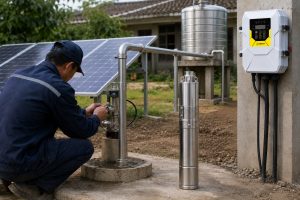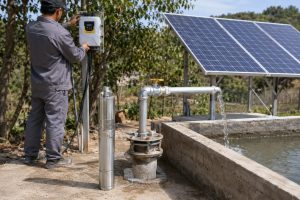
Struggling to find a reliable, cost-effective water solution for off-grid locations? The constant need for power and maintenance for traditional pumps can drain resources and limit possibilities.
The best solar pump is not a single product but a system matched to your specific needs. It depends on water depth, required flow rate, and water quality, ranging from small fountain pumps to powerful deep well systems for agriculture.
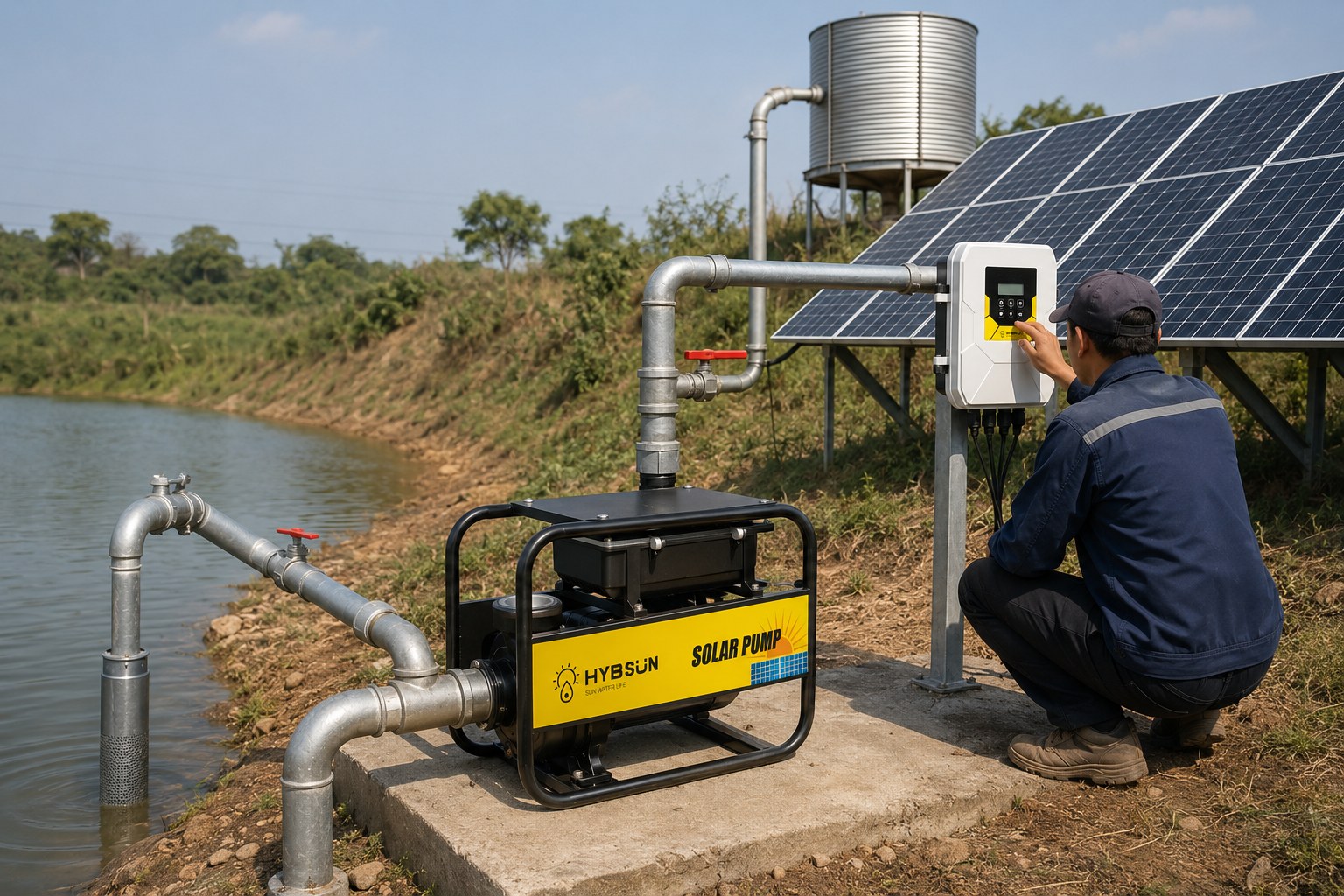
While a simple solar pump can bring life to a garden pond, the technology's true power lies in its ability to provide water security for homes, farms, and livestock anywhere under the sun. Understanding the core components and different pump types is the first step toward harnessing this power. Let's move beyond decorative fountains and dive into the robust world of solar water pumping solutions that are transforming water access globally, exploring the critical factors that distributors and end-users must consider for a successful and sustainable investment.
Understanding Key Solar Pump Performance Metrics
Choosing the wrong pump specifications can lead to an inefficient system that fails to meet your water demands. You might end up with a trickle of water when you need a torrent.
To choose correctly, you must understand two critical metrics: Maximum Vertical Head (MVH), the total height the pump can lift water, and Maximum Flow Rate (GPH), the volume of water moved per hour.
These two core specifications are the foundation for designing any effective water pump system, whether for a small garden or a large agricultural operation. They are often inversely related; a pump designed for a very high head (lifting water from a deep well) will typically have a lower flow rate than a surface pump designed to move large volumes of water over a short distance. A successful project hinges on accurately calculating your head and flow requirements first. For distributors, offering a range of pumps with varied head and flow capabilities is essential to meet diverse customer needs. For end-users, getting these numbers right means the difference between a reliable water supply and a costly mistake.
Maximum Vertical Head (MVH)
The max vertical head is the maximum vertical distance a pump can push water.
It's a crucial number for any application involving a change in elevation, such as pumping from a deep well, moving water uphill to a storage tank, or powering a tall fountain.
This measurement is calculated from the water level at the source to the final discharge point.
For example, if a well is 100 feet deep and the pump is placed at the bottom, the pump's MVH must be significantly greater than 100 feet to overcome gravity and friction losses in the pipes and deliver water to the surface with adequate pressure.
Altitude also plays a role, as pumps lose some of their lifting capability at higher elevations.
Maximum Flow Rate (MF)
Maximum Flow Rate, often measured in Gallons Per Hour (GPH) or Liters Per Day (LPD), defines the volume of water a pump can move under ideal conditions.
This metric is vital for applications like irrigation or filling large stock tanks, where the total volume of water delivered per day is the primary concern.
A pump's actual flow rate in a real-world installation will almost always be lower than its stated maximum.
The final flow rate is affected by the total vertical head, the length and diameter of the piping, and the number of bends or fittings in the system.
When sizing a system for livestock or crops, it is wise to calculate the total daily water demand and choose a pump and panel combination that can meet this demand within the available sunlight hours, with a buffer of 20-30% to account for cloudy days.
| Application | Typical Head Requirement | Typical Flow Rate Requirement |
|---|---|---|
| Small Birdbath/Fountain | 1-3 feet | 20-70 GPH |
| Domestic Well Supply | 100-300 feet | 200-500 GPH |
| Livestock Watering | 50-150 feet | 500-1,500 GPH |
| Small-Scale Irrigation | 20-80 feet | 1,000-3,000+ GPH |
Choosing the Right Solar Pump Type for the Job
With so many pump types available, selecting the one that matches your specific water source and application can be overwhelming. A mismatched pump leads to poor performance, premature wear, and wasted investment.
The choice comes down to three main types: Solar Screw Pumps for high-head, low-flow needs; Plastic Impeller Pumps for high-flow, wear-resistance; and Stainless Steel Impeller Pumps for corrosive environments.
Each pump type is engineered to excel under different conditions. A deep well in a sandy region requires a completely different solution than a shallow pond with acidic water. Understanding the core strengths and limitations of each design is crucial for distributors aiming to build a comprehensive product portfolio and for end-users seeking a reliable, long-lasting water solution. By matching the pump's construction to the water's characteristics and the application's demands, you ensure optimal efficiency, durability, and return on investment.
Solar Screw Pump: The High-Head Specialist
The solar screw pump, also known as a progressing cavity pump, is an engineering marvel for deep well applications.
It operates using a single helical rotor (a stainless steel screw) that rotates inside a flexible rubber stator.
This motion creates a series of sealed cavities that "progress" from the suction end to the discharge end, pushing the water column upward.
This design principle makes it exceptionally good at creating high pressure, allowing it to lift water from extreme depths.
Its primary strength lies in its ability to achieve a very high head with a relatively low flow rate, making it the perfect choice for domestic water supply, livestock drinking troughs in arid regions, and small-scale drip irrigation systems fed by deep aquifers.
A significant advantage is its exceptional resistance to sand and grit, as the flexible stator can pass small solids without sustaining the damage that would destroy a centrifugal pump. This makes it highly reliable in wells with poor water quality, a common issue in many developing regions.
| Feature | Specification | Benefit for User/Distributor |
|---|---|---|
| Pump Mechanism | Progressing Cavity (Screw) | Provides very high head/pressure. |
| Best Application | Deep Wells, Domestic Water | Ideal for low-flow, high-lift needs. |
| Sand Resistance | Excellent | Reduces maintenance and increases lifespan in sandy wells. |
| Target Market | Africa, Latin America | Solves water access challenges in electricity-scarce areas. |
Solar Plastic Impeller Pump: The High-Flow Workhorse
When the goal is to move a large volume of water, the multi-stage centrifugal solar pump with plastic impellers is the go-to solution.
This pump uses a series of stacked impellers and diffusers.
As water enters, each impeller stage adds energy, increasing the pressure and flow.
The use of engineered plastic for the impellers is a key design choice.
It makes the pump lightweight, cost-effective, and, most importantly, highly resistant to abrasion from fine sand.
Unlike harder materials, the plastic can absorb impacts from small particles, reducing wear and tear over time.
This pump type delivers a high flow rate at a medium head, making it ideal for farm irrigation, filling large reservoirs, and providing water for pasture-based livestock operations.
Its high water output can significantly shorten pumping times, which is critical for agricultural applications where efficiency is key.
Its balance of performance, durability against common abrasives, and economic pricing makes it a versatile and popular choice in markets across the Americas and Africa.
| Feature | Specification | Benefit for User/Distributor |
|---|---|---|
| Pump Mechanism | Multi-stage Centrifugal | Delivers high flow rates at medium head. |
| Impeller Material | Engineered Plastic | Excellent resistance to abrasion from fine sand. |
| Best Application | Farm Irrigation, Ranching | High water output for large-volume needs. |
| Key Advantage | Cost-Effective & Lightweight | Reduces purchase and installation costs. |
Solar Stainless Steel Impeller Pump: The Premium Durability Option
In environments where water is corrosive, durability is paramount.
The solar stainless steel impeller pump is the premium solution built for the toughest water conditions.
This model features a pump body and multi-stage impellers crafted from high-grade SS304 stainless steel.
The fundamental advantage of stainless steel is its superior resistance to corrosion from acidic or alkaline water.
This is critical in regions with specific geological characteristics, such as the alkaline soils found in parts of Australia or areas with industrial or agricultural runoff that affects water pH.
While it also provides high flow rates and medium-to-high head capabilities similar to its plastic-impeller counterpart, its primary selling point is longevity and reliability in harsh chemical environments.
The higher initial cost is justified by a significantly longer service life and reduced need for replacement in applications where a lesser pump would quickly fail.
This makes it the clear choice for high-end residential water systems, commercial operations in challenging water zones, and any user who prioritizes long-term reliability over upfront cost.
| Feature | Specification | Benefit for User/Distributor |
|---|---|---|
| Pump Mechanism | Multi-stage Centrifugal | Provides high flow and medium-to-high head. |
| Impeller Material | SS304 Stainless Steel | Maximum corrosion and chemical resistance. |
| Best Application | Corrosive Water, Premium Homes | Unmatched durability in acidic or alkaline water. |
| Target Market | Australia, High-end Ranches | Serves niche markets where quality is non-negotiable. |
The Engine Behind the Pump: Why the Motor Matters Most
Focusing only on the pump itself is a mistake; the motor is the heart of the entire system. An inefficient motor wastes precious solar energy, requiring more panels and increasing costs.
The true competitive advantage lies in the high-efficiency Brushless DC (BLDC) permanent magnet motor, which achieves over 90% efficiency, drastically reducing solar panel requirements and operating costs.
The shift to BLDC permanent magnet motors represents a quantum leap in solar pumping technology. Unlike older brushed motors, BLDC motors have no physical brushes to wear out, making them virtually maintenance-free with a significantly longer lifespan. Their advanced electronic controls allow for variable speed operation, which, when paired with an MPPT controller, perfectly matches the motor's speed to the available sunlight. This intelligent power use, combined with raw efficiency, means the entire system is smaller, lighter, and more cost-effective, a trifecta of benefits for both distributors and end-users.
The Power of BLDC Permanent Magnet Motors
The core of this motor's power is its design.
It utilizes a rotor made from high-strength 40SH neodymium iron boron permanent magnets.
This eliminates the need for electrical energy to create a magnetic field in the rotor, which is a major source of energy loss in traditional motors.
The result is a motor with an electrical-to-mechanical conversion efficiency that regularly exceeds 90%.
This is a stark contrast to conventional AC or brushed DC motors, which often operate in the 60-75% efficiency range.
This high efficiency translates directly into powerful performance from a smaller package.
Compared to traditional motors of equivalent output, a BLDC design can be up to 47% smaller and 39% lighter.
This reduction in size and weight simplifies installation, especially in remote locations, and lowers shipping costs for distributors.
The brushless design also means higher torque at low speeds, which is excellent for starting the pump under load.
Market Value for Distributors and End-Users
The high efficiency of a BLDC motor has a powerful ripple effect on the entire system's cost and value.
Because the motor requires less power to do the same amount of work, the number of solar panels needed can be significantly reduced, sometimes by 25% or more.
This is often the single largest cost reduction in the entire system.
For end-users, this means a lower initial investment and a faster return on investment.
For distributors, it creates a more competitive and attractive package to offer customers.
The maintenance-free nature of the BLDC motor is another huge selling point.
There are no brushes to inspect or replace, which is a critical advantage for pumps installed in remote or hard-to-reach wells.
This "install and forget" reliability, combined with a long service life, provides peace of mind and drastically lowers the total cost of ownership over the pump's lifetime.
It allows brands to build a reputation for efficiency, durability, and environmental friendliness.
| Feature | BLDC Permanent Magnet Motor | Traditional AC/Brushed Motor |
|---|---|---|
| Efficiency | >90% | 60-75% |
| Maintenance | None (Brushless) | Requires brush replacement |
| Lifespan | Long | Limited by brush wear |
| Size & Weight | Compact & Light | Bulky & Heavy |
| Solar Panel Need | Reduced by ~25% | Higher Requirement |
Beyond the Pump: Building a Complete and Intelligent System
A great pump and motor are not enough if the system can't adapt to changing conditions. Without intelligent control, you lose a significant amount of potential energy on sunny and cloudy days alike.
A truly optimized system integrates an MPPT controller to maximize solar harvesting and can include an AC/DC hybrid function for guaranteed 24/7 operation, ensuring water is available whenever you need it.
The final layer of a top-tier solar pumping solution is the brain that manages it all. An intelligent controller acts as the intermediary between the solar panels, the motor, and potentially an alternate power source. It ensures every watt generated by the panels is used to its fullest potential and provides the flexibility to overcome the primary limitation of solar power: the setting of the sun. This system-level thinking is what separates a basic pump from a comprehensive water security solution.
Maximizing Solar Power with MPPT Controllers
A solar panel's power output varies constantly with the intensity of sunlight.
An MPPT (Maximum Power Point Tracking) controller is a sophisticated electronic device that constantly adjusts the electrical load on the panels to keep them operating at their peak efficiency, or "maximum power point."
This continuous optimization can boost the total energy harvested from the solar array by up to 30% over the course of a day compared to a system without MPPT.
In practical terms, this means the pump starts earlier in the morning, runs faster during peak sun hours, and keeps working longer into the evening.
It effectively squeezes more "work" out of the same set of solar panels, leading to more water pumped per day.
For any serious solar pumping application, an integrated MPPT controller is not a luxury; it is a necessity for maximizing performance and return on investment.
Ensuring 24/7 Water Access with AC/DC Hybrid Technology
What happens when you need water on a series of cloudy days or during the night?
This is where an AC/DC hybrid controller provides the ultimate solution for water security.
These advanced controllers are designed with inputs for both DC power from solar panels and AC power from the grid or a generator.
The system is intelligent enough to prioritize solar power automatically.
When sunlight is abundant, the pump runs entirely on free energy from the sun.
If clouds roll in and solar power decreases, the controller can seamlessly blend in AC power to maintain the pump's speed and water flow, maximizing the use of any available solar energy before drawing from the grid.
When the sun goes down, or if there is no solar input, the controller automatically switches to the AC power source.
This ensures a reliable, worry-free water supply 24 hours a day, providing the best of both worlds: the cost-savings of solar and the on-demand reliability of the grid.
Conclusion
The best solar pump is a complete, intelligently-controlled system tailored to your water needs, combining the right pump, an efficient BLDC motor, and a smart controller for ultimate reliability.
FAQs
How deep can a solar pump pull water from?
Solar deep well pumps, especially screw types, can efficiently pump water from depths exceeding 300 feet (or over 100 meters), depending on the specific model and system design.
Can solar water pumps work at night?
Pumps with a battery backup or an AC/DC hybrid controller can work at night. The hybrid system automatically switches to grid or generator power when solar energy is unavailable.
How many solar panels do I need for a water pump?
This depends on the pump's power rating, daily water needs, and your location's sun hours. A high-efficiency BLDC motor can reduce the number of panels needed by over 25%.
Do solar pumps need batteries?
Batteries are not required for daytime operation. They are an option for storing energy for nighttime or cloudy-day use, but an AC/DC hybrid system is often a more practical alternative.
What is the life of a solar water pump?
A high-quality solar pump system with a brushless motor can have a service life of over 10 years, with the solar panels themselves often lasting more than 25 years.
What maintenance do solar pumps require?
Systems with brushless motors are nearly maintenance-free. Periodic cleaning of solar panels and checking connections is all that's typically needed. Pumps in sandy wells may require occasional inspection.
Can a solar pump fill a large tank?
Yes. A common strategy is to use solar power to pump water into a large storage tank during the day, ensuring a gravity-fed water supply is available 24/7.
Are solar pumps good for irrigation?
Absolutely. High-flow centrifugal solar pumps are excellent for farm and pasture irrigation, providing a cost-effective and environmentally friendly way to deliver large volumes of water directly where it's needed