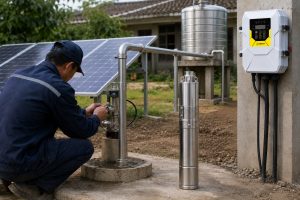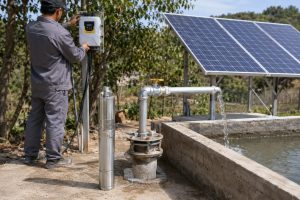
Dreaming of a lively pond but worried about complex wiring and high electricity bills?
You want a simple, green solution for your water feature.
Yes, solar pond pumps are an excellent choice.
Modern designs are efficient, durable, and easy to install.
Models with battery backup now offer consistent performance, overcoming the old limitation of only working in direct sunlight, making them reliable for most garden ponds and water features.
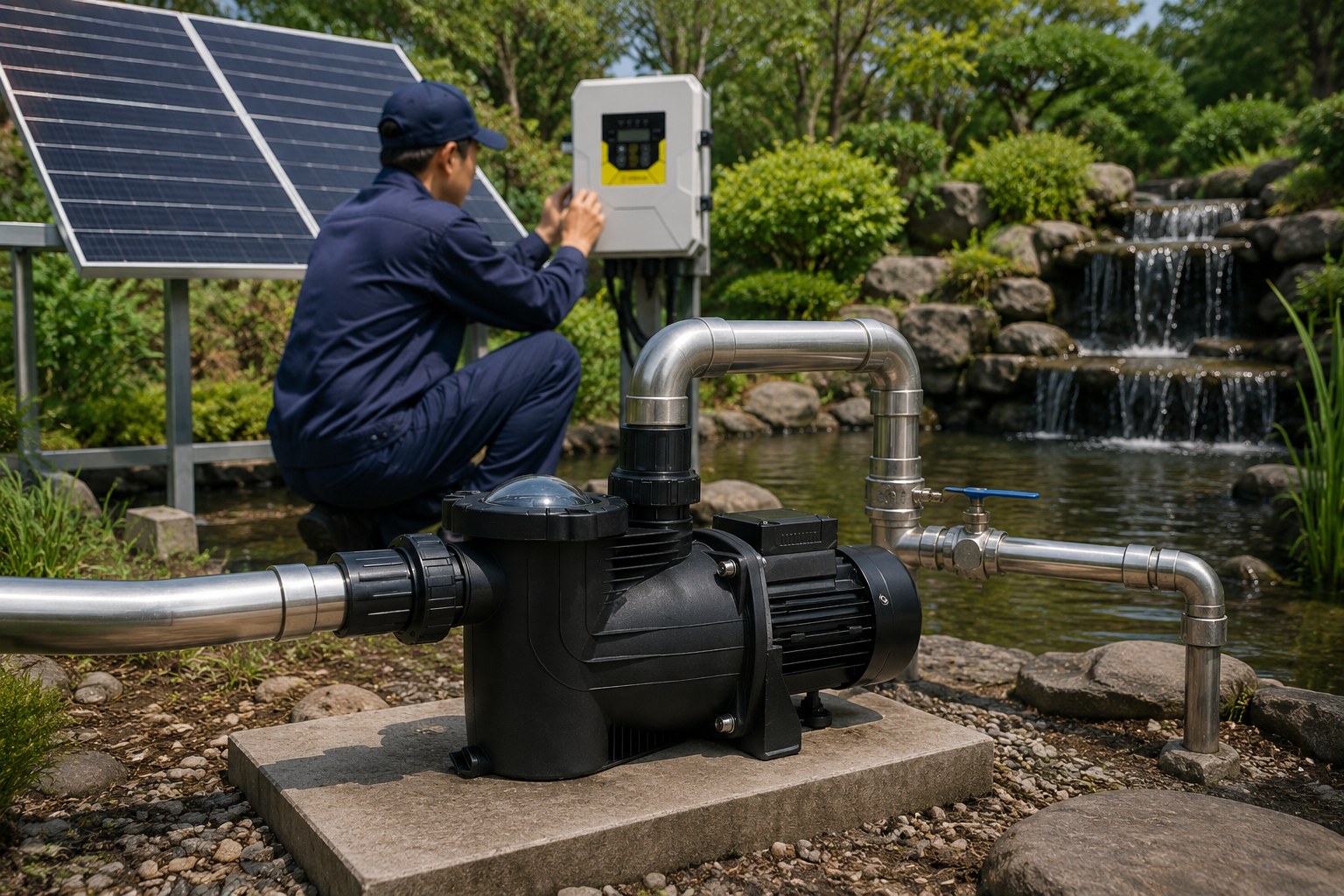
Solar water features have come a long way from being just a garden novelty.
They are now robust, high-performance systems that offer a perfect blend of natural beauty and clean energy.
But are they always the best choice compared to traditional electric pumps?
Let's dive into a detailed comparison to see if a solar pump is the right fit for your needs.
We will explore their pros and cons, the technology that powers them, and how to choose the perfect one.
What Are The Advantages And Disadvantages Of Solar Water Pumps For Ponds?
You're attracted to the idea of a solar pump, but you wonder if there are hidden drawbacks.
Are they powerful and reliable enough for your pond?
The main advantages are zero running costs, environmental friendliness, and the freedom to install them anywhere without needing an electrical outlet.
The primary disadvantages are a dependency on sunlight and a generally lower flow rate compared to similarly priced electric pumps.
However, technological advancements are rapidly closing this gap.
Choosing between a solar and a conventional electric pump requires weighing these benefits and drawbacks against your specific needs.
A small decorative pond in a sunny location has very different requirements than a large koi pond that needs constant, powerful filtration 24/7.
Understanding these differences in detail is key to making an informed decision and avoiding disappointment.
The Bright Side: Key Benefits of Going Solar
Solar pumps offer compelling advantages that go beyond just being "green."
-
Eco-Friendly Operation: Solar pumps run on 100% clean, renewable energy.
They produce zero carbon emissions, reducing your environmental footprint. -
Significant Cost Savings: The sun's energy is free.
After the initial purchase of the equipment, your running costs are $0.
An electric pump, on the other hand, adds to your utility bill every hour it runs.
Over a 5-year period, an electric pump could cost over $500 in electricity, while a solar pump costs nothing. -
Unmatched Installation Flexibility: Without the need for electrical wiring, you can place a solar pump anywhere.
This is ideal for remote corners of your garden, large properties, or any location far from a power outlet.
Installation is typically a simple plug-and-play process.
| Feature | Solar Pond Pump | Conventional Electric Pump |
|---|---|---|
| Energy Source | Sun (Free, Renewable) | Grid (Paid, Fossil Fuels) |
| Running Cost | $0 | $50 - $150+ per year |
| Installation | DIY, Plug-and-Play | Often requires a professional electrician |
| Location | Anywhere with sun | Near a power outlet |
| Carbon Footprint | Zero | Contributes to emissions |
The Cloudy Side: Potential Drawbacks to Consider
Despite their benefits, solar pumps have limitations you must be aware of.
-
Sunlight Dependency: A basic solar pump's performance is directly tied to the intensity of the sunlight.
On cloudy days, the flow rate will decrease significantly.
Basic models will not operate at all at night. -
Inconsistent Flow Rate: Because of its reliance on the sun, the water flow can be inconsistent throughout the day.
If you need a constant, powerful flow for a waterfall or a large filtration system, a basic solar model might not be sufficient. -
Higher Initial Cost for Equal Power: For the same flow rate (LPH or GPH), a solar pump is often more expensive upfront than its electric counterpart.
For example, a 2500 LPH solar pump might cost over $700, while a high-quality electric pump with the same output could be under $300.
You are paying a premium for the solar panel and technology.
| Pump Type | Example Model | Flow Rate (LPH) | Approx. Upfront Cost |
|---|---|---|---|
| Solar Pump | Reefe 2500LPH Solar | 2,500 | $715 |
| Electric Pump | Oase Aquamax 2500LPH | 2,500 | $279 |
This initial cost difference is the main trade-off for long-term energy savings.
How Do Solar Pumps Work, And What Is The Key Technology?
You see the solar panel and the pump, but how does sunlight actually move water?
It seems complex, but the core principle is surprisingly straightforward.
A solar pump system works by using a photovoltaic (PV) panel to convert sunlight into DC electricity.
This electricity powers a motor, which in turn drives the pump mechanism to move water.
The single most important component influencing performance and reliability is the motor, with modern brushless motors offering over 90% efficiency.
Understanding the components of a solar pump system helps you appreciate what makes a quality unit.
It's not just about the size of the solar panel.
The efficiency of the motor and the intelligence of the controller are what truly separate a high-performance system from a basic garden novelty.
Let's break down this powerful technology.
From Photon to Flow: The Pumping Process
The entire operation can be broken down into four simple steps.
-
Energy Capture: The photovoltaic (PV) solar panel, made of silicon cells, absorbs photons from sunlight.
This excites electrons, generating a direct current (DC) of electricity. -
Power Optimization: The electricity flows to a controller, often an MPPT (Maximum Power Point Tracking) controller.
This smart device optimizes the voltage and current from the solar panel to ensure the motor receives the most efficient power possible, even as lighting conditions change.
It can increase output by up to 30% compared to systems without one. -
Mechanical Conversion: The optimized electricity powers the motor.
The motor converts this electrical energy into mechanical rotational energy. -
Water Movement: The rotating motor drives the pump (e.g., an impeller or a screw).
This creates pressure and pushes water from the source, through the pump, and out to your fountain or waterfall.
The Heart of the System: The BLDC Motor
The efficiency of the entire system hinges on the motor.
High-end solar pumps use a BLDC (Brushless DC) permanent magnet motor.
This is a major leap forward from older, brushed motor designs.
The rotor in these motors often uses powerful rare-earth magnets like Neodymium iron boron.
This advanced design delivers an efficiency of over 90%, meaning almost no energy is wasted as heat.
Key advantages of a BLDC motor include:
- High Efficiency: They convert more electricity into power, so you get more water flow from a smaller solar panel.
- Longer Lifespan: With no brushes to wear out, these motors can run for over 20,000 hours with zero maintenance.
- High Torque: They provide strong, consistent power, which is essential for starting the pump and lifting water.
- Compact & Lightweight: A BLDC motor can be up to 47% smaller and 39% lighter than a traditional motor with the same power output.
| Feature | BLDC Brushless Motor | Traditional Brushed Motor |
|---|---|---|
| Efficiency | > 90% | 60% - 75% |
| Lifespan | 20,000+ hours | 2,000 - 5,000 hours |
| Maintenance | None (no brushes) | Brush replacement required |
| Reliability | Very High | Moderate |
For a distributor or an end-user, choosing a pump with a BLDC motor means better performance, lower long-term costs, and much greater reliability.
What Types of Solar Pumps Are Available for Different Needs?
You realize not all pumps are the same.
You have a specific need, from a small birdbath to irrigating a field, and wonder if there is a specialized solar pump.
Yes, solar pumps are highly specialized.
Surface pumps, like those for ponds and fountains, are designed for low-pressure, high-volume circulation.
For demanding jobs like pulling water from deep underground, specialized deep well pumps like screw pumps or centrifugal impeller pumps are used, each engineered for specific flow and head requirements.
While a simple pond pump is great for a garden feature, the same technology, when scaled up and specialized, can solve major water challenges in agriculture and domestic water supply.
Looking at these more powerful systems gives us insight into the true capability of solar pumping technology.
Let's explore a few key types to understand which pump is right for which job.
For Deep Wells and High Head: The Solar Screw Pump
This type of pump is a workhorse for deep water sources.
It uses a single helical screw (rotor) that rotates inside a rubber housing (stator).
This action creates sealed cavities of water that are pushed progressively up the pump.
It's a form of positive displacement pump.
- Best Application: Domestic water supply from deep wells, livestock watering, and small-scale irrigation where water needs to be lifted very high.
They excel in providing water from depths exceeding 100 meters. - Key Advantage: They can handle sandy or silty water much better than other pump types.
The screw mechanism is less prone to clogging or damage from abrasives.
This makes them extremely durable in harsh water conditions. - Limitation: They are designed for high head (lifting height) but provide a relatively low flow rate.
They are not suitable for applications needing large volumes of water quickly, like flood irrigation.
For High Flow and General Use: The Solar Centrifugal Impeller Pump
This is the most common type of pump for both surface and submersible applications.
It uses a spinning impeller to create centrifugal force, which pushes water out at high velocity.
Multi-stage versions use several impellers stacked together to achieve higher pressure.
The impellers themselves can be made from different materials, creating two distinct sub-categories.
1. The Plastic Impeller Pump
These pumps use durable, wear-resistant engineered plastic for the impellers.
- Best Application: Farm irrigation, pasture water supply, and general water transfer where a high flow rate is needed at a medium head.
They are an economical choice for moving large volumes of water. - Key Advantage: Excellent resistance to fine sand, lightweight, and more affordable.
This makes them a popular choice in agricultural settings. - Limitation: Not ideal for highly corrosive water or extreme depths, where the material may degrade over time.
2. The Stainless Steel Impeller Pump
This is the premium option, using high-grade SS304 or SS316 stainless steel for the impeller and pump body.
- Best Application: Water sources with corrosive properties (acidic or alkaline water), residential water supply in regions with poor water quality, and high-end applications demanding maximum reliability.
- Key Advantage: Extremely high corrosion resistance and a very long service life.
They are the most durable and reliable option available. - Limitation: They have a higher upfront cost and are heavier than their plastic counterparts, targeting a more specialized, high-end market.
| Pump Type | Best For | Flow Rate | Head (Lift) | Sand Resistance | Cost |
|---|---|---|---|---|---|
| Solar Screw Pump | Deep Wells, Homes | Low | Very High | Excellent | Mid-High |
| Plastic Impeller | Farms, Irrigation | High | Medium | Good | Low-Mid |
| S.S. Impeller | Corrosive Water | High | Medium-High | Fair | High |
How Do I Overcome The Limitations Of Solar Power?
You love the eco-friendly and cost-saving aspects of solar.
But you're concerned about the pump not working on cloudy days or at night.
The most effective way to overcome sunlight dependency is to choose a solar pump system with an integrated battery backup.
This allows the system to store excess energy generated during sunny periods for use at night or on overcast days.
For ultimate reliability, a hybrid AC/DC system provides a 24/7 solution.
The classic problem of "no sun, no pump" is no longer a deal-breaker.
Modern solar pump systems have evolved with smart solutions that ensure you get the water you need, whenever you need it.
Whether it's for keeping your pond life healthy overnight or ensuring your livestock always have water, there is a technology to provide that peace of mind.
The Power of Battery Backup
A solar pump with a battery backup fundamentally changes the game.
- How it Works: During peak sunlight, the solar panel powers the pump and simultaneously charges a built-in battery.
When the sun gets weak or sets, the system's controller automatically switches to draw power from the battery to keep the pump running. - Key Benefit: It provides a consistent, reliable water flow, effectively eliminating the main drawback of solar power.
Your fountain can run into the evening, and your pond filter can continue oxygenating the water overnight. - The Trade-off: Systems with battery backup have a higher initial cost compared to basic, direct-drive solar pumps.
However, this extra investment buys you performance that is much closer to a traditional electric pump, but without the electricity bill.
| System Type | Day Operation | Night Operation | Upfront Cost | Running Cost |
|---|---|---|---|---|
| Basic Solar Pump | Yes (sun-dependent) | No | Low | $0 |
| Solar with Battery | Yes | Yes (for a few hours) | Medium | $0 |
| Electric Pump | Yes | Yes | Low | High |
The Ultimate Solution: Hybrid AC/DC Systems
For critical applications where the water must flow 24/7, a hybrid system is the most robust solution.
This advanced technology offers the best of both worlds.
- Dual Power Input: The system's intelligent controller is designed to accept power from both the solar panels (DC) and the electrical grid or a generator (AC).
- Smart Switching: The controller automatically prioritizes solar power.
It will use 100% of the available solar energy first.
If the solar power isn't enough to meet the demand (e.g., on a very cloudy day), it will blend in just enough AC power to maintain performance.
When there is no solar input at all (at night), it seamlessly switches over to full AC power. - Benefit: This guarantees uninterrupted, worry-free water supply around the clock.
You still maximize your energy savings by using free solar power whenever possible, but you have the grid as a foolproof backup.
This is the pinnacle of reliability in water pumping technology.
Conclusion
Solar pond pumps are an excellent, viable solution for modern water features.
With technologies like efficient BLDC motors, battery backups, and hybrid AC/DC systems, they are more powerful and reliable than ever before.
FAQs
Do solar pond pumps work in winter?
Yes, but their performance will be significantly reduced due to shorter days and weaker sunlight.
A larger solar panel or battery backup is needed for better winter operation.
Do solar pond pumps work at night?
Basic models do not.
Only solar pumps equipped with a battery backup system can store energy during the day to operate for a few hours after sunset.
How long do solar pond pumps last?
A quality solar pump with a brushless motor can last for 3-5 years or more.
The solar panel itself can last for over 20 years with minimal degradation.
Can a solar pump be too powerful for a pond?
Yes.
A pump with too high a flow rate can drain a small feature quickly or create excessive turbulence.
It's important to match the pump's GPH/LPH to your pond's volume.
Do solar pond pumps need cleaning?
Yes, regular maintenance is key.
You should clean the solar panel to ensure maximum sun exposure and clean the pump's filter intake to prevent clogs from debris.
Are solar pumps with battery backup worth it?
If you want your water feature to run in the evening or on cloudy days, a battery backup is absolutely worth the extra cost for the added reliability and consistency.
How much does a solar pond pump cost to run?
The running cost is zero.
After the initial purchase of the equipment, the energy from the sun is entirely free, so there are no ongoing electricity bills.
Do solar pond pumps add oxygen to the water?
Yes.
By creating surface movement, fountains and waterfalls powered by solar pumps help aerate the water, which increases oxygen levels and is beneficial for fish and a healthy pond ecosystem.