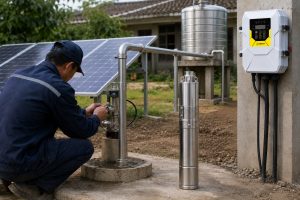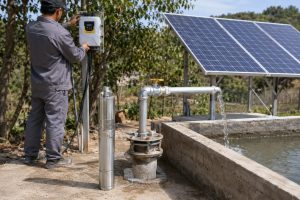
Your remote property needs water, but the power grid is miles away.
The cost of running lines is astronomical.
A solar pump seems perfect, but you worry about its reliability and hidden issues.
The most common problems with solar pumps are the high initial purchase price, their dependence on sunlight, potential performance issues like low flow, and the need for occasional maintenance.
However, each of these challenges can be effectively managed with proper system design and planning.
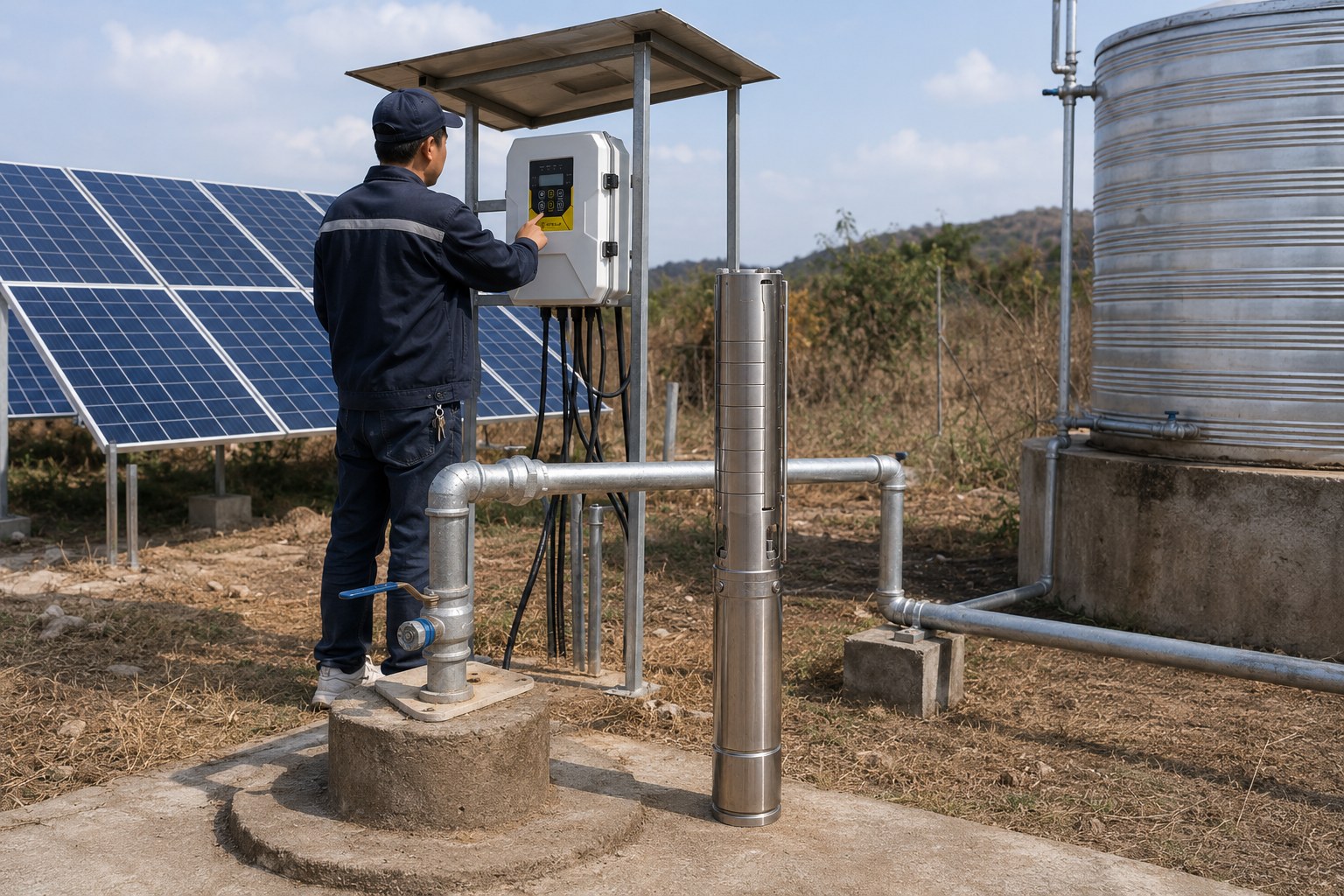
While solar water pumps offer incredible freedom from the grid, they aren't without their complexities.
Understanding the potential hurdles from the start is the key to designing a system that delivers reliable water for decades.
Let's explore these common problems one by one and uncover the practical, modern solutions that turn these disadvantages into manageable considerations.
A well-planned system is a successful system.
Is the high upfront cost of solar pumps a deal-breaker?
The initial price tag on a solar pump system can be daunting.
It seems much more expensive than a standard AC pump.
But this initial view misses the bigger financial picture and long-term savings.
A solar pump system's initial cost is higher than an AC pump's because it includes solar panels and a specialized controller.
However, this cost is often dramatically lower than the expense of extending utility power lines to a remote location, making it the cheaper option overall.
The sticker price of a solar water pump system is only one part of the total cost of ownership.
A classic AC pump might seem like a bargain at first glance.
But that pump needs electricity.
If your well is far from an existing power source, the real expense begins.
Extending utility power lines to rural properties can be incredibly expensive.
Breaking Down the Costs: AC vs. Solar
We’re talking costs that can be ten, or even a hundred times more than the solar system itself.
Utilities may charge tens of thousands of dollars per mile to run new lines.
This single expense can dwarf the entire cost of a complete solar pumping solution.
In contrast, a solar pump system is self-contained.
Its price includes the pump, motor, controller, and solar panels—your own personal power plant.
There are no grid connection fees.
Let's compare the potential costs over a five-year period for a remote installation.
| Cost Factor | Traditional AC Pump System | Solar Pump System |
|---|---|---|
| Pump, Motor, & Controller | $800 - $2,300 | $1,000 - $2,800 |
| Power Source Installation | $10,000 - $50,000+ (Grid Extension) | $1,000 - $3,000 (Solar Panels) |
| 5-Year Electricity Bill | $3,000 - $12,000+ (@$50-$200/mo) | $0 |
| Estimated 5-Year Total Cost | $13,800 - $64,300+ | $2,000 - $5,800 |
As the data shows, the solar pump system quickly becomes the more economical choice.
The Long-Term Payback
Once installed, a solar pump runs for free, powered by the sun.
There is no monthly utility bill.
This means that over time, the solar pump doesn't just save you money; it pays for itself.
For customers who already have AC power at the well, switching to solar can still offer significant savings.
By shutting off a dedicated power line for a pump, you can eliminate a monthly bill entirely.
The typical payback period for a solar pump system, when replacing an existing AC pump, is often just 2 to 5 years.
After that, the water is virtually free.
Choosing Cost-Effective Technology
The initial cost can also be managed by selecting highly efficient components.
The heart of a modern solar pump is its motor.
Advanced systems use brushless DC (BLDC) permanent magnet motors.
These motors can achieve efficiencies of over 90%.
This is a huge leap compared to traditional motors, which might operate at 60-70% efficiency.
This high efficiency means the motor needs less power to do the same amount of work.
Consequently, you need fewer solar panels to run it.
Since solar panels can account for 40-50% of the system's cost, choosing a high-efficiency motor can reduce the initial investment by up to 25% without sacrificing performance.
This makes the upfront cost much more manageable.
What happens when the sun doesn't shine?
A solar pump’s greatest strength is also its main weakness: it relies on the sun.
This creates a valid fear.
What if you have several cloudy days, or you need water at night?
Solar pumps are weather-dependent, so output drops on cloudy days and ceases at night.
This is overcome by implementing water storage in large tanks or by using power backup options like batteries or a hybrid AC/DC controller that can use grid or generator power.
The sun is a powerful but intermittent energy source.
A solar pump works hardest in the middle of a clear, sunny day.
But water needs are often constant.
Livestock needs to drink daily, crops need consistent irrigation, and homes need water around the clock.
Relying solely on real-time solar pumping is risky.
Fortunately, there are two primary, well-established strategies to ensure you have water whenever you need it, regardless of the weather.
Planning for this upfront is crucial for a successful system.
The Water Storage Strategy
The simplest and most common solution is to store water, not electricity.
The logic is straightforward: pump extra water when the sun is shining and store it in a large tank for later use.
When sizing a system, we recommend planning for 3 to 5 days of water storage.
This creates a buffer to handle extended cloudy periods and for use at nighttime.
For example, if your livestock and home require 2,000 gallons per day, you would install a storage tank of 6,000 to 10,000 gallons.
During sunny days, the pump works to fill this tank.
Then, you can draw water from the tank using gravity or a small pressure pump, even when the solar pump is inactive.
This approach is robust, low-tech, and highly effective.
Compared to battery storage, large water tanks are often more affordable and have a longer lifespan with virtually no maintenance.
Advanced Power Backup Solutions
In some situations, storing water may not be practical, or an even higher level of reliability is required.
This is where power backup solutions come into play.
-
Generator Input: Many larger solar pump controllers are designed to accept a backup power source. They come with native inputs for an AC generator. If your water tank runs low after several stormy days, you can simply start a generator, and the controller will use that power to run the pump and refill your tank. For smaller systems, a simple converter box can achieve the same result.
-
Battery Storage: Instead of storing water, you can store electricity in batteries. The solar panels charge the batteries during the day. The pump can then draw power from the batteries at night or on cloudy days. This provides a truly on-demand water supply. However, battery banks add significant cost and complexity to a system. They also require maintenance and will need to be replaced after 5-10 years, depending on the technology and usage.
-
AC/DC Hybrid Systems: The most advanced solution is a hybrid controller. These controllers can be connected to both DC solar panels and an AC power source (like the grid or a generator) simultaneously. The controller's smart logic will always prioritize using the free solar energy first. If the sunlight fades, it will seamlessly supplement with AC power to maintain pump performance. If there's no sun at all, it will switch over to AC power completely. This guarantees 24/7, worry-free water access while maximizing the use of solar energy to keep costs down. This technology offers the best of both worlds: the cost savings of solar and the reliability of the grid.
Why is my solar pump underperforming or bubbling?
You’ve invested in a solar pump, but the performance is disappointing.
The water flow is weak, or you see air bubbling into your pool or tank.
This frustration is common when a system is not properly configured.
Poor performance, like low flow or air in the lines, often indicates the system is not fully 'priming'.
This can be caused by insufficient flow rate to purge all the air, a mismatched pump and motor, or air entering the system, which breaks the efficient siphon effect.
A solar pump system is more than just a pump.
It is a dynamic system where every component must work together.
When it doesn't, you get problems like gurgling pipes and weak water pressure.
These symptoms point to a system that is not achieving a fully flooded, or "primed," state.
This means there is air trapped in the plumbing.
Air in the lines is a major problem because it breaks the siphoning effect.
Once a system is fully primed, the weight of the water in the return pipe helps pull more water through the system, reducing the workload on the pump.
When air gets in, the pump has to work much harder just to lift the water, which kills efficiency and flow rate.
Diagnosing the "Air in the System" Problem
This issue is common in solar pool heating systems but applies to any setup where water is lifted.
Often, the problem originates with a Vacuum Relief Valve (VRV).
This valve is designed to let air in when the pump shuts off, allowing the pipes and solar collectors to drain.
This prevents freezing in winter and damage from suction.
However, if the pump's flow rate is too low while running, it may not create enough pressure at the top of the system to keep the VRV fully closed.
As a result, the valve allows air to be sucked into the return line.
This creates a "waterfall" effect inside the pipe instead of a solid column of water.
You'll hear gurgling and see bubbles at the return outlet.
This happens when trying to run a pump at a very low speed to save energy, but that speed is below the minimum threshold needed to prime the system.
Effective Solutions for Low Flow
Fixing an underperforming system requires addressing the root cause, which is almost always insufficient flow.
-
Install a Throttle Valve: A standard solution is to install a "brake" or "throttle" valve (like a ball valve) on the return line, after the solar collectors but before the line goes back to the tank or pool. By partially closing this valve, you create a small amount of back-pressure. This "congestion" forces the water to back up and fill the pipe completely, purging the air and closing the VRV. You can then tune the valve until the bubbling stops.
-
Proper Pump Sizing and Speed: You are fighting physics. A pump must be sized to provide the minimum flow rate required to overcome the total head (lift + friction) of your specific system. Running a powerful pump at a very low speed might use less energy per hour, but it's inefficient if it can't prime the system. It may be more energy-efficient overall to use a slightly higher speed that primes the system correctly and fills your tank faster.
-
Choose the Right Pump for the Application: Preventing these issues starts with selecting the right type of pump. Different pump designs excel in different conditions.
- High Head, Deep Wells: For deep wells (over 80-100 meters), a solar screw pump is ideal. Its progressive cavity design uses a stainless steel screw to push water. It provides lower flow but can generate the immense pressure needed to overcome very high lift, ensuring a steady, solid stream of water.
- High Flow, Farms & Irrigation: For moving large volumes of water for irrigation or livestock, a multi-stage centrifugal pump is better. These pumps, available with durable plastic or stainless steel impellers, are designed for high flow rates. This high volume of water easily purges air from systems with moderate head.
Are solar pumps truly "set it and forget it"?
Solar pumps are often marketed as having low maintenance.
This is largely true compared to diesel generators or other complex systems.
But "low maintenance" does not mean "no maintenance."
A little bit of periodic attention is required.
While solar pumps are highly reliable, they are not zero-maintenance.
The most critical task is to periodically clean the solar panels of dust and debris.
A dirty panel can lose up to 30% of its power output, directly reducing the amount of water pumped.
The beauty of a solar pump system lies in its simplicity.
There are few moving parts compared to a combustion engine.
The motor is often sealed, and the controller is solid-state.
However, the system does interact with the environment, and this is where minor maintenance becomes necessary.
Neglecting these simple tasks can lead to a gradual decline in performance that might be mistaken for a failing pump.
In reality, the system is just "starving" for power or has a minor blockage.
The Impact of Dirty Panels
The solar panels are your system's fuel tank.
Anything that blocks sunlight from reaching the solar cells will reduce power generation.
This includes dust, dirt, pollen, leaves, or bird droppings.
In arid or dusty regions, a significant layer of grime can build up surprisingly quickly.
A visible layer of dust might reduce panel efficiency by 5-10%.
A thick, caked-on layer could cut output by 25-30% or more.
This means on a day when your pump should be operating at 100%, it might only be running at 70% capacity.
The result is less water pumped and a longer time needed to fill your storage tank.
Cleaning the panels is one of the easiest ways to ensure you are getting every watt of power you paid for.
A Simple Maintenance Schedule
A regular, simple check-up can prevent most problems and extend the life of your system.
| Task | Recommended Frequency | Impact if Neglected |
|---|---|---|
| Clean Solar Panels | Every 3-6 months (more in dusty areas) | Significant power loss (up to 30%), reduced water output. |
| Inspect Wiring | Annually | Check for damage from weather or animals to prevent power loss and safety hazards. |
| Check Pump Inlet | Annually | A clogged inlet screen from silt, sand, or debris will choke the pump and stop water flow. |
| Monitor Performance | Regularly | Noticing a drop in flow early helps diagnose problems like dirty panels or a clog before they become serious. |
The Advantage of Durable Components
The need for more intensive maintenance, like pump repair, can be minimized by choosing a high-quality system from the start.
The water itself can be a major source of wear and tear.
-
Corrosion Resistance: If your water has a high mineral content or is acidic/alkaline, it can corrode a standard pump. Choosing a pump with a stainless steel (SS304) impeller and body provides superior corrosion resistance, ensuring a much longer service life in harsh water conditions.
-
Sand Resistance: Wells in sandy soil can be tough on pumps. Abrasive sand particles can quickly wear down impellers. A solar screw pump is highly resistant to sand and is a far better choice in these environments than a standard centrifugal pump.
-
Motor Durability: The motor is the engine of the system. A high-quality brushless DC (BLDC) motor has no brushes to wear out and replace. This maintenance-free design, combined with a sealed casing, gives it a lifespan that can exceed 10 years, making it a truly "set it and forget it" component.
Conclusion
The common problems of solar pumps—cost, weather, performance, and maintenance—are all solvable.
With proper planning, modern technology, and the right components, these systems provide reliable, cost-effective water anywhere.
Frequently Asked Questions
How long do solar water pumps last?
A quality solar pump system can last for 20 years or more.
The pump itself lasts 10-15 years, while solar panels are often warrantied for 25 years.
Can a solar pump work without a battery?
Yes, most solar pumps work without batteries.
They pump water into a storage tank during the day, and you use the stored water when the sun isn't out.
How many solar panels does it take to run a water pump?
This depends on the pump's power, but a typical small submersible well pump (0.5 to 1 HP) might require 4 to 8 standard-sized solar panels.
Do solar pumps work on cloudy days?
Yes, but at a reduced rate.
They will pump less water on an overcast day than on a bright sunny day, which is why having water storage is important.
What is the main disadvantage of a solar pump?
The main disadvantage is the high initial investment compared to a conventional AC pump, though it pays for itself over time by eliminating electricity bills.
Can a solar pump run 24 hours?
A solar pump can run 24 hours if it is connected to a battery bank or a hybrid controller that can switch to an AC power source at night.
How deep can a solar water pump?
Solar pumps can service a wide range of depths.
Screw-type pumps can lift water from over 200 meters, while centrifugal pumps are better for shallower wells.
Is a solar pump better than an electric pump?
A solar pump is better in off-grid locations due to zero running costs and energy independence.
An electric pump may be cheaper initially if grid power is already available.