Struggling with an unreliable water supply?
Choosing the wrong well pump can lead to costly failures and water shortages, especially in off-grid locations where every drop counts.
A deep well is generally better for water quality and drought resistance.
However, a shallow well is a more economical choice if your property has a high water table under 25 feet.
Your final decision depends on well depth, water needs, and budget.
Choosing the right well pump is the heart of a reliable private water system.
This decision directly impacts your daily access to water, long-term costs, and peace of mind.
It's more than just a piece of equipment; it's a lifeline.
We'll explore the fundamental differences, specific applications, and crucial selection factors.
This guide will help you navigate the tradeoffs between shallow and deep well systems.
You will gain the confidence to invest in a water solution that serves you dependably for years.
Understanding the Fundamental Differences Between Well Pump Types
Confused by pump terminology?
You're not alone.
Understanding the basic mechanics of how pumps move water is the first step to making a smart choice for your property.
Shallow well pumps use suction to pull water from depths up to 25 feet.
Deep well pumps are submersible, pushing water up from hundreds of feet below.
This core difference in mechanism dictates everything from installation complexity to long-term reliability.
How They Work: Suction vs. Push
The most fundamental distinction lies in how each pump moves water.
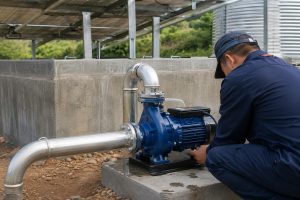
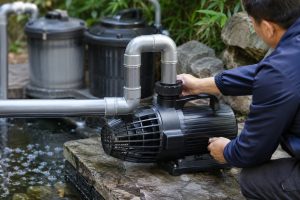
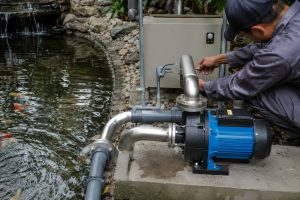
Shallow well pumps are positioned above ground.
They create a vacuum to suck water upward, much like drinking through a straw.
This method is limited by physics to a maximum lift of about 25 feet (7.6 meters) at sea level.
These pumps are often jet pumps, which use an impeller to create the suction force.
Deep well pumps, typically submersible pumps, operate on a completely different principle.
The pump motor and pump end are lowered directly into the well, fully submerged in water.
Instead of pulling water, the pump uses a series of impellers to push water up through a pipe to the surface.
This "push" method is far more energy-efficient for lifting water from significant depths.
It overcomes the physical limitations of suction.
Location and Installation
The pump's location has significant implications for installation and maintenance.
-
Shallow Well Pumps: These are installed above ground, in a basement, or a well house.
- Installation: Simpler and requires no specialized heavy equipment, reducing initial labor costs by up to 50%.
- Maintenance: All components are easily accessible for inspection, repairs, or replacement.
-
Deep Well Submersible Pumps: These are installed inside the well casing, deep underground.
- Installation: A complex process that requires professional equipment like a pump hoist or rig to lower the pump, pipe, and electrical wiring down the well.
- Maintenance: If the pump fails, it must be pulled from the well, a costly and labor-intensive job that almost always requires professional service.
Modern Power: The Solar Advantage
Traditionally, both pump types relied on grid electricity.
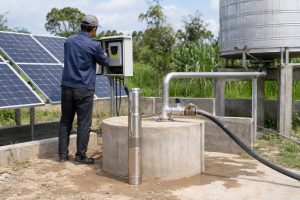
Today, high-efficiency solar-powered systems are revolutionizing water access, especially in off-grid areas.
Advanced Brushless DC (BLDC) permanent magnet motors now power both shallow and deep well pumps.
These motors boast efficiencies over 90%, a significant jump from the 60-70% efficiency of older AC motors.
This means they require less energy to do the same amount of work.
This efficiency makes them perfect for solar applications, reducing the number of solar panels needed and lowering the overall system cost.
Shallow Well Pumps: Applications, Advantages, and Limitations
Have a high water table?
A shallow well pump might seem like the obvious, budget-friendly choice for your water needs.
For wells 25 feet deep or less, a shallow well pump is a cost-effective and accessible solution.
Its main advantages are a lower initial price and simpler maintenance.
However, it's vulnerable to droughts, freezing, and contamination, and requires manual priming.
A shallow well pump can be an excellent choice under the right conditions.
It’s crucial to understand both its benefits and its significant drawbacks before making a decision.
Common Applications
Shallow well pumps are best suited for properties where water is close to the surface.
- Residential Water Supply: Ideal for homes and cabins with a static water level less than 25 feet.
- Garden and Lawn Irrigation: Easily powers sprinkler systems or provides water for small-scale gardening.
- Livestock Watering: A common choice for supplying water to troughs on small farms.
- Boosting City Water Pressure: A jet pump can sometimes be configured to increase low water pressure from a municipal supply.
Weighing the Pros and Cons
The decision to use a shallow well pump involves a clear tradeoff between cost and reliability.
The low upfront investment is appealing, but potential long-term issues must be considered.
A cost-benefit analysis often shows a 30-40% lower initial system cost compared to a deep well setup.
| Feature | Advantage | Disadvantage |
|---|---|---|
| Cost | Lower purchase and installation cost. | Higher potential for replacement costs if it runs dry. |
| Installation | Simpler, often a DIY-friendly project. | Must be protected from the elements. |
| Maintenance | Components are above ground and easy to access. | Requires regular priming; can lose prime easily. |
| Reliability | Works well with a consistent high water table. | Prone to failure during droughts; can run dry. |
| Vulnerability | N/A | Susceptible to freezing in cold climates. |
| Water Quality | N/A | Higher risk of surface contamination. |
The Priming Problem
One of the most common frustrations with shallow well pumps is the need for priming.
Because they work by suction, the pump and the suction pipe must be completely filled with water to create a proper seal.
If air gets into the system, the pump loses its prime and will stop pumping water.
Losing prime can happen if the foot valve at the bottom of the suction pipe leaks or if the water level drops below the pipe's intake.
This requires you to manually refill the pump housing, which can become a tedious and recurring chore.
Deep Well Pumps: When and Why to Choose This Option
Is your water source deeper than 25 feet?
Then you need a pump that can go the distance and deliver water with power and consistency.
A deep well pump is essential for wells deeper than 25 feet and can reach hundreds of feet.
Its submersible design pushes water efficiently, ensuring a reliable supply, superior water quality, and protection from freezing, despite a higher initial cost.
For most modern homes with a private well, a deep well submersible pump is the standard.
Its robust design and powerful performance offer compelling advantages that often justify the higher upfront investment.
Let's explore the specialized types of deep well pumps that cater to diverse global needs.
Superior Performance and Reliability
Deep well pumps are workhorses designed for demanding applications.
- Greater Depth Capability: They can effectively pump water from depths of 300 feet or more.
- Self-Priming: Because the pump is submerged in water, it never needs priming.
- High Efficiency: Pushing water is more energy-efficient than pulling it over long distances, resulting in better performance and lower operating costs, especially when powered by efficient motors.
- Quiet Operation: The motor is located far underground, making the system virtually silent at the surface.
- Freeze-Proof: The pump and water line below the frost line are completely protected from freezing temperatures.
A Portfolio of Solar-Powered Solutions
In the world of off-grid water solutions, solar deep well pumps are a game-changer.
They are typically powered by highly efficient BLDC motors and come in several specialized designs.
H3: Solar Screw Pump: The Deep Well Specialist
This pump is engineered for low flow but very high head (pressure).
It uses a stainless steel screw rotor turning inside a rubber stator to push water upward.
- Best For: Deep domestic wells, livestock drinking water, and small-scale drip irrigation in remote areas.
- Advantages: Its design gives it an exceptional ability to lift water from extreme depths and handle water with a higher sand content (up to 5% sediment) without damage.
- Limitations: It provides a lower flow rate (gallons per minute) compared to centrifugal models.
H3: Solar Plastic Impeller Pump: The High-Flow Workhorse
This is a multi-stage centrifugal pump.
It uses a series of durable, wear-resistant plastic impellers to deliver high flow rates at a medium head.
- Best For: Farm irrigation, pasture water management, and supplying water to larger homes or gardens.
- Advantages: Delivers a high volume of water, offers excellent resistance to fine sand, is lightweight, and is the most economical option for high-flow needs.
- Limitations: Less durable in highly corrosive water or at extreme depths where pressure is high.
H3: Solar Stainless Steel Impeller Pump: The Premium Choice
This model is the top-of-the-line option.
It features SS304 stainless steel impellers, a pump body, and other components.
It offers high flow rates and is built for maximum durability.
- Best For: Corrosive water conditions (acidic or alkaline), high-end homes, and commercial ranches where reliability is paramount.
- Advantages: Unmatched corrosion resistance, leading to a longer service life and higher reliability, even in harsh water.
- Limitations: Higher upfront cost and greater weight, making it a premium solution for specific market needs.
| Solar Pump Type | Flow Rate | Head (Lift) | Sand Resistance | Best Application |
|---|---|---|---|---|
| Screw Pump | Low | Very High | Excellent | Deep domestic wells |
| Plastic Impeller | High | Medium | Good | Farm irrigation |
| SS Impeller | High | Med-High | Moderate | Corrosive water |
Making the Right Selection: Factors to Consider for Your Property
Ready to choose a pump?
Don't rush.
A successful water system depends on a few critical calculations and considerations that go beyond just well depth.
To select the perfect pump, you must know your well depth, calculate your peak water demand (GPM), determine the required horsepower, and align it all with your budget and local environmental conditions.
Making the right choice is a balancing act.
It involves matching the pump's capabilities to your property's specific needs.
Overlooking any of these factors can lead to an inefficient system, premature pump failure, or an inadequate water supply.
1. Well Depth and Static Water Level
This is the non-negotiable starting point.
You must have a professional measurement of your well.
- Total Well Depth: The distance from the surface to the bottom of the well.
- Static Water Level: The level at which the water sits in the well when the pump is not running.
- The 25-Foot Rule: The critical measurement is the distance from where the pump will sit to the static water level. If it's 25 feet or less, a shallow well pump can work. If it's more, you must use a deep well pump.
2. Water Requirements (Flow Rate in GPM)
How much water do you need?
Calculate your peak demand in Gallons Per Minute (GPM).
A typical home requires 8-12 GPM.
Add up the GPM requirements for all fixtures that might run at the same time (e.g., a shower at 2.5 GPM, a dishwasher at 2 GPM, and a washing machine at 2.5 GPM = 7 GPM).
- Low to Moderate Demand (8-12 GPM): Standard for most single-family homes.
- High Demand (20+ GPM): Required for large homes, farms, or commercial applications. High-capacity deep well submersible pumps are designed for this.
3. Horsepower (HP) and Motor Efficiency
Horsepower is the muscle.
It's determined by the flow rate (GPM) and the total head (the vertical distance the water is lifted plus friction loss in the pipes).
A deeper well or a higher GPM requirement demands more horsepower.
However, modern motor technology has changed the equation.
The focus is now on efficiency, not just raw power.
A high-efficiency Brushless DC (BLDC) motor can do the same work as a larger, traditional AC motor but with 20-30% less energy.
This is especially critical for solar-powered systems, as a more efficient motor reduces the number of expensive solar panels needed.
For example, a 1.5 HP high-efficiency BLDC motor can often replace a 2.0 HP standard motor, saving on both initial and operational costs.
4. Budget: Initial vs. Lifetime Cost
Your budget must cover the entire system.
- Shallow Well Systems: Lower initial cost for the pump and installation.
- Deep Well Systems: A significantly larger investment upfront. The pump can be 2-3 times more expensive, and professional installation is a must.
However, consider the lifetime cost.
A deep well pump is typically more energy-efficient and has a longer lifespan.
Over 10-15 years, the lower operating and replacement costs can offset the higher initial price.
A solar deep well system, while the most expensive initially, can have near-zero operating costs, offering the best long-term value.
5. The Power Behind the Pump: Core Motor and Control Technology
Thinking the pump itself is all that matters?
The motor that drives it and the controller that manages it are the true keys to efficiency and reliability.
The system's heart isn't the pump type, but the motor's efficiency and the controller's intelligence.
A high-efficiency motor reduces energy needs by over 20%, while an intelligent controller maximizes every bit of available power for consistent performance.
The most significant advancements in water pumping technology haven't been in the pump mechanics but in the systems that power and control them.
Understanding this core technology is essential for building a truly modern and resilient water system.
H3: The BLDC Permanent Magnet Motor Advantage
The engine of a modern solar pump is the Brushless DC (BLDC) permanent magnet motor.
It represents a massive leap in efficiency.
- Peak Efficiency: These motors convert over 90% of electrical energy into mechanical work, compared to 60-70% for conventional AC motors.
- Compact and Lightweight: Advanced design and materials, like neodymium iron boron magnets, make these motors up to 47% smaller and 39% lighter than traditional motors of equivalent power. This simplifies installation, especially for deep well pumps that must be lowered by hand or with light equipment.
- Durability: With no brushes to wear out, these motors are virtually maintenance-free and have a significantly longer service life.
The market value is clear: A more efficient motor directly reduces the number of solar panels required to run the system, cutting down one of the most significant costs of a solar-powered setup.
H3: Intelligent MPPT Controllers
The "brain" of the system is the Maximum Power Point Tracking (MPPT) controller.
Solar panels produce a variable amount of power depending on the sunlight's intensity.
The MPPT controller constantly analyzes the output from the panels and adjusts the electrical load to extract the maximum possible power at any given moment.
This can boost the water output of a solar pump system by up to 30% over the course of a day compared to systems with a simple controller.
It ensures the pump starts earlier in the morning, runs faster in full sun, and keeps pumping longer into the evening.
H3: Hybrid AC/DC Solutions for 24/7 Water
What about cloudy days or nighttime water needs?
This is where hybrid technology comes in.
Advanced controllers are designed with dual power inputs for both DC (from solar panels) and AC (from the grid or a generator).
- Automatic Switching: The controller prioritizes solar power. When sunlight is sufficient, the system runs entirely on free solar energy.
- Hybrid Function: When solar power is low (e.g., on a cloudy day), the controller can blend AC power with the available DC power to keep the pump running, maximizing the use of solar energy.
- AC Backup: When there is no solar input at all (e.g., at night), the controller automatically switches over to the AC power source.
This hybrid capability ensures a reliable, uninterrupted water supply 24 hours a day, providing the best of both worlds: the cost savings of solar and the round-the-clock reliability of the grid.
Conclusion
The best well choice depends on your well's depth.
Shallow wells are for depths under 25 feet, while deep wells are for anything more.
Modern solar technology makes both options reliable and efficient.
Frequently Asked Questions
Which is better, a shallow well or a deep well?
Deep wells offer better water quality and drought resistance.
Shallow wells are a budget-friendly solution for high water tables but come with more risks.
What are the disadvantages of a deep well?
The primary disadvantages are high upfront installation costs and complex, expensive maintenance if the submerged pump fails.
Professional service is almost always required for repairs.
Do I need a shallow or deep well pump?
If your well's static water level is 25 feet or less from the surface, use a shallow pump.
If it is deeper than 25 feet, you must use a deep well pump.
What are the disadvantages of a shallow well?
Shallow wells can run dry during droughts, are more susceptible to surface contamination, and the pumps can freeze in cold climates and require frequent priming.
Can a deep well pump be used in a shallow well?
While technically possible, it is not cost-effective.
A deep well submersible pump is much more expensive and complex to install than a shallow well jet pump designed for that depth.
How long do well pumps last?
A shallow well jet pump typically lasts 10-15 years.
A quality deep well submersible pump, being better protected underground, can last 15-25 years before needing replacement.
Does a deeper well mean better water?
Generally, yes.
Water from deeper aquifers is naturally filtered through more layers of rock and soil, reducing the risk of contamination from surface runoff like bacteria or chemicals.
What is a convertible jet pump?
A convertible jet pump is a versatile option that can be set up for shallow wells (0-25 ft) or configured with a jet ejector assembly to work in deeper wells (up to 90 ft).