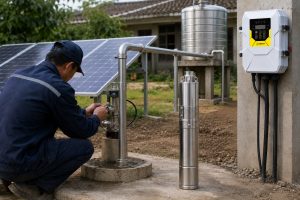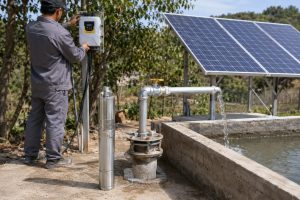
Your solar pump has stopped, and your water supply is cut off.
This sudden halt can be frustrating, especially in remote areas where water is critical.
You need a quick fix.
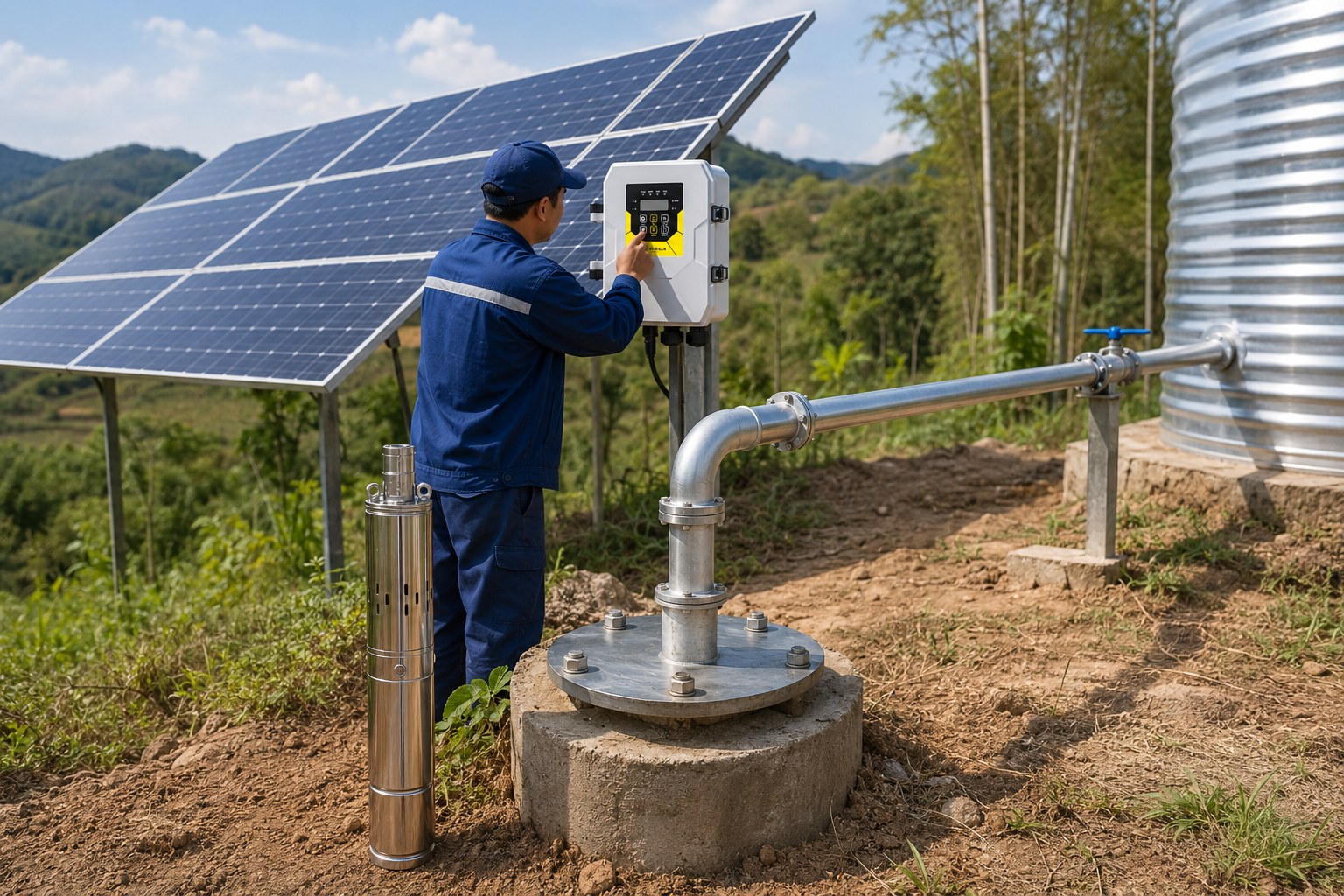
Resetting a solar pump controller typically involves a "power cycle.
" First, safely disconnect all power sources, including the solar panels and any AC or battery backup.
Wait for 5-10 minutes to allow internal capacitors to fully discharge.
Then, reconnect the power, usually starting with the battery, then the solar array, to reboot the system.
A reset is often the first and simplest troubleshooting step.
However, a recurring need for resets points to a deeper issue.
Understanding the components of your system, especially the controller, pump, and motor, is crucial for diagnosing problems and ensuring long-term reliability.
This knowledge transforms you from a user into a proficient system manager, capable of maximizing efficiency and lifespan.
Let's explore these core components to understand how they work together and what to do when they don't.
What is an MPPT Solar Pump Controller and Its Key Features?
Your solar panels' energy output constantly changes with the sun's intensity.
This fluctuation causes your pump to run inefficiently, wasting precious energy and reducing your daily water volume.
You're not getting the performance you paid for.
An MPPT (Maximum Power Point Tracking) controller is an intelligent electronic brain.
It constantly adjusts the system's electrical parameters to extract the maximum possible power from your solar panels, regardless of changing sunlight.
This can boost your daily water output by up to 30%.
An MPPT controller is more than just an on/off switch; it is a dynamic power optimizer.
It acts as a highly efficient DC-to-DC or DC-to-AC converter, but its real value lies in its sophisticated tracking algorithm.
This algorithm continuously scans the voltage and current from the solar array to pinpoint the "Maximum Power Point" (MPP).
The MPP is the ideal combination of voltage and current that yields the highest power output (Watts = Volts x Amps) at any given moment.
By forcing the pump to operate at this exact point, the controller ensures that not a single watt of available solar energy is wasted.
How MPPT Maximizes Efficiency
Traditional controllers connect the pump directly to the panels, meaning the pump's operating point is dictated by the panel's fluctuating voltage.
This is rarely the optimal point for power extraction.
MPPT technology decouples the pump from the panels.
It uses a method called dynamic VI maximum power point tracking, which offers a response speed over 99.5% faster than conventional methods.
This prevents issues like poor tracking on cloudy days or "water hammer" damage caused by sudden power shifts.
The controller regulates the output frequency using V/F (Voltage/Frequency) control, which allows for a soft start.
This gradually ramps up the motor's speed, reducing mechanical shock on the pump and electrical strain on the motor, extending the life of both components by as much as 40%.
Key Features of a Modern Controller
When evaluating a solar pump controller, look beyond the basic MPPT function.
Advanced controllers offer a suite of features that enhance reliability, usability, and protection.
| Feature | Description | User Benefit |
|---|---|---|
| Hybrid Power Input | Allows connection to both DC solar and an AC source (grid or generator) simultaneously. | Guarantees 24/7 water supply, automatically switching to AC power at night or on cloudy days. |
| Digital LCD Display | Provides real-time data on pump speed (%), DC input voltage, output voltage, and system status. | Simplifies diagnostics and monitoring without needing external tools. |
| Remote Monitoring | Optional GSM or RS485 connectivity allows for control and data logging from a remote location. | Enables predictive maintenance and immediate fault alerts for critical applications, reducing downtime. |
| Full Protection Suite | Built-in safeguards against over-voltage, under-voltage, over-current, and dry running. | Automatically protects the pump and motor from damaging conditions, preventing costly repairs. |
| Mobile APP Control | Allows users to operate and monitor the pump system directly from their smartphone. | Provides ultimate convenience and control, putting system management in the palm of your hand. |
These features transform a simple pump system into a smart, resilient water management solution.
The ability to automatically blend AC and DC power, for instance, maximizes the use of free solar energy while providing the reliability of the grid, ensuring your tanks are always full.
How do Different Pump Types Affect System Performance?
You've installed a solar pump, but the water output is disappointing or the pump has already failed.
This often happens when the pump type is mismatched with the well depth, water quality, or required flow rate.
Using the wrong pump is an expensive mistake.
The pump end is not a one-size-fits-all component.
A solar screw pump is for deep wells with low flow needs.
A plastic impeller pump provides high flow for irrigation.
A stainless steel impeller pump is for corrosive water.
Matching the pump to the application is non-negotiable for efficiency.
The pump itself, often called the "wet end," is where the mechanical work of moving water happens.
Its design directly dictates the system's performance characteristics, specifically its flow rate (how much water) and head (how high it can lift it).
Choosing the correct pump type for your specific conditions is just as important as having an efficient motor and controller.
A perfectly good motor will perform poorly if connected to the wrong pump.
Let's break down the three most common types of solar deep-well pumps.
The Deep Well Specialist: Solar Screw Pump
This pump type is a positive displacement pump.
It uses a single helical rotor (the "screw," typically made of stainless steel) that turns inside a flexible rubber stator.
This action creates sealed cavities of water that are "pushed" up the pipe.
This mechanism is incredibly effective at generating high pressure, making it ideal for applications with a very high head.
- High Head, Low Flow: It can lift water from extreme depths (over 200 meters) but provides a lower volume of water compared to centrifugal pumps.
- Sand Resistance: The gentle pushing action and durable materials make it highly resistant to abrasive sand and solids, a common issue in boreholes.
- Applications: Perfect for domestic water supply, livestock watering troughs, and small-scale drip irrigation where well depth is the primary challenge.
The High-Volume Workhorse: Solar Centrifugal Pumps
These pumps use a series of spinning impellers to accelerate water outwards.
The kinetic energy is then converted into pressure.
They are designed for high flow rates at medium head, making them the standard choice for most irrigation and large-volume water transfer needs.
The key difference lies in the impeller material.
- Plastic Impeller Pump: Uses durable, engineered plastic for the impellers.
- Advantages: Lightweight, economical, and offers excellent wear resistance against fine sand. It delivers high flow efficiently.
- Limitations: Less suitable for very deep wells or highly corrosive water, where the material can degrade over time. Widely used for farm irrigation and general water supply.
- Stainless Steel Impeller Pump: Features impellers and a pump body made from SS304 or even higher-grade stainless steel.
- Advantages: Superior corrosion resistance, making it essential for acidic or alkaline water conditions. It offers a very long service life and high reliability in harsh environments.
- Limitations: Higher initial cost and weight. It targets high-end residential, commercial, or specific agricultural markets with known water quality issues.
Comparing Pump Performance for Your Application
Selecting the right pump requires a clear understanding of your needs.
The following table provides a direct comparison to guide your decision-making process.
| Pump Type | Flow Rate | Head Range | Sand Tolerance | Best Application | Relative Cost |
|---|---|---|---|---|---|
| Solar Screw Pump | Low (1-5 m³/h) | Very High (up to 200m+) | Excellent | Deep domestic wells, livestock | High |
| Plastic Impeller Pump | High (5-15 m³/h) | Medium (up to 100m) | Good | Farm irrigation, shallow wells | Low |
| SS Impeller Pump | High (5-15 m³/h) | Medium-High (up to 120m) | Moderate | Corrosive water, premium homes | Very High |
In some applications, particularly those involving sludge or wastewater, pre-conditioning the fluid is necessary.
Systems can incorporate grinders or screens, like a muncher or chopper, to macerate solids before they enter the pump.
This technology protects the pump from clogging and damage, drastically increasing its lifespan and maintaining system efficiency.
Why is the BLDC Motor the Heart of a Modern Solar Pump?
Your solar water pumping system seems to be underperforming.
You have enough panels and the right pump, but the water flow is weak, especially on overcast days.
The hidden culprit is often an inefficient motor, which wastes the precious, limited power generated by your solar array.
This forces you to over-invest in panels just to compensate.
The BLDC (Brushless DC) permanent magnet motor is the engine that drives the system's overall efficiency.
With efficiencies exceeding 90%, it converts more solar electricity into water-pumping power.
This single component can reduce the number of solar panels needed by 25%, significantly lowering upfront costs.
If the controller is the brain, the motor is the heart of the solar pumping system.
The type and quality of the motor determine how effectively the controller's electrical output is converted into the mechanical rotational force needed to drive the pump.
The adoption of BLDC permanent magnet motor technology represents the single most significant advancement in solar pumping efficiency in the last decade.
The Unmatched Efficiency of BLDC Technology
A traditional DC motor uses carbon "brushes" to make electrical contact with the spinning rotor.
This creates friction, heat, and wear, leading to energy losses and the need for eventual replacement.
A BLDC motor eliminates these brushes entirely.
Instead, it uses an electronic controller to switch the direction of the magnetic field in the stationary part of the motor (the stator), causing the rotor to spin.
The rotor itself is constructed with powerful permanent magnets, often made from high-grade materials like 40SH neodymium iron boron.
This design offers an enormous leap in efficiency.
While older brushed motors or standard AC motors might operate at 70-80% efficiency, a quality BLDC motor consistently achieves efficiencies of over 90%.
This 10-20% efficiency gain is not a minor detail; it means that for every 100 watts of solar power, a BLDC motor delivers 10-20 more watts of useful work.
Technical and Financial Advantages
The superiority of the BLDC motor extends beyond just efficiency.
Its design provides a cascade of benefits that impact the entire system's performance, cost, and longevity.
- High Starting Torque: BLDC motors deliver high torque from a standstill, ensuring the pump can start reliably even under load or in low-light conditions.
- Compact and Lightweight: Without the bulky brush assembly, BLDC motors can be significantly smaller and lighter. A BLDC motor can be up to 47% smaller and 39% lighter than an AC motor with equivalent power output, simplifying installation and reducing shipping costs.
- Maintenance-Free Operation: The absence of brushes means there are no parts to wear out and replace. This is a critical advantage for pumps installed in remote or hard-to-access locations.
- Longer Service Life: With fewer wearing parts and less operational heat, a BLDC motor can have a service life of over 20,000 hours, more than double that of many brushed motors.
The financial implications are profound.
A more efficient motor requires less power to do the same amount of work, directly reducing the size and cost of the solar array needed.
| Feature | BLDC Motor System | Traditional Motor System | Financial Impact |
|---|---|---|---|
| System Efficiency | >90% | ~75% | Needs ~20% fewer solar panels for the same water output. |
| Motor Lifespan | 20,000+ hours | 5,000-10,000 hours | Reduces long-term replacement costs and service calls. |
| Maintenance | None (Brushless) | Requires periodic brush replacement | Lowers the total cost of ownership significantly. |
Ultimately, the BLDC motor is the strategic core of a competitive solar water pump.
It's the component that unlocks the full potential of the solar panels and the pump, delivering a powerful, cost-effective, and durable solution.
How do Packaged Systems Serve Diverse Industries?
You need a pumping solution for a specialized application like biogas processing or geothermal energy, but sourcing individual components is a logistical nightmare.
You worry that a mismatched pump, motor, and controller will lead to catastrophic failure, project delays, and endless finger-pointing between different suppliers.
The risk of getting it wrong is too high.
Packaged pump systems eliminate this risk by providing a fully integrated, factory-tested solution.
These systems combine the pump, motor, controller, and any necessary grinders or screens into a single, optimized unit.
This guarantees component compatibility and delivers unsurpassed reliability for any application.
While understanding individual components is important, the greatest reliability often comes from procuring a complete, pre-engineered packaged system.
This approach shifts the responsibility of component matching from the end-user to the manufacturer, who has the expertise to design a perfectly harmonized unit.
These turnkey solutions are designed to meet the specific and often demanding requirements of diverse industries, far beyond simple water transfer.
Tailored Solutions for Every Sector
A single pump model cannot serve every need.
Leading manufacturers offer a portfolio of packaged systems, each tailored to a specific industrial vertical.
This ensures the materials, design, and performance are perfectly aligned with the application's unique challenges.
- Agriculture and Irrigation: These systems are built for endurance and high volume. They often feature high-flow centrifugal pumps and robust controllers designed to withstand harsh outdoor environments. The goal is to maximize water delivery during peak sunlight hours.
- Biogas and Biofuel: These applications involve pumping abrasive and solids-laden sludge. The packaged system will integrate a powerful progressing cavity pump with a "chopper" or "muncher" unit. This grinder macerates solids before they enter the pump, preventing clogs and enabling the efficient transfer of energy-rich biofuel.
- Saltwater Disposal (SWD): In the oil and gas industry, produced water must be managed. SWD systems use pumps constructed from highly corrosion-resistant materials, like duplex stainless steel, to handle the aggressive brine, ensuring environmental compliance and operational uptime.
- Building and Construction: Packaged systems for this sector include firefighting pump sets, HVAC circulation pumps, and pressure-boosting systems for high-rise buildings. They are designed for 100% reliability and compliance with strict safety codes.
The Unbeatable Value of an Integrated Approach
Choosing a packaged system over sourcing individual components offers clear and compelling advantages in cost, time, and peace of mind.
The value proposition is built on guaranteed performance and simplified logistics from procurement to maintenance.
| Aspect | Component-Based Approach | Packaged System Approach | Advantage |
|---|---|---|---|
| Procurement | Source from multiple vendors, manage complex logistics. | Single purchase order from one trusted supplier. | Reduces administrative overhead by over 50%. |
| Compatibility | High risk of mismatched components causing poor performance. | Components are factory-selected and tested for synergy. | Guarantees the system will perform to specification. |
| Installation | Complex, time-consuming integration on-site. | Often arrives on a pre-plumbed skid for "plug-and-play" installation. | Reduces on-site labor and installation time by up to 40%. |
| Support & Warranty | Multiple contacts for troubleshooting; blame can be shifted. | A single point of contact for all service, support, and warranty claims. | Streamlines problem resolution and ensures accountability. |
This integrated model provides a highly effective and low-maintenance alternative to building a system from scratch.
It delivers a history of quality and performance in a single, reliable package, ensuring your process runs smoothly whether you are managing water resources, producing renewable energy, or handling industrial fluids.
Conclusion
Resetting your controller is a simple fix, but true system mastery comes from understanding how the controller, motor, and pump work in harmony.
A well-chosen, integrated system ensures efficiency, durability, and a reliable water supply for years to come.
FAQs
Why is my solar pump not working?
Check for simple issues first: low sunlight, a clogged pump intake, loose wiring, or a visible fault light on the controller.
How do I test a solar water pump controller?
Use a multimeter to verify the DC voltage from the panels matches specifications and check for the correct output voltage to the pump.
Can a solar pump run without a controller?
No, the controller is essential. It manages the power from the panels and correctly operates the sophisticated brushless DC motor.
What is a common problem with solar water pumps?
The most frequent issues include dry-run situations (well water level drops), clogged intakes from debris, or controller faults from electrical surges.
How long does a solar pump controller last?
A high-quality controller, protected from extreme weather and power surges, typically has a lifespan of 5 to 10 years.
What does a red light on a pump controller mean?
A solid or blinking red light almost always signals a fault condition, such as low voltage, dry running, or motor overload.
Can I run a solar pump at night?
Yes, but only if you have a hybrid controller that can automatically switch to a connected AC grid or a battery bank for power.
How do you reset a pump?
The safest method is to power cycle it. Disconnect all power inputs, wait at least five minutes, and then reconnect them as per the manual.