Struggling with high energy bills from your pool?
A simple schedule change could be the key to significant savings.
Running your pool pump during off-peak electricity hours is the cheapest option.
This is typically late at night or in the early morning.
This strategy can lower your energy costs by 30-50% without harming your pool's water quality.
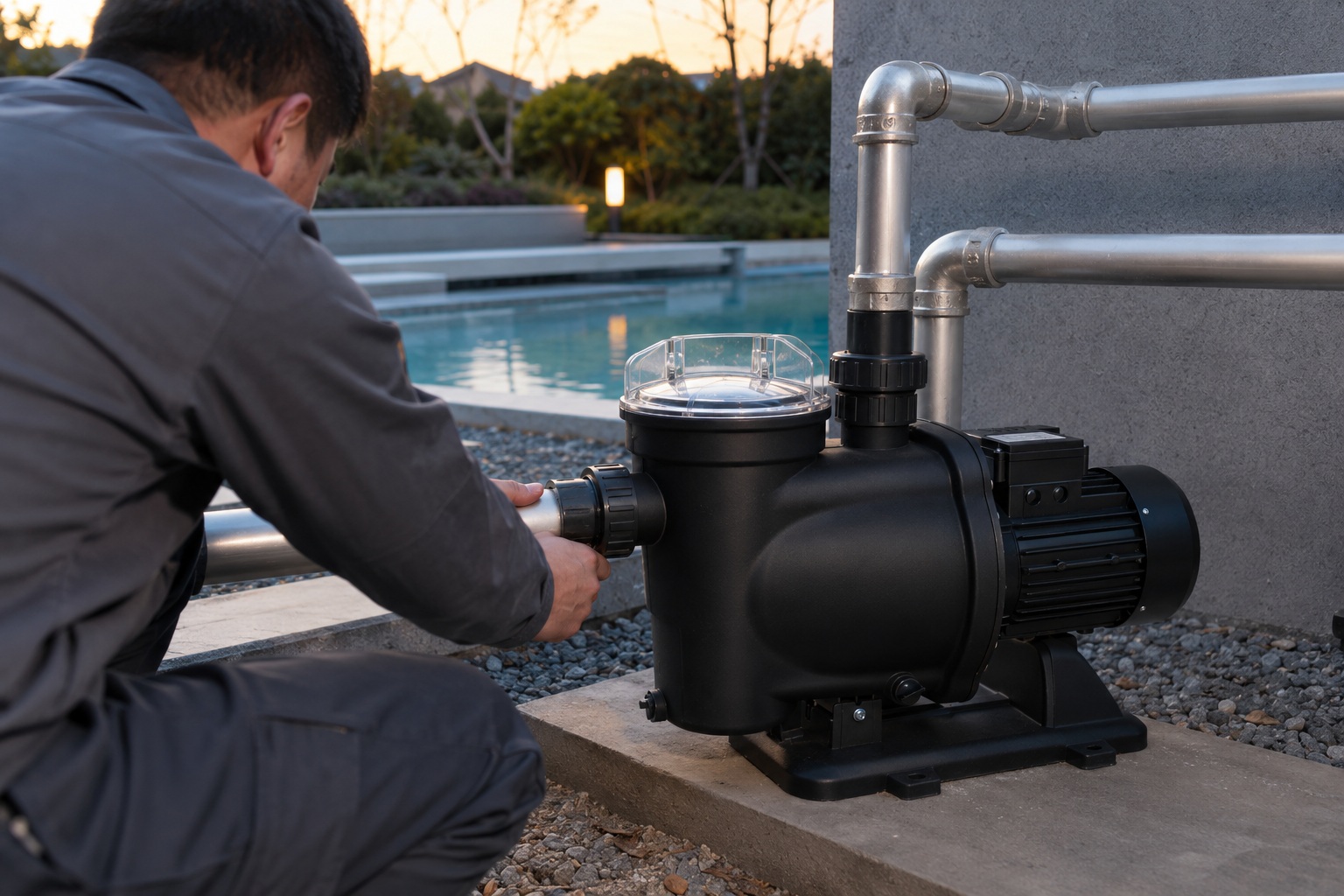
Finding the cheapest time to run your pump is a great start.
However, true optimization involves more than just watching the clock.
You need to balance cost savings with the essential work your pump does.
This includes fighting algae, circulating chemicals, and keeping your water safe and clear.
Understanding the "why" behind the timing will empower you to create the perfect, cost-effective schedule for your specific pool.
Let's dive into the details to find the best strategy for you.
How Long Should I Run My Pump For?
Are you worried your pool isn't truly clean?
Running your pump can feel like a confusing game of time versus money.
Run your pool pump long enough for one full "turnover" each day. This is typically about 8 hours. You should increase this run time during very hot weather or periods of high pool usage to ensure all the water gets filtered properly.
The Goal: One Full Turnover
The primary job of your pump is to circulate water.
It pulls water through the skimmer and main drain.
It pushes the water through the filter.
Then, it sends the clean water back into the pool.
A "turnover" is the amount of time it takes for your pump to cycle all the water in your pool once.
For most residential pools, achieving at least one full turnover per day is the minimum requirement for a healthy pool.
This ensures all the water gets filtered and chemicals are evenly distributed.
Calculating Your Pool's Turnover Rate
To determine the ideal run time, you first need to calculate your pool's specific turnover rate.
You will need two numbers: your pool's volume and your pump's flow rate.
The formula is simple:
Pool Volume (in gallons) ÷ Pump Flow Rate (in Gallons Per Minute, or GPM) = Total Minutes for One Turnover
Then, divide the total minutes by 60 to get the hours needed.
For example, a 20,000-gallon pool with a pump rated at 40 GPM would take 500 minutes, or 8.3 hours, for one turnover.
| Pool Size (Gallons) | Pump Flow Rate (GPM) | Turnover Time (Hours) |
|---|---|---|
| 15,000 | 35 | 7.1 |
| 20,000 | 40 | 8.3 |
| 25,000 | 50 | 8.3 |
| 30,000 | 60 | 8.3 |
The 10-Degree Rule for Hot Weather
Weather plays a huge role in your pump's workload.
A simple guideline for adjusting run time is the "10-Degree Rule".
Run your pump for one hour for every 10°F of the outside air temperature.
This rule provides a great baseline that scales with the heat.
| Outside Temperature (°F) | Recommended Run Time (Hours) |
|---|---|
| 70°F (21°C) | 7 |
| 80°F (27°C) | 8 |
| 90°F (32°C) | 9 |
| 100°F (38°C) | 10 |
On days over 90°F (32°C), consider adding an extra hour or two.
This extra circulation is crucial because heat and sun accelerate algae growth and chlorine breakdown.
If you ever notice cloudy water or the start of algae, the first step is to increase your pump run time in two-hour increments until the water clears.
When Should a Pump Run? Day vs. Night
Are you debating running your pump during the day or at night?
Each option has pros and cons that directly affect your wallet and your water quality.
Running your pump at night is generally cheaper because of off-peak electricity rates. However, running it during the day is more effective for maintaining water quality, as it fights algae and chlorine loss caused by peak sun exposure.
The Case for Daytime Operation
Running your pump when the sun is out might seem counterintuitive from a cost perspective, but it's a powerful strategy for water health.
The sun's UV rays are your chlorine's worst enemy.
Sunlight can deplete up to 90% of your pool's unstabilized chlorine in just a couple of hours.
When your pump is running, the water is moving.
This circulation helps mix the stabilizing chemicals and slows down the chlorine loss.
Algae also loves warm, stagnant water and sunlight—the exact conditions of a pool in the afternoon.
Running the pump during these peak hours creates an environment where algae struggles to grow.
Furthermore, most swimming happens during the day.
Running the pump during these high-traffic times helps the skimmer and filter immediately deal with the debris, sunscreens, and oils that swimmers introduce.
| Daytime Pumping Pros | Daytime Pumping Cons |
|---|---|
| Counteracts chlorine loss from UV rays. | Higher energy costs. |
| Prevents algae growth during peak sun. | Can be noisier during the day. |
| Cleans the pool during high-traffic swim times. | |
| Keeps chemicals circulating and effective. |
The Argument for Nighttime Pumping
The single biggest advantage of running your pump at night is cost savings.
Most utility companies offer Time-of-Use (TOU) plans.
These plans feature "off-peak" hours, usually from late evening to early morning, when electricity is significantly cheaper.
By scheduling your pump to run during these hours, you can cut your pool's energy expenses dramatically.
Some sources also suggest that chlorine is more effective at night without the sun's UV rays to break it down.
However, this approach has a major drawback.
Your pool water will be stagnant during the hottest and sunniest part of the day.
This is the prime time for algae to bloom and for debris to settle on your pool floor.
You might save money on electricity but end up spending more on chemicals and cleaning time to combat these issues.
Often, a pool run only at night will still require at least one hour of pumping during the day to prevent problems.
What Are the Best Pool Pump Settings for Energy Savings?
Are you shocked by how much your pool pump adds to your electric bill?
Your pump's type and settings could be the real culprit, costing you hundreds of dollars.
For maximum energy savings, use a variable-speed pump (VSP). Run it at lower speeds for longer periods. This method is far more energy-efficient than running a traditional single-speed pump on high for short bursts of time.
Single-Speed Pumps: The Energy Hog
The traditional single-speed pump is a workhorse, but an inefficient one.
It operates at only one constant, high speed, typically around 3,450 revolutions per minute (RPM).
This "all or nothing" approach is like driving your car with the gas pedal floored everywhere you go.
This high speed is rarely necessary for basic filtration.
It consumes a massive amount of electricity.
A single-speed pump can be the second-largest energy user in a home, after the HVAC system.
This can add $500 to over $870 to your annual energy bills.
Because of this inefficiency, these pumps are being phased out and even banned in favor of more advanced models in many regions.
Variable-Speed Pumps (VSPs): The Smart Upgrade
Variable-speed pumps are the game-changer for pool owners.
They use advanced permanent magnet motors, similar to the technology in electric vehicles.
This allows them to run at a wide range of speeds.
You can run the pump at a high speed for demanding tasks like vacuuming or running a water feature.
Then, you can dial it down to a very low, quiet, and energy-sipping speed for general filtration.
The key principle is that reducing pump speed creates exponential energy savings.
Slowing the pump speed by half reduces its energy consumption by nearly 88%.
An ENERGY STAR-certified variable-speed pump can save you up to 90% on your pool's energy costs compared to a single-speed model.
Over the life of the pump, this can add up to savings of over $2,800.
A Sample VSP Schedule for Maximum Savings
The best strategy for a VSP is to run it longer, but slower.
This provides superior filtration at a fraction of the cost.
A common and effective schedule involves splitting the day.
| Time Block | Pump Speed | Purpose | Duration |
|---|---|---|---|
| 10:00 AM - 2:00 PM | Medium-High | Chemical circulation, peak sun defense | 4 hours |
| 2:00 PM - 10:00 PM | Off | Saving energy during peak rates | 8 hours |
| 10:00 PM - 6:00 AM | Low | Main filtration, off-peak savings | 8 hours |
This schedule provides a total run time of 12 hours.
It addresses water health during the day while taking full advantage of low-cost energy at night.
For some pools, it can even be more cost-effective to run a VSP 24/7 at a very low speed than to cycle a single-speed pump on and off.
Can I Create a Hybrid Schedule for the Best Results?
Are you torn between saving money at night and cleaning effectively during the day?
You don't have to choose just one.
A hybrid approach offers the perfect solution.
Yes, a hybrid schedule is often the best overall strategy. You can split your pump's total required run time between a daytime slot to fight the sun's effects and a nighttime slot to capitalize on cheaper, off-peak energy rates.
Designing Your Hybrid Schedule
A hybrid model gives you the best of both worlds.
It allows you to run the pump during the most critical parts of the day while also taking advantage of lower electricity costs.
The goal is to meet your pool's total required run time (e.g., 8 hours) by splitting it into two or more shorter intervals.
A great example for an 8-hour requirement would be:
- Run 1 (Day): 10:00 AM - 2:00 PM (4 hours)
- Run 2 (Night): 1:00 AM - 5:00 AM (4 hours)
This schedule achieves two critical goals.
First, the daytime run (10 AM - 2 PM) happens when the sun is high and intense.
This keeps chemicals circulating, fights algae growth, and helps your chlorine work more effectively.
Second, the nighttime run (1 AM - 5 AM) occurs during the cheapest off-peak electricity hours for most utility providers.
You get the necessary filtration done at the lowest possible cost.
Leveraging Time-of-Use (TOU) Plans
This hybrid strategy is most effective when paired with a Time-of-Use (TOU) electricity plan.
These plans divide the day into pricing tiers.
| Time-of-Use Tier | Typical Hours | Electricity Cost | Best Pump Action |
|---|---|---|---|
| Off-Peak | 12:00 AM - 6:00 AM | Lowest | Run pump for filtration |
| Mid-Peak | 6:00 AM - 4:00 PM | Medium | Run pump for sun defense |
| On-Peak | 4:00 PM - 9:00 PM | Highest | Keep pump off |
Your goal is to avoid the "On-Peak" window entirely.
Programmable timers and variable-speed pumps make this incredibly easy to automate.
You set the schedule once and let the pump do the work, ensuring you never pay premium prices for filtration.
The AC/DC Hybrid Advantage
For ultimate efficiency and reliability, modern pump systems offer an even smarter solution.
Some advanced systems are designed as AC/DC hybrids.
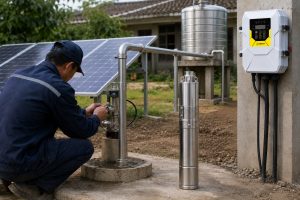
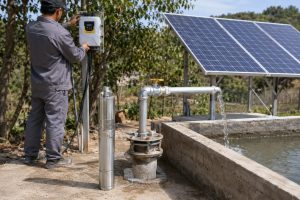
During the day, they can run entirely on free energy from solar panels.
The system's intelligent controller automatically uses the sun's power to run the pump, circulating and cleaning your water at zero energy cost.
When the sun goes down or on cloudy days, the controller can automatically switch to use AC grid power.
This ensures your filtration schedule is never interrupted.
This hybrid function maximizes the use of free solar energy first before drawing from the grid.
It guarantees worry-free, 24-hour water management, offering both complete energy independence and the reliability of a grid backup.
Conclusion
The cheapest time is off-peak at night.
But the best time combines day and night running.
Use a variable-speed pump on a hybrid schedule for ultimate savings and a crystal-clear pool.
FAQs
Is it cheaper to run a pool pump 24/7?
No, not for a single-speed pump, which is very costly. A variable-speed pump can be run 24/7 on a very low, cheap setting, which is sometimes more efficient than cycling on/off.
How can I reduce my pool pump electricity bill?
Use a variable-speed pump, run it on a hybrid schedule during off-peak hours, keep filters clean, and cover your pool to reduce debris and evaporation, which lessens pump workload.
How many hours a day should I run my pool pump to save money?
Run it for the minimum time needed for one full turnover, typically 8 hours. Running it less than this may save electricity but will cost more in chemicals and cleaning.
Is it OK to run a pool pump 4 hours a day?
This is generally not enough time for proper filtration in most pools. It can lead to cloudy water and algae unless the pool is very small or has an extremely powerful pump.
Does turning a pool pump on and off damage it?
Frequent cycling can cause extra wear on a single-speed pump's motor. Variable-speed pumps are designed to run for long, continuous periods at low speeds, which is better for their longevity.
What is the most expensive time to run a pool pump?
The most expensive time is during "on-peak" electricity hours. This is typically in the late afternoon and early evening, from about 4 PM to 9 PM, when energy demand is highest.
What happens if I don't run my pool pump long enough?
Your water will not be properly filtered, leading to cloudy water, algae growth, and an imbalance of chemicals. Debris will also accumulate, making the pool unsanitary and uninviting.
Do I need to run my pool pump in the winter?
Yes, but for less time, around 4-6 hours a day. If temperatures drop near freezing (below 40°F or 4°C), you must run the pump continuously to prevent pipes from freezing and cracking.