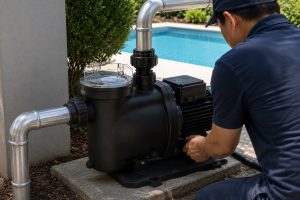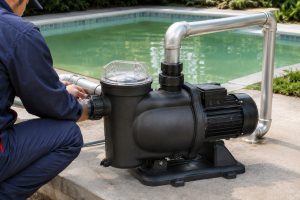
Your pond's water is getting cloudy, and the waterfall has slowed to a disappointing trickle.
A dirty pump is straining your entire system and ruining the tranquil view you worked so hard to create.
Thankfully, a simple and regular cleaning routine is the key to fixing it.
As a general rule, you should inspect and clean your pond pump every 4 to 6 weeks during the active season. However, factors like pond size, fish load, and falling leaves in autumn may require more frequent cleanings—sometimes as often as every two weeks—to maintain optimal water flow and health.
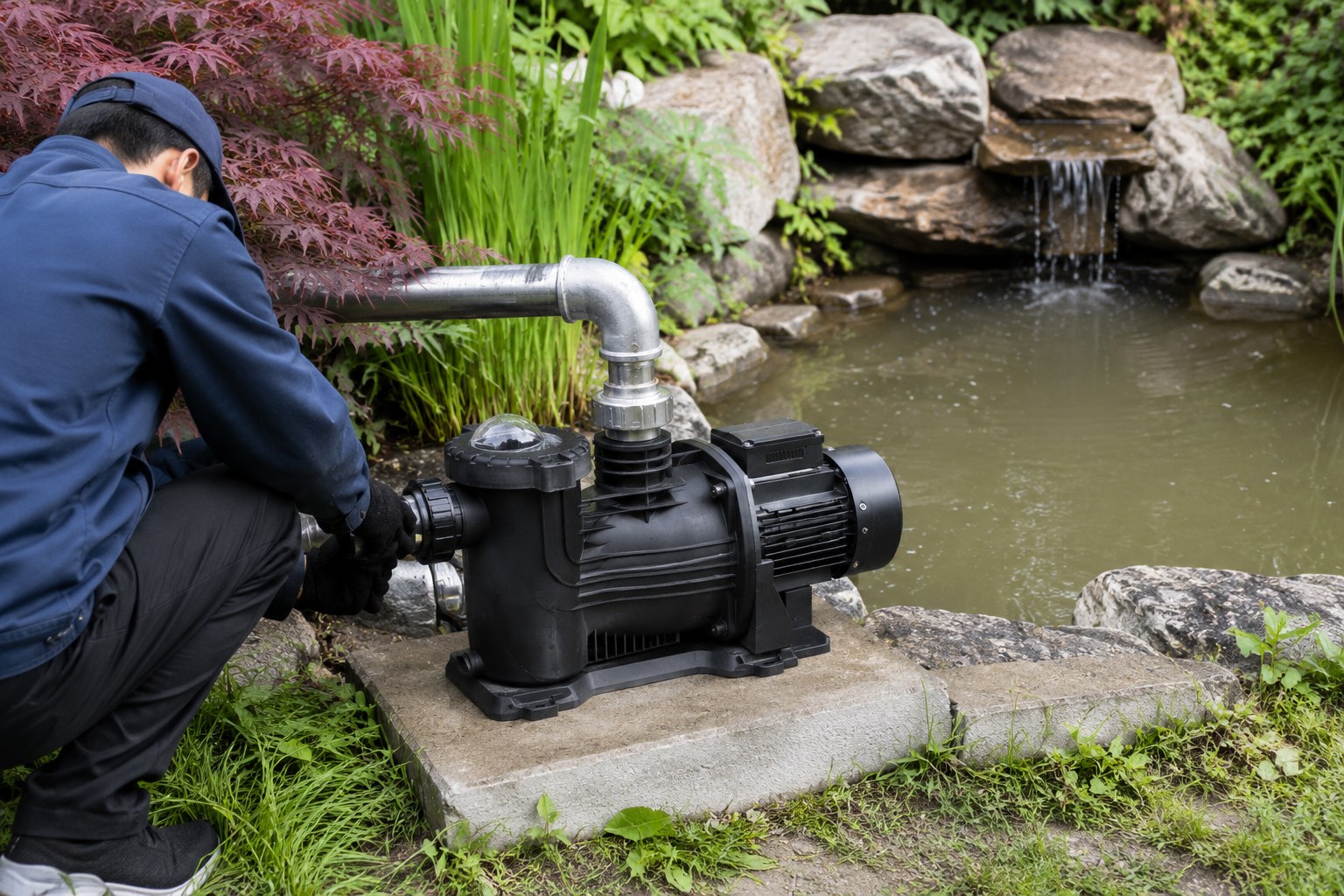
Keeping your pump clean is the secret to a crystal-clear pond and a long-lasting, efficient pump.
But knowing precisely when and how to clean it depends on several key factors you can easily monitor.
Let's explore the essential maintenance tips that will save you time and money.
These practices will prevent costly replacements and ensure your pond's delicate ecosystem thrives for years to come.
Why Is Regular Pump Cleaning So Important?
A clogged or dirty pump is forced to work harder, consuming more energy and leading to a much shorter lifespan.
This neglect results in murky water, unhealthy fish, and the unexpected, high cost of a replacement pump.
Don't let a lack of simple maintenance drain your wallet and ruin your pond.
Regular cleaning is crucial because it prevents clogs, reduces strain on the motor by up to 30%, and ensures efficient water circulation. This simple task oxygenates the water for fish and plants, powers filtration systems effectively, and can extend the pump's lifespan from one year to over three years, saving you from premature, costly replacements.
The Heart of Your Pond's Ecosystem
A pond pump is often called the heart of the pond, and for good reason.
It continuously circulates water, which is vital for two main processes: oxygenation and filtration.
As water moves and splashes, it absorbs oxygen from the air.
This oxygen is essential for the survival of your fish, beneficial bacteria, and aquatic plants.
Without adequate circulation, your pond can become stagnant, leading to low oxygen levels that can harm or even kill your fish.
The pump also pushes water through your pond's filter.
The filter traps debris, fish waste, and other toxins, keeping the water clean and clear.
If the pump is clogged and its flow rate drops, the filter cannot do its job effectively.
This leads to a buildup of harmful substances and the cloudy, unhealthy water that all pond owners dread.
A clean pump ensures the entire life-support system of your pond is running at peak performance.
The Financial Impact of Neglect
Ignoring pump maintenance has direct financial consequences that go beyond the final replacement cost.
A pump struggling against clogs and buildup has to work significantly harder to move the same amount of water.
This increased strain leads to higher electricity consumption.
A pump with its flow rate reduced by just 25% due to debris can consume over 15% more energy.
Over a season, this wasted energy adds up on your utility bill.
Furthermore, this constant overwork causes premature wear on the motor and impeller.
A high-quality pump that is well-maintained can last for three years or even longer.
The same pump, if poorly maintained, might fail in less than a year.
Replacing a pump annually instead of every few years is a significant and completely avoidable expense.
Regular cleaning is a small investment of time that pays huge dividends in energy savings and extended equipment life.
Connecting Performance to Lifespan
The relationship between maintenance frequency, pump performance, and lifespan is direct and predictable.
A proactive cleaning schedule keeps your pump operating as the manufacturer intended, maximizing both its efficiency and its durability.
Failing to perform routine cleanings initiates a downward spiral of reduced flow, increased strain, and accelerated wear and tear.
The data clearly shows that a little effort goes a long way.
You can directly influence how long your pump will last.
| Maintenance Schedule | Water Flow | Energy Use | Expected Lifespan |
|---|---|---|---|
| Every 4-6 Weeks | Optimal (100%) | Normal | 2-3+ Years |
| Quarterly | Reduced (by ~30%) | Increased (by ~15%) | 1-2 Years |
| Annually | Severely Restricted (by >50%) | High (by >40%) | < 1 Year |
What Are the Key Signs Your Pump Needs Cleaning?
Your once-powerful waterfall isn't as strong as it used to be.
You hear a strange new grinding or humming noise coming from the depths of your pond.
These are not minor issues; they are clear cries for help from your pump.
Ignoring these warning signs could lead to irreversible damage and total system failure.
The most common signs that your pump needs immediate cleaning are a noticeable decrease in water flow and the emergence of unusual noises. Any reduction in your waterfall's power or any new grinding, rattling, or loud humming sounds from the pump indicates an urgent need for inspection and maintenance.
Reading the Flow Rate
The most reliable indicator of a problem is a change in the amount of water your pump is moving.
For ponds with features like waterfalls, fountains, or streams, this change is often easy to spot.
If your waterfall looks weaker or your fountain doesn't spray as high, your pump is likely clogged.
A drop in flow rate of 20% or more is a clear signal that it's time for a cleaning.
In ponds without such visible features, diagnosing a flow reduction can be trickier.
One effective method is to install an in-line water flow meter.
This device gives you a precise reading in gallons per hour (GPH), allowing you to see exactly when performance starts to decline.
By taking a baseline reading when the pump is clean, you can easily identify a drop in efficiency and act before the clog becomes severe.
Monitoring flow is the best way to move from reactive to proactive maintenance.
Decoding Pump Noises
Your ears are one of the best tools for diagnosing pump problems.
A healthy pump should operate with a consistent, quiet hum.
Any deviation from this sound warrants an immediate investigation.
Different noises can point to specific problems.
- Grinding or Crunching: This is often caused by small pebbles, sand, or other hard debris getting caught in the impeller chamber. This is very damaging and needs to be addressed immediately to prevent the impeller from breaking.
- Rattling: This sound may indicate that a larger object, like a twig or a snail shell, is bouncing around inside the pump housing. It could also mean a part has come loose.
- Loud Humming or Whining: If the pump is much louder than usual but the flow is weak, the motor is likely straining to turn a jammed or heavily clogged impeller. The pump is working hard but going nowhere, which can quickly lead to overheating and motor burnout.
Visual Clues in the Water
Sometimes, the water itself will tell you that the pump isn't working correctly.
If your water, which is normally clear, starts to become cloudy or green with algae, it's a sign that the filtration system is not keeping up.
Since the pump is responsible for moving water to the filter, it is often the root cause.
A reduced flow rate means less water is being cleaned per hour, allowing waste and algae to build up faster than the system can remove them.
You might also notice more floating debris on the pond's surface.
A properly functioning system should pull this debris toward the skimmer or pre-filter.
If leaves and dust are just sitting on the surface, it's a strong indicator that the pump's suction has been compromised by a clog at its intake.
A Step-by-Step Guide to Cleaning Your Pond Pump
You know your pump needs to be cleaned, but the idea of taking it apart can be daunting.
You might worry that you'll break a delicate part or won't be able to put it back together correctly.
It’s actually a straightforward process that is simpler than you think with the right steps and tools.
First and foremost, always disconnect the pump from its power source. Then, remove the pump from the pond, disassemble it according to the manufacturer's instructions, and use a soft brush to clean the intake, housing, and impeller. For stubborn limescale, a deep clean with white vinegar will dissolve the buildup. Finally, rinse all parts thoroughly with clean water before reassembling.
Essential Tools for the Job
Having the right tools on hand makes the cleaning process quick and easy.
You don't need a professional workshop; a few basic items will do the trick.
Before you begin, gather the following:
- Gloves: Protect your hands from grime and sharp edges.
- A Bucket: Useful for holding small parts during disassembly or for carrying water.
- A Soft Brush or Sponge: A non-abrasive brush (like an old toothbrush) is perfect for scrubbing parts without scratching them.
- A Hose: For rinsing off components after cleaning.
- Screwdriver or Pliers: You may need these to open the pump casing, depending on your model.
- White Vinegar: For deep cleaning and removing mineral deposits.
Never use a power washer, as the high pressure can easily damage the impeller, seals, or plastic housing.
The Routine Cleaning Process (Every 4-6 Weeks)
This is the regular maintenance that will keep your pump running smoothly throughout the season.
- Safety First: Unplug the pump from its power source. If possible, turn off the breaker to the outlet. Installing a ground fault circuit interrupter (GFCI) is a highly recommended safety measure for all pond equipment.
- Remove and Disassemble: Carefully lift the pump out of the pond. Follow the manufacturer's instructions to remove the pre-filter screen or cage, and then the pump cover to expose the impeller. Taking a photo with your phone before you fully disassemble can be a great reference for reassembly.
- Inspect and Clean: Pull the impeller assembly straight out of the impeller chamber. It is often held in place by a magnet. Clear away any tangled debris like string algae, leaves, or hair.
- Scrub Gently: Use your soft brush and a bucket of pond water to scrub the impeller, the inside of the chamber, and the intake screen. Using pond water instead of chlorinated tap water helps preserve the colonies of beneficial bacteria living on these surfaces.
- Rinse and Reassemble: Give all the components a final rinse to wash away any loosened grime. Carefully put everything back together in the reverse order you took it apart.
The Deep Cleaning Process (Twice a Year)
At least once in the spring and once before winter, your pump needs a more thorough cleaning to remove stubborn buildup.
This process targets mineral deposits, also known as limescale, which can form a hard, crusty layer on components.
This buildup forces the motor to work harder and can insulate it, causing overheating.
Removing limescale can improve pump efficiency by over 20% in areas with hard water.
After disassembling the pump, soak the impeller and other affected plastic parts in a solution of 50% white vinegar and 50% water for about 20-30 minutes.
After soaking, the limescale should be soft enough to scrub away with your soft brush.
During this deep clean, also inspect the rubber O-rings and seals for any signs of cracking or drying out.
Applying a small amount of silicone-based, aquarium-safe lubricant will keep them supple and ensure a watertight seal.
How Can You Reduce How Often You Clean Your Pump?
Spending every other weekend cleaning your pump is a chore.
You would probably rather spend that time enjoying your pond instead of working on it.
With a few smart adjustments to your pond setup, you can make a huge difference in your maintenance workload.
To significantly reduce cleaning frequency, your first and best step is to use a pre-filter or skimmer to catch debris before it ever reaches the pump. You should also elevate the pump off the pond floor on stones, regularly clean your main filter, manually remove large debris with a net, and use a pond vacuum to remove bottom sludge.
The Power of Pre-Filtration
The most effective way to protect your pump is to stop debris before it gets there.
A pre-filter acts as the first line of defense.
Using an effective pre-filter can reduce the need for pump cleaning by up to 50%.
There are several types to consider:
- Pump Cages/Sponges: Many submersible pumps come with a built-in cage or a sponge pre-filter. These are good for stopping large debris but can clog quickly themselves.
- External Pre-filters: These are separate canisters that attach to the pump's intake hose. They have a larger capacity for trapping debris than built-in cages and are easier to clean without removing the main pump.
- Pond Skimmers: This is the most effective solution. A skimmer sits at the edge of the pond and continuously pulls water from the surface, trapping leaves, pollen, and other floating debris in a collection basket. The pump is often housed within the skimmer unit, keeping it protected in a clean water environment.
Strategic Pump Placement
Where you place your pump in the pond has a major impact on how much debris it encounters.
The bottom of the pond is where sludge—a thick layer of fish waste, decaying leaves, and other organic matter—accumulates.
Placing your pump directly on the pond floor is an invitation for it to suck up this sludge, causing constant clogging.
The best practice is to place the pump in the deepest part of the pond to promote good circulation, but elevate it.
Set the pump on a few flat stones or a dedicated pump stand to raise it 6-12 inches off the bottom.
This simple trick keeps the intake above the worst of the sludge layer.
Also, try to position the pump away from dense aquatic plants that shed leaves and away from the base of waterfalls where debris tends to collect.
A Multi-Pronged Attack on Debris
Relying on the pump alone to keep the pond clean is a recipe for frequent maintenance.
A holistic approach that tackles debris from all angles will keep your entire system healthier and dramatically cut down on your cleaning chores.
Combining several strategies creates a powerful defense against the dirt and grime that threaten to clog your pump.
| Strategy | Target Debris | Impact on Cleaning Frequency |
|---|---|---|
| Pond Skimmer | Floating leaves, twigs, pollen, dust | High Reduction (up to 40%) |
| Pond Vacuum | Sunken sludge, decaying matter | Medium Reduction (up to 25%) |
| Algae-eating Fish | Algae buildup on surfaces | Low-Medium Reduction (up to 15%) |
| Beneficial Bacteria | Invisible organic waste, ammonia | Low-Medium Reduction (up to 10%) |
Does Pump Type and Quality Affect Cleaning Frequency?
You follow a perfect maintenance schedule, but your pump still seems to clog easily and performs poorly.
The problem might not be your cleaning routine, but the pump itself.
Is a low-quality, inefficient pump costing you more in time and frustration in the long run?
Yes, pump quality and design have a huge impact. Higher-quality pumps with robust, solids-handling impellers and efficient motors process debris better and require less frequent cleaning. For distributors and importers, offering durable, well-designed pumps means fewer customer complaints and a stronger brand reputation for reliability and performance.
Magnetic Drive vs. Motor-Driven Pumps
Pond pumps generally fall into two categories based on their internal mechanics, and this affects how they handle dirt.
Magnetic-drive (mag-drive) pumps use a magnetic coupling to spin the impeller.
They are very energy-efficient but typically have less torque.
This makes them more susceptible to jamming from small debris, meaning they may require more frequent cleaning, especially if you don't use a good pre-filter.
Direct-drive (or motor-driven) pumps have the impeller attached directly to a motor shaft.
These pumps are more powerful, have higher torque, and are often designed as "solids-handling" pumps.
They can pass larger debris (up to a certain size) without clogging.
While they may use slightly more energy, their robust nature means they are better suited for dirtier ponds or applications with high debris loads, reducing the need for constant cleanings.
The Importance of the Motor
While traditional pond pumps use various motor types, the core principles of efficiency and durability are universal.
The motor is the engine of the pump, and its quality dictates overall performance.
For instance, in highly demanding applications like solar deep-well pumping, high-efficiency BLDC (Brushless DC) permanent magnet motors are the industry standard.
These advanced motors can exceed 90% efficiency, are more compact, and are virtually maintenance-free.
This same focus on superior motor technology translates directly to high-quality pond pumps.
A well-engineered motor not only consumes less electricity but also generates less heat and withstands the strain of operation far better.
This contributes to a longer, more reliable service life with fewer maintenance headaches for the end-user and a more dependable product for the distributor.
Material Matters: Plastic vs. Stainless Steel
Just as in other pump applications, the material of the impeller is critical to a pump's longevity and performance between cleanings.
A standard plastic impeller found in many entry-level pumps is economical but can wear down quickly if exposed to sand, grit, or other abrasive particles.
This wear reduces its efficiency and makes it more prone to clogging.
More advanced pumps utilize robust, wear-resistant engineered plastics or even stainless steel impellers.
Stainless steel, commonly found in premium pumps designed for corrosive or abrasive environments, offers superior durability.
It resists wear from grit and maintains its precise shape for much longer, ensuring the pump's performance doesn't degrade.
For a business sourcing pumps, choosing models with superior materials is a direct investment in quality, customer satisfaction, and long-term brand value.
Conclusion
Consistent and proper pond pump cleaning is not just a chore; it's a vital practice for ensuring pond health and maximizing pump longevity.
By following a regular schedule and implementing preventive measures, you protect your investment, save on energy costs, and guarantee a beautiful, thriving pond for years to come.
Frequently Asked Questions
How do I know if my pond pump impeller is broken?
Look for a lack of water flow despite the motor humming, loud grinding noises, or visible cracks and breaks on the impeller blades during a visual inspection.
Can a pond pump run 24/7?
Yes, it is highly recommended. Continuous operation ensures constant oxygenation and filtration, which is essential for maintaining a healthy and stable pond ecosystem for your fish and plants.
What happens if a pond pump runs dry?
Running dry can cause the pump to overheat rapidly, which can melt plastic components, damage seals, and burn out the motor, often causing permanent failure within minutes.
How do I prepare my pond pump for winter?
In freezing climates, remove the pump, clean it thoroughly, and store it in a frost-free location submerged in a bucket of water to keep seals from drying out.
Can I use a pressure washer to clean my pond pump?
No, never use a pressure washer. The intense pressure can easily crack the plastic housing, break the delicate impeller, and destroy the watertight seals, causing permanent damage.
Why is my pond pump losing pressure?
The most common cause is a clog in the pump's intake, impeller, or the connected tubing. It can also be caused by an air leak in the intake line.
How to protect pond pump from leaves?
Use a pond skimmer to continuously remove leaves from the surface or place a fine mesh bag around the pump to act as an effective pre-filter.
Should I turn my pond pump off at night?
No, you should not. Turning the pump off stops filtration and life-sustaining aeration. This can lead to oxygen depletion overnight, which is extremely dangerous for fish.