Your well pump stopped, and now your home is without water.
This sudden halt in your daily life is frustrating.
But often, the solution is simpler than you think.
First, check the basics like your circuit breaker and the pump's shut-off switch. A tripped breaker causes the vast majority of pump failures. Simply flipping it off and on again can restore your water, saving you the cost and wait for a professional service call.
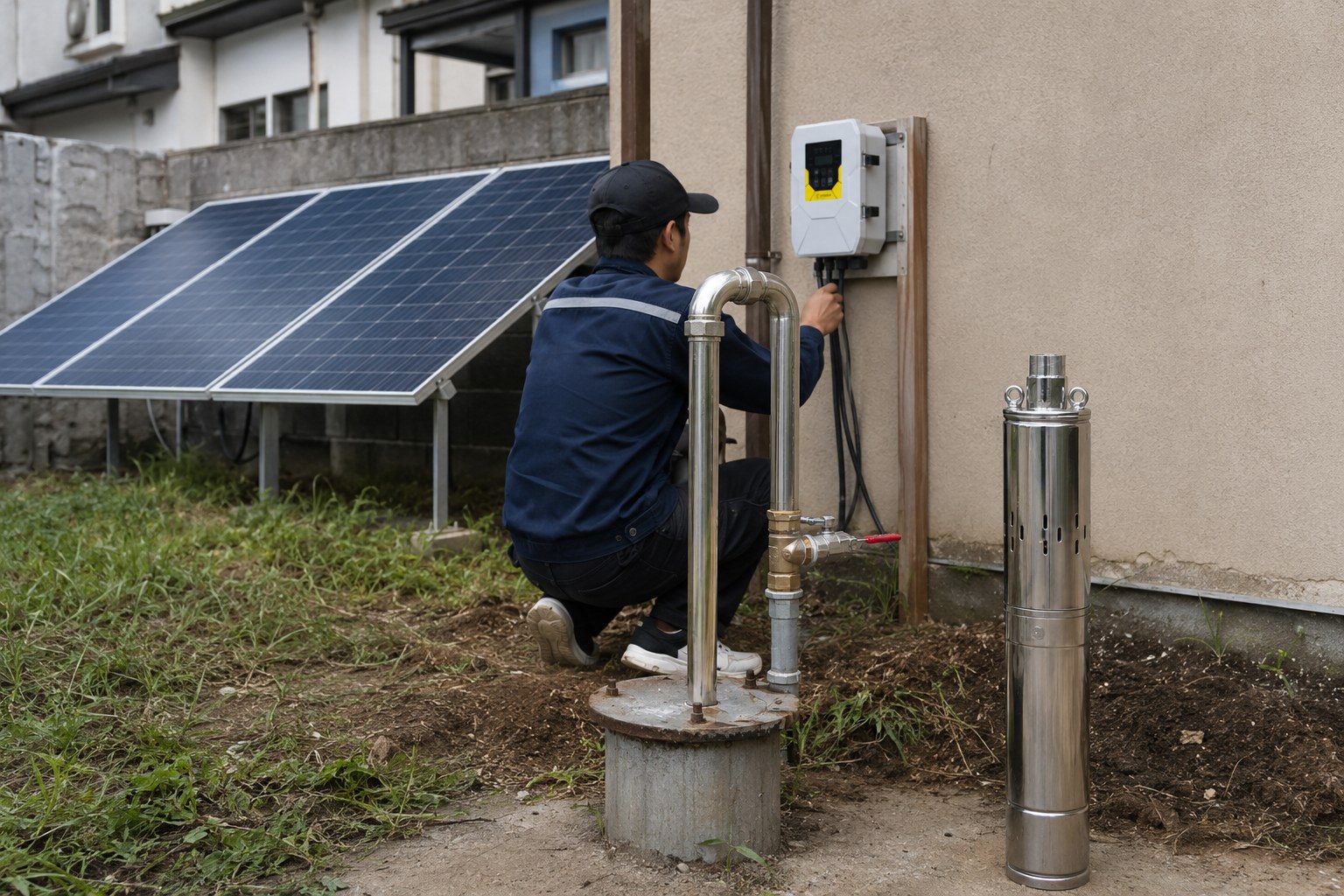
Getting your water running again can feel like a daunting task.
But before you imagine worst-case scenarios and expensive repair bills, it's important to know that many issues have straightforward solutions.
A systematic approach can help you identify the problem quickly and efficiently.
This guide will walk you through a step-by-step process, from the simplest checks you can do yourself to understanding when it's time to consider a modern, more reliable replacement.
We'll explore the common failure points and delve into the advanced, highly efficient pump technologies that offer a long-term solution to water supply challenges.
Let's start troubleshooting and get your water flowing again.
Why Your Pump Stopped: Initial Electrical and Plumbing Checks
You turn on the faucet, and nothing comes out.
The silence where you expect the sound of rushing water is alarming.
You need a solution, and you need it now.
Begin by checking your home's circuit breaker panel for a tripped breaker labeled "pump" or "well." If it's not the breaker, ensure the well's shut-off switch hasn't been accidentally turned off. These simple electrical checks resolve over 80% of sudden pump failures.
How do I get my water pump to work again
When you have no water, your pump's electrical system is the first and most important place to look.
Since the pump relies entirely on electricity to function, a power interruption is the most common reason for it to stop working.
Similarly, simple blockages in your plumbing can mimic a pump failure, so it's essential to rule them out.
Initial Electrical Checks
Always start with the power supply.
Go to your circuit breaker panel and find the breaker dedicated to your pump.
If it is in the middle or "off" position, it has tripped.
Push it fully to the "off" position, wait a few seconds, and then flip it firmly back to "on."
If the breaker trips again immediately, this signals a more serious electrical short.
Do not repeatedly reset it, as this is a fire hazard.
For older homes, you might have a fuse box.
Check for a blown fuse, indicated by a broken metal filament inside.
Always replace it with a fuse of the exact same amperage.
Also, locate the well shut-off switch, which is often a separate switch near the pressure tank.
Make sure it's in the "on" position.
Simple Plumbing Checks
If the electricity is flowing correctly, the next step is to check for simple plumbing issues.
A clogged sediment filter can completely halt water flow.
If the filter housing looks dirty, try bypassing, cleaning, or replacing the filter to see if water flow returns.
Water treatment systems, like softeners or iron filters, also have bypass valves.
Engaging the bypass will tell you if the issue lies with the treatment unit rather than the pump itself.
In colder climates, check for frozen pipes, especially any exposed lines running between the well and the house.
Finally, test all the faucets in your home.
If only one is dry, the problem is localized to that specific fixture's plumbing.
If all are dry, it confirms a system-wide problem originating at the pump or pressure tank.
| Initial Check | Likelihood of Being the Cause | DIY Fixable? |
|---|---|---|
| Tripped Circuit Breaker | Very High (60%+) | Yes |
| Well Switch Turned Off | High | Yes |
| Clogged Sediment Filter | Medium | Yes |
| Power Outage in Area | Varies by location | No (Wait for utility) |
| Blown Fuse (Older Systems) | Medium | Yes |
| Treatment System Issue | Low | Yes (Bypass) |
| Frozen Pipes | Low (Seasonal) | Yes (Thawing) |
Diagnosing Key Electrical Components: The Heart of the Problem
The pump has power, but it's still silent.
This points to a failure in the components that control it.
You're worried this means a complex and expensive repair is unavoidable.
The pressure switch or control box is the likely culprit. A faulty capacitor, found in the control box, is responsible for 90% of motor failures. Carefully inspect these parts for burn marks, bulges, or corrosion, as these are clear signs of what needs to be replaced.
If basic power checks don't resolve the issue, the problem likely lies within the key electrical components that command your pump.
The pressure switch and control box are the brain and heart of the operation.
A failure here will stop the entire system, even if the pump motor itself is fine.
Safety is paramount: Always turn off all power to the pump at the circuit breaker before opening or touching any electrical components.
These systems carry high voltage that can cause serious injury.
Troubleshooting the Pressure Switch
The pressure switch is a small box, typically mounted on the piping near your pressure tank.
It reads the water pressure and tells the pump when to turn on (at low pressure) and off (at high pressure).
With the power off, remove the cover.
Look at the electrical contacts.
If they are blackened, pitted, or look burnt, the switch has likely failed.
Sometimes, the small tube connecting the switch to the water pipe gets clogged with sediment, preventing it from reading the pressure correctly.
With the power off and water pressure released, you can disconnect the switch and clear this tube.
Given their low cost (typically $20-$40), it is almost always better to replace a faulty pressure switch than to attempt a repair.
Inspecting the Well Pump Control Box
The control box is the starting hub for your pump's motor.
Inside, you will find the capacitor, which provides the initial electrical jolt to start the motor.
A bulging or leaking capacitor is the single most common reason for a pump to fail.
Capacitors should be perfectly cylindrical; any distortion or fluid leakage means it must be replaced.
While the control box is open, look for other signs of trouble.
Melted wire insulation, scorch marks, or a burnt smell are indicators of severe overheating and a potential fire hazard that requires professional attention.
Gently tug on each wire to ensure all connections are tight and secure.
| Component | Sign of Failure | Action | Approximate Cost |
|---|---|---|---|
| Pressure Switch | Burnt/pitted contacts, clogged sensor tube | Replace | $20 - $40 |
| Capacitor | Bulging, leaking, burn marks | Replace | $15 - $50 |
| Control Box Wiring | Melted insulation, loose connections, scorch marks | Call a Professional | Varies |
Repair or Replace? Making the Smart Financial Decision
Your pump is old and has broken down again.
You're facing a costly repair and wondering if it's worth it.
Pouring more money into an aging system feels like a losing battle.
Consider the pump's age against the repair cost. If your pump is over 10 years old and the repair cost is more than 50% of a new unit, replacement is the smarter investment. A new pump offers better efficiency, lower energy bills, and a full warranty.
Deciding whether to repair or replace a failing well pump is a critical financial decision.
While a simple repair might seem cheaper upfront, it may not be the most economical choice in the long run.
Several factors, including the pump's age, the frequency of breakdowns, and the potential for improved efficiency, should guide your decision.
Understanding Pump Lifespans
The expected lifespan of a well pump varies by type.
Submersible pumps, which are protected down in the well, typically last 8 to 15 years, though some high-quality models can last longer.
Jet pumps, located above ground and exposed to the elements, have a shorter lifespan of around 8 to 10 years.
If your pump is nearing or has exceeded its average lifespan, investing in a major repair is often not cost-effective.
Upgrading to Modern, Efficient Solutions
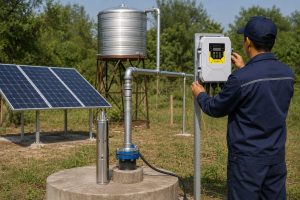
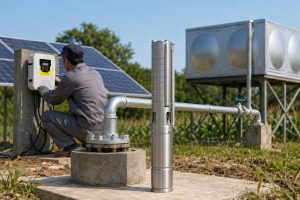
If replacement is the right path, it's an opportunity to upgrade to a far superior technology: the solar deep well pump.
These systems operate independently of the power grid, offering you water security and eliminating electricity bills associated with pumping.
Modern solar pumps are not one-size-fits-all.
They come in specialized designs to meet diverse needs, ensuring optimal performance for any application.
-
Solar Screw Pumps: These are ideal for deep wells where high head (pressure) is needed. They provide lower flow but are extremely durable and can handle water with high sand content, making them perfect for domestic use in remote areas.
-
Solar Plastic Impeller Pumps: For applications requiring high water volume, such as farm irrigation or livestock, these pumps are the workhorse. They deliver high flow at a medium head and are highly wear-resistant against fine sand.
-
Solar Stainless Steel Impeller Pumps: In areas with corrosive water (acidic or alkaline), this premium option is unmatched. The full stainless steel construction ensures a long service life and high reliability, perfect for high-end homes or specific agricultural regions.
| Pump Type | Best For | Flow Rate | Head (Pressure) | Sand Resistance | Primary Advantage |
|---|---|---|---|---|---|
| Solar Screw Pump | Deep Wells, Homes | Low | Very High | Excellent (up to 2% sand) | High Head Capability |
| Solar Plastic Impeller Pump | Farm Irrigation | Very High | Medium | Good | High Flow & Value |
| Solar SS Impeller Pump | Corrosive Water | High | Medium-High | Moderate | Extreme Durability |
Choosing the right type of solar pump ensures you get a system perfectly tailored to your well's depth, water quality, and daily water requirements, providing a reliable and cost-effective solution for years to come.
The Unseen Hero: Why the Motor Matters Most
You're focused on the pump, but the motor driving it is just as important.
An inefficient motor will waste energy and money.
It's a hidden cost that can undermine the benefits of your new system.
Modern solar pumps are powered by high-efficiency Brushless DC (BLDC) permanent magnet motors. With an efficiency of over 90%, they consume significantly less power, reducing the number of solar panels needed by up to 25% and ensuring a long, maintenance-free operational life.
When selecting a water pump system, the pump itself often gets all the attention.
However, the motor is the core power source that determines the entire system's efficiency, reliability, and long-term operating cost.
The shift from traditional AC motors to advanced BLDC motors represents a massive leap forward in pump technology.
What is a BLDC Permanent Magnet Motor?
A Brushless DC (BLDC) motor uses permanent magnets on its rotor and electronic commutation instead of the carbon brushes and copper windings found in older motors.
This design eliminates friction and energy loss associated with brushes, leading to a dramatic increase in efficiency.
The rotors in these motors are often made from high-strength rare-earth magnets, like neodymium iron boron, which provides powerful torque in a compact size.
Technical and Market Advantages
The benefits of a BLDC motor are substantial.
They are not only more efficient but also more powerful and durable.
Compared to traditional motors, a BLDC motor can be up to 47% smaller and 39% lighter for the same power output.
This makes installation easier and less costly.
For a solar-powered system, this high efficiency is a game-changer.
A pump with a BLDC motor requires less energy to do the same amount of work.
This directly translates to needing fewer solar panels to power the system, which can reduce the initial investment cost by 25% or more.
Over the pump's lifespan, the maintenance-free design and lower energy consumption result in significant savings.
| Feature | Traditional AC Motor | BLDC Permanent Magnet Motor | Advantage |
|---|---|---|---|
| Efficiency | 60-75% | >90% | Reduces energy use by 30%+ |
| Components | Brushes, Commutator | Electronics, Permanent Magnets | No wearing parts, maintenance-free |
| Lifespan | 5-10 years | 15-20+ years | Long-term reliability |
| Size/Weight | Larger, Heavier | Compact, Lighter | Easier, cheaper installation |
| Torque | Lower at low speed | High across all speeds | Better starting & performance |
Choosing a pump system with a high-efficiency BLDC motor is an investment in long-term performance, reliability, and cost savings.
Beyond the Sun: Ensuring Water 24/7
Solar power is fantastic, but what happens on cloudy days or at night?
A water shortage at a critical moment is a major concern.
Your water supply shouldn't be at the mercy of the weather.
Modern solar pump systems solve this with an AC/DC hybrid controller. This smart device automatically uses solar power when available but can instantly switch to AC grid power or a generator. It ensures you have uninterrupted water access 24/7, rain or shine.
The primary goal of any water system is reliability.
While solar pumps provide incredible freedom from the grid, their reliance on sunlight can be a limitation in some scenarios.
To address this, advanced systems now incorporate hybrid technology that offers the best of both worlds: the free energy of the sun and the constant availability of a backup power source.
How AC/DC Hybrid Controllers Work
The AC/DC hybrid controller is the brain of the modern solar pumping system.
It is designed with inputs for both DC power from solar panels and AC power from the grid or a generator.
The controller's internal logic is programmed to prioritize solar power first.
Whenever the sun is shining, the pump runs entirely on free solar energy.
If clouds reduce the solar input, the controller can blend AC and DC power, using only as much AC power as necessary to maintain pump operation.
When there is no solar input at all (e.g., at night), the controller automatically switches over to the AC source to keep the water flowing.
This entire process is seamless and requires no manual intervention.
The Advantage of Hybrid Power and System Intelligence
This hybrid capability guarantees a worry-free water supply around the clock.
It's perfect for applications where water is critical, such as livestock farming, crop irrigation, or simply ensuring a home never runs dry.
To further optimize solar energy usage, these controllers are equipped with Maximum Power Point Tracking (MPPT).
MPPT technology constantly adjusts the electrical load to ensure the solar panels are operating at their absolute peak efficiency, regardless of changing light conditions.
This can increase the daily energy harvest by up to 30% compared to systems without MPPT, meaning you get more water pumped for every hour of sunlight.
| System Type | Power Source | Daytime Operation | Night/Cloudy Day Operation | Best For |
|---|---|---|---|---|
| DC Only Solar | Solar Panels | Excellent | None (or with battery storage) | Off-grid areas with storage tanks |
| AC Only Grid | Utility Grid | Good | Good | Urban areas with reliable power |
| AC/DC Hybrid | Solar + Grid/Generator | Excellent (Prioritizes Solar) | Excellent (Automatic AC Switch) | Critical applications needing 24/7 water |
By combining a high-efficiency pump, a BLDC motor, and an intelligent AC/DC hybrid controller, you create a water system that is not only cost-effective and environmentally friendly but also exceptionally reliable.
Conclusion
Start with simple checks, but for long-term water security, consider upgrading to a modern solar pump system with a high-efficiency motor and smart controller for ultimate reliability and savings.
Frequently Asked Questions
Why is my pump running but no water coming out?
This is often due to a loss of prime, an air leak in the suction line, or a clogged intake. Check that the intake is submerged and the system is properly primed.
How do you reset a well pump?
You can reset most well pumps by turning the dedicated circuit breaker off for 30 seconds and then turning it back on. This will reset the pressure switch and control box.
What is the most common cause of well pump failure?
Electrical issues are the most common cause. A failed capacitor in the control box accounts for up to 90% of failures, followed by a faulty pressure switch or a tripped breaker.
Can a well pump be repaired?
Yes, many components like the pressure switch, capacitor, and control box are inexpensive and easy to repair or replace. However, a failed motor often requires a full pump replacement.
How much does it cost to fix a well pump?
Minor repairs like replacing a pressure switch can cost under $200. A full pump replacement is more significant, typically ranging from $975 to $2,750 depending on well depth and pump type.
Why did my well pump suddenly stop working?
A sudden stop is almost always electrical. The first things to check are the circuit breaker, any GFCI outlets in the circuit, and the well's main shut-off switch.
What are the signs of a bad well pump?
Signs include low water pressure, dirty water, sputtering faucets (air in the lines), a pump that runs constantly, or a sudden spike in your electricity bill.
How do I know if my well pump capacitor is bad?
A bad capacitor may be visibly bulged, leaking oil, or have burn marks. If the pump hums but doesn't start, or if the breaker trips, the capacitor is a likely suspect.