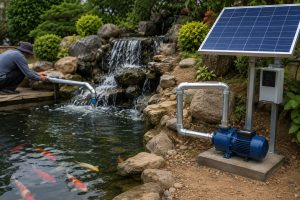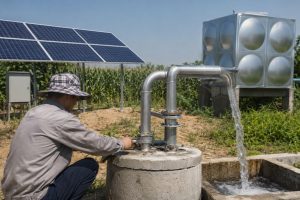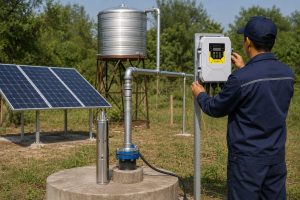
Struggling to find a truly powerful water pump for your home or farm?
You need reliable water pressure, but the options are confusing, and making the wrong choice is costly.
A powerful solution is closer than you think.
**The most "powerful" water pump is not just about horsepower.
True power comes from matching the pump's flow rate (GPM), pressure (head), and motor efficiency to your exact needs.
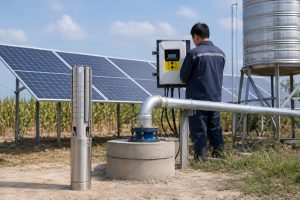
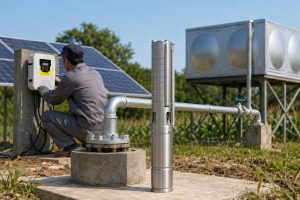
For off-grid applications, specialized solar deep well pumps offer tailored power for different situations.
To find the right pump, you must look beyond a single specification.
The real strength of a pump lies in a complete system designed for your environment.
It involves the pump type, the motor driving it, and the intelligence controlling it.
Let's explore the components that create a genuinely powerful water solution.
This will help you choose a system that delivers reliable water for years to come.
Types of Water Pumps for Different Needs
Confused by the different types of water pumps available?
Choosing the wrong one can lead to poor performance, wasted energy, and a shorter lifespan for your equipment.
Understanding the options is the first step to a reliable water supply.
**For off-grid power, solar deep well pumps are a top choice.
They primarily come in three specialized designs.
These are solar screw pumps for high pressure, solar plastic impeller pumps for high flow, and solar stainless steel impeller pumps for ultimate durability in harsh water.
Choosing the right pump type is the foundation of an efficient and long-lasting water system.
Each design is engineered for a specific task, and understanding their strengths and weaknesses is crucial.
Whether you need to draw water from a very deep well, irrigate a large field, or handle corrosive water, there is a specialized solar pump designed for the job.
Let's dive deeper into these three popular solar pump technologies to see how they deliver power differently.
Solar Screw Pumps: Power for Deep Wells
Solar screw pumps are a type of positive displacement pump.
They use a single helical rotor, which is a stainless steel screw, that rotates inside a rubber stator.
This action creates sealed cavities of water that are pushed progressively up toward the outlet.
This mechanism is excellent at building very high pressure, allowing it to lift water from extreme depths.
While its flow rate is lower compared to other types, its ability to generate high head is unmatched.
This makes it the perfect solution for domestic water supply and livestock drinking in regions where water tables are very low, such as parts of Africa and Latin America.
A key advantage is their high resistance to sand and solids in the water, as the screw design can handle abrasives better than centrifugal impellers.
| Feature | Solar Screw Pump | Centrifugal Impeller Pump |
|---|---|---|
| Pumping Mechanism | Positive Displacement (Screw) | Centrifugal Force (Impeller) |
| Best For | Very High Head, Deep Wells | High Flow Rate, Medium Head |
| Flow Rate | Lower (e.g., 1-10 GPM) | Higher (e.g., 10-100+ GPM) |
| Sand Resistance | Excellent | Good to Fair |
| Typical Application | Deep well domestic supply | Farm irrigation, tank filling |
The main limitation of a screw pump is its lower flow volume.
It is not designed for applications requiring large amounts of water quickly, like large-scale farm irrigation.
However, for providing a steady, reliable stream of water from a deep source, its power is undeniable.
Solar Plastic Impeller Pumps: The High-Flow Workhorse
Solar plastic impeller pumps are a type of multi-stage centrifugal pump.
They use a series of impellers stacked on top of each other to move water.
As water enters, each impeller spins, adding pressure and pushing the water to the next stage.
This multi-stage design allows the pump to achieve high flow rates at a medium head.
The impellers are made from durable, engineered plastics that offer excellent resistance to wear from fine sand.
This makes them a popular and economical choice for farm irrigation, pasture water supply, and filling large water tanks.
They are widely used across Africa and the Americas where high water output is needed for agriculture.
| Feature | Plastic Impeller Pump | Stainless Steel Impeller Pump |
|---|---|---|
| Flow Rate | High | High |
| Head Range | Medium | Medium to High |
| Wear Resistance | Excellent (for fine sand) | Good |
| Weight | Lightweight | Heavier |
| Cost | Economical | Premium |
These pumps are lightweight and cost-effective, offering a great balance of performance and price.
However, their durability can be a limitation in highly corrosive water environments or in extremely deep wells where pressure and stress are high.
For most agricultural and residential applications with moderate well depths, they are a powerful and reliable workhorse.
Solar Stainless Steel Impeller Pumps: Ultimate Durability
This pump is the premium option in the solar centrifugal pump family.
It functions similarly to the plastic impeller model but uses impellers and a pump body made from high-grade SS304 stainless steel.
This construction provides superior resistance to corrosion and abrasion.
It is specifically designed for challenging water conditions, such as acidic or alkaline water.
These conditions are often found in the alkaline soil regions of Australia or parts of the Americas.
The stainless steel impeller pump delivers high flow rates and can achieve medium-to-high head, making it very versatile.
Its robust build ensures a long service life and high reliability, even in harsh environments.
This makes it an ideal choice for high-end homes, ranches, and any application where water quality is a concern and long-term reliability is paramount.
The main trade-off is a higher initial cost and increased weight compared to its plastic counterpart.
This pump targets a more niche, high-end market where performance and longevity justify the investment.
Pump Selection Factors: Beyond Horsepower
Worried about choosing a pump that is too weak or too strong?
An incorrect choice wastes energy, damages the equipment, and leaves you with unreliable water pressure.
Looking past horsepower is essential for making a smart decision.
**To select the right pump, you must analyze flow rate (GPM), total head, and motor efficiency.
Matching these factors to your home or farm's daily water needs is far more important for determining a pump's true power than its horsepower rating alone.
Focusing only on horsepower is a common and costly mistake.
A pump's power is its ability to do a specific job efficiently.
A 1 HP pump designed for high flow at low pressure is not "less powerful" than a 1 HP pump designed for low flow at high pressure—they are simply powerful in different ways.
Understanding the core metrics of flow, pressure, and the motor that drives them is how you find a pump that is truly powerful for your needs.
Understanding Flow Rate and Pressure (Head)
Flow rate and pressure are the two most critical performance indicators for any water pump.
Flow rate, measured in Gallons Per Minute (GPM) or cubic meters per hour (m³/h), tells you how much water the pump can move in a given time.
Pressure, often measured by "head," tells you how high the pump can lift the water.
Total Dynamic Head (TDH) is the total equivalent height that water must be pumped, considering the vertical lift, pipe friction, and operating pressure.
Your home or farm has specific flow and pressure requirements.
You must choose a pump that can meet these demands.
| Household Fixture | Typical Flow Rate (GPM) |
|---|---|
| Shower | 2.5 - 5.0 |
| Toilet | 2.2 - 5.0 |
| Kitchen Faucet | 2.5 - 3.0 |
| Washing Machine | 4.0 - 5.0 |
| Outdoor Spigot | 4.0 - 8.0 |
To estimate your peak demand, you can add up the flow rates of fixtures you might use simultaneously.
For example, running a shower (5 GPM) and a washing machine (5 GPM) at the same time requires a pump that can deliver at least 10 GPM to maintain good pressure.
This is where understanding pump types becomes practical.
A solar screw pump might deliver 5 GPM at 500 feet of head, perfect for a deep well supplying one house.
A solar impeller pump might deliver 50 GPM at 150 feet of head, ideal for irrigating a field.
Both can be powerful, but for completely different jobs.
The Critical Role of the Motor
The motor is the heart of the water pump system.
It converts electrical energy into the mechanical force that moves water.
The efficiency of the motor directly impacts the overall performance and operating cost of the entire system.
Modern solar water pumps are driven by high-efficiency Brushless DC (BLDC) permanent magnet motors.
These motors are a significant leap forward in technology.
They can achieve efficiencies exceeding 90%, which is a dramatic improvement over traditional AC motors.
The core of these motors, the rotor, is made from high-strength 40SH neodymium iron boron magnets.
This advanced design delivers high torque and strong power in a compact package.
| Feature | BLDC Permanent Magnet Motor | Standard AC Motor |
|---|---|---|
| Efficiency | > 90% | 60% - 75% |
| Size & Weight | Up to 47% smaller, 39% lighter | Larger and heavier |
| Lifespan | Longer | Shorter |
| Maintenance | Maintenance-free (no brushes) | Requires brush replacement |
| Torque | High torque at all speeds | Torque varies with speed |
The market value of a high-efficiency motor is substantial.
Because it uses less power to do the same amount of work, it reduces the number of solar panels required to run the pump.
This lowers the initial investment cost of the system.
Furthermore, its compact and lightweight design simplifies transportation and installation.
As the core driving force, the BLDC motor is what makes modern solar pumps so competitive and effective.
It is the engine that unlocks the true power of the pump.
Installation and System Intelligence
Is the thought of installing a new water pump system intimidating?
A poor installation can lead to leaks, low pressure, and a drastically shorter pump lifespan, costing you more time and money.
Proper planning and system integration are key to success.
**A powerful pump is only as good as the system controlling it.
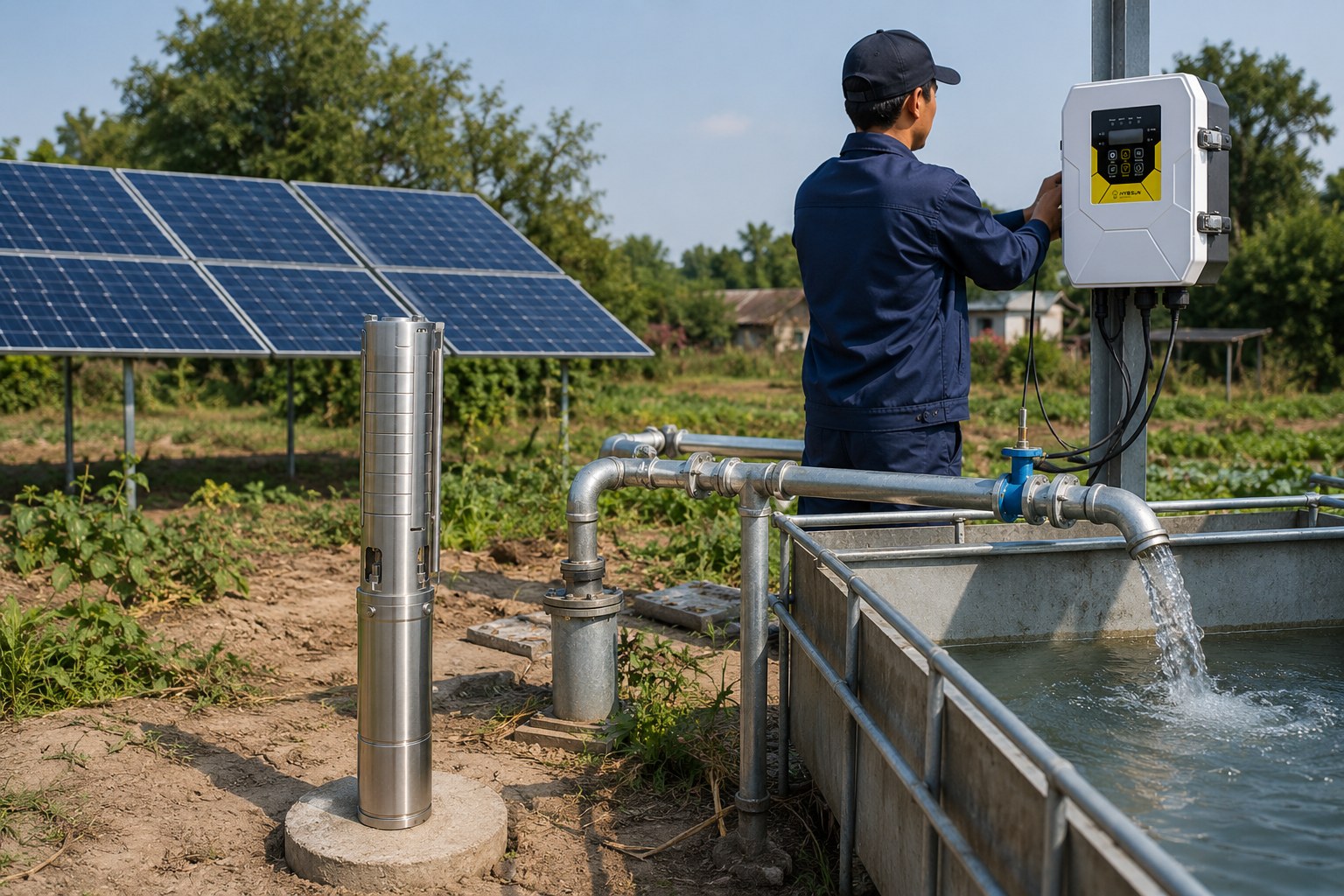
A complete system includes an intelligent MPPT controller to maximize solar energy, properly sized pipes, and often a pressure tank to ensure smooth operation and protect the pump from excessive wear.
The true power of a modern water pump system comes from the synergy between its components.
The pump provides the muscle, but the controller provides the brains.
Without an intelligent controller, a significant amount of potential energy from your solar panels is wasted.
Likewise, without proper installation practices, the pump cannot perform at its best and may fail prematurely.
Let's examine the intelligent components and best practices that turn a good pump into a great water system.
The Brains of the Operation: MPPT Controllers
An MPPT (Maximum Power Point Tracking) controller is the smart link between your solar panels and the pump motor.
Solar panels produce a variable amount of voltage and current depending on the intensity of the sunlight.
The job of the MPPT controller is to constantly monitor the output of the panels and adjust the electrical load to extract the maximum amount of power possible at any given moment.
This process can increase the daily water output of a solar pump system by up to 30% compared to a system without MPPT.
It ensures the pump starts earlier in the morning, runs more consistently on cloudy days, and works later into the evening.
Modern controllers also include a suite of protective features that are essential for the pump's longevity.
These include:
- Dry-run protection: Shuts off the pump if the well runs out of water, preventing damage.
- Over-voltage and under-voltage protection: Protects the motor from unstable power.
- Over-current protection: Prevents the motor from burning out if it gets jammed.
The MPPT controller is not just an accessory; it is a fundamental part of a powerful and reliable solar water system.
Considering AC/DC Hybrid Systems
One of the biggest concerns with solar power is its availability.
What happens on very cloudy days or at night when you still need water?
This is where AC/DC hybrid systems provide a powerful solution.
A hybrid controller is designed with two power inputs: one for DC power from solar panels and one for AC power from the grid or a generator.
The controller is intelligent enough to manage these sources automatically.
When there is enough sunlight, the system runs exclusively on free solar power.
If solar power is insufficient due to cloud cover, the hybrid function can blend AC power with the available DC power to keep the pump running, maximizing the use of solar energy.
When there is no solar input at all, like at night, the controller automatically switches to the AC power source.
This ensures you have a worry-free, 24-hour water supply without any manual intervention.
This technology bridges the gap between the eco-friendliness of solar and the on-demand reliability of the grid, offering the best of both worlds.
Essential Installation and Maintenance Tips
A correct installation is vital for ensuring your pump system operates at peak efficiency and lasts for many years.
Even the best pump will fail if installed improperly.
Key installation considerations include using corrosion-resistant pipes like PVC or polyethylene and ensuring all connections are watertight to prevent leaks and pressure loss.
Installing check valves is crucial to prevent backflow, which can damage the pump.
Adding a pressure tank to a household system is highly recommended.
It provides a reservoir of pressurized water, so the pump doesn't have to turn on and off every time a faucet is opened.
This drastically reduces pump cycling, which is a major cause of motor wear and tear.
Regular maintenance is simple but effective.
| Frequency | Recommended Task |
|---|---|
| Daily | Visually inspect for leaks, listen for unusual noises, check pressure gauge. |
| Monthly | Clean strainers and filters if installed. |
| Annually | Have a professional inspect the electrical connections and overall system performance. |
Following these simple installation and maintenance practices will protect your investment and ensure your pump delivers powerful performance for its full lifespan.
Making the Right Choice: A Portfolio Approach
Afraid of being sold a one-size-fits-all water pump?
Your water needs are unique, and a generic solution is rarely the most efficient or cost-effective choice.
You need a solution tailored to your specific environment.
**The best choice is often not a single pump model but a flexible product portfolio.
This allows distributors and users to perfectly match a low-flow/high-head pump, a high-flow pump, or a corrosion-resistant pump to the specific application, budget, and water conditions.
Thinking in terms of a product portfolio is a strategic advantage.
For a distributor, it means being able to serve a wider range of customers, from a homeowner with a deep well to a farmer with large irrigation needs.
For the end-user, it means getting a pump that is not just powerful, but powerful in the right way for their job.
This approach avoids the compromises of a one-size-fits-all product and leads to greater efficiency, longer lifespan, and higher customer satisfaction.
Matching the Pump to the Application
The key to success is selecting the right tool for the job.
By understanding the distinct advantages of each solar pump type, you can create a powerful and efficient water solution for almost any scenario.
This table provides a clear summary to help guide the selection process.
It allows you to quickly compare the core strengths of each pump and align them with your application's demands.
| Pump Type | Ideal Application | Key Advantage | Flow Rate | Head Range | Cost Level |
|---|---|---|---|---|---|
| Solar Screw Pump | Deep well domestic supply, livestock | Very High Head, Sand Resistance | Low | High | Medium |
| Solar Plastic Impeller | Farm irrigation, tank filling, gardens | High Flow, Wear Resistance, Economical | High | Medium | Low-Medium |
| Solar SS Impeller | Corrosive water, high-end homes | Corrosion Resistance, Long Lifespan | High | Medium-High | High |
This portfolio approach ensures that every user gets a system optimized for their needs.
A distributor who understands this can provide superior advice and build a reputation for expertise and quality.
An end-user who makes a choice based on this logic will enjoy a reliable and cost-effective water supply for years to come.
Common Mistakes to Avoid
Choosing the right water pump involves more than just picking a model from a catalog.
Many homeowners and even some installers make simple mistakes that lead to poor performance and premature failure.
Avoiding these common pitfalls is just as important as selecting the right hardware.
One of the biggest mistakes is guessing the required flow rate and pressure.
Always calculate your needs based on your fixtures, irrigation system, and the total head of your system.
Ignoring your water chemistry is another critical error.
If you have well water, get it tested for sand, minerals, and corrosivity.
High sand content will quickly destroy the wrong type of pump, while corrosive water requires a stainless steel model.
Another issue is improperly sizing the pump.
An oversized pump will cycle frequently, wasting energy and burning out the motor.
An undersized pump will fail to deliver the pressure and flow you need.
Finally, many people focus only on the pump itself.
They forget that the motor, the controller, and the quality of the installation are just as important.
A powerful pump is useless without an efficient motor to drive it and an intelligent controller to manage it.
By avoiding these mistakes, you ensure that your entire water pump system works in harmony.
Conclusion
The true power of a water pump system lies in its overall efficiency, durability, and intelligent control, not just in its raw horsepower rating.
FAQs
What is a good GPM for a house well pump?
A typical 3-4 bedroom house requires 8-12 GPM (Gallons Per Minute).
This ensures you can run multiple fixtures like a shower and a washing machine simultaneously without a significant drop in pressure.
Is higher HP better for a well pump?
Not necessarily.
Higher horsepower (HP) must be matched to your well's depth and your home's flow rate needs.
An oversized pump can damage your well and the pump itself through excessive cycling.
How do I choose a water pump for my house?
First, determine your water source (deep well, shallow well, city water).
Then, calculate your required flow rate and pressure (head).
Finally, select a pump type (submersible, jet, booster) that matches these specifications.
How many solar panels does it take to run a water pump?
This depends on the pump's power rating, the local sunlight conditions (solar irradiance), and desired run time.
A small 1/2 HP pump might require 2-4 panels, while a larger 3 HP pump could need 12 or more.
What is the difference between a submersible pump and a jet pump?
A submersible pump sits underwater inside the well and pushes water up, making it efficient for deep wells.
A jet pump sits above ground and pulls water up, which is suitable for shallow wells (less than 25 feet).
Can a solar pump work at night?
A standard solar pump only works when there is sunlight.
However, a system with an AC/DC hybrid controller or a battery bank can provide water at night or on cloudy days.
How long do solar water pumps last?
A quality solar water pump system can last for 15-20 years or more with proper maintenance.
The solar panels often have a warranty of 25 years, while the pump and motor may last 10+ years before needing service.