Choosing a well pump feels overwhelming.
You worry that picking the wrong size will lead to low pressure, high electricity bills, or a pump that fails years too soon.
This guide simplifies the process, ensuring you get it right.
A 1/2 HP submersible well pump is typically suitable for well depths of 50 to 100 feet. However, depth is not the only factor. Your required flow rate (GPM) and the Total Dynamic Head (TDH), which includes pressure and friction, are essential for accurate pump sizing.
A 1/2 HP pump might be perfect for a 100-foot well in one location.
But it could fail completely in a 75-foot well under different conditions.
To truly understand a pump's capability, you need to look beyond just horsepower.
This guide will walk you through all the critical factors.
We will break down the calculations and technologies so you can choose a pump with confidence.
You will learn how to ensure a reliable and efficient water supply for years to come.
Understanding the Key Sizing Factors
You might think that well depth is the only number that matters.
But relying on depth alone can lead you to choose a pump that is either too weak or dangerously powerful for your well.
Understanding all the variables is the key to a long-lasting and efficient system.
To size a well pump correctly, you must consider six key factors: the pump setting depth, the static water level, drawdown, your home's GPM demand, required water pressure (PSI), and friction loss from your piping. Each factor directly impacts the pump's performance and longevity.
Let’s dive deeper into what these factors mean for your pump selection.
Getting these right is the difference between a water system that works flawlessly and one that causes constant problems.
A small investment in proper calculation now saves thousands in repairs and energy costs later.
Well Depth vs. Pumping Water Level
The most important measurement is not your total well depth.
It is the pumping water level.
This is the level from which the pump must start lifting water.
It is calculated by taking your static water level and adding the drawdown.
- Static Water Level: This is where the water sits naturally in the well when the pump is off. A well driller records this on your well log. For example, in a 400-foot well, the static water level might be at 100 feet.
- Drawdown: This is how many feet the water level drops while the pump is running. A well in solid rock might have a drawdown of 50 feet, while a well in sand and gravel may only have a drawdown of 10 feet.
- Pumping Water Level: This is the Static Water Level + Drawdown. If your static level is 100 feet and drawdown is 30 feet, your pumping water level is 130 feet. This is the true starting point for lift.
A 300-foot well with a high water level at 50 feet is much less demanding than a 200-foot well with a low water level at 180 feet.
The pump must lift water from the pumping water level, not the bottom of the well.
Calculating Your GPM Needs
Gallons Per Minute (GPM) is the measure of how much water your household needs during peak demand.
A pump must be able to supply enough water for simultaneous uses.
A good rule of thumb is to estimate 1 GPM for every water-using fixture in your home.
A typical 3-bedroom, 2-bathroom home has around 10-12 fixtures and requires a pump that can deliver 8-12 GPM.
| Fixture | Typical Flow Rate (GPM) |
|---|---|
| Shower | 2–5 GPM |
| Kitchen Faucet | 2–3 GPM |
| Washing Machine | 4–5 GPM |
| Toilet | 1.5–3 GPM |
| Dishwasher | 2–3 GPM |
| Outdoor Hose | 3–5 GPM |
Crucially, your pump's GPM rating should not exceed your well's production rate.
If your well only yields 5 GPM, installing a 12 GPM pump is a mistake.
It will pump the well dry, pull in air, and damage the motor.
In low-yield wells, the correct strategy is to use a smaller pump to fill a large storage tank slowly.
Then, a separate booster pump provides on-demand pressure to the house.
The Importance of Pressure (PSI)
Your pump doesn't just lift water to the surface.
It must also push it into a pressure tank to create usable water pressure for your home.
Most residential systems use a pressure switch set to 40/60 PSI.
This means the pump turns on at 40 PSI and turns off at 60 PSI.
To account for this in pump sizing, you must convert your desired pressure into "feet of head."
The formula is simple: PSI × 2.31 = Feet of Head.
So, to reach a 60 PSI cutoff pressure, the pump must generate the equivalent of an additional 138.6 feet of lift (60 × 2.31).
This pressure requirement is a significant part of the total workload placed on the pump.
Higher pressure settings require a more powerful pump.
Don't Forget Friction Loss
As water moves through pipes, it encounters friction, which the pump must overcome.
This is known as friction loss.
It depends on the pipe's diameter, length, and the flow rate (GPM) moving through it.
Using a pipe that is too small dramatically increases friction and forces your pump to work harder.
For example, pumping 10 GPM through 100 feet of pipe creates very different amounts of friction:
| Pipe Diameter | Friction Loss (feet per 100ft at 10 GPM) |
|---|---|
| 1-inch | ~7.5 feet |
| 1.25-inch | ~3.0 feet |
| 1.5-inch | ~1.6 feet |
On a deep well, this difference adds up quickly.
For a pump set at 300 feet, using a 1.25-inch pipe instead of a 1-inch pipe can reduce the total friction loss by over 13 feet.
This reduction in workload can lower energy costs and extend the pump's lifespan.
Upgrading from a 1-inch to a 1.25-inch drop pipe is a small upfront cost that pays for itself many times over.
How to Calculate Total Dynamic Head (TDH) for Accurate Sizing
Sizing a pump based on guesswork is a recipe for failure.
Calculating Total Dynamic Head (TDH) feels technical, but it is a straightforward process that removes all uncertainty.
It is the only way to ensure your pump is perfectly matched to your well and your needs.
Total Dynamic Head (TDH) is the total resistance a pump must overcome. You calculate it by adding the vertical lift (pumping level to the pressure tank), total pipe friction loss, and your system's pressure requirement (in feet). This single number is what you use to select the right pump.
Once you have your TDH and required GPM, selecting a pump becomes a simple matching game.
You are no longer guessing at horsepower.
You are choosing a piece of engineered equipment designed for the specific job you need it to do.
This data-driven approach guarantees better performance, greater efficiency, and a longer life for your pump.
The TDH Formula Explained
The formula for TDH is a simple sum of three numbers.
It represents every force the pump has to work against.
TDH = Vertical Lift + Friction Loss + Pressure Head
Let's break down each component:
- Vertical Lift: This is the vertical distance in feet from the pumping water level in the well to the inlet of your pressure tank. If the pumping level is 120 feet deep and the tank is 10 feet above ground, the vertical lift is 130 feet.
- Friction Loss: This is the total head lost due to friction in all the piping between the pump and the pressure tank. You calculate this using a friction loss chart based on your pipe size, GPM, and total pipe length (including horizontal runs).
- Pressure Head: This is the pressure setting of your system, converted to feet. For a standard 40/60 PSI switch, you use the cutoff pressure (60 PSI). The calculation is 60 PSI × 2.31 = 138.6 feet.
Adding these three figures together gives you the total workload, or TDH, for your system.
A Step-by-Step Example
Let's apply the formula to a real-world scenario.
Imagine the following conditions:
- Total Well Depth: 300 feet
- Static Water Level: 80 feet
- Drawdown: 20 feet
- Pipe: 300 feet of 1.25-inch pipe
- Flow Rate Requirement: 10 GPM
- Pressure Switch Setting: 40/60 PSI
Now, let's calculate the TDH.
-
Calculate Pumping Water Level:
80 ft (Static Level) + 20 ft (Drawdown) = 100 feet -
Calculate Vertical Lift:
We will assume the pressure tank is near the wellhead. The vertical lift is equal to the pumping water level: 100 feet. -
Calculate Friction Loss:
At 10 GPM, 1.25-inch pipe loses about 3.0 feet of head per 100 feet.
(300 ft / 100 ft) × 3.0 ft = 9 feet of friction loss. -
Calculate Pressure Head:
Use the 60 PSI cutoff pressure.
60 PSI × 2.31 = 138.6 feet. -
Calculate Total Dynamic Head (TDH):
100 ft (Lift) + 9 ft (Friction) + 138.6 ft (Pressure) = 247.6 feet.
For this well, you need a pump that can deliver 10 GPM at approximately 248 feet of TDH.
A 1/2 HP pump would be severely undersized here; a 1 HP or 1.5 HP pump would be the correct choice.
Matching TDH and GPM to a Pump Curve
Every pump model has a manufacturer-provided performance curve.
This chart is the key to making the final selection.
The vertical axis shows the Head (or TDH) in feet, and the horizontal axis shows the Flow Rate in GPM.
To use the chart:
- Find your calculated TDH on the vertical axis.
- Find your required GPM on the horizontal axis.
- Find where these two points intersect on the chart.
- Choose a pump where this intersection point falls within its main performance curve, preferably in the middle 50% of the curve.
This central area is known as the Best Efficiency Point (BEP).
Operating a pump near its BEP ensures it runs at maximum efficiency, uses the least amount of energy, and experiences the least amount of wear and tear.
It prevents you from choosing a pump that is straining at the edge of its capabilities, which is a common cause of premature failure.
The Dangers of an Oversized or Undersized Pump
You might be tempted to buy a bigger pump, thinking "more power is always better."
This common misconception can destroy your pump, damage your well, and inflate your electricity bills.
Getting the size wrong in either direction leads to serious problems.
An oversized pump short-cycles, causing the motor to burn out quickly while pulling sand into your well. An undersized pump runs constantly, leading to overheating and motor failure, all while delivering frustratingly low water pressure. Correct sizing is non-negotiable for system health.
The goal is not to get the most powerful pump, but the correct pump.
A perfectly matched pump might run for 10-15 years with no issues.
An incorrectly sized pump can fail in as little as 2-3 years, requiring an expensive replacement.
Let's look at the specific problems caused by both oversizing and undersizing.
Why an Oversized Pump is a Costly Mistake
Installing a pump that is too powerful is one of the most common and damaging mistakes in the well industry.
It creates a cascade of problems that lead to premature system failure.
-
Destructive Short Cycling: An oversized pump fills the pressure tank extremely quickly. This forces the pump to turn on and off rapidly, sometimes 20 or more times per hour instead of a healthy 4-6 times. Each startup draws 3 to 5 times the normal running amperage, creating a massive heat surge that degrades the motor windings. This is the number one killer of submersible motors.
-
Well Damage and Sand Production: When a pump draws water faster than the aquifer can supply it, the turbulence can pull fine sand and sediment from the surrounding formation into the well. This abrasive sand then erodes the pump's internal components (impellers and diffusers), clogs check valves, and can even fill the bottom of your well, reducing its depth and yield.
-
Higher Energy Costs: A 1.5 HP motor can draw over 50% more electricity than a 3/4 HP motor. If the smaller pump was the correct size, you are paying significantly more on your utility bill every single hour the pump runs. Compounded by short cycling, an oversized pump can add hundreds of dollars to your annual energy costs.
If you suspect you have an oversized pump, solutions like a larger pressure tank or a cycle stop valve can mitigate the damage, but the only true fix is replacing the pump with the correctly sized model.
The Frustration of an Undersized Pump
While not as immediately destructive as an oversized pump, an undersized pump also leads to premature failure and poor performance.
The symptoms are often more obvious to the homeowner.
-
Poor Performance: The most common sign is a noticeable drop in water pressure when more than one faucet is running. The pump may also run for very long periods, or even continuously, without being able to reach the pressure switch's cutoff setting.
-
Motor Overheating: Submersible motors are designed to be cooled by the water flowing past them. An undersized pump must run at its maximum capacity for extended periods to meet demand. This continuous operation generates excessive heat that the water flow cannot dissipate effectively.
-
Premature Failure: This constant overheating degrades the motor's internal insulation and windings, leading to an electrical short and complete motor failure. A pump that should last over a decade may fail in just 4-6 years. The cost of a single premature pump replacement far outweighs the small price difference to have chosen the correct, slightly larger pump at the time of installation.
The only effective solution for an undersized pump is to replace it with a properly sized one based on a current TDH calculation.
Beyond HP: Choosing the Right Pump Technology for Your Needs
You have calculated your TDH and GPM, but another crucial choice awaits.
What type of pump technology is best for your specific application?
The design of the pump's "wet end" and the motor that drives it are just as important as the horsepower rating for long-term efficiency and reliability.
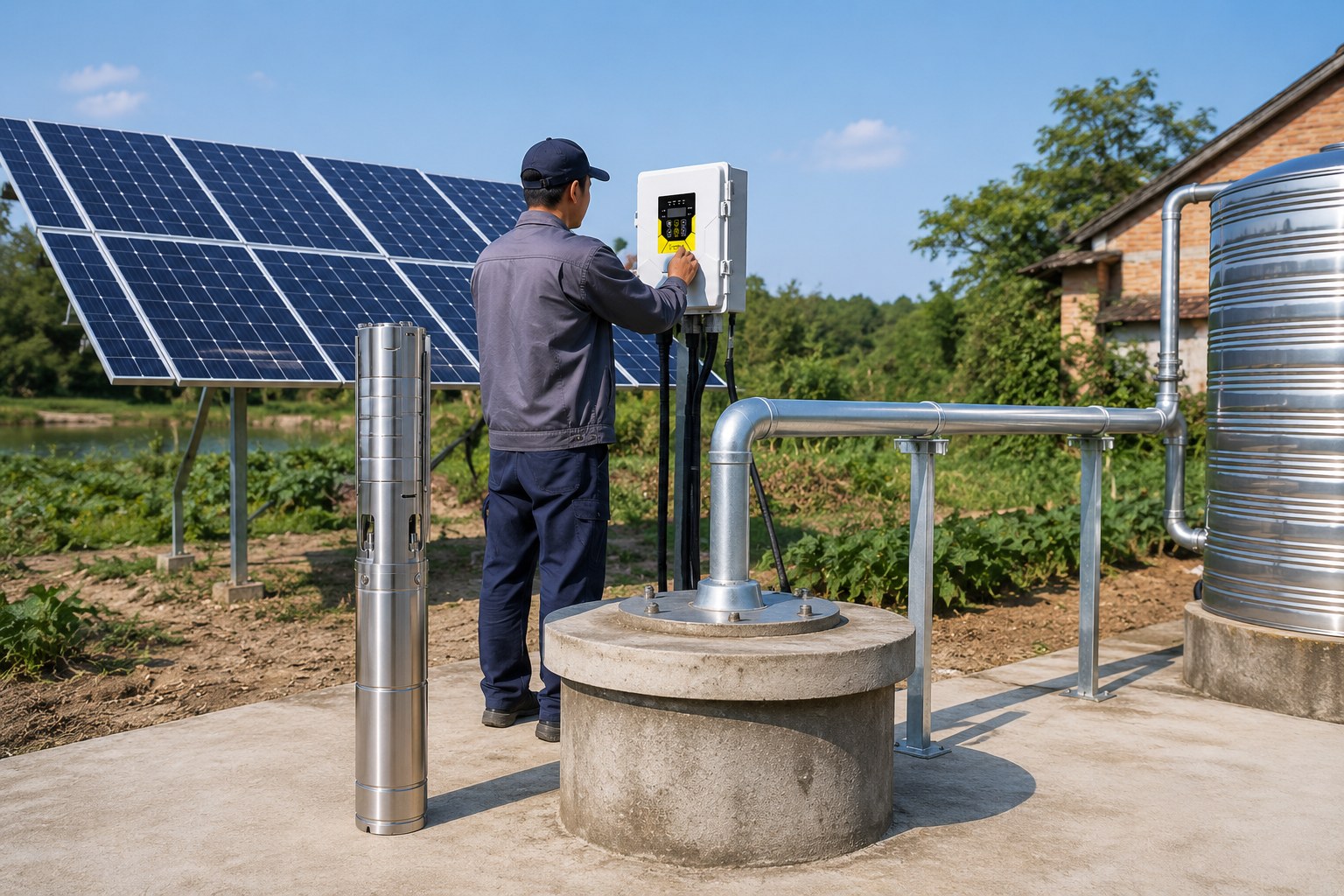
The best pump technology depends entirely on your needs. Modern solar-powered systems offer diverse options: screw pumps provide high head for deep wells, while centrifugal impeller pumps deliver high flow for irrigation. The key is matching the pump's design to your water source and demand.
Today’s water pump market is led by advanced, sustainable solutions.
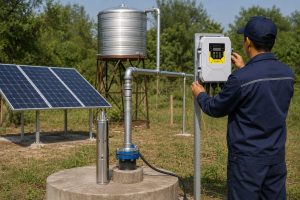
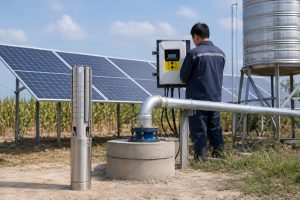
Solar water pumps, operating independently of the power grid, have become essential for agriculture and domestic water supply in off-grid areas worldwide.
They are powered by highly efficient motors that reduce operating costs and environmental impact.
Let's explore the leading technologies.
The Power of Solar Pumps
Solar water pumps represent a significant leap forward in water access.
They offer a reliable and cost-effective solution for anyone living off-grid or looking to reduce their reliance on utility power.
- Grid Independence: They run entirely on solar energy, providing water even during power outages or in remote locations with no electrical infrastructure.
- Cost-Effective: After the initial investment, there are no electricity bills. The fuel source—sunlight—is free.
- Environmentally Friendly: Solar pumps produce zero emissions, providing a clean and sustainable way to access water.
These systems are powered by a special type of motor designed for maximum efficiency.
Matching Pump Type to Application
The "wet end" of the pump is the part that actually moves the water.
Different designs are optimized for different tasks.
The three most common types in solar pumping systems are screw pumps, plastic impeller pumps, and stainless steel impeller pumps.
| Pump Type | Best For | Flow Rate | Head (Lift) | Key Advantage |
|---|---|---|---|---|
| Solar Screw Pump | Deep wells, low-yield wells, domestic use | Low | High | Excellent sand resistance |
| Solar Plastic Impeller Pump | Farm irrigation, high-volume needs | High | Medium | High flow at an economical price |
| Solar SS Impeller Pump | Corrosive or acidic water, premium homes | High | Medium-High | Maximum durability & corrosion resistance |
-
Solar Screw Pumps (Low Flow, High Head): This design uses a helical rotor (a screw) inside a rubber stator. It pushes water upward through compression. It's ideal for very deep wells where high lift is needed but large volumes of water are not. Its ability to handle sandy or gritty water makes it very durable in harsh well conditions.
-
Solar Plastic Impeller Pumps (High Flow, Wear-Resistant): These are multi-stage centrifugal pumps. They use a series of durable, engineered plastic impellers to accelerate water. They are the go-to choice for applications needing high GPM, such as farm irrigation or supplying water to livestock. They offer excellent performance and value.
-
Solar Stainless Steel Impeller Pumps (Premium, Corrosion-Resistant): This model is built for the toughest conditions. It uses impellers made from SS304 stainless steel, making it highly resistant to corrosion from acidic or alkaline water. It is the premium choice for applications where water quality is poor or where maximum longevity is the top priority.
The Unsung Hero: The BLDC Motor
The heart of every modern solar pump is its motor.
High-efficiency Brushless DC (BLDC) permanent magnet motors are the industry standard.
They are the core technology that makes solar pumping so effective.
- Incredible Efficiency: BLDC motors can convert over 90% of the electrical energy from the solar panels into mechanical power. This is a huge improvement over older motor designs.
- Powerful & Compact: They use powerful rare-earth magnets (Neodymium Iron Boron) to generate high torque in a small package. A modern BLDC motor can be up to 47% smaller and 39% lighter than a traditional motor of the same power.
- Market Value: The high efficiency means the system requires fewer solar panels to do the same amount of work, reducing the total system cost. They are also virtually maintenance-free and have a very long operational life.
This advanced motor technology is the driving force behind the performance, reliability, and cost-effectiveness of today's best water pump systems.
Maximizing Efficiency with Smart Pump Controllers
You have chosen the perfect pump and motor.
But what happens on cloudy days, or when you need water at night?
A pump is only as good as the system that controls it.
Modern controllers are the brain of the operation, ensuring you get water when you need it while protecting your investment.
Smart pump controllers maximize every bit of available solar energy using MPPT technology. Advanced hybrid AC/DC models go a step further, guaranteeing a 24/7 water supply by automatically switching to grid or generator power when sunlight is unavailable, offering ultimate peace of mind.
These intelligent devices are no longer just simple on/off switches.
They are sophisticated power management systems that optimize performance, increase water output, and safeguard the pump from damaging electrical conditions.
They are an essential component of any modern, reliable water system.
What is an MPPT Controller?
MPPT stands for Maximum Power Point Tracking.
It is a technology that revolutionizes how solar pumps perform.
A solar panel's power output varies constantly with the intensity of the sunlight.
An MPPT controller continuously analyzes the panel's output and adjusts the electrical load to extract the absolute maximum amount of power available at any given moment.
- More Water, Longer Hours: By optimizing power, MPPT allows the pump to start earlier in the morning, run more consistently through cloudy periods, and shut down later in the evening. This can increase the total volume of water pumped per day by up to 30% compared to a system without MPPT.
- Improved Efficiency: It ensures that no solar energy is wasted. Every watt generated by the panels is put to effective use, making the entire system more productive.
Essentially, MPPT acts as a smart bridge between the solar panels and the pump motor, ensuring they are always working together in perfect harmony for maximum water output.
The Hybrid Advantage: AC/DC Controllers
For critical applications where a 24-hour water supply is non-negotiable, a hybrid AC/DC controller is the ultimate solution.
This technology provides complete energy flexibility and reliability.
- Dual Power Inputs: The controller has inputs for both DC power from solar panels and AC power from the utility grid or a generator.
- Automatic Switching: The system's logic prioritizes solar power. It will run on free energy from the sun whenever it is available. If the sunlight fades due to heavy clouds or nightfall, the controller automatically and seamlessly switches to the AC power source.
- Hybrid Functionality: Some advanced controllers can even blend power sources. If solar power is providing 70% of the pump's needs, the controller will draw only the remaining 30% from the AC grid. This maximizes the use of solar energy while still guaranteeing full performance.
This hybrid capability ensures a worry-free, uninterrupted water supply, day or night, rain or shine.
Why Smart Control Matters
A smart controller does more than just manage power sources.
It also acts as a comprehensive protection system for the pump motor.
It constantly monitors the electrical conditions and can shut the pump down to prevent damage from:
- Dry-Running: Sensors can detect when the water level in the well drops too low, stopping the pump before it runs without water and overheats.
- Over-Voltage and Under-Voltage: It protects the motor from damaging power surges or sags from the grid or panels.
- Overload and Clogging: It can sense when the motor is working too hard, such as from a clog, and shut it down to prevent a motor burnout.
This multi-layered protection dramatically extends the life of the pump and the entire system, making a smart controller one of the wisest investments you can make for your water supply.
Conclusion
Sizing a well pump goes far beyond a simple horsepower rating.
A reliable water system depends on accurate TDH calculations and choosing the right technology for your specific needs.
Frequently Asked Questions
How many GPM does a 1/2 HP well pump produce?
A 1/2 HP pump can produce a wide range, typically from 5 to 15 GPM, depending on the total dynamic head (TDH) it's working against.
Is 1/2 HP enough for a well pump?
It is enough for shallow wells (under 100 feet) with average household demand. It is not suitable for deep wells or high-flow irrigation needs.
What size well pump do I need for a 150-foot well?
For a 150-foot well, you will likely need a 3/4 HP or 1 HP pump. The exact size depends on your water level, GPM needs, and pressure.
What size pump do I need for a 200 ft well?
A 200-foot well typically requires a 1 HP or 1.5 HP pump. An accurate TDH calculation is necessary to determine the precise horsepower needed for your system.
Can you put too big of a pump in a well?
Yes. An oversized pump is very damaging. It causes rapid on/off cycling (short cycling) that burns out the motor and can pull sand into your well.
How do you know if your well pump is undersized?
Signs of an undersized pump include low water pressure, especially when multiple faucets are open, and the pump running constantly without shutting off.
How many GPM does a 3 bedroom house need?
A typical 3-bedroom house needs about 8-12 GPM to meet peak demand, assuming one gallon per minute for each water-using fixture running at once.
Does a deeper well always need a bigger pump?
Generally, yes, because the pump must lift water higher. However, a deep well with a high water level may need a smaller pump than a shallower well with a very low water level.