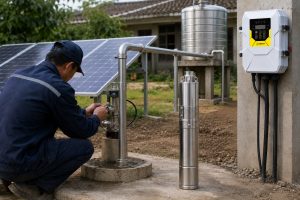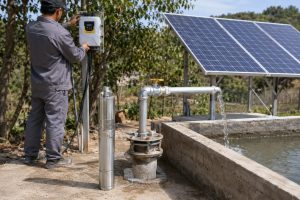
Struggling with a dry, brown lawn while a creek or pond sits just out of reach?
You know the water is there, but getting it to your garden seems like an expensive, complex engineering project.
Let's demystify the process for you.
A 2 hp pump's horizontal reach can be thousands of feet, but this isn't a simple number. It's a balance between the pump's pressure (head), the vertical height (lift), and pipe diameter. For example, a high-pressure 2 hp pump could push water over 1,200 feet horizontally even with a 100-foot uphill climb.
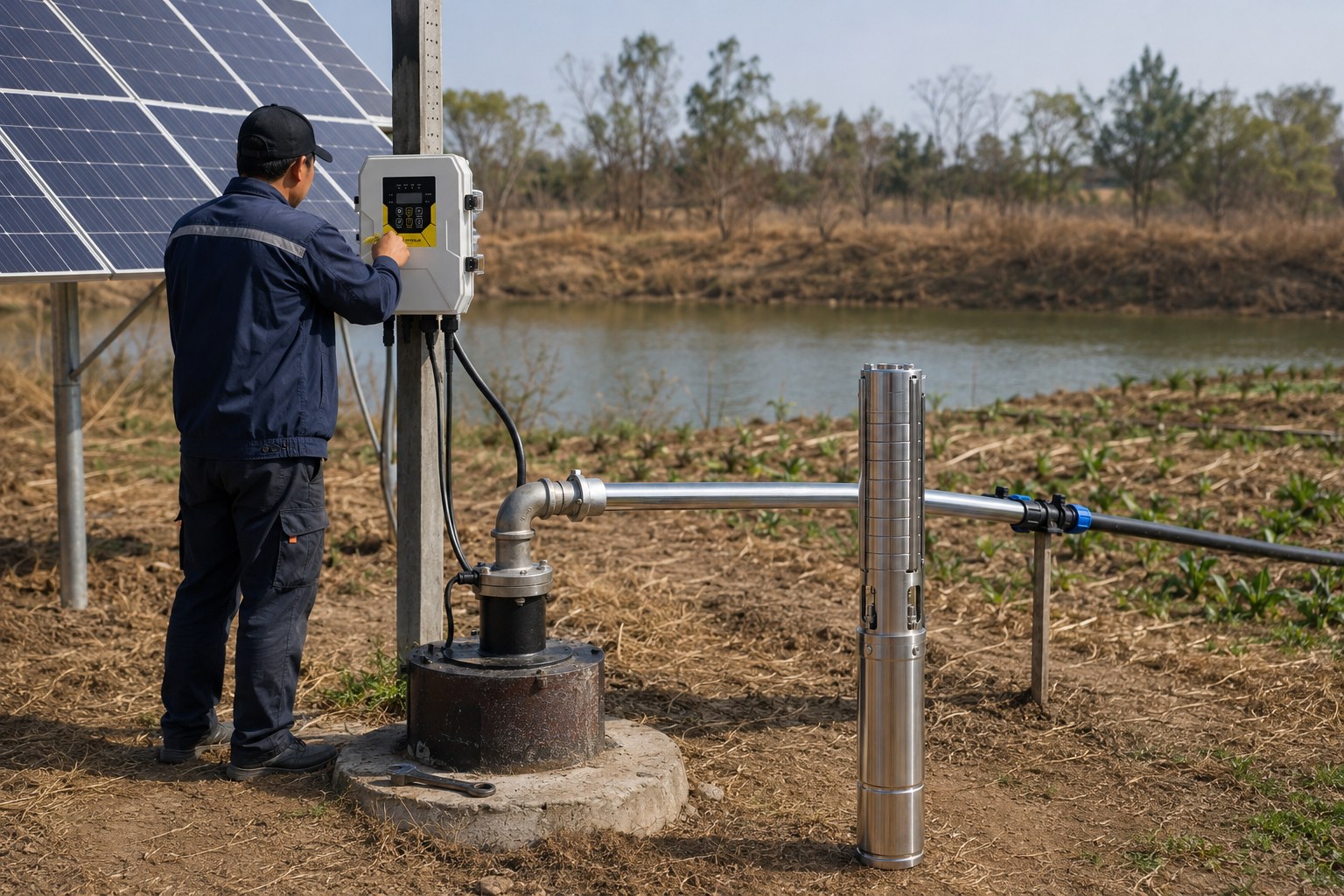
Understanding how far your pump can really move water requires looking past the horsepower rating on the box.
Horsepower tells you the motor's potential, but it doesn't tell you the whole story about performance.
The true capability of your pump is a dynamic interplay between pressure, flow rate, and the specific challenges of your landscape.
To select the right pump and avoid costly mistakes, you need to understand the fundamental forces at play.
Let's break down the key factors—Total Dynamic Head, friction loss, and pump type—to empower you to calculate your exact needs and make a smart investment.
This guide will walk you through it, step by step.
Understanding Pump Head and Pressure
Are you baffled by pump specifications listing "head" in feet and "pressure" in PSI?
This technical jargon often makes a simple task feel like a complex physics problem, leading to confusion and guesswork.
We're here to translate these concepts into practical knowledge.
Total Dynamic Head (TDH) is the most crucial metric; it represents the total work a pump must do. It combines vertical lift and friction loss into a single value measured in feet. For context, every 2.31 feet of head equals 1 PSI of pressure. A 2 hp pump's true strength is defined by its performance against TDH, not just its horsepower.
To accurately determine if a 2 hp pump can meet your needs, you must first calculate the Total Dynamic Head of your specific system.
This isn't as complicated as it sounds.
It’s simply the sum of all the resistance the pump has to overcome.
Once you have this number, you can confidently read a pump's performance chart and know exactly how it will perform for you.
Let's dive deeper into the components of TDH and how to use them.
What is Total Dynamic Head (TDH)?
Total Dynamic Head is the effective pressure your pump must generate.
It is composed of three key elements.
-
Static Lift (Vertical Distance): This is the total vertical height in feet from the surface of your water source (like a creek) to the highest point of discharge (like a sprinkler on your lawn). If your pump is pushing water 100 feet uphill, your static lift is 100 feet.
-
Suction Head: This is the vertical distance from the water source up to the pump's inlet. It’s important because most surface-mounted centrifugal pumps cannot "suck" water up more than about 25 feet at sea level due to the limits of atmospheric pressure. This value decreases at higher altitudes.
-
Friction Head (Friction Loss): This is the "hidden" pressure loss caused by water rubbing against the inner walls of your pipes and fittings. Longer pipes, smaller diameters, and more bends all increase friction loss significantly. This is often the most underestimated factor in pump sizing.
Your TDH is the sum of these three values: TDH (in feet) = Static Lift + Suction Head + Friction Loss.
How to Convert PSI to Feet of Head
Pressure and head are two ways of measuring the same thing.
Understanding their relationship is key to interpreting pump specs.
The conversion is simple:
- 1 PSI (pound per square inch) of pressure can push a column of water 2.31 feet high.
- Conversely, a 1-foot column of water exerts 0.433 PSI of pressure at its base.
This means a pump rated for a "max head" of 115 feet can generate a maximum pressure of about 50 PSI (115 ft / 2.31 = 49.7 PSI).
Here’s a quick reference table.
| Pressure (PSI) | Equivalent Head (Feet) |
|---|---|
| 10 PSI | 23.1 feet |
| 25 PSI | 57.8 feet |
| 50 PSI | 115.5 feet |
| 75 PSI | 173.3 feet |
| 100 PSI | 231.0 feet |
Reading a Pump Curve
Horsepower alone is misleading.
The single most important tool for choosing a pump is its performance curve.
This graph, provided by the manufacturer, shows the pump's exact performance across its operational range.
The vertical Y-axis shows the Total Dynamic Head (in feet or PSI).
The horizontal X-axis shows the flow rate, usually in Gallons Per Minute (GPM).
The curve on the graph shows the inverse relationship between head and flow.
As the total head (resistance) increases, the flow rate the pump can deliver decreases.
To use it, you first calculate your system's TDH.
Find that value on the Y-axis, move horizontally to the curve, and then drop down to the X-axis to see the flow rate (GPM) the pump will deliver under your specific conditions.
If that GPM meets your needs, the pump is a good fit.
If it's too low, you need a more powerful pump or you need to reduce your TDH (for example, by using larger pipes).
The Critical Role of Pipe Size and Friction Loss
Did you invest in a powerful pump only to get a disappointing trickle from your hose?
This common frustration often stems not from the pump, but from using pipes that are too small for the job.
It's an easy and costly mistake to make.
For a 2 hp pump pushing water over 1000 feet, simply increasing the pipe diameter from 1.5 inches to 2 inches can reduce friction loss by over 60%. This small change dramatically increases the effective horizontal distance and flow rate, ensuring your pump performs as expected.
Friction loss is the invisible force working against your pump.
Every foot of pipe, every elbow, and every valve adds a small amount of resistance.
Over a long distance, this resistance adds up to a significant pressure drop, robbing your system of performance.
Understanding how to minimize this loss is just as important as choosing the right pump.
Let's explore why pipe size matters so much and how to calculate its impact.
The Science of Friction Loss
Imagine trying to push a large volume of water through a tiny straw.
You'd have to push incredibly hard, and the water would shoot out at high velocity.
Pipes work the same way.
To maintain a certain flow rate (GPM) through a smaller pipe, the water must travel much faster.
This increased velocity dramatically increases the friction between the water and the pipe's inner surface.
In fluid dynamics, friction loss is roughly proportional to the square of the velocity.
This means that doubling the water's speed quadruples the friction loss.
The industry-standard goal is to design systems where water velocity does not exceed 5 feet per second.
Keeping the velocity low by using a larger diameter pipe is the most effective way to minimize pressure loss and maximize your pump's efficiency.
Calculating Friction Loss
You don’t need to be a physicist to figure this out.
Engineers use standardized friction loss charts for this calculation.
These charts show the amount of "head loss" (in feet) for every 100 feet of a specific pipe material and size at a given flow rate.
Let's look at an example for a flow rate of 30 GPM.
| Pipe Diameter (Schedule 40 PVC) | Velocity (ft/sec) | Friction Loss (feet per 100 ft of pipe) |
|---|---|---|
| 1.25 inches | 6.13 ft/sec | 7.97 feet |
| 1.5 inches | 4.39 ft/sec | 3.32 feet |
| 2 inches | 2.54 ft/sec | 0.88 feet |
| 2.5 inches | 1.70 ft/sec | 0.32 feet |
As you can see, moving from a 1.5-inch pipe to a 2-inch pipe reduces friction loss by nearly 75% (from 3.32 feet to 0.88 feet).
For a 1,000-foot pipe run, that's the difference between adding 33.2 feet of head and only 8.8 feet of head to your TDH calculation.
This difference can be the make-or-break factor in whether your pump works effectively.
Sizing Your Suction and Discharge Lines
The pipe on the intake side of the pump (the suction line) is just as critical.
A common mistake is using a suction hose that is too small or too long.
This starves the pump of water, causing it to work harder and creating a damaging phenomenon called cavitation—the formation and collapse of vapor bubbles that sounds like gravel is running through your pump and can destroy the impeller over time.
Follow these rules of thumb:
- Suction Line: Never use a pipe or hose that is smaller than the pump's inlet port. For long suction lines, it is best practice to use a pipe one size larger than the inlet to minimize friction and prevent cavitation.
- Discharge Line: As shown in the table above, use the largest practical pipe diameter for your discharge line, especially for long distances, to preserve the pressure your pump is working so hard to create.
Choosing the Right Type of 2 HP Pump
Not all 2 hp pumps are created equal.
The market is filled with different types, and buying one based on horsepower alone can lead to poor performance, wasted energy, and buyer's remorse.
Let's explore the main options to find the right fit for you.
The best 2 hp pump depends on your needs. For long distances and high vertical lifts, you need a high-pressure multi-stage centrifugal pump. For moving large volumes of water across relatively flat ground, a standard high-flow transfer pump is more suitable. Matching the pump type to your required head and flow is essential.
The term "2 hp pump" is a broad category.
Within that category are pumps designed for high pressure but lower flow, and others designed for high flow but lower pressure.
A pump designed to drain a swimming pool quickly (high flow, low head) will fail miserably at pushing water up a 150-foot hill (low flow, high head).
Knowing the difference is critical to your success.
Centrifugal Pumps: The Workhorse
Most pumps you'll encounter are centrifugal pumps.
They use a spinning impeller to draw water in and "sling" it outwards, creating pressure.
-
Single-Stage Centrifugal Pumps: These have one impeller. They are excellent for "high-flow, low-head" applications. This includes tasks like general water transfer, draining flooded areas, or irrigation on flat land. A 2 hp trash pump is a good example, designed to move lots of water (and some debris) without needing much pressure.
-
Multi-Stage Centrifugal Pumps: These pumps have two or more impellers in a series. The discharge from the first impeller feeds the inlet of the second, and so on. Each stage acts like a pressure booster, compounding the pressure. This makes them ideal for "high-head" applications, such as pumping water to great heights, over long distances, or for systems that require high pressure like a multi-zone sprinkler system.
Specialized Pumps for Specific Needs
Sometimes, a standard centrifugal pump isn't the best tool.
-
Submersible Pumps: These are placed directly into the water source (like a well or tank). Their key advantage is that they push water up rather than sucking it. This completely eliminates the suction lift limitation of ~25 feet and makes them the default choice for deep wells. A 2 hp submersible pump can be an excellent solution for lifting water from deep within a creek or pond.
-
Screw (Progressing Cavity) Pumps: These use a helical rotor (a screw) turning inside a rubber stator. They operate like an auger, pushing a "pocket" of water along with each rotation. They are fantastic for very high-head, low-flow situations and are exceptionally good at handling water with sand or grit, which would quickly wear out a centrifugal pump's impeller.
Material Matters: Plastic vs. Stainless Steel Impellers
The material of the pump's "wet end" components, especially the impeller, has a major impact on durability and application.
For centrifugal pumps, two common options stand out.
| Feature | Plastic Impeller Pump | Stainless Steel Impeller Pump |
|---|---|---|
| Best For | High-flow, medium-head general use | High-flow, corrosive or high-temperature water |
| Wear Resistance | Excellent for water with fine sand or silt | Good, but can be abraded by coarse sand |
| Corrosion Resistance | Good for neutral pH water | Superior for acidic or alkaline water |
| Durability | Lighter weight, but can become brittle over time with UV exposure | Extremely durable and long-lasting service life |
| Cost | More economical and cost-effective | Higher initial investment, lower lifetime cost |
Choosing a pump with a durable plastic (e.g., Noryl) impeller is a great, cost-effective choice for most farm and home irrigation needs with relatively clean water.
However, if your water source is acidic, alkaline, or has other corrosive properties, investing in a pump with a stainless steel (SS304) impeller and housing will ensure a much longer service life, justifying the higher upfront cost.
Calculating Your Specific Pumping Distance
Enough with the theory.
It's time to apply this knowledge to your property and get a real, actionable number.
This section provides a step-by-step guide to calculating your system's requirements.
Let's do the math together.
First, determine your Total Dynamic Head (TDH) by adding your vertical lift (static head) and the friction loss from your pipes. Next, decide on your required flow rate (GPM). Finally, consult a 2 hp pump's performance curve to confirm it can deliver that GPM at your calculated TDH.
This calculation is the blueprint for your water system.
Getting it right means you'll purchase a pump that performs perfectly from day one.
Getting it wrong leads to wasted money, time, and frustration.
Follow these steps carefully.
Step-by-Step Calculation Example
Let's use the scenario from the online forum: pumping water from a creek up a steep hill to a lawn.
1. Measure Static Head (Vertical Lift)
- You estimate the vertical height from the creek to the lawn is 100 feet.
- You plan to place the pump on the bank, 10 feet vertically above the water level.
- Total Static Head = 100 ft (lift) + 10 ft (suction) = 110 feet.
2. Determine Required Flow Rate (GPM)
- You want to run two large lawn sprinklers, each requiring 10 GPM.
- Required Flow Rate = 20 GPM.
3. Choose a Pipe Size and Length
- The horizontal distance is 80 yards, which is 240 feet.
- Accounting for the slope and connections, you estimate a total pipe length of 350 feet.
- To minimize friction, you wisely choose a 2-inch discharge pipe.
4. Calculate Friction Loss
- Using a friction loss chart, you find that 20 GPM flowing through a 2-inch PVC pipe results in approximately 0.4 feet of head loss per 100 feet of pipe.
- *Total Friction Loss = 0.4 ft/100ft 350 ft = 1.4 feet.**
- You also have several fittings (elbows, valves), which add a bit more resistance. Let's round up and estimate a total Friction Head of 5 feet.
5. Calculate Total Dynamic Head (TDH)
- TDH = Total Static Head + Total Friction Head
- TDH = 110 feet + 5 feet = 115 feet.
Matching to a Pump Curve
Now you have the two numbers you need: a required flow of 20 GPM at a TDH of 115 feet.
You can now confidently shop for a 2 hp pump.
You look at the performance curve for a high-pressure 2 hp centrifugal pump.
You find 115 feet on the vertical axis, trace it over to the performance curve, and then drop down to the horizontal axis.
You see that at 115 feet of head, this pump delivers 35 GPM.
Since 35 GPM is greater than your required 20 GPM, this pump is an excellent choice.
It has more than enough power for the job.
What if you had chosen a 1.25-inch pipe instead?
The friction loss for 20 GPM would be much higher, around 3.5 feet per 100 feet.
- New Friction Loss = 3.5 ft/100ft * 350 ft = 12.25 feet. Let's round to 15 feet with fittings.
- New TDH = 110 feet + 15 feet = 125 feet.
Now, when you check the pump curve at 125 feet of head, the flow rate might have dropped to only 18 GPM.
This is less than your required 20 GPM, meaning your sprinklers wouldn't work correctly.
This example clearly shows how a simple choice like pipe size can determine the success or failure of your project.
Beyond Horsepower: The Importance of Motor Efficiency
Focusing solely on a pump's horsepower is like judging a car's performance only by its engine size, ignoring fuel economy and transmission.
The true secret to long-term performance and cost savings lies in the efficiency of the motor driving the pump.
A modern, high-efficiency motor can deliver the same water output using 20-40% less energy than an older design. For example, a Brushless DC (BLDC) motor with over 90% efficiency will significantly reduce electricity bills or the number of solar panels required compared to a standard AC motor.
Motor efficiency is a measure of how well the motor converts electrical energy into mechanical work.
The remaining energy is lost as heat.
An inefficient motor is essentially an expensive heater that also happens to pump water.
A more efficient motor not only saves money but also runs cooler, lasts longer, and often delivers better performance.
Let's look at the technology making this possible.
What is a BLDC Motor?
BLDC stands for Brushless DC Permanent Magnet Motor.
Unlike traditional AC induction motors or brushed DC motors, BLDC motors do not have brushes that wear out.
They use powerful permanent magnets on the rotor and a sophisticated electronic controller to switch the electromagnets in the stator.
This design eliminates the friction and energy loss associated with brushes, resulting in dramatically higher efficiency and reliability.
They are the core technology behind high-performance drones, electric vehicles, and modern, high-efficiency water pumps.
The Efficiency Advantage
The difference in performance is stark.
A motor's efficiency rating tells you what percentage of the input power is converted to useful work.
| Motor Type | Typical Efficiency | Key Characteristics |
|---|---|---|
| Brushless DC (BLDC) | 85% - 92% | High torque, compact, low heat, long life, quiet operation |
| Standard AC Induction | 60% - 80% | Inexpensive, widely available, less efficient, runs hotter |
| Brushed DC | 75% - 80% | Simple design, but brushes wear out, requiring maintenance |
Choosing a pump with a 90% efficient BLDC motor over one with a 70% efficient AC motor results in an energy saving of over 22% for the exact same amount of water pumped.
What This Means For You
Opting for a pump system powered by a high-efficiency BLDC motor offers tangible benefits.
-
Lower Operating Costs: Whether you're connected to the grid or using solar power, higher efficiency directly translates to lower costs. You'll either pay less on your monthly electricity bill or be able to power your pump with a smaller, less expensive solar panel array.
-
More Power, Less Bulk: BLDC motors produce more power for their size. This allows for pump designs that are significantly smaller and lighter—sometimes up to 40% lighter—making them easier to transport and install.
-
Superior Reliability and Lifespan: With no brushes to wear down and replace, BLDC motors are virtually maintenance-free. They also run cooler, which reduces stress on bearings and windings, leading to a much longer operational lifespan. This "set it and forget it" reliability is invaluable, especially in remote or hard-to-access installations.
Conclusion
A 2 hp pump's horizontal reach isn't a fixed number.
It is a dynamic outcome of total head, flow rate, and friction loss, which you can now confidently calculate.
FAQs
How many GPM can a 2 hp pump move?
It varies by pump type. A high-flow 2 hp pump might move 150+ GPM at low pressure, while a high-pressure model might only deliver 20 GPM at high pressure.
How high can a 2 hp pump push water?
This is its "max head." Some high-pressure 2 hp pumps can push water over 200 feet vertically, but the flow rate will be very low at that height.
Can a 2 hp pump run sprinklers?
Yes, a 2 hp pump can typically run several sprinkler zones at once. You must first calculate the total GPM and PSI requirements of your sprinkler system.
What size pipe should I use for a 2 hp pump?
For long distances, use at least a 2-inch discharge pipe to minimize friction. The suction pipe should never be smaller than the pump's inlet and is often best one size larger.
How do you increase water pressure from a pump?
The best method is to use a pump designed for higher pressure, like a multi-stage pump. Restricting the outlet with a smaller nozzle increases pressure but reduces flow.
Does pipe length affect water pressure?
Yes, significantly. Every foot of pipe adds friction, which reduces pressure at the outlet. Longer pipes and smaller diameters create the most pressure loss.
What is the difference between a water pump and a booster pump?
A water pump draws water from a source (well, lake). A booster pump is installed in an existing water line to increase the pressure of water that is already flowing.
How much does it cost to run a 2 hp pump?
A 2 hp motor consumes about 1.5 kilowatts per hour (kWh). Based on average electricity rates, running it for an hour could cost between $0.20 and $0.40.