Running a pool pump constantly racks up huge electricity bills.
This leaves many pool owners wondering if it's necessary.
The truth is, you can maintain a crystal-clear pool without the excessive cost.
No, your pool pump does not need to run 24/7.
For most residential pools, operating the pump for 8-12 hours per day is sufficient.
This provides one full "turnover," ensuring all water is filtered, which keeps it clean and safe while significantly reducing energy consumption.
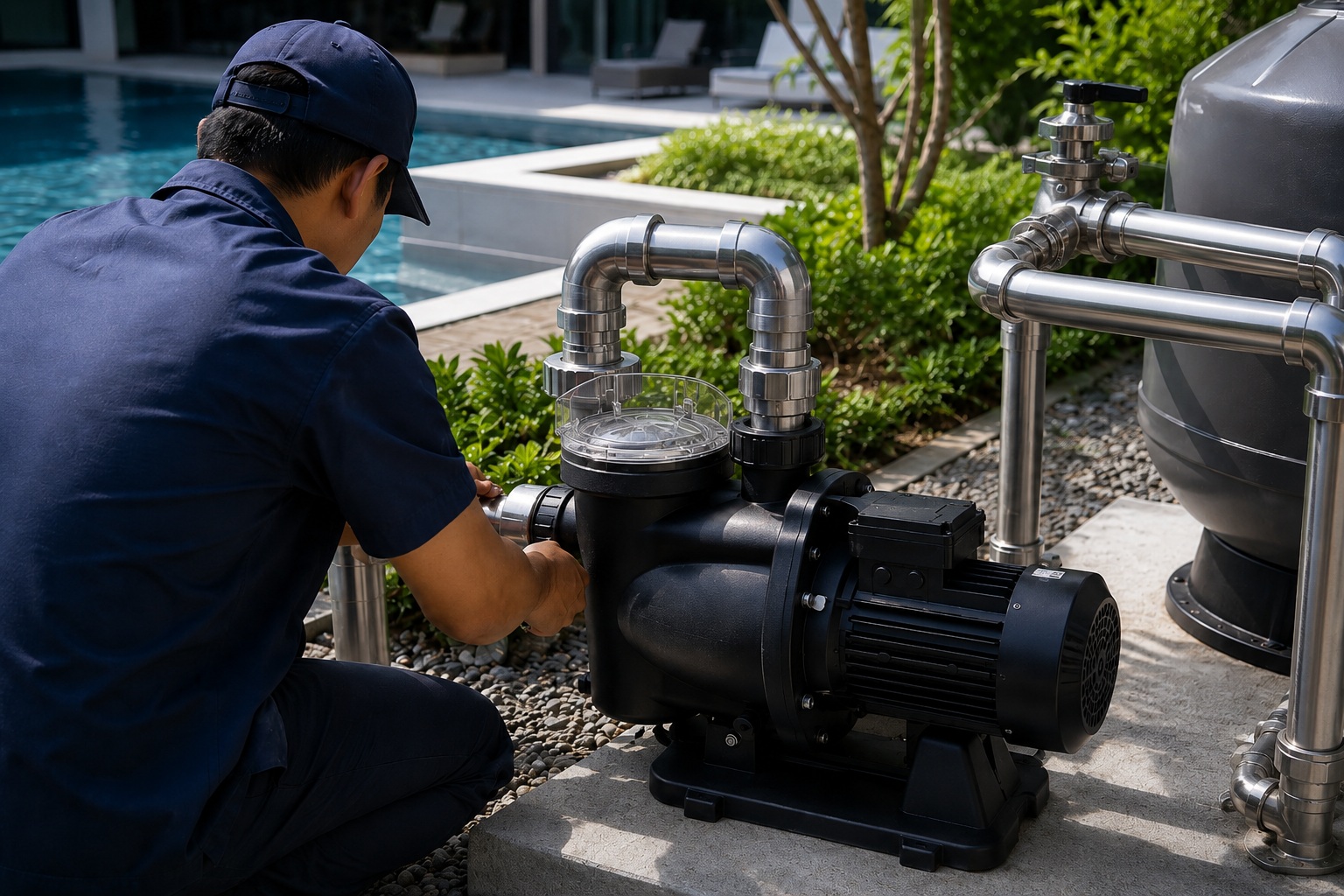
Understanding the right runtime for your pool pump is key to balancing cleanliness with cost.
Running it too little can lead to algae and cloudy water.
Running it too much wastes money and puts unnecessary wear on your equipment.
The goal is to find the perfect balance.
Let’s explore how to optimize your pump’s schedule and discover how advanced technology can drastically cut your operating costs.
The General Rule of Thumb and Pool Care Tips
Confused about your pool pump's ideal runtime?
The nonstop noise and soaring energy bills can be frustrating.
Finding the sweet spot is easier than you think.
A pool pump's main job is to circulate the entire volume of water through the filter at least once daily.
This is known as a "turnover."
For most residential pools, achieving one turnover takes about 8 to 12 hours, not 24.
To truly optimize your pool's health and your budget, you need to look beyond a simple time estimate.
Factors like your pool's size, the type of pump you own, and even the weather play a critical role.
A "one-size-fits-all" approach simply doesn't work.
Let's break down these factors to create a smarter, more efficient filtration schedule.
Calculating Your Pool's Turnover Rate
The first step is to calculate how long your pump needs to run for one full turnover.
You need two numbers: your pool's volume in gallons and your pump's flow rate in gallons per minute (GPM).
The formula is: Pool Volume (Gallons) ÷ Pump Flow Rate (GPM) ÷ 60 = Hours for One Turnover.
For example, a 20,000-gallon pool with a pump that moves 50 GPM would need about 6.7 hours for a full turnover.
Running it for 8 hours ensures a safe and clean margin.
Single-Speed vs. Variable-Speed Pumps
The type of pump you have dramatically impacts both energy use and required runtime.
Single-speed pumps are the old standard; they run at one constant, high speed.
Variable-speed pumps (VSPs) allow you to control the motor speed, offering massive energy savings.
A VSP can run at a lower speed for a longer period, using up to 90% less electricity than a single-speed model to circulate the same amount of water.
| Feature | Single-Speed Pump | Variable-Speed Pump |
|---|---|---|
| Speed Control | One fixed high speed | Multiple, adjustable speeds |
| Energy Efficiency | Low | High (up to 90% savings) |
| Noise Level | Loud | Very quiet at low speeds |
| Upfront Cost | Lower | Higher |
| Long-Term Cost | High due to energy use | Lower due to energy savings |
How Ambient Temperature Affects Runtime
A common guideline is to run your pump for one hour for every 10°F (or about 5.5°C) of the ambient air temperature.
So, on an 80°F day, you would run the pump for 8 hours.
In hotter weather, more contaminants like algae and bacteria grow, requiring longer filtration times to keep the water sanitized and clear.
During cooler months, you can significantly reduce the runtime.
An Opportunity for Solar Pool Pumps to Shine
Old pool pumps are energy vampires.
They can be the second-biggest energy consumer in a home, after the HVAC system.
This financial drain makes enjoying your pool unnecessarily expensive.
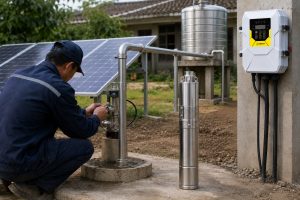
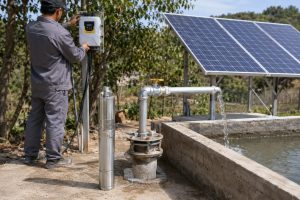
Solar pool pumps offer a game-changing solution.
By running directly on free energy from the sun, they can cut your pool's electricity costs to zero.
This makes them the most economically and environmentally sustainable choice for pool circulation.
The transition to solar is becoming more urgent as energy prices rise and climate concerns grow.
While early imported models had issues with reliability and inconsistent performance, the technology has matured significantly.
A high-quality solar pump system is no longer just a trend; it's a smart investment with a rapid return.
Let’s look at the core technology that makes modern solar pumps a superior choice.
The Power of a High-Efficiency Motor
The heart of any advanced solar pump is its motor.
Traditional pumps often use brushed AC motors, which are inefficient and have a short lifespan.
Modern solar pumps utilize a Brushless DC (BLDC) permanent magnet motor.
The difference in performance is staggering.
- Lifespan Comparison: A standard brushed motor typically lasts between 2,000 to 5,000 hours. In contrast, a BLDC motor has a lifespan of 20,000 to 30,000 hours. That is 6 to 10 times longer.
- Efficiency: BLDC motors achieve efficiencies exceeding 90%, while conventional motors often operate below 70%. This means more water is pumped for every watt of solar energy produced.
- Design: Our BLDC motors are 47% smaller and 39% lighter than comparable brushed motors. This compact design simplifies installation and reduces shipping costs for our distribution partners.
These technological advantages mean you need fewer solar panels to power the pump, lowering the initial investment and accelerating the return on investment (ROI).
A typical solar pump system can pay for itself in just 2-4 years through electricity savings alone.
Solving the Consistency Problem
One major challenge for early solar pumps was inconsistent power on cloudy days or in the late afternoon.
This could cause the pump to cycle on and off rapidly, which puts extreme stress on the motor and leads to premature failure.
This is where intelligent control comes in.
We have developed a hybrid AC/DC controller that eliminates this problem.
The system is designed to use solar power as its primary source.
However, if an intelligent sensor detects that solar input is insufficient due to clouds or at night, it automatically switches to or supplements with AC grid power.
This ensures the pump runs for its required duration every day without interruption or damaging cycling.
| Power Source | System Response | Result |
|---|---|---|
| Full Sun | Runs 100% on DC solar power | Zero grid electricity costs |
| Partial Clouds | Hybrid function supplements DC with minimal AC power | Maximizes solar energy use, ensures stable operation |
| No Sun / Night | Automatically switches to AC power | Guarantees filtration turnover is complete |
This hybrid capability offers the best of both worlds: maximum energy savings from solar with the reliability of the grid as a backup.
It ensures a perfectly clean pool 24/7, worry-free.
Conclusion
Your pool pump shouldn't run all the time.
Instead, focus on achieving one daily turnover with an efficient, modern pump system to save money and ensure a clean pool.
Frequently Asked Questions (FAQs)
Is it cheaper to run a pool pump at night?
Yes, running your pump during off-peak hours at night can be cheaper if your utility company offers variable rates.
However, a solar pump eliminates this cost entirely by using free energy during the day.
Can I run my pool pump 4 hours a day?
Running it for only 4 hours is generally not enough for most pools, especially in summer.
This short runtime likely won't achieve a full turnover, leading to cloudy water and algae growth.
Do I need to run a pool pump every day?
Yes, you should run your pump every day to ensure proper water circulation and chemical distribution.
Skipping days allows stagnant water to become a breeding ground for bacteria and algae.
How does a pool cover affect pump run time?
Using a pool cover reduces debris, evaporation, and chemical loss.
This can allow you to slightly reduce your pump's daily runtime while keeping the water clean.
Should I run my pool pump after adding chemicals?
Yes, you should always run the pump for at least a few hours after adding chemicals.
This circulates the water to ensure the chemicals are evenly distributed throughout the pool.
What happens if you run a pool pump with no water?
Never run a pump without water.
This is called "running dry" and can quickly cause the motor to overheat and suffer catastrophic damage, leading to expensive repairs or replacement.
How many hours should a variable-speed pump run?
A variable-speed pump should run longer, often 10-12 hours a day, but at a much lower speed.
This method uses significantly less energy than running a single-speed pump for 8 hours.
Can a pool pump be oversized?
Yes, a pump that is too powerful for your pool's plumbing and filter can cause damage and waste energy.
It's crucial to match the pump's flow rate to your system's design.