Struggling with high energy bills or unreliable water access in remote locations?
A sun-powered solution offers incredible independence and cost savings.
Yes, solar-powered water pumps work exceptionally well.
They provide a reliable, cost-effective, and environmentally friendly water solution, especially in off-grid areas, by efficiently converting sunlight directly into the energy needed to pump water for agriculture, livestock, and homes.
These systems are not just a niche product anymore.
They have become essential equipment across Africa, the Americas, Australia, and Asia.
Their ability to operate independently of the power grid makes them a game-changer for sustainable water management.
But how do they actually function, and what makes them such a compelling choice?
Let’s explore the technology that brings water to some of the world's most challenging environments.
What Are Solar Pumps & How Do They Work?
Feeling puzzled by how simple sunlight can lift thousands of gallons of water from deep underground?
The technology seems complex, but its core principle is surprisingly straightforward and effective.
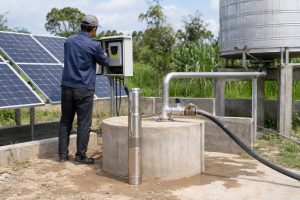
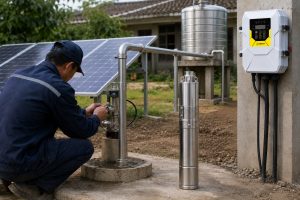
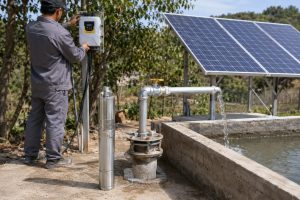
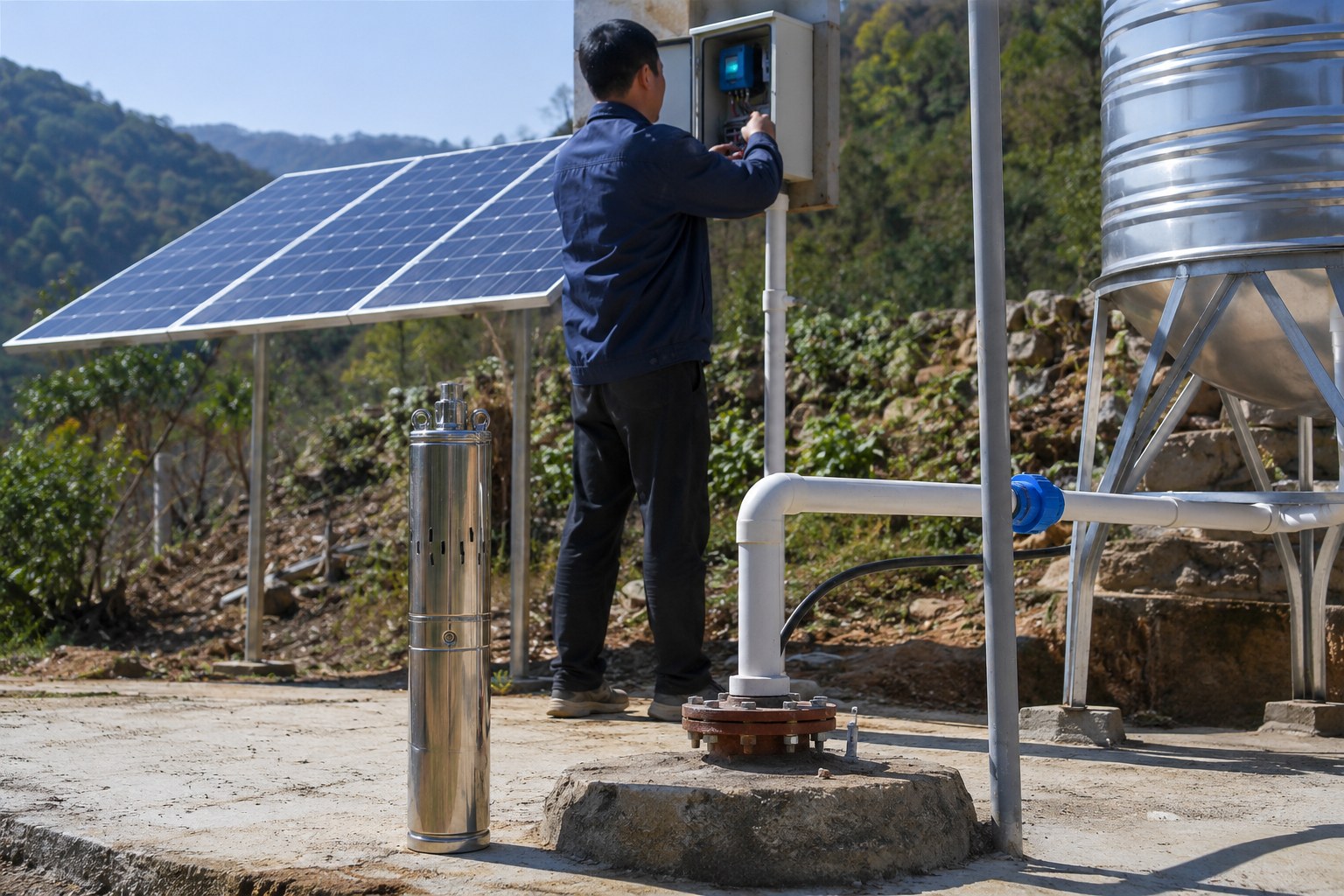
Solar pumps use photovoltaic (PV) panels to absorb sunlight and convert it into DC electricity.
This electricity powers a specialized motor connected to a pump.
A controller manages the power flow, maximizing efficiency and protecting the system as it moves water from a source to where it's needed.
The magic of a solar water pump lies in its elegant simplicity and the interaction between a few key components.
It's a complete system designed to work in harmony, turning the sun's energy into a life-sustaining resource.
Let’s break down each part to understand its role.
The Core Components
A solar pumping system is more than just a pump.
It's an integrated setup where each part is vital for performance.
-
Solar Photovoltaic (PV) Panels: These are the system's power plant.
Made of solar cells, they capture photons from sunlight.
This process generates direct current (DC) electricity, the fuel for the pump motor. -
Pump Controller: This is the brain of the operation.
It takes the DC power from the panels and optimizes it for the motor.
Crucially, it includes Maximum Power Point Tracking (MPPT) technology.
MPPT adjusts the electrical load to extract the maximum possible power from the solar panels, increasing water output by up to 30% compared to systems without it.
It also protects the pump from damage due to voltage fluctuations or running dry. -
Water Pump Motor: This is the heart of the system.
Most modern solar pumps use a highly efficient brushless DC (BLDC) motor.
This motor converts electrical energy from the controller into the mechanical force needed to drive the pump mechanism and move water.
From Sunlight to Water Flow
The process from sunshine to a running faucet is seamless.
First, the solar panels begin generating power as soon as the sun rises.
The DC electricity travels to the MPPT controller.
The controller analyzes the incoming power and the pump's needs, then delivers the optimized voltage and current to the motor.
The motor spins, activating the pump, which then draws water from the source—be it a deep well, a river, or a pond.
The water is then moved through pipes to a storage tank, irrigation system, or directly to a tap.
Because the system responds directly to sunlight, it pumps the most water during the sunniest parts of the day.
Can It Work Without a Battery?
A common misconception is that solar pumps require batteries to function.
While batteries can be used to store energy for nighttime pumping, over 95% of agricultural and domestic solar pumping systems operate without them.
Instead, they pump water into a storage tank during the day.
This "water battery" approach is far more cost-effective and low-maintenance.
The stored water can then be used anytime, day or night, using gravity or a small pressure pump.
This design eliminates the high cost, limited lifespan, and maintenance needs associated with battery banks.
Pros and Cons of Solar Water Pumps
Worried about the initial investment for a solar pump system?
While the upfront cost can seem high, the long-term savings and reliability often make it the most economical choice.
The primary advantage of solar pumps is the elimination of ongoing fuel and electricity costs.
Once installed, the sun provides free energy.
The main disadvantage is that they depend on sunlight, which requires oversizing panels or using a hybrid system for 24/7 operation in critical applications.
Choosing the right water pumping solution involves weighing the benefits against the potential drawbacks.
For many, the financial and operational advantages of solar pumps far outweigh their limitations.
Let's dive into a realistic comparison to see if this technology fits your needs.
The Overwhelming Pros
-
Zero Operating Fuel Costs: This is the most significant benefit.
A solar pump's fuel—sunlight—is free and abundant.
Compared to a diesel-powered generator, which can cost thousands of dollars annually in fuel and maintenance, a solar pump starts saving you money from day one.
For example, a 3HP diesel pump running 5 hours a day could consume over $4,000 in fuel per year, while a solar pump costs nothing to run. -
Low Maintenance and High Reliability: Solar pumps, especially those with brushless motors, have very few moving parts that can wear out.
There are no engine oils to change or spark plugs to replace.
Maintenance is typically limited to occasionally cleaning the solar panels to ensure maximum efficiency.
This reliability is critical for remote farms and homesteads where a breakdown can be catastrophic.
Modern systems often come with a 2-year warranty and a designed lifespan of over 10 years. -
Environmentally Friendly: Solar pumps operate with zero carbon emissions.
They don't contribute to air or noise pollution, making them a clean solution for both the user and the surrounding environment.
This helps preserve local ecosystems and supports sustainable farming practices. -
Energy Independence: By operating off-grid, you are no longer vulnerable to power outages or the rising costs of grid electricity and fossil fuels.
This independence provides peace of mind and predictable operational costs for years to come.
Addressing the Cons
While the benefits are strong, it's important to understand the limitations.
| Concern | Reality & Mitigation |
|---|---|
| High Upfront Cost | The initial investment can be higher than a conventional AC pump. However, government incentives and the elimination of fuel costs mean the return on investment (ROI) is often achieved within 1-3 years. Total lifetime cost is significantly lower. |
| Depends on Sunlight | Pumping volume is reduced on cloudy days and stops at night. This is solved by pumping water into a storage tank during peak sun hours. A properly sized tank ensures water is available 24/7. |
| Pumps Less Than AC Pumps? | A solar pump may have a lower instantaneous flow rate than a large AC pump. However, it runs for 6-8 hours a day for free, often moving more water daily than an AC pump that is run for only 1-2 hours due to high electricity costs. |
By designing the system correctly with adequate storage, the "cons" become manageable parts of a highly effective and economical water solution.
Solar Screw Pump: Low Flow, High Head
Do you need to pull water from a very deep well but don't require massive flow rates?
The high cost and complexity of traditional deep-well pumps can be a major barrier.
The solar screw pump is the ideal solution for deep wells.
It uses a simple-yet-robust rotating screw mechanism to efficiently push water from depths exceeding 150 meters (500 feet), making it perfect for domestic water supply and livestock in areas with deep water tables.
When the water source is far below the surface, you need a pump designed specifically for high "head," which is the vertical distance it can lift water.
This is where the solar screw pump, also known as a helical rotor pump, truly excels.
It's a workhorse built for depth, not for speed.
How It Achieves High Head
The design is ingenious.
It consists of a single metal screw (the rotor) that turns inside a rubber sleeve (the stator).
As the rotor spins, it creates sealed cavities of water that are progressively "pushed" up the pump.
This positive displacement method generates immense pressure, allowing it to overcome the massive weight of a tall column of water.
It doesn't "throw" water like a centrifugal pump; it methodically lifts it.
Key Applications and Strengths
-
Deep Well Water Supply: This is its primary application.
For homes, small communities, and livestock troughs that rely on wells deeper than 80 meters, the screw pump is often the only viable solar option. -
High Sand Resistance: The rubber stator and stainless steel screw can handle water with a higher concentration of sand and silt without clogging or rapid wear.
This durability is a major advantage in many regions where groundwater is not perfectly clear.
It can tolerate a sand content up to 5 times higher than many centrifugal pumps. -
Efficiency in Low-Yield Wells: Because it operates at a lower flow rate, a screw pump is less likely to drain a well that replenishes slowly.
It provides a steady, reliable supply without overwhelming the water source.
Performance Comparison
Let's compare it to a centrifugal pump in a deep-well scenario.
| Feature | Solar Screw Pump | Solar Centrifugal Pump |
|---|---|---|
| Max Head | 150-200 meters (500-650 ft) | 80-120 meters (260-400 ft) |
| Typical Flow Rate | 5-20 liters/minute (1-5 GPM) | 30-100 liters/minute (8-26 GPM) |
| Sand Tolerance | High | Low to Medium |
| Best Use Case | Deep wells, domestic use, livestock | Shallower wells, irrigation, high volume needs |
While its flow rate is limited, making it unsuitable for large-scale irrigation, the screw pump's ability to provide water from extreme depths using only solar power is a game-changing advantage for millions.
Solar Plastic Impeller Pump: High Flow, Wear-Resistant
Need to irrigate a farm or water a large herd of livestock without breaking the bank?
Traditional irrigation pumps consume enormous amounts of electricity or fuel, making operational costs sky-high.
The solar plastic impeller pump is the go-to for high-volume applications like farm irrigation and pasture water supply.
This multi-stage centrifugal pump uses durable, wear-resistant plastic impellers to deliver impressive flow rates at a very competitive price point, offering the best value for moving large amounts of water.
When the priority is volume over extreme depth, a centrifugal pump is the answer.
The plastic impeller variant makes this powerful technology accessible and affordable for a wider range of users, particularly in agriculture.
It’s designed to be a cost-effective workhorse.
Centrifugal Force in Action
Inside the pump, a stack of impellers spins at high speed.
Each impeller is a disc with curved vanes.
As water enters the center of a spinning impeller, centrifugal force throws it outward at high velocity.
The water is then collected in a diffuser, which slows it down and converts its velocity into pressure.
It then moves to the next impeller in the stack, which adds more pressure.
This multi-stage process allows the pump to achieve both high flow and moderate head.
Why Engineered Plastic?
-
Wear Resistance: Modern solar pumps use high-strength, engineered polymers for their impellers, not simple plastic.
These materials are specially formulated to resist abrasion from fine sand, which can quickly erode metal impellers.
This gives them a surprising durability advantage in many real-world water conditions. -
Cost-Effectiveness: Manufacturing plastic impellers is significantly less expensive than casting and machining stainless steel ones.
This cost saving is passed directly to the end-user, making the pump system much more affordable. -
Lightweight: Plastic components reduce the overall weight of the pump.
This makes it easier and cheaper to transport, handle, and install, which is a significant factor in remote areas.
A plastic impeller pump can be up to 30% lighter than its stainless steel equivalent.
Ideal Use Cases and Limitations
These pumps are widely used across Africa, the Americas, and Asia for applications demanding high water output.
| Application | Why It Fits |
|---|---|
| Farm Irrigation | High flow rates can efficiently supply drip, sprinkler, or flood irrigation systems for crops. |
| Livestock Watering | Can quickly fill large water troughs or tanks for sizable herds of cattle, sheep, or goats. |
| Community Water Supply | Ideal for filling a central village tank from a moderately deep well or surface water source. |
The main limitation is its suitability for highly corrosive water or extreme depths.
While wear-resistant, the plastic may not hold up as well as stainless steel in water with very high or low pH.
For most general farming and livestock applications, however, it represents an unbeatable combination of performance and value.
Solar Stainless Steel Impeller Pump: Premium Quality, Corrosion Resistance
Is your water source acidic, alkaline, or salty?
Corrosive water can destroy a standard pump in months, leading to costly replacements and downtime.
The solar stainless steel impeller pump is the premium solution for harsh water environments.
Built with SS304 or SS316 stainless steel impellers and housing, it offers maximum durability and a long service life, ensuring reliable water flow even in corrosive conditions where other pumps fail.
For some applications, only the best will do.
When water quality is aggressive, investing in a stainless steel pump isn't a luxury; it's a necessity.
It's engineered to withstand chemical attacks and provide unwavering performance for years, protecting your investment and guaranteeing your water supply.
The Power of Stainless Steel
Stainless steel is an iron alloy containing chromium, which forms a passive, invisible, and corrosion-resistant oxide film on the surface.
This makes it highly resistant to rust, acidity, and alkalinity.
-
SS304: This is the most common grade used in water pumps.
It offers excellent corrosion resistance for most water types and is a fantastic all-around choice for durability. -
SS316: This grade includes molybdenum, which gives it superior resistance to chlorides (like salt) and other industrial chemicals.
It is the go-to choice for coastal areas, brackish water wells, or mining applications.
This material choice ensures the pump's internal components don't degrade, maintaining their precise shape for consistent efficiency and flow over a lifespan that can be 2-3 times longer than less-durable pumps in the same conditions.
When is Stainless Steel the Right Choice?
-
Regions with Known Water Quality Issues: In areas like Australia with alkaline soils, or in certain coastal parts of the Americas and the Middle East, a stainless steel pump is essential.
-
High-Value Applications: For high-end homes, critical livestock operations, or commercial properties, the reliability and longevity of a stainless steel pump justify the higher initial cost.
The cost of failure in these applications is simply too high. -
Drinking Water Systems: Many users prefer stainless steel for potable water systems due to its hygienic properties and the assurance that no materials will leach into the water over time.
Performance and Cost
While operating on the same centrifugal principle as the plastic impeller pump, the stainless steel version offers subtle performance gains due to the rigidity and precision of the metal parts.
| Feature | Stainless Steel Impeller | Plastic Impeller |
|---|---|---|
| Corrosion Resistance | Excellent to Superior | Fair to Good |
| Lifespan in Harsh Water | Very Long | Short to Medium |
| Initial Cost | Higher (30-50% more) | Lower |
| Weight | Heavier | Lighter |
| Target Market | Premium Residential, Specialized Agriculture, Industrial | General Agriculture, Standard Domestic Use |
The choice between plastic and stainless steel is a strategic one.
It depends entirely on balancing your budget with the specific chemical makeup of your water source and your long-term reliability needs.
The Core Power: BLDC Permanent Magnet Motor
What really determines a solar pump's performance?
While the pump type matters, the motor driving it is the true heart of the system, dictating its efficiency and reliability.
All modern high-performance solar pumps are powered by a brushless DC (BLDC) permanent magnet motor.
This advanced motor technology achieves an efficiency of over 90%, dramatically reducing the number of solar panels needed and delivering more water per watt of sunshine.
The motor is the engine that converts electrical power into the mechanical motion needed to pump water.
The shift from older, inefficient motor types to the BLDC motor is the single biggest reason for the success of today's solar water pumps.
It’s a technological leap that makes the entire system viable.
Why is BLDC So Efficient?
Traditional DC motors use "brushes" to transmit power to the spinning part of the motor.
These brushes create friction, generate heat, produce electrical sparks, and wear out over time.
A BLDC motor eliminates them entirely.
-
No Brushes, No Friction: In a BLDC motor, the power is managed electronically by the controller.
This lack of physical contact means virtually no energy is lost to friction.
This translates directly into higher efficiency. -
Permanent Magnet Rotor: The rotor—the part that spins—is made with powerful permanent magnets, often using high-grade Neodymium Iron Boron (like 40SH grade magnets).
This creates a strong magnetic field without needing to use electrical energy to power an electromagnet, further boosting efficiency. -
Cooler Operation: Less energy lost as heat means the motor runs cooler, which extends the life of its components, such as bearings and windings.
The Market Impact of High Efficiency
The real-world benefits of a motor that is over 90% efficient are enormous.
| Advantage | Impact on the User |
|---|---|
| Fewer Solar Panels Needed | An efficient motor requires less power to do the same amount of work. This can reduce the number of solar panels needed by 25-40%, significantly lowering the system's initial cost. |
| More Water Output | On any given day, a more efficient motor will pump more water using the same amount of sunlight. This is especially noticeable during early morning, late afternoon, or on cloudy days. |
| Compact and Lightweight Design | BLDC motors are much more power-dense than older motor types. They can be up to 47% smaller and 39% lighter for the same power output, making the pump easier to install and transport. |
| Maintenance-Free and Long Life | With no brushes to wear out, the motor is virtually maintenance-free. Its designed service life can easily exceed 25,000 hours of operation. |
This core technology is the universal driver that elevates the performance of all three pump types—screw, plastic impeller, and stainless steel impeller.
It's the single most important factor in the system's overall competitiveness and value.
What About Cloudy Days? Hybrid AC/DC Solutions
Is your biggest fear about solar pumps the lack of water on consecutive cloudy days or at night?
This is a valid concern, especially for critical applications where a 24/7 water supply is non-negotiable.
Modern hybrid AC/DC controllers solve this problem by automatically switching power sources.
They prioritize free solar energy when available but can instantly supplement with or switch to AC grid power or a generator when sunlight is insufficient, ensuring an uninterrupted water supply.
Energy independence is great, but water security is paramount.
For many users, relying 100% on the sun isn't practical.
This is where intelligent hybrid technology provides the perfect blend of solar savings and grid-level reliability, giving you the best of both worlds.
How Hybrid Controllers Work
A hybrid AC/DC controller is designed with two simultaneous power inputs: one for your solar panels (DC) and one for an AC source (grid power or a generator).
The controller's built-in logic is programmed to be as economical as possible.
-
Solar Priority: As long as there is enough sunlight to run the pump, the controller will use 100% solar power.
Your AC power source remains on standby. -
Power Blending: On overcast days when solar power is reduced but still present, the controller can blend the two sources.
It will use all available solar power first and then draw only the small amount of additional power needed from the AC source to keep the pump running at the desired speed.
This maximizes your use of free energy. -
Automatic Switchover: When the sun goes down or during extended periods of heavy cloud cover, the controller will automatically and seamlessly switch over to full AC power.
When the sun returns, it switches back to solar.
You don't have to do anything.
The Benefit of Redundancy
This dual-power capability offers incredible flexibility and peace of mind.
| Scenario | Hybrid Solution |
|---|---|
| A Week of Rainy Weather | Your pump continues to run on AC power, ensuring your crops or livestock never go without water. You only pay for electricity when you absolutely need it. |
| Nighttime Irrigation Needed | You can schedule your pump to run at any time, day or night, without needing a massive and expensive battery bank. |
| Power Grid Failure | If the grid goes down during the day, your pump continues to run on solar power, providing water security that grid-only pumps cannot. |
This technology is a game-changer for dairy farms, critical irrigation projects, and residential users who want the cost savings of solar without ever compromising on reliability.
It ensures that you always have water, 24 hours a day, 365 days a year, while still slashing your energy bills.
Conclusion
The true strength of a solar pump system is its combination of a durable pump, a highly efficient motor, and an intelligent controller, providing a complete and reliable water solution.
FAQs
How long do solar water pumps last?
A quality solar water pump system can last for 15-20 years. The solar panels have a lifespan of 25+ years, while the pump and motor typically last 10+ years before requiring major service.
Can a solar pump work without a battery?
Yes, most solar pumps work without batteries. They pump water into a storage tank during the day, and the stored water is used as needed, which is more cost-effective.
How deep can a solar pump pull water from?
It depends on the pump type. Solar screw pumps can pull water from over 150 meters (500 feet), while centrifugal pumps are better suited for depths up to 120 meters (400 feet).
What maintenance does a solar water pump require?
Maintenance is minimal. It mainly involves cleaning the solar panels a few times a year to remove dust and debris. The brushless motors are virtually maintenance-free.
Can a solar pump run on cloudy days?
Yes, but at a reduced flow rate. As long as there is some daylight, the panels will produce power. Hybrid systems can supplement with AC power on very cloudy days.
How many solar panels are needed for a water pump?
The number of panels depends on the pump's power rating, the well depth, and the required daily water volume. A professional can size the system correctly for your specific needs.
Are there government incentives for solar water pumps?
Many countries and states offer tax credits, rebates, or grants for installing solar water systems, especially for agricultural use. Check with your local energy or agricultural agency.
Can I run my house on a solar pump system?
A solar pump system is designed specifically to power a water pump. You would need a separate, larger solar power system with batteries and an inverter to run an entire house.