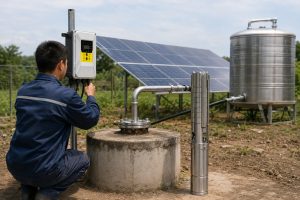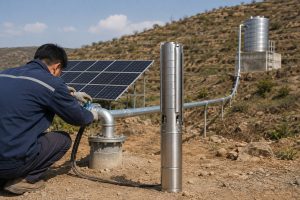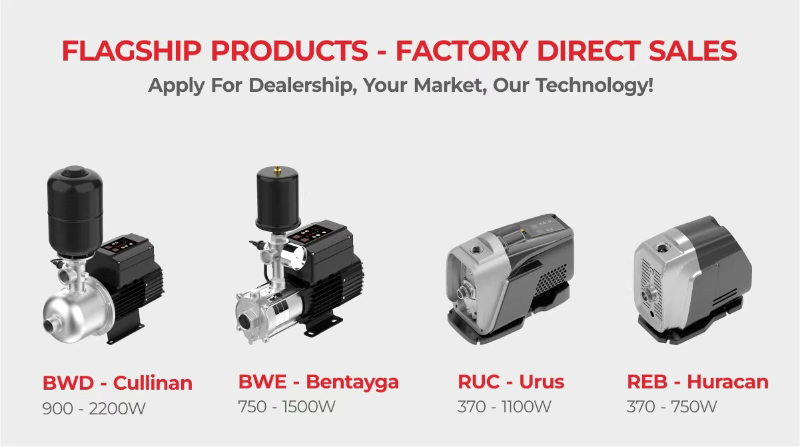
Struggling with high energy bills and unreliable water access?
A new pump could be the answer, but choosing the right one is tough.
The best pump brand depends on your specific need.
For deep wells, Grundfos is reliable.
For pools, Hayward is a top choice.
For off-grid solar applications, brands specializing in high-efficiency BLDC motors and varied pump types offer the most value. It is about matching technology to the application.
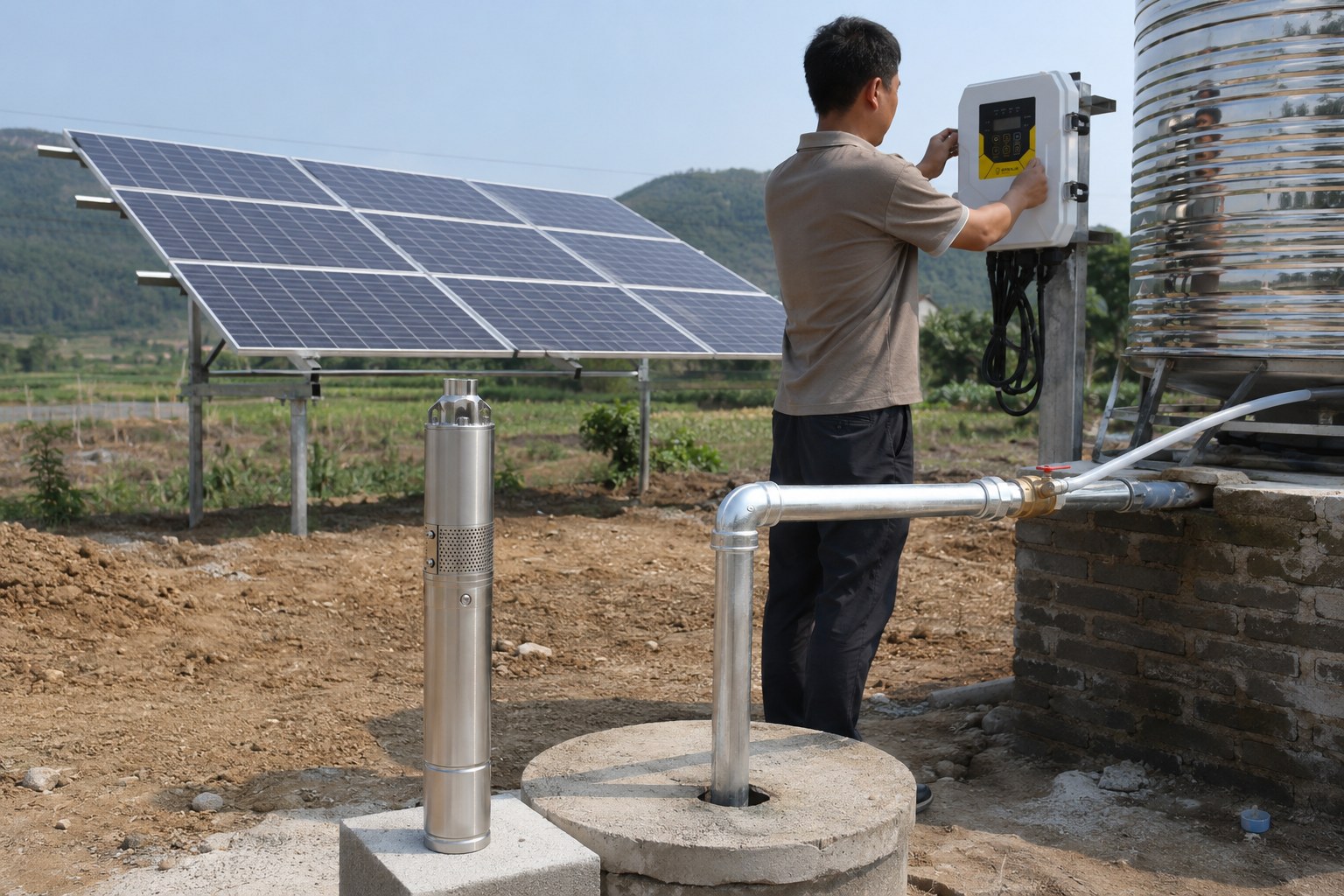
With so many options, from industrial giants to specialized solar pump makers, it is easy to get lost.
This guide will break down the top players.
More importantly, it will help you understand which type of pump technology best fits your needs.
This applies whether you are on the grid or harnessing the power of the sun.
Let's dive into what really makes a pump "the best."
What Are the Top Well Pump Brands Based on Customer Reviews and Reliability?
Is your well pump failing?
Choosing a replacement feels like a gamble, with reliability being your biggest concern.
A wrong choice can cost you significant time and money.
Grundfos consistently leads in reliability for deep wells with its efficient motors.
Red Lion is praised for robust construction.
However, the true measure of a pump's value is how its technology matches your specific well conditions, especially in off-grid solar setups.
When you look at the market, big names like Grundfos, Red Lion, and Flotec stand out.
They have earned their reputations through years of solid performance.
Grundfos is known for its incredible efficiency, often delivering 10 GPM with just a 1/2 HP motor.
Red Lion builds pumps like tanks, with stainless steel shells that last for years.
But focusing only on the brand name on the box can be a mistake.
The real secret to performance and longevity is the technology inside the pump.
This is especially true as the world moves toward more sustainable and independent water solutions.
The Power of Solar: Beyond the Grid
The global demand for clean energy has made solar water pumps essential.
They are critical in regions like Africa, the Americas, Australia, and Asia.
These pumps operate independently of the power grid.
This makes them environmentally friendly and highly cost-effective in the long run.
For remote farms, ranches, and homes, a solar pump isn't just a piece of equipment; it's a lifeline.
It provides a consistent water supply without the need for expensive grid infrastructure or diesel generators.
The Core Technology: BLDC Permanent Magnet Motors
The true revolution in modern solar pumps lies in their motors.
Nearly all top-tier solar pumps are driven by high-efficiency Brushless DC (BLDC) permanent magnet motors.
These aren't your average electric motors.
They are engineered for maximum power output with minimal energy input.
Their efficiency ratings often exceed 90%.
A traditional AC motor, by comparison, might only reach 60-75% efficiency.
The rotor, a key component, is typically made from 40SH neodymium iron boron.
This advanced magnetic material provides incredibly high torque in a compact size.
| Feature | BLDC Permanent Magnet Motor | Traditional AC Motor |
|---|---|---|
| Efficiency | Over 90% | 60-75% |
| Size | Up to 47% smaller | Larger and bulkier |
| Weight | Up to 39% lighter | Heavier |
| Maintenance | Virtually maintenance-free | Requires regular checks |
| Lifespan | Longer operational life | Shorter due to wear |
Why Motor Efficiency is the Real Game-Changer
This dramatic increase in efficiency has a powerful ripple effect.
First, it significantly reduces the number of solar panels required to power the pump.
Fewer panels mean a lower initial investment, simpler installation, and a smaller physical footprint.
Second, the compact and lightweight design of BLDC motors makes them easier and cheaper to transport and install, especially in remote locations.
Finally, their brushless design eliminates the parts that wear out most quickly in traditional motors.
This results in a virtually maintenance-free system with a much longer service life.
The motor is the heart of the system, and its efficiency dictates the overall performance and economic value of the entire solar pump setup.
What Should I Look for in a Pool Pump (And What to Avoid)?
Is your pool pump running up your electric bill?
Old single-speed pumps are loud, inefficient, and costly.
They can turn the pleasure of pool ownership into a financial headache.
Look for a variable-speed pump.
They can save up to 90% on energy costs and are much quieter.
The key is matching the pump's horsepower and flow rate to your pool size and filter, avoiding oversized pumps that waste energy.
The pool industry provides a great lesson in pump evolution.
For decades, single-speed pumps were the standard.
They ran at one speed: full blast.
This wasted enormous amounts of energy.
Then, variable-speed (VS) pumps arrived.
They allow owners to dial in the exact speed needed for the task, from gentle filtering to powerful vacuuming.
The "affinity laws" of pump physics show that cutting the pump speed in half reduces power consumption by about 87%.
This is a monumental saving.
Just as VS technology transformed pools, specialized pump ends driven by efficient BLDC motors are transforming off-grid water solutions.
The principle is the same: matching the right technology to the specific job.
Matching the Pump Type to Your Water Needs
A high-efficiency BLDC motor is only half of the equation.
The other half is the pump end—the part that actually moves the water.
Different water sources and applications demand different types of pumps.
Choosing the right one is critical for performance and durability.
The three most popular types of solar deep-well pumps create a powerful and versatile product portfolio.
The High-Head Specialist: Solar Screw Pumps
The solar screw pump is a type of progressing cavity pump.
It uses a single stainless steel helical screw that rotates inside a rubber stator.
This action creates sealed cavities that move water upward through compression.
This design is perfect for applications requiring high head (lifting water from great depths) but at a low flow rate.
They are ideal for domestic water supply, filling tanks for livestock, and small-scale irrigation.
One of their biggest advantages is their exceptional resistance to sand and grit, which would quickly destroy other pump types.
This makes them a top choice for harsh water conditions often found in parts of Africa and Latin America.
Their main limitation is a lower flow rate, making them less suitable for large-scale agricultural irrigation.
The High-Flow Workhorse: Solar Plastic Impeller Pumps
This is a multi-stage centrifugal pump.
It uses a series of stacked, durable plastic impellers to move water.
Each stage adds pressure, resulting in high flow rates at a medium head.
These pumps are the go-to solution for farm irrigation, pasture water supply, and watering large home gardens.
They are widely used in Africa and the Americas where high water output is a priority.
The engineered plastic impellers offer excellent resistance to fine sand and are very wear-resistant.
This pump type is also lightweight and more economical, making it a popular choice.
However, in highly corrosive water or extremely deep wells, a more robust material may be necessary.
| Feature | Solar Screw Pump | Solar Plastic Impeller Pump |
|---|---|---|
| Best For | High Head, Deep Wells | High Flow, Medium Depth |
| Mechanism | Progressing Cavity | Multi-Stage Centrifugal |
| Flow Rate | Low | High |
| Sand Resistance | Excellent (coarse & fine) | Good (fine sand) |
| Primary Use | Domestic Water, Livestock | Farm & Pasture Irrigation |
| Cost | Moderate | Economical |
Which Brands Offer the Best Performance for Specific Applications?
Choosing a pump is not a one-size-fits-all decision.
The wrong pump for your specific water conditions can lead to premature failure.
This results in corrosion and a completely wasted investment.
For corrosive water, brands offering stainless steel construction are best.
For moving slurry, you need a specialized industrial pump.
This highlights the need to match materials and design to the application, a principle that is crucial for solar pumps in diverse environments.
The industrial pump market shows the importance of specialization.
A company like Weir Group engineers massive pumps specifically to handle abrasive slurry in mines.
Sulzer produces pumps designed to resist highly corrosive chemicals.
This same logic applies to the solar water pump world.
While a plastic impeller pump works wonders for a farm in one region, it might fail quickly in another with different water chemistry.
This is where material science becomes a critical factor in brand selection.
A truly great brand or supplier understands this and offers a portfolio that covers these diverse needs.
The Premium Choice for Harsh Water: Solar Stainless Steel Impeller Pumps
For the most demanding water conditions, the solar stainless steel impeller pump is the top-tier solution.
This model features an impeller and pump body constructed from SS304 stainless steel.
This material is specifically chosen for its high resistance to corrosion.
It is ideal for water sources that are acidic or alkaline.
This pump is perfect for regions with alkaline soils, such as parts of Australia and the Americas.
It is also the preferred choice for high-end homes and ranches where long-term reliability is paramount.
While the initial cost and weight are higher, the investment pays off.
These pumps offer a significantly longer service life and superior reliability in environments that would destroy lesser pumps.
They deliver high flow rates at medium-to-high head, combining performance with extreme durability.
The Brains of the Operation: Intelligent MPPT Controllers
A great solar pump system is more than just a motor and a pump end.
It also needs an intelligent controller.
The best systems use a Maximum Power Point Tracking (MPPT) controller.
This sophisticated electronic device constantly monitors the output of the solar panels.
It adjusts the electrical load to ensure the pump is always receiving the maximum possible power, regardless of changing sunlight conditions.
An MPPT controller can boost the pump's daily water output by as much as 30% compared to a system without one.
It is the brain that optimizes the entire operation, maximizing the return on your solar investment.
The Hybrid Advantage: AC/DC Compatibility
The latest innovation from top-tier brands is the AC/DC hybrid controller.
This technology solves the biggest challenge for solar power: what happens on cloudy days or at night?
A hybrid controller has two power inputs.
You can connect it to your solar panels and an AC power source (like the grid or a generator) at the same time.
The controller's logic is brilliant.
It automatically prioritizes solar power whenever it is available.
If sunlight fades, the hybrid function can blend AC power with the available solar power to maintain operation, maximizing every bit of solar energy.
When there is no solar input at all, it seamlessly switches to the AC source.
This ensures you have a worry-free, 24/7 water supply.
It offers the best of both worlds: the free, clean energy of the sun and the reliability of a conventional power source.
How to Choose a Pump Manufacturer?
Partnering with a manufacturer is a long-term commitment.
Choosing the wrong one can lead to supply chain issues.
It can also result in poor quality and a lack of support for your business.
Look for a manufacturer with proven experience, international certifications (CE, CSA), and a focus on product reliability.
For distributors, a partner offering OEM options and a flexible product portfolio is key to meeting diverse market demands successfully.
When you are selecting a manufacturing partner, especially for a technical product like a solar water pump, you need to look beyond the price list.
The best suppliers act as partners in your success.
They provide the products, support, and flexibility you need to grow your business.
Key factors to evaluate include product reliability, global service capabilities, manufacturing experience, and official certifications.
These elements separate the transactional suppliers from the true long-term partners.
Building a Competitive Product Portfolio
For a distributor, the ability to meet diverse customer needs is paramount.
This is why partnering with a manufacturer that offers a flexible and comprehensive product portfolio is so important.
A portfolio that includes solar screw pumps, plastic impeller pumps, and stainless steel impeller pumps covers nearly every possible application.
- For the homeowner with a deep well: You can offer a reliable screw pump.
- For the farmer needing to irrigate fields: You can offer a high-flow plastic impeller pump.
- For the rancher in an area with corrosive water: You can offer a durable stainless steel pump.
This flexibility allows you to be a one-stop solution for your market.
It positions you as an expert who can provide the right tool for any job, rather than a seller pushing a single, limited product.
What "Reliability" Means in Solar Pumps
In the context of solar pumps, reliability is a three-part concept.
It is the sum of the system's core components working in harmony.
- High-Efficiency Motor: The BLDC motor is the heart of the system. Its efficiency and durability are the foundation of the pump's long-term performance and low operating cost.
- Durable Pump End: The pump end must be made from the right material for the water condition. A mismatched material is the number one cause of premature pump failure.
- Intelligent Controller: The MPPT and AC/DC hybrid controller ensure the system operates at peak efficiency and provides water reliably, day or night, rain or shine.
A failure in any one of these areas compromises the entire system.
A truly reliable pump excels in all three.
The Mark of a Quality Global Supplier
A top-tier global supplier demonstrates its quality in several ways.
They have robust quality control systems in place, such as IQC, PQC, and OQA protocols.
Their products carry international certifications like CE, IEC, and RoHS, proving they meet global safety and quality standards.
They have extensive export experience and can support distributors with logistics and market knowledge.
Crucially, they often offer OEM and private label production.
This allows distributors to build their own brand identity while leveraging the manufacturer's engineering expertise and production capacity.
Choosing a manufacturer with these capabilities provides a strong foundation for a successful and profitable business partnership.
Conclusion
A pump's value is not just its brand name.
It is the efficiency of its motor, the durability of its materials, and the intelligence of its control system.
Frequently Asked Questions
What is the most reliable well pump?
Submersible pumps from reputable brands like Grundfos are considered most reliable. Their reliability comes from being sealed, operating underwater which keeps them cool, and designs that prevent common failures.
Which type of pump is most reliable?
Submersible well pumps are generally the most reliable type. They can last 10-15 years because they are protected from the elements and often include features that prevent damage.
Are variable speed pumps worth the extra cost?
Absolutely. Variable speed pumps can reduce energy costs by up to 90%. They typically pay for themselves within 1-2 seasons through electricity savings alone, plus they are much quieter.
How long do well pumps last?
A quality well pump typically lasts 8-12 years with proper maintenance. Some premium, well-maintained models can even last over 15 years before needing major service or replacement.
Can I install a well pump myself?
DIY installation is complex and often not recommended for submersible well pumps. It involves heavy lifting and electrical work that should be handled by a licensed professional for safety and warranty reasons.
What size pump do I need?
The right size depends on your well's depth, recovery rate, and your home's water demand. A professional can perform tests to recommend the correct horsepower and flow rate.
What is the difference between a submersible and a jet pump?
A submersible pump is placed inside the well, underwater, and pushes water up. A jet pump is located above ground and pulls water up through suction, making it suitable for shallower wells.
How do solar water pumps work?
Solar pumps use photovoltaic (PV) panels to capture energy from the sun. This energy powers a motor (ideally a high-efficiency BLDC motor) that drives the pump to move water.