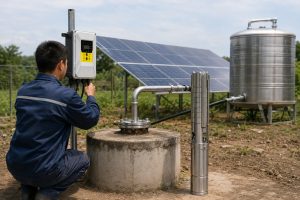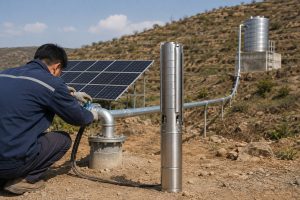
A failing pump can quickly lead to no water, costing you time and money.
The best water pump is a complete system matched to your specific needs.
It combines the right pump type, a high-efficiency motor, and smart controls to deliver reliable water flow while saving energy and money over its 15-25 year lifespan.
This guide breaks down the options.
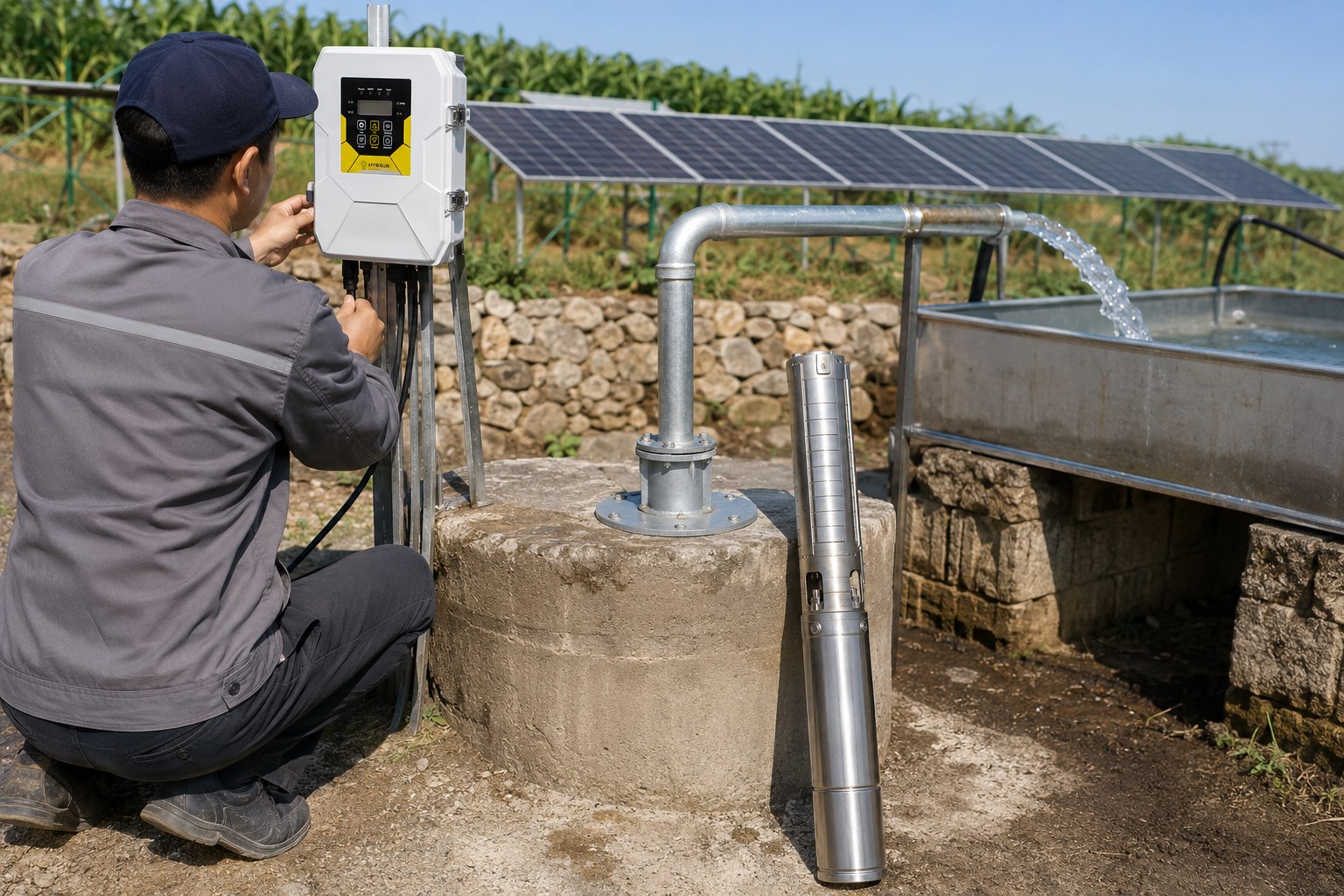
Choosing the perfect pump can feel overwhelming with so many brands and types available.
However, understanding the core components and matching them to your water source and demand simplifies the decision.
Whether you need water for your home, farm, or business, the right choice ensures decades of reliability.
This guide will walk you through the key factors, from pump types and motor technology to brand quality, helping you find the most efficient and cost-effective solution.
Defining Your Needs: Submersible vs. Jet Pumps
Your well is deep and a surface pump just won't cut it.
You need a solution that can reliably lift water from hundreds of feet below ground.
Submersible pumps are the superior choice for most modern wells over 25 feet deep.
They are more efficient, quieter, and better protected, pushing water up from inside the well instead of pulling it from the surface.
To select the right pump, you must first understand your well's characteristics.
The primary decision for well owners is between a submersible pump and a jet pump.
This choice is almost always determined by the depth of your well.
Submersible Pumps: The Deep Well Standard
Submersible pumps are installed directly inside the well casing, fully submerged below the water level.
This design makes them incredibly efficient because they push water to the surface, rather than expending energy to pull it.
They are the only practical option for wells deeper than 100 feet, common in regions like San Diego County, and can operate in wells over 1,000 feet deep.
Their underwater placement also makes them virtually silent at the surface and protects them from weather.
Because they are the modern standard, they are available in a huge range of sizes and capacities, from small residential units to large agricultural pumps.
Jet Pumps: For Shallow Applications
Jet pumps are mounted at the surface and pull water up from the well.
This design has significant limitations.
Shallow well jet pumps can only lift water from a maximum depth of about 25 feet.
Deep well jet pumps use a two-pipe system to reach depths of around 100 feet, but they become very inefficient at those depths.
Because the motor is at the surface, they are noisier and more exposed to the elements.
While they have a lower initial installation cost and are easier to service, their inefficiency and depth limitations make them unsuitable for the vast majority of modern wells.
Direct Comparison
Here’s a breakdown to help you see the differences clearly.
| Feature | Submersible Pump | Jet Pump |
|---|---|---|
| Ideal Depth | 25 to 1,000+ feet | 0 to 25 feet (Shallow), up to 100 feet (Deep) |
| Efficiency | High (pushes water) | Low (pulls water, uses more energy per gallon) |
| Noise Level | Very Quiet (underground) | Noisy (surface motor) |
| Priming | Self-priming | Requires priming |
| Protection | Protected from weather | Exposed to weather |
| Initial Cost | Higher | Lower |
| Long-term Cost | Lower (due to efficiency) | Higher (due to energy use) |
For most residential, agricultural, or off-grid applications with wells deeper than 25-50 feet, a submersible pump is the clear winner, offering superior efficiency, longevity, and performance.
The Heart of the System: Pump Motor Considerations
You’ve found a great pump, but paired with a weak or inefficient motor, it will fail prematurely.
The motor is the engine of your water system, and its quality dictates overall efficiency and reliability.
A high-efficiency motor, like a Brushless DC (BLDC) model, is the most critical component.
It directly impacts your energy costs, the number of solar panels needed, and the pump's lifespan, providing more power in a smaller, more durable package.
Even the best pump is useless without a reliable motor to power it.
The motor's design and efficiency are just as important as the pump end itself.
In fact, the lifetime energy costs to run a pump can often exceed the initial purchase price, making motor efficiency a crucial financial consideration.
Quality pump brands often pair their pumps with motors from industry leaders, but understanding the technology itself helps you make a smarter investment.
The Power of BLDC Permanent Magnet Motors
The biggest advancement in pump technology is the widespread adoption of Brushless DC (BLDC) permanent magnet motors.
This technology is a game-changer, especially for solar-powered applications.
A high-quality BLDC motor achieves an efficiency of over 90%.
This is a significant improvement over traditional AC or brushed motors.
The rotor is often made of powerful materials like 40SH neodymium iron boron magnets, providing high torque in a compact design.
The benefits are substantial.
- Energy Savings: Higher efficiency means the motor requires less power to do the same amount of work.
This can reduce electricity costs by 10-20% or more. - Reduced System Cost: In solar pump systems, a more efficient motor means you can use fewer solar panels to achieve the desired water flow, lowering the total upfront cost of the system.
A BLDC motor can be up to 47% smaller and 39% lighter than a traditional motor, simplifying installation. - Longer Lifespan: With no brushes to wear out, BLDC motors are virtually maintenance-free and have a significantly longer operational life.
- Better Performance: They provide strong, consistent torque across a range of speeds, allowing for features like soft starts that reduce wear on the entire system.
Power Source Flexibility: AC/DC Hybrid Systems
For off-grid or unreliable grid locations, ensuring a 24/7 water supply is critical.
This is where hybrid AC/DC controllers come in.
These intelligent controllers can accept power from two sources simultaneously, typically solar panels (DC) and the electrical grid or a generator (AC).
Here’s how it works:
- Solar Priority: During the day, the controller automatically uses power from the solar panels to run the pump.
- Hybrid Function: On cloudy days when solar input is low, the controller can blend solar power with AC power to ensure the pump runs at the required speed, maximizing the use of free solar energy.
- Automatic Switchover: When there is no solar input at night or during heavy cloud cover, the system automatically switches to the AC power source.
This technology ensures you have a worry-free water supply around the clock, combining the cost savings of solar with the reliability of a grid connection.
Motor Technology Comparison
| Motor Feature | High-Efficiency BLDC | Traditional AC/Brushed |
|---|---|---|
| Efficiency | > 90% | 60-75% |
| Lifespan | Long (no brushes to wear out) | Shorter (brushes require maintenance) |
| Maintenance | Maintenance-free | Requires regular maintenance |
| Size/Weight | Compact and lightweight | Bulkier and heavier |
| Solar Compatibility | Excellent (lowers panel requirement) | Less efficient (requires more panels) |
| Control | Precise speed and torque control | Limited control options |
Choosing a pump with a high-efficiency BLDC motor and an intelligent controller is the smartest way to build a reliable, cost-effective water system for the future.
Choosing by Application: Top Pump Types
You need to pump water, but your farm requires high volume while your neighbor's deep well needs high pressure.
Using the wrong pump type is inefficient and leads to premature failure.
The "best" pump is the one designed for your specific job.
Whether you need high pressure for a deep well, high flow for irrigation, or consistent pressure for your home, there is a specialized pump that will perform better and last longer.
Once you've decided on a submersible pump with a high-efficiency motor, the next step is to choose the right pump "end" for your specific application.
The design of the pump's internal mechanism determines its performance characteristics—namely, its flow rate (GPM) and pressure (Head).
Here are the most common types for residential and agricultural use.
For Deep Wells & High Head: The Solar Screw Pump
When you need to lift water from very deep wells, a screw pump is an excellent choice.
This type of pump is a positive displacement pump.
It uses a single helical stainless steel screw (the rotor) rotating within a rubber stator.
As the screw turns, it creates sealed cavities of water that are pushed progressively up toward the outlet.
This mechanism produces very high pressure (head) but a relatively low flow rate.
- Key Advantage: Its ability to handle sandy or silty water is superior to many other designs, as the screw mechanism is less susceptible to abrasion damage.
It is highly resistant to sand. - Best Applications: Domestic water supply for homes with very deep wells (300+ feet), livestock drinking water in arid regions, and small-scale irrigation where high pressure is needed to push water over long distances.
It is ideal for electricity-scarce areas in Africa and Latin America. - Limitations: The flow rate is limited, making it unsuitable for large-scale irrigation or applications requiring high volumes of water.
For High Volume Irrigation: The Centrifugal Pump
Centrifugal pumps are the most common type for applications requiring high flow rates.
They use a spinning impeller (or multiple impellers in a multistage design) to create pressure and force water out.
The material of the impeller is a key consideration.
1.
Solar Plastic Impeller Pump
This is a multi-stage centrifugal pump equipped with durable, wear-resistant plastic impellers.
These pumps are designed to deliver high flow rates at a medium head.
They offer an excellent balance of performance and cost.
- Key Advantage: They are highly economical and lightweight.
Their design provides excellent resistance to fine sand, making them a durable choice for farms and pastures. - Best Applications: Farm irrigation, pasture water supply, filling large storage tanks, and garden use.
They are widely used across Africa and the Americas. - Limitations: In highly corrosive water or very deep wells requiring extreme pressure, a more robust material may be necessary.
2.
Solar Stainless Steel Impeller Pump
This is a premium model that uses SS304 stainless steel for both the impeller and the pump body.
It is specifically designed for long-term durability in challenging water conditions.
- Key Advantage: The stainless steel construction offers superior resistance to corrosion, abrasion, and wear.
This makes it highly reliable with a very long service life. - Best Applications: Pumping water with acidic or alkaline properties, use in regions with alkaline soil (like parts of Australia), and water supply for high-end homes and ranches where reliability is paramount.
- Limitations: The premium materials and construction lead to a higher initial cost and greater weight compared to plastic impeller models.
Pump Type Performance Comparison
| Pump Type | Flow Rate | Head (Pressure) | Sand Resistance | Best For |
|---|---|---|---|---|
| Solar Screw Pump | Low | Very High | Excellent | Deep wells, domestic water, livestock |
| Plastic Impeller | High | Medium | Good (for fine sand) | Farm irrigation, high volume, budget-conscious |
| Stainless Steel Impeller | High | Medium to High | Very Good | Corrosive water, premium reliability, longevity |
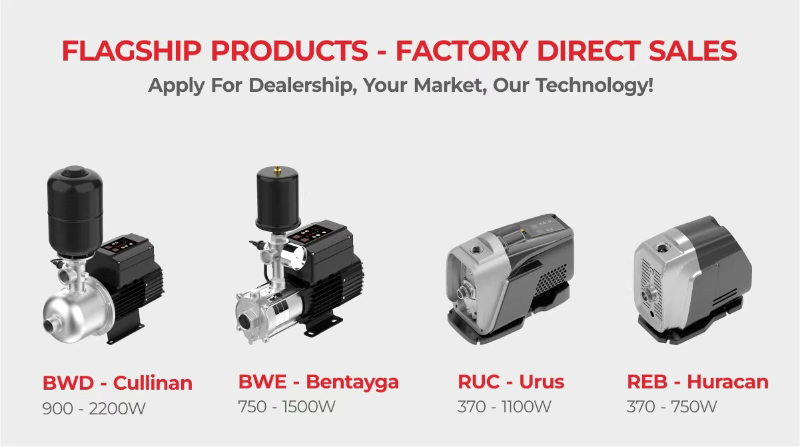
For Consistent Home Pressure: The VFD Smart & Booster Pump
For homes connected to a municipal source or a well system, fluctuating water pressure is a common complaint.
A Variable Frequency Drive (VFD) smart pump, also known as a booster pump, solves this problem.
Instead of running at a single speed, a VFD pump adjusts its motor speed in real-time based on water demand.
When you open one faucet, it runs slowly.
When you open multiple faucets and a shower, it speeds up to maintain constant, steady pressure throughout the house.
- Key Advantage: It provides consistent water pressure, prevents sudden drops, and is extremely energy-efficient, reducing electricity costs.
It also reduces noise and protects your plumbing from water hammer issues.
Evaluating Quality: What to Look for in a Brand
Your water pump failed after just a few years, leading to costly repairs and a huge headache.
Investing in a budget brand can cost more in the long run through frequent replacements and high energy bills.
A quality brand is defined by its materials, engineering, and warranty.
Look for brands that use stainless steel construction, high-efficiency motors, and offer a lifespan of 15-25 years, ensuring you get the best value over time.
Choosing a reputable brand is one of the most important decisions you will make.
While the pump's specifications must match your well, the brand's quality determines its lifespan, reliability, and long-term value.
After decades of experience, service professionals recognize that premium brands consistently outperform budget options, especially in challenging conditions.
Here’s what separates a top-tier pump from the rest.
Lifespan and Materials
The expected lifespan of a well pump is a direct reflection of its quality.
- Budget Brands: Typically last 8-12 years.
They often use lower-grade materials that are more susceptible to corrosion and wear. - Mid-Tier Brands: Can last 12-20 years.
They offer a good balance of quality and value. - Premium Brands: Often last 15-25 years, with some lasting even longer.
They use superior materials like 304-grade stainless steel for housings and internal components.
Stainless steel construction is critical for resisting corrosion from minerals, hard water, and aggressive water chemistry.
Pumps with features like floating impellers can also better handle sandy or silty water by allowing particles to pass through, reducing wear.
Efficiency and Performance Data
A pump's efficiency is not just about the motor.
It's about the entire hydraulic design.
Look for brands that provide clear performance curves showing the relationship between flow rate (GPM), head (feet), and horsepower (HP).
A high-quality pump will deliver the target GPM at your required head pressure while using less electricity than a less efficient model.
Over a 15-year period, the energy savings from a high-efficiency pump can easily pay back the initial higher cost.
Installation, Warranty, and Serviceability
Even the best pump will fail if installed improperly.
Top brands often have certified installer networks to ensure their products are set up correctly.
Furthermore, a brand's warranty is a statement of confidence in its product.
- Look for a standard manufacturer warranty of at least 3-5 years.
Premium brands often lead in this area. - Consider parts availability.
Well-established brands with wide distribution networks make it easier and faster to get replacement parts or service, minimizing downtime.
Quality Pump Checklist
Use this table as a quick reference when comparing pump brands.
| Feature | What to Look For | Why It Matters |
|---|---|---|
| Construction Material | 304 Stainless Steel Housing | Resists corrosion and extends pump life. |
| Motor Type | High-Efficiency BLDC | Saves energy, reduces system costs, and has a longer lifespan. |
| Expected Lifespan | 15-25 Years | Indicates high-quality components and engineering. |
| Impeller Design | Floating or Sand-Resistant | Handles abrasive conditions better, reducing wear. |
| Manufacturer Warranty | 3-5 Years | A sign of the manufacturer's confidence in their product. |
| Certifications | CE, IEC, RoHS | Ensures the product meets international safety and quality standards. |
| Service Network | Wide availability of parts | Ensures you can get service and repairs done quickly. |
Investing in a quality brand is an investment in peace of mind and the most effective way to achieve the lowest total cost of ownership.
Conclusion
The best pump is a complete system: the right type, a high-efficiency motor, and smart controls, perfectly matched to your water needs for decades of reliable, cost-effective service.
FAQs
What are the 3 main types of water pumps?
The three main categories are centrifugal, submersible, and positive displacement pumps.
Each is designed for different applications, from high-volume transfer to high-pressure deep well lifting.
How do I choose a water pump for my house?
Calculate your peak water demand in Gallons Per Minute (GPM) and measure your well depth or required pressure.
Match these specs to a pump, prioritizing reliability and efficiency.
What is the most efficient type of water pump?
Submersible pumps paired with a Brushless DC (BLDC) motor are generally the most efficient.
This combination minimizes energy loss by pushing water and using advanced motor technology.
How many years does a water pump last?
A quality well pump can last 15-25 years.
Budget pumps may only last 8-12 years.
Lifespan depends heavily on brand quality, installation, and water conditions.
Is a more expensive water pump better?
Often, yes.
A higher price usually reflects superior materials, a more efficient motor, and better engineering, leading to a longer lifespan and lower long-term energy costs.
What is a good GPM for a house water pump?
A typical 2-3 bathroom home requires a pump that can deliver 10-15 GPM.
This ensures adequate pressure and flow even when multiple fixtures are in use.
Can a water pump run 24 hours?
Yes, pumps are designed for continuous duty.
However, a properly sized system with a pressure tank will cycle on and off to meet demand, which extends the pump's life.
What is the difference between a booster pump and a submersible pump?
A submersible pump is installed inside a water source, like a well, to push water out.
A booster pump is typically installed after the source to increase the pressure within a plumbing system.