Struggling with weak water pressure or an unreliable supply?
A failing water system can feel like a full-blown crisis, disrupting your entire home.
The right pump can save you time, money, and a lot of frustration.
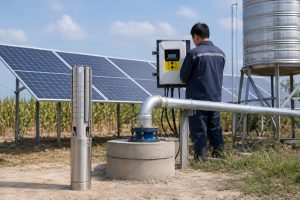
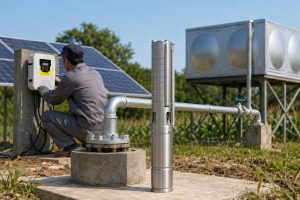
The best water pump for a house depends entirely on your specific needs and water source. For homes with wells, especially in off-grid or energy-conscious areas, a solar deep well pump powered by a high-efficiency BLDC motor is the top choice, offering unmatched reliability and low running costs.
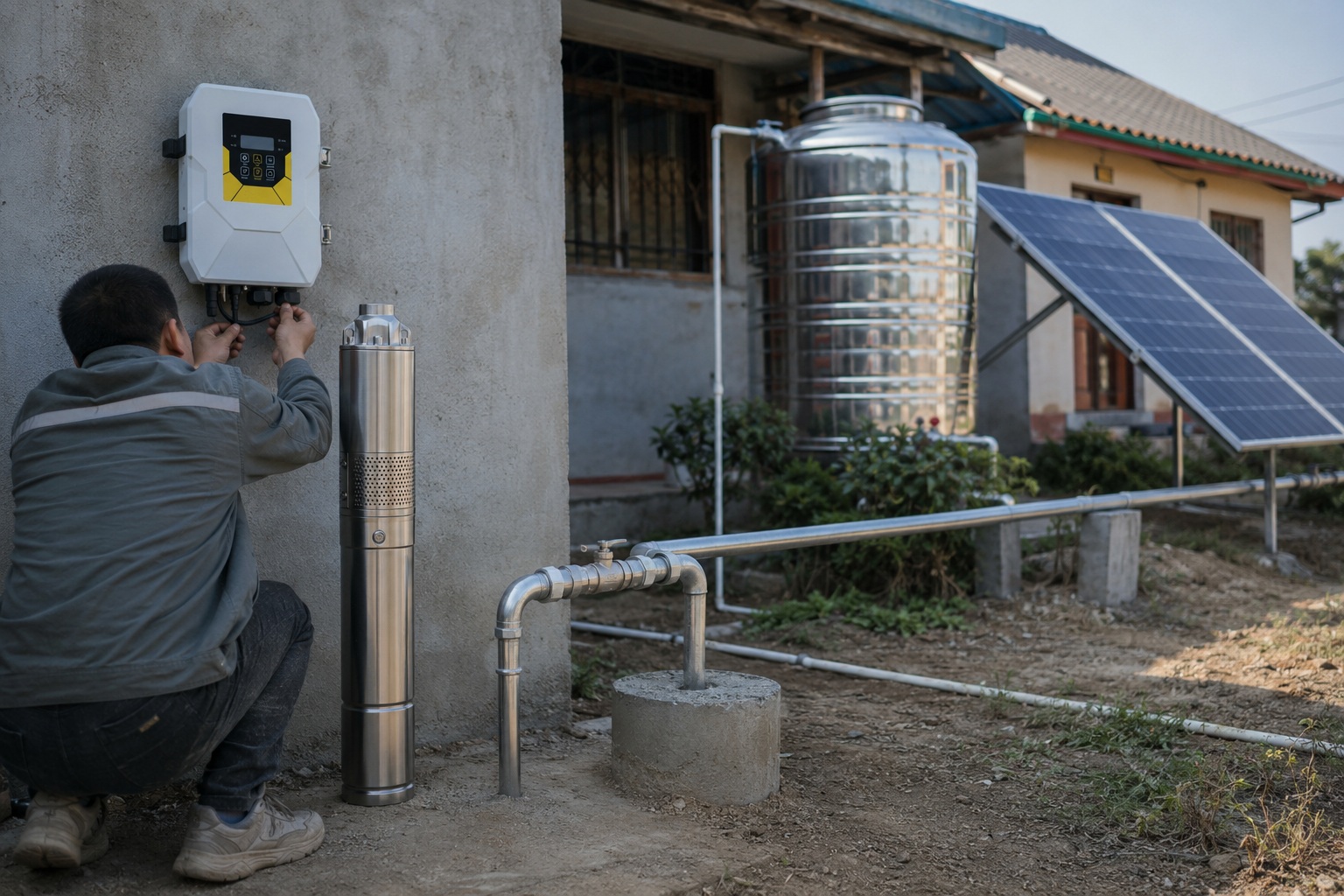
Choosing the right pump is a game-changer for your home's water system.
It's not just about buying a piece of equipment; it's about investing in a reliable solution tailored to your unique situation.
Whether you're dealing with low city water pressure, drawing from a deep well, or aiming for energy independence, there's a specific pump designed for the job.
This guide will break down the different types of pumps, from general household models to advanced solar-powered systems.
We will help you understand the key technologies and specifications.
This will empower you to make an informed decision that ensures consistent, efficient water flow for years to come.
Let's dive into the world of water pumps and find the perfect fit for your home.
What Are the Different Types of Water Pumps for a Home?
Is your basement flooding after a heavy rain?
Is your shower pressure frustratingly weak?
These common household problems point to different types of pump failures.
Choosing the right pump starts with identifying your specific challenge.
*Homes use several types of pumps for different jobs. Sump pumps handle drainage, booster pumps increase water pressure, well pumps source water from underground, and recirculation pumps provide instant hot water. Understanding which problem you need to solve is the first step to finding the correct pump.
To choose the best water pump, you first need to understand what you need it to do.
A pump that is perfect for one task will be completely useless for another.
The main categories of residential water pumps are defined by their specific application within the home's plumbing system.
Each type is engineered to solve a distinct water-related issue, from removal to supply and pressure enhancement.
Let's break down the most common types.
Sump Pumps: Your Basement's First Line of Defense
A sump pump is a specialized pump used to remove water that has accumulated in a water-collecting sump basin.
These are most commonly found in the basements of homes.
Their job is to prevent flooding.
They sit in a pit, or "sump," at the lowest point of your basement or crawlspace.
When groundwater levels rise, the pit fills with water, and a float switch activates the pump.
The pump then moves the water away from your home's foundation to a designated drainage area.
A reliable sump pump can prevent thousands of dollars in water damage, making it a critical investment for homes in areas with high water tables or heavy rainfall.
Pressure Booster Pumps: Ending Weak Showers
A pressure booster pump does exactly what its name suggests: it boosts the water pressure in your home's plumbing system.
If you experience a trickling shower or faucets that take forever to fill a pot, a booster pump is likely the solution.
These pumps are installed on your main water line and increase the pressure of the water coming from the city supply or a private well.
Modern booster pumps often feature variable speed drives (VSDs).
These smart systems automatically adjust their speed based on water demand, maintaining constant pressure at every tap while saving up to 50% on energy compared to fixed-speed pumps.
Well Pumps: The Heart of Your Rural Water System
For homes not connected to a municipal water supply, a well pump is the essential heart of the water system.
This pump's job is to lift water from an underground well and deliver it to a pressure tank, which then distributes it throughout the house.
There are several kinds of well pumps, including shallow well pumps for wells less than 25 feet deep and submersible deep well pumps for wells that can be hundreds of feet deep.
The performance of your entire home's water supply depends on the reliability and proper sizing of your well pump.
We will explore this critical category, especially modern solar-powered options, in much greater detail.
Hot Water Recirculation Pumps: Instant Comfort and Savings
Waiting for hot water to reach your faucet is not only annoying but also incredibly wasteful.
A hot water recirculation pump solves this problem by creating a loop from the water heater to your furthest faucet.
It slowly circulates hot water back to the water heater through the cold water line.
This ensures that hot water is always available instantly at any tap.
These systems can save a significant amount of water annually, with some estimates reaching up to 15,000 gallons per year for an average family.
Many models include programmable timers, so they only operate during peak usage times, further enhancing energy efficiency.
| Pump Type | Primary Application | Ideal For | Key Metric |
|---|---|---|---|
| Sump Pump | Water Removal | Preventing basement/crawlspace flooding | Flow Rate (GPH) |
| Booster Pump | Pressure Increase | Fixing low water pressure in showers/faucets | Pressure (PSI) |
| Well Pump | Water Supply | Drawing water from an underground well | Head Height (Feet) & Flow (GPM) |
| Recirculation Pump | Instant Hot Water | Eliminating the wait for hot water at the tap | Water Savings (Gallons/Year) |
How Do You Choose the Best Well Pump for Your Property?
If you live in a rural area, you know that a well pump failure is not a minor inconvenience.
It means no water for drinking, cooking, or bathing.
Your entire daily life comes to a halt until it's fixed.
Choosing the best well pump requires matching its horsepower (HP) and flow rate (Gallons Per Minute) to your well's depth and your family's water needs. Crucial factors include proven reliability, material quality like stainless steel for longevity, and long-term energy efficiency, which is where solar-powered systems excel.
Selecting the right well pump is one of the most important decisions a rural homeowner can make.
This single piece of equipment is responsible for your entire water supply.
A well-chosen pump can provide over a decade of trouble-free service, while a poor choice can lead to frequent, costly repairs and frustrating downtime.
The decision goes beyond just buying a pump; it's about designing a reliable water delivery system.
Let's explore the critical factors you must consider.
Critical Specifications: Horsepower, Flow Rate, and Head
You cannot choose a pump without understanding these three key terms.
They determine whether the pump can physically get the water from your well to your house.
-
Horsepower (HP): This measures the motor's power. A higher HP pump can lift water from greater depths and produce higher pressure. Most homes use pumps between 0.5 HP and 1.5 HP. A 0.5 HP pump might suffice for a 100-foot well, while a 400-foot well could require a 1.5 HP model or more.
-
Flow Rate (GPM): Gallons Per Minute indicates how much water the pump can move. Your home's demand determines the GPM you need. A common rule of thumb is to budget 1 GPM for each major water fixture (e.g., shower, toilet, washing machine). A typical 3-4 bedroom house generally requires a pump capable of 8-12 GPM.
-
Head Height: This is the maximum vertical distance in feet the pump can lift water. It must be greater than your well's depth plus any elevation change to your house.
| Horsepower | Typical Well Depth | Recommended GPM |
|---|---|---|
| 0.5 HP | Up to 150 feet | 5-10 GPM |
| 0.75 HP | 150 - 225 feet | 8-12 GPM |
| 1.0 HP | 225 - 300 feet | 10-15 GPM |
| 1.5 HP | Over 300 feet | 12-20 GPM |
Material Matters: Stainless Steel vs. Cast Iron
The materials used in a well pump's construction directly impact its lifespan.
Premium pumps often use stainless steel for the casing and internal components.
Stainless steel offers superior corrosion resistance, which is vital since the pump is constantly submerged in water.
This makes it the ideal choice for ensuring water purity and pump longevity, with high-quality stainless steel pumps often lasting 15 to 20 years.
Budget-friendly options might use cast iron or thermoplastic components.
While cast iron is durable, it is susceptible to rust over time, which can affect water quality.
Thermoplastics are corrosion-proof but may not withstand the high pressures and temperatures found in deep well applications as well as stainless steel.
Investing in stainless steel often provides better long-term value, despite a higher initial cost.
The Rise of Solar Well Pumps: An Energy-Efficient Revolution
In recent years, solar-powered well pumps have emerged as a game-changing technology, especially for off-grid and rural properties.
These systems use solar panels to power the pump, completely eliminating reliance on the electrical grid.
This not only provides energy independence but also dramatically reduces or eliminates electricity costs associated with pumping water.
Modern solar pump systems are incredibly efficient and reliable.
They are designed to work even on overcast days and can be paired with battery storage or a hybrid controller for 24/7 operation.
For anyone looking to build a sustainable, cost-effective, and resilient water system, a solar well pump is now the premier choice.
When is a Solar Screw Pump the Right Choice?
Do you have an extremely deep well but only need a modest amount of water for your home or livestock?
Using a conventional high-flow pump in this situation is like using a sledgehammer to crack a nut—inefficient and wasteful.
A solar screw pump is the perfect solution for deep wells where high pressure (head) is more important than high flow volume. Its unique design is exceptionally efficient at lifting water from great depths, making it the ideal choice for domestic water supply or livestock watering in remote areas.
The solar screw pump, also known as a progressive cavity pump, operates on a completely different principle than common centrifugal pumps.
This specialized design gives it a unique set of advantages that make it unbeatable in specific scenarios.
It is a problem-solver for some of the most challenging well conditions.
Understanding how it works reveals why it's the go-to choice for high-head, low-flow applications.
How it Works: The Progressing Cavity Principle
At the heart of a screw pump is a single helix-shaped metal rotor that turns inside a double helix rubber stator.
As the rotor spins, it forms a series of sealed cavities that "progress" from the pump's intake to its outlet.
Water is trapped in these cavities and pushed steadily upwards.
This mechanism is a form of positive displacement.
It creates a very consistent, non-pulsating flow and is capable of generating extremely high pressure.
Because the components are in tight contact, the pump is self-priming and can handle water with a higher concentration of sand or sediment than many other pump types without sustaining significant damage.
Key Advantages and Applications
The unique design of the solar screw pump translates into several key benefits.
Its ability to produce high pressure with low power input makes it a perfect match for solar energy.
- High Head Capability: Screw pumps excel at lifting water from very deep wells, often exceeding 150-200 meters (over 650 feet).
- High Sand Resistance: The screw and rubber design can manage sandy or silty water far better than pumps with tight-tolerance impellers.
- Energy Efficiency: They are highly efficient in their designed operating range of low flow and high head, maximizing the water pumped per watt of solar power.
- Ideal Applications: They are best suited for providing drinking water to homes, filling cisterns or storage tanks, and watering livestock where the daily water volume requirement is low to moderate but the well is deep.
| Feature | Specification | Advantage |
|---|---|---|
| Pump Type | Progressive Cavity (Screw) | Positive Displacement |
| Flow Rate | Low (e.g., 1-5 GPM) | Efficient for low-volume needs |
| Max Head | Very High (e.g., up to 200+ meters) | Perfect for very deep wells |
| Sand Resistance | Excellent | Durable in less-than-ideal water conditions |
| Best Use Case | Deep wells with modest water demand | Domestic supply, livestock watering |
The main limitation of a screw pump is its relatively low flow rate.
It is not designed for applications requiring large volumes of water quickly, such as flood irrigation for large farms.
However, for its intended purpose, it is an unparalleled and highly reliable choice.
Is a Solar Plastic Impeller Pump Good for High-Volume Needs?
Do you need to irrigate a small farm, water a large pasture, or run multiple garden sprinklers at once?
You need a pump that can move a lot of water without getting worn down by the fine sand common in many wells.
This combination of high flow and durability can be a challenge.
Absolutely. A solar plastic impeller pump is an outstanding choice for high-volume applications like farm irrigation or garden watering. Its multi-stage centrifugal design is engineered for high flow rates, and modern polymer impellers provide excellent wear resistance against fine sand, creating an economical and effective solution.
When the goal is to move a large quantity of water efficiently, a multi-stage centrifugal pump is the standard answer.
These pumps use a series of spinning impellers to accelerate water and build pressure.
The choice of material for these impellers is a critical design decision that impacts the pump's performance, durability, and cost.
While the term "plastic" might sound inferior, modern engineering polymers are incredibly tough and offer distinct advantages in certain conditions.
Balancing Flow and Durability
A solar plastic impeller pump is designed to hit the sweet spot of high flow and medium head.
This makes it perfect for drawing water from wells of moderate depth (e.g., up to 100 meters) and delivering it in volumes large enough for agricultural use.
Each stage of the pump consists of an impeller and a diffuser.
The impeller adds velocity to the water, and the diffuser converts that velocity into pressure, guiding the water to the next impeller stage.
By stacking multiple stages, the pump can achieve the required pressure to lift water from the well and distribute it across a field.
Why Plastic Impellers Can Be a Smart Choice
The key innovation here is the use of high-strength, wear-resistant plastic (often a polyoxymethylene or similar engineered polymer) for the impellers.
This offers several benefits over traditional materials in specific contexts.
- Abrasion Resistance: These polymers are highly resistant to abrasion from fine sand and silt. Unlike metal impellers which can be eroded, plastic impellers have a degree of flexibility that helps them withstand wear from small particles.
- Cost-Effectiveness: Manufacturing plastic impellers is generally more economical than casting and machining stainless steel ones. This makes the overall pump more affordable without a significant sacrifice in performance for its intended application.
- Lightweight: Plastic components reduce the overall weight of the pump, making it easier and cheaper to install, especially in very deep wells where a heavy pump can be challenging to handle.
| Feature | Specification | Advantage |
|---|---|---|
| Pump Type | Multi-Stage Centrifugal | High Flow Design |
| Flow Rate | High (e.g., 10-30 GPM) | Ideal for irrigation and high-demand homes |
| Max Head | Medium (e.g., up to 100 meters) | Suited for shallow to medium-depth wells |
| Sand Resistance | Good (for fine sand) | Economical durability for common well conditions |
| Best Use Case | Farm irrigation, pasture watering, home gardens | High-volume, cost-sensitive applications |
The primary limitation of a plastic impeller pump is in highly corrosive water or in very deep, high-pressure wells where the mechanical stress could exceed the material's limits.
However, for a huge range of agricultural and residential applications, it represents an optimal balance of performance, durability, and value.
Why Choose a Stainless Steel Impeller Pump?
Are you dealing with water that has a low pH (acidic) or high pH (alkaline)?
Or perhaps you live in a coastal area with slightly brackish water?
In these corrosive environments, a standard pump can degrade quickly, leading to premature failure and costly replacements.
A solar stainless steel impeller pump is the definitive choice for harsh and corrosive water conditions. Its full SS304 stainless steel construction provides maximum defense against corrosion and ensures a long, reliable service life, making it the premium solution for challenging water quality and high-value applications.
When absolute reliability and longevity are the top priorities, nothing beats the performance of stainless steel.
A pump with stainless steel impellers, diffusers, and a stainless steel body is the gold standard in the industry.
This type of pump is engineered not just to move water, but to withstand chemical attack and abrasion over decades of continuous use.
It is an investment in long-term peace of mind, especially when your water source is less than ideal.
The Gold Standard for Water Purity and Corrosion Resistance
The primary reason to choose a stainless steel pump is its exceptional resistance to corrosion.
Grade 304 stainless steel (SS304) is an alloy containing chromium and nickel, which form a passive, protective layer on the surface of the metal.
This layer instantly reforms if scratched, preventing rust and degradation from a wide range of chemical contaminants found in groundwater.
This has two major benefits:
- Pump Longevity: The pump's internal components maintain their precise shape and tolerances for much longer, ensuring consistent performance and extending the pump's operational lifespan to 20 years or more with proper maintenance.
- Water Purity: Because the material does not rust or corrode, it does not leach contaminants into the water supply. This is crucial for providing clean, safe drinking water for your home.
When is the Premium Cost Justified?
While a stainless steel pump carries a higher initial price tag, that cost is easily justified in many scenarios.
The investment pays for itself by avoiding the cost and hassle of multiple replacements of lesser pumps.
Consider a stainless steel pump essential if you have:
- Aggressive Water Conditions: Water that is acidic, alkaline, or has high levels of dissolved minerals (hard water).
- Critical Applications: Supplying water to a high-end home, a valuable livestock operation, or a business where water supply interruption is not an option.
- Specific Geographic Regions: Areas known for corrosive groundwater, such as coastal regions or agricultural lands with alkaline soil, where a standard pump would have a very short life.
| Feature | Specification | Advantage |
|---|---|---|
| Pump Type | Multi-Stage Centrifugal | Premium, High-Durability Design |
| Impeller Material | SS304 Stainless Steel | Maximum Corrosion & Abrasion Resistance |
| Flow Rate | High (e.g., 10-30 GPM) | Delivers high volume reliably |
| Max Head | Medium to High (e.g., up to 150 meters) | Versatile for various well depths |
| Best Use Case | Corrosive water, high-end homes, critical operations | Long-term reliability and value |
The only real downside to a stainless steel pump is its higher upfront cost and greater weight compared to plastic models.
However, when you measure the cost over the pump's entire lifespan, it often emerges as the most economical choice for demanding environments.
What Is the Most Important Part of a Solar Water Pump?
You can have the most perfectly designed pump end, but if the motor driving it is inefficient, you're fighting a losing battle.
You'll be wasting precious solar energy, which means you either pump less water or have to buy more solar panels to compensate.
This directly impacts both performance and cost.
The motor is, without a doubt, the most critical part of a modern solar water pump. A high-efficiency Brushless DC (BLDC) permanent magnet motor is the heart of the system. Its superior efficiency (often over 90%) directly reduces the number of solar panels needed, cuts costs, and ensures maximum water output from the energy available.
While the pump end (screw or impeller type) determines how the water is moved, the motor determines how efficiently that work gets done.
In a solar-powered system, efficiency is everything.
Every drop of water pumped is a direct result of converting sunlight into mechanical motion, and the motor is where the most significant gains—or losses—occur.
The shift to Brushless DC (BLDC) motor technology has revolutionized the solar pump industry.
Unpacking the Technical Advantages of BLDC Motors
A BLDC motor is fundamentally different from older brushed DC or standard AC motors.
It uses permanent magnets on the rotor and a sophisticated electronic controller to switch the electromagnets in the stator.
This design eliminates the physical brushes that wear out in traditional motors.
The results are dramatic.
- Extreme Efficiency: BLDC motors can achieve efficiencies greater than 90%. This is a huge leap compared to the 60-75% efficiency of many traditional motors. This means more of the sun's energy is converted into useful work.
- High Torque: They produce high torque even at low speeds, which is ideal for starting a pump under load, especially in deep wells.
- Compact and Lightweight: The high power density of the magnets (like 40SH neodymium iron boron) allows BLDC motors to be much smaller and lighter. A BLDC motor can be up to 47% smaller and 39% lighter than a traditional motor of the same power output.
- Long, Maintenance-Free Life: With no brushes to wear out, the primary wear components are the bearings, leading to a much longer and virtually maintenance-free operational life.
The Real-World Market Value
These technical advantages translate directly into tangible benefits for the user.
A more efficient motor means you can run your pump with fewer solar panels.
For example, a system requiring 1000 watts with a 70% efficient motor might only need about 770 watts with a 90% efficient BLDC motor.
That could mean saving the cost of one or two entire solar panels, which can be hundreds of dollars.
The smaller size and lower weight also simplify installation, reducing labor time and the need for heavy lifting equipment, a significant advantage when working in remote locations.
| Motor Type | Efficiency | Maintenance | Lifespan | Size/Weight |
|---|---|---|---|---|
| BLDC Permanent Magnet | >90% | None (Brushless) | Very Long | Compact & Light |
| Traditional AC/Brushed DC | 60-75% | Brush Replacement | Shorter | Bulky & Heavy |
Ultimately, the motor acts as the system's engine.
Investing in a pump with a high-quality BLDC motor is the single most effective way to ensure you are getting the most water for your money and the maximum performance out of your solar investment.
How Can You Get Water 24/7 with a Solar Pump?
The sun is a fantastic source of free energy, but it has one obvious limitation: it's not available 24/7.
What happens on very cloudy days, or at night when you need to run the washing machine?
Your home's water supply shouldn't be at the mercy of the weather.
A smart hybrid AC/DC controller is the key to a 24/7 water supply. This intelligent device automatically manages power sources, prioritizing free solar energy when available and seamlessly switching to a grid or generator backup when it's not. This guarantees an uninterrupted, worry-free water supply around the clock.
A solar pump system is more than just panels and a pump; the controller is the brain that makes it all work together seamlessly and reliably.
The most advanced systems now use hybrid controllers that can accept power from both DC (solar panels) and AC (grid power or a generator) sources.
This technology completely removes the "intermittency" problem of solar power, giving you the best of both worlds: the cost savings of solar and the reliability of the grid.
The Brains of the System: Smart Power Management
A modern controller's first job is to maximize the energy harvested from the solar panels.
It does this using a technique called Maximum Power Point Tracking (MPPT).
The MPPT algorithm constantly adjusts the electrical load on the panels to keep them operating at their peak efficiency point, which changes with sunlight intensity.
This feature alone can boost the water output of a system by up to 30% over the course of a day compared to a system without MPPT.
It ensures that you are squeezing every possible watt of power from your solar array at all times.
The Hybrid Advantage: Uninterrupted Water Supply
The true genius of a hybrid controller lies in its ability to manage multiple power inputs automatically.
The logic is designed to be as economical as possible.
- Priority 1: Full Solar Power: When the sun is shining brightly, the controller directs 100% of the power from the solar panels to the pump. The AC input is on standby.
- Priority 2: Hybrid Power: On overcast days when solar power is reduced, the controller can blend power from both the solar panels and the AC source. It uses all available solar energy first and only supplements it with the exact amount of AC power needed to keep the pump running at the desired speed.
- Priority 3: Full AC Power: At night or during extended periods of no sun, the controller automatically switches over to run the pump entirely from the AC source (grid or generator).
This automatic, seamless switching means you never have to think about it.
You get the water you need, whenever you need it, while the system works in the background to use the cheapest energy source available at any given moment.
This ensures you have a truly reliable and worry-free water supply 24 hours a day, 365 days a year.
Conclusion
The best water pump is a complete, well-matched system.
It combines the right pump type for your water, a high-efficiency BLDC motor, and an intelligent hybrid controller for ultimate reliability and savings.
FAQs
What size water pump do I need for my house?
For most homes, a pump providing 8-12 GPM is sufficient. The required horsepower depends on well depth, with 0.5 HP for shallow wells and 1.0 HP or more for deeper wells.
How long do house water pumps last?
A quality submersible well pump can last 10 to 15 years, with premium stainless steel models often reaching 20 years. Budget pumps may only last 5-7 years.
Can I install a water pump myself?
Many simpler pumps, like recirculation or booster pumps, are DIY-friendly. However, installing a submersible well pump involves electrical and plumbing work and is often best left to a professional.
What is a good GPM for a house water pump?
A flow rate of 10-12 GPM (Gallons Per Minute) is considered good for a typical 3-4 bedroom home, allowing multiple fixtures to run simultaneously without a significant pressure drop.
Are variable speed pumps worth it?
Yes, for most homes. Variable speed pumps maintain constant water pressure regardless of demand and can reduce energy consumption by over 50%, making them a worthwhile long-term investment.
Do I need a pressure tank with a well pump?
With a traditional fixed-speed well pump, a pressure tank is essential to prevent the pump from cycling too frequently. With a modern variable speed pump, a much smaller tank is used to smooth out pressure changes.