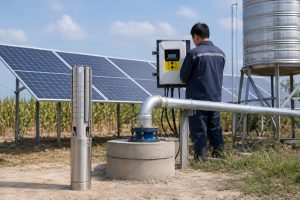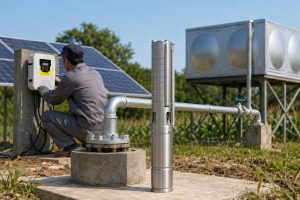
Struggling with unreliable water access or high electricity bills for pumping?
This constant uncertainty can disrupt farming and daily life.
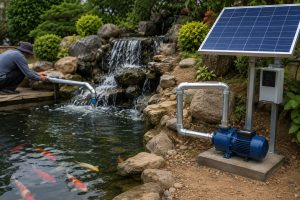
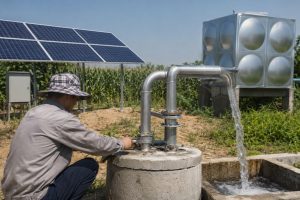
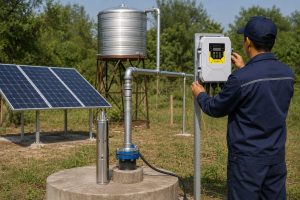
A solar water pump offers a dependable, cost-free solution.
Yes, you can absolutely get a solar water pump.
They are a highly efficient and sustainable solution for agriculture, livestock, and residential water needs, especially in off-grid areas.
By harnessing solar energy, these pumps provide a reliable water supply without relying on the power grid or fuel.
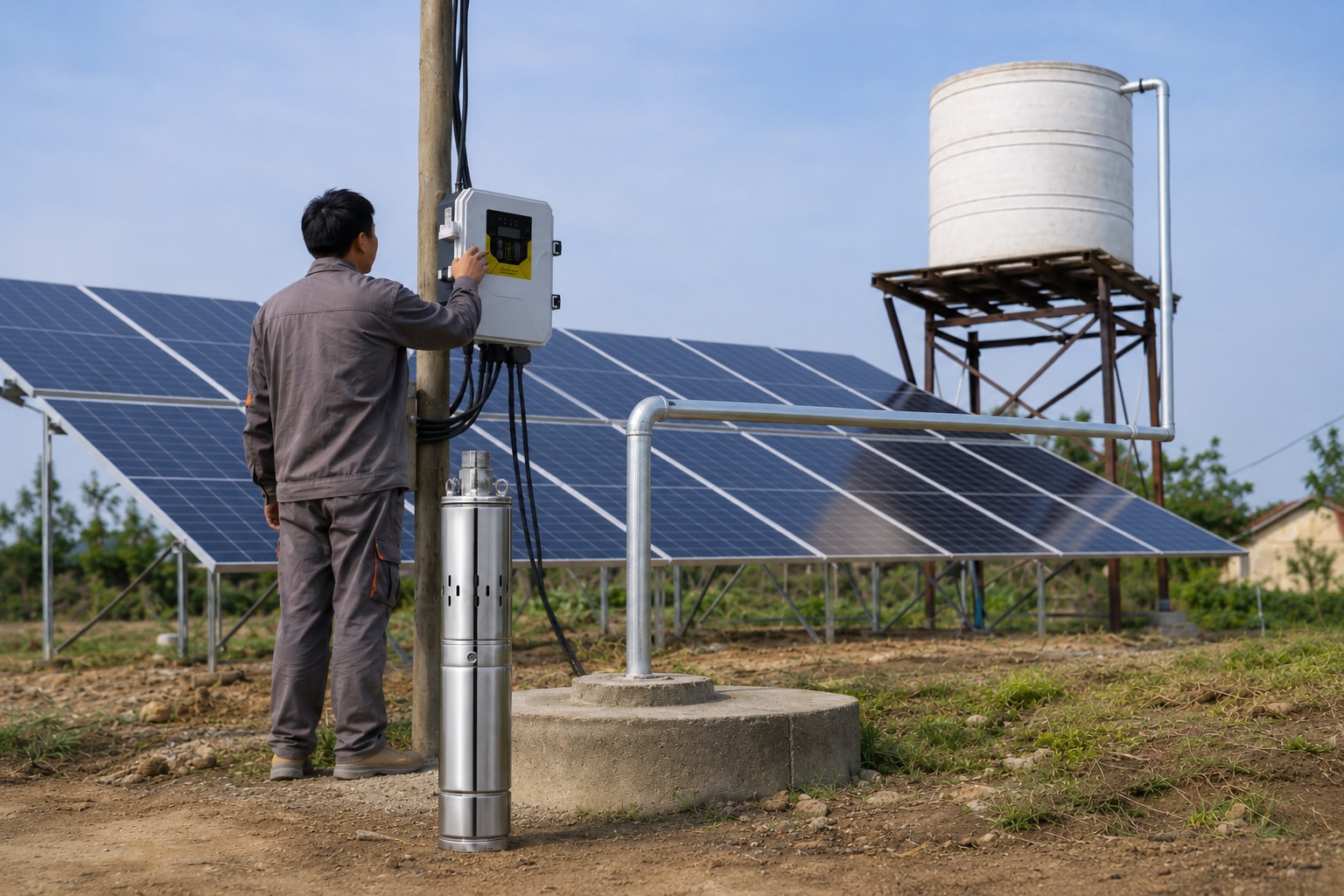
Solar-powered water solutions are transforming access to water across the globe.
They are becoming essential in regions like Africa, the Americas, Australia, and Asia.
These systems operate independently, are kind to the environment, and save money in the long run.
Let's explore what makes these pumps a smart choice and how to select the perfect one for your needs.
What Are The Different Types of Solar Water Pumps?
Choosing a solar pump feels overwhelming with so many options available.
Picking the wrong one means wasted money and poor performance.
Understanding the three main types clarifies which pump best fits your needs.
The three most popular types are solar screw pumps, solar plastic impeller pumps, and solar stainless steel impeller pumps.
Each is designed for specific conditions.
Screw pumps excel at high head, plastic impeller pumps deliver high flow, and stainless steel pumps resist corrosion.
Choosing the right solar pump is the first step toward a reliable water system.
The decision depends entirely on your specific requirements for water volume, well depth, and water quality.
These three pump types form a competitive portfolio, driven by the same core motor technology but tailored for vastly different applications.
Let's break them down to see which one is the right match for you.
Solar Screw Pump: Low Flow, High Head
A solar screw pump is a type of positive displacement pump.
It uses a single stainless steel screw (rotor) that rotates inside a rubber stator.
This action creates sealed cavities that move water upward through compression.
This design is perfect for providing low flow rates but at a very high head, or pressure.
They are ideal for lifting water from very deep wells.
For example, these pumps can efficiently operate in wells over 150 meters deep, a challenge for many other pump types.
Their primary applications include domestic water supply for homes, providing drinking water for livestock, and small-scale irrigation.
They are particularly popular in electricity-scarce regions of Africa and Latin America.
A major advantage is their exceptional resistance to sand.
They can handle water with higher sand content without the rapid wear and tear seen in centrifugal pumps, making them durable in harsh water conditions.
The main limitation is their lower flow rate, which makes them less suitable for large-scale agricultural irrigation that demands high volumes of water.
Solar Plastic Impeller Pump: High Flow, Wear-Resistant
This pump is a multi-stage centrifugal pump.
It features multiple impellers made from durable, engineered plastic stacked together.
As the impellers spin, they push water outwards, generating high flow rates at a medium head.
These pumps are the workhorses for applications that need a lot of water.
Think of farm irrigation, large-scale pasture water supply, and filling reservoirs or large tanks.
They are widely used across agricultural regions in Africa and the Americas.
Their biggest advantage is the high water output, capable of delivering flow rates exceeding 10,000 liters per hour.
They also offer excellent resistance to fine sand, outperforming many standard pumps.
Furthermore, their plastic components make them lightweight and more economical compared to all-metal alternatives.
However, their durability can be a concern in highly corrosive water environments or when used in extremely deep wells where pressure is high.
Solar Stainless Steel Impeller Pump: Premium Quality, Corrosion Resistance
This model is the premium option in the centrifugal pump category.
It uses impellers and a pump body made from high-grade SS304 or even SS316 stainless steel.
This construction is specifically designed for longevity in challenging water conditions.
It offers high flow rates similar to the plastic impeller model but can handle medium-to-high head applications.
These pumps are the perfect solution for acidic or alkaline water.
They are frequently used in the alkaline soil regions of Australia and parts of the Americas.
They are also the top choice for water supply in high-end homes, commercial properties, and ranches where reliability is paramount.
The key advantage is superior corrosion resistance, which can result in a service life up to 5 times longer than less-resistant models.
This reliability comes at a price, as they are heavier and have a higher initial cost, positioning them for niche and high-end markets.
| Pump Type | Flow Rate | Head (Lift) | Key Advantage | Best Application |
|---|---|---|---|---|
| Solar Screw Pump | Low | Very High | Excellent sand resistance | Deep wells, domestic use, livestock |
| Plastic Impeller Pump | High | Medium | High flow, economical | Farm irrigation, pasture water supply |
| SS Impeller Pump | High | Medium-High | Superior corrosion resistance | Corrosive water, high-end homes |
What Is The Core Technology Driving Solar Pumps?
A great pump body is useless without an efficient motor.
An inefficient motor wastes precious solar power and requires a larger, more expensive solar array.
High-efficiency Brushless DC (BLDC) motors are the solution that powers modern solar pumps.
The core technology is the high-efficiency Brushless DC (BLDC) permanent magnet motor.
This advanced motor is the heart of the solar pump system.
It dramatically boosts performance, reduces the required number of solar panels, and ensures a longer, maintenance-free operational life.
All three of the pump types we discussed—screw, plastic impeller, and stainless steel impeller—rely on this same core driving force.
The motor's efficiency directly determines the overall efficiency and competitiveness of the entire water pump system.
It's the engine that makes everything work, and its design has massive implications for performance, cost, and reliability.
Understanding this technology is key to appreciating the true value of a modern solar pump.
The Power of BLDC Permanent Magnet Motors
A BLDC motor is an electronically commutated motor that does not use brushes.
This design eliminates friction and wear associated with brushes, leading to significantly higher efficiency and a longer lifespan.
The efficiency of these motors often exceeds 90%.
This is a massive leap compared to traditional AC motors, which may only operate at 60-75% efficiency.
The rotor in these motors is typically made of high-strength permanent magnets, such as 40SH neodymium iron boron.
This material creates a powerful magnetic field, allowing the motor to generate strong torque with less energy input.
Key Technical Advantages
The benefits of this advanced design are clear and measurable.
BLDC motors have a much higher power density.
This means they can be designed to be significantly smaller and lighter than traditional motors with the same power output.
On average, a BLDC motor can be up to 47% smaller and 39% lighter.
This compact design simplifies installation, especially in the tight confines of a well.
It also reduces shipping costs for distributors.
The high torque output means the pump can start reliably even in difficult conditions and can handle variations in load without stalling.
Market and Cost Implications
The high efficiency of a BLDC motor has a direct impact on the total system cost.
Because the motor uses energy so effectively, it requires fewer solar panels to achieve the same water output.
This can reduce the required solar array size by up to 25%.
Since solar panels are a major part of the initial investment, this leads to significant upfront savings for the end-user.
For distributors, it makes the complete system more price-competitive.
The brushless design is virtually maintenance-free, eliminating the cost and hassle of replacing worn brushes.
With a typical service life exceeding 25,000 hours, these motors are built for long-term, dependable operation.
| Feature | BLDC Motor | Traditional AC Motor |
|---|---|---|
| Efficiency | >90% | 60-75% |
| Lifespan | >25,000 hours | 10,000-15,000 hours |
| Maintenance | None (Brushless) | Requires brush replacement |
| Size / Weight | Compact & Lightweight | Bulky & Heavy |
| Starting Torque | High | Lower |
| System Cost | Lower overall (fewer panels) | Higher overall (more panels) |
What Are The Advantages of a Solar Water Pump System?
Relying on grid power or diesel for water pumps is costly and unpredictable.
Sudden price hikes and power outages can halt your water supply completely.
A solar water pump system provides true energy independence and long-term savings.
The main advantages are huge cost savings from eliminating electricity bills, environmental benefits from zero emissions, and a reliable water supply for remote or off-grid locations.
This boosts agricultural productivity, enhances home convenience, and increases property value.
The benefits of a solar water pump system extend far beyond simply moving water.
They represent a strategic investment in sustainability, reliability, and financial stability.
Whether for a farm, a ranch, or a home, these systems offer a powerful combination of practical and economic advantages that are hard to ignore.
Let's explore these benefits in more detail.
Unmatched Cost-Effectiveness
The financial case for solar water pumps is compelling.
Once installed, the energy is free.
This eliminates the recurring, and often rising, cost of electricity or diesel fuel.
While the initial investment in a solar pump system can be 20-30% higher than a conventional pump, the return on investment is remarkably fast.
Most users see a full payback within just 2 to 3 years.
After that, the water is virtually free for the life of the system, which can be 25 years or more.
This long-term financial benefit makes it a wise investment for any B2B distributor or end-user looking to control operational costs.
Enhanced Reliability and Independence
Solar water pumps offer true water security.
They operate independently of the electrical grid, making them immune to power outages.
This is a critical advantage in rural or remote areas where the grid is unstable or non-existent.
In regions with inconsistent rainfall, a solar pump ensures a steady water supply for crops and livestock, mitigating the risks of drought.
For even greater reliability, modern systems can include an AC/DC hybrid controller.
This intelligent device automatically switches the pump to AC grid power or a generator at night or on heavily overcast days.
This ensures a worry-free, 24/7 water supply.
Environmental Sustainability
Switching to solar power is a responsible choice for the environment.
Solar water pumps produce zero carbon emissions.
This helps reduce the user's carbon footprint and contributes to cleaner air.
They also eliminate the risk of soil and water contamination from fuel spills associated with diesel pumps.
Furthermore, they operate almost silently.
This is a significant improvement over noisy diesel generators, which can disrupt the peace of a rural home or disturb livestock.
Improved Productivity and Property Value
A reliable water supply has a direct impact on productivity.
Studies have shown that consistent, efficient irrigation can increase crop yields by as much as 30%.
For homeowners, a solar pump system provides strong, consistent water pressure for showers and appliances, improving daily convenience.
This enhanced water system also increases property value.
Adequate water pressure and a sustainable, low-cost water source are highly attractive features for potential homebuyers, making your property more valuable and easier to sell.
How Do You Choose the Right Solar Pump System?
Investing in a solar pump system is a major decision.
Making the wrong choice can lead to poor performance, system failure, and wasted money.
Following a systematic approach ensures you select a system that perfectly matches your needs.
To choose the right system, first assess your water needs, specifically flow rate and total head.
Next, match those needs to the correct pump type—screw for deep wells, plastic impeller for high-volume irrigation, or stainless steel for corrosive water.
Finally, ensure the system includes a high-efficiency BLDC motor and an intelligent controller.
Selecting the ideal solar water pump system doesn't have to be complicated.
It's a logical process of matching your unique situation to the right technology.
By breaking it down into a few key steps, you can confidently choose a system that will provide reliable, cost-effective water for years to come.
This is the same process a knowledgeable distributor would use to guide a customer to the perfect solution.
Step 1: Calculate Your Water Requirements
Before looking at any pumps, you must understand your water needs.
This involves two key metrics:
- Total Dynamic Head (TDH): This is the total equivalent height that water must be lifted. It includes the vertical distance from the water level in the well to the highest point of use, plus any pressure requirements and friction loss in the pipes. It's measured in meters or feet.
- Flow Rate: This is the volume of water you need over a specific period. It is typically measured in liters or gallons per hour, or per day.
For example, a small farm needing 20,000 liters per day from a 100-meter-deep well has vastly different requirements than a home needing to fill a storage tank from a 30-meter well.
Accurately calculating TDH and flow rate is the most critical step.
Step 2: Match the Pump to the Application and Water Quality
Once you know your numbers, you can select the right pump type.
- High Head, Low Flow: If your well is very deep (e.g., > 80 meters) and your volume needs are moderate, a solar screw pump is the best choice.
- High Flow, Medium Head: If you need large volumes of water for irrigation from a shallower well (e.g., < 80 meters), a solar plastic impeller pump is the most economical and effective option.
- Corrosive Water: If your water is acidic, alkaline, or has high salinity, you must choose a solar stainless steel impeller pump to ensure a long service life. Using a standard pump in these conditions will lead to premature failure.
Step 3: Verify the Motor and Controller Technology
The pump body is only part of the equation.
You must ensure the system is powered by a high-efficiency BLDC motor to maximize energy use and minimize the size of your solar array.
Equally important is the controller.
Look for a system with an intelligent MPPT (Maximum Power Point Tracking) controller.
An MPPT controller constantly optimizes the power from the solar panels to the motor, which can boost the system's overall water output by up to 30% compared to a basic controller.
If you need water 24/7, ask for an AC/DC hybrid controller.
This allows the system to seamlessly switch to an alternate power source when solar energy is unavailable, guaranteeing uninterrupted operation.
Simple Checklist for Buyers:
- What is your well depth and static water level? (Determines Head)
- How much water do you need per day? (Determines Flow Rate)
- What is the quality of your water (sandy, salty, acidic)? (Determines Pump Material)
- How many hours of peak sun do you get per day in your location? (Determines Solar Array Size)
- Do you need water at night or on cloudy days? (Determines if you need a Hybrid Controller)
Conclusion
Choosing the right solar pump means matching pump type, motor efficiency, and intelligent controls to your specific needs.
This ensures a reliable, cost-effective, and sustainable water solution for years to come.
FAQs
How long do solar water pumps last?
A well-maintained solar water pump system can last for 20-25 years. The solar panels have a long lifespan, and the brushless motor often operates for over 25,000 hours before needing service.
Can a solar pump run without a battery?
Yes, most solar water pumps are designed to run directly from solar panels during the day. They pump water when the sun is shining, often into a storage tank for later use.
How deep can a solar pump pull water from?
This depends on the pump type. Solar screw pumps are designed for deep wells and can pull water from depths exceeding 150 meters (about 500 feet) with ease.
Do solar water pumps work on cloudy days?
Yes, they can still operate on cloudy days, but at a reduced flow rate. An MPPT controller helps maximize output in low-light conditions, and hybrid controllers can switch to AC power if needed.
How many solar panels does it take to run a water pump?
The number of panels depends on the pump's power rating, your location's sunlight, and your water needs. A small residential pump might need only 2-3 panels, while a large irrigation pump could require 10 or more.
Is a solar water pump worth it?
For most off-grid or rural applications, absolutely. While the initial cost is higher, the ROI is often achieved within 2-3 years due to the elimination of fuel or electricity costs.
Can you run a well pump on solar?
Yes, running a well pump on solar is one of the most common and effective applications. There are solar pump solutions for nearly any well depth and flow requirement.
What is the disadvantage of a solar water pump?
The main disadvantage is the initial investment cost, which is higher than for a conventional pump. They also depend on sunlight, so water output is reduced on cloudy days or at night without a backup power source.