Struggling to choose a water pump that won't fail you?
The constant risk of breakdowns, costly repairs, and inconsistent water pressure can be a major headache.
The best pump company depends on your specific needs, but industry leaders like Grundfos, Franklin Electric, and Zoeller consistently top reliability charts. For off-grid applications, solar pumps with high-efficiency BLDC motors represent the most advanced and cost-effective solution, offering long-term value and energy independence.
Choosing the "best" pump isn't about picking a single brand name.
It's about understanding the technology, matching it to your application, and investing in a system that delivers performance for years to come.
Whether you need a submersible well pump for your home or a robust solar-powered solution for a large farm, the right choice involves balancing cost, reliability, and efficiency.
This guide will break down the top players in the market, explore critical selection factors, and dive into the innovative technologies that are changing the game.
What Are the Top Brands Based on Customer Reviews and Reliability?
Finding a pump that provides a decade of trouble-free operation is challenging.
Many buyers face frequent replacements and high maintenance costs by choosing cheaper, less reliable options.
Based on extensive customer reviews and reliability metrics, the top-tier pump brands are Grundfos, Franklin Electric, Zoeller, and Myers. These brands are praised for their durable construction, energy efficiency, and consistent performance, offering superior long-term value over budget alternatives.
When you invest in a water pump, you are investing in your property's most critical utility.
The difference between a premium brand and a budget option often becomes clear within the first few years.
While the initial cost of a top-tier pump is higher, the long-term savings in energy bills and replacement costs are significant.
These leading brands have built their reputations not just on marketing, but on decades of field-tested performance in the most demanding environments.
Let's explore what sets these manufacturers apart and why they command such loyalty from both homeowners and professionals.
A Breakdown of the Leaders
The pump market is crowded, but a few names consistently rise to the top.
These brands differentiate themselves through superior materials, innovative engineering, and a proven track record.
Grundfos is often seen as the industry pioneer.
Their focus on stainless steel construction and variable-speed, energy-efficient motors sets them apart.
A Grundfos pump can reduce operational costs by up to 50% compared to a standard model.
Franklin Electric has built a reputation on pure, unshakeable reliability.
Their motors are legendary for their durability and include advanced protection features that prevent overheating, a common cause of pump failure.
Zoeller and Myers are champions of durability.
Zoeller's heavy-duty cast iron pumps are a favorite for sump and sewage applications, designed for minimal maintenance.
Myers combines this toughness with user-friendly designs that simplify installation.
Comparing Key Performance Metrics
To make an informed decision, it's helpful to compare these brands across key metrics.
The right pump for you will depend on your specific water needs, well depth, and budget.
| Brand | Key Strength | Typical Lifespan | Primary Material | Avg. Flow Rate (GPM) | Warranty |
|---|---|---|---|---|---|
| Grundfos | Energy Efficiency | 15-20+ Years | Stainless Steel | 10-25 GPM | 2-5 Years |
| Franklin Electric | Motor Reliability | 10-20 Years | Stainless Steel | 5-25 GPM | 2-5 Years |
| Zoeller | Durability | 10-15 Years | Cast Iron | 5-20 GPM | 1-3 Years |
| Myers | User-Friendly | 8-15 Years | Cast Iron/Steel | 5-20 GPM | 1-3 Years |
| Flotec | Value for Money | 5-7 Years | Thermoplastic/Steel | 5-15 GPM | 1 Year |
The Value Proposition: Initial Cost vs. Long-Term Investment
It's tempting to opt for a pump with a lower upfront cost.
However, this often proves to be a more expensive choice in the long run.
A budget pump may last only 5-7 years and consume significantly more electricity.
In contrast, a premium stainless steel pump from a brand like Grundfos or Franklin Electric can last over 20 years.
The energy savings from a variable-speed motor alone can pay back the initial price difference within just a few years.
Furthermore, top brands offer robust warranties and readily available replacement parts, ensuring peace of mind and easier maintenance.
This long-term reliability is why professionals overwhelmingly recommend investing in a proven, high-quality brand.
Critical Factors to Consider When Selecting a Pump Brand
Choosing the wrong pump can lead to inadequate water pressure.
It can also cause high electricity bills and premature system failure, forcing costly and inconvenient replacements.
Beyond the brand name, you must match the pump’s specifications to your needs. Key factors include horsepower (HP), flow rate (GPM), material quality (stainless steel is best), and the availability of customer support and warranties (2-5 years is ideal).
A successful pump installation goes far beyond just picking a well-known brand.
It requires a careful evaluation of your household's or farm's specific water demands.
A pump that is too powerful will cycle on and off frequently, wasting energy and wearing out the motor.
A pump that is too weak will fail to provide adequate pressure, especially during peak usage times.
Material quality is another non-negotiable factor.
The water in your well has a unique chemical composition, and choosing a pump made from corrosion-resistant materials is vital for ensuring a long service life.
Let's break down these critical factors to help you create a checklist for your next purchase.
1. Matching Horsepower (HP) and Flow Rate (GPM)
These two specifications are the most important for matching a pump to your needs.
Horsepower (HP) determines how much power the motor has to lift water.
For most residential wells, a pump between 0.5 HP and 1.5 HP is sufficient.
Deep wells or homes with high water demand may require more.
Flow Rate, measured in Gallons Per Minute (GPM), indicates how much water the pump can deliver.
A typical home requires about 10-12 GPM to run multiple fixtures at once.
To calculate your need, count the number of water fixtures in your home and assume 1 GPM per fixture.
- Small Home (1-2 bathrooms): 0.5 - 0.75 HP, 5-10 GPM
- Medium Home (2-3 bathrooms): 0.75 - 1.0 HP, 10-15 GPM
- Large Home / Small Farm: 1.5+ HP, 15-25 GPM
2. Prioritizing Material Quality
The pump's construction material directly impacts its lifespan.
You have three main choices: thermoplastic, cast iron, and stainless steel.
- Thermoplastic: This is the most affordable option. It is resistant to corrosion but is the least durable and can warp under high heat. It's suitable for shallow, low-use wells.
- Cast Iron: This material is extremely durable and tough. It's a great choice for many applications, though it can be susceptible to rust in highly acidic or alkaline water.
- Stainless Steel: This is the premium choice. It offers the best of both worlds: exceptional durability and superior resistance to corrosion. For any deep well or harsh water environment, stainless steel construction can extend a pump's life by 50-100% compared to other materials.
3. Evaluating Warranty and Support
A pump is a long-term investment, and the manufacturer's support is a critical part of its value.
A strong warranty is a direct reflection of the company's confidence in its product.
Look for warranties that span at least 2-5 years.
Equally important is the availability of replacement parts and technical support.
Established brands like Grundfos and Franklin Electric have extensive global distribution networks.
This means that if a problem does arise, you or your contractor can quickly get the necessary parts and guidance to resolve the issue, minimizing downtime.
Don't treat these as secondary considerations; they are vital lifelines when you need them most.
The Rise of Solar Pumping Technology: A Sustainable Solution
Grid electricity is unreliable and expensive in many regions.
Diesel generators are noisy, polluting, and require constant refueling, making them impractical for remote water access.
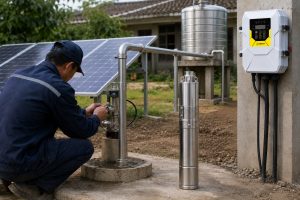
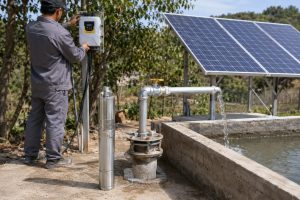
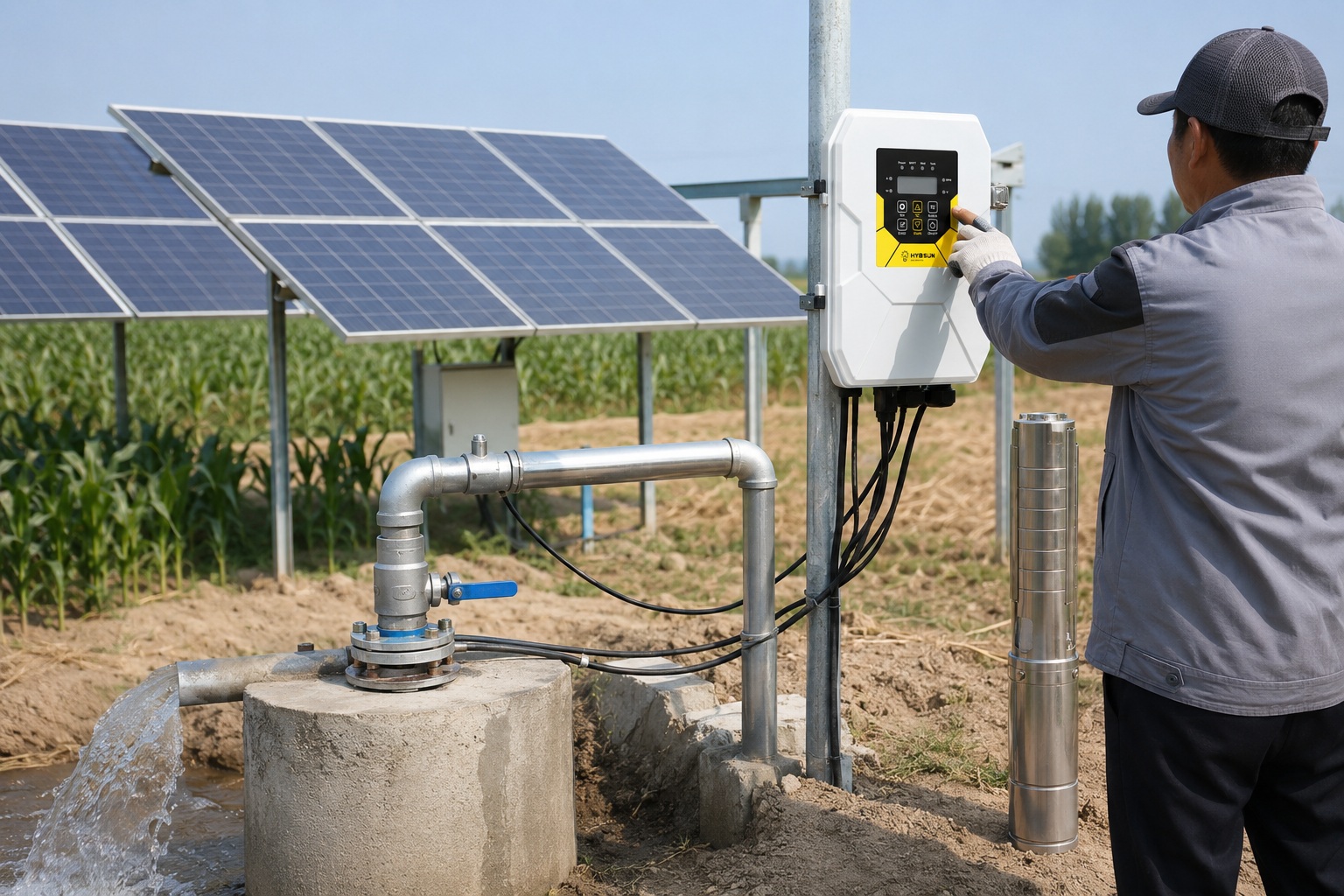
Solar water pumps offer a revolutionary solution. They operate independently of the power grid, powered by high-efficiency BLDC motors. This technology provides clean, cost-effective, and reliable water for homes, farms, and livestock in off-grid areas worldwide.
With the growing global demand for clean energy and sustainable water management, solar pumps have become essential.
They are transforming agriculture and domestic water supply in vast regions of Africa, the Americas, Australia, and Asia.
The core of this revolution is a combination of advanced pump designs and ultra-efficient motors.
A complete and competitive product portfolio now exists to meet diverse water needs, from deep wells with low yields to large-scale irrigation projects.
These systems are driven by Brushless DC (BLDC) permanent magnet motors, which boast efficiencies over 90%.
This high efficiency is the key to minimizing the number of solar panels required, making the systems more affordable and easier to install.
Let's explore the different types of solar pumps and the core technology that makes them so effective.
Understanding Solar Deep Well Pump Types
Not all solar pumps are created equal.
The "best" type depends entirely on the well's depth and the required water volume.
Three main designs dominate the market, each tailored for a specific application.
- Solar Screw Pump: This design uses a stainless steel screw rotating inside a rubber stator. It pushes water upward through compression. This mechanism is perfect for applications requiring a low flow rate but a very high head (lifting capability). Screw pumps can draw water from wells over 200 meters deep. They are also highly resistant to sand and sediment, making them ideal for harsh water conditions in Africa and Latin America.
- Solar Plastic Impeller Pump: This is a multi-stage centrifugal pump. It uses a series of durable, wear-resistant plastic impellers to achieve a high flow rate at a medium head. It is an economical and lightweight choice for farm irrigation, pasture water supply, and residential gardens. Its excellent resistance to fine sand makes it a workhorse in the Americas and parts of Africa.
- Solar Stainless Steel Impeller Pump: This is the premium option. It features an SS304 stainless steel impeller, diffuser, and pump body. This pump is designed for high flow rates and superior corrosion resistance. It is the ideal choice for acidic or alkaline water conditions, such as those found in the alkaline soils of Australia or parts of the Americas. Its long service life and high reliability make it perfect for high-end homes and critical livestock operations.
| Pump Type | Flow Rate | Head | Sand Resistance | Key Application | Best For |
|---|---|---|---|---|---|
| Screw Pump | Low | Very High | Excellent | Deep Well, Livestock | Africa, Latin America |
| Plastic Impeller | High | Medium | Good | Farm Irrigation | Americas, Africa |
| SS Impeller | High | Medium-High | Fair | Corrosive Water | Australia, High-End |
The Heart of the System: The BLDC Motor
The true innovation behind modern solar pumps is the motor.
All three pump types are powered by a Brushless DC (BLDC) permanent magnet motor.
This is not the same as a standard AC or brushed DC motor.
BLDC motors use powerful rare-earth magnets (like 40SH neodymium iron boron) and an electronic controller to achieve efficiencies exceeding 90%.
A conventional AC motor might only be 60-70% efficient.
This 20-30% efficiency gain is massive.
It means the pump can produce the same amount of water with significantly fewer solar panels, directly reducing the system's initial cost by up to 30%.
These motors are also 47% smaller and 39% lighter than traditional motors of the same power output.
This compact, lightweight design simplifies installation, especially in remote locations.
Because they have no brushes to wear out, they are virtually maintenance-free and have a very long service life.
Maximizing Every Sunbeam: Smart Controllers
To get the most out of a solar array, the system needs an intelligent controller.
A Maximum Power Point Tracking (MPPT) controller constantly adjusts the electrical load to ensure the solar panels operate at their peak efficiency, regardless of changing sunlight conditions.
This can boost the water output by up to 25% over a day compared to a simple controller.
For even greater reliability, advanced AC/DC hybrid controllers are available.
These controllers can be connected to solar panels and an AC power source (grid or generator) simultaneously.
The system automatically prioritizes free solar power.
If the sunlight is insufficient, it seamlessly blends in AC power or switches to it completely.
This ensures a worry-free, 24/7 water supply, making solar a viable primary water source even on cloudy days or at night.
How to Choose the Right Pump Manufacturer for Your Business
As an importer or distributor, your reputation depends on the quality of the products you sell.
Partnering with a weak manufacturer leads to customer complaints, warranty claims, and damage to your brand.
To choose the right B2B partner, evaluate their manufacturing depth, quality control systems, and engineering capabilities. Look for manufacturers with proven R&D, international certifications (CE, IEC, RoHS), and a flexible approach to meet your market's specific needs.
For a distributor, selecting a manufacturer is a strategic partnership.
It's not just about finding the lowest price.
It's about finding a supplier who can help you grow your business.
A top-tier manufacturing partner acts as an extension of your own company.
They provide the technical expertise, production capacity, and reliable quality that allow you to confidently serve your customers.
Your ideal partner should have a deep understanding of pump technology and a proven track record in global markets.
They should be able to offer more than just a standard product; they should offer solutions.
Let's examine the key criteria for evaluating a potential manufacturing partner.
1. Verify Technical Capabilities and R&D
A strong manufacturer invests heavily in research and development.
This is what separates market leaders from followers.
Look for a company with a dedicated team of engineers and a portfolio of technical patents.
For example, expertise in intelligent permanent magnet variable frequency pump technology is a clear indicator of a forward-thinking company.
This R&D focus ensures that the products you sell are not just reliable today, but will remain competitive for years to come.
It also means the manufacturer can provide superior technical support and even collaborate on custom solutions.
2. Scrutinize Quality Control Systems
Consistent quality is the cornerstone of a successful product line.
Ask potential partners about their quality control (QC) procedures.
A world-class manufacturer will have a multi-stage QC process.
This typically includes:
- IQC (Incoming Quality Control): Inspecting all raw materials and components before they enter the production line.
- PQC (Process Quality Control): Monitoring and testing at every stage of the assembly process.
- LQC (Line Quality Control): Final checks as the product comes off the production line.
- OQA (Outgoing Quality Assurance): A final inspection of a sample of finished goods before they are shipped.
Furthermore, ask for data on their product testing protocols.
Rigorous testing, such as 144+ hours of salt spray testing for corrosion resistance and 1000+ hours of UV resistance testing, demonstrates a serious commitment to durability.
3. Assess Global Experience and Certifications
A manufacturer with a broad global footprint has proven their ability to meet the standards of diverse markets.
A company exporting to 150+ countries has navigated complex logistics and regulatory environments.
They understand the unique challenges of different climates and water conditions.
Crucially, verify that their products hold the necessary international certifications.
Certifications like CE (Conformité Européenne), IEC (International Electrotechnical Commission), and RoHS (Restriction of Hazardous Substances) are non-negotiable for most markets.
They are an independent validation of the product's safety, quality, and environmental compliance.
4. Look for Flexibility and Partnership Potential
Your business is unique, and your manufacturer should be able to adapt to your needs.
Can they handle large order volumes?
An annual production capacity of 300,000+ units indicates a robust and scalable operation.
More importantly, are they willing to work with you on branding and customization?
Many successful distributors build their own brand identity.
A good manufacturing partner will support this by offering OEM (Original Equipment Manufacturer) services, allowing you to sell high-quality, field-proven products under your own brand name.
This combination of technical strength, quality assurance, and business flexibility is the hallmark of a true strategic partner.
Conclusion
The best pump company is the one that provides the right technology for your application, backed by proven reliability and strong support.
This is true for both end-users and distributors.
FAQs
What is the most reliable well pump brand?
Grundfos is widely considered the most reliable well pump brand due to its superior stainless steel construction, energy efficiency, and long operational lifespan of 20+ years.
What is the average lifespan of a well pump?
A quality well pump from a top brand can last 15-20 years or more.
Budget options typically last only 5-7 years, making them more expensive in the long run.
Is a more expensive water pump worth it?
Yes, a higher initial cost for a premium pump is worth it.
You get better materials, higher efficiency that saves on energy bills, and a much longer, more reliable service life.
What are the top 3 water pump brands?
The top 3 brands for reliability and performance are generally recognized as Grundfos, Franklin Electric, and Zoeller, each excelling in different areas like efficiency, motor durability, and toughness.
How do I choose a water pump for my house?
Calculate your home's peak water demand in GPM (gallons per minute).
Then, consider your well depth to determine the required horsepower (HP) and choose a reliable brand.
Can a solar pump work at night?
A standard solar pump only works when there is sunlight.
However, systems with an AC/DC hybrid controller can automatically switch to grid or generator power at night or on cloudy days.
What is a BLDC motor in a pump?
A BLDC (Brushless DC) motor is a highly efficient permanent magnet motor.
It uses electronics instead of brushes, making it more reliable, compact, and powerful than traditional motors.
What is the best type of pump for a deep well?
For very deep wells, a solar screw pump is often best as it provides a very high head (lifting force).
For moderate to deep wells, a multi-stage submersible pump is ideal.