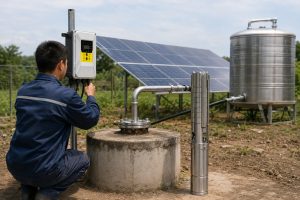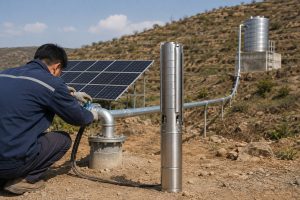
Struggling with low water pressure from your shallow well?
Choosing the wrong pump wastes energy and money.
Find the perfect, efficient solution for your needs.
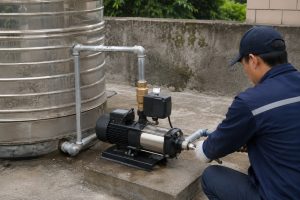
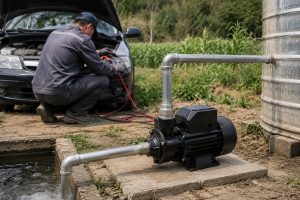
For shallow wells less than 25 feet deep, a jet pump is often the best choice. It's installed above ground for easy maintenance and uses suction to efficiently draw water. Solar-powered jet pumps offer an eco-friendly, off-grid alternative with long-term savings.
Choosing the right pump is the most critical decision for ensuring a reliable water supply from your well.
With various types available, each designed for different depths and water needs, the choice can feel overwhelming.
This guide will break down the options, helping you select the ideal pump for your shallow well, whether you are installing a new system or replacing an old one.
Let's explore the factors that will lead you to the most effective and efficient water extraction solution.
Understanding Well Pump Types and Power Ratings
Confused by pump types and horsepower ratings?
An incorrect choice can lead to system failure.
Let's clarify the options to ensure you get reliable, efficient water flow.
Pumps are categorized by well depth and mechanism. Shallow well pumps, like jet or centrifugal models, are for wells under 25 feet. Deep well pumps, typically submersible, are for depths up to 400 feet. Horsepower (HP) should match your home's demand, not just well depth.
To make an informed decision, you must first understand the fundamental differences between the main categories of well pumps.
This knowledge is the foundation for selecting a system that is not only effective but also energy-efficient and durable.
The primary distinctions are based on the well's depth and the pump's operational mechanics—whether it pulls water from above or pushes it from below.
Furthermore, the motor's power, measured in horsepower (HP), must be carefully matched to your specific requirements to avoid inefficiency and premature wear.
Shallow vs. Deep Well Pumps: A Clear Distinction
The first step is to identify whether you need a shallow or deep well pump.
This is determined by the depth of your well.
Shallow well pumps are designed for water sources less than 25 feet deep.
They are installed above ground and use suction to pull water up.
Deep well pumps are necessary for wells deeper than 25 feet, with some models capable of operating at depths of 400 feet or more.
These are typically submersible pumps placed directly in the water.
| Feature | Shallow Well Pump | Deep Well Pump |
|---|---|---|
| Well Depth | Less than 25 feet (7.6 meters) | 25 to 400 feet (7.6 to 122 meters) |
| Installation | Above ground, near the wellhead | Inside the well casing, below water level |
| Mechanism | Pulls water via suction | Pushes water to the surface |
| Common Types | Jet Pump, Centrifugal Pump | Submersible Pump, Deep Well Jet Pump |
Jet vs. Submersible Pumps: Pushing vs. Pulling
The mechanical difference between pump types is crucial.
Jet pumps, common for shallow wells, are mounted above ground and create a vacuum to draw water up through a pipe.
This "pulling" method relies on atmospheric pressure, which limits its effectiveness to about 25 feet.
Submersible pumps, in contrast, are placed inside the well.
Their sealed motor drives an impeller that "pushes" water up to the surface.
This method is significantly more energy-efficient for deep wells, often proving to be over 30% more efficient than a jet pump trying to lift water from similar depths.
Because they are submerged, they are also cooled by the surrounding water, which contributes to a longer lifespan and quieter operation.
Matching Horsepower to Performance
Horsepower (HP) determines a pump's ability to lift water and provide pressure.
Choosing the right HP is a balancing act.
An undersized pump will struggle to meet your home's demand, resulting in low pressure.
An oversized pump will cycle on and off too frequently, a condition known as "short cycling," which wastes energy and causes premature motor burnout.
Oversizing can increase electricity consumption by as much as 25% without any noticeable improvement in pressure.
A professional can calculate the total dynamic head (TDH), which accounts for well depth, distance to the home, and friction loss, to recommend the perfect horsepower.
| Horsepower (HP) | Typical Flow Rate (GPM) | Best Application |
|---|---|---|
| ½ HP | 5 - 7 GPM | Small homes, cabins, low water demand |
| ¾ HP | 8 - 12 GPM | Standard 3-4 bedroom homes, average demand |
| 1 HP and above | 12+ GPM | Large homes, irrigation, high water demand |
How to Determine the Right Size Well Pump for Your Home
Worried about choosing the wrong pump size?
Undersizing causes low pressure, while oversizing wastes electricity and wears out your pump.
Let's calculate your exact needs.
To size your pump, calculate your home's peak water demand in gallons per minute (GPM). Count your water fixtures (faucets, showers, etc.) and assign 1 GPM to each. The total is the minimum GPM your pump should provide.
Sizing a well pump correctly is just as important as choosing the right type.
The goal is to find a pump that can meet your household's maximum water needs without being overworked or excessively powerful.
This balance ensures a steady water supply, optimal energy consumption, and a long service life for your equipment.
The key metric for sizing is your home's peak water demand, measured in gallons per minute (GPM).
This figure represents the maximum amount of water you might use at any one time.
Step-by-Step GPM Calculation
Estimating your GPM demand is straightforward.
Follow these simple steps to get a reliable estimate for your home.
- Count Your Fixtures: Make a list of every water-using fixture and appliance in your home. Include faucets, showers, toilets, dishwashers, washing machines, and outdoor spigots.
- Assign GPM Values: A common rule of thumb is to assign a value of 1 GPM for each fixture. For a more precise calculation, you can use standard flow rates.
- Add the Totals: Sum the GPM values for all fixtures that could potentially run simultaneously. This total is your peak water demand. Your pump's flow rate should meet or slightly exceed this number.
| Fixture Type | Average GPM |
|---|---|
| Faucet | 1 |
| Shower | 2 |
| Toilet | 1.5 |
| Dishwasher | 1.5 |
| Washing Machine | 2 |
| Outdoor Spigot | 2.5 |
For example, a home with a kitchen faucet (1 GPM), a shower (2 GPM), and a toilet (1.5 GPM) running at the same time has a peak demand of 4.5 GPM.
A pump capable of at least 5 GPM would be suitable.
The Importance of Well Yield
While calculating your demand is crucial, you must also consider your well's capacity.
Well yield is the rate at which your well naturally replenishes its water, also measured in GPM.
A professional can perform a well yield test to determine this rate.
Crucially, your pump's flow rate should never exceed your well's yield.
If you install a 15 GPM pump on a well that only yields 10 GPM, the pump will draw water faster than the well can recover.
This can cause the pump to run dry, leading to overheating and severe damage to the motor.
Always ensure your pump's output is matched to or less than the well's sustainable yield.
Common Sizing Mistakes to Avoid
Selecting the right pump size is about finding the perfect balance.
Avoid these common pitfalls to prevent inefficiency and costly repairs.
- Oversizing the Pump: A pump that is too powerful for your needs will short cycle, turning on and off rapidly. This causes the motor to overheat, increases energy bills, and puts excessive strain on the pressure tank, potentially reducing its lifespan by up to 50%.
- Undersizing the Pump: A pump that is too weak will run constantly to try and meet demand, leading to low water pressure and motor strain. This can cause the motor to burn out prematurely.
- Ignoring Well Yield: As mentioned, this is a critical error. It risks running your well dry and destroying your pump.
- Forgetting the Pressure Tank: The pressure tank works with the pump to maintain consistent water pressure. If the tank is too small or improperly pressurized, even a correctly sized pump will perform poorly.
Exploring the Best Pumps for Shallow Wells
Your shallow well needs a specific type of pump.
Choosing incorrectly leads to inefficiency and frequent repairs.
Discover the top pump types designed for shallow well performance.
The best pumps for shallow wells (under 25 feet) are jet pumps and centrifugal pumps. They are installed above ground for easy access. For modern, sustainable solutions, solar-powered pumps are an excellent, cost-effective choice for off-grid or eco-conscious users.
For wells with a water level less than 25 feet from the surface, you have several excellent pump options.
Because these pumps don't need to lift water from great depths, they can be simpler in design and are typically installed above ground.
This makes them significantly easier to access for maintenance and repairs compared to their submersible counterparts.
The most common choices are jet pumps and centrifugal pumps, but other types also serve specific needs for shallow well applications.
Let's examine the pros and cons of each to help you decide.
Jet Pumps: The Popular Choice
Jet pumps are the workhorses of shallow well systems.
They operate by creating suction through a nozzle and venturi system, which generates a vacuum powerful enough to draw water up from the well.
Their above-ground installation makes them a favorite for homeowners who prefer easy access for service.
They are particularly effective in areas with sandy soil, where a submersible pump might get clogged.
For wells with fluctuating water tables, a convertible jet pump is a versatile solution.
It can be configured with one pipe for shallow depths or two pipes to draw water from as deep as 90 feet, offering flexibility as conditions change.
Centrifugal Pumps: Simple and Cost-Effective
Centrifugal pumps are another great option for very shallow wells, typically those less than 25 feet deep.
They use a spinning impeller to generate centrifugal force, which draws water into the pump and pushes it into the plumbing system.
These pumps are generally less expensive than jet pumps and are known for their simple, reliable design.
Like jet pumps, they are installed above ground in a pump house or shed, making maintenance straightforward.
However, their suction power is not as strong as a jet pump's, limiting them to the shallowest of wells.
Hand Pumps: The Reliable Backup
While not a primary solution for most modern homes, the hand pump remains an incredibly valuable tool.
This simple, mechanical device requires no electricity, making it a foolproof backup during power outages or primary pump failures.
A hand pump can be installed alongside your main electric pump to ensure you always have access to water for basic needs.
They are low-maintenance, durable, and provide peace of mind, especially for those living in rural areas with less reliable power grids.
Their main limitation is that they are manually operated and best suited for shallow depths.
The Rise of Solar-Powered Pumps for All Well Types
Facing high electricity bills or living off-grid?
Traditional pumps are costly and grid-dependent.
Solar pumps offer a sustainable, cost-effective, and reliable alternative for any well.
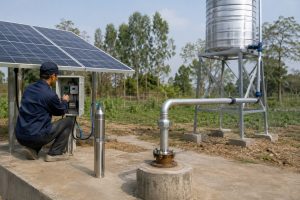
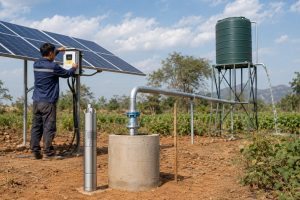
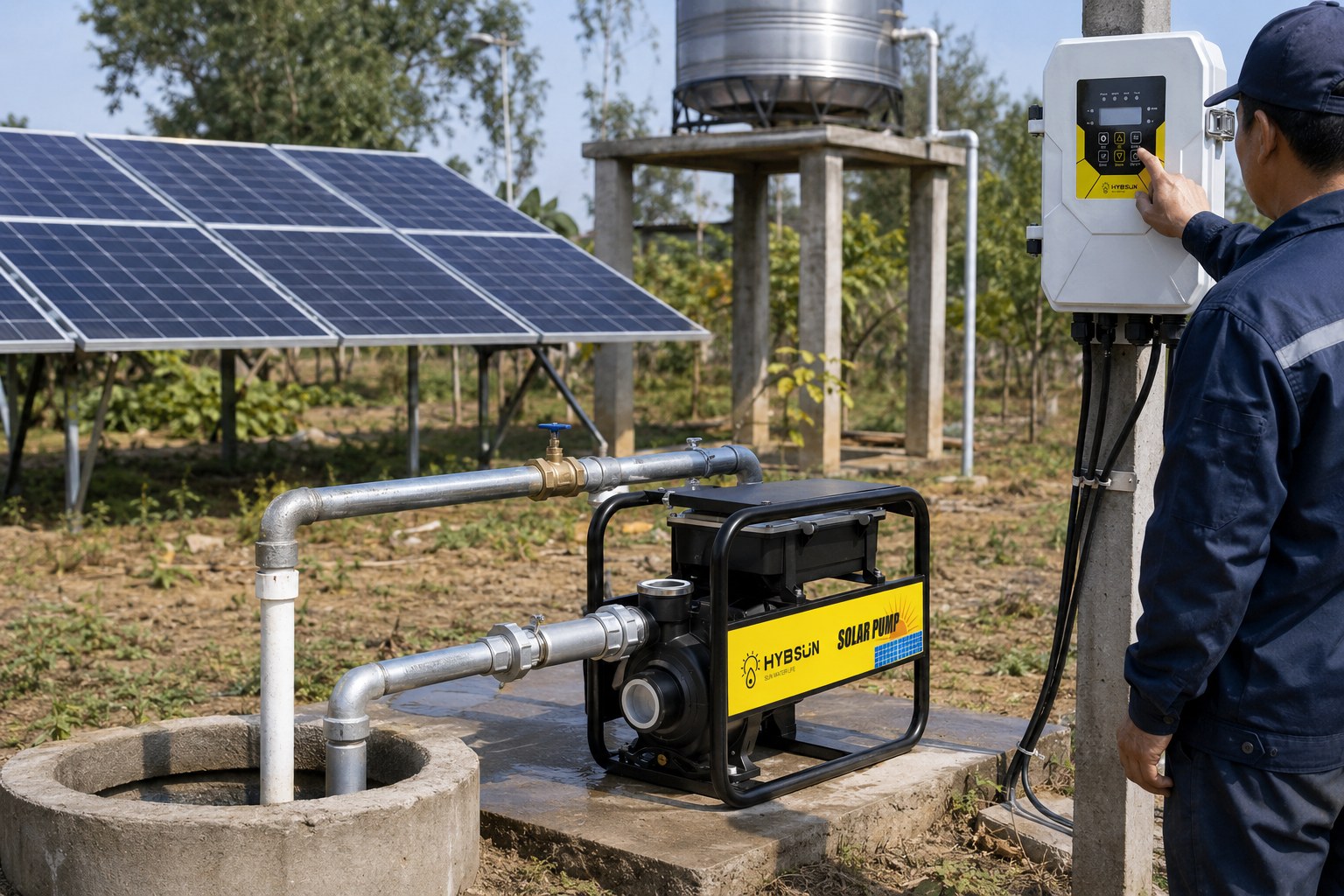
Solar-powered pumps use energy from the sun, eliminating electricity costs and environmental impact. They are ideal for remote areas and can be used in both shallow and deep wells. The core is a high-efficiency BLDC motor, making them powerful and durable.
With a growing global focus on sustainability and energy independence, solar water pumps have emerged as a leading technology.
They are perfect for off-grid homes, remote agricultural operations, and any property owner looking to reduce their carbon footprint and electricity costs.
These systems harness the sun's free and abundant energy to power a highly efficient motor, providing a reliable water supply without being tied to the grid.
Modern advancements have made solar pumps more powerful, durable, and affordable than ever before, creating a competitive portfolio for diverse water needs.
The Power Core: BLDC Permanent Magnet Motors
The heart of a modern solar pump system is its motor.
High-end solar pumps utilize a Brushless DC (BLDC) permanent magnet motor, a game-changer in pump technology.
These motors achieve efficiencies exceeding 90%, compared to the 60-75% efficiency of standard AC motors.
The rotor is often made from high-strength neodymium iron boron magnets, delivering superior torque and power.
This high efficiency means the pump can do more work with less energy, reducing the number of solar panels needed.
Technologically, these motors are also more compact and lighter—up to 47% smaller and 39% lighter than traditional motors—simplifying installation and reducing shipping costs.
Their brushless design eliminates the need for maintenance and ensures a significantly longer service life.
Solar Pump Portfolio for Diverse Needs
Solar pumps are not a one-size-fits-all solution.
A well-designed product line includes different pump types to meet specific demands for flow, pressure (head), and water conditions.
| Pump Type | Mechanism | Flow | Head | Best For | Sand Resistance |
|---|---|---|---|---|---|
| Solar Screw Pump | Progressing Cavity | Low | Very High | Deep wells, domestic water, livestock | High |
| Solar Plastic Impeller | Multi-Stage Centrifugal | High | Medium | Farm irrigation, high-volume needs | Excellent (fine sand) |
| Solar SS Impeller | Multi-Stage Centrifugal | High | Med-High | Corrosive water, premium homes | Good |
- Solar Screw Pumps are ideal for deep wells where high lift (head) is needed but flow requirements are low, such as for a single home or livestock watering.
- Solar Plastic Impeller Pumps deliver high flow rates, making them perfect for agricultural irrigation or filling large tanks quickly. Their wear-resistant impellers handle fine sand well.
- Solar Stainless Steel Impeller Pumps are the premium choice for harsh water conditions. The SS304 stainless steel resists corrosion from acidic or alkaline water, ensuring durability in challenging environments like those found in parts of Australia or the Americas.
Advanced Features: Hybrid AC/DC Controllers
A major innovation in solar pump technology is the hybrid AC/DC controller.
This intelligent device allows the pump to be powered by solar panels, the AC grid, or a generator.
The controller automatically prioritizes solar power when the sun is shining.
If solar energy is insufficient due to clouds, or at night, it can automatically blend in AC power or switch over completely.
This ensures a worry-free, 24/7 water supply.
This hybrid functionality maximizes the use of free solar energy while providing the reliability of a grid-connected system, offering the best of both worlds.
Common Problems and Signs You Need a Replacement
Is your water pressure dropping or your electricity bill soaring?
These could be signs your well pump is failing.
Ignoring them can lead to a complete water outage.
Key signs you need a new pump include low or fluctuating pressure, the pump cycling on and off rapidly (short cycling), air sputtering from faucets, strange noises, and a sudden increase in your electric bill.
Even the best well pump will eventually wear out.
A typical well pump has a lifespan of 10 to 25 years, depending on the type, usage, and water quality.
Recognizing the early warning signs of failure can help you plan for a replacement before you are left without water.
Being proactive allows you to avoid an emergency situation and make a well-researched decision on your next pump, rather than a rushed one.
Pay close attention to changes in your water system's performance, as these are often the first indicators of a problem.
Troubleshooting Your Well Pump System
Before assuming the pump is the problem, it's helpful to troubleshoot the system.
Many issues can be caused by other components, such as the pressure tank or clogged pipes.
This table outlines common problems and their potential causes.
| Problem | Possible Cause | Recommended Action |
|---|---|---|
| Low pressure | Undersized pump, Clogged filter, Leak | Check for leaks, flush system, consider pump upgrade |
| Short cycling | Oversized pump, Faulty pressure tank | Adjust pressure switch, inspect/replace tank |
| Frequent pump failure | Over-pumping the well, Incorrect sizing | Conduct a well yield test, verify pump size |
| Air in water lines | Lowering water table, Leak in suction pipe | Check static water level, inspect piping for leaks |
| Noisy operation | Worn bearings, Debris in impeller | Schedule professional inspection for service |
| High electric bills | Inefficient/aging pump, Pump running constantly | Monitor pump cycles, consider upgrading to a high-efficiency model |
When to Repair vs. When to Replace
Deciding whether to repair or replace a failing pump often comes down to age and cost-effectiveness.
If your pump is less than 10 years old and requires a minor repair (like replacing a pressure switch), a repair is usually the best option.
However, if the pump is older and experiencing major issues like motor failure, replacement is often the smarter investment.
The cost of a major repair can sometimes be 50% or more of the cost of a new pump.
Furthermore, a new, correctly sized pump will be more energy-efficient, potentially saving you up to 25% on your electricity costs and paying for itself over time.
The Role of Professional Maintenance
Preventive maintenance is the key to extending your pump's life and ensuring its efficiency.
Simple annual checks can prevent catastrophic failures and costly emergency calls.
- Check the pressure switch to ensure it is engaging and disengaging at the correct pressures (typically 40/60 PSI).
- Inspect visible piping and check valves for leaks or corrosion.
- Flush sediment filters and clean screens to prevent clogs that restrict water flow and strain the pump.
- Monitor your water quality. High levels of sand, silt, or minerals like iron can accelerate wear on pump components.
- Schedule a professional inspection at least once a year. A technician can test the motor's amperage draw, check the pressure tank's air charge, and perform a flow test to ensure the entire system is operating correctly.
Conclusion
Choosing the right shallow well pump—like a jet or solar pump—ensures reliable water and efficiency.
Sizing correctly and considering modern options guarantees a long-lasting, cost-effective water system.
FAQs
What size well pump do I need for a shallow well?
A ½ to ¾ HP pump is common, but size should be based on your home's GPM demand, not just the well's depth.
Can I put a submersible pump in a shallow well?
Yes, but jet pumps are often more practical and easier to service for wells under 25 feet deep due to their above-ground installation.
How long should a shallow well pump last?
A quality jet or centrifugal pump can last 10-15 years with proper maintenance. Submersible models may last slightly longer.
Will a bigger pump give me more water pressure?
Not always. Pressure is also managed by your pressure tank and switch. An oversized pump can cause damage and waste energy.
Are solar well pumps reliable?
Yes, modern solar pumps with high-efficiency BLDC motors are extremely reliable, providing consistent water even in remote, off-grid locations.
How much does it cost to replace a shallow well pump?
Costs vary, but jet pumps are generally less expensive to purchase and install than submersible pumps because they are located above ground.
What is the difference between a shallow well pump and a deep well pump?
Shallow well pumps pull water from depths of less than 25 feet. Deep well pumps are submersible and push water from much greater depths.
Can a well pump run 24/7?
No, a pump should cycle on and off. If it runs constantly, it likely indicates a leak, an undersized pump, or a depleted well.