Struggling with an unreliable water supply for your home or farm?
The constant worry about water pressure and high energy bills can be frustrating.
A properly chosen pump is the solution.
The best small water pump is one that perfectly matches your specific needs.
This depends on your well's depth, your household's water demand in gallons per minute (GPM), and your power source.
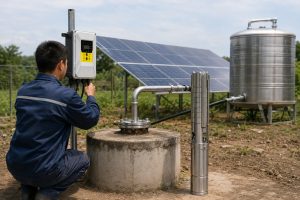
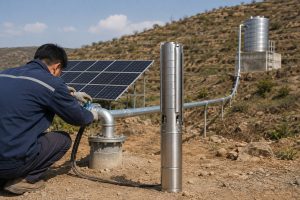
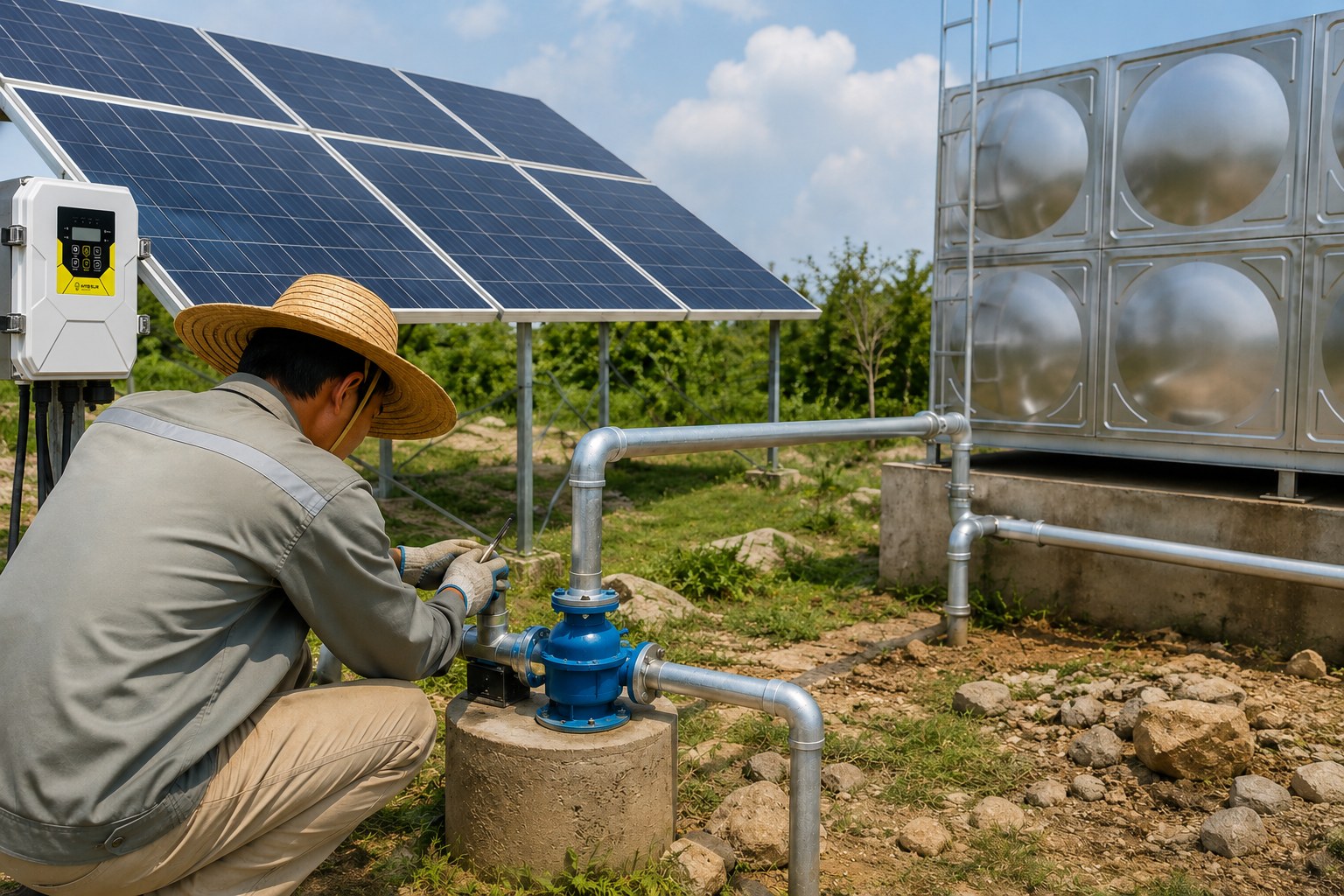
For off-grid or eco-friendly applications, solar submersible pumps are often the most efficient and cost-effective choice.
Choosing the right water pump can feel overwhelming with so many options available.
However, making the right choice is crucial for ensuring a reliable and efficient water supply for years to come.
It's not just about picking a pump; it's about designing a complete water system that works for you.
This guide will break down the essential factors, from pump types to sizing calculations, helping you move from confusion to clarity.
We will explore the different technologies available and help you understand which pump is the perfect fit for your well and your wallet.
Types Of Replacement Well Pumps
Feeling lost in a sea of pump options?
Choosing the wrong one can lead to costly repairs and inefficient performance.
Understanding the basic types is the first step to making a confident decision.
The main pump types are jet pumps, ideal for shallow wells (less than 25 feet), and submersible pumps, which are more efficient for deep wells.
A growing and popular category is solar-powered pumps, which offer sustainable, off-grid water solutions for a wide range of well depths.
To select the best pump, you must first understand the fundamental differences in how they operate and where they are installed.
Each type has been engineered for specific conditions, and matching the pump to your well's characteristics is the key to long-term success.
While traditional pumps have served homes for decades, modern advancements, particularly in solar technology, have introduced new levels of efficiency and sustainability.
Conventional Pump Systems
For years, the choice was primarily between two types of electric pumps.
-
Jet Pumps: These pumps are installed above ground and use suction to pull water up from the well.
They are effective for shallow wells, typically those less than 25 feet deep.
Their above-ground placement makes them easier to access for maintenance, but they are less energy-efficient than submersible models because pulling water requires more energy than pushing it. -
Submersible Pumps: These pumps are installed directly inside the well, fully submerged in the water.
They push water to the surface, a much more efficient method for deep wells.
Submersible pumps can operate in wells from 25 feet to over 400 feet deep.
Because they are cooled by the surrounding water, they tend to have a longer lifespan and operate more quietly.
| Pump Type | Well Depth | Installation | Efficiency | Key Advantage |
|---|---|---|---|---|
| Jet Pump | < 25 feet | Above Ground | Lower | Easy access for service |
| Submersible Pump | 25 - 400+ feet | Inside Well | Higher | More energy-efficient |
The Rise of Sustainable Pumping Solutions
With a global shift towards clean energy, solar water pumps have emerged as a powerful and essential technology.
They operate independently of the power grid, making them perfect for remote or off-grid locations in Africa, the Americas, Australia, and Asia.
By harnessing the power of the sun, they offer an environmentally friendly and cost-effective solution, eliminating electricity bills associated with water pumping.
A Modern Portfolio for Diverse Needs
Modern solar deep well pumps are not a one-size-fits-all solution.
They come in specialized designs to meet a wide range of needs, all typically powered by highly efficient brushless DC motors.
This specialization creates a competitive and complete product portfolio.
-
Solar Screw Pump: This design uses a stainless steel screw to push water.
It excels at producing very high pressure (head) from deep wells but delivers a lower flow rate.
It is highly resistant to sand, making it ideal for domestic water supply in areas with harsh water conditions. -
Solar Plastic Impeller Pump: This is a multi-stage centrifugal pump that delivers a high flow rate at a medium head.
Its durable plastic impellers offer excellent resistance to fine sand, and its lightweight, economical design makes it perfect for farm irrigation and pasture water supply. -
Solar Stainless Steel Impeller Pump: This premium model uses a full stainless steel construction.
It is designed for maximum durability and corrosion resistance, making it the best choice for acidic or alkaline water conditions.
It offers high flow and a long service life in demanding environments.
| Solar Pump Type | Best For | Flow Rate | Head/Pressure | Key Feature |
|---|---|---|---|---|
| Screw Pump | Deep wells, homes | Low | Very High | High sand resistance |
| Plastic Impeller | Farms, irrigation | High | Medium | Wear-resistant, economical |
| Stainless Steel Impeller | Corrosive water | High | Medium-High | Maximum corrosion resistance |
How to Determine the Right Size Well Pump for Your Home
Worried about choosing the wrong pump size?
An incorrect choice can lead to weak water pressure or a constantly running, energy-wasting motor.
A simple calculation can set you on the right path.
To size your pump, first estimate your home's peak water demand in gallons per minute (GPM).
Count all your water fixtures and appliances, assigning 1 GPM to each.
A pump with a flow rate that meets or slightly exceeds this total will ensure steady pressure.
Properly sizing a well pump is about finding the perfect balance.
You need enough power to meet your household's busiest moments without overworking the pump or wasting electricity.
Beyond just counting fixtures, you must also consider your well's depth and its ability to replenish itself.
These factors work together to define the ideal horsepower and flow rate for your system.
Calculating Your Gallons Per Minute (GPM) Demand
The first step is to determine your home's peak water usage.
This is the maximum amount of water you might use at one time.
A simple way to estimate this is by counting every fixture that uses water.
| Fixture Type | Average GPM |
|---|---|
| Faucet | 1.0 |
| Shower | 2.0 |
| Toilet | 1.5 |
| Dishwasher | 1.5 |
| Washing Machine | 2.0 |
| Outdoor Spigot | 2.5 |
To calculate your need, add up the GPM for all fixtures that could realistically run at the same time.
For a typical 3-4 bedroom home, this usually falls between 8 and 12 GPM.
For example, if you have 10 fixtures, a pump capable of delivering at least 10 GPM is a good starting point.
The Importance of Well Yield
Your pump's capacity should never exceed your well's ability to supply water.
Well yield is the rate, measured in GPM, at which water naturally flows into your well from the surrounding ground.
A professional can perform a well yield test to determine this rate.
If you install a 15 GPM pump on a well that only yields 10 GPM, the pump will draw water faster than the well can replenish, potentially running dry and causing severe damage to the motor.
Always ensure your pump's flow rate is equal to or less than the well's yield.
Matching Horsepower to Your Needs
Horsepower (HP) determines how much lifting power a pump has.
The deeper your well and the more water you need to move, the more horsepower you will require.
- ½ HP pumps: Suitable for smaller homes with shallow wells and low water demand.
- ¾ HP pumps: The standard for average-sized homes with wells up to 150-200 feet deep, providing 8–12 GPM.
- 1 HP and above: Necessary for larger homes, deep wells (over 200 feet), or applications requiring higher pressure like irrigation systems.
Choosing the right horsepower is critical.
An undersized motor will struggle to deliver adequate pressure, while an oversized motor will waste energy without providing significant benefits.
The Efficiency Core: The BLDC Motor
The true heart of a modern, high-performance solar pump is its motor.
The most advanced systems use a Brushless DC (BLDC) permanent magnet motor.
This technology is a game-changer for pump efficiency and longevity.
These motors can achieve efficiencies exceeding 90%, compared to 60-70% for standard AC motors.
This means they convert more solar energy directly into pumping power.
Technologically, they are designed to be more compact and lightweight—often up to 47% smaller and 39% lighter than traditional motors.
This high efficiency reduces the number of solar panels needed, lowering the initial system cost by 15-25%.
It also simplifies installation and extends the motor's life, as it runs cooler and with less stress.
Common Sizing Mistakes (and How to Avoid Them)
Is your new pump already causing problems?
Issues like sputtering faucets or a noisy pump often point back to sizing errors made during installation.
Knowing these common pitfalls is key to avoiding them.
The most frequent mistakes are oversizing the pump, which causes rapid on-off cycling, and undersizing it, which results in poor water pressure.
Another critical error is ignoring the well's yield, which can cause the pump to run dry and burn out the motor.
Selecting a well pump is a balancing act.
It's not just about getting the most powerful model available.
The goal is to create a harmonious system where the pump, pressure tank, and well itself all work together seamlessly.
An imbalance in any one of these areas can lead to inefficiency, premature wear, and eventual system failure.
Understanding how these components interact is crucial for a reliable water supply.
The Dangers of Oversizing
A pump that is too powerful for your system is just as bad as one that is too weak.
An oversized pump will meet the home's water demand too quickly, causing the pressure switch to turn it off.
As soon as a faucet is used, the pressure drops, and the pump kicks back on.
This rapid on-off pattern is known as short cycling.
Short cycling generates excess heat in the motor, which can lead to premature failure.
It also causes significant wear on the pump's electrical components and can increase energy consumption by up to 30%.
The Frustration of Undersizing
An undersized pump cannot keep up with your home's peak water demand.
You'll notice this as a frustrating drop in water pressure when more than one fixture is running.
For example, flushing a toilet might cause the shower to weaken to a trickle.
This constant struggle to meet demand puts a continuous strain on the pump's motor, forcing it to run for extended periods without rest.
This not only provides an unsatisfactory user experience but also leads to overheating and a drastically shortened pump lifespan.
Ignoring the Well's Capacity
This is perhaps the most dangerous and costly mistake.
As mentioned before, your pump's GPM rate must not exceed your well's yield rate.
If it does, the pump will empty the well casing of water and begin to pump air.
Pumps are designed to be cooled and lubricated by the water they move.
When a pump runs dry, the motor rapidly overheats, which can destroy the bearings and seals within minutes, leading to catastrophic failure and the need for a complete replacement.
The Role of Intelligent Control Systems
Modern solar pump systems have a powerful tool to avoid these issues: the intelligent controller.
Advanced controllers use Maximum Power Point Tracking (MPPT) to optimize the energy drawn from the solar panels, ensuring the pump runs at its most efficient speed based on the available sunlight.
This maximizes water output throughout the day.
Furthermore, many controllers come with built-in protections.
They can sense when the well's water level is too low and will automatically shut off the pump to prevent dry running.
Some hybrid AC/DC controllers can even switch automatically to grid power or a generator when sunlight is insufficient, ensuring a 24/7 water supply while prioritizing the use of free solar energy.
This intelligence makes the entire system more resilient, efficient, and less prone to common operational mistakes.
Conclusion
The "best" small water pump is a complete system.
It balances well depth, water needs, and power source.
Modern solar pumps with efficient motors and smart controllers offer the most reliable, cost-effective, and sustainable solution.
FAQs
What is a good GPM for a house well?
Most homes require 8 to 12 GPM.
This supports daily activities like showering and running appliances simultaneously without a significant drop in pressure.
How many HP pump do I need for a 100 ft well?
For a 100-foot well, a ½ to ¾ HP pump is typically sufficient for an average-sized home, providing adequate flow and pressure.
Can a well pump be too powerful?
Yes.
An oversized pump will short cycle, leading to wasted energy, overheating, and premature failure of the motor and control components.
What is the most reliable type of well pump?
Submersible pumps are generally considered the most reliable.
They are sealed from the elements, cooled by water, and have a long operational lifespan.
How long do small water pumps last?
A quality well pump can last 10 to 15 years, and sometimes longer.
Longevity depends on proper sizing, usage, and regular maintenance.
Are solar water pumps worth it?
Yes, especially for off-grid locations.
They eliminate electricity costs, are environmentally friendly, and modern systems are highly reliable and require minimal maintenance.
What size well pump do I need for a 200 ft well?
For a 200-foot deep well, you will likely need a ¾ to 1 HP submersible pump to ensure sufficient lift and water pressure.
Will a higher HP well pump increase water pressure?
Not necessarily.
Horsepower provides lifting power.
To increase pressure at the faucet, you often need to adjust the pressure tank or switch settings.