Your pond life is struggling for air, and you're far from a power source.
Discover simple, effective ways to boost oxygen without a traditional electric pump.
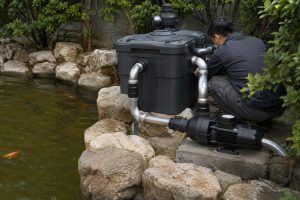
You can oxygenate a pond without a mains-powered pump by adding specific pond plants, installing a waterfall, or using solar-powered aerators and fountains. These methods improve water quality, support fish health, and prevent stagnation naturally and cost-effectively, freeing you from the grid.
While these are great starting points, the real power in off-grid water management comes from understanding the technology available.
From simple plants to advanced solar systems, each solution offers unique benefits.
Let's explore how to create a vibrant, healthy pond ecosystem, no matter your situation.
How to Oxygenate Ponds with Natural Solutions
Worried about foul odors and algae blooms in your pond?
These issues often signal a lack of oxygen.
The solution could be simpler and more natural than you think.
The most effective natural method is to install pond plants. Aim to cover at least 50% of the surface with a variety of plants, including submerged oxygenators. They release oxygen directly into the water and absorb excess nutrients that fuel algae growth, creating a balanced ecosystem.
Adding plants is the foundation of a self-sustaining pond.
It is nature's own filtration and aeration system.
This biological process is far more than just decoration; it is a critical component for maintaining water health.
Signs of low oxygen, such as fish gasping at the surface or foul smells, can often be reversed by a robust planting strategy.
The Role of Different Plant Types
Not all plants are created equal when it comes to oxygenation.
A diverse selection ensures a balanced and resilient ecosystem.
You should aim for a mix of submerged, floating, and marginal plants.
Submerged plants are the heavy lifters of oxygen production.
They live entirely underwater and release oxygen directly into the water column through photosynthesis.
Floating plants, like water lilies, provide shade.
This shade helps keep the water cool, and cooler water can hold more dissolved oxygen.
Marginal plants grow at the pond's edge and help filter runoff, preventing pollutants from entering the water.
This diversity creates a multi-layered defense against low oxygen and poor water quality.
| Plant Type | Primary Function | Examples | Coverage Goal |
|---|---|---|---|
| Submerged | Oxygen Production | Hornwort, Anacharis, Cabomba | 25-30% of pond volume |
| Floating | Shading & Cooling | Water Lilies, Duckweed | 20-25% of surface area |
| Marginal | Nutrient Filtration | Iris, Cattails, Rushes | Along the pond edges |
Maximizing Natural Oxygenation
To get the most out of your pond plants, you must manage them correctly.
We recommend covering at least 50% of your pond's surface area.
This coverage strikes a balance between open water and plant life.
It ensures enough light penetrates for submerged plants while providing adequate shade to prevent overheating.
During the day, these plants will be an oxygen factory.
However, it is important to remember that at night, plants consume a small amount of oxygen through respiration.
In a heavily stocked fish pond, this night-time oxygen dip can be a concern.
That is why combining natural methods with other solutions, like solar aerators, provides the most stable environment for your aquatic life.
A well-planted pond can see dissolved oxygen levels increase by up to 40% during peak sunlight hours compared to a bare pond.
This natural boost reduces stress on fish and promotes the growth of beneficial bacteria that break down waste.
Why Use Solar Power for Pond Aeration
You want the power of aeration without the high electricity bills or complex wiring.
What if you could harness the sun to bring your pond to life?
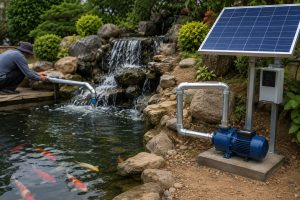
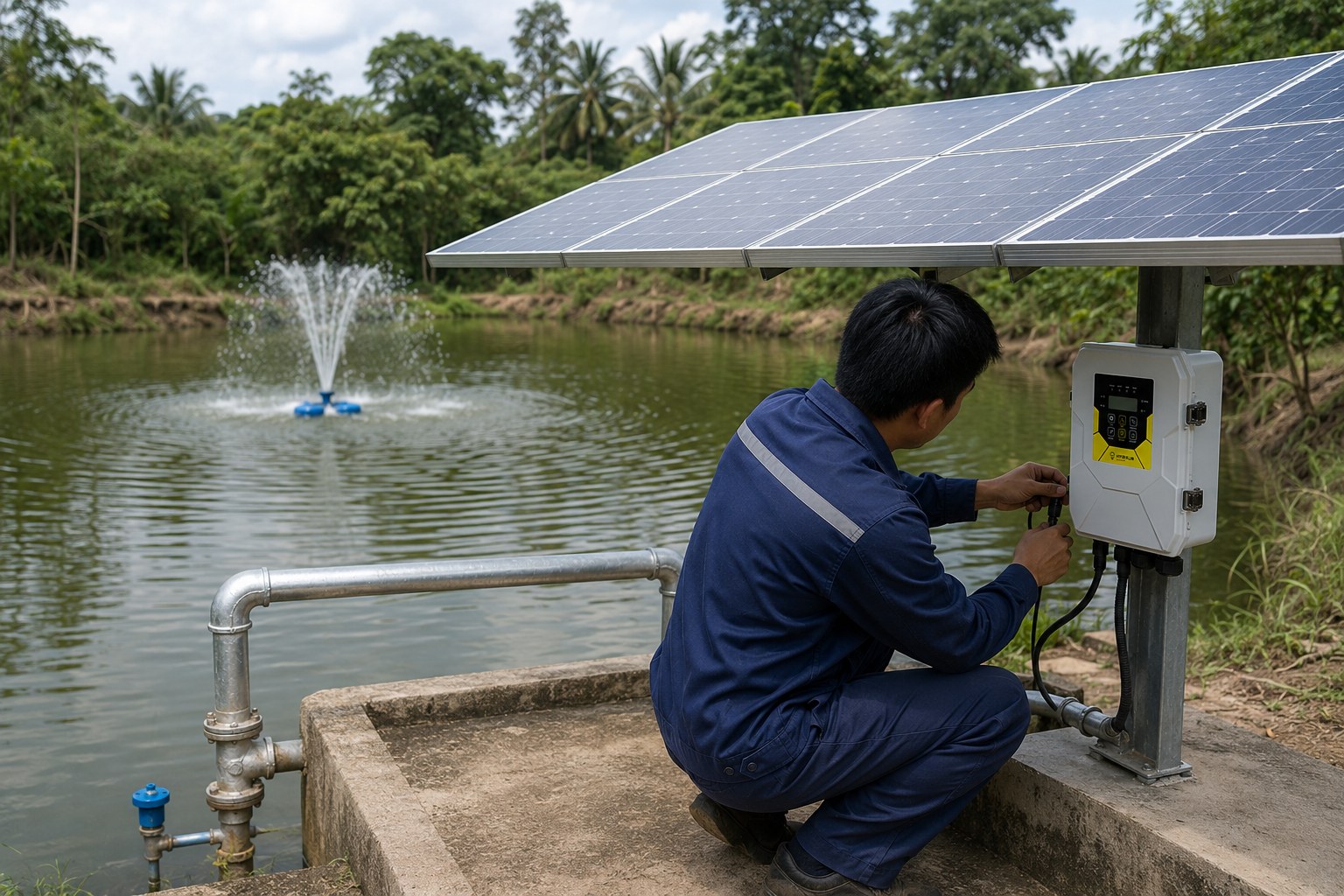
Solar-powered fountains and air pumps are excellent for aerating ponds without mains electricity. They circulate water and add oxygen by creating surface agitation and bubbles. Models with battery backups can even operate at night or on cloudy days, ensuring consistent oxygenation for a healthy pond.
Moving from a static, natural system to an active, solar-powered one represents a significant upgrade in pond management.
While plants are essential, they are passive.
Solar-powered devices actively introduce oxygen and circulate water, tackling problems like thermal stratification, where the bottom layer of the pond becomes oxygen-deprived.
This technology is perfect for locations far from an electrical outlet.
It offers a "set it and forget it" solution that works silently and efficiently, powered entirely by free energy from the sun.
The return on investment is immediate, with zero operational electricity costs.
Solar Fountains vs. Solar Air Pumps
You have two main choices when it comes to solar aeration: fountains and air pumps.
Solar fountains pull water from below the surface and spray it into the air.
This process is beautiful and highly effective at aeration.
As the water droplets fall back to the surface, they trap atmospheric oxygen and carry it into the pond.
This surface agitation breaks the tension and allows for a much greater gas exchange, increasing dissolved oxygen levels by 15-25% in the upper layers of water.
Solar air pumps work differently.
They use a solar panel to power a small pump that pushes air through a hose to an air stone placed at the bottom of the pond.
The air stone releases a column of fine bubbles.
These bubbles not only dissolve oxygen directly into the water but also, more importantly, create a powerful lift current.
This current circulates the entire water body, pulling oxygen-poor water from the bottom to the surface to get oxygenated.
For deep ponds, an air pump is often 30-50% more effective at total-pond oxygenation than a surface fountain.
The Importance of Battery Backup
A key limitation of basic solar products is that they only work when the sun is shining.
This can be a problem, as oxygen demand from fish and decaying matter continues 24/7.
The lowest oxygen levels in a pond often occur just before sunrise, after a long night of consumption without production.
This is where solar systems with an integrated battery backup become invaluable.
These units, like the PondXpert SolarShower or SolarAir Plus models, use a portion of the sun's energy to charge a lithium-ion battery.
Once the sun sets or if the sky becomes heavily overcast, the system automatically switches to battery power.
A typical system can provide 4-8 hours of nighttime operation.
This ensures continuous aeration through the critical nighttime hours, preventing dangerous oxygen drops and keeping your fish safe.
Choosing a model with a battery backup provides peace of mind and transforms a daytime-only convenience into a full-time pond health solution.
Choosing the Right Solar Pump for Advanced Aeration
Your water needs go beyond a small garden pond, requiring serious power for deep wells or large-scale irrigation.
Traditional pumps are costly and grid-dependent.
There's a better, solar-powered way.
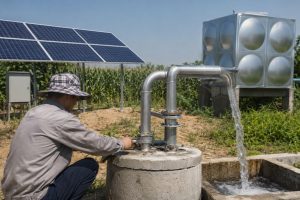
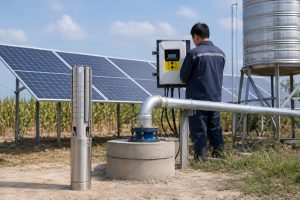
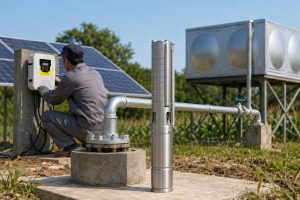
For robust water movement that significantly boosts oxygen, advanced solar deep well pumps are the answer. Depending on your needs, you can choose a solar screw pump for high head, a plastic impeller pump for high flow, or a stainless steel impeller pump for durability in corrosive water.
When we talk about oxygenating large bodies of water or moving water for agriculture, simple pond aerators are not enough.
We enter the realm of high-performance solar water pumps.
These systems are not just for aeration; they are for wholesale water management.
They can draw water from hundreds of feet below ground and move thousands of gallons per hour.
This powerful circulation is the ultimate form of aeration for large ponds, lakes, or reservoirs.
The choice of pump depends entirely on your specific water source and application.
Understanding the differences between pump types is critical for designing an efficient and long-lasting system.
The Solar Screw Pump: High Head for Deep Water Sources
The solar screw pump is a specialist.
It is a type of positive displacement pump.
It uses a single helical rotor (the screw) turning inside a rubber stator.
This action creates sealed cavities of water that are pushed up the pipe.
This mechanism is incredibly efficient at creating high pressure.
It means the pump can lift water from very deep wells, often exceeding 200 meters (650 feet).
However, this design limits the volume of water it can move.
Its main advantage is its exceptional resistance to sand and silt.
The screw design can handle water with a higher solids content than centrifugal pumps, making it ideal for newly drilled or unstable wells common in parts of Africa and Latin America.
It is the perfect choice for domestic water supply, livestock watering troughs, and small-scale drip irrigation where the well is deep but the flow requirement is low.
The Solar Plastic Impeller Pump: High Flow for Agriculture
For applications requiring high volumes of water, the solar plastic impeller pump is the workhorse.
This is a multi-stage centrifugal pump.
It uses a series of rotating impellers to accelerate water outwards, converting rotational energy into water pressure.
Each stage adds more pressure, allowing it to achieve a moderate head.
Its key feature is the use of engineered plastic for the impellers.
This material is lightweight, economical, and surprisingly wear-resistant against fine sand.
This pump is designed for high flow rates, making it perfect for flood irrigation, center-pivot systems, and filling large reservoirs or farm ponds quickly.
Because it delivers more water per watt of solar power, it is a highly cost-effective solution for agricultural producers in the Americas and Africa.
Its limitation is that the plastic components may degrade in highly corrosive water or under the extreme pressures of very deep wells.
The Solar Stainless Steel Impeller Pump: Ultimate Durability
When water quality is a challenge, the solar stainless steel impeller pump is the premium solution.
This pump operates on the same multi-stage centrifugal principle as the plastic impeller model.
However, its critical components, including the impellers, diffusers, and pump body, are all constructed from SS304 or even higher-grade SS316 stainless steel.
This construction gives it superior resistance to corrosion from acidic or alkaline water.
It is the ideal choice for regions with aggressive groundwater, such as the alkaline soils of Australia or certain coastal areas.
While it has a higher initial cost, its extended service life and reliability in harsh conditions provide a lower total cost of ownership over time.
This pump is targeted at high-end applications, including premium residential water supply, commercial operations, and any environment where pump failure is not an option.
| Pump Type | Flow Rate | Max Head (Lift) | Sand Resistance | Corrosion Resistance | Best Application |
|---|---|---|---|---|---|
| Solar Screw Pump | Low | Very High (200m+) | Excellent | Good | Deep well domestic & livestock water |
| Plastic Impeller Pump | High | Medium (100m) | Good (fine sand) | Fair | Farm irrigation, high-volume needs |
| Stainless Steel Impeller | High | High (150m) | Fair | Excellent | Corrosive water, premium homes |
The Engine Driving It All: High-Efficiency BLDC Motors
You've chosen a solar pump, but its performance feels lackluster, requiring too many solar panels.
The problem isn't the sun; it's the motor inside your pump.
The performance of any solar pump hinges on its motor. High-efficiency Brushless DC (BLDC) permanent magnet motors are the gold standard. With over 90% efficiency, they deliver more power with less energy, reducing the number of solar panels needed and cutting overall system costs significantly.
The pump end—be it a screw or impeller—is only half of the equation.
The motor that drives it is the true heart of the system.
An inefficient motor wastes precious solar energy as heat, requiring you to over-invest in solar panels just to get the job done.
This is where the technological superiority of Brushless DC (BLDC) permanent magnet motors becomes clear.
They represent a leap in efficiency over older DC brushed motors or AC motors paired with an inverter.
This efficiency is not just a number on a spec sheet; it translates directly into lower costs, easier installation, and higher reliability.
What Makes BLDC Motors Superior?
The magic of a BLDC motor lies in its design.
Unlike traditional motors with carbon brushes that wear out, BLDC motors are electronically commutated.
There are no parts creating physical friction to transfer power, which immediately eliminates a major point of failure and maintenance.
The core of the motor's power is its permanent magnet rotor.
High-end motors use powerful rare-earth magnets like Neodymium Iron Boron (NdFeB).
These magnets create a strong magnetic field without needing any electrical power.
This means nearly all the energy from the solar panels goes directly into turning the pump shaft.
This design results in an operational efficiency exceeding 90%.
For comparison, a standard AC motor might be 75% efficient, and a brushed DC motor could be even lower.
This 15-20% efficiency gain is massive in the world of solar power.
The Tangible Benefits of a 90%+ Efficient Motor
A highly efficient motor provides compounding advantages across the entire system.
First, it reduces the solar panel requirement.
A system with a 90% efficient motor can produce the same water flow with approximately 25% fewer solar panels than a system with a 70% efficient motor.
This directly reduces the initial investment cost of the system, often by hundreds or thousands of dollars.
Second, these motors are more compact and lightweight.
A modern BLDC motor can be up to 47% smaller and 39% lighter than a traditional motor of equivalent power output.
This makes shipping cheaper and installation far easier, especially when deploying a pump down a deep well.
Finally, the high-torque nature of BLDC motors means they can start and run reliably even in low-light conditions.
Paired with an MPPT (Maximum Power Point Tracking) controller, the system intelligently adjusts the motor's speed to extract the maximum possible power from the solar panels throughout the day, further boosting overall water output.
Ensuring 24/7 Water Supply with Hybrid Power
Solar pumps are great, but what happens on cloudy days or at night when you need water most?
Your livestock and crops can't wait for the sun to shine.
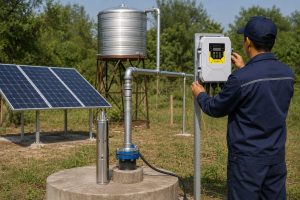
Modern solar pump systems solve this with AC/DC hybrid controllers. These smart devices automatically switch between solar power and a grid or generator backup. This ensures a reliable, uninterrupted water supply 24/7, giving you the best of both worlds: free solar energy and constant availability.
For critical applications, 100% reliance on the sun is a risk.
A string of cloudy days could disrupt water supply for a home, farm, or community.
This is where hybrid technology bridges the gap between off-grid freedom and on-grid reliability.
An AC/DC hybrid controller acts as the brain of the water pump system.
It is designed with two separate power inputs: one for the DC power from your solar panels and another for an AC power source, like the utility grid or a backup generator.
This dual-input capability provides ultimate flexibility and water security.
How a Hybrid Controller Works
The operation of a hybrid controller is elegantly simple.
Its internal logic is programmed to prioritize solar power at all times.
When the sun is shining, the controller directs 100% of the DC power from the photovoltaic panels to the pump motor.
It simultaneously uses its MPPT function to optimize this power for maximum water flow.
If clouds roll in and the solar power drops, the controller can do two things.
In a "hybrid" or "blending" mode, it can supplement the low solar power with a small amount of AC power to keep the pump running at the desired speed.
This maximizes the use of free solar energy, only drawing from the grid what is absolutely necessary.
If the solar input drops to zero, such as at night, the controller automatically and seamlessly switches over to the AC power source.
The pump continues to run without any interruption, ensuring your water tanks stay full.
The Strategic Advantage of Hybrid Systems
The ability to blend power sources is a game-changer for solar pumping.
It eliminates the need for a large, expensive battery bank for nighttime operation.
Batteries are a costly component with a limited lifespan and require maintenance.
A hybrid controller leverages an existing AC source, making the system simpler, more cost-effective, and more reliable in the long run.
This technology ensures you get worry-free water 24 hours a day.
You benefit from maximum energy savings by using solar power whenever it is available.
You also have the peace of mind that comes with knowing a reliable backup is always on standby.
For any user, from a homeowner to a large-scale agricultural enterprise, a hybrid system offers the most practical and resilient solar water pumping solution on the market today.
Conclusion
From natural plants to advanced hybrid solar pumps, you have many options to oxygenate water without relying on the grid, ensuring a healthy ecosystem and reliable water access.
Frequently Asked Questions (FAQs)
1. Can a pond survive without a pump?
Yes, a wildlife pond without fish can thrive using only plants for oxygenation. However, ponds with fish require active circulation, which a solar pump can provide without mains electricity.
2. How do you oxygenate a pond naturally?
Introduce plenty of submerged oxygenating plants like Hornwort. You can also build a small waterfall or stream, as the water movement naturally incorporates oxygen from the air.
3. Do waterfalls add enough oxygen to a pond?
Waterfalls are very effective at adding oxygen. The splashing and surface agitation they create are excellent for increasing the dissolved oxygen content, especially in the pond's upper layers.
4. How can I add oxygen to my pond in an emergency?
Spray the pond's surface with a garden hose. This is a great short-term solution to add oxygen quickly while you arrange a permanent fix for your pump or aerator.
5. Do solar aerators work at night?
Standard solar aerators do not. However, models equipped with a battery backup will store solar energy during the day to continue operating for several hours after dark.
6. How do I know if my pond needs more oxygen?
Look for fish gasping at the surface, foul odors from decay, and excessive algae growth. These are all clear signs that your pond's oxygen levels are too low.
7. Are solar fountains powerful enough for large ponds?
Solar fountains are best for small to medium decorative ponds. For large ponds, lakes, or deep wells, a more powerful, dedicated solar deep well pump system is necessary.
8. What plants are best for oxygenating a pond?
Submerged plants are the most effective. Top choices include Hornwort, Anacharis (Elodea), and Cabomba, as they release oxygen directly into the water where fish need it most.