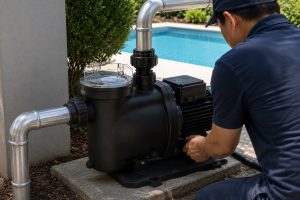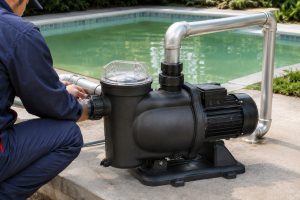
Struggling with high electricity bills and a noisy pool pump?
A powerful pump is ruining your filter and failing to keep your water clear.
You need a smarter, not stronger, solution.
The best pump for most inground pools is a variable-speed (VS) model with a horsepower rating of 1.5 to 1.65 HP. This pump offers the best balance of energy efficiency, quiet operation, and performance, paying for itself in electricity savings within one to two seasons.
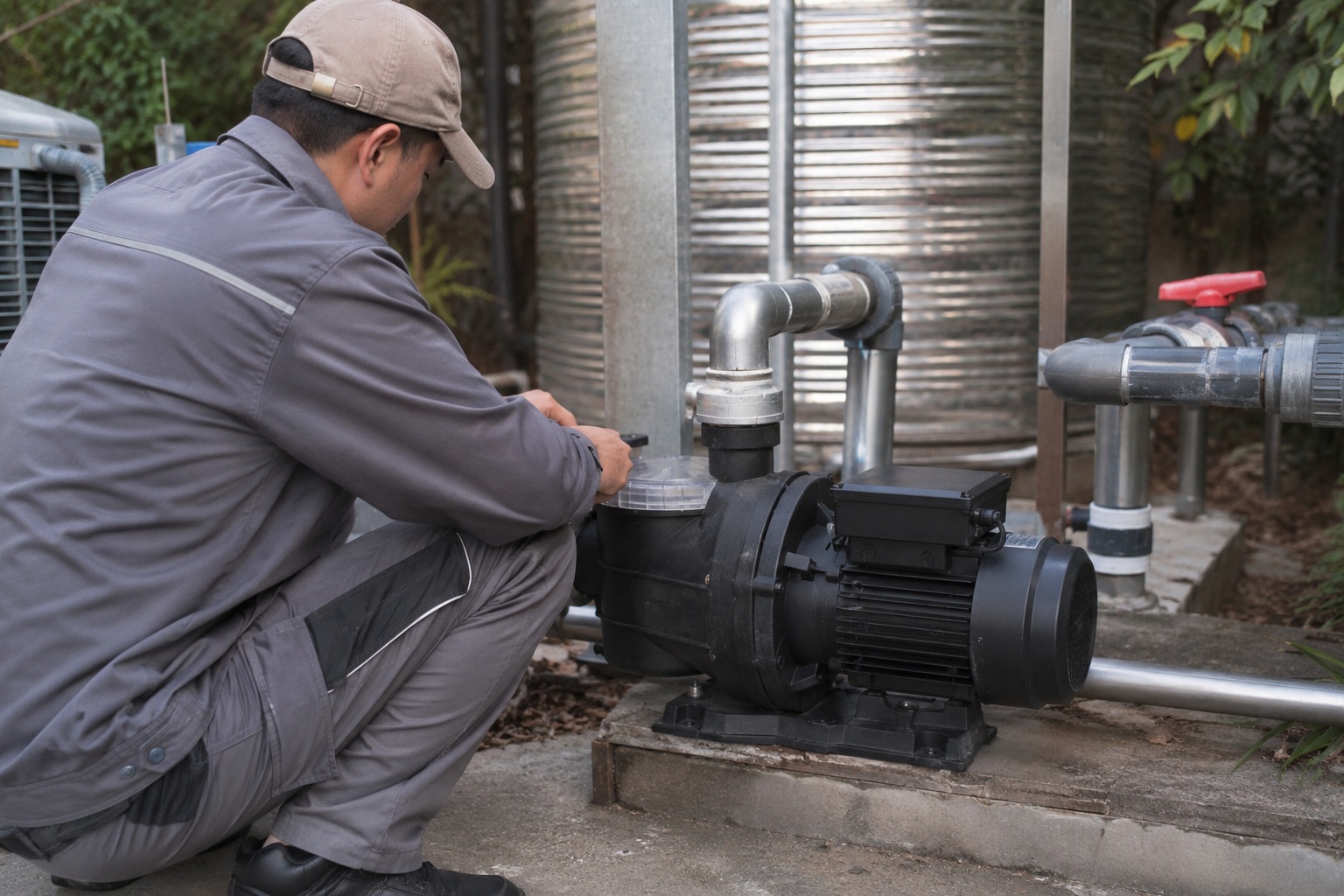
Your pool pump is the heart of your pool’s circulation system.
Choosing the right one is the most critical decision you'll make for your pool's health and your wallet.
The wrong choice leads to cloudy water, algae growth, and shocking electric bills.
This guide will walk you through everything you need to know.
We will explore the different types of pumps.
We will also discuss how to choose the perfect one for your specific needs.
Let's dive into making a smart investment for your pool.
Variable-Speed vs Single-Speed: The Most Important Decision
Still running a single-speed pump?
You are watching your money go down the drain with every energy bill.
It's time for an upgrade that actually pays you back.
A variable-speed (VS) pump is the superior choice, cutting energy use by up to 90% compared to a single-speed model. By running at lower speeds for longer, it provides better filtration and quieter operation, making it a mandatory upgrade in many regions due to its efficiency.
The debate between single-speed and variable-speed pumps is over.
The winner is clear.
If you are installing a new pump or replacing an old one, a variable-speed model is almost always the right answer.
This isn't just an opinion.
It is a fact backed by performance data, energy savings, and even legislation.
Let's break down why this decision is so crucial.
What is a single-speed pool pump?
Single-speed pumps are the old guard of pool circulation.
They operate at one fixed, high speed, typically around 3,450 RPM (Revolutions Per Minute).
They are simple in design and cheaper to buy upfront.
This has made them the standard for decades.
However, their simplicity comes at a huge cost.
They run at full blast all the time, whether they need to or not.
A typical 1.5 HP single-speed pump consumes about 1,500 watts of electricity.
If you run it for 8 hours a day, at an average electricity rate of $0.15/kWh, you are spending roughly $55 per month.
This "all or nothing" operation is incredibly inefficient.
It's like driving your car with the gas pedal floored everywhere you go.
What is a variable-speed pool pump?
Variable-speed (VS) pumps represent a major technological leap.
They use a modern permanent magnet motor, similar to those in electric cars.
This allows you to control the motor's speed precisely.
You can dial it down for daily filtration and ramp it up for tasks like vacuuming or running water features.
This control is where the magic happens.
Pool pump power consumption follows a principle called the "Affinity Laws."
This law states that if you cut the pump's speed in half, you reduce its power consumption by about 87.5%.
For example, running a VS pump at a low 1,400 RPM for daily filtering might only draw 200 watts.
Compare that to the 1,500 watts of a single-speed pump doing the same job.
The energy savings are massive, often between 80-90%.
The Financial and Legal Case for Variable-Speed
The energy savings alone mean a VS pump typically pays for its higher upfront cost in just 1-2 pool seasons.
Many utility companies offer substantial rebates, often between $200 and $400, further shortening the payback period.
Beyond the financial savings, there is a legal imperative.
Due to their significant energy savings, governments in many states and countries now mandate the use of variable-speed or multi-speed pumps for new installations and replacements.
Places like California, Arizona, and Florida in the USA have led the way.
This trend is growing globally as energy conservation becomes more critical.
| Feature | Single-Speed Pump | Dual-Speed Pump | Variable-Speed Pump |
|---|---|---|---|
| Speed Control | One Speed (High) | Two Speeds (High/Low) | Fully Adjustable |
| Energy Efficiency | Very Low | Moderate | Very High (up to 90% savings) |
| Upfront Cost | Low ($400-$600) | Medium ($500-$700) | High ($750-$1,400+) |
| Operating Noise | Loud (70+ dB) | Loud on high, quieter on low | Very Quiet (40-50 dB at low speed) |
| Payback Period | N/A | 2-3 Seasons | 1-2 Seasons |
| Legal Status | Banned for new installs in many areas | Meets some energy codes | Meets all modern energy codes |
| Filtration Quality | Good | Better (on low speed) | Best (slow flow improves filtration) |
Horsepower: Why Bigger Isn't Always Better
Think a more powerful pump means a cleaner pool?
This common mistake can cost you money and even damage your equipment.
It's time to learn that balance, not brute force, is key.
Choose horsepower based on your pool's volume, filter size, and plumbing, not on the idea that "more is better." For most inground pools (10,000-25,000 gallons), a 1.5 HP variable-speed pump is ideal. Oversizing a pump wastes energy and can overwhelm your system.
Many pool owners fall into the trap of buying a pump with the highest horsepower they can find.
The logic seems simple: more power must mean more cleaning.
In reality, this is one of the most counterproductive and costly mistakes you can make.
The goal is to circulate water effectively and efficiently, not to create a whirlpool.
Let's look at why selecting the right horsepower is about precision, not power.
Calculating Your Pool's Needs
The first step is to determine the required flow rate for your pool.
The industry standard is to "turn over" the entire volume of your pool water through the filter in an 8-hour period.
Here’s how to calculate the necessary Gallons Per Minute (GPM):
- Find Your Pool Volume: (Length x Width x Average Depth x 7.5 for rectangular pools). A pool volume calculator can simplify this for irregular shapes.
- Calculate Required GPM: (Pool Volume in Gallons) ÷ (Turnover Time in Minutes). For an 8-hour turnover, this is (Volume ÷ 8) ÷ 60.
For example, a 20,000-gallon pool needs a flow rate of at least 42 GPM (20,000 ÷ 8 ÷ 60 ≈ 41.7).
A 1.0 to 1.5 HP pump is more than capable of delivering this flow rate under typical conditions.
The Dangers of an Oversized Pump
Installing a pump that is too powerful for your system creates several problems.
- Ineffective Filtration: Pushing water through a filter too quickly is like trying to catch butterflies with a fast-moving net. The water moves so fast that dirt and particles don't have time to be trapped by the filter media, passing right back into the pool. Sand filters are particularly susceptible to this.
- Equipment Damage: Excessive flow creates high pressure within your plumbing and filter. This stress can damage filter internals, blow O-rings, and cause fittings to fail.
- Cavitation: An oversized pump trying to pull water through restrictive plumbing can cause cavitation. This is the formation of tiny air bubbles that collapse violently, creating a grinding noise and eroding the pump's impeller over time.
- Wasted Energy: A bigger motor consumes more electricity, even when a variable-speed model is throttled down. You're paying for capacity you simply don't need.
Flow Rate vs. Horsepower
Don't judge a pump solely by its HP rating.
You must look at its performance curve, which is a chart provided by the manufacturer.
This chart shows the GPM the pump can produce at different levels of resistance, measured in "feet of head."
A well-engineered 1.5 HP pump can easily outperform a poorly designed 2.0 HP pump in real-world conditions.
This is another reason why variable-speed pumps are superior.
You can purchase a 1.65 HP model and dial it in to produce the exact 42 GPM your pool needs, ensuring optimal performance without waste.
Matching Your Pump to Your Filtration System
Your pump and filter are a team.
If they aren't working in harmony, your entire system will fail.
Pairing a massive pump with a small filter is a recipe for disaster.
Ensure your pump's flow rate does not exceed the maximum flow rate of your filter and plumbing. Check the GPM rating on your filter's label. A variable-speed pump allows you to program a maximum speed to protect your equipment while maintaining optimal filtration.
A powerful pump is useless if the rest of your system can't handle the water it's trying to move.
Think of it like a highway.
There's no point having an eight-lane on-ramp if it leads to a one-lane road.
The traffic will just back up, causing chaos and inefficiency.
Your pump, filter, and plumbing must be correctly sized to work together as a balanced and effective system.
Understanding Filter Flow Rate Limits
Every pool filter has a design flow rate specified by the manufacturer, listed in GPM.
Exceeding this rate is detrimental to both water clarity and the filter's lifespan.
- Sand Filters: These filters work best at lower flow rates. Pushing water through too fast channels the water through the sand instead of distributing it evenly. This allows debris to bypass the sand and return to the pool. A typical sand filter for a residential pool might have a max flow rate of 50-75 GPM.
- Cartridge Filters: These filters have a large surface area and generally prefer moderate flow rates to maximize the time water is in contact with the filter media. Their max GPM varies widely by size.
- Diatomaceous Earth (D.E.) Filters: D.E. filters provide the finest filtration but are sensitive to being overpowered. High flow can dislodge the D.E. cake from the filter grids, compromising filtration and potentially sending D.E. powder back into the pool.
The Impact of Plumbing Size
The diameter of your pool's plumbing also dictates the maximum efficient flow rate.
Trying to force too much water through pipes that are too small creates high resistance (head pressure), which makes the pump work harder, wastes energy, and reduces flow.
- 1.5-inch Pipe: This is common in older pools. It can effectively handle a maximum of around 60 GPM.
- 2.0-inch Pipe: This is the standard for modern pools. It can manage a flow rate of about 100 GPM more efficiently.
If you have 1.5-inch plumbing, installing a pump capable of 120 GPM is a complete waste.
The plumbing itself becomes the bottleneck.
This is yet another area where variable-speed pumps excel.
You can set a maximum RPM or flow rate in the pump's controller to ensure it never overwhelms your filter or plumbing, protecting your investment.
| System Component | Typical Max Flow Rate (GPM) | Notes |
|---|---|---|
| 1.5" PVC Pipe | ~60 GPM | Common on older or smaller pools. |
| 2.0" PVC Pipe | ~100 GPM | Standard for modern inground pools. |
| Sand Filter (24") | ~60 GPM | Works best at lower flow rates. |
| Cartridge Filter (420 sq ft) | ~150 GPM | Varies greatly with filter size. |
| D.E. Filter (48 sq ft) | ~96 GPM | High flow can disturb D.E. coating. |
Quietest Pool Pumps: When Noise Matters
Is your pool pump so loud it ruins the peace of your backyard?
The constant drone can be a major source of irritation for you and your neighbors.
Modern pumps offer a solution.
The quietest pool pumps are variable-speed models running at low RPMs, operating at around 40-50 decibels—the sound of a quiet conversation. This is a dramatic reduction from the 70+ decibels of a single-speed pump, which sounds more like a vacuum cleaner.
Pump noise is a quality-of-life issue that many pool owners overlook until it's too late.
If your equipment pad is located near a bedroom window, a patio, or your property line, the noise level becomes a primary concern.
The good news is that advancements in pump technology have made a quiet backyard oasis an achievable reality.
The key is moving away from the loud, brute-force approach of single-speed pumps.
Decibels Don't Lie: A Sound Comparison
The decibel (dB) scale is logarithmic, meaning a small increase in number represents a huge jump in perceived loudness.
A 10 dB increase is roughly a doubling of loudness.
- Single-Speed Pumps: These typically operate at 70-75 dB or even higher. This is comparable to the sound of a garbage disposal or a vacuum cleaner running continuously. It's loud enough to disrupt conversations and be clearly audible to neighbors.
- Variable-Speed Pumps (at low speed): When running at the low RPMs used for daily filtration (e.g., 1,200-1,400 RPM), a VS pump produces only 40-50 dB. This is the ambient sound level of a quiet library or a refrigerator humming. You often have to stand right next to it to even know it's on.
This reduction of 20-30 dB is not a minor improvement; it's a game-changer for backyard tranquility.
Motor Technology That Reduces Noise (TEFC)
The quietest premium variable-speed pumps often use a Totally Enclosed Fan Cooled (TEFC) motor design.
Unlike traditional open-drip-proof motors that are open to the air, TEFC motors are sealed.
This design has two major benefits for noise reduction.
First, the sealed housing naturally dampens the mechanical and electrical noise produced by the motor.
Second, because they are sealed, they rely on an external fan to pull air over the motor casing to cool it.
This fan is engineered to be far quieter than the internal fan of an open motor spinning at 3,450 RPM.
The combination of the sealed design and quieter cooling fan makes TEFC motors the standard for quiet operation and also protects the motor's internal components from dust, moisture, and insects, extending its life.
The Underrated Benefit of Quiet
The ability to run your pump 24/7 at an almost inaudible low speed is one of the most underrated advantages of a VS pump.
It means better filtration and chemical distribution because the water is always moving.
It also means you can enjoy the sounds of nature in your backyard, not the drone of machinery.
For those with a pool near their house, it means no more pump noise waking you up at night or disrupting a peaceful evening.
This peace and quiet is a benefit that, once experienced, you'll never want to give up.
The Future of Pumping: Advanced Motors and Hybrid Power
You've seen how variable-speed pumps save energy.
But what if you could take that efficiency to the next level?
Imagine a pump so smart it runs almost for free.
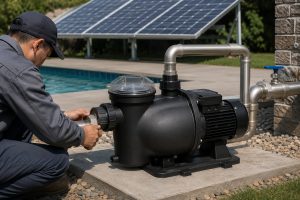
The future is here, driven by ultra-efficient BLDC motors and hybrid AC/DC power systems. These pumps can be powered by solar panels during the day and automatically switch to grid power at night, offering 24/7 operation with minimal environmental impact and cost.
While standard variable-speed pumps are a massive leap forward, the technology continues to evolve.
The next frontier in pool pump technology focuses on maximizing every watt of energy and integrating renewable power sources.
This push is leading to even smarter, more resilient, and more cost-effective solutions for circulating your pool water.
The core of this revolution lies in the motor and its control system.
The Heart of Efficiency: BLDC Motors
The power behind modern, high-efficiency pumps is the Brushless DC (BLDC) permanent magnet motor.
This is the same core technology found in everything from high-end drones to electric vehicles.
Unlike older AC induction motors, BLDC motors don't rely on electrical windings in the rotor.
Instead, they use powerful permanent magnets.
This design offers several key advantages:
- Higher Efficiency: BLDC motors can exceed 90% efficiency, converting more electricity directly into rotational force with less energy wasted as heat. This is a significant improvement over the 75-85% efficiency of older motors.
- Higher Torque: They produce more power and torque relative to their size, allowing for more compact and lightweight designs. A modern BLDC motor might be up to 40% lighter than an old induction motor of the same horsepower.
- Longer Lifespan: With no brushes to wear out, these motors are virtually maintenance-free and have a longer operational life.
Maximizing Solar: The Role of MPPT Controllers
When you pair a BLDC pump with solar panels, the controller becomes critical.
An advanced Maximum Power Point Tracking (MPPT) controller acts as the brain of the system.
It constantly analyzes the output from the solar panels and adjusts the electrical load to a point that delivers the most power.
This is especially important on cloudy days or during early morning and late afternoon when sunlight is not optimal.
An MPPT controller can boost the energy harvest from your solar array by up to 30% compared to simpler controllers.
This means the pump can run for more hours each day on free solar energy.
Uninterrupted Operation: AC/DC Hybrid Systems
What happens on rainy days or at night when solar power is unavailable?
This is where AC/DC hybrid systems come in.
These intelligent systems are designed with inputs for both DC power from solar panels and AC power from the grid.
The controller automatically prioritizes solar power.
When the sun is shining, the pump runs on 100% solar energy.
If clouds roll in and solar output drops, the controller can blend AC power with the available DC power to maintain the desired pump speed.
When there is no solar input at all, it seamlessly switches over to full AC power.
This ensures you get worry-free, 24/7 water circulation.
You maximize your use of free, clean energy without ever sacrificing performance.
Pool Pump Maintenance: Making Your Investment Last
You've invested in a high-quality pump.
Now you need to protect that investment.
Neglecting simple maintenance can cut your pump's life in half.
To maximize your pump's lifespan, which can be 8-12 years, perform regular maintenance. This includes cleaning the strainer basket weekly, checking for leaks, lubricating the lid O-ring, and never running the pump dry. These simple steps prevent strain and costly damage.
A quality pool pump is built to last, but it is not indestructible.
Like any piece of hardworking mechanical equipment, it requires some basic care to deliver a long and reliable service life.
A well-maintained pump can last for over a decade, while a neglected one might fail in just a few years.
Fortunately, the required maintenance is simple and doesn't take much time.
Incorporating these checks into your weekly routine will pay dividends in longevity and performance.
Routine Maintenance Checklist
Follow this simple checklist to keep your pump in top condition.
- Clean the Strainer Basket: Check the pump's strainer basket at least once a week, or more often if your pool collects a lot of leaves and debris. A full basket restricts water flow, forcing the pump to work harder. This is called "starvation," and it can cause the motor to overheat and seals to fail.
- Lubricate the Lid O-ring: The O-ring on the strainer basket lid creates a crucial airtight seal. Once or twice a year, apply a thin layer of a silicone-based lubricant to it. This keeps the rubber supple, prevents air leaks (which can cause the pump to lose prime), and makes the lid easier to open and close.
- Keep the Area Clear: Ensure the area around the pump motor, especially the air vents, is clear of leaves, mulch, and debris. The motor needs proper airflow to stay cool. Overheating is a primary cause of premature motor failure.
Identifying Early Warning Signs
Learning to spot trouble early can save you from a complete pump replacement.
- Leaks: Regularly inspect the pump, particularly the area where the motor connects to the pump housing (the seal plate). Any water dripping from this spot indicates that the shaft seal has failed. This is a common wear item and should be replaced immediately. If left unattended, the water will drip into the motor and destroy the bearings.
- Unusual Noises: Your pump should have a consistent, smooth hum. If you hear high-pitched screeching or a low, rough grinding sound, it's a strong sign that the motor bearings are failing. The bearings can be replaced, but it's a job that needs to be done before the motor seizes completely.
- Problems Priming: If your pump struggles to prime (fill with water and start pumping), it's usually due to an air leak somewhere on the suction side. The most common culprit is a dry or cracked lid O-ring, but it could also be a loose fitting on the incoming plumbing.
Extending Pump Lifespan
Two rules are paramount.
First, never run the pump dry.
Even a few minutes of operation without water can generate enough heat to melt the shaft seal and damage internal components.
Always ensure the system is full of water and primed before walking away.
Second, if you live in a cold climate, winterize the pump properly.
Drain all water from the pump housing and filter by removing the drain plugs.
Water left inside will freeze, expand, and crack the pump body, requiring a costly replacement.
Conclusion
The best inground pool pump is a variable-speed model.
It saves energy, runs quietly, and provides superior filtration.
Match the pump to your pool and filter for optimal, long-lasting performance.
Frequently Asked Questions
How long should I run my pool pump each day?
With a single-speed pump, run 8-12 hours in summer. With a variable-speed pump, you can run 12-24 hours at a low, energy-saving speed for better filtration and savings.
Are variable-speed pumps worth the extra cost?
Yes. They can save up to 90% on energy costs, meaning the pump typically pays for its higher price in just one or two seasons through lower electricity bills.
What size pump do I need for a 20,000 gallon pool?
A 1.5 HP variable-speed pump is ideal. It provides ample power for all tasks while allowing you to dial in the perfect, efficient flow rate for daily circulation.
Can I install a pool pump myself?
If you are comfortable with basic plumbing and electrical work, you can. However, wiring a 230V pump should be done by a licensed electrician for safety and warranty purposes.
How long do pool pumps last?
A quality, well-maintained pump can last 8-12 years. Variable-speed models may last even longer as their motors experience less strain from running at lower speeds most of the time.
Should I repair or replace my pool pump?
If a newer pump needs a minor fix like a seal, repair it. If an old single-speed pump needs a major repair (like a motor), upgrading to a variable-speed model is more cost-effective long-term.
What's the difference between single-speed, dual-speed, and variable-speed?
Single-speed runs at one high speed. Dual-speed has a high and low setting. Variable-speed allows you to choose any speed, offering maximum efficiency, control, and quietness.
Can you oversize a pool pump?
Yes, and it's a bad idea. An oversized pump can damage your filter, strain plumbing, and waste electricity. It's crucial to match the pump to your system's needs.