Struggling with unreliable water access and high energy costs?
Many off-grid locations face this daily.
A dependable, efficient water pump is the key to solving these critical water supply challenges.
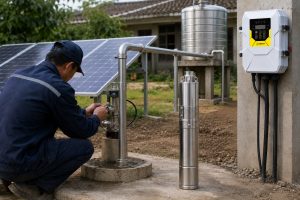
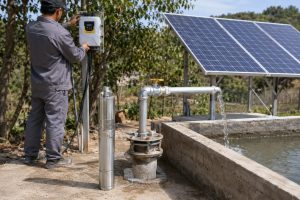
The top three water pumps for modern, sustainable applications are the Solar Screw Pump, the Solar Plastic Impeller Pump, and the Solar Stainless Steel Impeller Pump. Each type is powered by an efficient motor and is designed to meet specific needs for flow, pressure, and water conditions.
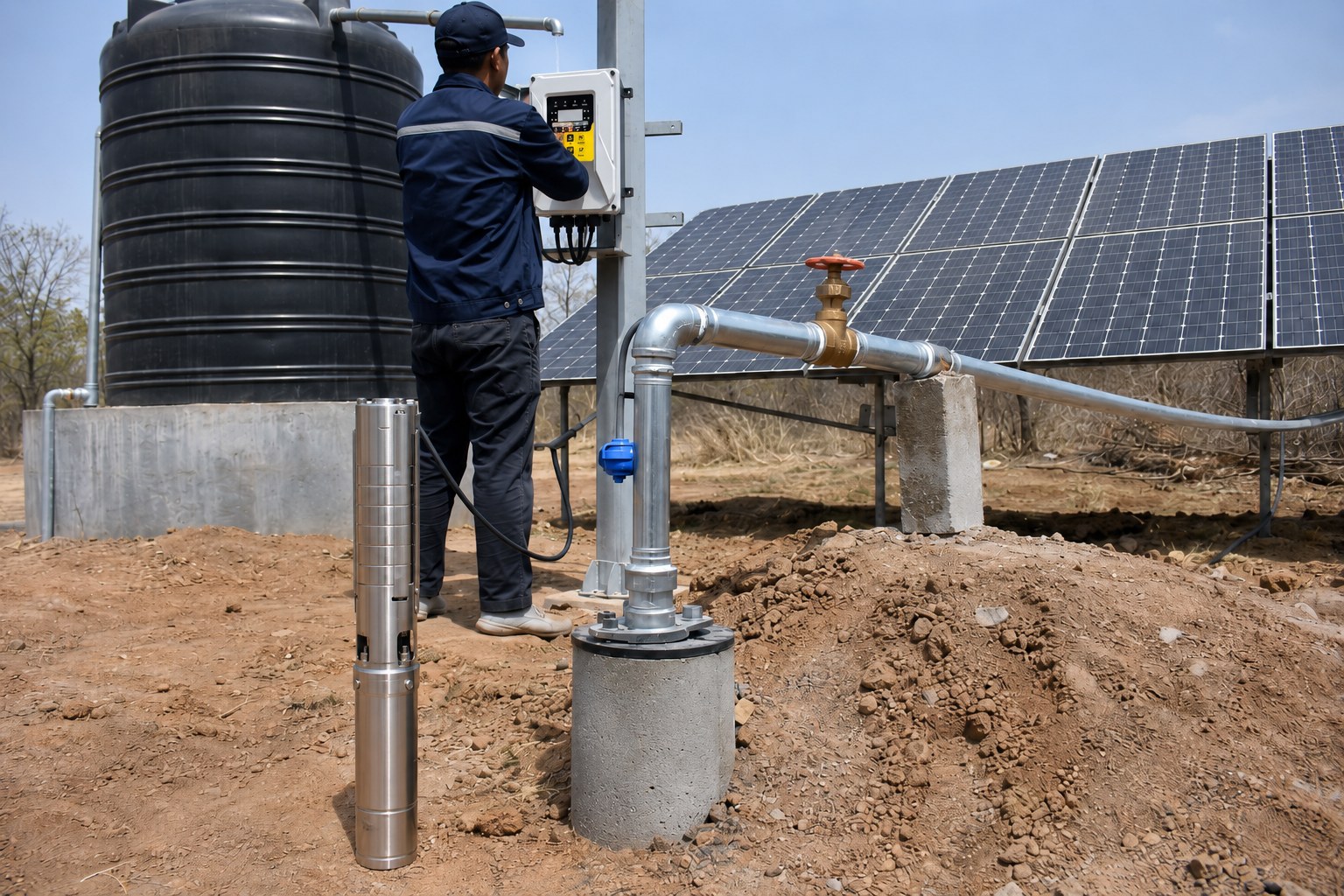
These pumps may look similar on the outside.
However, their internal designs and ideal uses are vastly different.
Understanding these differences is crucial for choosing the right solution for your home, farm, or business.
This guide will break down the technology, performance, and best applications for each pump.
Let's explore what makes each one unique and which one is the perfect fit for your specific requirements.
Solar Screw Pump: Low Flow, High Head
Dealing with a very deep well that conventional pumps can't handle?
This is a common problem in arid regions.
A solar screw pump provides the high-pressure solution needed to lift water from great depths.
A solar screw pump, also known as a progressive cavity pump, excels at creating very high pressure (head). It is the ideal choice for deep wells where a lower volume of water is sufficient, such as for domestic use or livestock watering.
A solar screw pump is a type of positive displacement pump.
Its core components are a single-helix metal rotor that rotates inside a double-helix rubber stator.
This unique design creates sealed cavities of water that "progress" from the pump's intake to its outlet.
As the rotor turns, it compresses the water within these cavities, generating immense pressure.
This mechanism is less about speed and more about force.
It allows the pump to effectively push water up from depths exceeding 200 meters (over 650 feet), a task where many centrifugal pumps would fail or operate inefficiently.
How a Screw Pump Works
The operation is simple yet powerful.
The motor turns the stainless steel screw rotor.
The rotor fits tightly inside the rubber stator.
As it rotates, it traps pockets of water and forces them upward.
This continuous pushing action builds significant head pressure, making it perfect for overcoming the force of gravity in very deep wells.
Key Performance Metrics
The performance of a screw pump is defined by its ability to trade flow for pressure.
Its design makes it highly resistant to sand and other small particles, which is a major advantage in newly drilled or unstable wells.
| Feature | Performance Data | Advantage |
|---|---|---|
| Flow Rate | Low (e.g., 0.5 - 5 m³/h) | Ideal for filling tanks, not for flood irrigation. |
| Head (Pressure) | Very High (up to 200+ meters) | Can access water sources far below the surface. |
| Sand Resistance | Excellent (handles 2-3% sand content) | The rubber stator resists abrasion from sandy water. |
| Efficiency | High at target pressure | Operates most efficiently when working against high head. |
Ideal Applications and Regions
This pump is a lifeline in many parts of the world.
Its ability to function in electricity-scarce areas makes it invaluable.
- Domestic Water Supply: It provides reliable water for homes from deep wells.
- Livestock Drinking Water: It can pump water to remote troughs for cattle, sheep, and other animals.
- Small-Scale Drip Irrigation: The low flow is suitable for efficient irrigation methods that deliver water directly to plant roots.
It is particularly popular in regions across Africa and Latin America.
In these areas, water tables can be very low, and grid power is often unavailable or unreliable.
Advantages vs. Limitations
Every pump design involves trade-offs.
The screw pump is a specialist, not a generalist.
| Advantages | Limitations |
|---|---|
| Excellent Deep Well Capability | Limited Flow Rate |
| High Resistance to Sand/Silt | Not Suitable for Large-Scale Irrigation |
| Maintains Efficiency Under High Load | Rubber Stator Can Wear Over Time |
| Simple, Robust Mechanical Design | Can be Damaged if Run Dry |
Solar Plastic Impeller Pump: High Flow, Wear-Resistant
Need to move a large volume of water for irrigation or filling a reservoir?
High flow is essential for agriculture and large properties.
A solar plastic impeller pump is designed to deliver high output efficiently and affordably.
A solar plastic impeller pump is a multi-stage centrifugal pump that provides high flow rates at a medium head. Its durable plastic impellers offer excellent wear resistance against fine sand, making it a cost-effective choice for farms and residential use.
This pump operates on the centrifugal principle.
It uses a series of rotating impellers to move water.
Water enters the center of the first impeller, where it is spun outwards by centrifugal force.
This action increases the water's velocity and pressure.
The water then moves to the next impeller stage, where the process repeats, building more pressure.
The "multi-stage" design allows the pump to achieve a useful head while maintaining a high flow rate.
The use of engineered plastic for the impellers is a key feature.
These materials are not ordinary plastic; they are high-strength polymers designed to be lightweight, durable, and highly resistant to abrasion from fine sand particles.
The Centrifugal Principle in Action
The pump's motor spins a shaft connected to a stack of impellers.
Each impeller acts like a mini-pump, adding energy to the water.
The more stages (impellers) a pump has, the higher the pressure it can generate.
The diameter and shape of the impellers determine the flow rate.
This design is optimized for moving large volumes of water efficiently against moderate back-pressure.
Performance Data Comparison
Compared to a screw pump, a plastic impeller pump has a completely different performance profile.
It prioritizes volume over extreme pressure.
| Feature | Performance Data | Advantage |
|---|---|---|
| Flow Rate | High (e.g., 5 - 15 m³/h) | Can quickly irrigate fields or fill large tanks. |
| Head (Pressure) | Medium (e.g., 50 - 100 meters) | Suitable for most residential and agricultural wells. |
| Wear Resistance | Excellent for fine sand | Polymer impellers flex slightly, resisting abrasion. |
| Weight | Lightweight | Easier and cheaper to install and transport. |
Target Uses and Markets
The high output of this pump makes it a workhorse for many applications.
- Farm Irrigation: It can supply water to sprinkler systems or flood irrigation channels.
- Pasture Water Supply: It efficiently fills large water storage tanks for livestock.
- Residential Gardens: It provides ample water for large gardens and lawns.
- Community Water Systems: It can serve as the primary pump for small community water projects.
These pumps are widely used across Africa, the Americas, and Southeast Asia.
Their balance of performance and cost makes them a popular choice for agricultural development and rural water supply projects.
Cost-Benefit Analysis
The economic advantages of plastic impeller pumps are significant.
The lower material cost and lighter weight reduce the initial purchase price by 15-20% compared to stainless steel models.
The lighter weight also lowers shipping costs and simplifies installation, reducing labor expenses.
However, they are not ideal for every situation.
In highly corrosive water or for wells deeper than 100 meters, their durability can be a limitation compared to more robust, all-metal alternatives.
Solar Stainless Steel Impeller Pump: Premium Quality, Corrosion Resistance
Is your well water acidic, alkaline, or salty?
Corrosive water can destroy a standard pump in months.
A stainless steel impeller pump is built to withstand these harsh conditions and provide a long service life.
A solar stainless steel impeller pump is a premium multi-stage centrifugal pump. It uses SS304 or higher-grade stainless steel for the impellers and pump housing, ensuring maximum durability and resistance to corrosion in challenging water environments.
This pump functions identically to the plastic impeller model, using the same multi-stage centrifugal principle.
The critical difference is the material.
Every component that touches water—the impellers, diffusers, pump body, and outlet—is made from high-quality stainless steel, typically grade 304 or 316.
Stainless steel offers superior resistance to chemical corrosion, rust, and abrasion from larger, harder particles.
This makes the pump exceptionally durable and reliable, especially in water that is not chemically neutral.
It is the top-tier choice for applications where water quality is aggressive and pump longevity is the highest priority.
While the initial investment is higher, the total cost of ownership is often lower in corrosive environments due to reduced maintenance and a much longer operational lifespan.
The Importance of Materials
The choice of stainless steel is not just for show.
- SS304: This is a versatile and widely used grade of stainless steel. It offers excellent corrosion resistance in a wide range of atmospheric environments and can withstand most oxidizing acids. It is ideal for water with a pH range of 6.0 to 8.5.
- SS316: This grade contains molybdenum, which gives it even greater resistance to chlorides (like salt) and other industrial chemicals. It is the preferred choice for coastal areas with saltwater intrusion or for pumping water with higher mineral content.
Technical Specifications and Longevity
The performance is similar to a plastic impeller pump in terms of flow but can often achieve a higher head due to the rigidity of the metal impellers.
| Feature | Performance Data | Advantage |
|---|---|---|
| Flow Rate | High (e.g., 5 - 15 m³/h) | Powerful water delivery for demanding tasks. |
| Head (Pressure) | Medium-to-High (up to 150 meters) | Can serve deeper wells than plastic models. |
| Corrosion Resistance | Superior | Withstands acidic, alkaline, and saline water. |
| Lifespan | Very Long (15-20 years) | Robust construction ensures maximum durability. |
Niche and High-End Applications
These pumps are essential in specific markets.
- Coastal Regions: They resist the corrosive effects of saltwater spray and potential brackish water in wells.
- Alkaline Soil Areas: Common in parts of Australia and the Americas, where high pH water can be aggressive.
- Mining Operations: Used for dewatering applications where water may contain various minerals and chemicals.
- High-End Homes and Ranches: Chosen by owners who demand the highest quality and longest-lasting equipment.
Investment vs. Expense
A stainless steel pump costs 25-40% more than a comparable plastic impeller model.
It is also heavier, which can increase installation complexity.
However, this higher upfront cost is an investment in reliability.
In an environment with corrosive water, a plastic pump might fail in 3-5 years.
A stainless steel pump can last 15 years or more in the same conditions.
This avoids the repeated cost and hassle of pump replacement, making it the more economical choice in the long run.
The Core Power: High-Efficiency BLDC Motors
What truly powers these modern solar pumps?
The secret to their performance is not just the pump design.
It is the advanced motor that drives them.
All three top solar pumps are driven by a high-efficiency Brushless DC (BLDC) permanent magnet motor. This core technology is what makes the entire system efficient, reliable, and competitive, with operational efficiencies often exceeding 90%.
A BLDC motor is a significant leap forward from older motor technologies.
Unlike traditional DC motors, it has no brushes that wear out, create sparks, and reduce efficiency.
Instead, it uses an electronic controller to switch the power to the motor's windings.
The rotor itself is made of powerful permanent magnets, often using high-grade materials like neodymium iron boron (NdFeB).
This design results in less friction, less heat, and much higher efficiency.
The efficiency of a motor is the measure of how well it converts electrical energy into mechanical work.
A standard AC motor might be 70-80% efficient.
A high-quality BLDC motor can be over 90% efficient.
This 10-20% difference is massive in a solar-powered system.
What is a BLDC Permanent Magnet Motor?
Think of it as a smart motor.
An external controller precisely manages the flow of electricity to electromagnets in the stator (the stationary part).
These electromagnets create a rotating magnetic field that interacts with the permanent magnets on the rotor (the spinning part), causing it to turn with high torque and precision.
This brushless design eliminates the single most common failure point in older DC motors.
Efficiency by the Numbers
The high efficiency of a BLDC motor has a direct impact on the entire solar pumping system.
| Motor Type | Typical Efficiency | Impact on Solar System |
|---|---|---|
| BLDC Motor | > 90% | Requires 15-25% fewer solar panels for the same work. |
| AC Induction Motor | 70-80% | Needs a larger, more expensive solar array. |
| Brushed DC Motor | 60-75% | Least efficient; requires most power and regular maintenance. |
This means a more compact, less expensive, and easier-to-install solar array.
Technical Advantages Breakdown
The benefits of BLDC motors are extensive.
- High Efficiency: Converts more solar power directly into pumping water.
- High Torque: Provides strong starting power, which is crucial for positive displacement pumps like the screw pump.
- Compact & Lightweight: Can be up to 47% smaller and 39% lighter than conventional motors of the same power output.
- Maintenance-Free: No brushes to inspect or replace.
- Long Service Life: Designed for over 20,000 hours of continuous operation.
- Quiet Operation: Generates less noise and vibration.
The Market Impact
For distributors and installers, the value is clear.
A more efficient motor reduces the total system cost for the end customer.
Fewer solar panels are needed, which lowers the initial investment.
The smaller, lighter pump and motor are easier to handle and install, saving time and labor.
For the end user, this means a more affordable system that is incredibly reliable and requires virtually no maintenance.
The motor is the heart of the pump, and a strong, efficient heart makes the entire system better.
Smart Control: Maximizing Solar Energy
How can you get water on cloudy days or even at night?
A great pump and motor are only part of the solution.
A smart controller unlocks the full potential of a solar water pumping system.
Modern solar pumps use intelligent controllers with Maximum Power Point Tracking (MPPT) to maximize energy use. Many systems also offer a hybrid AC/DC function, ensuring a reliable water supply 24 hours a day, regardless of the weather.
The controller is the brain of the solar pumping system.
It sits between the solar panels and the pump motor.
Its primary job is to manage the power from the panels and deliver it to the motor in the most effective way.
Simple controllers just connect the panels to the motor, but this is highly inefficient.
The voltage and current produced by solar panels change constantly with the intensity of the sunlight.
A smart controller adapts to these changes in real-time.
Understanding MPPT
Maximum Power Point Tracking (MPPT) is a sophisticated algorithm used by the best controllers.
It constantly measures the voltage and current from the solar panels.
It then adjusts the electrical load of the pump to ensure the panels are always operating at their "maximum power point."
This is the ideal combination of voltage and current that delivers the most possible watts at any given moment.
An MPPT controller can boost the amount of energy harvested from the panels by up to 30% over the course of a day compared to a system without it.
This means the pump can start earlier in the morning, run later in the evening, and continue to pump water even under overcast skies.
Hybrid AC/DC Systems
The most advanced controllers offer hybrid capability.
They have two separate power inputs: one for DC power from the solar panels and one for AC power from the grid or a generator.
The controller's logic is designed to prioritize solar power.
| Power Scenario | Controller Action | User Benefit |
|---|---|---|
| Sunny Day | Uses 100% free solar power. | Zero running cost for water pumping. |
| Cloudy Day | Blends solar and AC power to maintain pump speed. | Continuous operation without draining generator fuel. |
| Nighttime | Automatically switches to 100% AC power. | 24/7 water availability. |
This hybrid functionality provides the best of both worlds: the cost-free energy of solar and the round-the-clock reliability of the grid.
It eliminates the need for expensive battery banks, instead using an AC source as the backup.
The System as a Whole
It is crucial to view the pump, motor, and controller as a single, integrated system.
A high-quality pump is wasted if the controller is inefficient.
A great controller cannot make up for a poorly designed motor.
When all three components are designed to work together, the result is a system that is efficient, reliable, and easy to operate.
For an importer or distributor, offering a complete, optimized system is a powerful selling point.
It provides a plug-and-play solution that guarantees performance for the end user.
Conclusion
Choosing the right water pump depends on your specific needs for flow, head, and water quality.
The three top solar pumps—screw, plastic impeller, and stainless steel impeller—offer a complete portfolio.
They are all powered by efficient BLDC motors and smart controllers, ensuring reliable and sustainable water solutions.
FAQs
What is the most reliable water pump brand?
Reliability depends more on matching the pump type to the application.
However, brands that use stainless steel construction, high-efficiency BLDC motors, and offer integrated smart controllers are generally the most dependable for long-term use.
Which type of water pump is best for home use?
For homes with a well, a submersible pump is best.
A screw pump is ideal for very deep wells, while a plastic or stainless steel impeller pump provides higher flow for larger homes or gardens.
How much HP is required for a water pump?
Horsepower (HP) can be misleading.
Focus on the required flow rate (GPM or m³/h) and head (feet or meters).
A 1 HP screw pump will have very different performance than a 1 HP centrifugal pump.
What is the most common type of pump?
Centrifugal pumps, including plastic and stainless steel impeller models, are the most common globally.
Their versatility and high flow rates make them suitable for a wide range of residential, agricultural, and industrial applications.
How long should a good water pump last?
A high-quality, professionally installed solar well pump system can last 15-20 years.
The pump end may require service before the BLDC motor, which is designed for over 20,000 hours of operation.
Are solar water pumps worth it?
Yes, especially in off-grid or unreliable grid areas.
They have very low operating costs, require minimal maintenance, and provide energy independence for your water supply, paying for themselves over time.
Can a solar pump run without batteries?
Yes, most modern solar pump systems are designed to be batteryless.
They pump water when the sun shines and store the water in a tank, which is much more cost-effective and durable than storing energy in batteries.
What is the difference between a pump and a motor?
The pump, or "wet end," is the mechanical part with impellers or a screw that physically moves the water.
The motor is the electrical "dry end" that converts electricity into the rotational force needed to power the pump.