Tired of seeing a lifeless pond? You want a beautiful water feature but dread the complex wiring, high electricity bills, and noisy operation of traditional pumps.
Yes, modern solar pond pumps are highly effective when correctly sized for your pond. They provide excellent water circulation, boost oxygen levels to support fish and plants, and help control algae, all using free energy from the sun with minimal maintenance.
The idea of a sun-powered pump seems perfect, but does the reality match the promise?
For many years, solar pumps were weak and unreliable.
But technology has advanced significantly.
Today's models offer impressive power and dependability, making them a smart choice for everyone from casual gardeners to serious pond enthusiasts.
Let's explore how these systems work, what to look for when buying one, and what kind of results you can truly expect.
How Do Solar Pumps Work?
Wondering how sunlight can power a gushing fountain?
It's a straightforward process that converts solar energy into water movement, eliminating the need for grid electricity entirely.
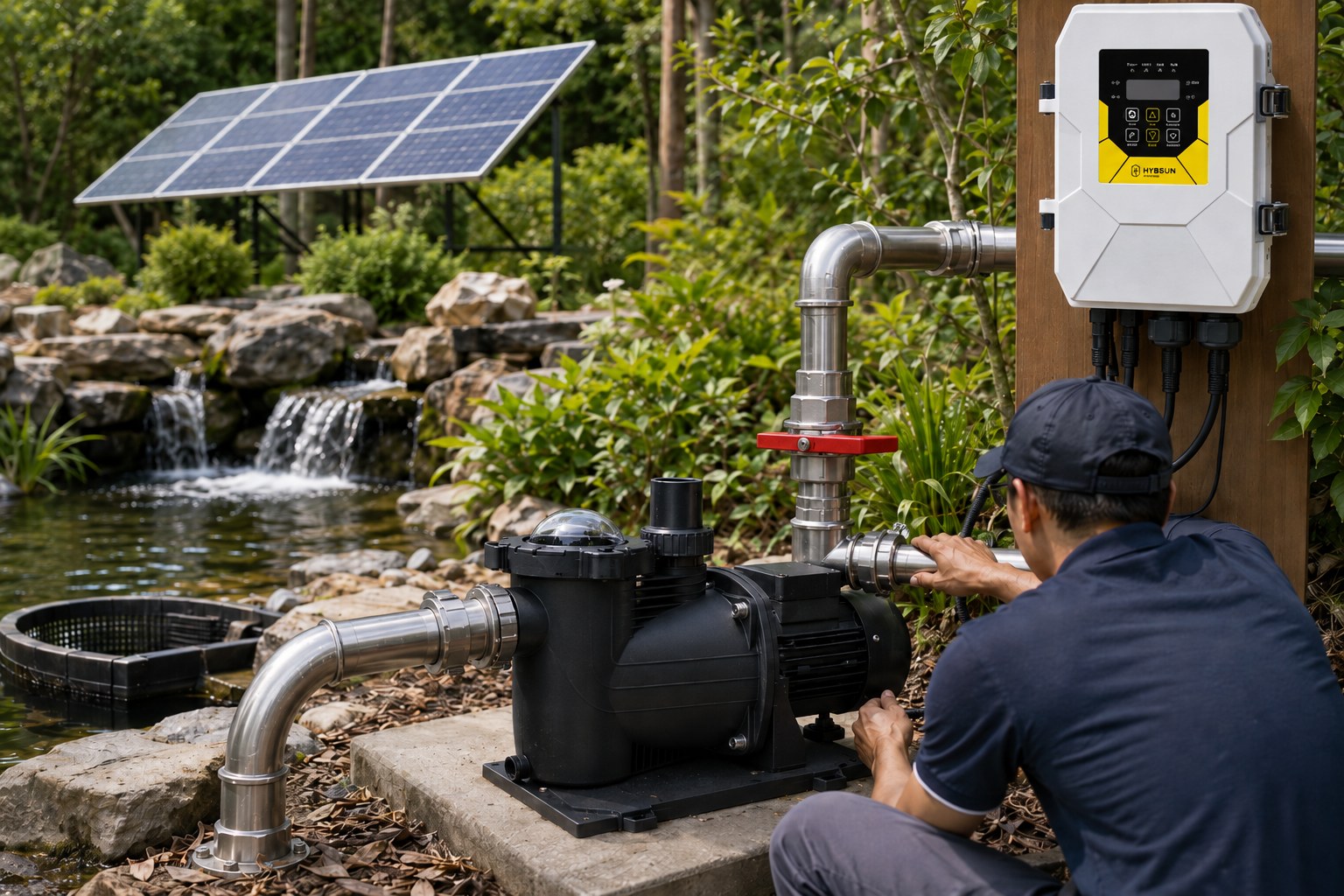
A solar pump uses a photovoltaic (PV) panel to absorb sunlight and convert it into DC electricity. This power runs a small, efficient motor inside the pump, which then circulates water through your pond, fountain, or filter system, creating a healthy and lively aquatic environment.
To truly understand their effectiveness, we need to look at the components that make up a modern solar pump system.
Each part plays a critical role in turning sunshine into a beautiful, healthy pond.
From the panel that catches the light to the motor that drives the flow, the system is a marvel of simple, eco-friendly engineering.
The Core Components
A solar pump system consists of three main parts.
-
The Solar Panel: This is the system's power plant. Most high-quality kits use monocrystalline solar panels, which have an efficiency rating of 18-22%. They are excellent at converting not just direct sunlight but also diffuse light on overcast days into usable energy.
-
The Motor: The heart of the pump is its motor. Modern solar pumps use brushless DC (BLDC) motors. These motors are incredibly efficient, with over 90% of the energy from the panel being converted into mechanical motion. They are also nearly silent and have a much longer lifespan than older brushed motors because there are no parts to wear out.
-
The Pump: The motor drives an impeller, which is a small rotor that pushes water. This is what creates the flow and pressure needed to run a fountain or circulate water.
| Component | Function | Key Feature to Look For |
|---|---|---|
| Solar Panel | Converts sunlight into electricity. | Monocrystalline (18-22% efficiency) |
| Motor | Powers the pump impeller. | Brushless DC (BLDC) for >90% efficiency |
| Pump Unit | Moves the water. | IP68 waterproof rating |
The Role of Battery Backup
A major limitation of early solar pumps was that they only worked when the sun was shining brightly.
Modern systems solve this problem with an integrated battery backup.
The solar panel charges the battery during peak sunlight hours.
Any excess power is stored.
When a cloud passes over or when night falls, the system automatically switches to battery power.
This ensures your pond receives consistent circulation, which is vital for ponds with fish that require constant oxygenation.
A typical lithium-ion battery can provide 4-8 hours of runtime after the sun goes down.
Advanced Controller Technology
The most sophisticated solar pump systems include an intelligent controller.
These controllers often feature Maximum Power Point Tracking (MPPT) technology.
An MPPT controller optimizes the match between the solar panel and the pump motor.
It can increase the power harvested from the panel by up to 30%, especially on cloudy days or during early morning and late afternoon.
Some advanced systems even offer AC/DC hybrid functionality.
These controllers have inputs for both the solar panel and a standard AC power source.
The system prioritizes solar power, but if solar energy is insufficient, it automatically supplements with or switches to AC power.
This guarantees 24/7 operation for critical applications without sacrificing the benefits of solar energy.
What Are The Advantages And Disadvantages Of Solar Water Pumps For Ponds?
Solar pumps seem like the perfect solution, but are there hidden downsides?
Like any technology, they have clear benefits and some limitations that you need to be aware of.
The primary advantages are zero running costs, complete energy independence, and simple, wire-free installation. The main disadvantages are a higher initial purchase price and performance that depends on available sunlight, though batteries help mitigate this.
Weighing the pros against the cons is the best way to decide if a solar pump is the right fit for your specific needs and location.
For many, the long-term savings and environmental benefits far outweigh the initial investment and potential for reduced flow on gloomy days.
Let's break them down in more detail.
The Unbeatable Pros
The benefits of going solar for your pond are compelling.
- 100% Eco-Friendly: Solar pumps run on clean, renewable energy. They produce zero carbon emissions, reducing your environmental footprint.
- Zero Running Costs: Once you've purchased the kit, the energy is free. A conventional 20-watt pump running 24/7 can use over 175 kWh of electricity per year. At an average cost of $0.30 per kWh, a solar pump saves you over $50 annually in electricity bills alone. Over the 3-5 year lifespan of the pump, this adds up to significant savings.
- Easy and Safe Installation: Since there are no electrical cables to run from your house, installation is a breeze. You don't need to hire an electrician or dig trenches across your lawn. The low-voltage DC power is also completely safe for fish, wildlife, and curious pets or children.
- Flexibility and Portability: You can place your pond or water feature anywhere in your garden, even hundreds of feet from a power outlet. The pump and panel are easy to move to optimize sun exposure or change your garden layout.
The Realistic Cons
It's also important to understand the limitations before you buy.
- Sunlight Dependent: The pump's performance is directly tied to the sun. On heavily overcast or rainy days, the flow rate can drop by 50-70% if you don't have a battery backup system. The pump will not run at night without a battery.
- Higher Initial Cost: A quality solar pump kit with a battery can cost two to three times more than a comparable traditional electric pump. For example, a 2500 LPH conventional pump might cost $280, while a solar equivalent could be over $700. You are paying for the panel, battery, and controller upfront.
- Power Limitations: Solar pumps are ideal for small to medium-sized ponds, typically up to around 5,000 liters. For very large ponds or powerful waterfalls that require flow rates over 10,000 LPH, a conventional high-voltage pump is often still the more practical choice.
Pros vs. Cons at a Glance
| Feature | Pros | Cons |
|---|---|---|
| Cost | No electricity bills, long-term savings. | Higher initial purchase price. |
| Installation | Simple, no wiring, can be placed anywhere. | Panel needs a sunny, unobstructed spot. |
| Performance | Quiet, reliable flow in sunlight. | Reduced flow on cloudy days, no night use without a battery. |
| Environment | 100% green energy, zero emissions. | Manufacturing of panels/batteries has an environmental cost. |
| Safety | Low voltage is safe for fish and family. | None. |
What Makes a Good Solar Pond Pump (Buying Guide)?
Ready to invest in a solar pump?
With so many models available, choosing the right one can feel overwhelming.
This guide will help you focus on the key factors.
A good solar pump features a high-efficiency monocrystalline panel, a durable brushless motor, and a flow rate that can circulate your pond's volume at least once per hour. For consistent performance and healthy fish, a model with an integrated battery backup is essential.
Selecting the right pump isn't just about picking the most powerful one.
It's about finding a balanced system where the panel, pump, and battery are perfectly matched to the size of your pond and your performance expectations.
Getting this right is the key to a successful and satisfying solar pond experience.
Sizing Your Pump Correctly
The two most important specifications to understand are flow rate and head height.
Flow Rate (LPH)
Flow rate, measured in Liters Per Hour (LPH), tells you how much water the pump can move.
A healthy pond needs good circulation.
A simple rule of thumb is to choose a pump with a flow rate equal to your pond's total volume.
This ensures the entire pond is circulated at least once every hour.
To calculate your pond's volume:
Volume (Liters) = Length (m) x Width (m) x Average Depth (m) x 1000
For ponds with fish or heavy plant life, aim for a pump that circulates the water twice per hour.
Head Height
Maximum Head Height is the maximum vertical distance the pump can push water.
If you are just circulating water within the pond, this is less critical.
However, if you want to create a fountain or power a waterfall, head height is crucial.
Keep in mind that the flow rate will decrease as the operating height increases.
A pump with a 2-meter max head might have a 1,000 LPH flow rate at ground level, but only 500 LPH at 1 meter of height, and zero flow at 2 meters.
Always check the manufacturer's performance chart to ensure the pump can deliver the flow you need at your desired height.
Key Features to Look For
Beyond the basic specs, several features separate a high-quality pump from a cheap one.
- Panel Type: Insist on a monocrystalline solar panel. They have a higher efficiency (18-22%) than polycrystalline panels (15-18%) and perform significantly better in low-light conditions.
- Motor Type: A brushless DC (BLDC) motor is non-negotiable. It ensures a longer lifespan (often over 20,000 hours), higher efficiency, and quieter operation.
- Battery Backup: For any pond with fish or for those who want nighttime operation, a built-in lithium-ion battery is a must. Check the battery capacity (measured in mAh or Wh) to understand its potential runtime.
- Materials and Durability: Look for a pump with an IP68 waterproof rating, meaning it's designed to be fully submerged. The housing and cables should be made from UV-resistant materials to prevent them from becoming brittle in the sun.
- Included Filter: Many kits come with a pre-filter box. This protects the pump from being clogged by debris and provides a surface for beneficial bacteria to grow, improving water quality.
Real-World Results — How Effective Are Solar Pond Pumps?
Theory and specifications are useful, but what do they mean in a real garden?
The performance of modern solar pumps is genuinely impressive, transforming ponds quickly and efficiently.
In practice, users report significant improvements in water clarity and a reduction in algae growth within just a few weeks of installation. The consistent, gentle circulation created by solar pumps fosters a stable, healthy ecosystem that benefits fish and attracts wildlife.
Let's move beyond the marketing claims and look at how these pumps perform under specific conditions, from the cold of winter to powering advanced water features.
We will also explore how the core technology in these pond pumps is scaling up to handle much bigger jobs.
Do Solar Pond Pumps Work in Winter?
Yes, they do, but with reduced effectiveness.
Solar panels can still generate electricity in cold weather, sometimes even more efficiently than in extreme heat.
The main challenge in winter is the reduced amount of sunlight.
Shorter days and a lower sun angle mean the pump will operate for fewer hours each day.
In climates where ponds freeze over, it is highly recommended to remove the pump and store it indoors.
This prevents the pump housing from cracking due to expanding ice, which can permanently damage the unit.
Are They Strong Enough for Waterfalls?
For small waterfalls and bubbling features, the answer is a definite yes.
Many solar pump kits are powerful enough to create a pleasing cascade over rocks.
However, you must choose a model with sufficient head height and flow rate.
For example, to create a decent flow over a 1-meter high waterfall, you would need a pump with a maximum head of at least 2 meters and a flow rate of 2,000-3,000 LPH.
For large, multi-tiered waterfalls, a higher-wattage (e.g., 50W to 100W) solar system or a conventional AC pump is generally required.
Beyond Ponds: Advanced Solar Pump Technology
The same core technology driving your pond pump—a high-efficiency BLDC motor paired with a solar panel—is also being used to provide water in some of the most demanding environments on Earth.
This demonstrates the power and reliability of the technology.
- Solar Screw Pumps: These pumps use a helical rotor to push water. They are designed for low flow but very high head, making them perfect for pulling water from deep wells (over 100 meters deep) for domestic use or livestock watering in off-grid areas.
- Solar Centrifugal Pumps: For applications needing higher flow rates, like farm irrigation, multi-stage centrifugal pumps are used. These can be fitted with durable plastic impellers for general use or stainless steel impellers for use in corrosive or alkaline water conditions, which are common in regions like Australia.
- The Power of BLDC Motors: Across all these applications, the BLDC motor is the star. Its efficiency (often >90%) means fewer solar panels are needed, reducing the system's cost and footprint. The motors are compact and lightweight—sometimes up to 47% smaller and 39% lighter than traditional motors—making installation far easier. Their maintenance-free design is a critical advantage in remote locations.
| Pump Type | Typical Use Case | Flow Rate | Head Height |
|---|---|---|---|
| Solar Pond Pump | Small Ponds, Fountains | Medium | Low |
| Solar Screw Pump | Deep Well Water Supply | Low | Very High |
| Solar Centrifugal Pump | Farm Irrigation, Large Tanks | High | Medium |
Conclusion
So, are solar pond pumps effective?
Absolutely.
They are an excellent, sustainable solution for aerating and beautifying small to medium ponds, offering reliable performance with zero running costs and minimal environmental impact.
FAQs
Can a solar pond pump run 24/7?
Only models with a battery backup can run continuously. They store solar energy during the day to operate through the night or on cloudy days.
How long do solar panels for pond pumps last?
The solar panels themselves can last for 20 years or more. The pump motor and battery typically have a lifespan of 3 to 5 years with regular maintenance.
Can a solar pump run a filter?
Yes, many solar pump kits are powerful enough to push water through an external filter box, providing both mechanical and biological filtration for a healthier pond.
Do solar fountains need direct sunlight?
For optimal performance, yes. While they can operate in diffuse light on overcast days, the flow rate will be significantly reduced without direct sun.
How do you clean a solar pond pump?
Simply unplug the pump from the panel, remove it from the water, and open the pre-filter case. Rinse the filter sponge and impeller under clean water to remove any debris.
What happens to a solar pump on a cloudy day?
Without a battery, the pump's flow will decrease or stop. With a battery, the pump will automatically switch to stored power and continue running normally.
Is a bigger solar panel better for a pond pump?
A bigger panel provides more power, which can increase flow and charge a battery faster. However, the panel's wattage should be matched to the pump's requirements for efficiency.
Are solar pumps safe for fish?
Yes, they are extremely safe. They run on low-voltage DC power, which poses no risk of electric shock to fish or other wildlife in the pond.