Struggling to move fluids efficiently?
Choosing the wrong pump leads to wasted energy, high maintenance costs, and operational downtime, eating into your profits and productivity.
The five main types of industrial pumps are Centrifugal, Screw, Diaphragm, Gear, and Peristaltic pumps. Each is designed for specific applications, handling different fluid viscosities, pressures, and flow rates. Understanding their unique functions is crucial for selecting the most efficient and cost-effective solution for your needs.
Choosing the right pump is more than a simple purchase.
It's a strategic decision that impacts your entire operation's efficiency, reliability, and cost-effectiveness.
Whether you're managing a large farm, a chemical processing plant, or a municipal water system, the pump you select must align perfectly with your specific requirements for flow, pressure, fluid type, and power source.
Let's explore the five most essential pump types to help you make an informed choice.
1. Centrifugal Pumps
Need to move large volumes of water or other low-viscosity fluids quickly?
A centrifugal pump might be your go-to solution, but its limitations with abrasives and sensitive liquids can cause unexpected problems and costs.
Centrifugal pumps use a rotating impeller to generate flow, making them ideal for high-volume, low-pressure applications like irrigation and water treatment. They are the most common type of pump used globally due to their simple design and high flow capacity.
Centrifugal pumps are the workhorses of the fluid transfer world.
They operate on a simple yet effective principle: an engine or motor rotates an impeller within the pump casing.
This rotation imparts kinetic energy to the fluid, forcing it outward by centrifugal force and into the discharge pipe.
Their design is optimized for high flow rates with low-viscosity fluids, such as water.
This makes them a top choice for applications ranging from municipal water distribution to large-scale agricultural irrigation.
However, this design also comes with significant trade-offs.
Strengths and Weaknesses
The primary advantage of centrifugal pumps is their ability to produce a smooth, non-pulsating flow at high rates.
They are generally more affordable upfront compared to other pump types of similar capacity.
Their simple construction often leads to lower maintenance requirements for clean fluid applications.
On the other hand, they are not one-size-fits-all.
The high rotational speed of the impeller can shear, or break down, sensitive liquids like emulsions or biological fluids.
Furthermore, they are highly susceptible to damage from abrasive particles and solids, which can rapidly erode the delicate impeller, leading to a performance drop of over 15% in a short time and eventual failure.
Flow rate is also closely tied to system pressure; any variation can push the pump off its Best Efficiency Point (BEP), drastically increasing energy consumption and wear.
Impeller Variations for Specific Needs
To address some of these limitations, especially in specialized fields like solar water pumping, manufacturers have developed variations in impeller design and material.
The choice of impeller is critical for tailoring a centrifugal pump to a specific environment.
- Solar Plastic Impeller Pumps: These pumps are designed for high flow and medium head, making them excellent for farm irrigation and pasture water supply. The engineered plastic impellers offer impressive resistance to fine sand and wear. They are lightweight and more economical, reducing initial investment and installation complexity. However, their durability is compromised in highly corrosive water or very deep wells where pressure and stress are high.
- Solar Stainless Steel Impeller Pumps: For demanding applications involving corrosive or alkaline water, stainless steel is the material of choice. These pumps feature SS304 or higher-grade stainless steel impellers and casings, providing superior corrosion resistance and a significantly longer service life—often lasting over 50% longer than plastic alternatives in harsh conditions. This makes them ideal for acidic water environments, coastal regions, and high-end residential water systems where reliability is paramount.
Comparing Impeller Materials
| Feature | Plastic Impeller Pump | Stainless Steel Impeller Pump |
|---|---|---|
| Primary Application | Farm irrigation, general water supply | Corrosive water, high-end homes |
| Flow Rate | High | High |
| Head (Pressure) | Medium | Medium to High |
| Corrosion Resistance | Moderate | Excellent (up to 60% better) |
| Sand Resistance | Good | Moderate |
| Cost | Lower | Higher (approx. 25-40% more) |
| Weight | Lightweight | Heavier |
| Service Life | Good | Excellent |
2. Screw Pumps
Are you dealing with deep wells or thick, viscous fluids?
A standard pump might fail or operate inefficiently, but a screw pump provides a powerful and reliable solution for these challenging conditions.
A screw pump is a type of positive displacement pump that uses one or more rotating screws to move fluids along an axis. It excels at generating very high pressure (head) at a low, constant flow rate, making it perfect for deep well water extraction and handling viscous liquids.
Screw pumps, also known as progressive cavity pumps, operate on a brilliantly simple concept.
A helical metal rotor turns within a flexible rubber stator.
This motion creates a series of sealed cavities that progress from the suction end to the discharge end, carrying the fluid with them.
This mechanism allows the pump to move fluid gently and at a constant rate, regardless of the discharge pressure.
This positive displacement action is fundamentally different from the velocity-based principle of a centrifugal pump.
It's what gives the screw pump its unique capabilities.
The High-Head, Low-Flow Specialist
The defining characteristic of a screw pump is its ability to produce an exceptionally high head.
This means it can push water from great depths, making it an invaluable tool for domestic water supply and livestock watering in regions with deep water tables, such as parts of Africa and Latin America.
While a centrifugal pump's flow drops dramatically as head increases, a screw pump maintains a steady flow rate.
This reliability is crucial for providing consistent water access.
However, this specialization comes with a limitation: screw pumps inherently have a lower flow rate compared to centrifugal pumps of a similar size.
They are designed for pressure, not volume, making them less suitable for large-scale irrigation that requires moving massive amounts of water.
Superior Solids and Sand Handling
One of the most significant advantages of a screw pump is its remarkable resistance to abrasives.
The rubber stator and the design of the cavities allow the pump to handle water with high concentrations of sand and silt without the rapid wear and tear that would destroy a centrifugal pump's impeller.
This durability makes it the ideal choice for wells in harsh water conditions where other pumps would fail in months, not years.
The main vulnerability of a screw pump is running dry.
The fluid being pumped is essential for lubricating the contact surfaces between the rotor and stator.
Operating without fluid for even a short period can cause friction to build up, generating enough heat to destroy the stator and leading to catastrophic failure and costly repairs.
Screw Pump vs. Centrifugal Pump for Deep Wells
| Feature | Screw Pump | Centrifugal Pump (Multi-stage) |
|---|---|---|
| Operating Principle | Positive Displacement | Dynamic (Centrifugal Force) |
| Best For | High Head, Low Flow | Medium Head, High Flow |
| Deep Well Performance | Excellent (maintains flow at depth) | Good (but flow drops with depth) |
| Sand Handling | Excellent | Poor to Fair (requires special impellers) |
| Dry Run Tolerance | Very Low (catastrophic failure) | Low (can damage seals and motor) |
| Efficiency at High Head | High | Decreases as head increases |
3. Diaphragm Pumps
Tired of pumps that leak, can't handle solids, or get damaged by running dry?
These common frustrations lead to constant maintenance and unexpected downtime, disrupting your entire operation.
Diaphragm pumps are a type of positive displacement pump that uses a flexible diaphragm and check valves to move fluid. Their seal-less design allows them to run dry, self-prime, and handle abrasive and shear-sensitive fluids without damage, making them incredibly versatile and reliable.
Diaphragm pumps offer solutions to many of the most common problems found in other pump types.
Instead of rotating impellers or gears, they use a reciprocating diaphragm that moves back and forth.
On the backstroke, the diaphragm creates a vacuum, pulling fluid into the pump chamber through an inlet check valve.
On the forward stroke, it pushes the fluid out through an outlet check valve.
This simple, robust mechanism is the key to its versatility.
Modern electric-operated double diaphragm (EODD) pumps have further enhanced these benefits by replacing inefficient compressed air systems with highly efficient electric motors.
A Pump That Protects Itself
One of the most remarkable features of a diaphragm pump is its inherent durability.
- Runs Dry: Because there are no tight-fitting rotating parts that require fluid for lubrication, a diaphragm pump can run dry indefinitely without damaging the system. This avoids expensive repairs caused by an empty supply tank or a blocked intake.
- Stalls Under Pressure: If the discharge line becomes clogged or a valve is accidentally closed, a diaphragm pump will simply stall under the back pressure. It will stop pumping without damaging the motor or the pump itself. Once the blockage is cleared, it restarts automatically. This eliminates the need for complex pressure sensors and bypass systems, which add cost and failure points.
- Self-Priming: Diaphragm pumps have excellent suction lift and can self-prime from a dry start, meaning they can lift fluid from below the pump level without needing to be manually filled first.
Unmatched Fluid Compatibility
The seal-less design of a diaphragm pump is a major advantage.
Traditional pumps rely on expensive and fragile mechanical seals to prevent leaks around the rotating shaft.
These seals are common failure points, especially with abrasive or corrosive fluids.
A diaphragm pump has no rotating seals, eliminating this problem entirely.
This makes it exceptionally good at handling a wide range of materials.
It can easily pump abrasives and solids that would destroy other pumps.
The gentle, low-shear pumping action also makes it perfect for transferring sensitive liquids like paints, foods, and chemicals without altering their composition.
Modern EODD pumps offer energy-efficient electric drives that can reduce energy consumption by up to 80% compared to traditional air-operated diaphragm pumps (AODDs), making them both environmentally friendly and cost-effective.
4. Gear Pumps
Do you need to pump high-viscosity fluids like oils, fuels, or syrups with precision?
Many pumps struggle with thick liquids, losing efficiency and failing to deliver a consistent flow.
Gear pumps are compact positive displacement pumps that use the meshing of gears to move fluid. They are renowned for their ability to handle high-viscosity liquids at high pressures and temperatures, delivering a smooth, pulse-free flow perfect for hydraulic systems and chemical dosing.
Gear pumps operate through the action of two or more rotating gears.
As the gears rotate, they separate on the intake side of the pump, creating a vacuum that draws fluid into the chamber.
The fluid is then trapped in the pockets between the gear teeth and the pump casing.
As the gears continue to rotate, they carry the fluid around the outside of the chamber to the discharge side.
Here, the teeth of the gears mesh back together, forcing the fluid out of the pump.
This design provides a precise and continuous flow that is directly proportional to the rotational speed of the gears.
The High-Viscosity Champion
The core strength of a gear pump is its effectiveness with viscous fluids.
While centrifugal pumps lose efficiency dramatically as fluid thickness increases, gear pumps thrive.
The tight clearances between the gears and the casing ensure that even thick oils and polymers are moved efficiently.
They can operate at high pressures, making them a common choice for powering hydraulic equipment.
Their ability to provide a constant, non-pulsating flow is also critical in applications like fuel injection and metering, where precision is essential.
The Trade-Off: Maintenance and Abrasives
Despite their strengths, gear pumps have notable disadvantages.
Their design is mechanically complex, with many moving parts and tight tolerances.
This complexity leads to higher maintenance costs, and spare parts can be expensive.
Those same tight clearances that make them great for viscous fluids also make them extremely vulnerable to abrasive particles.
Even small amounts of grit or solids in the fluid can cause rapid wear on the gear teeth and casing, leading to a loss of efficiency and eventual failure.
This means they are only suitable for pumping clean, filtered liquids.
Furthermore, due to their compact design, most gear pumps are not suitable for applications requiring very large bulk flow rates.
They are specialists in precision and pressure, not massive volume.
Gear Pump Performance Characteristics
| Feature | Performance | Reason |
|---|---|---|
| Viscosity Handling | Excellent | Tight clearances efficiently move thick fluids. |
| Pressure Capability | High | Positive displacement action forces fluid against resistance. |
| Flow Consistency | Excellent (Pulse-Free) | Continuous action of rotating gears provides a smooth output. |
| Abrasive Tolerance | Very Poor | Tight clearances are quickly damaged by solids. |
| Maintenance Cost | High | Complex design and expensive precision parts. |
| Bulk Flow Rate | Low to Medium | Compact design limits the maximum volume per revolution. |
5. Peristaltic Pumps
Are you working with sterile, corrosive, or highly sensitive fluids where contamination is not an option?
Traditional pumps with seals and moving parts in the fluid path pose a constant risk of leaks, contamination, and material degradation.
Peristaltic pumps, also known as hose pumps, are a unique type of positive displacement pump where the fluid is contained entirely within a flexible tube. Rotating rollers or "shoes" compress the tube, creating a moving pocket of fluid, ensuring it never touches any mechanical parts.
Peristaltic pumps offer the ultimate in fluid isolation.
Their operating principle is similar to how the human digestive system moves food.
A flexible tube is fitted inside a circular pump casing.
A rotor with a series of rollers, shoes, or wipers rotates, squeezing the tube.
This compressive action, called peristalsis, forces the fluid inside the tube to move from the inlet to the outlet.
When the roller passes, the tube returns to its original shape, creating a vacuum that draws more fluid in.
Because the fluid is completely contained within the tube, it is the only part that needs to be compatible with the material being pumped.
The Ultimate in Purity and Safety
The primary advantage of a peristaltic pump is its exceptionally hygienic and sanitary design.
- No Contamination: The fluid never contacts the pump's mechanical components. This eliminates any risk of contamination from the pump to the fluid, or from the fluid to the environment. This is critical in medical applications like IV fluid delivery, pharmaceutical production, and food processing.
- No Seals, No Leaks: With no seals to wear out or fail, the risk of leaking hazardous or expensive chemicals is virtually eliminated. The only potential failure point is the tube itself.
- Low Shear: The gentle squeezing action is ideal for handling shear-sensitive fluids, such as live cells in biotechnology or flavor-rich liquids in the food industry, without damaging them.
The High-Maintenance Reality
While peristaltic pumps solve many problems, they introduce a new one: high maintenance costs associated with the tube.
The constant compression and relaxation of the tube causes it to wear out over time.
This fatigue is accelerated when pumping abrasive fluids, which can erode the inner wall of the tube.
Therefore, the hose becomes a consumable part that requires frequent and scheduled replacement to prevent a rupture.
A hose failure can be catastrophic, leading to costly spills, process contamination, and significant downtime.
Additionally, peristaltic pumps generally have limitations on flow rate and pressure compared to other pump types, and their physical footprint can be quite large for the flow they produce.
Beyond the Pump: Smart Control Systems
The pump itself is only one part of an efficient water system.
The motor that drives it and the controller that manages it are just as critical for performance, reliability, and cost-effectiveness.
The Power Behind the Pump: BLDC Motors
The heart of a modern, high-efficiency pump is its motor.
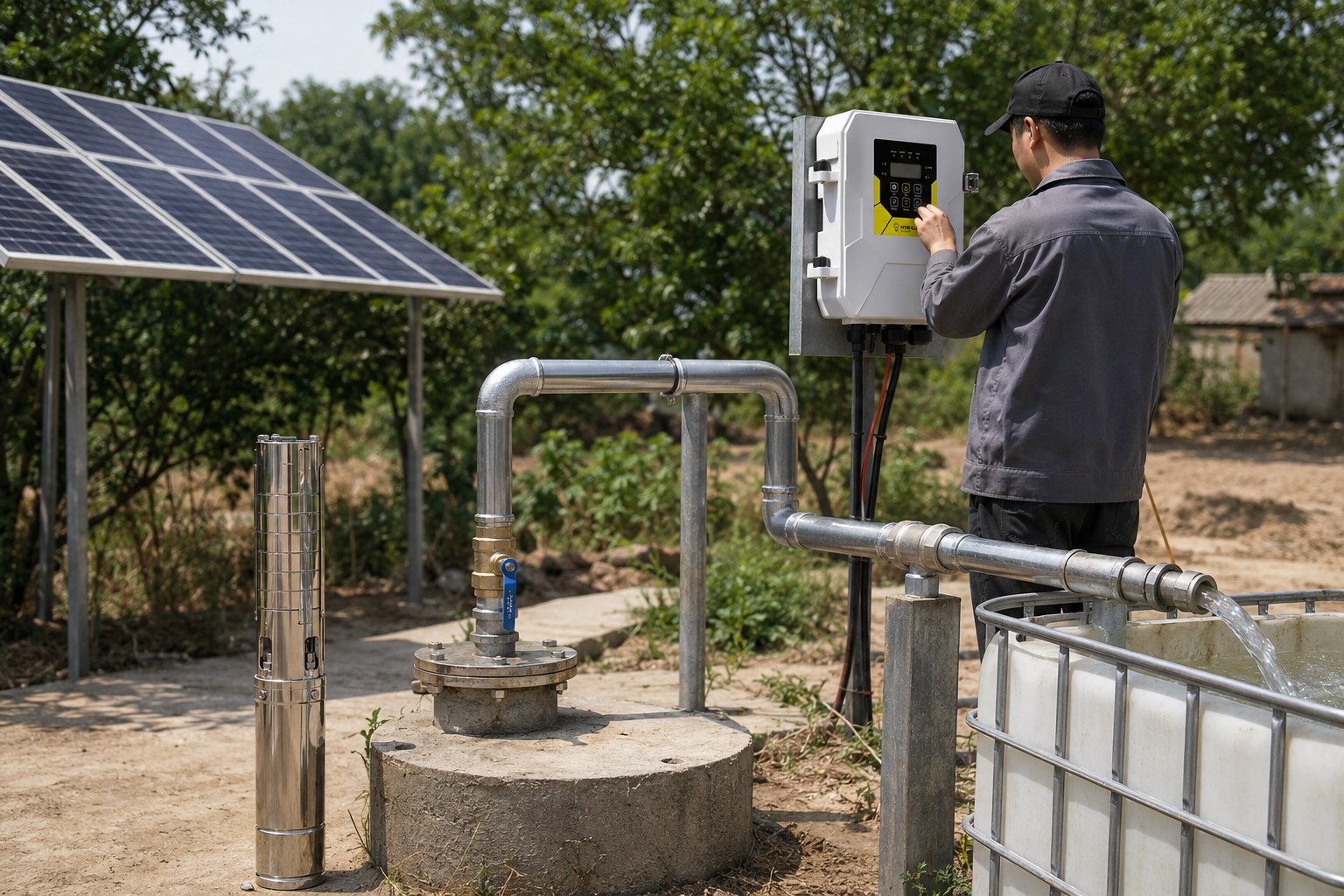
Brushless DC (BLDC) permanent magnet motors have become the gold standard, especially for solar-powered applications.
These motors offer efficiencies exceeding 90%, a significant improvement over traditional AC or brushed DC motors.
This high efficiency is crucial in solar pumping, as it means more water can be pumped with fewer solar panels, reducing the initial system cost by up to 25%.
Advanced BLDC motors are also significantly smaller and lighter—often up to 47% smaller and 39% lighter than their conventional counterparts.
This makes installation easier and less expensive, a key factor in remote, off-grid locations.
Maximizing Every Ray of Sunlight: MPPT Controllers
An intelligent controller is the brain of the solar pump system.
Maximum Power Point Tracking (MPPT) controllers are designed to continuously monitor the voltage and current from the solar panels.
They adjust the electrical input to the pump to ensure the panels are always operating at their peak efficiency, or "maximum power point."
This technology can boost the water output of a solar pump system by as much as 30% over the course of a day compared to systems without MPPT.
Ensuring 24/7 Water Access: Hybrid AC/DC Systems
For applications that require water around the clock, reliance on solar power alone is not enough.
Hybrid AC/DC controllers solve this problem by providing dual power inputs.
The controller automatically prioritizes solar power whenever the sun is shining, maximizing the use of free energy.
When solar energy is insufficient due to clouds or at night, the controller can seamlessly blend in power from an AC grid source or a generator.
When there is no solar input at all, it automatically switches over to the AC source.
This intelligent power management ensures a reliable, uninterrupted water supply 24 hours a day without any manual intervention.
Conclusion
Choosing the right pump requires matching the pump's design to your specific needs for flow, pressure, fluid type, and power source, ensuring optimal efficiency and long-term reliability.
FAQs
What are the 2 main types of pumps?
The two primary classifications are dynamic pumps, like centrifugal pumps, which use velocity to create pressure, and positive displacement pumps, which trap and move fixed amounts of fluid.
What is the most common type of pump?
Centrifugal pumps are the most common type used across the globe. Their simple design makes them effective and affordable for moving large volumes of low-viscosity fluids like water.
Which pump is best for high pressure?
Positive displacement pumps, such as piston, screw, or gear pumps, are best for high-pressure applications. They are designed to move fluid against significant resistance without a major loss in flow.
What is the difference between a pump and a motor?
A motor converts electrical or chemical energy into mechanical motion. A pump is a machine that uses this mechanical motion to move fluids (liquids or gases) from one place to another.
How do I choose a water pump?
To choose a pump, consider the required flow rate (GPM), total head or pressure (psi), the type of fluid, its viscosity, and the available power source (AC, DC, solar).
What is a self-priming pump?
A self-priming pump can evacuate air from its suction line and create the necessary vacuum to start lifting fluid without needing to be manually filled with liquid before operation.
What is pump head?
Pump head is the height that a pump can raise a fluid against gravity. It's a measure of the pressure a pump can generate, often expressed in feet, meters, or PSI.
Can I pump hot water with any pump?
No, pumping hot water requires a pump built with materials that can withstand high temperatures without warping or failing. Standard pumps may have seals and components that degrade quickly with heat.