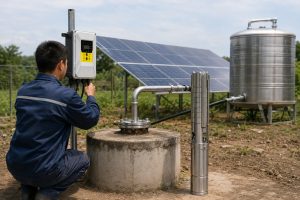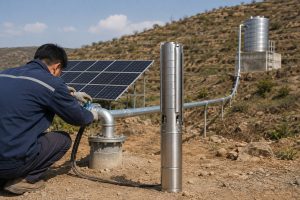
Struggling with inconsistent water pressure or an unreliable water supply?
Choosing the wrong pump can lead to frustration and wasted money.
The best water pump for home use depends entirely on your specific needs. For deep wells, a submersible pump is ideal. For low pressure, a booster pump is the solution. For off-grid applications, solar-powered pumps offer unmatched efficiency and independence.
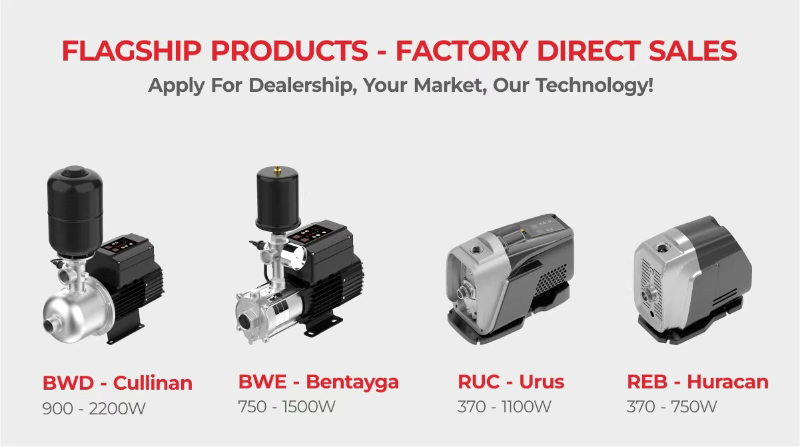
Finding the right water pump can feel overwhelming with so many options available.
Each type is designed for a specific job, from pulling water from deep underground to boosting the pressure in your shower.
Understanding the core differences between these pumps is the first step toward making an informed decision that ensures a reliable and efficient water system for your home.
This guide will break down the most common types of water pumps, highlighting their strengths, ideal applications, and the technology that powers them, so you can choose with confidence.
Submersible Pumps: The Deep Well Solution
Need to draw water from a deep well or borehole?
A surface pump just won't cut it, often failing to provide the necessary lift and pressure.
Submersible pumps are the superior choice for deep water sources. Placed directly within the well, they push water to the surface, making them far more efficient and reliable than pumps that have to pull water up.
Submersible pumps are the unsung heroes of many residential water systems, especially in rural and off-grid areas.
Because they operate below the water's surface, they don't need to be primed and are exceptionally quiet.
Their design allows them to deliver water from significant depths, often exceeding hundreds of feet, with consistent pressure.
The real innovation in this space, however, is the integration of solar power, which has created a new class of highly efficient and sustainable submersible pumps.
How Solar Submersible Pumps Revolutionize Water Access
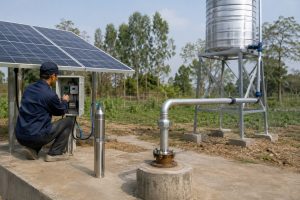
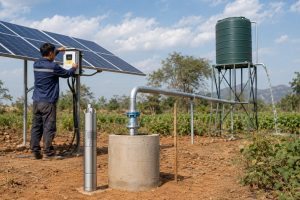
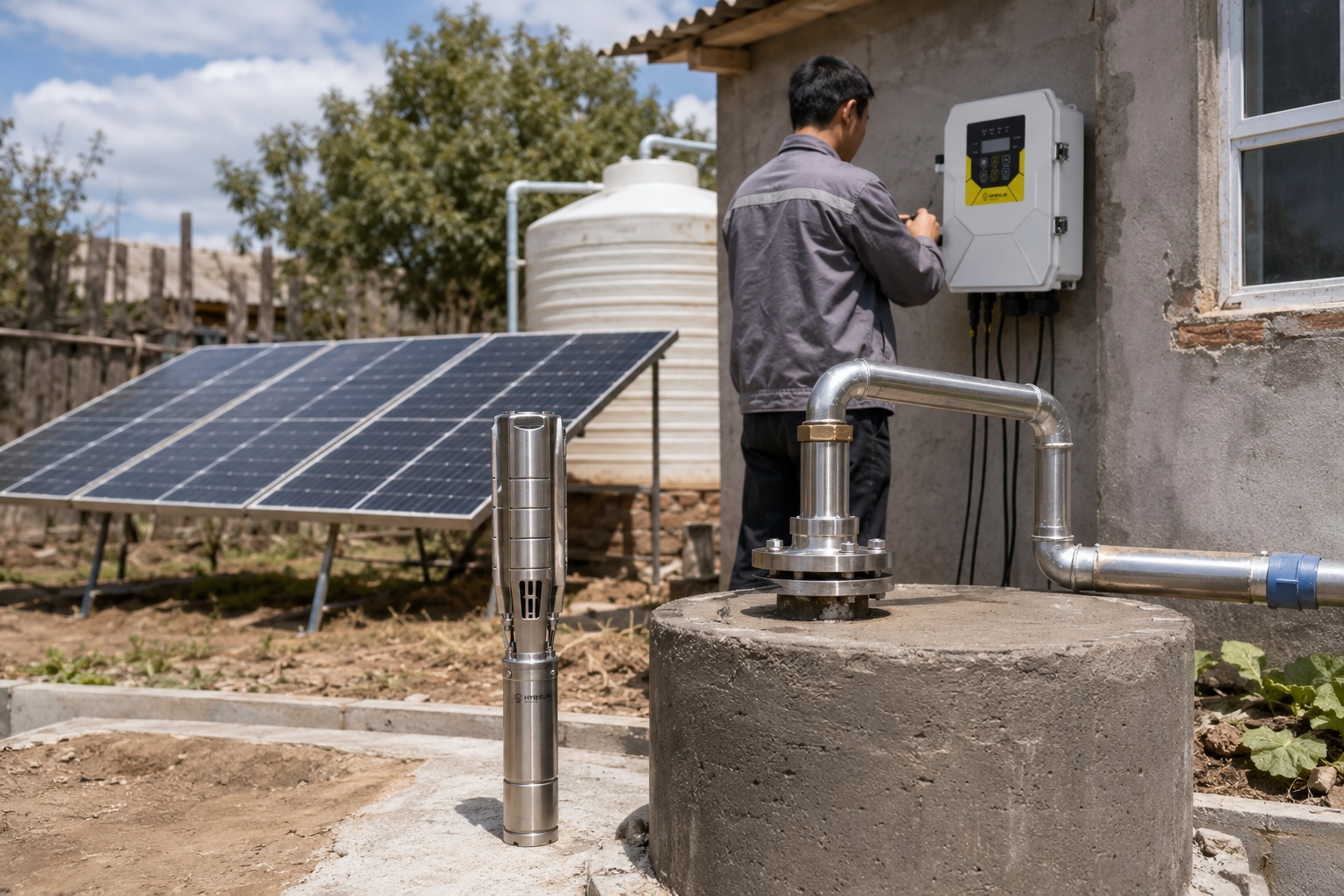
Solar submersible pumps operate independently of the electrical grid, making them a game-changer for remote homes, farms, and communities.
They harness the power of the sun to provide a steady supply of water for domestic use, livestock, and irrigation.
The core of these systems is a high-efficiency motor designed to make the most of every watt of solar energy.
Let's explore the three most popular types.
Key Solar Submersible Pump Types
The best solar submersible pump for you depends on your specific water needs, such as flow rate and well depth.
| Pump Type | Flow Rate | Head (Pressure) | Key Advantage | Ideal Application |
|---|---|---|---|---|
| Solar Screw Pump | Low | Very High | Handles sand and silt well | Deep wells, domestic water, livestock in Africa & Latin America |
| Solar Plastic Impeller | High | Medium | High wear resistance, economical | Farm irrigation, pasture water supply, gardens in Africa & Americas |
| Solar SS Impeller | High | Medium-High | Superior corrosion resistance | Acidic/alkaline water, high-end homes in Australia & Americas |
Deep Dive: Comparing Solar Pump Technologies
Solar Screw Pumps are perfect for challenging well conditions.
They use a stainless steel screw rotating within a rubber stator.
This mechanism acts like a corkscrew, pushing water upwards through compression.
While this design provides a lower flow rate, it generates an incredibly high head, capable of lifting water from wells over 300 meters deep.
Their biggest advantage is their tolerance for sand and sediment, which would quickly damage other pump types.
This makes them a durable, low-maintenance solution for areas with poor water quality.
Solar Plastic Impeller Pumps are the workhorses for applications requiring high water volume.
These are multi-stage centrifugal pumps equipped with durable, wear-resistant plastic impellers.
They deliver an impressive flow rate at a medium head, making them ideal for irrigating small farms, watering large gardens, or supplying water to livestock pastures.
Their lightweight construction and cost-effective design have made them widely popular, offering an excellent balance of performance and value, especially for agricultural users who need to move a lot of water efficiently.
Solar Stainless Steel (SS) Impeller Pumps represent the premium option for durability and longevity.
Using SS304 stainless steel for both the impeller and pump body, these pumps are built to withstand corrosive water environments.
They are the go-to choice for regions with acidic or alkaline water, such as in parts of Australia or the Americas.
While they have a higher initial cost, their exceptional resistance to corrosion ensures a much longer service life and higher reliability, protecting the investment for high-end homes, ranches, and critical water supply systems.
Booster Pumps: The Ultimate Pressure Fix
Tired of weak showers and faucets that take forever to fill a pot?
Living with low water pressure is a daily frustration that impacts your entire home.
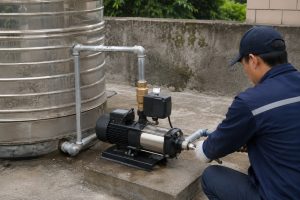
Automatic booster pumps are the definitive solution for low water pressure. They amplify the existing water flow, ensuring strong, consistent pressure at every faucet, shower, and appliance in your home.
A booster pump works by taking the incoming water from your municipal supply or storage tank and increasing its pressure before it travels through your home's plumbing.
This ensures a satisfying and functional water experience, from a powerful shower spray to a washing machine that fills quickly.
Modern booster pumps have evolved significantly, moving beyond simple on/off models to intelligent systems that offer superior performance and efficiency.
The two main types you'll encounter are traditional automatic pumps with pressure tanks and advanced VFD smart pumps.
When Do You Need a Booster Pump?
You likely need a booster pump if you experience:
- Weak shower pressure.
- Faucets that produce a slow trickle.
- Appliances like dishwashers or washing machines taking a long time to fill.
- Noticeable pressure drops when multiple taps are used simultaneously.
- Living in a multi-story home where upper floors have weaker pressure.
Traditional vs. VFD Smart Pumps
Choosing the right type of booster pump is crucial for achieving the desired results and long-term savings.
| Feature | Traditional (with Pressure Tank) | VFD Smart Pump |
|---|---|---|
| Pressure Control | On/Off switch, pressure fluctuates | Constant pressure, adjusts to demand |
| Energy Efficiency | Runs at 100% speed, higher consumption | Varies speed, saves up to 80% energy |
| Noise Level | Louder, frequent start/stop cycles | Significantly quieter, smooth operation |
| Pump Lifespan | More wear from frequent cycles | Longer lifespan due to soft starts |
| Plumbing Protection | Can cause water hammer | Eliminates water hammer |
The VFD Smart Pump Advantage
Automatic Booster Pumps with Pressure Tanks have been the standard for years.
They use a pressure switch to turn the pump on when pressure drops below a set point and off when it reaches the upper set point.
The small pressure tank stores a reserve of pressurized water to reduce the number of times the pump needs to cycle, which helps reduce wear and tear.
While reliable and effective, this system results in noticeable pressure fluctuations as the pump cycles on and off.
VFD (Variable Frequency Drive) Smart Pumps represent a major leap forward in booster technology.
Instead of a simple on/off switch, a VFD pump uses a sophisticated controller to adjust the motor's speed in real-time based on water demand.
When you turn on a faucet, the pump starts softly and speeds up just enough to maintain a perfectly constant pressure.
If you turn on another faucet, the pump instantly increases its speed to meet the new demand without any pressure drop.
This not only provides a superior user experience but also leads to massive energy savings—often between 30% and 60%—because the pump only uses the exact amount of energy needed.
Furthermore, the soft start and stop functionality dramatically reduces mechanical stress, extending the pump's lifespan and protecting your plumbing from the damaging effects of water hammer.
The Power Behind the Pump: Motors and Controllers
A pump is just a metal casing without its engine.
Are you sure your pump's motor isn't an energy hog, driving up your electricity bills?
The motor is the heart of any water pump, and its efficiency dictates overall performance. High-efficiency motors, like the BLDC permanent magnet type, can boost pump system efficiency to over 90%, drastically reducing operating costs.
When selecting a water pump, buyers often focus on flow rate and pressure, but the motor and controller are where the real long-term value and performance gains are found.
An inefficient motor can waste a significant amount of electricity, turning it into heat instead of pumping power.
This is especially critical for solar pumps, where every watt counts.
The combination of an advanced motor and an intelligent controller creates a pumping system that is not only powerful but also smart, adaptable, and incredibly cost-effective over its lifetime.
The BLDC Motor Advantage
The core power source for today's most competitive solar pumps is the BLDC (Brushless DC) permanent magnet motor.
These motors are a marvel of engineering, offering efficiencies that regularly exceed 90%.
This is a stark contrast to traditional AC or brushed DC motors, which often operate at 50-70% efficiency.
The rotor in a high-end BLDC motor is made from powerful materials like 40SH neodymium iron boron magnets.
This design delivers high torque and strong power in a compact form factor—often 47% smaller and 39% lighter than conventional motors.
For an end-user, this means a more powerful pump that requires fewer solar panels to run, directly lowering the initial system cost and simplifying installation.
Their brushless design also means there are no brushes to wear out, resulting in a maintenance-free, long-service-life motor.
The Intelligent Controller: The Brain of the System
If the motor is the heart, the controller is the brain.
Modern pump controllers do much more than just turn the pump on and off.
MPPT (Maximum Power Point Tracking) is a key feature in solar pump controllers.
It constantly analyzes the output from the solar panels and adjusts the electrical load to extract the maximum amount of power possible.
An effective MPPT controller can boost the water output of a pump by up to 30% over the course of a day compared to a system without it.
Hybrid AC/DC Controllers offer the ultimate in reliability and convenience.
These advanced controllers are designed with dual power inputs, allowing you to connect both solar panels and an AC power source (like the grid or a generator) simultaneously.
The controller's logic prioritizes solar power whenever it's available.
If sunlight is insufficient, it can blend AC power with the available solar power to maintain operation.
When there is no solar input at all, such as at night or on very cloudy days, it automatically switches over to the AC source.
This ensures a worry-free, 24/7 water supply without any manual intervention.
Specialty Pumps for Specific Home Needs
Facing a flooded basement or a clogged drainage line?
Using a standard water pump for these jobs can lead to quick failure and a bigger mess.
Specialty pumps, such as sewage, trash, and sludge pumps, are purpose-built for tough conditions. They are engineered to handle the solids, debris, and corrosive liquids that would instantly destroy a regular pump.
Not all water is clean.
Sometimes you need to move water that is filled with mud, leaves, sewage, or other solids.
These situations call for a pump that is built with durability and non-clog performance in mind.
Specialty pumps feature robust construction, often using cast iron, and specialized impeller designs to pass solids without jamming.
Understanding which specialty pump to use is key to resolving tough water problems effectively and safely.
Sewage and Grinder Pumps
These are essential for homes with basement bathrooms or laundry rooms located below the main sewer line.
A sewage pump is designed to pass soft solids up to 2 inches in diameter.
For applications with more demanding waste, a grinder pump is required.
It features a cutting mechanism, much like a garbage disposal, that macerates all wastewater and solids into a fine slurry before pumping it out.
This prevents clogs and allows the waste to be transported through smaller-diameter pipes over longer distances.
Trash and Diaphragm Pumps
When you need to dewater a flooded construction site, a muddy pond, or any area with standing water containing hard solids like sticks, gravel, and other debris, a trash pump is the right tool.
They are a type of centrifugal pump but with a specially designed "vortex" impeller that is recessed from the flow path.
This design allows solids to pass through the pump housing without coming into contact with the impeller, minimizing clogs and wear.
A diaphragm pump, on the other hand, is a positive displacement pump that is excellent for handling mud, slurries, and water with very high solids content.
It can even run dry without damage, making it a rugged choice for the most challenging dewatering jobs.
Sump Pumps: Your Basement's First Line of Defense
A sump pump is a specific type of submersible pump designed to prevent basement flooding.
It sits in a specially constructed pit, or "sump," in the lowest part of a basement or crawlspace.
When groundwater levels rise and water enters the sump pit, a float switch automatically activates the pump, which then discharges the water away from the home's foundation.
A reliable sump pump is a must-have for any home in an area with a high water table or heavy rainfall, providing peace of mind and protection against catastrophic water damage.
Conclusion
Choosing the right pump means matching the technology to your need.
Whether it's a solar submersible, a VFD booster, or a specialty trash pump, the best choice delivers efficiency, reliability, and long-term value.
FAQs
What is the most reliable water pump brand?
The most reliable brands focus on quality materials, motor efficiency, and strong warranties.
True reliability comes from matching the right pump type and size to your specific application.
Which water pump is best for home use?
It depends on the job.
Use a submersible pump for a well, a booster pump for low pressure, and a sump pump to prevent basement flooding.
Are smart water pumps worth it?
Absolutely.
VFD or "smart" pumps provide constant pressure, save significant energy (30-60%), and extend pump life, offering excellent long-term value despite a higher initial cost.
What size water pump do I need for my house?
Sizing depends on your required flow rate (GPM) and pressure (PSI).
Consider the number of bathrooms and water-using appliances.
Consulting a professional is recommended for accuracy.
How long should a home water pump last?
A quality, properly installed water pump can last 8 to 15 years.
Lifespan is affected by run time, water quality, and regular maintenance.
Can a solar pump work without batteries?
Yes, most modern solar pump systems are designed to run directly from solar panels during sunny hours.
Batteries can be added for storage to allow for nighttime or cloudy-day operation.
What is the difference between a submersible and a jet pump?
A submersible pump is placed inside the well and pushes water up.
A jet pump is installed on the surface and pulls water up, making it suitable only for shallow wells (less than 25 feet).
How do I choose between a screw pump and an impeller pump for my well?
Choose a screw pump for very deep wells or water with high sand content.
Choose an impeller pump for higher flow rates in wells with cleaner water.