Is it cheaper to repair or replace a well pump?

Your well pump stopped working, leaving you without water.

Now you face a tough choice: a potentially quick repair or a costly full replacement.

Deciding whether to repair or replace your well pump depends on its age, the type of problem, and the cost.

Repairing is often cheaper for new pumps with minor issues, costing $250 to $1,100.

Replacement is a better long-term investment for older pumps or major failures, costing $975 to $2,575 on average.
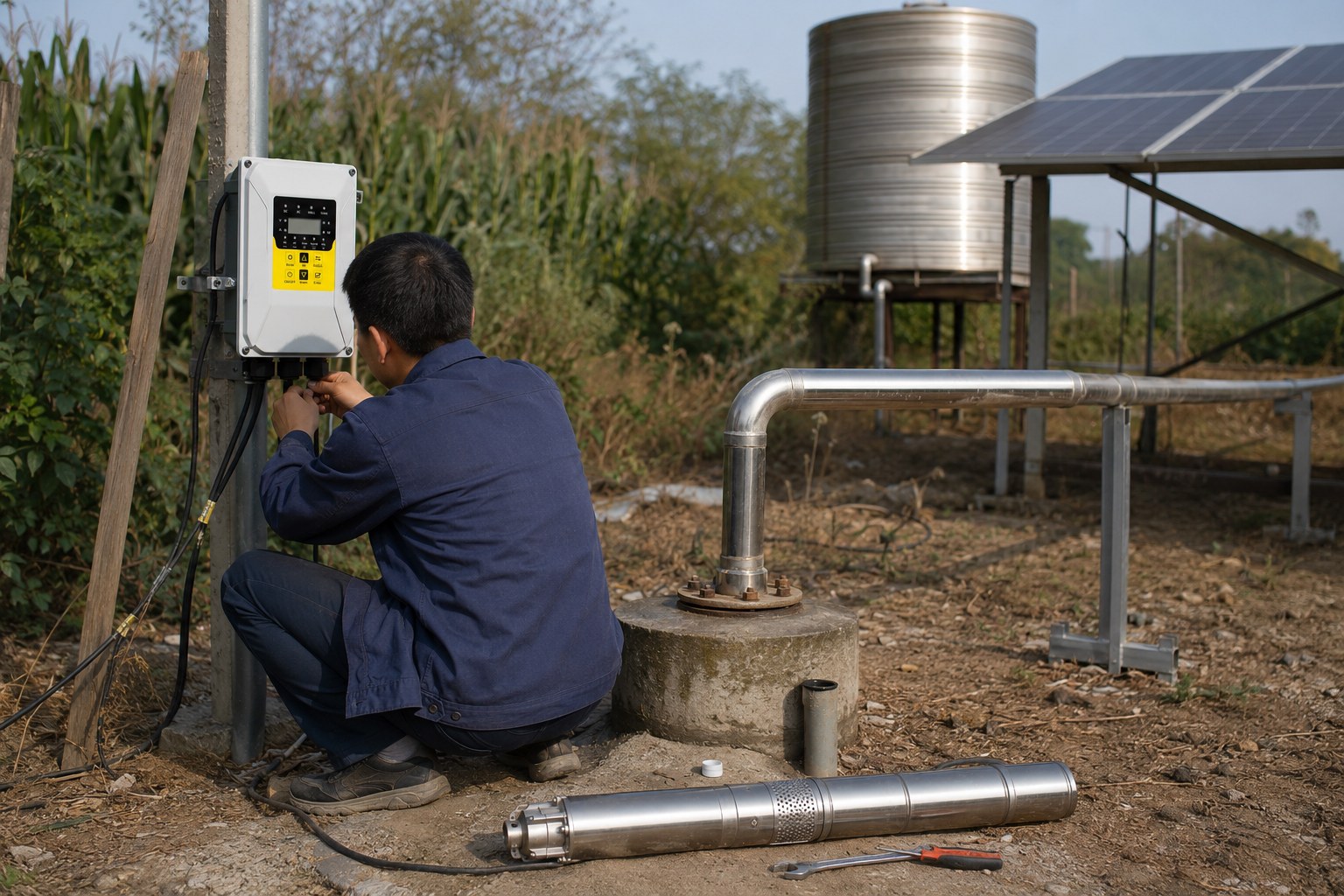
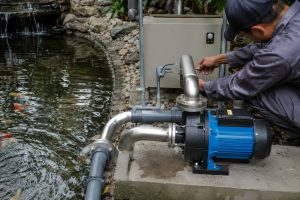
A technician inspecting a well pump system

This guide will break down the costs, signs of failure, and technology options.

It will help you make an informed financial decision for your home's water system.

We will explore everything from average costs to the latest in pump technology.

This ensures you understand all your options before you spend any money.

Average Cost of Well Pump Replacement

Your well pump is essential, but what happens when it breaks?

You need to understand the potential cost to budget effectively and avoid surprises.

The national average cost to replace a well pump is approximately $1,775.

Most homeowners will spend between $975 and $2,575 for a standard replacement project.

However, costs can be as low as $200 for a simple hand pump or exceed $5,000 for a high-end system.

Understanding the Cost Breakdown

The total price of a well pump replacement isn't just the pump itself.

It is a combination of materials, labor, and sometimes other system components.

A significant portion of the cost comes from professional labor.

Plumbers or well specialists charge between $45 and $150 per hour.

For a typical replacement, labor costs alone can range from $250 to $700.

The pump itself is the other major expense.

The price of the pump varies dramatically based on its type, power, and brand.

Cost Component Typical Price Range Percentage of Total Cost (Approx.)
Well Pump Unit $200 – $2,000+ 30% - 60%
Professional Labor $250 – $1,500 25% - 50%
Additional Materials (Piping, Wiring) $100 – $500 5% - 15%
Potential Pressure Tank $300 – $1,000 10% - 25%

Extreme Low-End vs. High-End Costs

Why is the price range so wide?

The simplest projects involve replacing a shallow well pump with easy access.

In this case, you might only pay a few hundred dollars.

For example, replacing a small, accessible shallow well jet pump could cost as little as $300 for the pump and $300 for labor, totaling $600.

On the other hand, a high-end scenario involves more complexity.

Imagine a deep well requiring a powerful submersible pump.

The job might also require replacing the pressure tank, extensive wiring, and new piping.

A 2 HP high-capacity submersible pump could cost $2,000.

Pulling a pump from a 300-foot well adds significant labor, potentially $1,500 or more.

If a new pressure tank ($800) and wiring are needed, the total can easily surpass $5,000.

Cost by Pump Type and Technology

The type of pump you choose is the single biggest factor in your total cost.

From simple manual pumps to advanced solar-powered systems, the prices vary significantly.

Choosing the right pump type depends on your well's depth, your water needs, and your budget.

A simple hand pump might cost $160, while a high-end solar pump system can cost over $4,000.

Understanding the options helps you balance performance with price.

Conventional Well Pumps

Most homes with wells use one of a few common pump types.

These pumps have been trusted for decades and offer reliable performance.

Their costs are well-documented, making it easier to budget for a replacement.

Jet Pumps

Jet pumps are mounted above ground and are great for shallow wells.

A shallow well is typically 25 feet deep or less.

  • Shallow Well Jet Pump: Costs between $225 and $800 installed. They are less powerful but very affordable for the right application.
  • Deep Well Jet Pump: For wells up to 150 feet deep. These cost more, from $435 to $1,100, and use a two-pipe system to draw water.

Submersible Pumps

Submersible pumps are the most common type for deep residential wells.

They are placed deep inside the well, pushing water up to the surface.

This design makes them very efficient and quiet.

Installation costs for submersible pumps range from $900 to $2,800 on average.

The pump unit itself typically costs between $275 and $1,550, with higher horsepower models costing more.

Modern and Sustainable Options

Technology has introduced new, highly efficient pump options.

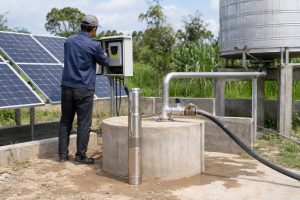
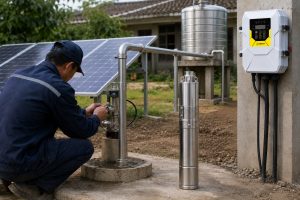
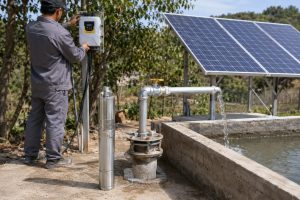
Solar pumps are a leading example of this innovation.

They offer independence from the power grid and long-term cost savings.

Solar Deep Well Pumps

Solar pumps use energy from the sun to power a high-efficiency motor.

They are becoming essential in areas with unreliable electricity or for homeowners wanting to reduce their carbon footprint.

The core of these systems is a Brushless DC (BLDC) permanent magnet motor.

These motors can achieve efficiencies over 90%, which is significantly higher than traditional AC motors.

This high efficiency means you need fewer solar panels, reducing the total system cost.

There are several types of solar pumps designed for different needs:

Pump Type Primary Use Flow/Head Key Advantage Installed Cost (Approx.)
Solar Screw Pump Deep wells, low water needs Low Flow, High Head Excellent for deep wells and sandy water $1,700 – $4,000
Solar Plastic Impeller Pump Farm irrigation, high water needs High Flow, Medium Head High volume output and wear-resistant $1,800 – $4,200
Solar Stainless Steel Pump Corrosive water, high-end homes High Flow, Medium-High Head Superior durability and corrosion resistance $2,000 – $5,000

Hybrid Power Systems

A major concern with solar has always been performance on cloudy days or at night.

Modern systems have solved this with AC/DC hybrid controllers.

These smart controllers can be connected to both solar panels and an AC power source (like the grid or a generator) at the same time.

The controller automatically prioritizes solar power.

If sunlight is insufficient, it seamlessly blends in or switches over to AC power.

This ensures you have a reliable water supply 24/7 without compromising on the energy savings from solar.

Key Factors That Affect Your Final Price

The pump's price is just the start.

Several other factors can significantly increase or decrease your final bill for a well pump replacement.

The depth of your well is a primary cost driver.

A deeper well requires a more powerful—and more expensive—pump.

It also increases the amount of labor, piping, and wiring needed, all of which add to the total cost.
![A diagram showing a deep well with a submersible pump,

Well Depth and Size

The depth of your well directly impacts the project's complexity and cost.

Wells are generally categorized as shallow or deep.

Any well deeper than 25 feet is considered a deep well.

  • Shallow Wells (under 25 feet): These allow for cheaper pumps like shallow well jet pumps. The installation is simpler and requires less labor and materials.
  • Deep Wells (over 25 feet): These require a more powerful submersible or deep well jet pump. The contractor needs specialized equipment to pull the old pump and install the new one, which can be hundreds of feet below ground. More depth means more cost for every foot of pipe and wire.

For example, replacing a pump in a 50-foot well might take a few hours.

Replacing one in a 400-foot well could be an all-day job for a two-person crew, dramatically increasing labor costs.

System Components

Your well pump is part of a larger system.

If other parts are failing, it's often wise to replace them at the same time.

This adds to the upfront cost but can save you from another service call soon.

Component Average Replacement Cost Why It Matters
Pressure Tank $800 – $3,900 Stores pressurized water. A faulty tank can cause the pump to cycle too often (short-cycling), leading to premature motor burnout.
Pressure Switch $50 – $200 Tells the pump when to turn on and off. A cheap but critical part. Failure can leave you with no water or cause the pump to run constantly.
Electrical Wiring $100 – $500+ Corroded or undersized wiring is a fire hazard and can damage the new pump. Upgrading is often necessary for safety and performance.
Pump Control Box $150 – $400 For three-wire submersible pumps, this above-ground box contains starting components. It's easier to replace than the pump itself.

Ignoring a failing pressure tank after installing a new $1,500 pump is a classic mistake.

The new pump will be forced to work much harder, shortening its lifespan from over 10 years to potentially just one or two.

Repair vs. Replacement: Making the Right Call

Your pump has failed, and you need water now.

Should you pay for a quick repair or invest in a full replacement?

The answer often comes down to a simple cost-benefit analysis.

A repair is almost always cheaper upfront, typically costing between $250 and $1,100.

However, if the pump is old or the damage is severe, a replacement is the more sensible long-term investment, even with its higher initial cost of $975 to $2,575.

When to Consider Repair

A repair is a great option under the right circumstances.

If your pump is relatively new and the issue is minor, a repair can save you a lot of money.

You can save over 75% compared to a full replacement in some cases.

Common Repairable Issues

Some parts of a well system are designed to be replaced and are not very expensive.

If the problem is with one of these components, a repair is the obvious choice.

Common Problem Average Repair Cost (incl. Labor) Viability
Faulty Pressure Switch $50 – $150 High. This is a cheap and easy fix. Always check this first.
Failed Pump Motor (Repairable) $175 – $1,400 Medium. If the cost is over 50% of a new pump, replacement is better.
Booster Pump Issue $250 – $2,000 Varies. Sometimes it's a simple fix, other times the whole unit needs replacing.
Broken Foot Valve $150 – $400 Medium. Requires pulling the pump, so labor is a key factor.

The 50% Rule: A good rule of thumb is to compare the repair quote to the cost of a new pump. If the repair cost is more than 50% of the replacement cost, replacement is usually the smarter financial move.

The Age Rule: If your pump is less than 8 years old, it's a strong candidate for repair. Most pumps have a lifespan of 8 to 15 years.

When to Choose Replacement

Sometimes, a repair is just throwing good money after bad.

Replacement is the clear winner when the pump is old, inefficient, or has a catastrophic failure.

Clear Signs It's Time to Replace

Watch for these signals that your pump is beyond a simple fix.

  • No Water: If the pressure switch is fine, the pump motor has likely failed completely.
  • Old Age: If your pump is over 10-15 years old, it's living on borrowed time. Replacing it proactively can prevent a sudden, inconvenient failure.
  • Constant Running: This indicates a major problem, either with the pump itself or a leak in the well pipe. Either way, your electricity bill will be sky-high.
  • Dirty Water: If your water is suddenly full of sand, silt, or rust, it could mean the pump is breaking down internally.
  • Multiple Failures: If you've already repaired the pump once or twice, and now another component has failed, it's time for a full system upgrade.

Investing in a new, energy-efficient pump, especially a solar or hybrid model, can also lead to significant savings on your electricity bill over the life of the pump.

DIY vs. Professional: Why Expertise Matters

You've diagnosed the problem and are considering your options.

Can you save money by replacing the well pump yourself?

While the idea of saving on labor costs is tempting, this is a job best left to the professionals.

A professional installation might add $300 to $1,500 to your bill, but it's a small price to pay for safety and peace of mind.

A failed DIY attempt can cost you thousands more than hiring a pro from the start.

The High Risks of DIY

Replacing a well pump is not a simple plumbing task.

It involves a unique combination of heavy lifting, plumbing, and high-voltage electrical work.

Here’s what can go wrong:

Dropping the Pump

This is the most common and costly DIY mistake.

Submersible pumps are connected to hundreds of feet of pipe, wire, and rope.

If your grip slips, the entire assembly can fall to the bottom of the well.

Retrieving it can be impossible, forcing you to drill a new well at a cost of $5,000 to $15,000 or more.

Electrical Hazards

Well pumps operate on high-voltage (240V) electricity.

Improper wiring is a serious fire hazard and can instantly destroy a brand-new pump motor.

Professionals understand the electrical codes and ensure everything is grounded and connected safely.

Incorrect Sizing and Installation

Choosing the right pump requires calculating your home's water demand, the well's depth, and its recovery rate.

  • An undersized pump will provide weak pressure and wear out quickly.
  • An oversized pump will short-cycle, wasting electricity and destroying the motor.

Professionals have the experience to select the perfect pump and install it correctly with necessary components like torque arrestors and safety ropes.

The Benefits of a Professional

Hiring an experienced well service company gives you much more than just a new pump.

  • Correct Diagnosis: They can determine if you truly need a new pump or if a simpler, cheaper repair will suffice.
  • Safety: They have the right equipment and training to handle the job without risking injury or property damage.
  • Warranty Protection: A professionally installed pump comes with a manufacturer's warranty. A DIY installation almost always voids this warranty.
  • Efficiency: A pro can complete the job in a few hours, while a DIYer might spend days struggling with it.
  • Peace of Mind: You know the job is done right, your water is safe, and you have a reliable system for years to come.

Conclusion

Repair is cheaper for new pumps with minor issues.

But replacement offers better long-term value for old or failing systems.

Consider modern, efficient options for lasting savings.

Frequently Asked Questions

How much does it cost to pull a well pump?

The cost to just pull and inspect a well pump typically ranges from $250 to $700, depending on the well's depth and the labor rates in your area.

What is the first thing to check when a well pump stops working?

First, check your home's circuit breaker to ensure the pump has power.

If it does, the next step is to check the pump's pressure switch for malfunction.

Can a well pump be rebuilt?

While some pump motors can be rebuilt, it is often not cost-effective.

The labor and parts can cost nearly as much as a new pump with a full warranty.

How do I know if my well pump motor is bad?

A humming sound without water flow, a tripped circuit breaker, or a complete lack of power are all strong signs that the pump motor has failed.

How long does it take to replace a well pump?

A professional can typically replace a well pump in 2 to 5 hours.

Deep or complex installations may take longer, potentially up to a full day.

What is the most common reason for well pump failure?

The most common reason is age-related wear and tear.

Frequent cycling due to a bad pressure tank or water leaks is a close second, as it burns out the motor.

How much does a well pump and pressure tank cost?

Replacing both a well pump and a pressure tank together typically costs between $1,500 and $3,500, ensuring the entire system is new and works efficiently.

Is well pump replacement covered by insurance?

Homeowner's insurance may cover damage from sudden events like lightning strikes but typically does not cover failure due to normal wear and tear or old age.

HYBSUN Company

Founded in China during 2005 HYBSUN SOLAR CO.,LTD has pioneered, innovated and excelled in the engineering ,manufacturing and sales of solar powered water pumping system.

Recent Posts

GET A FREE QUOTE NOW

Contact Form Demo (#3)

GET A FREE QUOTE NOW

Contact Form Demo (#3)
Get A Free Quote Now

Get A Free Quote Now !

Contact Form Demo (#3)