Tired of high electricity bills from your pool pump?
That constant hum is the sound of money draining away.
A solar connection offers a silent, cost-effective solution.
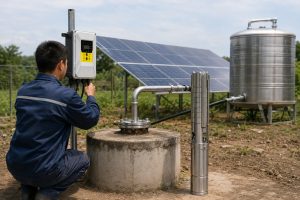
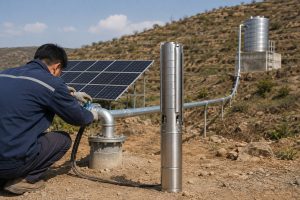
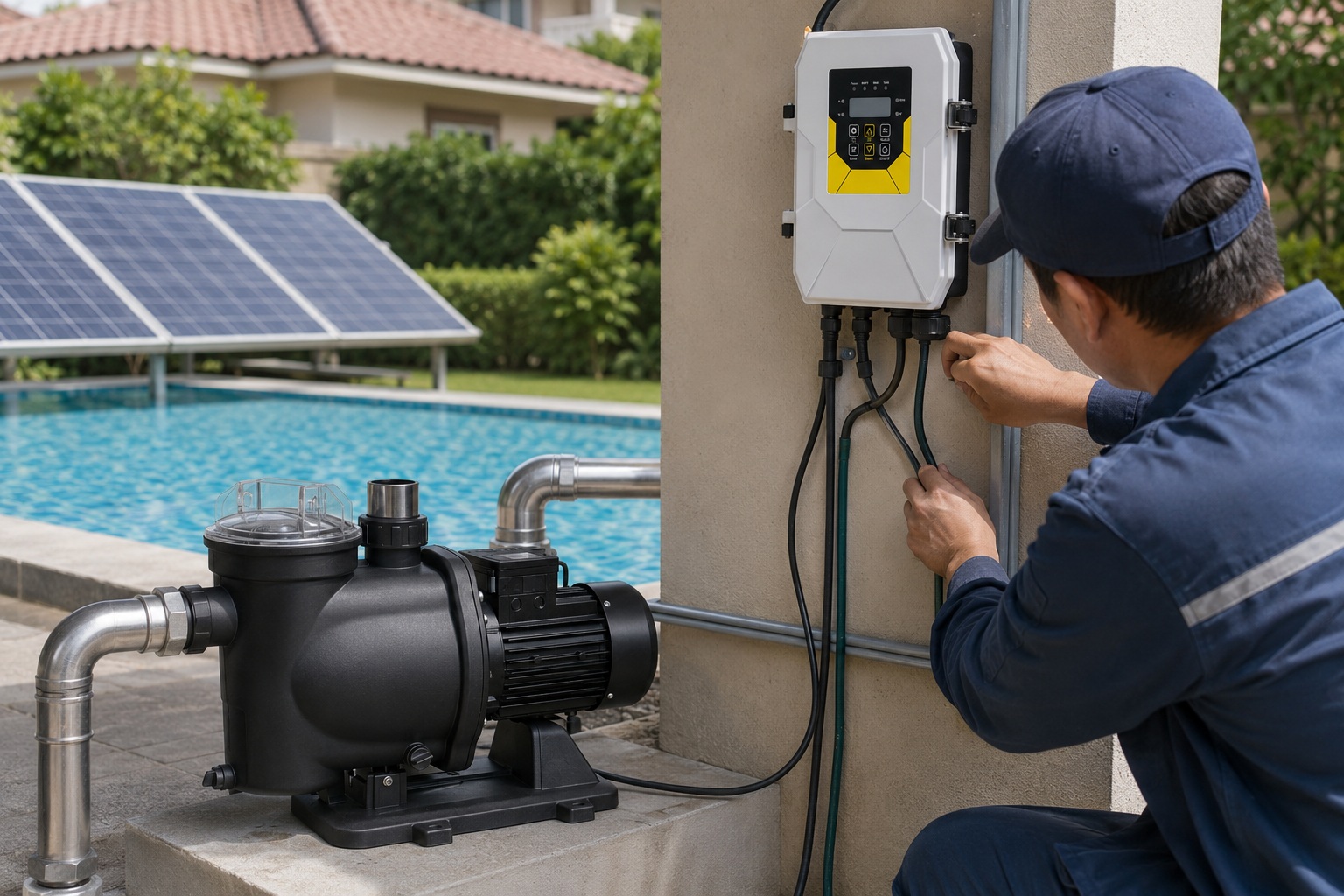
Connecting a solar panel to a pool pump requires wiring the panels to a solar pump controller.
The controller then connects to and manages the power for your DC pump.
This setup optimizes energy use and protects the pump motor, making it a simple and efficient upgrade.
Connecting a solar panel to your pool pump is more than just a wiring job.
It is a strategic upgrade to a more sustainable, efficient, and reliable pool circulation system.
This guide will walk you through not only the "how" but also the "why" and "what" of making the switch.
We will explore why your pump is so critical, how to choose the right solar-powered components, and what technology makes it all possible.
From understanding the fundamental connection to exploring advanced hybrid systems, you will gain the knowledge to make an informed decision, ensuring your pool stays sparkling clean while your energy costs plummet.
Why Pool Pumps Are Essential for Water Circulation
Your pool pump stopped, and the water looks fine for now.
But stagnant water quickly becomes a murky, unsafe breeding ground for algae and bacteria, risking costly damage.
A pool pump is the heart of your pool's circulatory system.
It moves water through filters to remove debris, distributes chemicals evenly, and prevents stagnation.
Without it, your pool's health degrades in as little as 24-48 hours, leading to cloudy water and algae growth.
A pool pump does more than just move water.
It keeps your entire pool ecosystem alive and healthy.
Without consistent circulation, your pool transforms from a refreshing oasis into a stagnant pond.
The pump pushes water through the filter, skimmer, and chlorinator, ensuring every part of the system works in harmony.
This constant movement is what prevents chemical imbalances, cloudy water, and the dreaded green hue of an algae bloom.
When water stands still, gravity takes over.
Dirt, debris, and bacteria settle on the pool surfaces.
This is where the trouble begins.
Circulation makes it difficult for algae to take hold and grow.
It also ensures that sanitizing chemicals like chlorine are distributed throughout the entire body of water, leaving no "dead zones" where bacteria can thrive.
Skipping pump run time doesn't just mean your pool looks dirty; it means you are actively risking its long-term health and the safety of anyone who swims in it.
Timeline of Neglect: What Happens When the Pump Stops
The decline in water quality is surprisingly rapid.
Understanding this timeline can highlight the urgency of maintaining pump operation, whether through grid power or a reliable solar alternative.
- 24-48 Hours: The first signs appear.
You won't see green water yet, but the chemistry is already changing.
Chlorine levels begin to drop without circulation to distribute it.
Small debris and dust start to settle on the pool floor instead of being pulled into the filter. - 3-5 Days: Visible changes emerge.
The water may start to look hazy or cloudy as microscopic particles accumulate.
With depleted chlorine levels and stagnant water, the conditions are now perfect for algae.
You might notice the first patches of green or yellow algae forming on the walls or in corners. - 5-7 Days: The situation becomes serious.
The pool is likely to be noticeably green.
The water is now unsafe for swimming due to high levels of bacteria and potential contaminants.
Mosquitoes and other insects may begin to use the stagnant water as a breeding ground.
This rapid deterioration can turn a simple fix into a costly and time-consuming recovery process.
A solar-powered pump offers a massive advantage here, as it can continue to operate during grid power outages, providing a crucial line of defense against this decline.
Factors That Speed Up Deterioration
Not all pools will degrade at the same rate.
Several environmental and usage factors can accelerate the process from clear to cloudy.
| Factor | Impact on Water Quality | Solar Solution Advantage |
|---|---|---|
| High Temperatures | Warmer water is a better incubator for algae and bacteria, causing them to multiply much faster. | A solar pump's performance is highest during the hottest, sunniest parts of the day, directly countering the increased risk. |
| Heavy Rainfall | Rain can introduce contaminants and dilute pool chemicals, throwing the water balance off. | Continuous circulation from a solar pump helps mix in the rainwater and redistribute chemicals to quickly rebalance the pool. |
| High Bather Load | More swimmers mean more organic matter (oils, skin cells) and contaminants introduced into the water. | Consistent filtration powered by the sun ensures these contaminants are removed efficiently, even after a busy pool day. |
| Debris from Foliage | Leaves, pollen, and twigs from nearby trees and plants add nutrients that feed algae. | A solar pump keeps the skimmer active, pulling surface debris into the filter before it has a chance to sink and decay. |
Choosing the Right Solar Pump for Your Needs
You've decided on solar, but not all pumps are created equal.
Choosing the wrong one can lead to poor circulation, inefficient energy use, and a system that fails you.
Choosing the right pump depends on your pool's specific needs for flow rate and pressure (head).
A high-flow pump is ideal for general circulation, while a high-head pump might be needed for pools with waterfalls or elevated features.
Material choice is also crucial for longevity.
While many solar pumps are marketed for deep wells, the core technology is directly applicable to swimming pools.
The key is to match the pump's characteristics—flow, head, and materials—to the demands of your pool environment.
A large, simple pool primarily needs a high flow rate to turn over the entire volume of water efficiently.
A pool with a spa, waterfall, or in-floor cleaning system requires a pump that can generate higher pressure (head) to operate those features.
Understanding this balance is the first step.
Next is material composition.
Pool water is a chemically treated environment, often with chlorine or salt.
This can be corrosive over time.
Choosing a pump made from durable, corrosion-resistant materials is essential for a long service life and reliable performance.
This is where the product portfolio of different pump types becomes highly relevant.
Comparing Solar Pump Technologies
Let's adapt the common types of solar deep-well pumps to a pool context to understand how their strengths apply.
The right choice provides the best performance and value for your specific setup.
| Pump Type | Key Characteristic | Ideal Pool Application | Advantages | Limitations |
|---|---|---|---|---|
| Solar Screw Pump | Low Flow, High Head | Pools with high-pressure features like waterfalls, deck jets, or long plumbing runs that create resistance. | Excellent for overcoming pressure loss; handles debris well. | Lower overall flow rate may require longer run times for full turnover. |
| Solar Plastic Impeller Pump | High Flow, Medium Head | Standard in-ground or above-ground pools where the main goal is efficient water turnover and filtration. | High water output for fast circulation; lightweight and economical. | May not be suitable for very high-pressure features or highly corrosive salt pools. |
| Solar Stainless Steel Impeller Pump | High Flow, High Corrosion Resistance | Saltwater pools, pools with aggressive water chemistry, or high-end installations requiring maximum durability. | Extremely long service life; resists corrosion from salt and chemicals; highly reliable. | Higher initial cost and heavier weight. |
Matching Pump to Pool Size and Features
To make this more practical, consider these scenarios:
- For a standard 15,000-gallon pool: A Solar Plastic Impeller Pump is likely the most cost-effective and efficient choice.
Its high flow rate will ensure the water is turned over at least twice a day, keeping it clean and clear with minimal energy use. - For a 25,000-gallon pool with an attached spa and a small waterfall: A Solar Stainless Steel Impeller Pump might be a better fit.
It offers both high flow for the main pool and enough pressure to run the spa jets and waterfall.
Its durability is a bonus for a larger investment. - For a small pool with a powerful deck jet water feature: A Solar Screw Pump could be used specifically for the water feature, providing the high pressure needed while a separate circulation pump handles filtration.
The key takeaway is that a "one-size-fits-all" approach does not work.
A flexible product portfolio allows distributors to meet the specific needs of every customer, from simple residential pools to complex custom designs.
Understanding the Core Power: The BLDC Motor
A great pump is nothing without a great motor.
The motor is the engine that drives the entire system, and its efficiency determines how much you save on energy.
The most advanced solar pumps use a Brushless DC (BLDC) permanent magnet motor.
This core technology offers efficiencies exceeding 90%, converting more sunlight into water movement.
*It's the key to reducing solar panel requirements and overall system cost.
The real revolution in solar pumping isn't just the pump itself; it's the motor that powers it.
Traditional AC motors can be inefficient, noisy, and require complex inverters to run on solar power.
BLDC permanent magnet motors change the game completely.
These motors use powerful permanent magnets (often neodymium iron boron) on the rotor, eliminating the need for energy-wasting brushes and electromagnets found in other motors.
This design has several profound advantages.
First, efficiency.
With efficiencies often over 90%, a BLDC motor wastes very little energy as heat.
For a pool owner, this means a 1 HP BLDC pump can often do the work of a 1.5 HP traditional pump, but with significantly less power consumption.
This directly translates to needing fewer solar panels to run the system, which lowers the initial investment and simplifies installation.
Technical Advantages and Market Value
The superiority of the BLDC motor goes beyond just a single efficiency number.
Its design creates a cascade of benefits that are highly valuable for both end-users and B2B distributors.
Let's break down the technical specs and their real-world impact.
- High Torque at Low Speeds: BLDC motors can produce strong turning force even when starting up or running slowly.
This is crucial for overcoming the initial inertia of the water without a huge surge of power, reducing stress on the entire system. - Compact and Lightweight Design: A BLDC motor can be significantly smaller and lighter than an AC motor of equivalent power.
Data shows they can be up to 47% smaller and 39% lighter.
For distributors, this means lower shipping costs and easier warehousing.
For installers, it means easier handling and mounting. - Maintenance-Free Operation: The "brushless" design means there are no brushes to wear out and replace.
This eliminates a common point of failure and maintenance, leading to a much longer and more reliable service life. - Variable Speed Control: BLDC motors are perfectly suited for variable speed operation when paired with an intelligent controller.
This allows the pump to run at lower speeds for general filtration and ramp up only when needed for cleaning cycles or water features, optimizing energy use throughout the day.
The Strategic Role of the Motor
For a B2B distributor, understanding the motor's role is a powerful sales tool.
Instead of just selling a pump, you are offering a complete high-efficiency system.
The motor becomes the core of your value proposition.
| Feature | Benefit for Distributor (e.g., Andrew) | Benefit for End User |
|---|---|---|
| High Efficiency (>90%) | Can market a product that requires fewer solar panels, creating a more competitive package price. | Lower initial system cost and faster ROI through energy savings. |
| Compact & Lightweight | Reduced shipping and storage costs per unit, improving profit margins. | Easier and cheaper installation. |
| Maintenance-Free | Fewer warranty claims and customer complaints related to motor failure. Builds brand reputation for reliability. | "Set it and forget it" peace of mind and lower lifetime ownership costs. |
| Intelligent Control | Offers a technologically advanced product that stands out from competitors. | Maximizes solar energy usage and provides a smarter, more efficient pool system. |
By focusing on the motor, you shift the conversation from a simple commodity pump to a high-performance, engineered solution.
This is how brands establish a reputation for "efficiency, durability, and environmental friendliness" in a competitive global market.
Ensuring 24/7 Operation with Hybrid AC/DC Systems
What happens on cloudy days or at night?
This is the biggest concern for anyone considering a solar-only system.
A dead pool pump means stagnant water and the start of problems.
A hybrid AC/DC solar pump system solves this problem.
It uses an intelligent controller that can draw power from both solar panels (DC) and the grid (AC).
The system automatically prioritizes free solar energy and only uses grid power when absolutely necessary.
The ultimate solution for worry-free pool operation is a hybrid system.
This technology removes the "all or nothing" limitation of traditional DC-only solar setups.
It provides the best of both worlds: the free, clean energy of solar and the unwavering reliability of the grid.
The heart of this system is the AC/DC controller.
This sophisticated device is designed with two power inputs: one for the DC power from your solar panels and one for the AC power from your home's electrical supply or a generator.
The magic is in how it automatically manages these sources.
When the sun is shining, the controller will use 100% of the power from the photovoltaic (PV) panels.
If clouds roll in and the solar power isn't quite enough to run the pump at the desired speed, the hybrid function kicks in.
Instead of shutting down, the controller will supplement the reduced solar power with just enough AC power to maintain operation.
This maximizes the use of every available ray of sunlight.
When the sun goes down, or if you need to run the pump at night, the controller automatically switches over to full AC power.
This guarantees your pool circulation never has to stop, providing worry-free water quality 24 hours a day.
How the Hybrid Controller Works
Understanding the logic of the controller helps illustrate its value.
It's not just a simple switch; it's an energy optimizer.
- Solar Priority Mode (Full Sun): The controller detects strong input from the PV panels.
It directs this DC power straight to the BLDC motor.
The AC grid input is on standby, consuming no power.
Result: 100% free energy operation. - Hybrid Mode (Partial Sun/Clouds): The controller detects that the PV input has dropped below the level needed for the current pump speed.
It continues to use all available DC power but also draws a small amount of AC power, converts it to DC, and blends it to meet the motor's demand.
Result: Maximum solar utilization, minimal grid dependency. - AC Priority Mode (Night/No Sun): The controller detects zero or negligible PV input.
It automatically switches to the AC input as the primary power source.
Result: Uninterrupted 24/7 operation.
Comparing Powering Options
Let's compare the operational costs and reliability of different pump power systems for a typical pool pump running 8 hours a day.
| Power System | Daytime Operation (Sunny) | Daytime Operation (Cloudy) | Nighttime Operation | Energy Cost | Reliability |
|---|---|---|---|---|---|
| Standard Grid Pump | 100% Grid Power | 100% Grid Power | 100% Grid Power | High | High (if grid is up) |
| DC-Only Solar Pump | 100% Solar Power | Reduced or no operation | No Operation | Very Low | Low (sun-dependent) |
| Hybrid AC/DC Solar Pump | 100% Solar Power | Hybrid (Solar + Grid) | 100% Grid Power | Very Low to Low | Very High |
For a distributor, the hybrid AC/DC system is the ultimate answer to customer hesitation about solar.
It eliminates any compromise on reliability while still delivering massive energy savings.
It transforms the solar pump from a niche, eco-friendly product into a superior, all-around solution that outperforms traditional pumps on every metric: cost, reliability, and intelligence.
Safe Installation and Maintenance Tips
Connecting your solar pump is straightforward, but safety and proper procedure are paramount.
Rushing the installation can risk damage to your equipment or lead to inefficient operation.
Always turn off all power sources—both grid breakers and solar panel disconnects—before beginning any wiring.
Ensure your pump and controller are installed in a dry, ventilated area, and plan for proper water drainage if you need to empty any pipes during the process.
A successful installation is a safe one.
Before you touch a single wire, your first step is to de-energize the entire system.
For a hybrid setup, this means shutting off the circuit breaker that supplies AC power to the controller.
It also means covering your solar panels with a dark blanket or tarp to stop them from producing DC voltage.
Even a single panel can generate enough electricity to cause a dangerous shock.
Proper location is also key.
While the pump itself is designed to handle water, the controller is an electronic device that needs protection.
Install the controller on a wall or post, away from direct sunlight and rain if possible, and ensure there is adequate airflow around it to keep it cool.
Finally, think about water management.
If you are replacing an existing pump, you will have to disconnect plumbing lines.
Be prepared for the water in the pipes and the filter to drain out.
Check local regulations before draining large amounts of chlorinated or saltwater into your yard or storm drains.
It's often best to direct this water to a sanitary sewer cleanout if available.
Step-by-Step Connection Guide
While specific instructions will vary by manufacturer, the general process for connecting a solar panel to a pool pump via a hybrid controller is as follows.
- Mount the Hardware:
- Securely mount the solar panels on your roof or a ground rack in a location that receives maximum direct sunlight, free from shade.
- Mount the pump controller in a protected, well-ventilated location near the pump.
- Install the pump on a solid, level pad, bolting it down if necessary.
- Connect the Plumbing:
- Connect the pool's suction and return lines to the pump's inlet and outlet ports.
- Use appropriate PVC unions for easy removal and maintenance.
- Prime the pump according to the manufacturer's instructions to ensure all air is removed from the system before startup.
- Wire the System (POWER OFF):
- Solar Panels to Controller: Run the positive (+) and negative (-) wires from the solar panel array to the corresponding "PV+" and "PV-" terminals on the controller.
Ensure polarity is correct. - Controller to Pump: Connect the three motor wires (U, V, W) from the controller to the pump motor.
These are typically not polarity-sensitive. - AC Power to Controller: Connect the Line, Neutral, and Ground wires from your AC power source to the "L," "N," and "GND" terminals on the controller.
- Solar Panels to Controller: Run the positive (+) and negative (-) wires from the solar panel array to the corresponding "PV+" and "PV-" terminals on the controller.
- Power Up and Test:
- Once all connections are double-checked, remove the cover from the solar panels.
- Turn on the AC circuit breaker.
- The controller should power on.
Follow the manufacturer's startup sequence to test the pump and configure any settings like speed or timers.
Routine Maintenance Checks
Your solar pump system is designed for low maintenance, but a few regular checks will ensure peak performance and longevity.
| Component | Check | Frequency | Purpose |
|---|---|---|---|
| Solar Panels | Clean panels with water and a soft cloth. | Quarterly or as needed | Removes dust, pollen, and debris that can reduce energy output by up to 20%. |
| Pump Basket | Empty the strainer basket of leaves and debris. | Weekly | Prevents clogs and ensures strong water flow, reducing strain on the motor. |
| Controller | Check for error codes or alerts on the display. | Monthly | Early detection of any potential issues with power supply or motor performance. |
| Wiring | Visually inspect all connections for tightness and signs of corrosion. | Annually | Ensures safe and efficient power transfer. |
By following these simple safety and maintenance procedures, you can ensure your investment provides clean, clear water powered by the sun for many years to come.
Conclusion
Connecting a solar panel to a pool pump is a smart investment in efficiency and reliability.
By choosing the right pump and motor technology, you can achieve significant energy savings and ensure uninterrupted operation.
FAQs
Can I run a pool pump directly from a solar panel?
No, you cannot.
A solar pump controller is essential to manage the variable DC voltage from the panels and protect the pump motor from damage.
How many solar panels do I need to run a pool pump?
This depends on the pump's wattage and your location's sun hours.
A typical 1.5 HP solar pump may require 4 to 8 panels (around 1200-2400 watts).
Is a solar pool pump worth it?
Yes, for most pool owners.
The initial cost is higher, but the long-term energy savings and off-grid reliability often result in a payback period of just 2-4 years.
Can a solar pump run at night?
A standard DC-only solar pump cannot run at night.
However, a hybrid AC/DC system can automatically switch to grid power for 24/7 operation.
What size solar pump do I need for my pool?
The pump should be sized to turn over your pool's entire water volume in an 8-hour period.
A professional can help calculate the required flow rate based on your pool size.
How long do solar pool pumps last?
A quality solar pump with a BLDC motor can last 10 years or more.
The solar panels themselves often come with a 25-year performance warranty.
Do solar pool pumps work on cloudy days?
Yes, but at a reduced speed.
Modern systems are highly efficient and can still circulate water in overcast conditions.
Hybrid systems will supplement with grid power if needed.
What maintenance does a solar pool pump require?
Maintenance is minimal.
You should keep the solar panels clean and regularly empty the pump's strainer basket, just as you would with a conventional pump.