Struggling with inconsistent water supply and high energy bills for your pump?
You need a reliable, cost-effective solution that works even off-grid.
Solar-powered pumps offer energy independence and long-term savings.
A 1HP (horsepower) water pump typically requires between 1000 to 1500 watts of solar panels.
A modern, high-efficiency three-phase 1HP pump can run on twelve 100W panels (1200W total), while older, less efficient single-phase pumps may need significantly more power to achieve the same performance.
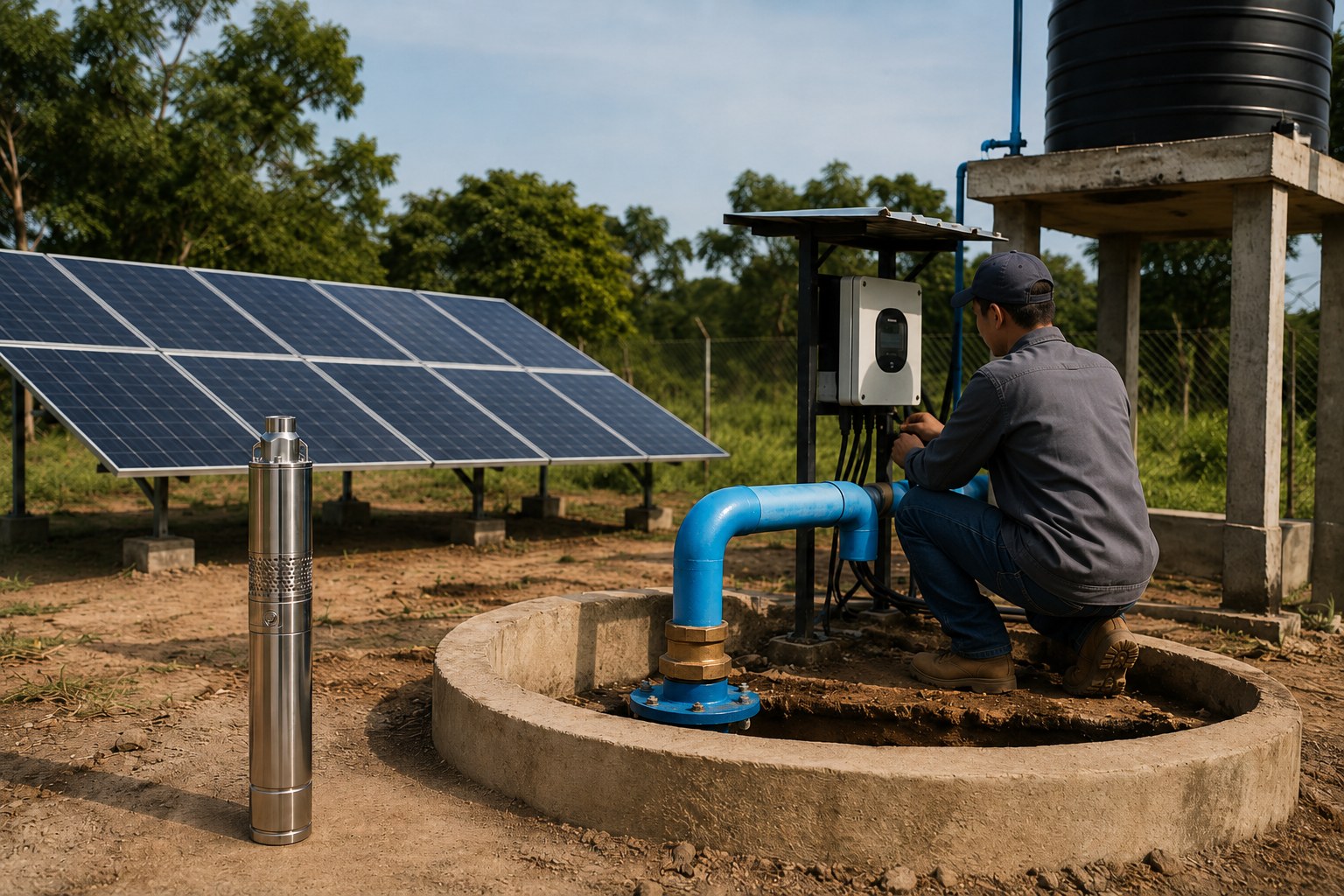
Choosing the right number of solar panels for a 1HP pump is more than just matching watts.
The pump's design, motor efficiency, and power type all play a crucial role in determining the final panel count.
Understanding these factors is key to building a system that is both cost-effective and reliable for years to come.
This guide will break down exactly what you need to know to make an informed decision for your agricultural, domestic, or off-grid water needs.
Why the Type of 1HP Pump Matters
Your water needs are unique, but your pump choice seems complicated.
The specific task—from deep well extraction to large-scale irrigation—demands a specific type of pump for optimal performance.
Understanding the differences can save you money and prevent system failure.
The type of 1HP pump you choose dramatically affects solar panel requirements.
A high-head screw pump for deep wells has different power needs than a high-flow impeller pump for irrigation, even if both are rated at 1HP.
This choice directly impacts system efficiency and cost.
The 1HP rating only tells you the motor's power output.
It doesn't tell you how that power is used.
A pump is a specialised tool, and selecting the right one for the job ensures every watt of solar energy is used effectively.
A system designed for lifting water 300 feet has vastly different hydraulic requirements than one moving thousands of gallons across a field.
Getting this choice right is the first step in designing an efficient solar-powered water system.
Let's explore the three main types of solar pumps and how their designs influence your solar array needs.
1. Solar Screw Pumps: For Deep Wells
Solar screw pumps, also known as progressive cavity pumps, are your deep-well specialists.
They use a stainless steel screw (rotor) rotating inside a rubber stator.
This action creates sealed cavities that move water upward with steady pressure.
This design excels at creating high head (lifting water from great depths) but delivers a lower flow rate compared to other pump types.
They are also highly-resilient to sand and silt, with a sand-resistance rating often exceeding 5%.
- Best Use Cases: Domestic water for homes, livestock watering troughs, and drip irrigation from very deep wells (over 150 meters).
- Solar Impact: Because they are designed for high-pressure, low-volume work, their power draw is consistent.
This makes them highly compatible with the steady output from a solar array.
Their high starting torque requires a robust controller to manage the initial power surge.
2. Plastic Impeller Pumps: For High Volume
These are multi-stage centrifugal pumps.
They use a series of plastic impellers that spin to push water outward and upward.
Each stage adds more pressure, increasing the head.
Their primary advantage is the ability to move a large volume of water at a medium head.
This makes them the go-to choice for applications where flow rate is more critical than well depth.
Their economic construction and lightweight nature make them a popular choice for large-scale projects.
- Best Use Cases: Flood irrigation for farms, filling ponds or reservoirs, and high-demand livestock operations.
- Solar Impact: A 1HP plastic impeller pump will have a power curve focused on maintaining high flow.
It may require more wattage to sustain this high volume output compared to a screw pump operating at the same 1HP rating but lower flow.
3. Stainless Steel Impeller Pumps: For Durability
These pumps operate on the same centrifugal principle as plastic impeller models.
However, their impellers and pump casings are made from corrosion-resistant materials like SS304 or SS316 stainless steel.
This robust construction makes them ideal for challenging water conditions, such as acidic water or water with high mineral content.
They combine high flow rates with excellent durability and a long service life, representing a premium, long-term investment.
- Best Use Cases: Water supply in regions with aggressive water, high-end residential water systems, and agricultural applications in areas with corrosive soil.
- Solar Impact: The hydraulic efficiency of stainless steel impellers is often higher than plastic, potentially reducing power consumption by 5-10% for the same water output.
This improved efficiency can slightly reduce the number of solar panels needed, offsetting their higher initial cost over the system's life.
| Pump Type | Primary Application | Flow Rate | Head (Lift) | Key Advantage | Impact on Solar Array |
|---|---|---|---|---|---|
| Solar Screw Pump | Deep Well Water Supply | Low | Very High | Handles sand, high pressure | Needs controller for high starting torque |
| Plastic Impeller Pump | Farm Irrigation, Ponds | High | Medium | High volume, cost-effective | Requires more power to sustain high flow |
| Stainless Steel Pump | Corrosive Water, Premium Homes | High | Medium-High | Extreme durability, corrosion-proof | ~5-10% more efficient, can reduce panel needs |
The Motor: Your System's Efficiency Engine
An inefficient pump motor wastes precious solar energy.
This forces you to buy more panels than necessary, increasing costs and installation complexity.
You need a motor that converts almost all solar power directly into water-pumping action.
The pump's motor is the single biggest factor in efficiency.
A modern Brushless DC (BLDC) permanent magnet motor is over 90% efficient, converting more solar energy into water pumped.
This can reduce your solar panel requirement by up to 25% compared to older motor technologies.
The motor is the heart of your solar water pump system.
Its ability to efficiently convert electrical energy from the panels into the mechanical force needed to pump water is paramount.
An inefficient motor acts like a leak in your power system, wasting energy as heat.
This is why leading pump manufacturers have moved to advanced motor technologies.
A highly efficient motor not only means you need fewer solar panels but also allows the pump to start earlier in the day and run later, extending your daily pumping window and increasing your total water output.
Why BLDC Motors are the Industry Standard
Brushless DC (BLDC) permanent magnet motors represent a major technological leap.
Unlike older brushed motors, they have no physical brushes to wear out, making them virtually maintenance-free.
Their rotors use powerful permanent magnets, like neodymium iron boron, which creates a stronger magnetic field with less energy input.
- Efficiency: BLDC motors regularly achieve efficiencies greater than 90%.
In contrast, standard DC brushed motors are around 75-80% efficient, and AC motors used in traditional pumps are often only 70-85% efficient. - Durability: The absence of brushes eliminates the most common point of failure in DC motors, leading to a service life that is 2 to 3 times longer.
- Performance: They provide high torque across a wide speed range.
This allows the pump to start reliably even in lower light conditions.
How Motor Efficiency Translates to Fewer Panels
Let's look at a practical, data-driven comparison.
A 1HP motor requires approximately 746 watts of electrical power to run at its rated output.
However, this doesn't account for motor inefficiency.
The solar panels must supply extra power to overcome these efficiency losses.
| Motor Type | Typical Efficiency | Power Needed from Panels (for 1HP Output) | Example Solar Array (using 300W panels) | Relative Panel Cost |
|---|---|---|---|---|
| Old AC Motor | 70% | 746W / 0.70 = 1065W | 4 panels (1200W total) | Highest |
| Brushed DC Motor | 80% | 746W / 0.80 = 933W | 4 panels (1200W total) | Medium |
| BLDC Motor | 92% | 746W / 0.92 = 811W | 3 panels (900W total) | Lowest |
As the table clearly shows, choosing a pump with a 92% efficient BLDC motor means you need at least 25% less raw power from your solar array compared to an older 70% efficient AC motor.
For a distributor, this is a massive competitive advantage.
You can offer your customers a complete 1HP system with three high-wattage panels instead of four, immediately reducing the total system cost and simplifying installation.
Single-Phase vs. Three-Phase: A Critical Choice for Solar Power
Choosing the wrong power phase for your pump can be costly.
You might end up buying more solar panels and a larger inverter to run an inefficient system.
This mistake drains your budget and reduces the reliability of your water supply.
For solar applications, a three-phase pump is significantly more efficient than a single-phase pump.
A 1HP three-phase motor uses power more smoothly, requiring fewer solar panels and a simpler DC controller, whereas a single-phase motor demands more starting power and complex electronics.
The distinction between single-phase and three-phase power is fundamental to designing an efficient solar pump system.
Single-phase power, common in households, delivers power in a single wave, which drops to zero twice in each cycle.
Three-phase power delivers power in three overlapping waves, ensuring a constant, smooth supply of energy to the motor.
For a motor, this smooth delivery is like the difference between pushing a car with one person versus three people pushing in sequence—the output is more consistent and efficient.
In solar pumping, this translates directly to better performance and lower equipment costs.
The Inefficiency of Single-Phase Pumps on Solar
Most off-the-shelf single-phase AC well pumps are designed to run on grid power.
Adapting them to solar is possible but introduces several inefficiencies.
- High Starting Current: Single-phase motors require a huge surge of current to start, often 3 to 5 times their running current.
A solar inverter must be oversized specifically to handle this brief but massive load, significantly increasing its cost. - Energy Conversion Loss: To run a standard AC pump, you need an inverter to convert the DC power from the solar panels into AC power for the pump.
This conversion process itself wastes 10-15% of your valuable solar energy. - More Panels Needed: Due to the high starting current and inverter losses, a solar-powered 1HP single-phase pump often requires 20-30% more solar panels than a native DC three-phase pump to perform the same work.
The Native Advantage of Three-Phase Solar Pumps
Modern solar pump systems are designed as integrated units centered around a three-phase BLDC motor.
This native design provides superior efficiency.
- Direct DC Power: The system uses a specialized solar pump controller, not a standard inverter.
This controller takes DC power directly from the panels and outputs a variable frequency three-phase signal to the motor.
There is minimal energy loss since there is no DC-to-AC conversion. - Soft Start: The controller intelligently "soft starts" the motor.
It gradually ramps up the frequency and voltage, eliminating the massive starting current surge.
This means you don't need to oversize your solar array just for startup. - Optimized Power Use: The controller includes Maximum Power Point Tracking (MPPT), which constantly adjusts the electrical load to extract the absolute maximum power available from the solar panels, regardless of sun conditions.
This feature alone can boost water output by up to 30%.
| Feature | Single-Phase System (Adapted for Solar) | Three-Phase System (Native Solar) | Advantage |
|---|---|---|---|
| Power Conversion | DC -> Inverter -> AC Pump | DC -> Controller -> DC Pump | Three-Phase (Minimal loss) |
| Startup | High current surge | Soft start, low current | Three-Phase (Smaller array needed) |
| Efficiency | Lower (Inverter/Motor losses) | Higher (MPPT, no conversion) | Three-Phase (>25% more efficient) |
| Panel Count | ~1500W for 1HP | ~1200W for 1HP | Three-Phase (Fewer panels) |
For any serious off-grid water pumping application, a native DC three-phase solar pump system is the clear winner.
It requires fewer panels, simpler electronics, and delivers more water, providing a far better return on investment.
Beyond Solar: The Power of Hybrid AC/DC Systems
What happens on cloudy days or when you need water at night?
A solar-only pump system stops working, leaving you without water when you might need it most.
This limitation can be a deal-breaker for critical applications.
Hybrid AC/DC solar pump systems solve the issue of intermittent sunlight.
They automatically switch between solar power and a secondary source like the grid or a generator.
This ensures a reliable, 24/7 water supply without compromising on the savings from solar energy.
The ultimate goal of any water system is reliability.
While solar power offers incredible cost savings and energy independence, its reliance on sunshine presents a challenge.
Modern water solutions have overcome this with hybrid technology.
A hybrid AC/DC controller acts as an intelligent power manager for your pump.
It prioritizes free energy from the sun but seamlessly supplements or switches to an AC power source when solar input is insufficient.
This provides the best of both worlds: the low operating cost of solar and the all-weather reliability of the grid.
How a Hybrid System Works
The core of the system is the hybrid controller, which has two distinct power inputs: one for the DC power from your solar panels and another for AC power from the grid or a generator.
- Solar Priority: By default, the controller will always use 100% of the available solar power.
If the sun is shining brightly, the pump runs entirely on solar, costing you nothing. - Automated Blending: On overcast days when solar power is reduced, the controller can intelligently blend AC power with the available DC power.
It only draws the minimum amount of AC power needed to keep the pump running at the desired speed, maximizing your use of free solar energy. - Automatic Switchover: When the sun goes down or during extended periods of heavy cloud cover, the solar input will drop below a usable threshold.
The controller detects this and automatically switches over to the AC input, ensuring the pump continues to operate without interruption.
The process is entirely automatic, requiring no manual intervention.
The Strategic Advantage for All Users
A hybrid system offers compelling benefits for every type of water user.
- For Farmers: Guarantees that critical irrigation schedules can be met, regardless of the weather.
It allows for nighttime irrigation to reduce evaporation, a practice not possible with a solar-only system. - For Homeowners: Ensures consistent water pressure for household use 24/7.
This is crucial for off-grid homes that depend on their well for all water needs. - For Livestock Operations: Provides an unfailing water supply for animals, which is essential for their health and safety.
The system can run on solar during the day and be powered by a small generator for just a few hours at night to keep tanks full.
| System Type | Power Source(s) | Operating Window | Water Reliability | Best For |
|---|---|---|---|---|
| Solar-Only | Solar Panels | Sunny Hours Only | Good (Daytime) | Non-critical uses, daytime water transfer |
| Battery System | Solar + Batteries | 24 Hours | Excellent | High cost, battery maintenance required |
| Hybrid AC/DC | Solar + Grid/Generator | 24 Hours | Excellent | Critical applications, maximum flexibility |
By investing in a hybrid AC/DC system, you get a robust, worry-free water solution.
It leverages the cost-saving benefits of solar power while eliminating the risk of downtime, ensuring you have water exactly when you need it.
Conclusion
Sizing your solar array for a 1HP pump depends on pump type, motor efficiency, and power phase.
A modern three-phase BLDC pump offers the highest efficiency, directly reducing your costs.
Frequently Asked Questions (FAQs)
How many solar panels do I need for a 1HP motor?
For a modern high-efficiency 1HP three-phase motor, you will need approximately 1200 watts of panels.
This is typically achieved with twelve 100W panels or four 300W panels.
What can a 400-watt solar panel run?
A single 400-watt solar panel can run small DC appliances directly.
It can power a small fractional horsepower pump, such as a 1/3 HP or 1/2 HP model, under full sun conditions.
Do you need power for a well?
Yes, all well pumps require a power source to lift water to the surface.
This can be grid electricity, a generator, or a solar panel array.
What is the best solar well pump?
The "best" pump depends on your needs.
A screw pump is best for deep wells, while a centrifugal impeller pump is better for high-volume irrigation from shallower sources.
How deep can a solar pump work?
High-head solar pumps, like progressive cavity (screw) models, can work in wells over 1000 feet (300 meters) deep.
The pump's design determines its maximum depth rating.
Can an inverter run a well pump?
Yes, an inverter can run a standard AC well pump using DC power from solar panels or batteries.
However, it is less efficient than using a native DC solar pump system.
Can I connect a solar panel directly to a pump?
You should not connect a solar panel directly to most pumps.
A solar pump controller is required to manage the voltage and current to prevent motor damage and optimize performance.
How much is a solar well pump?
A complete solar well pump kit can range from a few hundred to several thousand dollars.
The cost depends on the pump's size, depth rating, and the number of solar panels included.