Pump floats fail, causing floods or pump burnout.
You need a reliable solution but don't know what affects their lifespan.
Understanding key factors ensures longevity and system protection.
A high-quality pump float's lifespan varies greatly. Mechanical float switches can last from 5 to over 10 years, or 100,000 to 200,000 cycles. Suspension floats made of HDPE can last 15-25 years, depending on material quality, application, and environmental conditions like UV exposure.
Pump floats are essential yet often overlooked components in any water management system.
Their failure can lead to catastrophic consequences, from a burnt-out pump motor to a flooded basement.
Understanding what makes a float durable is not just about avoiding replacement costs; it's about ensuring the reliability of the entire system.
This guide will break down the different types of floats, the factors that dictate their lifespan, and the steps you can take to maximize their service life, ensuring your water pumping operations remain efficient and trouble-free for years to come.
The Importance of Float Switches in Pump Control
Manually operating a pump is inefficient and risky.
It can lead to pump damage from running dry or property damage from flooding.
Automatic control is the only safe option.
Float switches are vital for automation. They automatically turn the pump on and off based on water levels, preventing dry running and overfilling. This protects the pump, saves energy, and ensures a reliable, hands-off operation for sumps, ponds, and tanks.
The primary role of a float switch is to provide automated, dependable control over a submersible pump.
Without it, a pump requires constant human supervision, a practice that is both impractical and prone to error.
A pump left running in a dry pit can overheat and seize in minutes, resulting in a costly replacement.
Conversely, a pump that fails to activate during a heavy downpour can lead to thousands of dollars in water damage.
The float switch acts as a simple, effective sentinel, guarding against both of these scenarios.
Manual vs. Automatic Operation
Manual operation requires a person to physically switch the pump on and off.
This method is only suitable for temporary, supervised tasks like draining a small pool.
For any permanent installation, such as a basement sump pit or a wastewater tank, automatic operation is non-negotiable.
Automatic control, facilitated by a float switch, ensures the pump only runs when needed.
This simple function has a massive impact, offering a 100% reduction in the risk of human error-related failures.
It also improves energy efficiency by preventing unnecessary pump runtime, which can lower electricity consumption by 15-25% depending on the application.
The Mechanical Float Switch Principle
The most common type of float switch operates on a beautifully simple mechanical principle.
The device consists of a hollow, buoyant body with a small electrical switch and a metal ball or magnet inside.
As the water level rises, the float body rises with it.
At a predetermined angle, the metal ball inside rolls or the magnet moves, activating the internal switch and closing the electrical circuit to turn the pump on.
As the pump drains the water, the water level falls, and the float lowers.
At a specific downward angle, the ball rolls back, deactivating the switch and cutting power to the pump.
This elegant design provides reliable, repeatable control without complex electronics.
Common Failure Modes and Their Impact
Even the best-designed components can fail.
Understanding how float switches fail is the first step to preventing it.
-
Water Ingress: The most common failure. If the float's waterproof seal is compromised, water can enter the housing and short-circuit the internal switch. This can cause the pump to run continuously or not at all. A compromised seal can reduce a float's lifespan by over 90%.
-
Cable Fatigue: The electrical cable is subjected to constant flexing. Over thousands of cycles, the copper wires inside can break, or the outer jacket can crack, exposing the wires. High-quality neoprene cables (like H07RN-F) can withstand over 200,000 flex cycles, while cheaper PVC cables may fail after just 50,000 cycles.
-
Mechanical Wear: The internal switch mechanism has a finite number of cycles. A high-quality switch is rated for 200,000+ cycles, while a standard-grade switch might be rated for 50,000-100,000. For a sump pump that cycles 10 times a day, a 100,000-cycle switch would last over 27 years, but in a busy lift station cycling every few minutes, its life would be much shorter.
-
Environmental Degradation: Exposure to harsh chemicals, extreme temperatures, or high levels of UV radiation can make the plastic housing brittle and cause the cable jacket to degrade, leading to premature failure.
Key Features Affecting Pump Float Lifespan
Your pump float failed prematurely, costing you time and money.
You thought all floats were the same.
The truth is, specific features determine durability and performance under stress.
Material quality is the most critical factor. Floats made from corrosion-resistant materials like polypropylene or HDPE, with high-grade, flexible neoprene (H07RN-F) cables, significantly outlast cheaper PVC alternatives, often by 200-300% in harsh conditions.
Not all pump floats are created equal.
A float switch designed for a clean water sump pit will not survive long in an industrial wastewater tank.
The lifespan of a float is directly tied to the quality of its components and its suitability for the intended environment.
Investing in a high-quality float from a reputable manufacturer is a small upfront cost that pays significant dividends in reliability and reduced maintenance over the life of the system.
When selecting a float, paying close attention to material specifications is paramount.
Material Construction: The Foundation of Durability
The choice of material for the float body and cable is the single most important determinant of its lifespan.
-
Float Body: Cheaper floats often use PVC, which can become brittle over time, especially with UV exposure or in cold temperatures. High-quality floats use robust thermoplastics like Polypropylene (PP) or High-Density Polyethylene (HDPE). PP offers excellent chemical resistance, making it ideal for wastewater. HDPE provides superior impact strength and UV resistance, making it perfect for outdoor applications like pond management, with an expected service life of 15-25 years.
-
Cable Jacket: The cable is the float's lifeline. A low-quality PVC cable jacket will stiffen and crack, allowing water ingress. Premium floats use synthetic rubber or neoprene jackets, such as H05RN-F or, for heavy-duty use, H07RN-F. These materials remain flexible over a wide temperature range and are highly resistant to abrasion, oils, and chemicals.
Abrasion and Solids Resistance
In applications involving dirty water, effluent, or sewage, the float is constantly bombarded by suspended solids.
A well-designed float will have a smooth, rounded shape that sheds debris easily and is less likely to be damaged by impact.
The ability to handle solids without snagging or sustaining damage is a key feature of a durable design.
Floats with a higher abrasion resistance rating can last up to 50% longer in environments with sand, grit, or other abrasive particles.
Lifespan Comparison by Material
The material choice has a quantifiable impact on service life.
A simple comparison reveals the long-term value of investing in quality.
| Material | Typical Lifespan (Years) | Key Advantages | Best For |
|---|---|---|---|
| PVC | 2-5 | Inexpensive | Clean water, indoor sumps, temporary use |
| Polypropylene (PP) | 5-10 | Excellent chemical resistance, durable | Wastewater, effluent, light industrial |
| HDPE | 15-25 | Superior UV/impact/chemical resistance | Outdoor ponds, mining, heavy-duty dewatering |
| Stainless Steel | 20+ | Maximum durability, corrosion-proof | Highly corrosive environments, food-grade apps |
Understanding Different Types of Pump Floats
You need to float a pump, but which "float" do you need?
Choosing the wrong type can lead to system failure.
There's a big difference between a switch and a platform.
Pump floats fall into two main categories. First are float switches, which are small devices that control the pump's power based on water level. Second are pump flotation platforms or pontoons, which are structures designed to suspend the entire pump in the water.
The term "pump float" can be confusing because it refers to two distinct types of products with very different functions, lifespans, and applications.
One is an electrical control device, while the other is a structural support system.
Failing to distinguish between them can lead to incorrect product selection and system design.
Understanding the purpose and characteristics of each type is crucial for engineers, distributors, and end-users alike.
Float Switches for Automation
These are control devices.
Their job is to sense the water level and send an electrical signal to turn the pump on or off.
Their lifespan is measured in both years and activation cycles.
-
Tethered Float Switches: The most common and versatile type. They consist of a float connected by a flexible cable. The pumping range is adjusted by changing the length of the cable tether. They are simple, reliable, and cost-effective for most sump and sewage applications, with high-quality models lasting over 200,000 cycles.
-
Vertical Float Switches: These use a float that moves up and down a fixed rod. They are ideal for narrow basins or sumps where a tethered float might get snagged. Their confined movement can sometimes lead to more mechanical wear, but they offer great reliability in tight spaces.
-
Electronic Switches: These have no moving parts. They use sensors to detect the presence of water. With no mechanical components to wear out, they can have an extremely long cycle life (over 1 million cycles). However, they can be more sensitive to fouling from sludge or grease and are generally more expensive.
Flotation Platforms for Pump Suspension
These are structural systems.
Their job is to provide a stable, floating base for one or more pumps, typically in a pond, quarry, or large reservoir.
Their lifespan is measured in decades and is determined by structural integrity and material durability.
-
Mono-hull Floats: These are single-piece floats, often made of rotationally molded polyethylene, designed to suspend a single submersible pump. They are simple, corrosion-free, and easy to deploy for smaller applications.
-
Modular Pontoon Systems: For larger, heavier pumps or multiple pump installations, modular systems are used. These consist of multiple individual floats (pontoons) connected by a steel or aluminum frame. This design offers excellent stability and scalability. As discussed in engineering forums, a wide, square, or catamaran-style layout provides far greater stability than a narrow monohull, especially when servicing pumps.
-
Materials: Pontoons are typically made from heavy-duty, UV-stabilized HDPE or fabricated from steel. HDPE offers a maintenance-free, corrosion-proof solution with a 20+ year design life. Steel pontoons are used for extremely heavy loads but require protective coatings and regular maintenance to prevent corrosion, which can reduce their lifespan by 30-50% if neglected.
Installation and Maintenance for Extending Float Life
A perfectly good float can fail fast due to poor installation.
Snagged cables or incorrect positioning puts unnecessary stress on the components.
Proper setup is not optional; it's essential for longevity.
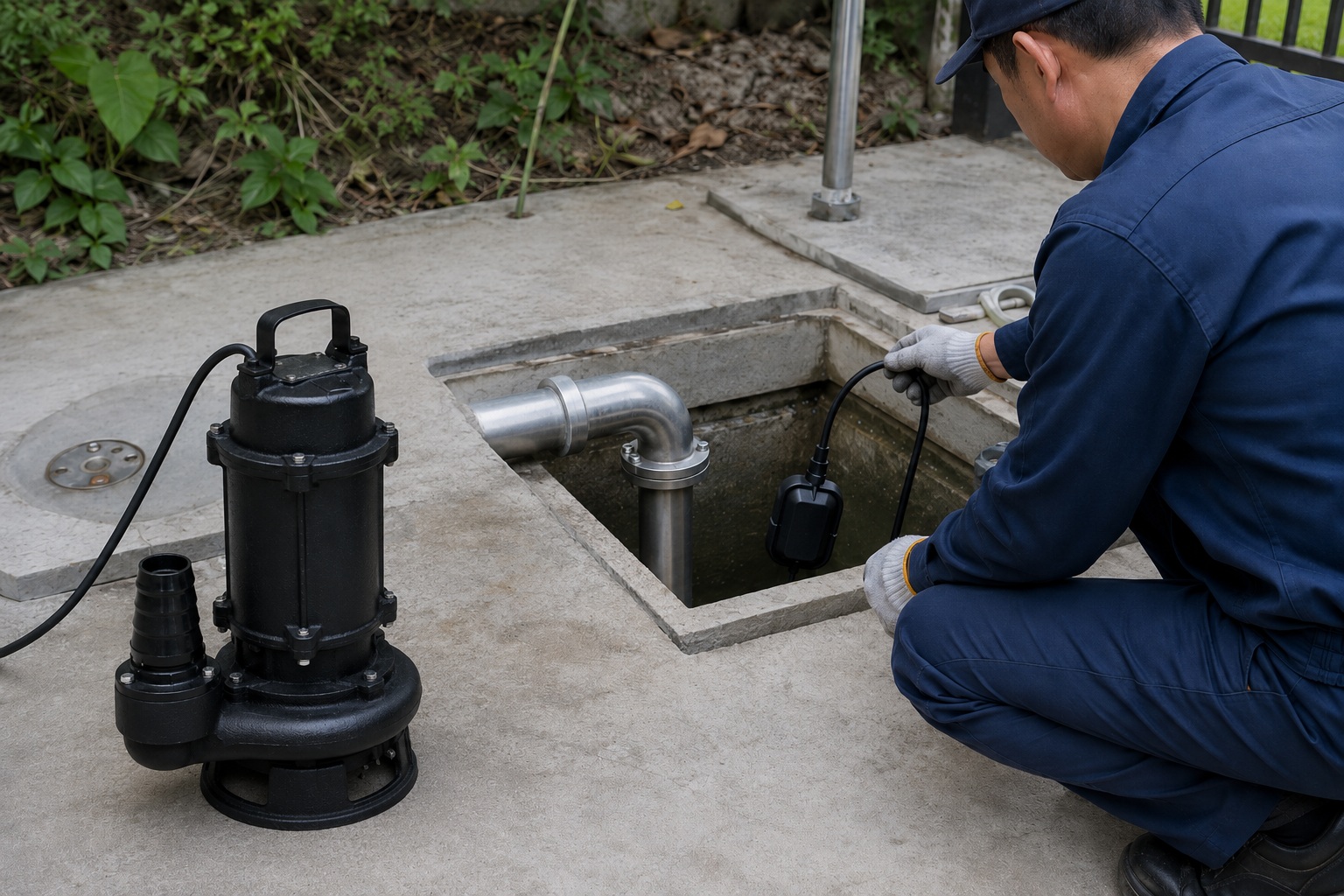
To maximize lifespan, ensure the float has a clear, unobstructed path of travel. Secure the power cable to the discharge pipe, leaving enough slack for free movement but not enough to snag. Regular inspections, at least twice a year, can catch issues before they cause failure.
A float switch's longevity is not solely dependent on its manufacturing quality.
Proper installation and routine maintenance can easily double the service life of any float.
Conversely, a poor installation can cause even the most expensive, heavy-duty float to fail in a matter of months.
These simple, low-cost procedures protect the investment in the pump and float, ensuring the entire system functions as designed for its maximum possible lifespan.
The Critical Role of Proper Installation
Getting the setup right from the start is the most effective way to ensure a long service life.
-
Set the Tether Length: For a tethered switch, the distance between the float and the point where the cable is secured determines the pumping range (the difference between the 'on' and 'off' water levels). A range that is too short causes the pump to "short cycle," turning on and off frequently. This dramatically increases wear on the pump's motor and the float's internal switch, potentially reducing their lifespan by 30-50%.
-
Avoid Obstructions: The float must be able to move freely up and down without hitting the basin walls, the pump itself, discharge pipes, or any other equipment in the pit. Any obstruction can cause the float to become stuck in the 'on' or 'off' position.
-
Secure the Cable: The float's electrical cable should be secured to the discharge pipe or a dedicated bracket. This prevents it from getting tangled around the pump or sucked into the pump's intake. Leaving too much slack is a common mistake that leads to snagging and cable damage.
Routine Maintenance Checklist
A simple inspection, performed every 6 to 12 months, can identify problems before they lead to failure.
- Check for Debris: Remove any grease, sludge, or solid waste that has accumulated on the float body or cable, as this can impede its movement.
- Test the Switch: Manually lift the float to ensure it activates the pump. As you lower it, confirm that the pump shuts off at the correct level.
- Inspect the Cable: Look for any signs of cracking, abrasion, or kinking in the cable, especially near the float body and the tether point, where most flexing occurs.
- Check Buoyancy: Ensure the float is riding high in the water. A waterlogged float will sit low and must be replaced immediately.
| Common Installation Mistake | Consequence | Estimated Lifespan Reduction |
|---|---|---|
| Tether too short / Incorrect range | Pump short-cycling, excessive wear on switch & motor | 30-50% |
| Cable not secured properly | Snagging, cable fatigue, water ingress at connection | 50-75% |
| Float can touch basin walls | Stuck float, pump burnout or flooding, physical damage | 60-80% |
| Using wire nuts below water level | Connection failure, short circuits | 90-100% |
Tips for Maximizing Pump Float Durability
You want your pump system to be a "set it and forget it" solution.
But achieving true long-term reliability requires smart choices from the start.
A little foresight goes a long way.
Select a float specifically rated for your application—clean water, dirty water, or sewage. A heavy-duty switch for sewage may last 10+ years, while a standard sump pump switch might fail in under a year in the same environment. Match the float to the task.
Maximizing the life of a pump float goes beyond just buying a quality product and installing it correctly.
It involves a holistic approach to system design and management.
By selecting the right type of float for the specific liquid being pumped and actively monitoring its performance, you can create a robust and resilient system that minimizes downtime and unexpected failures.
This strategic approach ensures the lowest total cost of ownership over the long term.
Matching the Float to the Application
Using the wrong tool for the job is a recipe for failure.
The same is true for pump floats.
The chemistry and contents of the water have a massive impact on the float's material.
-
Clean Water: In applications like rainwater harvesting or draining clean water sumps, a standard, general-purpose float switch is usually sufficient.
-
Dirty Water / Effluent: For sump pits that handle washing machine discharge or general ground water, a more robust float is needed. The float body should be resistant to common detergents, and the switch mechanism should be designed to handle a higher number of cycles.
-
Sewage and Industrial Waste: This is the most demanding environment. The float must be made from chemically resistant materials like polypropylene to withstand corrosive liquids and organic compounds. The switch mechanism should be mercury-free for environmental safety and sealed to a much higher standard. Using a clean-water float in a sewage pit can lead to failure in less than a year, whereas a properly specified sewage-rated float can last for a decade.
Monitoring for Early Signs of Wear
Catching a problem early can prevent a major system failure.
Be attentive to changes in your pump's behavior.
- Erratic Operation: If the pump starts running for longer or shorter periods than usual, or if it sometimes fails to turn on, the float switch is a primary suspect.
- Visible Damage: During routine checks, look for any cracks, deep scratches, or discoloration on the float's casing. Check if the cable has become stiff or brittle.
- Waterlogged Float: A float that is not buoyant is a float that has failed. It will sit low in the water or may even sink. This is a clear sign that water has breached the housing and the float needs immediate replacement.
The Stability Factor for Flotation Platforms
For larger systems using flotation platforms, stability is directly linked to the longevity of the entire assembly.
An unstable platform puts constant, uneven stress on the frame, the pontoons, and the pump's mounting and piping.
As discussed by professional engineers, a wide platform design is inherently more stable.
A square or rectangular frame with pontoons at the corners, or a catamaran-style design with two long pontoons, distributes weight more effectively and resists tipping.
This is especially critical when one of several pumps is removed for maintenance, an event that can dangerously unbalance a poorly designed, narrow barge.
A stable platform reduces vibration and mechanical stress, extending the life of not only the pontoons but also the expensive pumping equipment it supports.
Conclusion
A pump float's lifespan depends on material quality, application matching, and proper installation.
Choosing a durable, appropriate float and maintaining it correctly ensures long-term system reliability and prevents costly failures.
FAQs
How do you test if a pump float is bad?
Manually lift the float.
If the pump doesn't turn on, or if it doesn't turn off when you lower it, the switch is likely faulty.
Also, check if the float is waterlogged.
Can a float switch be repaired?
No, float switches are factory-sealed units.
Attempting to repair them is unsafe and ineffective.
If a float switch fails, it must be replaced with a new one.
Why does my sump pump float keep getting stuck?
It's likely obstructed by the basin walls, plumbing, or debris.
Ensure it has a clear path to move up and down, and adjust its position or tether length if necessary.
What is the difference between a normally open and normally open float switch?
A normally open (NO) switch closes the circuit (turns on) when the float rises, used for emptying a tank.
A normally closed (NC) switch opens the circuit (turns off) when the float rises, used for filling a tank.
How high should a sump pump float be set?
Set the 'turn on' level a few inches below the inlet drain tile and the 'turn off' level 2-4 inches above the pump's intake to prevent the pump from running dry.
Are mercury float switches still used?
While they were once common, mercury switches are being phased out in many regions due to environmental concerns.
Most modern, high-quality switches use a mercury-free mechanical ball and contact system.
How much does it cost to replace a pump float switch?
The part itself can range from $20 for a basic model to over $100 for a heavy-duty, industrial-grade switch.
Professional installation can add to the total cost.