Do you need water from a deep well but feel lost?
Choosing the wrong pump leads to wasted money and poor performance.
This guide will help you understand pump depth and select the right one.
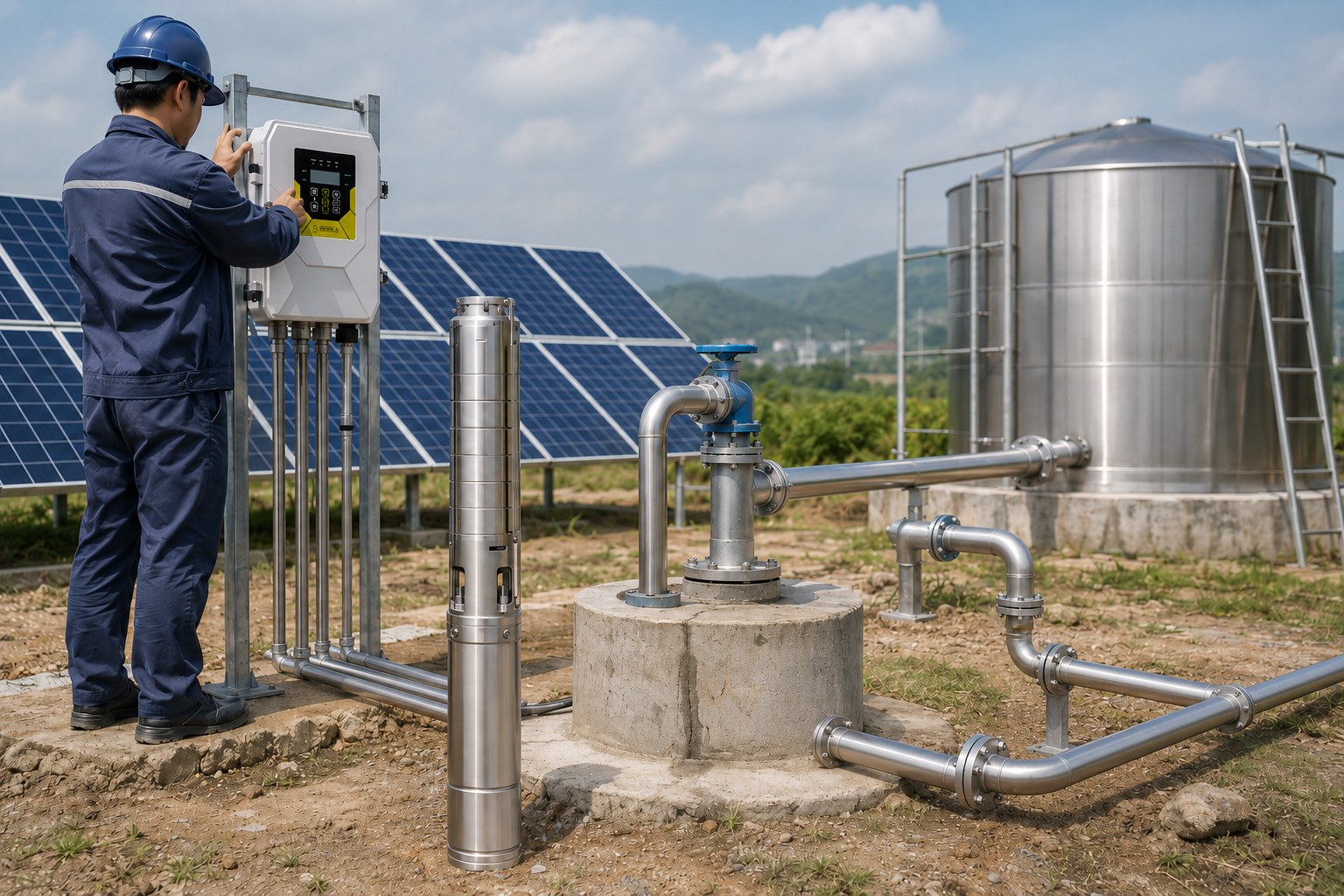
Submersible pumps can work in incredibly deep wells, often exceeding 1,000 feet (300 meters).
The maximum depth isn't a single number; it depends on the pump's specific design for flow and pressure.
Deep well models are engineered to overcome immense water pressure and lift water efficiently.
You now know that pumps are capable of reaching great depths.
However, the deepest pump is not always the best pump for your well.
A successful water system depends on matching the pump's capabilities to your exact requirements.
Let's explore the critical factors beyond just depth to ensure you make the right choice.
Aren’t Pumps Sized by Horsepower?
Many shoppers believe a higher horsepower pump is always better.
This common myth often leads to an inefficient and costly system.
Understanding the real metrics of pump performance, flow and pressure, is far more important.
Horsepower is a misleading specification when viewed in isolation.
For example, two different 1/2 HP pumps can have vastly different outputs.
One might deliver 5 gallons per minute (GPM) at high pressure, while another delivers 10 GPM at lower pressure.
Focus on the "design point," which combines flow and pressure, not just horsepower.
Choosing a pump based only on its horsepower is one of the biggest mistakes you can make.
It's an easy trap to fall into at the hardware store or while browsing online.
You might see two 1 HP pumps and assume they perform the same job.
They do not.
These pumps have different internal components, called impellers.
The impellers are engineered to create different combinations of flow and pressure.
A pump with a high-pressure design will produce less flow.
A pump with a high-flow design will produce less pressure.
Both could use a 1 HP motor.
The "Design Point" is What Matters
Instead of horsepower, professionals use a more precise measurement called the "design point."
The design point specifies two things.
First, it defines the required flow rate, measured in Gallons Per Minute (GPM) or cubic meters per hour.
This is the volume of water you need.
Second, it defines the required pressure the pump must generate.
This pressure is often expressed as 'head,' measured in feet or meters.
Head is the vertical height a pump can lift water.
For every 2.31 feet of height, 1 Pound per Square Inch (PSI) of pressure is created at the bottom.
So, a pump must overcome the head to get water to your tap.
Efficiency Saves You Money
A more efficient pump can deliver your required flow and pressure using less power.
This means it might use a lower horsepower motor than a cheaper, less efficient competitor.
While an efficient pump may have a higher purchase price, it saves you money every day.
The pump in your well can run for several hours daily.
Over a 7 to 10-year lifespan, the energy savings from an efficient pump can be substantial.
These savings will easily pay back the higher initial cost.
The "cheap" pump often becomes the most expensive one in the long run due to high electricity bills.
| Feature | Pump A (High-Efficiency) | Pump B (Standard) |
|---|---|---|
| Horsepower | 1.5 HP | 1.5 HP |
| Flow @ 500' Head | 15 GPM | 11 GPM |
| Energy Use (kWh) | 1.3 kW | 1.7 kW |
| Estimated 10-Year Energy Cost | $3,790 | $4,960 |
Note: Costs are estimates and vary with electricity rates and usage.
How Do You Calculate Your Pumping Needs?
Calculating your system's pressure requirement seems complicated.
Getting this calculation wrong can mean your pump delivers a weak trickle or no water at all.
Let's break down how to simply calculate your Total Dynamic Head (TDH).
To determine your required pump pressure, you must calculate the Total Dynamic Head (TDH).
This is the total pressure the pump must create.
It includes the depth to water, elevation changes to your home, desired water pressure, and friction loss from pipes.
A correct TDH calculation ensures your pump works perfectly.
The design point of your pump is a combination of the flow you need and the pressure required to deliver it.
This pressure is called Total Dynamic Head, or TDH.
To choose the right pump, you must first calculate the TDH for your specific well system.
This is not as difficult as it sounds.
TDH is simply the sum of all the vertical heights and pressures your pump has to overcome.
Breaking Down Total Dynamic Head (TDH)
We can calculate TDH by adding four key factors together.
-
Pumping Water Level: This is the most important factor.
It is the depth from the ground surface down to the water level in your well while the pump is running.
Your well driller's log should provide this information.
It is different from the static water level, which is the water level when the pump is off.
-
Elevation Head: This is the vertical height difference between the top of your well and the point of use.
If your house is on a hill 50 feet above your well, you must add 50 feet to your TDH.
-
Pressure Head: This is your desired water pressure at the house, converted into feet of head.
Most homes require between 40 and 60 PSI.
To convert PSI to feet of head, you multiply by 2.31.
So, a desired pressure of 50 PSI equals 115.5 feet of head (50 x 2.31).
-
Friction Loss: As water flows through pipes, it creates friction, which is a form of pressure loss.
Longer pipes and higher flow rates create more friction.
This value is often calculated by your contractor, but for a typical home system, it might be between 20 and 40 feet of head.
A Practical TDH Calculation Example
Let's put these factors together in an example.
- Your well has a pumping water level of 300 feet.
- Your house sits on a hill, creating 50 feet of elevation head.
- You want 50 PSI of pressure at the house, which is 115 feet of pressure head.
- Your pipes create 35 feet of friction loss.
The calculation is straightforward:
TDH = Pumping Water Level + Elevation Head + Pressure Head + Friction Loss
TDH = 300 ft + 50 ft + 115 ft + 35 ft = 500 ft
In this scenario, you need a pump that can deliver your desired flow rate (e.g., 15 GPM) at 500 feet of Total Dynamic Head.
With this design point (15 GPM @ 500' TDH), you can look at pump performance curves from manufacturers to find the perfect match.
Which Type of Submersible Pump is Right for Your Well?
You now know your required flow and pressure.
But not all submersible pumps are created equal.
Choosing one based only on performance curves can lead to failure if your water conditions are harsh.
The best pump type depends on your well's depth, yield, and water quality.
Screw pumps excel in deep, low-yield wells.
Plastic impeller pumps are economical for high-flow needs in clean water.
Stainless steel impeller pumps offer ultimate durability for corrosive or demanding environments.
With growing demand for reliable water, especially in off-grid areas, different pump technologies have been perfected.
Solar-powered deep well pumps are a leading example of this innovation.
They typically fall into three popular categories, each designed for a specific job.
Understanding these types will help you match a pump to your well conditions and water needs.
For Deep Wells and High Head: The Screw Pump
The solar screw pump is a type of positive displacement pump.
It uses a rotating stainless steel screw inside a rubber stator.
As the screw turns, it traps pockets of water and pushes them upwards.
This mechanism is highly effective at creating very high pressure, or head.
It is ideal for very deep wells where water needs to be lifted hundreds of feet.
However, this design provides a lower flow rate compared to other types.
Applications: Domestic water for homes, drinking water for livestock, and small-scale drip irrigation.
Advantages:
- Excellent for very deep wells (over 300 feet).
- Highly resistant to sand and silt in the water.
- Can operate reliably in harsh water conditions.
Limitations: Limited flow rate, making it unsuitable for large-scale farm irrigation.
For High Flow and General Use: The Plastic Impeller Pump
This is a multi-stage centrifugal pump.
It uses a series of durable plastic impellers stacked on top of each other.
As the impellers spin, they use centrifugal force to push water upwards from one stage to the next, building pressure and flow.
This design is engineered to deliver a high volume of water at a medium head.
It is a very popular and economical choice for a wide range of applications.
Applications: Farm irrigation, filling storage tanks, pasture water supply, and larger home gardens.
Advantages:
- Provides high water output (high GPM).
- Good resistance to fine sand.
- Lightweight and more affordable.
Limitations: Not ideal for very deep wells or highly corrosive water environments.
For Premium Quality and Corrosive Water: The Stainless Steel Impeller Pump
This model is the premium option for durability and longevity.
It uses impellers made from SS304 stainless steel, and often the pump body is also stainless steel.
This material is specifically chosen for its high resistance to corrosion and abrasion.
It is the best choice for wells with acidic or alkaline water, which would quickly damage other pumps.
Applications: Water supply in areas with poor water quality, high-end homes, and commercial applications where reliability is paramount.
Advantages:
- Extremely high resistance to corrosion.
- Very long service life, even in harsh conditions.
- High reliability for critical water needs.
Limitations: Higher initial cost and heavier weight.
| Pump Type | Best For | Flow Rate | Head/Pressure | Corrosion Resistance |
|---|---|---|---|---|
| Screw Pump | Very Deep Wells (>300 ft) | Low | Very High | Good |
| Plastic Impeller | High Volume Needs | High | Medium | Fair |
| Stainless Steel Impeller | Corrosive Water | High | Medium-High | Excellent |
What Powers the Pump, and Why Does it Matter?
The pump itself is only one part of the system.
A powerful pump paired with an inefficient motor is like a sports car with a bad engine.
The motor's efficiency is the key to unlocking performance and long-term savings.
Modern high-performance pumps are driven by brushless DC (BLDC) permanent magnet motors.
These motors achieve efficiencies over 90%, compared to 60-70% for older designs.
This means more of the sun's energy is converted into water flow, reducing panel costs and improving reliability.
The motor is the heart of your water pump system.
It is the core technology that converts electrical energy into the spinning motion that drives the pump.
All three of the pump types we discussed—screw, plastic impeller, and stainless steel—can be powered by the same advanced motor technology.
This technology is the Brushless DC (BLDC) permanent magnet motor.
Its design and efficiency are what truly set modern pump systems apart.
The Power of BLDC Permanent Magnet Motors
A BLDC motor uses powerful permanent magnets on its rotor.
This eliminates the need for carbon brushes, which wear out in traditional DC motors.
The result is a motor that is virtually maintenance-free.
These motors are also incredibly efficient, with some models exceeding 90% efficiency.
This means over 90% of the electricity supplied to the motor is converted into useful mechanical power.
This high efficiency is achieved using advanced materials, like powerful neodymium iron boron magnets.
Technical Advantages Over Old Motors
When compared to older motor technologies, the benefits of BLDC motors are clear.
They are significantly more powerful for their size.
Advanced BLDC motors can be up to 47% smaller and 39% lighter than traditional motors of the same power output.
This makes installation much easier, especially in deep wells where weight is a major factor.
They also provide high torque, which is the rotational force needed to start the pump and push water under heavy loads.
This is critical for deep well applications.
Because they have no brushes to wear out, their service life is extremely long.
How an Efficient Motor Saves You Real Money
The high efficiency of a BLDC motor has a direct impact on your wallet.
First, it reduces the number of solar panels needed to power the system.
Since the motor uses energy so effectively, you can achieve your desired water output with a smaller, less expensive solar array, often saving up to 25% on initial costs.
Second, it lowers your operating costs.
Every watt of electricity saved is money in your pocket, especially if you are using grid power or a generator as a backup.
Over the pump's long lifespan, these savings add up to a significant amount.
Finally, high efficiency means the pump can run better on overcast days, providing a more reliable water supply.
What if I Need Water When the Sun Isn't Shining?
Solar pumps are a fantastic, cost-effective solution.
But a common concern is the lack of water at night or on cloudy days.
This problem is solved with modern hybrid power systems, ensuring water is always available.
Modern solar pump systems can include a hybrid AC/DC controller.
This intelligent device automatically draws power from solar panels when available.
When sunlight is insufficient, it seamlessly switches to or blends in power from the AC grid or a generator, guaranteeing a 24/7 water supply.
A traditional solar-only pump system works great when the sun is bright.
But for many homes, farms, and businesses, a water supply is critical 24 hours a day.
In the past, this required large and expensive battery banks to store solar energy for use at night.
Today, a far more elegant and cost-effective solution exists: the hybrid AC/DC controller.
This device makes solar pumping a truly reliable primary water source.
The Role of the Intelligent Controller
The controller is the brain of the pump system.
Its first job is to maximize the energy from your solar panels using a function called Maximum Power Point Tracking (MPPT).
MPPT constantly adjusts the electrical load to ensure the panels are operating at their peak efficiency throughout the day.
The controller also serves as a vital protection device.
It monitors the system for problems like low water levels (dry-run protection), voltage spikes, and overheating, shutting the pump off before damage can occur.
Introducing Hybrid AC/DC Systems
A hybrid controller is designed with two power inputs: a DC input for solar panels and an AC input for the electrical grid or a generator.
The controller's logic is programmed to always prioritize free solar energy.
When the sun is shining, the pump runs entirely on DC power.
On a cloudy day, when solar power is reduced, the hybrid function can blend AC power with the available DC power to maintain pump speed and water flow.
When the sun goes down, the controller automatically switches the pump to run entirely on the AC power source.
The switch is seamless.
You get the water you need without any interruption.
The Benefit of a 24/7 Water Supply
This hybrid technology provides complete peace of mind.
You never have to worry about running out of water for a morning shower or for your livestock at night.
It gives you the best of both worlds.
You get the massive cost savings and environmental benefits of solar power.
You also get the unwavering reliability of a traditional grid-powered pump.
This technology eliminates the need for expensive battery systems for most applications, making a 24/7 solar-powered water solution more affordable and accessible than ever before.
Conclusion
A pump's maximum depth is just a starting point.
True success comes from calculating your specific needs and choosing the right pump type, an efficient motor, and a smart controller for your well.
Frequently Asked Questions (FAQs)
How do I know how deep my well is?
Your well driller's report or log is the best source for this information.
If you don't have it, a professional well service can measure the depth for you.
Can a submersible pump be too powerful for a well?
Yes, an oversized pump can remove water faster than the well can replenish it.
This is called over-pumping and can damage the pump by causing it to suck air.
How long do submersible pumps last?
A quality pump that is correctly sized and installed can last from 7 to 15 years.
Pump life depends heavily on water quality, usage, and proper installation.
What is the difference between a 2-wire and 3-wire submersible pump?
A 3-wire pump has its starting components in a control box at the surface.
This makes servicing easier than with a 2-wire pump, where components are in the motor.
Can you put a submersible pump in a shallow well?
Yes, but you must ensure it remains fully submerged for cooling.
For very shallow wells under 25 feet, a jet pump is often a more suitable and practical choice.
Does a deeper well require more horsepower?
Generally, yes.
More power is needed to lift water from greater depths against gravity and overcome the increased pressure.
What happens if a submersible pump runs dry?
Running without water causes the pump to overheat rapidly, which can destroy the motor and impellers.
A system with dry-run protection is essential to prevent this.