Is your small pond turning into a green, smelly bog?
This stagnant water can harm plants and fish, ruining your backyard oasis.
A pump could be the simple solution.
Yes, most small ponds need a pump to stay healthy and clear.
A pump circulates water, adds oxygen, and powers filters, which is vital for fish and prevents algae buildup.
However, some specific natural-style ponds might not require one.
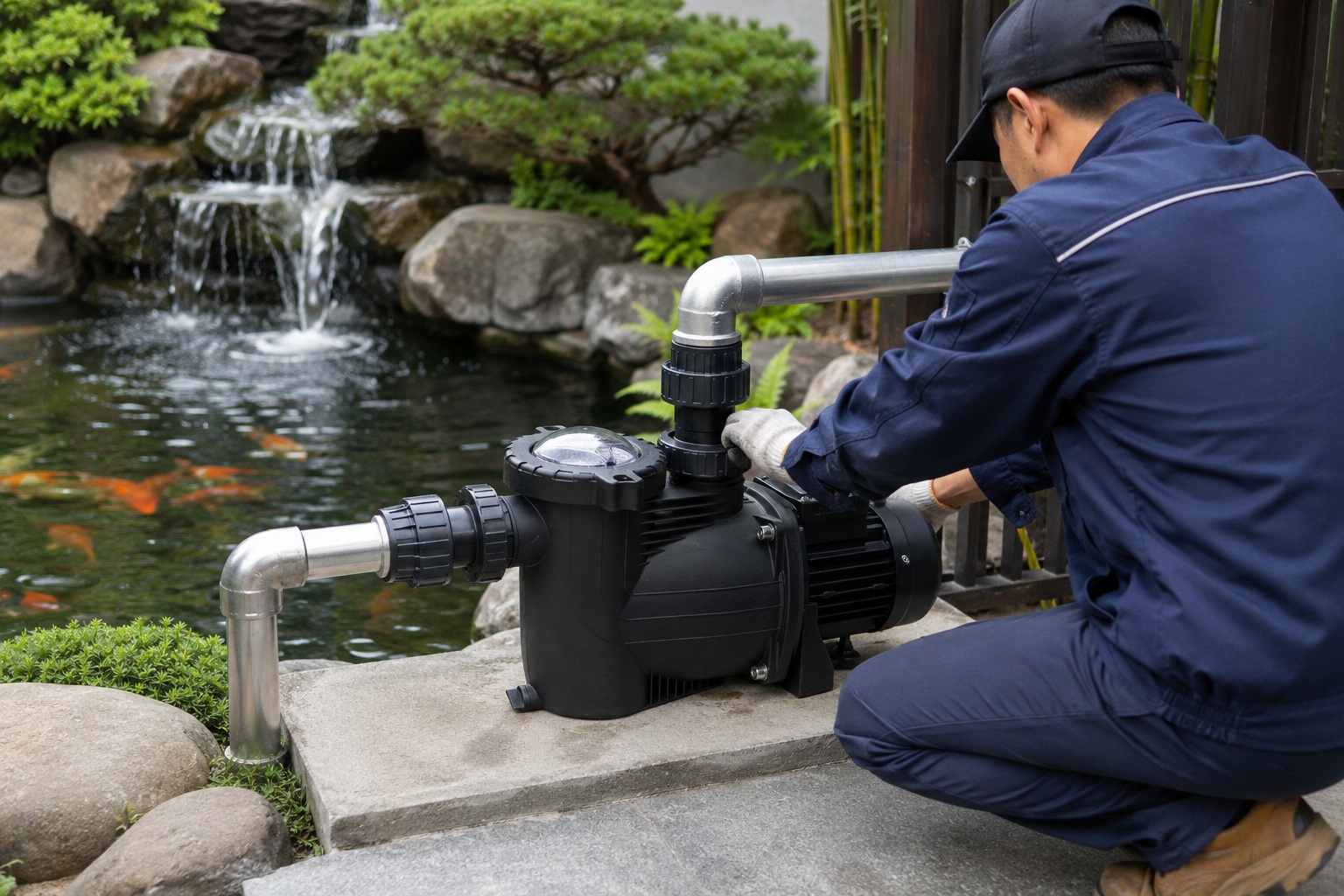
Deciding if your small pond needs a pump can feel confusing.
The answer depends on what you want from your pond.
Do you want a crystal-clear home for fish, or a wild, natural-looking water feature?
Let's break down the benefits, types, and sizes to help you make the right choice for your backyard.
What are the benefits of a pond pump?
Your pond looks lifeless and covered in algae.
Without movement, water quickly becomes stagnant, unhealthy, and unappealing.
A pump revitalizes your pond, creating a thriving ecosystem.
A pond pump is the heart of a healthy pond.
It provides essential circulation and aeration, preventing algae and keeping fish healthy.
It's the key to transforming a stagnant pool into a vibrant water feature.
A pump does more than just move water; it breathes life into your entire pond environment.
Without one, a small pond can quickly face a cascade of problems.
Understanding the core benefits shows why a pump is often considered an essential piece of equipment, not just an optional accessory.
Enhanced Water Circulation & Clarity
Stagnant water is a breeding ground for problems.
When water sits still, algae blooms can take over, turning your pond green and murky.
Debris settles on the bottom, decomposes, and releases harmful gases.
A pump creates constant water movement.
This circulation prevents algae from forming and helps the water absorb more oxygen from the surface.
A good rule of thumb is to circulate the entire volume of your pond at least once every two hours.
For a pond with a heavy fish load or in a very sunny location, circulating the volume once per hour is even better.
This continuous flow is the single most effective way to maintain clear, beautiful water.
Crucial Aeration for a Healthy Ecosystem
Fish, plants, and beneficial bacteria all need oxygen to survive.
In a still pond, oxygen levels can drop dangerously low, especially in warm weather or at night when plants consume oxygen.
This lack of oxygen, known as hypoxia, can be lethal to fish.
A pond pump significantly increases aeration in two main ways.
First, it agitates the surface, which dramatically increases the rate of gas exchange, allowing oxygen to dissolve into the water.
Second, if the pump powers a waterfall, fountain, or spitter, these features create even more surface turmoil, infusing the water with life-giving oxygen.
This oxygen-rich environment supports a robust population of beneficial bacteria, which are crucial for breaking down fish waste and other organic sludge.
Powering Filtration and Water Features
A pump is the engine that drives other critical pond systems.
Pond filters, which remove physical debris and neutralize biological waste, cannot function without a pump to push water through them.
A pump and filter combination is the ultimate duo for achieving a pristine, healthy pond.
Furthermore, if you desire the beauty and relaxing sounds of a waterfall or fountain, a pump is non-negotiable.
These decorative features rely entirely on a pump to lift water and create the desired flow.
A pump, therefore, serves both practical and aesthetic purposes, ensuring the pond is not only healthy but also a beautiful centerpiece of your garden.
What type of pump is best for a small pond?
Choosing a pump feels overwhelming with so many options.
You worry about picking the wrong type, wasting money on an inefficient or unreliable model.
The right pump type matches your pond's specific needs.
For most small ponds, a submersible electric or solar-powered pump is ideal.
The best choice depends on your access to electricity, your budget, and your water conditions.
Solar pumps offer eco-friendly operation, while specialized pumps handle unique challenges like debris or corrosive water.
The pump market has evolved significantly.
Beyond traditional electric models, new technologies offer greater efficiency and versatility.
Understanding the core mechanisms will help you select a pump that not only works but also saves you energy and lasts for years.
Let's explore the most common and innovative options for small ponds.
Conventional Submersible Pumps
These are the most common and straightforward choice for small ponds.
As the name implies, you simply place the pump directly into the pond, submerged in the water.
They are typically powered by a standard electrical outlet.
Feature pumps or fountain pumps are smaller versions of these, often coming with kits to create decorative spray patterns.
They are relatively inexpensive and easy to install, making them a popular entry-level option.
However, their performance is tied to your electrical grid, and their energy consumption can add up over time.
The Rise of Solar-Powered Pumps
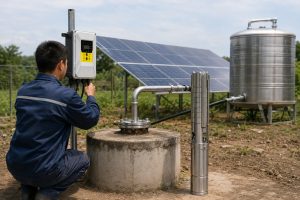
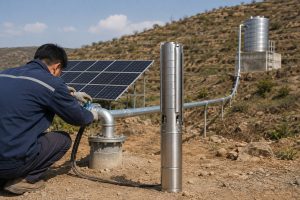
Solar pumps have become a game-changer for pond owners.
They operate independently from the power grid, making them perfect for remote areas of a garden or for homeowners seeking an environmentally friendly and cost-effective solution.
Early solar pumps had a reputation for being weak, but modern versions are incredibly efficient.
They are especially popular in sunny regions, providing a reliable water solution with zero ongoing electricity costs.
A complete solar pump kit includes a solar panel, the pump itself, and a controller, offering a complete off-grid water circulation system.
Choosing the Right Pump Mechanism
The "engine" inside the pump determines its performance characteristics.
For small ponds, you will primarily encounter two types.
-
Centrifugal Pumps (Impeller-based): This is the most common design. An impeller spins to push water outwards. The material of this impeller is a key differentiator.
- Plastic Impeller: These are lightweight, economical, and offer excellent resistance to wear from fine sand or grit. They deliver high flow rates and are perfect for general circulation and small water features in most ponds.
- Stainless Steel Impeller: This is a premium option. An SS304 stainless steel impeller offers superior durability and high resistance to corrosion. It is ideal for ponds with acidic or alkaline water, or for anyone seeking the longest possible service life.
-
Positive Displacement Pumps (Screw-based): This design uses a rotating screw inside a stator to push water. It operates differently from an impeller pump.
- Screw Pump: This type provides lower flow but can push water to a very high head, or height. It is perfect for creating tall waterfalls from a small sump. A major advantage is its exceptional ability to handle water with high sand content without clogging or wearing out quickly.
| Pump Mechanism | Best For | Flow Rate | Head (Lift) | Sand Tolerance |
|---|---|---|---|---|
| Plastic Impeller | General circulation, small features | High | Medium | Good |
| Stainless Steel Impeller | Corrosive water, long-term durability | High | Medium-High | Moderate |
| Screw Pump | High waterfalls, sandy water | Low | Very High | Excellent |
What size pump do I need for my small pond?
You're afraid of buying a pump that's too weak to keep your pond clean.
Or worse, one that's too powerful and creates a whirlpool, stressing your fish.
Sizing a pump correctly is a simple calculation.
To size a pump, you need to know your pond's volume and desired circulation rate.
A good starting point is a pump with a Gallons Per Hour (GPH) rating equal to half your pond's total volume.
For example, a 300-gallon pond needs a 150 GPH pump.
Choosing the right size pump, or its flow rate, is the most critical decision you'll make.
It's a balance between ensuring adequate circulation and avoiding excessive water turbulence.
Several factors influence this choice, from the simple dimensions of your pond to the power source that runs the pump.
Calculating Your Pond's Volume
First, you need to know how much water your pond holds.
For a square or rectangular pond, the formula is simple.
Measure the Length, Width, and Average Depth in feet.
Volume (in Gallons) = Length x Width x Depth x 7.5
For an irregularly shaped pond, you can approximate by measuring the average length and width.
Knowing this number is the foundation for every other calculation.
The GPH Rule of Thumb
The flow rate of a pump is measured in Gallons Per Hour (GPH).
The general guideline is to choose a pump that can circulate your pond's entire water volume once every two hours.
Therefore, the minimum GPH you should look for is:
Recommended GPH = Pond Volume / 2
However, this is just a baseline.
If you have a lot of fish, live in a hot climate, or want to power a large filter, a stronger pump is better.
A healthier target is to aim for a flow rate of 1 to 1.5 times the total volume of your pond per hour.
For a 500-gallon pond, this means a pump between 500 and 750 GPH would be ideal.
The Power Behind the Pump: Motor Efficiency
The heart of any pump is its motor.
The motor's efficiency dictates how much electricity is needed to achieve a certain GPH.
Traditional AC motors can be inefficient, but modern pumps often use advanced motors.
A Brushless DC (BLDC) permanent magnet motor is a prime example of high-efficiency technology.
These motors can achieve efficiencies exceeding 90%, compared to 40-50% for older motor types.
This means a pump with a BLDC motor can deliver the same flow rate while using up to 50% less energy.
For a solar-powered system, this high efficiency is critical.
It means you can power the same pump with a smaller, less expensive solar panel.
These motors are also more compact, lighter, and have a longer, maintenance-free service life.
Factoring in Head Height
"Head" or "Head Height" is the vertical distance the pump needs to push water.
If your pump is just circulating water inside the pond, the head height is minimal.
But if you are pumping water up to the top of a waterfall, you must account for that height.
Every pump has a "max head," which is the highest point it can lift water.
At its max head, a pump's flow rate drops to zero.
Always choose a pump with a max head rating that is significantly higher than your waterfall's height to ensure you get adequate flow.
| Pond Volume (Gallons) | Scenario | Recommended Flow Rate (GPH) |
|---|---|---|
| Up to 100 | Simple water feature, no fish | 50 - 100 |
| 100 - 250 | A few small fish, minimal plants | 150 - 375 |
| 250 - 500 | Moderate fish load, small waterfall | 375 - 750 |
When might a small pond NOT need a pump?
You love the idea of a natural pond but worry it's impossible.
You've been told every pond needs mechanical filtration to survive.
A self-sustaining pond is achievable under specific conditions.
A pump-less pond can work if it's designed as a balanced wildlife pond with very few fish and many plants.
These natural ecosystems rely on plants for oxygenation and filtration.
However, they require careful planning and are less stable than a pumped pond.
While a pump is beneficial for the vast majority of ponds, there are exceptions.
The goal of a pump is to replicate and amplify the cleaning processes found in natural bodies of water.
If you can create a system where nature does all the work, you can forgo the mechanics.
This approach, however, comes with its own set of rules and limitations.
The Natural or Wildlife Pond
The key to a successful pump-less pond is to create a perfectly balanced ecosystem.
This style of pond is often called a "wildlife pond."
Its primary purpose is to attract and support local wildlife like frogs, dragonflies, and birds.
The system relies on a very large number of aquatic plants to perform the functions of a pump and filter.
Oxygenating plants release oxygen directly into the water during the day.
Other plants with extensive root systems absorb excess nutrients, like nitrates from waste, which would otherwise feed algae.
For this to work, the "bio-load"—the amount of waste produced by living creatures—must be extremely low.
This means keeping very few, if any, fish.
A handful of native minnows might be okay, but goldfish or koi, which produce a lot of waste, would quickly overwhelm the natural system.
Tiny Water Bowls and Container Ponds
If your "pond" is extremely small, such as a decorative water bowl or a half-barrel container on your patio, a pump may be overkill.
In these fishless micro-ponds, you can maintain water quality manually.
This involves regularly scooping out leaves and debris and performing partial water changes every week or two to prevent stagnation and mosquito breeding.
Adding a few oxygenating plants can help keep the water fresher for longer.
This approach requires consistent manual effort, which a pump would otherwise automate.
The Trade-Off: Maintenance vs. Equipment
Ultimately, the choice comes down to a trade-off.
A pond with a pump and filter is a more controlled, stable environment that requires less guesswork.
It allows for a higher fish population and consistently clear water with minimal manual intervention beyond routine filter cleaning.
A pump-less pond requires a deeper understanding of botany and ecology.
It demands patience to establish and can be more susceptible to sudden imbalances, like an algae bloom after a string of hot, sunny days.
It is a "hands-on" approach that substitutes mechanical work with ecological knowledge and manual labor.
How can I ensure my pump runs reliably?
You've invested in a pump, but you're worried about it failing.
A clogged or broken pump can quickly turn your clear pond into a green mess.
Ensuring reliability starts with smart choices before and after installation.
To ensure reliability, choose a durable pump suited to your water, use an intelligent controller to protect the motor, and perform simple routine maintenance.
For off-grid or 24/7 needs, a hybrid power system offers the ultimate peace of mind.
A pump is a machine that runs for hours on end, often 24/7.
Its reliability is paramount to the health of your pond.
Modern pump systems have incorporated advanced technology not just to improve efficiency, but also to enhance durability and provide uninterrupted service, even when conditions are less than ideal.
Choosing Quality and Durability
Reliability starts with the pump itself.
As discussed, selecting the right materials for your specific water conditions is crucial.
If your water is acidic or you simply want the longest-lasting equipment, investing in a pump with a stainless steel (SS304) body and impeller is a wise choice.
If you anticipate sand or grit, a screw-type pump or one with a durable plastic impeller designed for wear resistance is better.
Cheaping out on a pump with low-quality materials is a false economy, as it will likely fail prematurely and require replacement.
The Role of an Intelligent Controller
Modern pump systems, especially solar ones, come with a sophisticated controller.
This controller is the brain of the operation.
An MPPT (Maximum Power Point Tracking) controller, for example, constantly optimizes the pump's performance based on the available sunlight.
It intelligently adjusts the motor's speed to maximize water output throughout the day, ensuring the pump doesn't try to draw more power than the panels can provide, which protects the motor from stress.
These controllers also include vital protections, such as running dry protection, which automatically shuts off the pump if the water level drops too low, preventing the motor from burning out.
Ensuring 24/7 Operation with Hybrid Power
What if you need your pump to run at night or on heavily overcast days?
This is a common concern, especially for ponds with high fish loads that need constant aeration.
The most advanced systems solve this with an AC/DC hybrid controller.
This innovative device allows you to connect both solar panels and your home's AC grid power (or a generator) to the controller simultaneously.
The system is smart enough to prioritize free solar power whenever it's available.
If solar energy is insufficient, it can automatically blend in AC power or switch over to it completely.
When the sun returns, it seamlessly switches back to solar.
This provides a truly worry-free, 24/7 water supply, giving you the economic and environmental benefits of solar without ever compromising on reliability.
Routine Maintenance
Even the best pumps require a little care.
The most important task is to keep the pump's intake screen clear of leaves, string algae, and other debris.
A clogged intake forces the pump to work harder and can reduce water flow to a trickle.
Periodically, perhaps once or twice a year, it's a good idea to unplug the pump, remove it from the pond, and inspect the impeller to ensure nothing is wrapped around it.
This simple cleaning takes only a few minutes but can significantly extend the life of your pump.
Conclusion
A pump is a vital investment for most small ponds, ensuring a healthy, clear, and vibrant aquatic environment.
By choosing the right type, size, and technology, you create a stable ecosystem.
FAQs
How long should a pond pump run per day?
For optimal pond health and water clarity, a pond pump should run 24 hours a day, 7 days a week.
Can a pump be too strong for a pond?
Yes, a pump that is too powerful can create excessive turbulence, which can stress fish and stir up bottom sediment.
Do pond pumps use a lot of electricity?
Modern, energy-efficient pumps, especially those with BLDC motors, use surprisingly little electricity, making their running costs very low.
How do I hide a pond pump?
You can hide a submersible pump behind rocks, inside a decorative planter, or by placing it within a pond skimmer box.
Will a pond pump keep water clear?
A pump helps keep water clear by circulating it through a filter and preventing the stagnation that leads to algae growth.
Can I use a fountain instead of a pump?
A fountain is not a replacement for a pump; rather, a fountain is a water feature that is powered by a pump.
Do solar pond pumps work on cloudy days?
Yes, they work at a reduced power on cloudy days.
Advanced systems can use hybrid AC power or a battery for continuous operation.
What happens if my pond pump stops working?
If a pump stops, water will stagnate, and oxygen levels will drop quickly, which can be dangerous for fish and cause algae blooms.