Struggling with unreliable water access or soaring energy bills for your well?
You need a consistent, cost-effective water supply, but traditional pumps are failing you.
Absolutely.
Solar pumps are an excellent, reliable solution for wells.
They operate independently of the power grid, harness free energy from the sun, and are specifically designed for various well depths and water needs, making them ideal for homes, farms, and ranches.
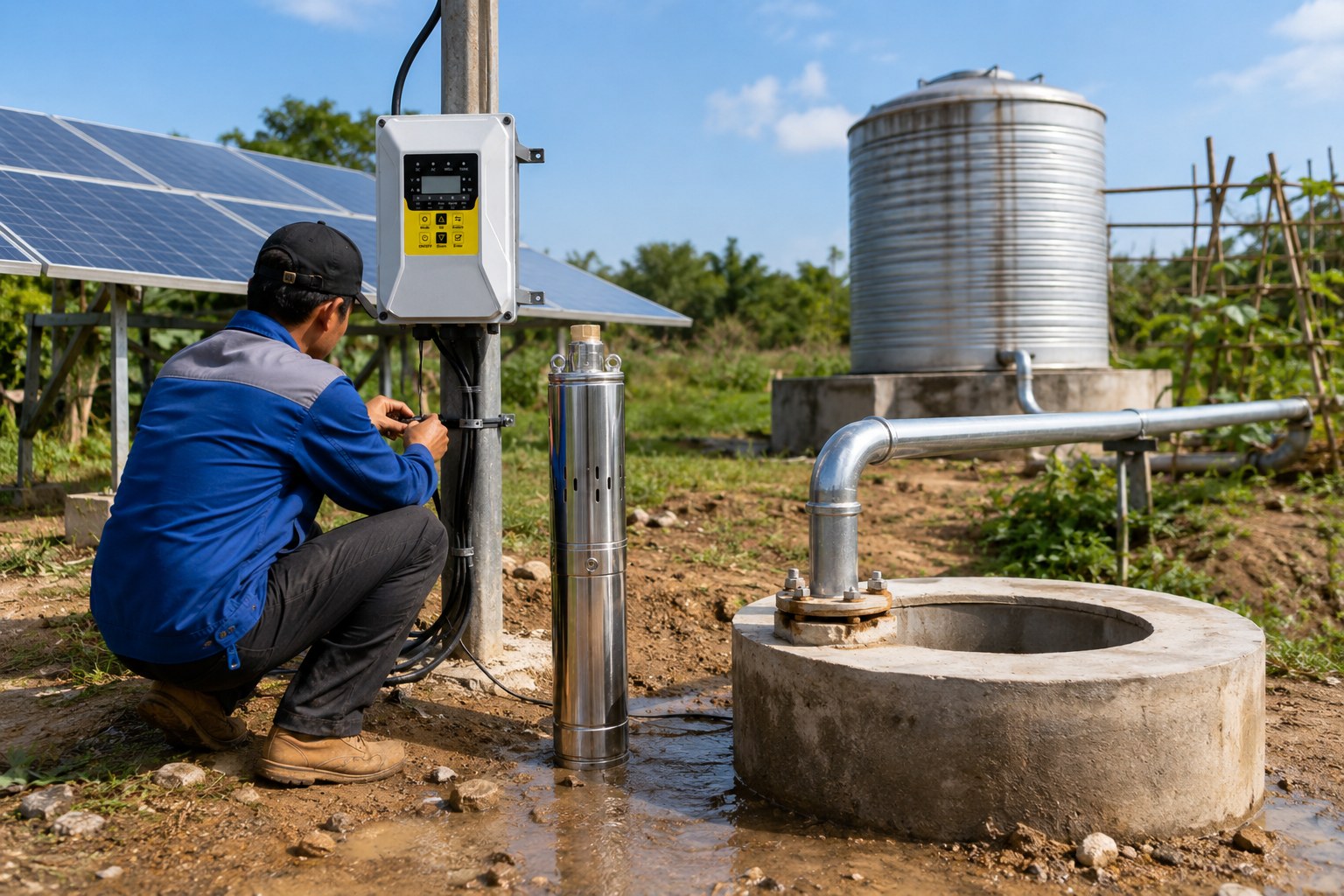
Solar-powered water pumps offer a powerful alternative to traditional fuel-burning or grid-tied systems.
They are becoming essential in regions across Africa, the Americas, Australia, and Asia for good reason.
This article will break down how they work, the different types available, their benefits, and what you need to consider.
Let's explore how you can achieve water independence with solar technology.
How Do Solar Pumps Work for Wells?
Are you wondering how sunlight can possibly draw water from deep underground?
It seems complex, but the process is straightforward and highly efficient, relying on a few key components.
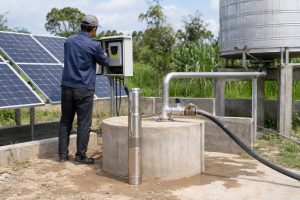
A solar well pump system works by converting sunlight directly into electricity using photovoltaic (PV) panels. This DC electricity powers a specialized pump motor, which then extracts water from the well. A controller manages the energy flow, optimizing performance even in low-light conditions.
A solar pump isn't just a single piece of equipment; it's a complete system designed to work in harmony.
Understanding each part helps clarify how it provides a reliable water source.
The magic happens when photons from the sun strike the solar panels, creating an electrical current.
This process, known as the photovoltaic effect, is the foundation of the entire system.
It happens without any moving parts, making the energy generation step incredibly reliable.
From there, the electricity travels to the pump, but several components ensure the system runs smoothly and efficiently, protecting your investment and maximizing water output.
The Core Components of a Solar Pumping System
A typical solar well pump system consists of several critical parts working together.
-
Solar Panels (PV Array): These are the power source.
They absorb sunlight and convert it into direct current (DC) electricity.
The size and number of panels depend on the pump's power needs, your geographic location's sun hours, and the total vertical lift required for the water. -
Water Pump Motor: This is the heart of the operation.
Solar pumps use specialized motors, often brushless DC (BLDC) types, designed for high efficiency and variable power input.
The motor drives the pump mechanism to move water from the source. -
Pump End: This is the part that physically moves the water.
It can be a submersible type placed down in the well or a surface type located above ground.
Different designs, like centrifugal or positive displacement, are used for different applications. -
Controller: This is the brain.
The controller manages the power from the panels to the pump.
It often includes Maximum Power Point Tracking (MPPT) technology, which adjusts the electrical load to get the most power possible from the solar panels throughout the day, boosting water output by up to 30%.
It also protects the pump from over-voltage or running dry. -
Inverter (Optional): Standard solar panels produce DC electricity.
If the pump motor is designed to run on alternating current (AC), an inverter is needed to convert the DC power to AC.
However, most modern solar-specific pumps are DC-powered for higher system efficiency, eliminating the need for an inverter.
The Pumping Process Step-by-Step
- Energy Capture: Sunlight hits the solar panels, generating DC electricity.
- Power Management: The electricity flows to the controller.
The MPPT controller optimizes this power for the pump. - Motor Activation: The optimized electricity powers the pump's motor.
- Water Extraction: The motor drives the pump, which lifts water from the well through pipes.
- Water Delivery: Water is delivered to a storage tank, an irrigation system, or directly to a water trough for livestock.
For added reliability, many systems include sensors.
A float switch in a storage tank can automatically turn the pump off when the tank is full, preventing overflow and wasted energy.
Similarly, well probes can shut the pump off if the water level drops too low, protecting the pump from damage.
| Component | Function | Key Feature |
|---|---|---|
| Solar Panels | Convert sunlight to DC electricity | 25+ year warranty is common |
| Pump Controller | Manages power and protects the pump | MPPT technology boosts efficiency |
| Pump Motor | Drives the pump mechanism | High-efficiency BLDC motors are preferred |
| Water Storage | Stores water for use anytime | Tanks are simpler and cheaper than batteries |
| Sensors | Automate operation and protect equipment | Float switches and dry-run sensors |
This integrated approach ensures that even on days with variable sunlight, the system can operate effectively, providing a steady and dependable water supply where it's needed most.
What Types of Solar Well Pumps Are Available?
Feeling overwhelmed by the different pump options?
Choosing the wrong type can lead to poor performance and wasted money, so it’s crucial to match the pump to your specific well and water needs.
Solar well pumps primarily come in two physical forms: submersible and surface. Beyond that, they are differentiated by their internal mechanism, with the three most popular deep well types being solar screw, plastic impeller, and stainless steel impeller pumps, each serving a unique purpose.
The best pump for your well depends on several factors: the depth of your well (static water level), the amount of water you need per day (flow rate), and the water quality (e.g., sandy or corrosive).
First, you must determine if you need a submersible or surface pump.
A submersible pump is installed down inside the well, underwater.
These are necessary for deep wells, as they push water to the surface rather than pulling it.
A surface pump sits on the ground and pulls water up through a suction pipe.
They are only effective for shallow wells where the water level is less than 20 feet (about 6 meters) below the surface.
For deep wells, which are common in many off-grid applications, the choice then comes down to the internal design of the submersible pump.
A Closer Look at Deep Well Pump Technologies
The core technology inside a submersible pump dictates its performance characteristics.
Let's break down the three leading options for solar deep well applications.
1. Solar Screw Pumps: The High-Head Specialist
This type of pump is a positive displacement pump.
It uses a single helical rotor (a stainless steel screw) rotating inside a resilient stator (rubber).
This action creates sealed cavities of water that are pushed progressively up to the surface.
- Performance: They excel at producing high pressure (head) but deliver a lower volume of water (flow rate).
This makes them perfect for lifting water from very deep wells, sometimes exceeding 600 feet (180 meters). - Best Applications: Ideal for domestic water supply, filling drinking troughs for livestock, or small-scale, low-volume irrigation where the well is exceptionally deep.
They are very popular in electricity-scarce regions of Africa and Latin America. - Key Advantage: Their design makes them highly resistant to sand and silt.
The rubber stator can handle abrasive particles better than the tight-fitting components of a centrifugal pump, giving them a longer life in harsh water conditions.
2. Solar Plastic Impeller Pumps: The High-Flow Workhorse
These are multi-stage centrifugal pumps.
They use a series of stacked impellers that spin at high speed.
Each impeller stage adds pressure, increasing the total head the pump can achieve.
- Performance: These pumps are designed to deliver a high flow rate at a medium head.
They are the go-to choice for applications requiring large volumes of water. - Best Applications: Perfect for farm irrigation, large-scale livestock watering, and supplying water to home gardens or communities.
They are widely used across the Americas and Africa for agricultural purposes. - Key Advantage: They offer a fantastic balance of performance and cost.
The durable plastic impellers are engineered to be wear-resistant against fine sand, and the pump's lightweight nature makes it easier and more economical to install.
3. Solar Stainless Steel Impeller Pumps: The Durability Champion
This model is functionally similar to the plastic impeller pump but built for maximum longevity in challenging environments.
It uses impellers and a pump body constructed from high-grade SS304 or SS316 stainless steel.
- Performance: They deliver high flow rates at medium-to-high head, similar to plastic impeller models, but with superior resilience.
- Best Applications: Specifically designed for use in corrosive water conditions, such as acidic or alkaline water.
They are the premium choice for alkaline soil regions in Australia, parts of the Americas with aggressive water, and high-end residential or commercial properties demanding the highest reliability. - Key Advantage: Extreme corrosion resistance.
This ensures a very long service life and consistent performance, even when pumping water that would quickly degrade lesser materials.
| Pump Type | Best For | Flow Rate | Head (Pressure) | Sand Resistance |
|---|---|---|---|---|
| Screw Pump | Very Deep Wells | Low | Very High | Excellent |
| Plastic Impeller | High Volume Needs | High | Medium | Good |
| SS Impeller | Corrosive Water | High | Medium-High | Good |
By understanding these distinctions, you can select a pump portfolio that covers diverse market needs, from low-flow domestic use in deep wells to high-volume agricultural irrigation.
What Are the Core Benefits of Using Solar Well Pumps?
Worried about the high initial cost of a solar pump system?
While the upfront investment is a valid concern, focusing only on that figure overlooks the massive long-term financial and operational advantages that make these systems so compelling.
Solar well pumps offer dramatic cost savings over their lifespan by eliminating fuel and electricity bills. They provide energy independence, require minimal maintenance, have a low environmental impact, and are perfect for remote, off-grid locations where other power sources are impractical or unavailable.
The decision to switch to a solar well pump is an investment in sustainability, reliability, and long-term financial health.
Unlike diesel or grid-powered pumps with their endless operational expenses, a solar pump's primary cost is the initial purchase.
After that, the energy is free.
This economic shift is transformative, especially for agriculture, which accounts for over 70% of freshwater use globally.
In developing countries, where over 60% of the population relies on agriculture, a dependable water source not tied to a volatile fuel market can mean the difference between poverty and prosperity.
Let's dive deeper into the specific benefits that make solar pumps a wise choice.
Quantifying the Advantages
The benefits aren't just conceptual; they translate into tangible, measurable outcomes for users.
1. Significant Cost Savings
The economic case for solar pumps is powerful.
- Zero Fuel Costs: Sunlight is free.
Compared to a diesel pump, which requires constant refueling, transport, and is subject to price fluctuations, a solar pump's operating costs are nearly zero.
Over a 10-year period, a solar pump can save you up to 85% in total costs compared to a diesel alternative. - No Electricity Bills: For those in areas with grid access, a solar pump eliminates the electricity bill associated with running a conventional well pump.
This provides insulation from rising utility rates.
2. Low Maintenance and High Reliability
Solar pumping systems are remarkably dependable.
- Fewer Moving Parts: The power generation side (the solar panels) has no moving parts and comes with warranties of 25 years or more.
The pumps themselves, especially those with high-quality brushless motors, are designed for longevity with minimal servicing. - Reduced Downtime: Conventional pumps require regular maintenance like oil changes and part replacements.
The reliability of a solar system means less time and money spent on repairs and more time with a consistent water supply.
3. Off-Grid Capability and Energy Independence
This is perhaps the most crucial benefit for many users.
- Works Anywhere: Solar pumps are ideal for remote farms, ranches, cabins, and villages located far from power lines.
The cost of extending the grid by even one mile can be tens of thousands of dollars, making solar a far more economical solution. - Water Security: By operating independently, you are not vulnerable to power outages or grid failures.
Your water supply remains secure as long as the sun shines, and with water storage, even through cloudy periods.
4. Environmentally Friendly
Choosing solar is a choice for a healthier planet.
- Clean Energy: Solar pumps use renewable energy, drastically reducing reliance on fossil fuels.
This lowers greenhouse gas emissions and helps combat climate change. - No Pollution: Unlike diesel pumps, they produce no harmful exhaust fumes, no noise pollution, and there's no risk of fuel or oil spills contaminating soil and groundwater.
This combination of economic, practical, and environmental benefits makes solar well pumps a superior choice for a wide range of water pumping needs around the world.
What Should You Consider Before Installing a Solar Well Pump?
Ready to buy a solar pump, but unsure where to start?
Jumping in without proper planning can lead to an undersized or oversized system, resulting in either insufficient water or wasted money.
A careful design approach is essential for success.
Before investing, you must assess your daily water needs, the total vertical lift (head), and your location's available sunlight. Proper sizing of the solar array and pump is critical, and factors like water storage and potential installation challenges should also be considered.
A solar pumping system is not a one-size-fits-all product.
It's a tailored solution.
The initial cost can be significant, so ensuring the system is designed correctly from the start is the most effective way to guarantee a strong return on investment.
While the long-term savings are substantial, the upfront expense must be managed by selecting components that precisely match your requirements.
The system's performance is directly tied to the sun, so understanding your local climate and solar resource is fundamental.
Let's walk through the key considerations to ensure you build a system that is both efficient and cost-effective.
A Step-by-Step Design Approach
To avoid costly mistakes, follow a structured process to design your system.
1. Determine Your Water Requirements
First, you need to know exactly how much water you need.
- Total Daily Volume: Calculate your total water usage in gallons or liters per day.
This will vary greatly depending on the application.
For example:- A single-family home might use 200-300 gallons (750-1100 liters) per day.
- A head of cattle requires about 15 gallons (57 liters) per day.
- Drip irrigation for an orchard might require a specific volume per tree.
- Peak Demand: Consider when you need the water.
Storing water in a tank allows the pump to work slowly all day, while direct-use irrigation may require a higher flow rate during specific hours.
2. Calculate the Total Dynamic Head (TDH)
This is the total pressure the pump must overcome.
It's more than just the depth of your well.
- Vertical Lift: This is the distance from the static water level in the well to the highest point of delivery (e.g., the top of your storage tank).
- Friction Loss: As water moves through pipes, friction creates back-pressure.
The length and diameter of your pipes, as well as the number of bends and fittings, will determine this loss.
This value must be added to the vertical lift to get the TDH.
3. Assess Your Solar Resource
The amount of power your system generates depends on "Peak Sun Hours."
- Peak Sun Hours: This is the average number of hours per day when the sun's intensity equals 1,000 watts per square meter.
It is not the same as hours of daylight.
Arid regions might get 6-7 peak sun hours in summer, while cloudy, northern climates might only get 3-4 in winter.
You must design your system based on the time of year with the least sun but when you still need water.
4. Sizing the Pump and Solar Array
With the data above, you can now select the right equipment.
The required flow rate is calculated simply:
Flow Rate (Gallons per Hour) = Total Daily Volume / Peak Sun Hours per Day
You can then consult pump performance charts.
These charts will show you which pump model can provide your required flow rate at your calculated TDH.
The chart will also specify the power (in watts) and voltage of the solar array needed to run that pump effectively.
5. Plan for Storage and Backup
- Water Storage: In most cases, storing water in a tank is far more cost-effective than storing electricity in batteries.
A large tank can provide a multi-day supply, ensuring you have water during extended cloudy periods.
A float switch in the tank automates the system perfectly. - Batteries: Batteries add cost, complexity, and maintenance.
They are typically only used in systems where water must be pumped at night or when a pressurized supply is needed without a separate booster pump or elevated tank.
Considering these factors carefully will ensure your solar pump installation is a success, providing clean, reliable water for years to come.
What Is the "Brain" Behind a Modern Solar Pump System?
Think all solar pumps are basically the same?
The reality is that the pump itself is only half the story.
The true competitive advantage lies in the unseen technology driving it: the motor and the controller.
The "brain" of a modern solar pump system is a combination of a high-efficiency Brushless DC (BLDC) permanent magnet motor and an intelligent MPPT controller. This pairing maximizes energy conversion from the panels and provides advanced control, with hybrid AC/DC options offering 24/7 reliability.
While the type of pump end (screw vs.
impeller) determines the application, it's the motor and controller that dictate the overall efficiency, reliability, and intelligence of the entire system.
Outdated systems with less efficient motors require larger, more expensive solar arrays to do the same amount of work.
Modern technology has changed the game, making solar pumping more powerful and economical than ever.
This core technology is what transforms a simple pump into a smart, energy-sipping water solution.
Let’s explore the two key components that make up this advanced technological core.
The Power of BLDC Permanent Magnet Motors
The motor is the engine of your pump, and not all motors are created equal.
- Unmatched Efficiency: The standout feature of a BLDC permanent magnet motor is its efficiency.
These motors regularly achieve efficiencies of over 90%.
In comparison, standard AC or brushed DC motors often operate in the 60-75% efficiency range.
This nearly 30% increase in efficiency means more water is pumped for every watt of solar power generated. - How it Translates to Savings: Higher efficiency has a direct financial benefit.
A more efficient motor requires a smaller solar array to achieve the same water output.
This can reduce the initial system cost by 20-30% by cutting down on the number of panels needed. - Superior Design: These motors use powerful rare-earth magnets (like Neodymium iron boron) in their rotors.
Because they are brushless, there are no parts to wear out and replace, leading to a maintenance-free design and a significantly longer service life.
They are also more compact and lighter than traditional motors of equivalent power.
| Motor Type | Typical Efficiency | Maintenance | Lifespan |
|---|---|---|---|
| Brushless DC (BLDC) | >90% | None | Long |
| Brushed DC | 75-80% | Brush Replacement | Medium |
| Standard AC | 60-75% | Minimal | Long |
The Flexibility of Intelligent Controllers
If the motor is the engine, the controller is the transmission and the computer.
- Maximum Power Point Tracking (MPPT): This is the most critical feature.
An MPPT controller continuously adjusts the electrical operating point of the solar panels to extract the maximum possible power as sunlight conditions change throughout the day.
This can boost the total daily water volume by as much as 30% compared to a system without MPPT. - Hybrid AC/DC Capability: This is a revolutionary feature for users who need water 24/7, regardless of the weather.
A hybrid controller can accept both DC power from the solar panels and AC power from the grid or a generator.
The controller automatically prioritizes solar power.
If sunlight is insufficient, it will seamlessly blend in AC power or switch over to it completely.
This ensures you have a reliable water supply day and night, on sunny days and cloudy ones, without any manual switching.
It offers the best of both worlds: the cost savings of solar with the constant availability of grid power.
Together, a high-efficiency BLDC motor and an intelligent hybrid controller create a solar pumping system that is powerful, economical, and incredibly reliable, meeting the diverse needs of users from off-grid homesteads to large commercial farms.
Conclusion
Solar pumps are a powerful, reliable, and cost-effective solution for wells.
By matching the right pump technology to your needs and leveraging efficient motors, you can achieve true water independence.
FAQs
How long do solar well pumps last?
A well-maintained solar pump system can last for over 20 years. The solar panels often have a 25-year warranty, and high-quality brushless pumps are designed for a long, maintenance-free life.
Can a solar pump run without a battery?
Yes, most solar pumping systems are designed to run without batteries. They pump water during sunny hours into a storage tank, which then provides water on demand, a more cost-effective solution.
How deep can a solar pump pull water from?
This varies by pump type. Solar screw pumps are designed for very deep wells and can lift water from over 600 feet (180 meters), while centrifugal pumps are better for shallower wells with higher volume needs.
How many solar panels do I need for a well pump?
The number of panels depends on the pump's power rating, the well's depth, and your location's peak sun hours. A small system may need only 1-2 panels, while large irrigation systems could require many more.
Are solar well pumps worth the investment?
For most off-grid or high-use situations, absolutely. The high initial cost is typically recovered within a few years through the complete elimination of fuel or electricity costs, making them highly economical long-term.
What happens to a solar pump on cloudy days?
Pump performance will be reduced on cloudy days. This is why most systems include a water storage tank, which ensures a consistent water supply even through several days of poor weather.
Can I use a solar pump for my house?
Yes, solar pumps are an excellent solution for supplying water to an entire house. A properly sized system with a storage tank and a pressure pump can provide reliable water for all domestic needs.