Choosing the wrong pump for your pond can lead to cloudy water and unhealthy fish.
You feel frustrated watching your beautiful pond turn into a murky mess, wasting both time and money.
This guide simplifies the process, ensuring you select the perfect pump for a crystal-clear 300-gallon pond.
For a standard 300-gallon pond, you need a pump with a flow rate of at least 450 GPH (gallons per hour). This ensures the entire water volume circulates 1.5 times every hour, which is the benchmark for maintaining excellent water quality, clarity, and oxygen levels for your fish.
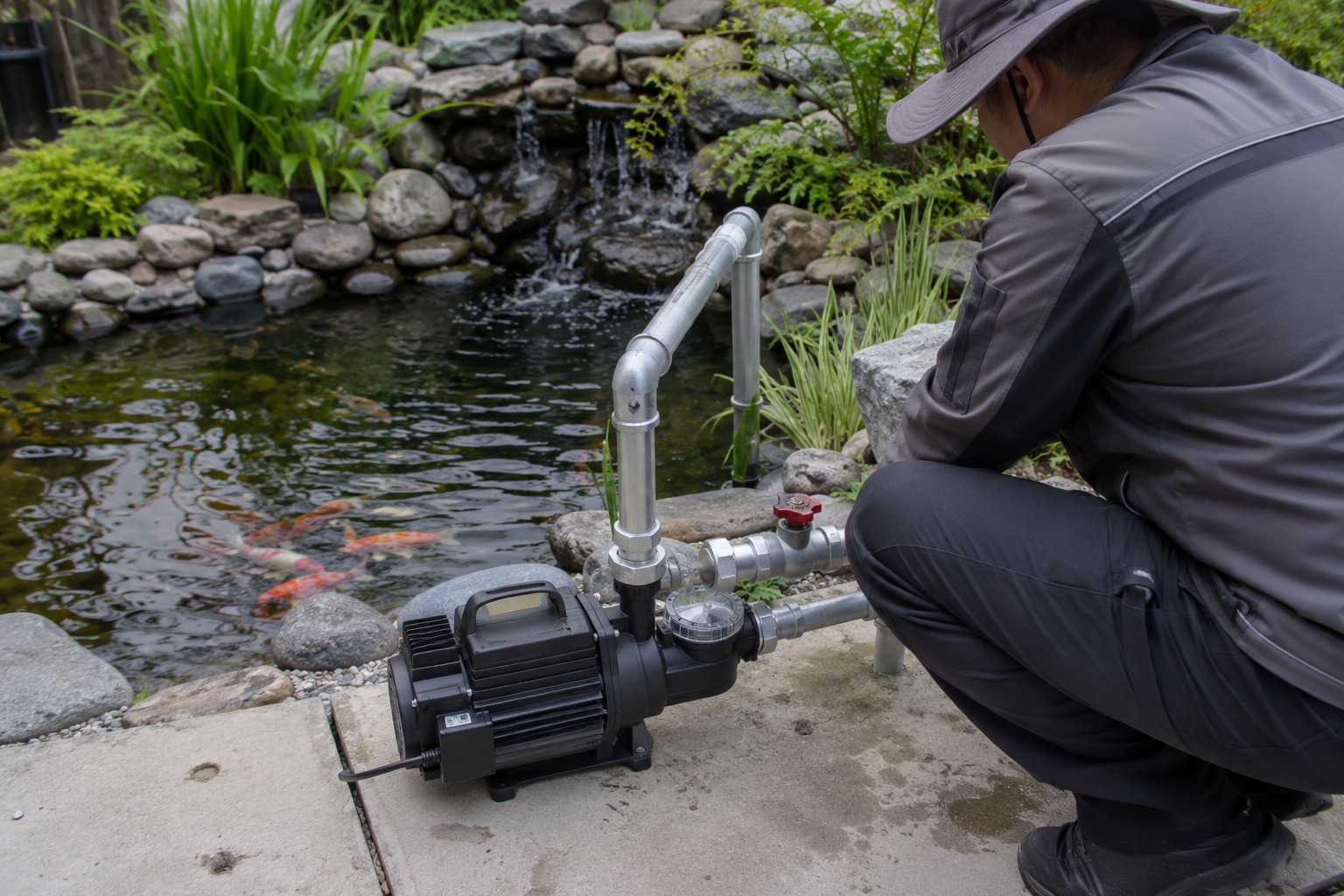
Getting the flow rate right is the first and most important step.
But your pond is a unique ecosystem.
Factors like fish, plants, and waterfalls can change your pump requirements significantly.
Let's dive deeper to make sure you get not just a good pump, but the perfect pump for your specific setup.
This ensures you invest wisely once and enjoy a thriving pond for years to come.
What Size Pond Pump Do I Need?
Trying to pick a pump from a wall of options feels overwhelming.
A wrong choice means you either have a stagnant pond or a whirlpool that stresses your fish.
We'll break down the core factors so you can choose with confidence, matching the pump precisely to your pond's demands.
To determine your pump size, start with your pond's volume. A 300-gallon pond needs a pump that can circulate the water at least once every two hours (150 GPH), but ideally closer to once per hour (300 GPH) or more, especially if you have fish.
The journey to the perfect pump begins with understanding the fundamental principles that govern water circulation in a closed environment like your pond. While the 300-gallon volume is our constant, several variables will influence the final Gallons Per Hour (GPH) figure you'll be looking for on the box. A pump isn't just about moving water; it's the heart of your pond's circulatory and life-support system. It drives filtration, promotes gas exchange at the surface for oxygenation, and prevents the thermal stratification that can lead to unhealthy temperature layers in the water.
Why Circulation Rate is Critical
The goal is to turn over the entire volume of your pond water at regular intervals. This rate is not arbitrary. It's based on the biological and chemical needs of your aquatic ecosystem.
- Lightly Stocked Ponds (Plants, few small fish): A full circulation every two hours is often sufficient. For your 300-gallon pond, this translates to a minimum flow rate of 150 GPH. This gentle flow keeps water from stagnating without creating a strong current.
- Heavily Stocked Ponds (Koi, multiple fish): These ponds generate significantly more waste (ammonia). To keep the water healthy and well-oxygenated, you need to circulate the entire volume at least once per hour. For your 300-gallon pond, this means you should be looking for a pump with a flow rate of at least 300 GPH.
The "Rule of Thumb" vs. Reality
A common guideline is to aim for a pump that circulates 1.5 times your pond's volume per hour. For a 300-gallon pond, this calculates to 450 GPH. This is an excellent starting point because it builds in a buffer for factors that reduce flow, which we will discuss next. It provides robust circulation that benefits almost any pond setup.
| Pond Stocking Level | Recommended Circulation Rate | Required Pump Flow (GPH) for 300-Gallon Pond |
|---|---|---|
| Plants only | 1x every 2 hours | 150 GPH |
| Lightly stocked (small fish) | 1x every 1.5 hours | 200 GPH |
| Moderately stocked | 1x every hour | 300 GPH |
| Heavily stocked (e.g., Koi) | 1.5x every hour | 450 GPH |
Remember, these GPH ratings are the pump's output at zero feet of lift. The moment you ask a pump to push water upwards, its actual output begins to drop.
Factors to Consider When Choosing a Fish Pond Pump
Thinking that any 450 GPH pump will work can be a costly mistake.
You buy the pump, hook it up, and the waterfall is just a trickle, or the filter barely works.
Let's examine the hidden forces—head height and friction loss—that can steal over 50% of your pump's power before it even completes its circuit.
The most crucial factor beyond volume is 'head height'—the vertical distance the pump must push water. A pump rated for 500 GPH at zero feet might only produce 250 GPH at a 4-foot head height, which is a common height for a small waterfall.
When you purchase a pump, the GPH listed on the box represents its maximum potential under ideal lab conditions—pumping water horizontally with no resistance. Your pond is not a lab. It has height, distance, and plumbing that all work against the pump. Understanding these factors is the difference between a thriving pond and a disappointing water feature.
Calculating Your Total Dynamic Head
"Total Dynamic Head" is the technical term for the total pressure your pump has to overcome. It's calculated by adding your vertical lift (head height) to the pressure loss from your plumbing (friction loss).
H3: What is Head Height?
This is the single most important calculation after volume.
It is the vertical height from the surface of your pond water to the highest point the water is being pumped.
This could be the top of your waterfall, the inlet of your filter, or the spout of a fountain.
For example, if your filter box sits 2 feet above the pond's surface, your minimum head height is 2 feet.
If your waterfall crests at 4 feet above the surface, your head height is 4 feet.
H3: The Hidden Flow Killer: Friction Loss
Every foot of pipe, every bend, and every fitting adds resistance, which is the equivalent of making the pump lift the water even higher.
A simple rule of thumb is to add 1 foot of head height for every 10 feet of flexible tubing.
Using a pipe diameter that is too small for your pump will drastically increase friction loss.
Always use the largest diameter tubing your pump outlet will accommodate.
Let's put this into a real-world scenario for your 300-gallon pond:
- You want a small waterfall that is 3 feet above the pond surface.
- You need 10 feet of tubing to run from the pump to the top of the waterfall.
Calculation:
- Static Head: 3 feet
- Friction Loss: 10 feet of tubing ÷ 10 = 1 foot of head
- Total Dynamic Head: 3 feet + 1 foot = 4 feet
This means you need a pump that can deliver your target flow rate (e.g., 450 GPH) at a 4-foot head height. You must check the performance chart on the pump's packaging or manual to verify this.
| Pump's Advertised GPH | Flow at 0' Head | Flow at 2' Head | Flow at 4' Head | Flow at 6' Head |
|---|---|---|---|---|
| Pump A (500 GPH) | 500 GPH | 400 GPH | 250 GPH | 100 GPH |
| Pump B (800 GPH) | 800 GPH | 650 GPH | 500 GPH | 350 GPH |
As you can see, the 500 GPH pump would be inadequate for our goal of 450 GPH at a 4-foot head. You would need to choose the 800 GPH pump to achieve the desired flow.
Exploring Advanced Pump Technologies and Power Sources
Your electricity bill keeps climbing, and you worry about the environmental impact.
A power outage could be catastrophic for your fish, and what if your pond is far from an outlet?
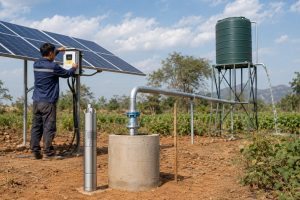
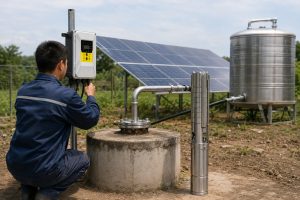
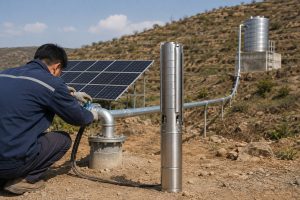
Solar-powered pumps offer a breakthrough solution, providing clean, free energy to run your pond, ensuring it stays healthy and vibrant even off-grid.
Modern solar pond pumps are a powerful and eco-friendly alternative. They operate with zero running costs after the initial investment, provide crucial circulation during power outages, and are perfect for ponds located away from a reliable power source.
As energy costs rise and environmental consciousness grows, looking beyond traditional grid-powered pumps is not just a niche idea; it's a smart strategy for the modern pond owner. The technology behind solar water pumps has advanced dramatically. They are no longer just for small, decorative fountains. Today's systems can easily power the circulation and filtration needs of a 300-gallon pond and much larger systems.
H3: Why Make the Switch to Solar?
The benefits of a solar-powered system extend far beyond just being "green."
- Zero Energy Costs: After the initial purchase of the pump and solar panel, the energy from the sun is 100% free. Over the 5-10 year lifespan of a good pump, this can represent savings of hundreds of dollars.
- Energy Independence: Your pond's life support system is no longer vulnerable to local power outages, which can be critical for fish health, especially during hot summer months when oxygen levels are lowest.
- Installation Flexibility: You can place your pond anywhere you like, without the cost and hassle of trenching electrical cables. This is perfect for larger properties, remote gardens, or agricultural settings.
- High Efficiency: Modern solar pumps are designed for maximum efficiency, converting a high percentage of solar energy directly into water flow.
H3: Matching Solar Pump Types to Your Pond's Needs
Just like their AC counterparts, solar pumps come in different designs for different tasks. Understanding these types allows you to build a more effective and efficient system.
- Solar Screw Pumps: These pumps excel at creating high pressure (head) but with lower flow volume. For a 300-gallon pond, a screw pump would be an excellent choice for powering a tall, thin waterfall or a high-spitting fountain, where pushing water vertically is the main challenge. Their resistance to grit also makes them durable for ponds with natural bottoms.
- Solar Plastic Impeller Pumps: This is the workhorse for general pond circulation. These centrifugal pumps are designed for high flow at low to medium head heights. This makes them the ideal choice for ensuring your 300-gallon pond's water is effectively turned over and sent through a filter system. They offer a great balance of performance and cost.
- Solar Stainless Steel Impeller Pumps: This is the premium option for durability and longevity. If your water has a high mineral content, is slightly acidic, or if you simply want the most robust pump possible, a stainless steel model is the best choice. It provides high flow rates and will withstand harsh water conditions far better than plastic alternatives.
| Solar Pump Type | Primary Strength | Best Use in a 300-Gallon Pond | Durability |
|---|---|---|---|
| Screw Pump | High Head / Pressure | Tall, narrow waterfalls or high fountains | Excellent, especially with sandy/gritty water |
| Plastic Impeller | High Flow Volume | General circulation, filtration, wide waterfalls | Good, most economical option |
| Stainless Steel Impeller | Corrosion Resistance | Ponds with treated/harsh water, maximum longevity | Superior, long-term investment |
By choosing the right type of solar pump, you can tailor the system perfectly to the aesthetic and biological needs of your pond, all while harnessing free, clean energy from the sun.
Understanding Modern Pump Motors and Control Systems
You think a pump is just a motor, and they're all basically the same.
But old, inefficient motors waste energy, are noisy, and have a shorter lifespan.
The secret to a powerful, quiet, and cheap-to-run pump lies in a high-efficiency brushless motor and an intelligent controller that maximizes every watt of power.
The heart of a top-tier modern pump is a Brushless DC (BLDC) motor. These motors are over 90% efficient, converting more power directly into water flow. This drastically reduces energy consumption, whether you're using solar panels or plugging into the wall.
The motor technology inside your pump has a bigger impact on its performance and your long-term satisfaction than any other component. For decades, traditional pumps used brushed AC or DC motors, which are inherently inefficient, with energy losses of 40% or more as wasted heat and friction. The revolution in pump technology is the widespread adoption of the electronically commutated Brushless DC (BLDC) motor.
H3: The BLDC Motor Advantage
BLDC motors represent a quantum leap in efficiency and reliability. By using permanent magnets on the rotor and a sophisticated electronic controller, they eliminate the physical brushes that wear out and create energy-wasting friction.
- Extreme Efficiency: BLDC motors regularly achieve efficiencies greater than 90%. For a pond owner, this means a 50-watt BLDC pump can produce the same water flow as a 100-watt traditional pump, cutting your energy cost in half.
- Compact and Lightweight: The efficient design results in a motor that can be up to 45% smaller and 35% lighter than a traditional motor of the same power. This makes the pump easier to install, conceal, and handle.
- Quiet and Cool Operation: The lack of brushes and high efficiency means BLDC motors run significantly quieter and generate very little waste heat. This contributes to a longer service life and won't unintentionally heat your pond water.
- Long, Maintenance-Free Life: With no brushes to wear out, the primary wear components are the bearings, which are engineered for thousands of hours of continuous use. They are virtually maintenance-free.
H3: The Brains of the Operation: Intelligent Controllers
Modern pump systems are more than just a motor; they include an intelligent controller that optimizes performance.
- MPPT for Solar: When paired with a solar panel, an MPPT (Maximum Power Point Tracking) controller is essential. It constantly adjusts the electrical load on the panel to extract the maximum possible power, regardless of whether it's bright sunshine or a slightly overcast day. This can boost your daily water output by up to 30%.
- AC/DC Hybrid Systems: The ultimate solution for reliability is a hybrid controller. This system can be connected to both a solar panel array (DC) and your home's grid power (AC) simultaneously. The controller's logic is designed to prioritize solar power first. If the sun isn't providing enough energy, it will seamlessly blend in just enough AC power to meet the demand. If the sun goes down or it's a very dark day, it automatically switches over to full AC power. This gives you 24/7 worry-free operation with the maximum possible energy savings. You get the best of both worlds: the free energy of solar and the absolute reliability of the grid.
Choosing a pump with a BLDC motor and a smart controller is an investment in efficiency, reliability, and long-term savings for your 300-gallon pond.
Conclusion
Choosing the right pump for your 300-gallon pond means matching a 450+ GPH flow rate to your head height and fish load while considering modern, ultra-efficient solar and hybrid options.
Frequently Asked Questions
Can a pond pump be too big for a 300-gallon pond?
Yes. A pump that creates excessive turbulence can stress fish and plants. Aim for a turnover rate of 1.5 to 2 times per hour for a good balance.
How many hours a day should a pond pump run?
For a pond with fish, the pump should run 24/7. Continuous circulation is vital for filtration and maintaining oxygen levels, especially overnight when plants are not producing oxygen.
Do I need a filter for a 300-gallon pond?
If you have fish, a filter is highly recommended. The pump pushes water through the filter, which removes waste and helps keep the water clean and healthy for aquatic life.
How much does it cost to run a pond pump?
This varies based on the pump's wattage and local electricity rates. However, a modern, energy-efficient 30-watt pump running 24/7 may cost only a few dollars per month.
What is the difference between GPH and head height?
GPH (Gallons Per Hour) is the volume of water a pump can move. Head height is the vertical distance it can push that water, which reduces the actual GPH.
Is a solar pump strong enough for a pond?
Absolutely. Modern solar pumps powered by high-efficiency motors are more than capable of providing the necessary circulation and filtration for ponds of 300 gallons and much larger.
Should I keep my pond pump running in winter?
Yes, it is generally recommended. Keeping the pump running helps to maintain a hole in the ice, allowing for crucial gas exchange that prevents harmful gases from building up.
How do I calculate the volume of my pond?
For a rectangular pond, multiply Length (ft) x Width (ft) x Average Depth (ft) x 7.48 to get the volume in gallons. For irregular shapes, estimate the average length and width.