Worried about your pond's health or your rising electricity bill?
Running a pump 24/7 seems costly, but turning it off could be a fatal mistake for your fish.
Yes, if your pond contains fish, the pump must run 24/7. This ensures vital oxygenation and filtration. Shutting it off, even for a few hours, can harm your pond's ecosystem and the health of your aquatic life, potentially leading to fish loss.
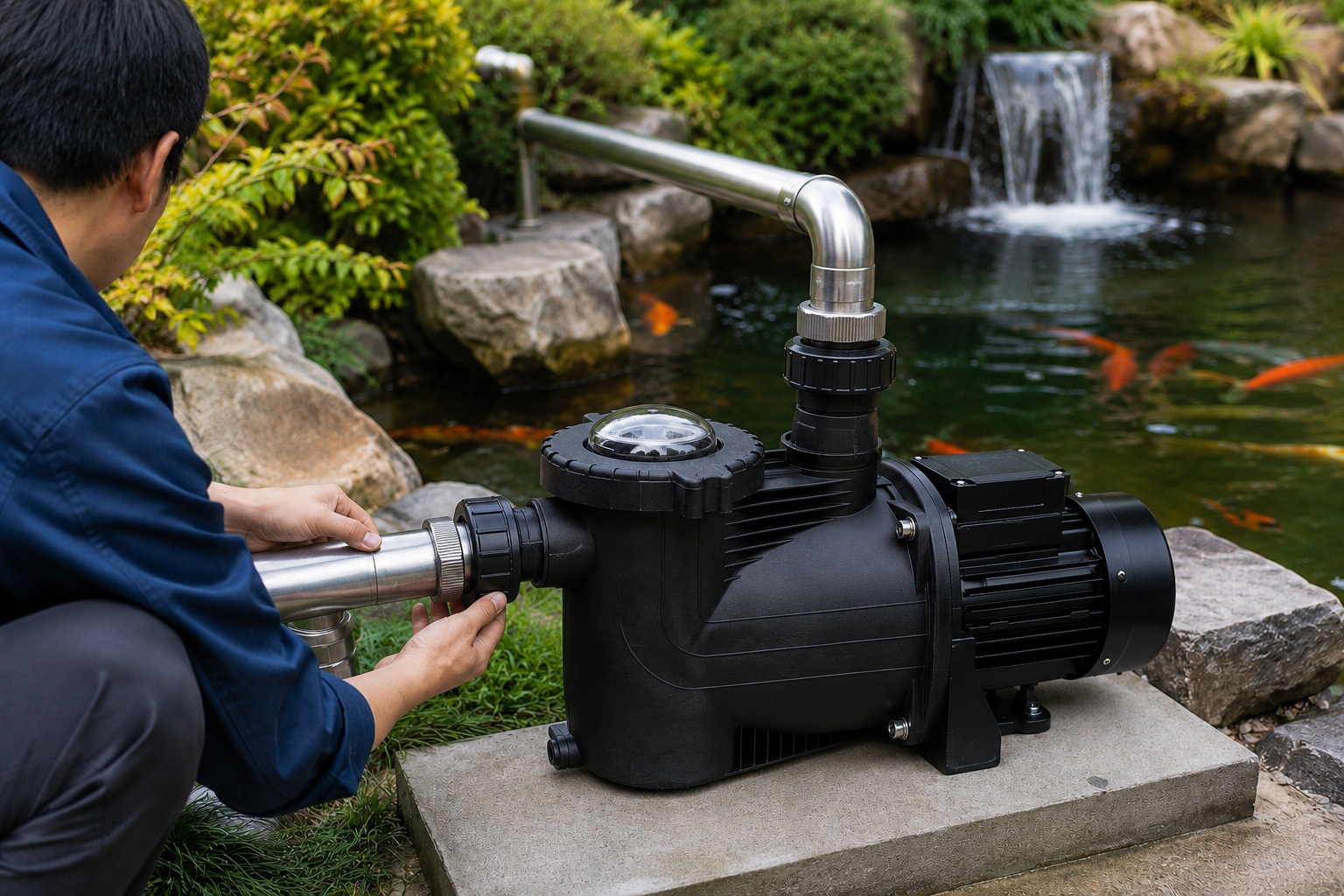
A pond pump is the life support system for your fish.
For many pond owners, the pump is an out-of-sight, out-of-mind piece of equipment.
However, understanding its function is the first step toward appreciating its importance.
The decision to run it continuously often comes down to balancing pond health against operational costs.
Let's dive into why continuous operation is so critical, what factors you should consider, and how modern technology can provide a healthy pond without breaking the bank.
This guide will help you make the best decision for your pond and its inhabitants.
What does a pond pump do?
Your pump seems like a simple device.
But do you know the critical roles it plays in keeping your pond alive and beautiful?
Its function goes far beyond just moving water.
A pond pump is the heart of your pond's ecosystem. It circulates water, providing essential aeration for fish, and pushes water through a filter to remove waste, keeping the environment clean and healthy for all aquatic life.
A pond without a pump is just a stagnant pool of water.
This environment quickly becomes unhealthy for most forms of aquatic life.
The pump's role is to transform this potential swamp into a thriving, miniature ecosystem.
It performs several interconnected tasks that are all vital for water quality and the survival of your fish.
Understanding these functions shows why interrupting the pump's operation can have a cascade of negative effects.
The Core Functions of a Pond Pump
The primary job of a pond pump is to move water.
This movement is the foundation for three critical processes: circulation, aeration, and filtration.
Without the pump, all three of these processes cease, and the pond's health rapidly declines.
Think of it as the circulatory system of a living body; if the heart stops, the entire system is in jeopardy.
| Feature | Pond with Pump | Pond without Pump |
|---|---|---|
| Oxygen Levels | Stable & High | Depleted & Unstable |
| Water Quality | Clean & Clear | Murky & High in Toxins |
| Fish Health | Healthy & Active | Stressed & Prone to Disease |
| Algae Growth | Controlled | Uncontrolled & Excessive |
| Bacteria | Beneficial colonies thrive | Harmful bacteria dominate |
Oxygenation and Aeration Explained
Fish, like all animals, need oxygen to survive.
They get this oxygen from the water.
Stagnant water has a very low rate of oxygen exchange with the atmosphere.
A pump powers aeration by creating water movement.
This movement agitates the pond's surface, which dramatically increases the surface area where oxygen from the air can dissolve into the water.
Features like fountains and waterfalls, powered by the pump, are extremely effective at this.
In a still pond, oxygen levels can drop by over 50% in just a few warm hours, putting immense stress on fish.
Continuous circulation ensures oxygen levels remain stable and sufficient for your fish to breathe easily.
Filtration and Water Clarity
Your pond filter is home to millions of beneficial bacteria.
These microscopic organisms are essential for breaking down harmful waste products, like ammonia from fish waste, into less toxic substances.
This is called the nitrogen cycle.
These bacteria require a constant flow of oxygen-rich water to survive, which the pump provides.
When you turn off the pump, the flow of water and oxygen stops.
Within as little as a few hours, a significant portion of these beneficial bacteria can die off.
This not only stops the filtration process but their death releases toxins back into the water.
When you restart the pump, you may be pushing this toxic, deoxygenated water back into the pond, creating a dangerous situation for your fish.
Should I keep my pond pump running in winter?
Winter is here, and your fish are slowing down.
You might think about turning off the pump to save energy.
But this could create a deadly trap under the ice.
Yes, you should absolutely keep your pump running in winter if you have fish. It prevents the surface from freezing completely, allowing toxic gases to escape and oxygen to enter, which is crucial for the survival of your pond's inhabitants.
The arrival of cold weather adds a new layer of complexity to pond care.
As fish go into a state of dormancy, or torpor, their metabolism slows down, and they require less oxygen.
However, they still require some oxygen to survive the winter.
A completely frozen pond surface traps harmful gases produced by decaying organic matter at the bottom of the pond.
At the same time, it prevents any new oxygen from entering the water.
This combination can be fatal.
Your pump is the single most important tool for preventing this scenario.
The Winter Dilemma: Key Factors to Consider
Whether and how you run your pump in winter depends on a few key factors.
Your primary goal is to maintain a hole in the ice for gas exchange without super-chilling the entire water column.
- Pond Inhabitants: If you have fish, a pump is non-negotiable. If your pond is purely a water feature with no aquatic life, you can turn it off and drain it to prevent damage.
- Climate/Temperature: In regions with deep freezes, running the pump correctly is critical. In milder climates where the pond rarely freezes solid, the risk is lower but still present.
- Pond Depth: Deeper ponds (over 1.2 meters or 4 feet) are more resistant to total freezing and maintain a stable, warmer layer of water at the bottom. Shallow ponds are more vulnerable and require more careful management.
Preventing a Frozen Death Trap
The main benefit of a winter pump is not to heat the water, but to keep it moving.
The constant movement of water at the surface will prevent that area from freezing over.
This small opening is a lifeline for the pond.
It allows oxygen to diffuse into the water from the atmosphere.
More importantly, it allows toxic gases, such as hydrogen sulfide and methane from decomposition, to escape.
Without this vent, these gases can build up to lethal concentrations, killing the dormant fish below.
A pond heater can serve a similar purpose but uses significantly more energy.
Adjusting Your Pump for Winter
You should not leave your pump in its summer position at the bottom of the pond.
Fish naturally seek out the deepest part of the pond during winter, as this water is the warmest (around 4°C or 39°F).
Running a pump at the bottom will circulate this warmer water up to the freezing surface, dangerously chilling the entire pond and disrupting the fishes' safe zone.
The correct strategy is to lift your pump.
Place it on a submerged shelf or float it just below the surface, directing the outflow to agitate the surface.
This keeps a hole open in the ice without disturbing the crucial thermal layers below.
| Pond Depth | Recommended Winter Pump Position | Rationale |
|---|---|---|
| Shallow (<1m / 3ft) | On a block, 30cm (1ft) below surface | Prevents total freezing, keeps hole open |
| Deep (>1m / 3ft) | On a shelf or floated, just below surface | Maintains ice-free area, preserves warm bottom layer for fish |
What are the benefits of running a pond pump all the time?
You see the electric meter spinning and wonder if it's worth it.
Is running your pump 24/7 just a waste of money?
The benefits might surprise you and could save you more in the long run.
Continuous pump operation provides constant oxygenation, prevents water stagnation, supports beneficial filter bacteria, and maintains stable water quality. This proactive approach prevents costly problems like algae blooms and fish loss, ensuring a healthy pond year-round.
Running a pump 24/7 is a form of proactive pond management.
Instead of reacting to problems like green water, bad odors, or sick fish, you are actively preventing them from occurring in the first place.
A tiny ecosystem like a garden pond is a delicate balance.
A constantly running pump is the primary tool for maintaining that balance.
The initial investment in electricity is far outweighed by the stability and health it provides, saving you money on chemical treatments, replacement fish, and a lot of personal stress and labor.
A Stable Ecosystem
Consistency is key to a healthy pond.
Aquatic life, from fish down to microscopic bacteria, thrives in stable conditions.
Turning a pump on and off creates drastic fluctuations in oxygen levels, water temperature, and toxin concentrations.
This instability is a major source of stress for fish, weakening their immune systems and making them more susceptible to diseases and parasites.
A continuously running pump ensures that the pond environment remains consistent and predictable, creating a stable, stress-free home for your fish where they can not only survive, but thrive.
This stability is the hallmark of a well-managed pond.
The Unseen Heroes: Beneficial Bacteria
We've mentioned them before, but their importance cannot be overstated.
The beneficial bacteria living in your filter media are your pond's invisible cleanup crew.
They perform the vital task of biological filtration, converting toxic ammonia into nitrites, and then into relatively harmless nitrates.
This process is entirely dependent on a consistent supply of oxygenated water, which the pump delivers.
Turning the pump off starves this bacterial colony of oxygen.
Studies have shown that a biological filter can lose up to 70% of its effective bacterial population within 4-6 hours without water flow.
When the pump is restarted, the weakened filter cannot handle the waste load, leading to dangerous spikes in ammonia and nitrite.
Running the pump 24/7 keeps your biological filter alive and functioning at peak efficiency.
The Cost of Not Running Your Pump
While it may seem like turning the pump off saves money, it's often a false economy.
The potential costs associated with intermittent pump operation can far exceed any savings on your electricity bill.
Consider the financial and emotional cost of losing valuable Koi or other beloved fish to poor water quality.
Think about the money spent on algaecides, water clarifiers, and other chemical treatments to combat the problems caused by a stagnant pond.
In the long run, the small daily cost of running an efficient pump is an investment that protects the larger investment you've made in your pond and its inhabitants.
| Expense Category | Running Pump 24/7 | Intermittent Pump Use |
|---|---|---|
| Electricity | Consistent, predictable cost | Lower, but unpredictable |
| Chemical Treatments | Minimal / None | High (Algaecides, Clarifiers) |
| Fish Replacement | Low risk of loss | High risk of loss |
| Emergency Equipment | Unlikely to be needed | May need aeration kits, etc. |
| Personal Labor | Low, routine maintenance | High, problem-solving |
How to run a pump 24/7 without high energy costs?
You know you need to run your pump 24/7, but the electricity bill is a major concern.
Is there a way to have a healthy pond without breaking the bank?
Modern, energy-efficient pumps are the solution. Solar-powered pumps, in particular, can drastically reduce or even eliminate running costs, operating independently from the power grid while providing reliable circulation for your pond.
The concern over energy costs is valid.
Older pond pumps were notoriously inefficient and could be a significant drain on a household's electricity budget.
However, pump technology has advanced dramatically.
The key to affordable 24/7 operation is choosing the right technology.
Solar water pumps, driven by hyper-efficient motors, represent a paradigm shift in pond management.
They untether your pond's life support from the grid, offering an environmentally friendly and economically brilliant solution.
With the right system, you can achieve worry-free, cost-free circulation during the day and have smart backup options for the night.
The Power of Solar Technology
The core of modern solar pumps is the Brushless DC (BLDC) permanent magnet motor.
These motors are a game-changer, with operational efficiencies exceeding 90%.
This is a massive improvement over traditional AC motors, which often waste a significant amount of energy as heat.
This high efficiency means that a solar pump requires far fewer solar panels to achieve the same water flow as an older system.
This not only reduces the initial setup cost but also makes the installation much simpler and more compact.
It's a smarter way to harness free energy from the sun.
| Pump Type | Motor Efficiency | Power Source | Typical Daily Cost (8-hour run) | 24/7 Viability |
|---|---|---|---|---|
| Traditional AC Pump | 40-60% | Grid Power | $0.50 - $2.00 | High operational cost |
| Modern DC Solar Pump | >90% | Solar Panels | $0.00 | Requires battery or hybrid system |
| AC/DC Hybrid Pump | >90% | Solar + Grid | Minimal (uses grid as backup) | Excellent, most reliable |
The Ultimate 24/7 Solution: AC/DC Hybrid Pumps
For the ultimate peace of mind, an AC/DC hybrid system is the perfect solution.
This technology provides the best of both worlds.
These systems are designed with two power inputs: one for your solar panels and one for your standard AC household power.
An intelligent controller manages the power source automatically.
When there is sufficient sunlight, the pump runs exclusively on free solar power.
As clouds pass or as evening approaches, the controller can blend AC power with the available solar power to maintain flow.
When there is no solar input at night, it seamlessly switches over to AC power, guaranteeing your pump runs 24 hours a day without any interruption.
This ensures your pond is always protected while maximizing your use of free solar energy and minimizing your reliance on the grid.
It is the most reliable and cost-effective way to ensure your pond thrives around the clock.
Conclusion
Running your pump 24/7 is essential for fish health.
Modern solar and hybrid pumps make this both economically and environmentally sustainable, ensuring a thriving pond for years to come.
FAQs
Can I turn my pond pump off at night?
No, if you have fish. Oxygen levels can drop dangerously low overnight, and the pause in filtration allows harmful toxins to build up in your filter.
How much does it cost to run a pond pump 24/7?
Costs vary by pump efficiency and electricity rates. An older pump might cost a few dollars a day, while a modern, efficient pump can cost as little as a dollar.
What happens if I turn my pond pump off for a day?
Oxygen will become depleted, and beneficial bacteria in your filter will start to die. This can lead to stressed fish and a spike in toxic ammonia.
Do I need a pond pump if I don't have fish?
It's not essential for survival, but it is highly recommended. A pump prevents water from stagnating, which reduces mosquito breeding, controls algae, and keeps the water looking and smelling fresh.
How do I keep my pond from freezing without a pump?
You can use a pond de-icer or a pond heater. These devices float on the surface and use a heating element to maintain a small, ice-free hole for gas exchange.
Can a pond pump be too strong for a pond?
Yes. A pump that is too powerful can create excessive currents that stress fish. The general rule is to circulate the entire volume of your pond water once every one to two hours.
Should my pond pump be on the bottom of the pond?
In the summer, yes, placing it at the bottom ensures full circulation. In the winter, you must raise it off the bottom to avoid disturbing the warmer water where fish hibernate.