Choosing the wrong sump pump can lead to a flooded basement and costly repairs.
Understanding horsepower is key to protecting a property and providing peace of mind.
For most residential properties with moderate water tables, a 1/2 HP sump pump offers a balanced blend of performance and efficiency.
A 3/4 HP pump is necessary for high water tables, deep basements, or areas with frequent, heavy rainfall to ensure greater water removal capacity.
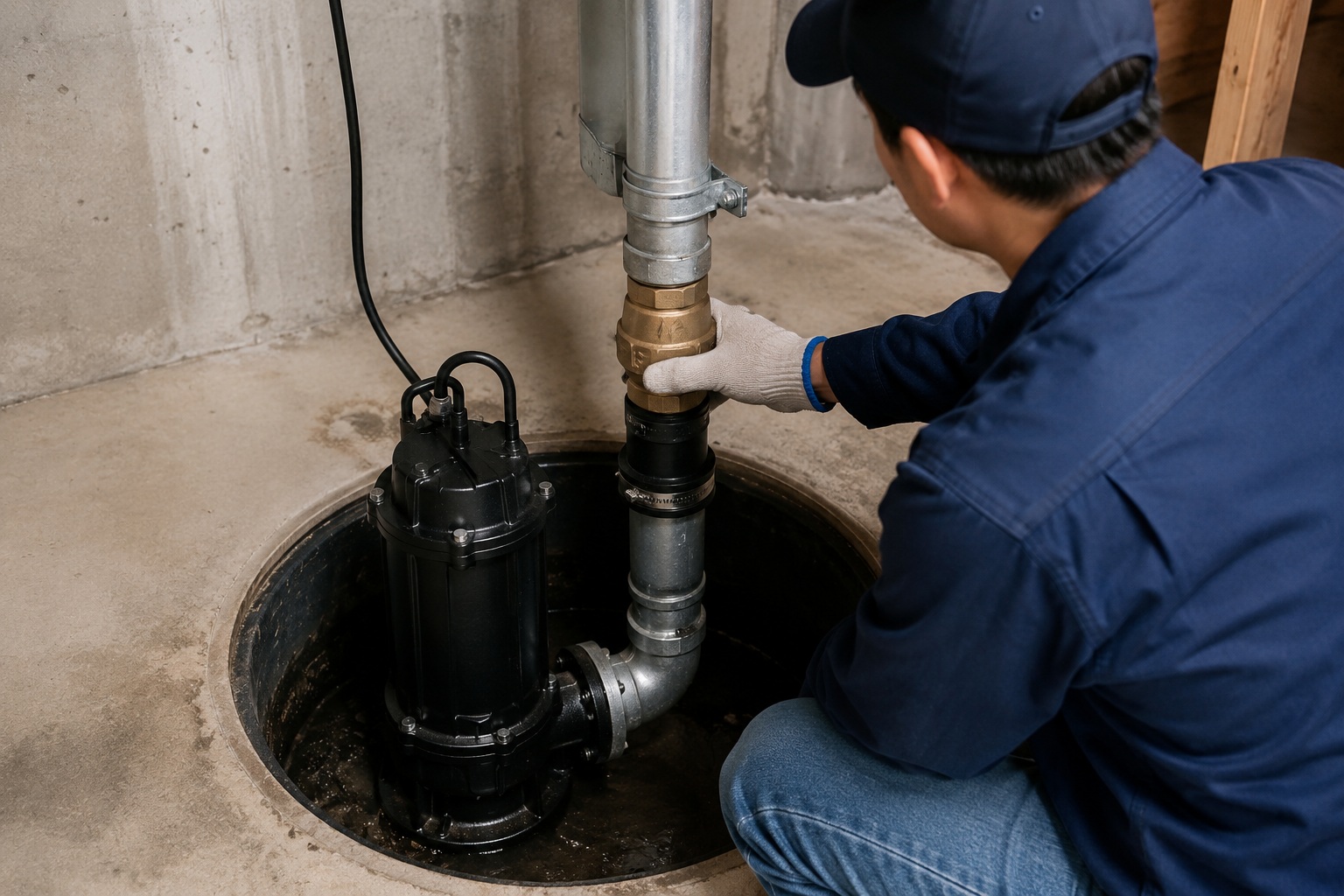
The decision between a 1/2 HP and a 3/4 HP sump pump is more than just picking a number.
It is a critical sizing exercise that involves matching the pump's power to the specific drainage demands of a property.
A pump that is too small will fail to keep up during heavy inflow, risking a flood.
Conversely, a pump that is too powerful for the conditions can short-cycle, leading to premature motor burnout and system failure.
To make the right choice for your projects, you need to look beyond horsepower alone.
You must consider the complete picture, including factors like head pressure, flow rate requirements, and discharge piping conditions.
This guide will walk you through everything you need to know to select the right pump with confidence, ensuring reliable and long-lasting protection against water damage.
Choosing the Right Horsepower (HP)
Confused by horsepower ratings and technical jargon?
A poorly chosen motor can lead to constant cycling and premature burnout, leaving a property vulnerable.
We make the choice simple.
A 1/2 HP pump is the versatile workhorse for average homes, handling typical drainage needs effectively.
A 3/4 HP pump delivers roughly 25-40% more pumping capacity, making it essential for properties with high water inflow, deeper basements, or long discharge pipes.
Horsepower (HP) is a rating of the motor's power output.
It directly influences how much water a pump can move and how effectively it can overcome the resistance of lifting that water.
While it is a primary factor, it should never be the only consideration.
The goal is to select a horsepower rating that matches the actual workload of the system, not to simply buy the biggest motor available.
An oversized pump can be just as problematic as an undersized one.
It can lead to short cycling, a condition where the pump turns on and off too frequently because it empties the sump pit too quickly.
This rapid cycling creates excessive heat and stress on the motor and switch, drastically reducing the pump's service life.
When to Choose a 1/3 HP Sump Pump
A 1/3 HP sump pump is a common and economical choice for many standard residential applications.
It is typically sufficient for smaller homes in areas with average or low water tables.
This pump size is generally effective where the vertical lift from the sump pit is between 7 and 10 feet and the horizontal discharge pipe run is under 25 feet.
However, its capacity is limited.
If a property experiences rapid water entry during storms or has a slightly higher lift, a 1/3 HP pump may struggle to keep up, running continuously without being able to empty the pit.
When a 1/2 HP Sump Pump is the Right Choice
For many distributors and contractors, the 1/2 HP sump pump represents the sweet spot for residential use.
It provides a significant performance boost over a 1/3 HP model, often pumping 35-40% more water.
This makes it the ideal choice for average-sized homes with above-average water tables or those with finished basements where the cost of a potential flood is high.
A 1/2 HP pump can comfortably handle higher vertical lifts, typically in the 10 to 15-foot range.
It also has more power to overcome the friction loss associated with longer horizontal pipe runs (30 to 150 feet).
This added power provides a crucial margin of safety, ensuring reliable performance during heavy downpours.
Stepping Up to a 3/4 HP or 1 HP Sump Pump
A 3/4 HP or 1 HP sump pump is designed for high-demand situations.
These stronger pumps are necessary for homes located in high water table areas, floodplains, or low-lying regions prone to flooding.
They are also the correct choice for buildings with very deep basements that require a vertical lift greater than 15 feet.
A 3/4 HP pump can move a substantially higher volume of water at a given head height compared to a 1/2 HP model.
This high capacity is critical for evacuating water quickly when inflow is intense.
However, this power must be matched with an appropriately sized sump basin (at least 18 inches in diameter) to prevent short cycling.
| Pump Horsepower | Typical Vertical Lift | Ideal Use Case | Flow Rate (GPH @ 10' Head) |
|---|---|---|---|
| 1/3 HP | 7' - 10' | Small homes, low to average water tables, short pipe runs. | ~1,800 - 2,200 GPH |
| 1/2 HP | 10' - 15' | Average homes, above-average water tables, finished basements. | ~2,500 - 3,500 GPH |
| 3/4 HP | 15' - 20'+ | High water tables, deep basements, flood-prone areas. | ~3,800 - 4,800 GPH |
| 1 HP | 20'+ | Very deep basements, commercial use, extreme water conditions. | ~4,500 - 6,000+ GPH |
Understanding Head Pressure and Flow Rate
Your powerful new pump is underperforming.
Why?
Ignoring head pressure and flow rate can render even the strongest motor ineffective, wasting money and risking water damage.
Head pressure is the total resistance your pump must overcome, including vertical lift and pipe friction.
Higher head pressure significantly reduces a pump's flow rate (GPH).
Always check a pump's performance curve to see its true output at your specific head height.
A pump's advertised flow rate, often measured in Gallons Per Hour (GPH), is almost always its performance at zero feet of head.
This is a laboratory number.
In the real world, every system has head pressure that reduces the actual flow rate.
To properly size a pump, you must calculate the Total Dynamic Head (TDH) of the system.
This calculation provides a realistic measure of the work the pump needs to do.
Ignoring TDH is one of the most common and costly sizing mistakes.
It often results in selecting a pump that looks powerful on the box but fails to perform adequately once installed.
For B2B distributors, educating clients on this concept is crucial for ensuring customer satisfaction and reducing callbacks for "underperforming" pumps.
Calculating Your Total Dynamic Head
Total Dynamic Head is the sum of two primary factors: the vertical lift and the friction loss from the piping.
TDH = Vertical Lift + Friction Loss
This number tells you the total equivalent height the pump is working against.
You then use this TDH value to find the real-world GPH on the pump's specific performance curve chart.
The Impact of Vertical Lift
Vertical lift, also known as static head, is the vertical distance in feet from the base of the sump pump to the highest point in the discharge pipe where water exits the system.
This is the single largest component of head pressure.
To measure it, use a tape measure to find the distance from the bottom of the sump pit to the point where the pipe exits the foundation wall.
Every foot of lift requires energy, and as lift increases, the pump's flow rate decreases.
A pump that delivers 3,000 GPH at 10 feet of lift might only deliver 1,800 GPH at 20 feet.
How Pipe Diameter and Friction Loss Affect Performance
Friction loss is the resistance created as water flows through the discharge pipe and its fittings.
Several factors contribute to friction loss:
- Pipe Length: Longer horizontal pipe runs create more friction.
- Pipe Diameter: Using a pipe diameter smaller than the pump's discharge port dramatically increases friction and chokes performance. A common rule is that for every 100 feet of horizontal run, you add an equivalent of 5-10 feet of head, depending on the pipe diameter.
- Fittings: Every 90-degree elbow, 45-degree turn, and check valve adds to the friction loss. A single 90-degree elbow can add the equivalent of 5-10 feet of pipe length to your calculation.
The table below illustrates how a 1/2 HP pump's performance can change based on head.
| Total Dynamic Head | Estimated Flow Rate (GPH) | Performance Decrease |
|---|---|---|
| 5 feet | 3,800 GPH | 0% (Baseline) |
| 10 feet | 3,100 GPH | ~18% Reduction |
| 15 feet | 2,400 GPH | ~37% Reduction |
| 20 feet | 1,500 GPH | ~60% Reduction |
Material Quality and Pump Type
Is your client's sump pump built to last?
Choosing a pump based on price alone often leads to early failure from corrosion or overheating, damaging your reputation.
For maximum longevity and reliability, cast iron or stainless steel housings are superior.
They dissipate heat effectively and resist corrosion.
While thermoplastic pumps are cheaper, they are less durable and not recommended for demanding, continuous-use applications common in B2B projects.
The construction and material of a sump pump are direct indicators of its durability and potential service life.
For contractors and distributors supplying pumps for residential and commercial projects, recommending a high-quality pump is essential for maintaining a professional reputation.
A pump failure can lead to catastrophic water damage, and the blame often falls on the installer or supplier.
Therefore, investing in a pump made from robust, durable materials is a critical part of a reliable water management strategy.
Pumps are generally categorized into two main types: submersible and pedestal.
Submersible vs. Pedestal Pumps: A Quick Comparison
Submersible pumps are the most common choice for residential applications.
The entire unit, including the motor, sits inside the sump pit, submerged in water.
This design offers quieter operation because the water helps muffle the motor noise.
Being submerged also helps the motor stay cool, which can contribute to a longer service life.
Pedestal pumps have the motor mounted on a shaft above the sump pit, with only the impeller and intake in the water.
This design makes the motor easier to access for service and repair.
Pedestal pumps are generally less expensive and can have a very long life span, but they are often noisier and less efficient at moving large volumes of water.
Housing Materials: Cast Iron vs. Stainless Steel vs. Thermoplastic
The pump housing serves two critical functions: protecting the internal components and dissipating heat from the motor.
-
Cast Iron: This is the gold standard for sump pump housing. Cast iron is incredibly strong and durable. Its mass is excellent at absorbing and dissipating motor heat, which is crucial for preventing overheating and extending the pump's life. It is also highly resistant to corrosion.
-
Stainless Steel: Like cast iron, stainless steel offers excellent durability and corrosion resistance. It is also very effective at dissipating heat. It is sometimes used in combination with cast iron or thermoplastic components. For applications involving brackish or corrosive water, bronze or stainless steel is a better choice than cast iron.
-
Thermoplastic: Plastic sump pumps are lightweight and the least expensive option. They are inherently resistant to corrosion. However, they are not as durable as metal pumps and are more susceptible to damage from debris. Crucially, plastic is an insulator, not a conductor of heat. This means thermoplastic pumps are less effective at dissipating motor heat, which can lead to a shorter lifespan, especially in high-use scenarios.
| Material | Heat Dissipation | Durability | Corrosion Resistance | Cost |
|---|---|---|---|---|
| Cast Iron | Excellent | Very High | High | High |
| Stainless Steel | Excellent | Very High | Very High | Highest |
| Thermoplastic | Poor | Medium | Excellent | Low |
Motor Power and Overall System Efficiency
Is horsepower the only metric that matters for performance?
Focusing only on HP overlooks the real source of a pump's power and efficiency, leading to higher operating costs.
Modern pump motors, especially permanent magnet brushless DC (BLDC) designs, can offer efficiency ratings over 90%, significantly higher than traditional motors.
This means more water is moved per watt of electricity, reducing long-term operating costs and enabling advanced features.
While horsepower gives you a general idea of a motor's strength, it doesn't tell the whole story about a pump's performance or efficiency.
Two pumps with the same 1/2 HP rating can have vastly different flow rates and service lives.
This is because overall pump performance is a result of the entire system working together, including the motor technology, the impeller design, and the quality of the internal components.
For a B2B audience focused on providing long-term value, understanding these nuances is key to stocking and recommending superior products.
Efficiency is not just about saving a few dollars on electricity; it's about better performance, greater reliability, and a longer-lasting product.
Why Horsepower Isn't the Whole Story
As discussed, horsepower is a motor rating, not a direct measure of water output.
The actual GPH of a pump is determined by how efficiently that motor's power is converted into water movement.
This is where the engineering of the pump's "wet end"—the impeller and volute—comes into play.
A well-designed pump can move more water with less power, making it more efficient.
The Role of Impeller Design
The impeller is a spinning rotor inside the pump that pushes water out through the discharge pipe.
Its design has a massive impact on performance.
- Vortex Impellers are excellent at handling solids and debris without clogging, but they are generally less efficient.
- Centrifugal Impellers with multiple vanes are more efficient at moving clear water at high pressures.
The material of the impeller (e.g., thermoplastic, cast iron, stainless steel) also affects its durability and long-term performance.
The Efficiency Advantage of Modern Motors
The biggest leap in pump technology in recent years has been in motor design.
Many high-end and commercial-grade pumps are moving away from traditional AC induction motors to more advanced options.
Permanent Magnet Brushless DC (BLDC) Motors represent a significant advancement.
Instead of brushes that wear out, they use a permanent magnet rotor and an electronic controller.
This technology offers several key advantages:
- High Efficiency: BLDC motors can be over 90% efficient, compared to 60-75% for many standard motors. This means less electricity is wasted as heat.
- Greater Durability: With no brushes to wear out, these motors have a significantly longer service life and are virtually maintenance-free.
- Compact & Powerful: They can produce more power and torque from a smaller, lighter package. A brushless motor can be up to 40% smaller and lighter than a traditional motor of equivalent power.
- Variable Speed: The electronic controller allows for precise speed control, enabling "smart" pumps that can adjust their speed based on water inflow, further boosting efficiency and reducing wear.
Advanced Features and Backup Systems
What happens when the power goes out during a storm?
A primary sump pump, no matter how powerful, is useless without electricity, leaving properties completely exposed to flooding.
A complete water management solution requires a backup system.
Battery backups provide hours of protection during outages.
For ultimate reliability, consider hybrid systems that can switch between DC battery/solar and AC grid power, ensuring 24/7 operation under any conditions.
A powerful primary pump is only one part of a comprehensive flood protection strategy.
Inevitable disruptions like power outages, mechanical failures, or overwhelming water inflow require additional layers of security.
For distributors and contractors, offering a complete solution with backup systems and alarms demonstrates a commitment to total property protection.
This not only enhances your reputation but also creates opportunities for upselling high-value, high-margin accessories.
Protecting a finished basement or a commercial space with valuable equipment demands more than a single line of defense.
It requires a redundant, multi-layered system designed to handle worst-case scenarios.
The Importance of a Reliable Float Switch
The float switch is the brain of the sump pump.
It's the component that tells the pump when to turn on and off.
A stuck or failed float switch is one of the most common causes of both pump burnout (if stuck on) and basement flooding (if stuck off).
- Tethered Float Switches: These require a wide sump pit to allow for the swinging motion needed to activate the pump.
- Vertical Float Switches: These move up and down on a rod, making them ideal for narrower sump pits.
- Electronic Switches: These have no moving parts in the water. They use sensors to detect the water level, making them among the most reliable options available.
Battery Backup Sump Pump Systems
A battery backup system is your first line of defense against a power outage.
These systems typically include a smaller, DC-powered pump, a deep-cycle marine battery, a controller, and a charger.
When the power goes out, the controller automatically activates the DC pump.
A good battery backup can pump thousands of gallons of water on a single charge, providing hours of protection until power is restored.
Combination systems, which bundle a primary AC pump and a secondary DC pump into one pre-plumbed unit, simplify installation.
Water-Powered and Hybrid Backup Solutions
For properties with a reliable municipal water supply, a water-powered backup pump is another option.
It uses the pressure from the city water to create a siphon that draws water out of the sump pit.
It requires no electricity or batteries, but it uses a significant amount of city water to operate.
Hybrid AC/DC systems offer the ultimate in flexibility and reliability.
These advanced systems can be powered by standard AC grid power.
When there is a power outage, they can automatically switch to a DC power source, such as a battery bank or solar panels.
Some controllers can even blend power, using DC power first and supplementing with AC power only when needed, maximizing efficiency and ensuring the pit stays dry 24/7, regardless of conditions.
The Value of Smart Alarms and Connectivity
A pump system is only useful if you know it's working.
Water alarms provide essential peace of mind.
Basic alarms will sound a loud beep when a high water level is detected.
More advanced Wi-Fi-enabled alarm systems are far more useful.
They can send a text, email, or push notification to a smartphone if an issue is detected, such as high water, power loss, or low battery.
This is vital for property owners who are away from home or for managing multiple properties.
Conclusion
Selecting the right sump pump horsepower requires a full system analysis.
Match the pump to the specific head, flow, and usage conditions for reliable, long-term protection against water damage.
FAQs
Can a sump pump be too powerful?
Yes. An oversized pump can empty the sump pit too quickly, causing it to turn on and off frequently. This "short cycling" creates excessive wear and can lead to premature motor failure.
What is the difference between a 1/3 and 1/2 hp sump pump?
A 1/2 HP pump delivers significantly more power, typically moving 35-40% more water than a 1/3 HP model. It is better suited for higher water tables and deeper basements.
Is a 1/2 hp sump pump powerful enough?
For most average-sized homes with moderate water inflow and a vertical lift under 15 feet, a 1/2 HP pump provides a good balance of power and reliability.
How many gallons per hour does a 3/4 hp sump pump?
A 3/4 HP pump can typically move between 3,800 and 4,800 gallons per hour (GPH) at a standard 10-foot head, but this varies widely by model and brand.
How do I know what size sump pump I need?
Measure your vertical lift, estimate the length and turns of your discharge pipe to determine total head, and observe how quickly your pit fills during heavy rain to estimate inflow requirements.
How long should a 1/2 hp sump pump last?
A quality 1/2 HP pump made with a cast iron housing can last 7-10 years on average. However, lifespan depends heavily on usage frequency, water conditions, and proper maintenance.
Should I replace my sump pump with the same horsepower?
If your old pump performed well for years, matching the horsepower is reasonable. If it struggled during storms, consider upgrading to a more powerful model after re-evaluating your system's needs.
What size discharge pipe for 1/2 HP sump pump?
For a 1/2 HP sump pump, a 1.5-inch diameter discharge pipe is standard. Using a smaller pipe will restrict flow and strain the pump motor, reducing its performance and lifespan.