Your basement is flooding.
The stress and high cost of water damage are a real threat.
A failed sump pump is often the cause, but choosing the right one can feel overwhelming.
Both Zoeller and Liberty make outstanding sump pumps, but they excel in different areas.
Zoeller is famous for its ultra-durable, heavy cast-iron pumps that are built to last.
Liberty is praised for its quiet operation and innovative features, like its reliable magnetic float switches.
Your best choice depends on your home's specific needs, your budget, and what you value most: sheer toughness or quiet performance.
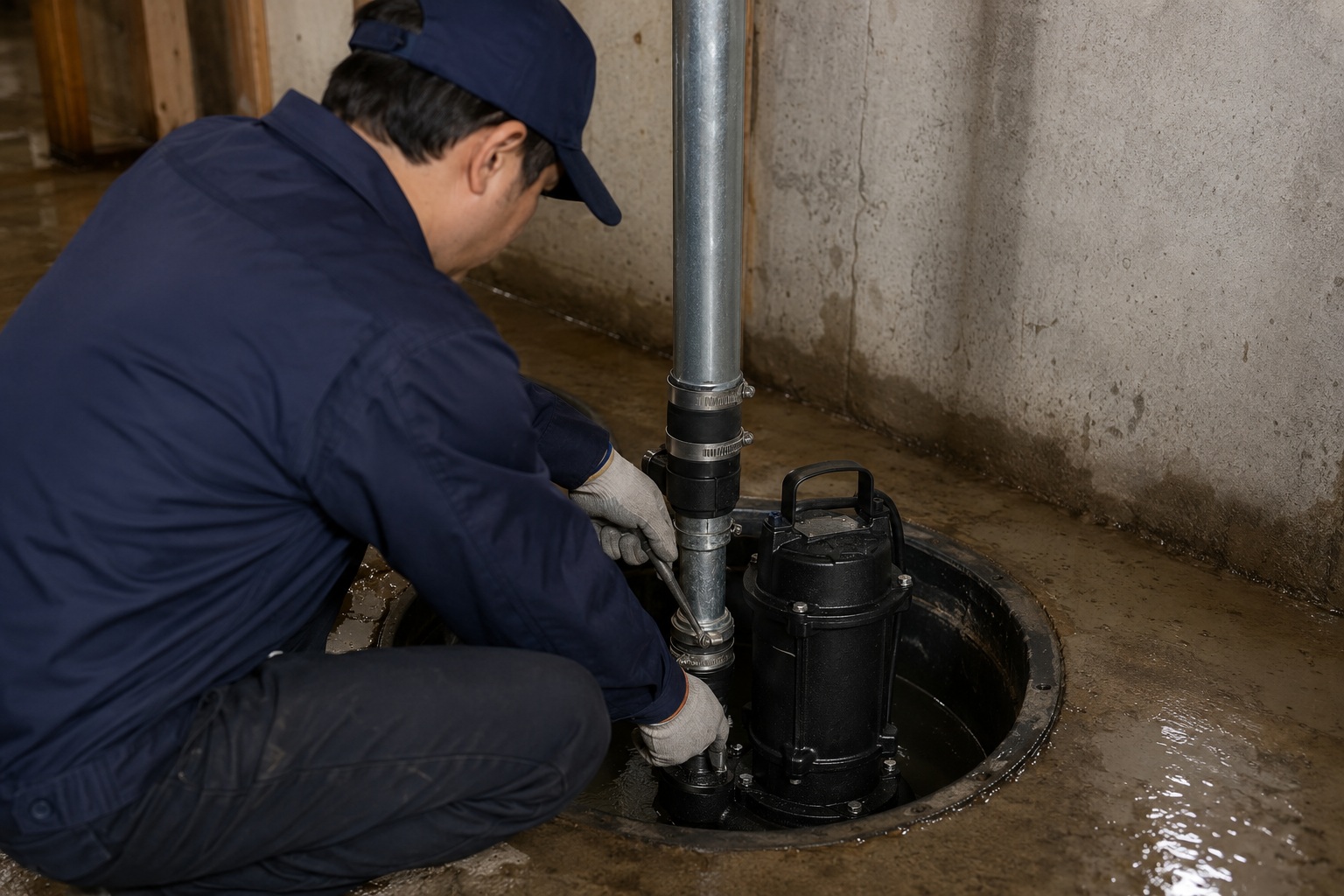
Choosing between top brands can be tough.
Both have a long history of protecting homes from water damage.
To make the right decision, you need to look beyond the brand name.
You must understand the key factors that define a pump's performance, durability, and suitability for your project.
This guide will break down everything from motor power and material quality to specific model comparisons.
It will give you the knowledge to choose the perfect pump with confidence.
Sump Pump Selection: Factors and Key Features to Consider
Your project has unique demands.
A pump that is perfect for a small basement might fail in a commercial building.
Ignoring these details can lead to a costly mismatch and potential pump failure.
To choose the right pump, first evaluate your project's specific needs.
This includes the pump's size and capacity, the basin size, and environmental factors like debris.
The horsepower, flow rate, and switch type are critical factors that determine performance and reliability.
To select the ideal sump pump, you need to dig deeper into the technical specifications.
It's not just about picking a brand.
It's about matching the pump's capabilities to the job it needs to do.
This ensures efficient water management and long-term peace of mind.
Project Requirements Explained
The first step is to assess your project requirements accurately.
For most residential homes, a pump capacity of 35-60 gallons per minute (GPM) is usually enough.
However, larger commercial projects might need pumps that can handle hundreds of GPM.
The sump basin size is also crucial.
A typical residential basin should be at least 18 inches in diameter and 30 inches deep.
Systems with a backup pump often require a larger basin, around 30 inches in diameter, to fit both units.
Environmental factors play a big role.
If your groundwater has a lot of sand or debris, a pump with a good intake screen is essential to prevent clogging.
Areas with heavy rainfall or a high water table demand a high-capacity pump to keep up.
The switch type is another critical choice.
Tethered float switches need a wide basin to swing freely.
Vertical float switches are better for smaller pits because they move straight up and down.
Diaphragm switches are excellent for tight spaces with a primary and backup pump.
| Feature | Residential Requirement | Commercial Requirement |
|---|---|---|
| Capacity (GPM) | 35 - 60 GPM | 100+ GPM |
| Basin Diameter | Minimum 18 inches | Minimum 30 inches |
| Typical HP | 1/4 to 1/2 HP | 1/2 HP or more |
| Switch Type | Vertical or Tethered | Vertical or Diaphragm |
Motor Power and Efficiency
Horsepower (HP) is a critical factor.
Too little power means the pump can't move water out effectively.
Too much power can cause the pump to cycle on and off too quickly, leading to premature wear and a shorter lifespan.
This is known as "short-cycling."
Most residential pumps range from 1/4 to 1/3 HP.
These are suitable for homes with average water intrusion.
A 1/2 HP pump is better for larger basements or homes that see more frequent groundwater issues.
For homes with very high water tables or deep basements, a 3/4 HP pump is often the ideal choice, providing the power to lift water over greater vertical distances.
While horsepower is important, the flow rate, measured in gallons per minute (GPM), gives a clearer picture of performance.
It tells you exactly how fast the pump can clear water from your sump pit.
An energy-efficient motor might have a higher upfront cost.
However, it can save you or your client hundreds of dollars over the pump's life by reducing electricity consumption by up to 40%.
| Horsepower (HP) | Gallons Per Minute (GPM) | Ideal Use Case |
|---|---|---|
| 1/3 HP | ~40-60 GPM | Standard basements, occasional water intrusion. |
| 1/2 HP | ~60-85 GPM | Larger basements, frequent groundwater issues. |
| 3/4 HP | ~85-100+ GPM | High water tables, deep basements, flood-prone areas. |
Material Quality: Cast Iron vs. The Field
A sump pump's motor can fail.
But often, the pump's housing gives out first, due to corrosion or cracking.
Choosing a pump made from cheap materials is a recipe for early replacement and potential disaster.
A pump's material directly impacts its durability, heat dissipation, and lifespan.
Cast iron is the gold standard for durability and longevity, effectively pulling heat away from the motor.
While plastic is cheaper, it can't match the robustness or cooling properties of a heavy-duty metal pump.
The materials used in a sump pump are not just about looks; they are about performance and survival.
A pump operates in a constantly wet and sometimes corrosive environment.
The housing material must withstand these conditions while also protecting the motor.
Investing in a pump made from high-quality materials might cost more initially.
But it pays for itself with fewer repairs, a longer service life, and more reliable protection, especially in demanding situations.
Why Cast Iron Dominates
Cast iron is the preferred material for high-quality sump pumps for two main reasons: durability and heat dissipation.
First, it is incredibly strong and resistant to corrosion and impact.
This robust construction ensures it can handle the tough conditions inside a sump pit for years without warping or cracking.
Brands like Zoeller have built their reputation on their heavy, all-cast-iron pumps like the M53.
Second, cast iron is excellent at dissipating heat.
The pump's motor generates significant heat during operation.
The heavy cast-iron housing acts as a heat sink, drawing that heat away from the motor and into the surrounding water.
This keeps the motor cool, preventing overheating and extending its operational life by up to 50% compared to materials that trap heat.
This cooling effect is a primary reason why cast-iron pumps are considered more reliable for frequent or prolonged use.
Other Material Options
While cast iron is a top choice, other materials are used in sump pump construction, each with its own pros and cons.
Stainless steel offers performance similar to cast iron.
It is highly corrosion-resistant and effective at dissipating heat.
It is often used in combination with cast iron components.
Powder-coated aluminum, used by brands like Liberty, offers a good balance.
It is lightweight, making installation easier, and also resists corrosion well.
Thermoplastic (plastic) pumps are the most affordable option.
They are lightweight and completely corrosion-proof.
However, they are not as durable as metal pumps and are more susceptible to damage from impact or debris.
Crucially, plastic does not dissipate heat well, which can lead to a shorter motor life if the pump runs frequently.
Bronze is a specialty material used for pumps in brackish or salt-water applications, as it withstands these corrosive environments better than other metals.
| Material | Durability | Heat Dissipation | Corrosion Resistance | Cost |
|---|---|---|---|---|
| Cast Iron | Excellent | Excellent | Good | High |
| Stainless Steel | Excellent | Very Good | Excellent | High |
| Aluminum | Good | Good | Very Good | Medium |
| Thermoplastic | Fair | Poor | Excellent | Low |
| Bronze | Very Good | Good | Superior | Very High |
Performance & Reliability: A Head-to-Head Comparison
Your basement is filling with water during a storm.
This is the worst time to discover your pump can't keep up.
You need a pump you can trust without a second thought.
To truly compare Zoeller and Liberty, we must look at their most popular models.
The Zoeller M53 Mighty-Mate and the Liberty Pumps 237 are both 1/3 HP workhorses designed for residential use.
They have similar power, but key differences in design and materials.
A direct comparison of the flagship models reveals the core philosophies of each brand.
Zoeller focuses on indestructible, heavy-duty construction.
Liberty focuses on quiet, efficient operation with smart design features.
By examining their specifications, features, and user feedback, we can determine which pump is better suited for different priorities and situations.
This head-to-head analysis will help you make an informed choice.
The Residential Workhorse: Zoeller M53 vs. Liberty 237
The Zoeller M53 and Liberty 237 are two of the most popular and highly-rated sump pumps on the market.
They are both 1/3 HP submersible pumps designed for the average American basement.
Their performance metrics are very close, but their designs reveal different priorities.
The Zoeller M53 is a beast.
Its housing and base are made entirely of cast iron, making it heavy (over 20 pounds) and incredibly durable.
It's known for its ability to pass small solids (up to 1/2 inch) without clogging, thanks to a non-screened intake.
Its float switch is a proven vertical design that is reliable, though it can be a point of failure after many years, like any mechanical switch.
The Liberty 237 takes a different approach.
It features a one-piece powder-coated aluminum housing, making it much lighter (around 11 pounds) and easier to install.
Its key innovation is the vertical magnetic float (VMF) switch, which has no moving parts exposed to the water, making it far less likely to jam or fail.
It also uses a vortex-style impeller, which is excellent at preventing clogs from stringy debris.
| Feature | Zoeller M53 Mighty-Mate | Liberty Pumps 237 |
|---|---|---|
| Motor | 1/3 HP | 1/3 HP |
| Max Flow Rate | 43 GPM (2,580 GPH) | 44 GPM (2,640 GPH) |
| Housing Material | Cast Iron | Powder-Coated Aluminum |
| Switch Type | Mechanical Vertical Float | Vertical Magnetic Float (VMF) |
| Solids Handling | Up to 1/2" spherical solids | Vortex impeller reduces clogs |
| Weight | ~21 lbs | ~11 lbs |
| Warranty | 3 Years | 2 Years |
| Key Pro | Extreme durability, heat dissipation | Quiet, reliable switch, lightweight |
| Key Con | Heavy, traditional switch design | Shorter warranty, less heat dissipation |
High-Capacity & Specialty Pumps
When you move beyond standard residential needs, both brands offer powerful solutions.
For high water tables or commercial applications, you'll look at 1/2 HP or larger pumps.
Here, models like the Wayne WSS30VN (a 1/2 HP primary pump with a battery backup included) become strong contenders, capable of moving over 85 GPM.
The real difference emerges in specialty grinder pumps.
These are needed when wastewater must be pumped to a septic tank or pressurized sewer main.
A standard sump pump cannot handle this job.
Liberty's Omnivore series, like the LSG202, features patented V-Slice cutter technology.
This grinder has a 99% success rate at macerating difficult items like rags and wipes that should not have been flushed, preventing clogs in the septic line.
Zoeller's Shark series, like the E820, is another top-tier grinder pump.
It is known for its robust cast-iron construction that allows for longer run times without overheating.
It also offers an optional auto-reversing cutter to clear potential jams.
In these high-stakes applications, the choice is less about brand loyalty and more about matching the specific pump technology (like cutter design) to the potential waste it will encounter.
Installation & Maintenance: Protecting Your Investment
You've bought a top-of-the-line pump.
You install it, forget about it, and assume your basement is safe.
Then, during the first major storm, it fails.
This happens all too often due to simple installation errors or a lack of basic maintenance.
A great pump is only as reliable as its installation and maintenance.
Simple mistakes like a missing check valve or a clogged pit can lead to pump failure.
Regular, simple checks can extend your pump's life by years and ensure it works when you need it most.
Proper installation and routine maintenance are not optional.
They are essential parts of owning a sump pump system.
Following a few key best practices during setup can prevent 90% of common pump problems.
Likewise, a simple 10-minute check every few months provides the ultimate peace of mind.
It ensures your first line of defense against a flooded basement is always ready for duty.
Neglecting these steps is like buying a great car but never changing the oil.
Key Installation Pitfalls to Avoid
Even the best pump will fail if installed incorrectly.
One of the most critical and often overlooked parts is the check valve.
This one-way valve is installed on the discharge pipe.
It prevents water that has been pumped out from flowing back into the pit when the pump turns off.
Without it, the pump will "short-cycle," turning on and off constantly to pump out the same water, drastically shortening its life.
Another common mistake is not providing support for the discharge line.
The weight of the pipe and the water inside can put stress on the pump's discharge port, leading to cracks and leaks.
Always secure the pipe to the foundation wall or floor joists.
Finally, the electrical connection is vital.
Your sump pump should be plugged into its own dedicated GFCI (Ground Fault Circuit Interrupter) outlet.
Plugging it into an outlet shared with other appliances or using an extension cord risks tripping a breaker, which would disable your pump when you need it most.
A dedicated 15-amp circuit is the professional standard.
A Simple Maintenance Checklist
Proper maintenance is easy and ensures your pump is ready for action.
Perform these checks every 3-4 months and before the start of the rainy season.
-
Test the Pump: Pour a five-gallon bucket of water into the sump pit. This should be enough to raise the float switch and activate the pump. Watch to make sure it turns on, pumps the water out, and shuts off correctly.
-
Clean the Pit: Unplug the pump. Remove any dirt, gravel, sand, or other debris from the bottom of the sump basin. This debris can get sucked into the pump and clog the impeller or intake screen.
-
Inspect the Pump and Float: While the pump is unplugged, lift it out of the pit. Clean the pump's intake screen. Check the float switch to ensure it moves freely and is not obstructed.
-
Check the Discharge Pipe: Go outside to where the pump's discharge pipe exits your home. Make sure the opening is not blocked by dirt, leaves, or snow. A blocked pipe can cause pressure to build and damage the pump.
-
Test the Backup System: If you have a battery backup pump, test it monthly. The system should have a "test" button. Also, check the battery terminals for corrosion and ensure the distilled water level (if it's not a sealed battery) is correct. Backup batteries typically need replacement every 3-5 years.
Conclusion
Both Zoeller and Liberty make fantastic, reliable sump pumps that will protect your home.
The best choice is not about which brand is universally better.
It's about which brand is better for you.
Choose Zoeller for unmatched durability.
Choose Liberty for quiet innovation.
FAQs
What is the average lifespan of a Zoeller or Liberty sump pump?
A high-quality cast-iron pump from Zoeller or a well-maintained Liberty pump can last 7 to 10 years. Cheaper, plastic models may only last 3 to 5 years.
Which sump pump is quieter, Zoeller or Liberty?
Liberty pumps are generally considered quieter. This is due to their lighter aluminum construction and vortex impeller design, which reduces operational noise compared to the heavier cast-iron Zoeller pumps.
Should I get a 1/3 HP or 1/2 HP sump pump?
For most average-sized basements with occasional water, a 1/3 HP pump is sufficient. If you have a high water table, a larger basement, or frequent flooding, a 1/2 HP pump provides extra security.
What is a vertical magnetic float switch?
Used by Liberty Pumps, this switch uses a magnetic field to activate the pump. It has no external moving parts exposed to water, making it less prone to jamming or failing than traditional mechanical floats.
Can I install a sump pump myself?
If you are replacing an existing pump, it is often a manageable DIY project for someone with basic plumbing skills. Installing a new system from scratch is more complex and usually requires a professional plumber.
Why is my sump pump running constantly?
This is often caused by a failed or stuck check valve, allowing water to flow back into the pit. It can also be a float switch that is stuck in the "on" position.
Is cast iron better than stainless steel for a sump pump?
Both are excellent, durable materials. Cast iron is superior at dissipating heat from the motor, potentially extending its life. Stainless steel offers slightly better corrosion resistance but is often more expensive.