Struggling to identify the top pump manufacturer for your needs?
The sheer number of options can be overwhelming, making a confident choice difficult.
While defining "biggest" can be complex, Grundfos, a Danish company, is widely considered the world's largest pump manufacturer by production volume, producing over 16 million pump units annually. They are a leader in both circulator pumps for heating and air-conditioning and water supply pumps.
Choosing the right pump manufacturer is a critical decision that impacts operational efficiency, long-term reliability, and your bottom line.
It’s not just about purchasing a piece of equipment.
It's about entering a partnership that ensures your systems run smoothly for years to come.
The world's leading manufacturers didn't get there by accident.
They built their reputations through decades of innovation, rigorous quality control, and a deep understanding of the industries they serve.
In this guide, we'll explore the giants of the pump industry, what makes them leaders, and how you can choose the best partner for your specific application.
We will look beyond simple brand names and dive into the engineering, market presence, and technological advancements that separate the best from the rest.
1. Grundfos
Are your energy bills for water circulation getting too high?
This constant financial drain cuts into profits and sustainability goals.
Founded in Denmark in 1945, Grundfos is a global leader known for its energy-efficient pump technologies and intelligent water solutions. The company dominates the circulator pump market and has a massive presence in over 60 countries, setting industry standards for quality and innovation.
Grundfos has established itself as a benchmark for quality and technological advancement in the pump industry.
The company's story began in a small Danish town and has grown into a global force with a mission centered on sustainability and efficiency.
Their production scale is immense, with an output exceeding 16 million pumps per year, a figure that highlights their vast market penetration and trusted status.
This scale allows for significant investment in research and development, keeping them at the forefront of pump technology.
Key Capabilities
Grundfos is particularly renowned for its focus on integrating smart technology into its products.
Their pumps are not just mechanical devices; they are intelligent systems designed to optimize performance and reduce energy consumption.
This is achieved through integrated electronics, sensors, and variable frequency drive (VFD) controls.
These systems can automatically adjust pump speed to match real-time demand, which can lead to energy savings of up to 60% compared to conventional pumps.
The company invests heavily in R&D, dedicating a significant portion of its revenue to developing next-generation solutions for water management.
Main Product Categories
The product portfolio at Grundfos is both broad and deep, catering to a wide array of applications.
Their offerings are meticulously engineered for specific sectors, ensuring optimal performance.
| Product Category | Primary Application | Key Feature |
|---|---|---|
| Circulator Pumps | HVAC systems, domestic hot water | Unmatched energy efficiency, compact design |
| Submersible Pumps | Groundwater, wastewater, dewatering | High reliability, robust construction |
| Multistage Pumps | Pressure boosting, industrial processes | High-pressure capability, modular design |
| Dosing Pumps | Water treatment, chemical injection | Precision and accuracy, digital control |
Their dominance in the circulator pump market is particularly notable, where they hold an estimated 50% of the global market share.
This leadership is built on decades of creating reliable and whisper-quiet pumps for heating, ventilation, and air conditioning systems.
2. Xylem
Concerned about managing large-scale water and wastewater projects effectively?
Inefficient systems lead to wasted resources, environmental risks, and high operational costs.
Xylem, an American-based global water technology leader, excels in providing comprehensive solutions for the entire water cycle. Their portfolio, including renowned brands like Flygt and Goulds Water Technology, is crucial for municipal water transport, treatment, and dewatering applications worldwide.
Xylem is a company born from a singular focus on water.
Spun off from ITT Corporation in 2011, the company's name itself is derived from the Greek word for the tissue that transports water in plants, reflecting its core mission.
With a presence in more than 150 countries, Xylem tackles water challenges on a global scale.
They are more than just a pump manufacturer; they position themselves as a technology partner for utilities, industrial sites, and commercial buildings.
Their approach integrates digital intelligence with robust hardware to create smarter, more resilient water systems.
Key Capabilities
Xylem's strength lies in its holistic view of water management.
The company is a pioneer in integrating IoT technology and data analytics into its systems.
This allows for real-time monitoring, predictive maintenance, and optimization of entire water networks, not just individual pumps.
For example, their "smart sewer" solutions can predict and prevent overflows, saving municipalities millions in cleanup costs and preventing environmental damage.
Their expertise in dewatering is world-renowned, with their Flygt brand being the originator of the electrical submersible pump.
This deep knowledge is applied in critical applications like construction sites, mines, and flood control.
Market and Product Focus
Xylem's business is structured around solving water problems across different segments.
Their products are designed for heavy-duty, continuous operation in demanding environments.
Core Business Segments:
- Water Infrastructure: This includes pumps and systems for clean water delivery, wastewater transport, and treatment. Brands like Flygt are workhorses in municipal lift stations globally.
- Applied Water: This segment serves residential, commercial, industrial, and agricultural users with products from brands like Goulds Water Technology and Lowara.
- Measurement & Control Solutions: This division provides the "brains" for water systems, offering smart meters, sensors, and analytics to monitor and manage water resources efficiently.
Their product range is extensive, featuring everything from massive wastewater pumps capable of moving thousands of gallons per minute to precise residential booster pumps.
This diverse portfolio allows them to provide end-to-end solutions for nearly any water-related challenge.
3. KSB
Facing challenges with highly demanding industrial or energy sector applications?
Standard pumps often fail under the extreme pressure, temperature, and corrosive conditions found in these environments.
KSB, a German engineering powerhouse founded in 1871, is a top-tier manufacturer of high-performance pumps and valves for industrial, energy, and water transport sectors. They are renowned for their robust and reliable solutions, particularly in high-stakes applications like power plants and chemical processing.
With nearly 150 years of history, KSB has built an unshakable reputation for German engineering excellence.
The company operates on a global scale, with production plants, sales offices, and service centers in over 100 countries.
This extensive network ensures that they can provide not just products, but also localized support and technical expertise to their customers worldwide.
KSB's philosophy is rooted in creating highly reliable and efficient solutions tailored to the most challenging industrial environments.
They are often the go-to choice for applications where failure is not an option.
Engineering and Application Focus
KSB's core strength is its deep application-specific knowledge.
They don't just sell pumps; they provide engineered solutions.
Their teams work closely with clients to understand the specific demands of a process, whether it's pumping abrasive slurries in a mine or circulating superheated water in a power station.
This collaborative approach ensures that the selected pump is perfectly matched to the application, maximizing performance and service life.
Key Product Areas:
- Energy Sector: KSB is a leading supplier of boiler feed pumps, coolant pumps, and auxiliary pumps for conventional and nuclear power plants. These products are designed to withstand extreme pressures and temperatures, with reliability being the paramount concern.
- Industrial Applications: They offer a vast range of pumps for chemical and petrochemical industries, designed with materials that resist corrosion and abrasion. This includes standardized chemical pumps (ISO 2858) and specialized process pumps.
- Water and Wastewater: KSB provides high-capacity pumps for water transport, treatment plants, and flood control. Their Eta-line of centrifugal pumps is one of the most recognized and widely used in the world.
- Building Technology: They also manufacture a comprehensive range of pumps for HVAC, water supply, and fire-fighting systems in large commercial and residential buildings.
The table below highlights some of KSB's flagship pump types and their primary uses.
| Pump Type | Primary Industry | Key Characteristic |
|---|---|---|
| Boiler Feed Pumps | Power Generation | Ultra-high pressure, high temperature |
| Process Pumps | Chemical, Oil & Gas | Corrosion and abrasion resistance |
| Sewage Pumps | Municipal Wastewater | Solids handling, non-clog design |
| Multistage Pumps | Water Supply, Industry | High head generation, high efficiency |
This focus on robust, application-specific engineering makes KSB a trusted partner for industries that rely on critical fluid handling systems.
4. Flowserve
Do your operations involve extreme temperatures, high pressures, or corrosive fluids?
Using the wrong equipment in these environments risks catastrophic failure, safety hazards, and costly downtime.
Flowserve is a U.S.-based multinational giant specializing in industrial pumps, valves, and seals for the most demanding industries like oil and gas, chemical processing, and power generation. They are experts in engineering solutions for severe service applications where reliability is paramount.
Flowserve's history is a tapestry woven from some of the most respected names in industrial fluid handling, with roots tracing back to 1790.
This deep heritage provides an unparalleled foundation of engineering knowledge and application experience.
Headquartered in Texas, USA, Flowserve operates in more than 50 countries, providing mission-critical flow control solutions to a global customer base.
The company's identity is forged in the crucible of heavy industry.
Their products are designed to perform reliably under the most extreme conditions imaginable, from cryogenic temperatures to molten metal environments.
Safety, reliability, and precision are the cornerstones of their engineering philosophy.
Expertise in Severe Service
Flowserve's primary differentiator is its focus on "severe service" applications.
This means their equipment is engineered to handle fluids and operating conditions that would quickly destroy standard pumps.
Key Areas of Specialization:
- High-Pressure Environments: They manufacture pumps capable of generating immense pressures, essential for applications like water injection in oil fields or high-pressure chemical reactions.
- Extreme Temperatures: Their product lines include pumps designed for cryogenic services (down to -196°C) and for high-temperature processes found in refineries and power plants (upwards of 450°C).
- Corrosive & Abrasive Fluids: Flowserve offers pumps constructed from a wide range of exotic alloys and non-metallic materials to handle everything from harsh acids to abrasive slurries.
This specialization is supported by a world-class team of materials scientists and engineers who develop proprietary alloys and sealing technologies to meet these challenges.
Product Portfolio for Heavy Industry
Flowserve's product lineup is a testament to its industrial focus.
They are a leading provider of pumps compliant with the American Petroleum Institute (API) 610 standard, which is the benchmark for safety and reliability in the oil and gas industry.
| Product Category | Common Industries | Key Function |
|---|---|---|
| API Process Pumps | Oil & Gas, Petrochemical | Hydrocarbon processing, transfer |
| Chemical Pumps | Chemical, Pharmaceutical | Safe handling of corrosive fluids |
| Slurry Pumps | Mining, Power Generation | Transporting abrasive solids |
| Mechanical Seals | All Industries | Preventing leakage from rotating equipment |
In addition to pumps, their expertise in mechanical seals is critical.
A pump is only as reliable as its seal, and Flowserve is a global leader in designing sealing systems that prevent leaks, enhance safety, and reduce environmental impact.
5. Beyond the Giants: The Rise of Specialized Pump Technology
Are the solutions from major brands overkill or unsuitable for your specific off-grid or sustainable project?
These large-scale solutions often miss the mark for niche applications, leaving you with inefficient or overly expensive options.
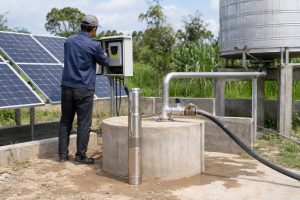
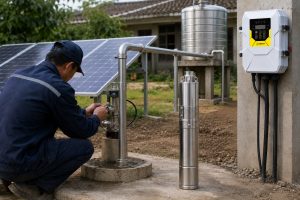
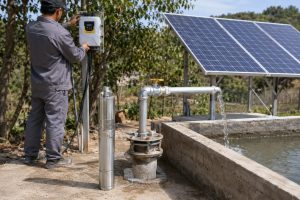
The future of water pumping isn't just about bigger systems; it's about smarter, specialized solutions. Solar water pumps, driven by hyper-efficient motors, are meeting critical needs for off-grid agriculture, livestock, and domestic water supply with unparalleled cost-effectiveness and reliability.
While global giants dominate industrial and municipal markets, a technological revolution is happening in specialized sectors.
The growing demand for sustainable, grid-independent solutions has spurred rapid innovation, particularly in solar water pumping.
This technology is transformative for regions with abundant sunlight but limited access to reliable electricity, such as large parts of Africa, Asia, Australia, and the Americas.
These are not just smaller versions of traditional pumps.
They are highly-engineered systems designed from the ground up to maximize efficiency and operate reliably in harsh, remote environments.
The Core of Modern Solar Pumps: The BLDC Motor
The heart of any high-performance solar pump is its motor.
The breakthrough technology in this space is the Brushless DC (BLDC) permanent magnet motor.
Unlike traditional AC or brushed DC motors, BLDC motors offer a quantum leap in efficiency.
Key Advantages of BLDC Motors:
- Extreme Efficiency: BLDC motors can achieve efficiencies exceeding 90%, compared to 50-70% for typical AC motors. This means they can pump more water with the same amount of solar power, reducing the number of solar panels needed by up to 40%.
- High Torque: They provide high starting torque, which is crucial for lifting water from deep wells.
- Compact & Lightweight: The use of powerful rare-earth magnets, such as Neodymium iron boron (NdFeB), allows for designs that are up to 47% smaller and 39% lighter than conventional motors of the same power.
- Durability: With no brushes to wear out, these motors are virtually maintenance-free and have a significantly longer service life.
This motor technology is the key enabler, making solar pumping a viable and economically superior choice for many applications.
Choosing the Right Solar Pump Type
The motor's power is delivered through a pump end, and the type of pump end determines the system's flow and pressure characteristics.
Three main types dominate the solar deep well market, each suited for different applications.
| Pump Type | Mechanism | Best For | Advantages | Limitations |
|---|---|---|---|---|
| Solar Screw Pump | A stainless steel screw rotates within a rubber stator | Low Flow, High Head (Deep wells, homes) | Excellent sand resistance, high lift | Lower overall flow rate |
| Solar Plastic Impeller Pump | Multi-stage centrifugal impellers made of durable polymer | High Flow, Medium Head (Farms, irrigation) | High water output, wear-resistant, economical | Less suitable for highly corrosive water |
| Solar Stainless Steel Impeller Pump | Multi-stage centrifugal impellers made of SS304 | High Flow, High Corrosion Resistance (Special water) | Superior corrosion resistance, very long life | Higher initial cost and weight |
This product matrix allows distributors and end-users to select the perfect pump for their specific water source and demand, from a single home's needs to irrigating a small farm.
The Importance of Intelligent Control
The final piece of the puzzle is the controller.
Modern solar pump systems use sophisticated MPPT (Maximum Power Point Tracking) controllers that act as the system's brain.
The MPPT controller constantly adjusts the electrical load to ensure the solar panels operate at their peak efficiency, maximizing water output throughout the day.
Advanced controllers also offer hybrid functionality.
They can be connected to both solar panels and an AC power source (grid or generator) simultaneously.
The controller prioritizes solar power and automatically blends in or switches to AC power when sunlight is insufficient, ensuring a reliable 24/7 water supply.
How to Choose a Pump Manufacturer
Feeling uncertain about how to evaluate and compare different pump suppliers?
Focusing only on price can lead to long-term problems with reliability and support.
To choose the right pump manufacturer, evaluate them based on a balanced scorecard: product reliability, global service network, manufacturing experience, certifications, and their specialization in your specific application. The best partner offers a blend of quality, support, and relevant expertise.
Selecting a pump manufacturer is a strategic decision that goes far beyond the initial purchase price.
The right partner can be a significant asset to your business, while the wrong one can be a source of constant frustration and expense.
A systematic approach to evaluation is essential.
You should consider a range of factors to build a complete picture of the manufacturer's capabilities and suitability for your needs.
Think of it as hiring a long-term partner, not just buying a product off the shelf.
Key Evaluation Criteria
Break down your decision-making process into several key areas.
This ensures you are making a well-rounded and informed choice.
1. Product Reliability and Engineering
Look for a proven track record.
How long have their products been in the field?
Seek out case studies or references related to your industry.
Examine the materials of construction and the engineering principles behind their designs.
Do they invest in technologies that enhance durability, like advanced motor design or robust sealing systems?
2. Manufacturing Experience and Quality Control
A manufacturer with decades of experience has likely refined its processes and solved countless production challenges.
Inquire about their quality control system.
Look for certifications like ISO 9001, which indicates a structured approach to quality management.
Manufacturers that control the entire production process, from casting to final assembly and testing, often deliver a more consistent and reliable product.
3. Application Specialization
Does the manufacturer have deep expertise in your specific industry or application?
A company that specializes in agricultural pumps will have a better understanding of irrigation needs than a company focused on petrochemicals.
Their product design, material selection, and even their sales support will be better tailored to your world.
4. Global Service and Support Network
What happens after the sale?
A top-tier manufacturer will have a global network of service centers and distribution partners.
This ensures that you can get technical support, spare parts, and warranty service quickly, no matter where you are located.
Easy access to support minimizes downtime and protects your investment.
5. Certifications and Compliance
For international markets, certifications are non-negotiable.
Look for compliance with recognized international standards such as CE (Europe), CSA (North America), or IEC (International).
These certifications are an independent verification of the product's safety, quality, and performance claims.
By weighing these factors, you can move beyond marketing claims and make a decision based on tangible evidence of a manufacturer's ability to deliver value and reliability.
Conclusion
The "biggest" manufacturer isn't always the best for you.
True success lies in partnering with a supplier whose technology, quality, and expertise align perfectly with your specific needs.
FAQs
Who is the largest pump manufacturer by revenue?
While production volume is one metric, companies like Xylem and Flowserve often report massive revenues due to their focus on large-scale industrial and municipal projects with high-value engineered systems.
What country makes the best pumps?
Germany, the United States, Denmark, and Japan are all home to world-leading pump manufacturers. Each country has companies known for engineering excellence, innovation, and reliability in different market segments.
Is Grundfos a good brand?
Yes, Grundfos is widely regarded as a top-tier brand. They are known for high-quality, energy-efficient pumps, particularly in HVAC and water supply applications, and have a strong global reputation for reliability.
Who are the top 5 pump manufacturers in the world?
The top 5 often includes Grundfos, Xylem, KSB, Flowserve, and Sulzer. This list can vary based on the metric used (revenue, volume, market), but these companies are consistently recognized as global leaders.
What is the most common type of pump?
The centrifugal pump is by far the most common type used worldwide. Its simple design, reliability, and ability to handle a wide range of flows and pressures make it suitable for countless applications.
Why is motor efficiency important in a pump?
The motor can account for over 90% of a pump's total lifecycle cost due to electricity consumption. A high-efficiency motor directly translates to significant long-term savings on operational expenses.
What does a pump's "head" mean?
Head is a measure of the pressure a pump can generate, typically expressed in meters or feet. It represents the vertical height to which a pump can raise a column of water.
What is the difference between a submersible and a surface pump?
A submersible pump is installed completely underwater in the fluid source, like a well. A surface pump is located on dry land and pulls water from the source through a suction pipe.