Struggling with weak water flow from your taps and showers?
This frustratingly low pressure makes daily tasks inefficient.
A water booster pump is the definitive solution to this common problem.
The best water booster pump is one that perfectly matches your specific needs for flow rate, pressure increase, and energy efficiency. For most homes, a 0.5 to 1.0 horsepower (HP) pump is sufficient. For commercial or off-grid applications, intelligent variable speed or solar-powered pumps offer superior performance and cost savings.
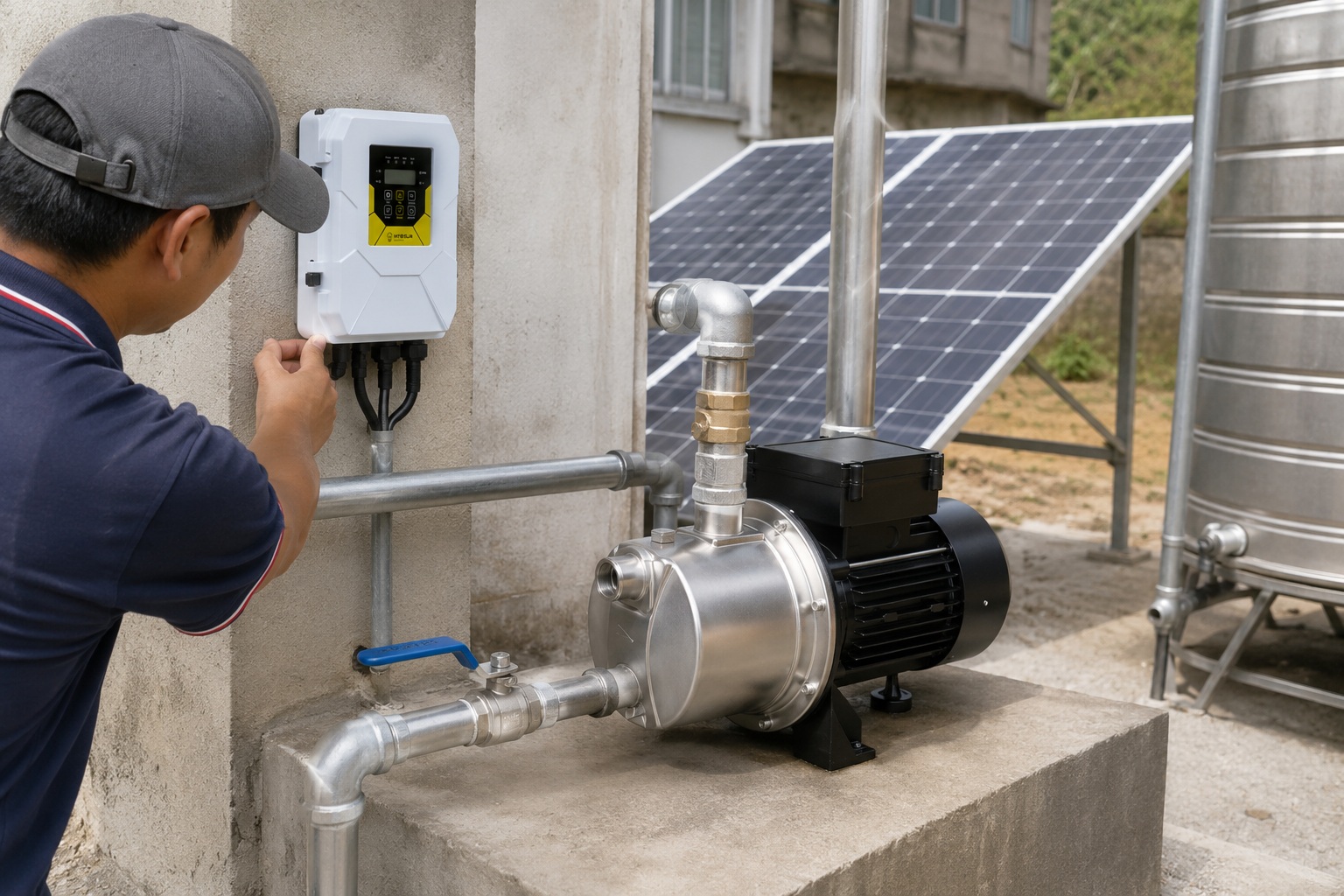
Choosing the right pump can seem daunting with so many options available.
You need to consider factors like the size of your property, your existing water pressure, and your power source.
This guide will break down everything you need to know.
We will explore different pump technologies, from traditional models to advanced solar and hybrid systems.
This will help you make an informed decision for your home or business inventory.
Understanding the Basics of Water Booster Pumps
Do you find the mechanics of water pressure confusing?
It can seem like a complex plumbing puzzle.
But the principle behind a booster pump is simple and can revolutionize your water system.
A booster pump is a device that increases the pressure of water within a plumbing system. It works by drawing in water from the supply line and using a motor-driven impeller to accelerate the water, pushing it out at a higher pressure for a strong, consistent flow.
To select the right pump, it's essential to understand the core concepts and components that define its performance.
This knowledge is crucial whether you are a homeowner solving a pressure issue or a distributor stocking your warehouse.
A pump that is too weak will not solve the problem, while one that is too powerful can create new ones.
Let's dive deeper into how these devices work and where they are most effective.
How Booster Pumps Calculate Pressure
The primary function of a booster pump is to add pressure to your existing system.
The calculation is straightforward.
Your final system pressure is the sum of your current pressure and the pump's maximum boost pressure.
For example, if your municipal supply provides 30 PSI and you install a booster pump rated for a 40 PSI boost, your new total system pressure will be 70 PSI.
This is a critical calculation to prevent over-pressurizing your pipes and fixtures, which could lead to leaks and damage.
Key Components of a Booster Pump
A booster pump system is more than just a motor.
It consists of several integrated parts working together.
- Motor: This is the engine of the pump, providing the power to drive the impeller. Its power is measured in Horsepower (HP).
- Impeller(s): These are rotating discs with vanes that spin at high speed to accelerate the water and build pressure. Multi-stage pumps have several impellers for a greater pressure boost.
- Controller/Pressure Switch: This is the brain of the pump. It senses the system pressure and turns the pump on when pressure drops (e.g., a tap is opened) and off when it reaches the setpoint.
- Pressure Tank: While not all systems require one, a pressure tank stores a small amount of pressurized water. This reduces pump cycling, saving energy and extending the motor's life.
Common Applications
Booster pumps are versatile and used in a wide range of scenarios.
They are not just for fixing weak showers.
Understanding their applications helps distributors identify key markets.
| Application | Typical Desired Pressure | Key Consideration |
|---|---|---|
| Residential Homes | 40-60 PSI | Provide comfort and appliance efficiency. |
| Multi-Story Buildings | 70+ PSI | Overcome pressure loss from height. |
| Garden & Irrigation | 30-50 PSI | Ensure even water distribution for sprinklers. |
| Well Water Systems | 40-60 PSI | Supplement the pressure from the well pump. |
| Rainwater Collection | 30-50 PSI | Make collected water usable throughout a property. |
Choosing Between Traditional and Modern Systems
Is a basic, old-style pump really the most cost-effective choice?
These fixed-speed systems often run inefficiently, wasting significant energy and money.
Modern intelligent pumps offer a smarter approach with substantial long-term savings.
Traditional pumps operate at a single, fixed speed whenever they are on. In contrast, modern systems use Variable Speed Drive (VSD) technology and intelligent sensors to precisely match water demand, reducing energy consumption by up to 50% and minimizing wear and tear on the system.
The evolution of pump technology presents a clear choice for distributors and end-users.
The decision is between a lower upfront cost and a much lower total cost of ownership.
For businesses aiming to provide high-value, sustainable solutions, understanding the difference is paramount.
Modern systems not only save money but also offer superior performance and reliability.
Let's explore the specific advantages that set these advanced systems apart.
Fixed-Speed vs. Variable Speed Drive (VSD) Pumps
The fundamental difference lies in how the motor operates.
A fixed-speed pump is either off or running at 100% capacity.
This is highly inefficient when water demand is low, like when only a single faucet is running.
It's like flooring the gas pedal every time you start your car, regardless of how far you need to go.
A Variable Speed Drive (VSD) pump, on the other hand, is much more intelligent.
It adjusts the motor's speed in real-time based on the actual water being used.
This demand-driven operation ensures the pump only uses the exact amount of energy needed.
Case studies in commercial buildings have shown that upgrading from fixed-speed to VSD systems can reduce annual energy use by over 25%.
The Power of Intelligent Controls
Modern VSD pumps are enhanced with sophisticated control systems.
These controllers provide a level of insight and automation that was previously impossible.
They use pressure sensors to constantly monitor the system and can coordinate multiple pumps in larger installations to work together seamlessly.
This adaptive control maintains perfectly consistent water pressure across an entire building, even during peak usage times.
The benefits extend beyond just comfort.
- Improved Efficiency: By eliminating unnecessary output, these systems drastically cut resource use and lower operating costs.
- System Insights: Real-time data allows for early issue detection and performance optimization.
- Enhanced Longevity: Reduced operational stress and smoother operation mean a longer service life for the entire system.
| Feature | Traditional Fixed-Speed Pump | Modern VSD Pump |
|---|---|---|
| Energy Efficiency | Low (Always runs at 100% speed) | High (Adjusts speed to demand) |
| Operating Cost | High | Low (Potential for >25% savings) |
| System Stress | High (Frequent start/stop cycles) | Low (Smooth, continuous operation) |
| Initial Cost | Lower | Higher |
| Long-Term Value | Low | High |
The Rise of Solar Water Pumping Solutions
Need a reliable water source where the power grid is unstable or non-existent?
Relying on generators is expensive, noisy, and requires constant refueling.
Solar water pumps offer a clean, quiet, and cost-effective solution for total water independence.
Solar water pumps are a game-changing technology for off-grid applications in regions like Africa, Australia, and the Americas. They utilize a hyper-efficient BLDC motor powered directly by solar panels, with specialized pump ends (screw, plastic, or steel impeller) designed for different water conditions.
The global shift towards sustainable solutions has made solar pumps an essential product category.
They are no longer a niche item but a core component of modern water infrastructure in developing and developed nations alike.
For a distributor, offering a comprehensive portfolio of solar pumps opens up vast, underserved markets.
Understanding the technology behind these pumps is key to serving these customers effectively.
Let's examine the components that make these systems so competitive.
The Core Technology: BLDC Permanent Magnet Motors
The heart of every advanced solar pump is its motor.
Unlike standard AC motors, these pumps use a Brushless DC (BLDC) permanent magnet motor.
This technology is a leap forward in efficiency, with some motors exceeding 90% conversion of electrical energy into mechanical power.
The rotor is constructed from high-grade materials like 40SH neodymium iron boron, providing powerful torque in a compact design.
This results in a motor that is up to 47% smaller and 39% lighter than a traditional motor of equivalent power.
The market value of this high efficiency is immense.
It directly reduces the number of solar panels required to run the pump, lowering the system's initial cost by 15-20%.
Furthermore, the brushless design means there are no parts to wear out, making the motor virtually maintenance-free with a very long service life.
Matching the Solar Pump to the Application
A complete solar pump portfolio includes different pump ends to meet diverse water needs.
The choice depends on the well depth, required water volume, and water quality.
- Solar Screw Pump: This design uses a stainless steel screw rotating within a rubber stator. It is perfect for low-flow, high-head applications like deep wells for domestic or livestock water. Its high resistance to sand makes it exceptionally durable in harsh water conditions.
- Solar Plastic Impeller Pump: This multi-stage centrifugal pump delivers high flow rates at a medium head. Its wear-resistant plastic impellers are excellent at handling fine sand, making it ideal for farm irrigation and pasture water supply. It offers a great balance of performance and economy.
- Solar Stainless Steel Impeller Pump: This is the premium option for durability and corrosion resistance. Built with SS304 impellers and a stainless steel pump body, it is designed for acidic or alkaline water conditions. It is the top choice for high-end homes and applications where water quality is a challenge.
| Pump Type | Key Feature | Best For | Flow/Head Profile | Ideal Regions |
|---|---|---|---|---|
| Solar Screw Pump | High Head, Sand Resistant | Deep wells, livestock | Low Flow, High Head | Africa, Latin America |
| Plastic Impeller Pump | High Flow, Wear-Resistant | Farm irrigation, pasture | High Flow, Medium Head | Africa, Americas |
| SS Impeller Pump | Corrosion Resistant | Corrosive water, premium homes | High Flow, Medium-High Head | Australia, parts of Americas |
Key Specifications to Consider for Your Business
Stocking the wrong pumps can lead to unsold inventory and dissatisfied customers.
A pump that fails to meet expectations can damage your business's reputation.
Understanding the key technical specifications is crucial for selecting a winning product lineup.
For a distributor, the most important specifications are Horsepower (HP), Flow Rate (GPM/LPM), Head (feet/meters), and build materials. Matching these specs to your local market's needs ensures you offer effective solutions and build customer trust, leading to repeat business.
As a pump importer or distributor, your success depends on your product knowledge.
You are not just selling a piece of equipment; you are providing a solution to a critical problem.
Being able to guide your customers to the right product based on clear technical data establishes you as an expert in your field.
Let's break down the most important numbers and features you need to master.
Decoding the Numbers: HP, Flow, and Head
These three specifications are the foundation of pump selection.
- Horsepower (HP): This measures the work output of the motor. It is a general indicator of the pump's capability. For example, a 0.5 HP pump is often suitable for a small home with 1-2 bathrooms, while a 1.0 HP model can handle a larger home or a 3-4 story building.
- Flow Rate (GPM/LPM): This is the volume of water the pump can move in a given amount of time, measured in Gallons Per Minute or Liters Per Minute. To choose the right flow rate, you must estimate the peak demand of the property. A typical shower requires about 2.5 GPM, while a washing machine needs 2.0 GPM.
- Head: This refers to the vertical height the pump can lift water, measured in feet or meters. Total Dynamic Head (TDH) is a more comprehensive measurement that also accounts for friction loss from pipes and fittings. A pump's performance curve chart will show its flow rate at different head pressures.
Material and Build Quality
The materials used in a pump's construction directly impact its durability and lifespan.
This is a key differentiator between budget and premium models.
- Stainless Steel: Offers the best durability and resistance to corrosion and rust. It is ideal for impellers, shafts, and pump casings, especially in areas with aggressive water.
- Cast Iron: Provides a very sturdy and durable pump body. It is often used in powerful pumps and is known for its longevity.
- Engineered Plastics (e.g., Noryl): Modern plastic impellers are highly resistant to wear from sand and abrasive particles. They are a lightweight and cost-effective choice for many applications.
Essential Protection Features
Reliable pumps include built-in safety features that protect the motor from damage.
These are critical selling points that reduce customer complaints and warranty claims.
- Thermal Overload Protection: Automatically shuts the pump off if the motor overheats, preventing burnout.
- Dry Run Protection: Senses when there is no water entering the pump and stops it from running. Running dry can quickly destroy a pump's seals and impeller.
- Wide Voltage Operation: Allows the pump to function reliably even when the electrical supply is unstable, which is common in many rural areas.
Hybrid Systems for 24/7 Water Security
Solar power is fantastic, but what happens on cloudy days or at night?
A water supply that depends entirely on the sun can leave users stranded.
Hybrid AC/DC systems eliminate this risk by guaranteeing a constant water supply.
AC/DC hybrid water pump systems offer the ultimate in reliability and efficiency. An intelligent controller automatically prioritizes free solar energy when available and seamlessly switches to AC grid or generator power when sunlight is insufficient, ensuring an uninterrupted 24/7 water supply.
For distributors, hybrid systems represent a significant market opportunity.
They bridge the gap between purely off-grid solar and traditional grid-tied pumps.
This technology provides a premium, all-in-one solution that appeals to a much broader customer base.
It combines the environmental and cost benefits of solar with the absolute reliability of the grid.
Let's look at how this advanced technology works and the value it presents.
How AC/DC Hybrid Controllers Work
The magic of a hybrid system lies in its sophisticated controller.
This unit is designed with dual power inputs, allowing it to be connected to both solar panels and an AC power source simultaneously.
The controller's software uses a clear logic to manage these power sources for maximum efficiency.
- Prioritize Solar: The controller constantly monitors the power generated by the solar panels. When there is sufficient sunlight, it will run the pump using 100% free solar energy.
- Blend Power: On partly cloudy days when solar output is reduced, the hybrid function activates. The controller draws the maximum available power from the solar panels and supplements it with just enough AC power to meet the pump's demand. This maximizes the use of free energy.
- Automatic Switchover: When there is no solar input, such as at night or during heavy storms, the controller automatically and seamlessly switches to the AC power source. The end-user experiences no interruption in their water supply.
The Business Case for Hybrid Pumps
Offering hybrid systems provides a strong competitive advantage for a pump distributor.
It is a high-value product with a compelling and easy-to-understand selling proposition: "Worry-free water, 24 hours a day."
This expands your potential market beyond customers who are fully off-grid to include those who are grid-connected but want to reduce their electricity bills and increase their water security.
For the end-user, the benefit is clear.
They get the best of both worlds.
They enjoy the significant cost savings and environmental benefits of solar power without ever having to worry about a lack of water.
This makes it an ideal solution for critical applications like homes, farms, and small commercial operations.
Conclusion
The best pump is a complete solution that balances performance, efficiency, and application-specific needs.
Modern VSD, solar, and hybrid systems deliver far greater long-term value for both distributors and end-users.
FAQs
How do I choose a booster pump for my house?
Assess your needs by counting fixtures to determine the required flow rate (GPM). A 0.5-1.0 HP pump is typically adequate for most homes, ensuring sufficient pressure without overloading your plumbing.
Do booster pumps use a lot of electricity?
Traditional models can be energy-intensive. However, modern VSD and solar-powered pumps are highly efficient, often cutting electricity consumption by 25-50% by matching motor speed to water demand.
Can a booster pump be too powerful?
Yes. An oversized pump can create excessive pressure (over 80 PSI), which may damage pipes, fittings, and appliances. It is crucial to correctly size the pump for your system's limits.
How long do booster pumps last?
A quality booster pump from a reputable manufacturer can last 8 to 15 years. The lifespan depends on build quality, operating conditions, and whether it has protective features like dry-run protection.
What is the difference between a booster pump and a submersible pump?
A booster pump is installed on a water line to increase pressure. A submersible pump is placed directly inside a water source, like a well or cistern, to push water up to the surface.
Do I need a pressure tank with a booster pump?
While many modern pumps have integrated controls, adding a pressure tank is often recommended. It reduces how often the pump starts and stops, which saves energy and extends the pump's lifespan.
What is a good PSI for a house?
The ideal water pressure for most homes is between 40 and 60 PSI. This range provides strong flow for showers and appliances without putting excessive stress on the plumbing system.
Can I install a booster pump myself?
If you have strong plumbing and electrical skills, self-installation is possible. However, professional installation is recommended to ensure the pump is correctly integrated, safe, and performs optimally.